
Reviewed by the COOLVIAL Editorial Team — specialists in insulin storage for Indian climate conditions.
Bengaluru, famously known as India’s ‘Garden City’, offers a generally salubrious climate, with temperatures typically ranging between 18°C and 33°C year-round. However, when the Southwest monsoon graces the city from June to October, bringing an average rainfall of around 970mm, this mild weather can sometimes lull residents into a false sense of security regarding insulin storage. The Bengaluru monsoon, while not as extreme as coastal cities, presents unique challenges for diabetics, from unexpected humidity spikes that can degrade insulin to traffic chaos blocking crucial pharmacy runs. This article, based on analysis of insulin storage queries from Bengaluru diabetics, outlines 7 smart storage strategies to protect your insulin during the rainy season.
Diabetes affects a significant portion of India’s population. According to the International Diabetes Federation, over 74 million adults in India were living with diabetes in 2021, and this number is projected to rise [Verify in 2026]. Proper insulin storage is paramount for its efficacy, and understanding the nuances of Bengaluru’s monsoon climate is a critical step in effective diabetes management.
Table of Contents
- Understanding Bengaluru’s Monsoon Climate and Its Impact on Insulin
- The Hidden Threat: Humidity and Insulin Degradation
- Navigating Monsoon Disruptions: Traffic, Waterlogging, and Power Cuts
- Proactive Measures: Stocking Up and Emergency Preparedness
- Choosing the Right Insulin Storage Solution for Bengaluru’s Monsoon
- Daily Best Practices for Insulin Care During the Rains
- Staying Informed: Local Advisories and Hospital Guidance
- Frequently Asked Questions (FAQs)
- Conclusion: Embrace the Monsoon, Protect Your Insulin
Understanding Bengaluru’s Monsoon Climate and Its Impact on Insulin
Bengaluru’s monsoon, while a welcome respite from the pre-monsoon heat, is characterized by moderate rainfall and fluctuating humidity rather than extreme temperatures. The city experiences its primary monsoon season between June and October, with occasional showers extending into November. Unlike cities with scorching summers or freezing winters, Bengaluru’s challenge lies in its unpredictable humidity and the logistical disruptions caused by the rains.
The ideal storage temperature for unopened insulin is typically between 2°C and 8°C, while opened vials or pens can often be kept at room temperature (below 25°C or 30°C, depending on the specific insulin type) for up to 28 days. Bengaluru’s average monsoon temperatures generally fall within this acceptable range. However, the accompanying humidity, and sudden temperature dips or spikes, can still compromise insulin integrity.
- Key Climate Characteristics During Bengaluru Monsoon:
- Temperature: Generally mild, averaging 20-28°C during the day.
- Rainfall: Moderate, around 970mm over the season, with intermittent heavy spells.
- Humidity: Elevated, often ranging from 70% to 90%, especially after rainfall.
- No Extreme Heat: Unlike other Indian cities, Bengaluru rarely experiences extreme heat (above 35°C) during its monsoon.
The false security offered by the mild temperatures can lead to complacency. Many residents might assume that because it’s not “hot,” their insulin is safe at ambient conditions. This oversight is where the subtle dangers of the Bengaluru monsoon insulin challenge lie. Constant exposure to high humidity, even within acceptable temperature ranges, can affect the pen’s mechanics, the insulin’s stability, and even lead to condensation issues.
The Hidden Threat: Humidity and Insulin Degradation
While direct heat is a well-known enemy of insulin, humidity, particularly in a city like Bengaluru, poses a more insidious threat. The high moisture content in the air during the monsoon can gradually impact insulin pens and vials, even if temperatures remain mild.
- How Humidity Harms Insulin and Devices:
- Insulin Degradation: Though less direct than heat, prolonged exposure to high humidity can accelerate the breakdown of insulin proteins. This reduces its potency, meaning you might inject the correct dose but receive less active medication, leading to elevated blood glucose levels.
- Pen Malfunction: Insulin pens, especially those with electronic components or fine mechanical parts, are susceptible to moisture damage. Humidity can cause:
- Corrosion of metal parts, leading to sticky buttons or dose dials.
- Condensation inside the pen, potentially affecting the insulin cartridge.
- Damage to electronic displays or battery life in smart pens.
- Label Deterioration: High humidity can cause labels on vials and pens to peel or become illegible, making it difficult to identify insulin type or expiry dates.
- Growth of Microorganisms: While less common for insulin itself, damp conditions can encourage mold or bacterial growth on the exterior of storage containers or bags if not properly maintained.
The cumulative effect of these subtle damages can be significant. Imagine relying on insulin that has lost 10-15% of its efficacy due to consistent humidity exposure. This could lead to poor glycemic control, increasing the risk of both short-term complications (like hyperglycemia) and long-term health issues. Manipal Hospital (Old Airport Road) endocrinologists often advise patients to be particularly vigilant about storage conditions during the monsoon months, emphasizing the often-overlooked role of humidity.
Navigating Monsoon Disruptions: Traffic, Waterlogging, and Power Cuts
Bengaluru’s charm can quickly turn into chaos during heavy monsoon spells. The city’s infrastructure, while robust, often struggles with the sudden downpours, leading to significant disruptions that directly impact diabetes management.
Bengaluru Monsoon & Insulin — 7 Smart Storage Strategies During the Rainy Season
Insulin at 2-8°C for 48+ hours. Trusted by 10,000+ Indian diabetics.
- Common Monsoon Disruptions in Bengaluru:
- Traffic Chaos: Bengaluru is infamous for its traffic, and the monsoon exacerbates it exponentially. A short trip from Jayanagar to Apollo Pharmacy on Bannerghatta Road, or from Hebbal to a MedPlus outlet, can stretch from minutes to hours. This impacts:
- Pharmacy Runs: Delays in reaching pharmacies like Apollo Pharmacy, MedPlus, or even receiving deliveries from Netmeds or PharmEasy can mean critical insulin supplies are late.
- Doctor Appointments: Missing or delaying visits to specialists at Fortis Hospital (Cunningham Road) or Manipal Hospital (Old Airport Road) due to traffic.
- Commuting with Insulin: If you commute daily, your insulin might be exposed to suboptimal conditions in a vehicle for extended periods.
- Waterlogging: Specific areas in Bengaluru are prone to waterlogging, disrupting movement. Central Bengaluru’s MG Road and Indiranagar 100ft Road, while bustling hubs, can become difficult to navigate. South Bengaluru’s Jayanagar and Koramangala, and parts of East Bengaluru like Marathahalli, also experience significant water accumulation. This can make walking or driving perilous, further isolating individuals from pharmacies or emergency care.
- Power Cuts: While less frequent in the core city, sudden power outages are common during heavy rains, especially in residential areas like Whitefield, Yelahanka, or even parts of JP Nagar. For diabetics relying on refrigeration for insulin, this poses an immediate threat. Without a backup, insulin can quickly warm up to damaging temperatures. For a comprehensive guide on managing this, refer to our article: Power Cut Survival Guide for Diabetics in Bengaluru — What To Do When the Grid Goes Down.
- Weekend Washouts: Planning a weekend getaway to Mysuru or a family visit to Bidadi? Monsoon downpours can quickly turn travel plans into washouts, potentially stranding you with limited or improperly stored insulin.
- Traffic Chaos: Bengaluru is infamous for its traffic, and the monsoon exacerbates it exponentially. A short trip from Jayanagar to Apollo Pharmacy on Bannerghatta Road, or from Hebbal to a MedPlus outlet, can stretch from minutes to hours. This impacts:
These disruptions highlight the need for robust, independent insulin storage solutions. Waiting for traffic to clear or power to resume is not an option when insulin efficacy is on the line.
Proactive Measures: Stocking Up and Emergency Preparedness
Being prepared is the best defense against the unpredictable nature of the Bengaluru monsoon. A little foresight can prevent a lot of stress and ensure uninterrupted diabetes care.
- Essential Monsoon Preparedness Steps:
- Stock Up on Supplies: Before the monsoon intensifies or a heavy spell is forecasted, ensure you have at least a 2-4 week supply of all diabetes essentials. This includes:
- Insulin vials/pens (both opened and unopened).
- Syringes/pen needles.
- Blood glucose test strips and lancets.
- Alcohol swabs.
- Glucagon emergency kit (if prescribed).
- Oral medications.
- A backup supply of snacks for hypoglycemia.
- Consider online pharmacies like Netmeds or PharmEasy for home delivery, but order well in advance, as even they can face delays during peak monsoon.
- Emergency Kit Assembly: Create a dedicated “monsoon diabetes emergency kit” that is easily accessible.
- Contents: Small bottle of water, non-perishable glucose source (glucose tablets, juice box), medical ID, emergency contact numbers, a spare insulin pen/vial (properly stored), and a copy of your prescription.
- Location: Keep it in a waterproof bag, ready to grab if you need to evacuate or are stuck in traffic.
- Backup Power Solutions: If you rely on refrigeration for insulin, consider a small, portable power bank for medical devices or a UPS for your home. While not directly for large fridges, these can be useful for smaller medical coolers if you have one.
- Consult Your Doctor: Discuss monsoon-specific challenges with your diabetologist or endocrinologist at hospitals like Apollo Hospital (Bannerghatta Road). They might offer specific advice based on your insulin regimen and local conditions.
- Waterproof Your Essentials: Invest in waterproof bags or pouches for your diabetes supplies, especially if you commute or frequent waterlogging-prone areas like Brigade Road or Indiranagar.
- Know Your Routes: Be aware of known waterlogging spots in your neighborhood (e.g., specific stretches in Koramangala or Marathahalli) and identify alternative routes to your nearest pharmacy (e.g., Davaindia or Apollo Pharmacy) or hospital.
- Stock Up on Supplies: Before the monsoon intensifies or a heavy spell is forecasted, ensure you have at least a 2-4 week supply of all diabetes essentials. This includes:
By taking these proactive steps, you can significantly reduce the impact of monsoon disruptions on your diabetes management.
Choosing the Right Insulin Storage Solution for Bengaluru’s Monsoon
Given Bengaluru’s specific monsoon challenges – moderate temperatures, high humidity, and frequent disruptions – a reliable, non-electric insulin cooling solution becomes indispensable. While refrigeration is ideal for long-term storage of unopened insulin, for daily use and travel, a portable solution is key.
- Insulin Storage Options for Bengaluru Monsoon:
- Refrigerator (Home Storage):
- Pros: Best for unopened insulin vials/pens (2°C to 8°C).
- Cons: Useless during power cuts, not portable for daily use or travel.
- Standard Insulated Pouches:
- Pros: Offer some insulation.
- Cons: Limited cooling time (often just 1-2 hours), don’t actively cool, offer minimal protection against humidity, need ice packs which can leak.
- Gel-Pack Based Coolers (e.g., Outer Woods OW-12):
- Pros: Provide cooling using gel packs, reusable. Outer Woods OW-12 is priced around Rs 999.
- Cons: Gel packs need freezing, add bulk and weight, cooling duration varies, can sweat and introduce moisture.
- Evaporative Cooling Cases (e.g., COOLVIAL Duo, FRIO):
- Pros: Water-activated, no electricity/refrigeration needed, lightweight, reusable, protects against humidity, provides consistent cooling. Ideal for Bengaluru’s mild climate and variable humidity.
- Cons: Requires soaking in water (minimal hassle), cooling duration depends on ambient conditions. FRIO cases are typically priced around Rs 1,900.
- Refrigerator (Home Storage):
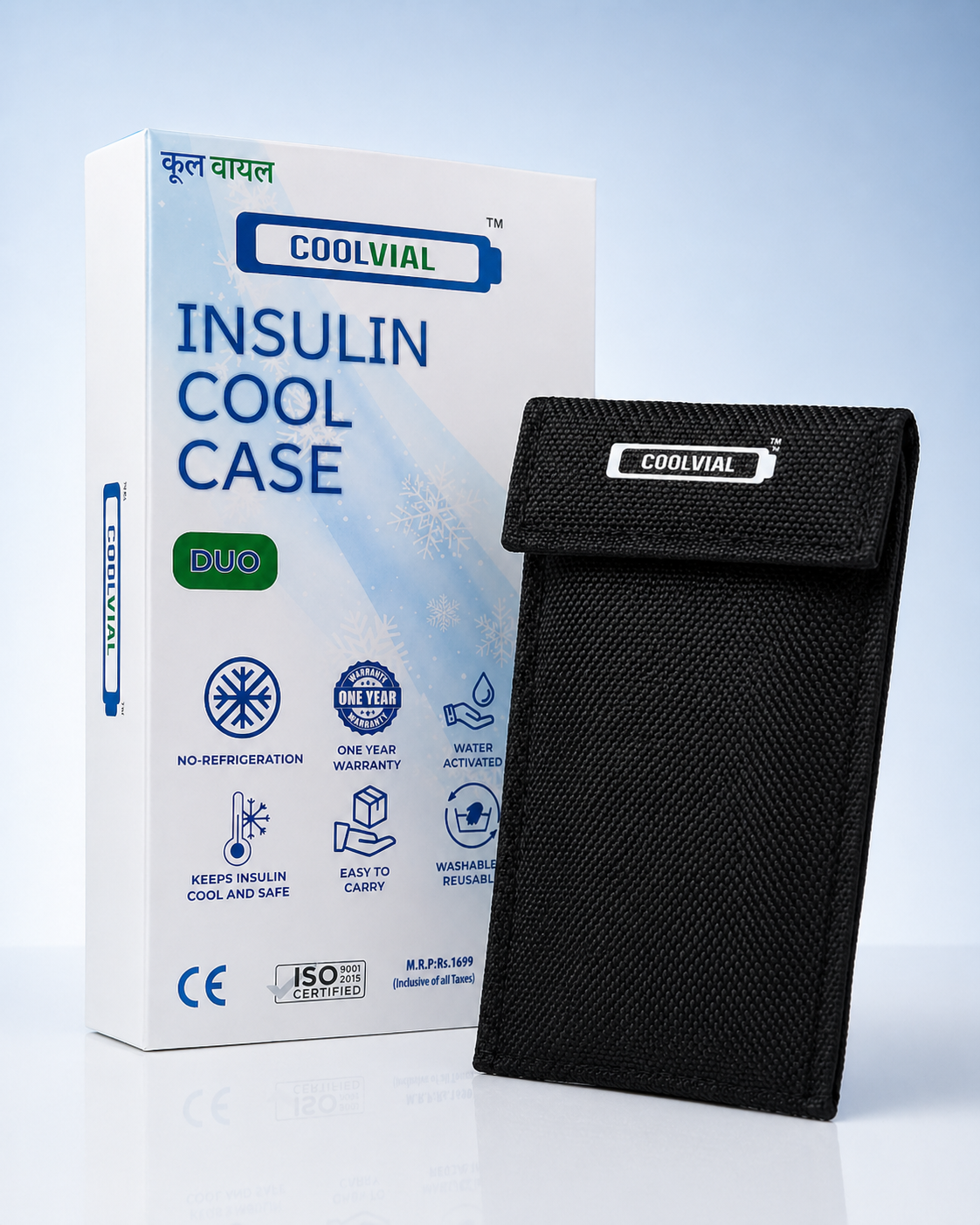
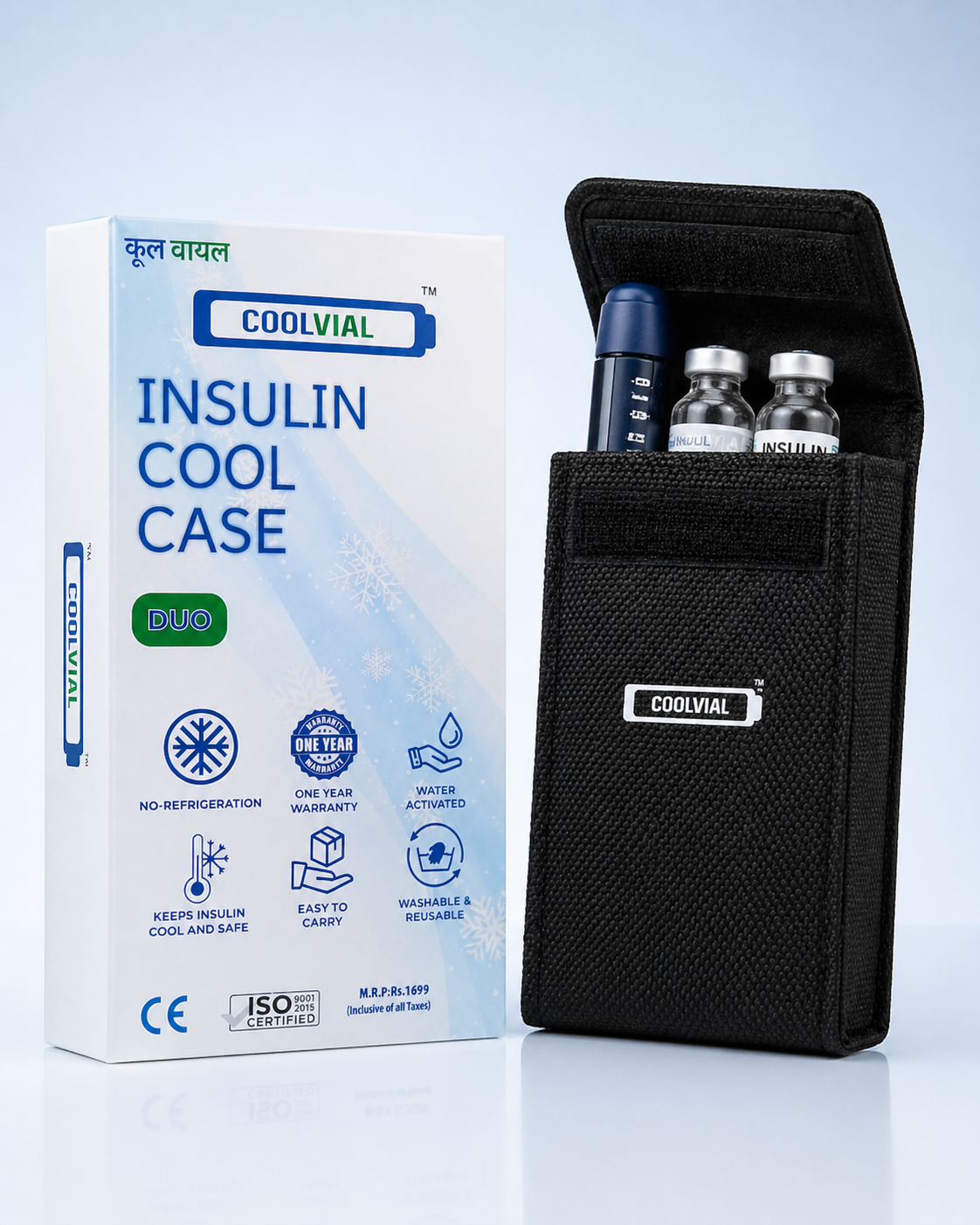
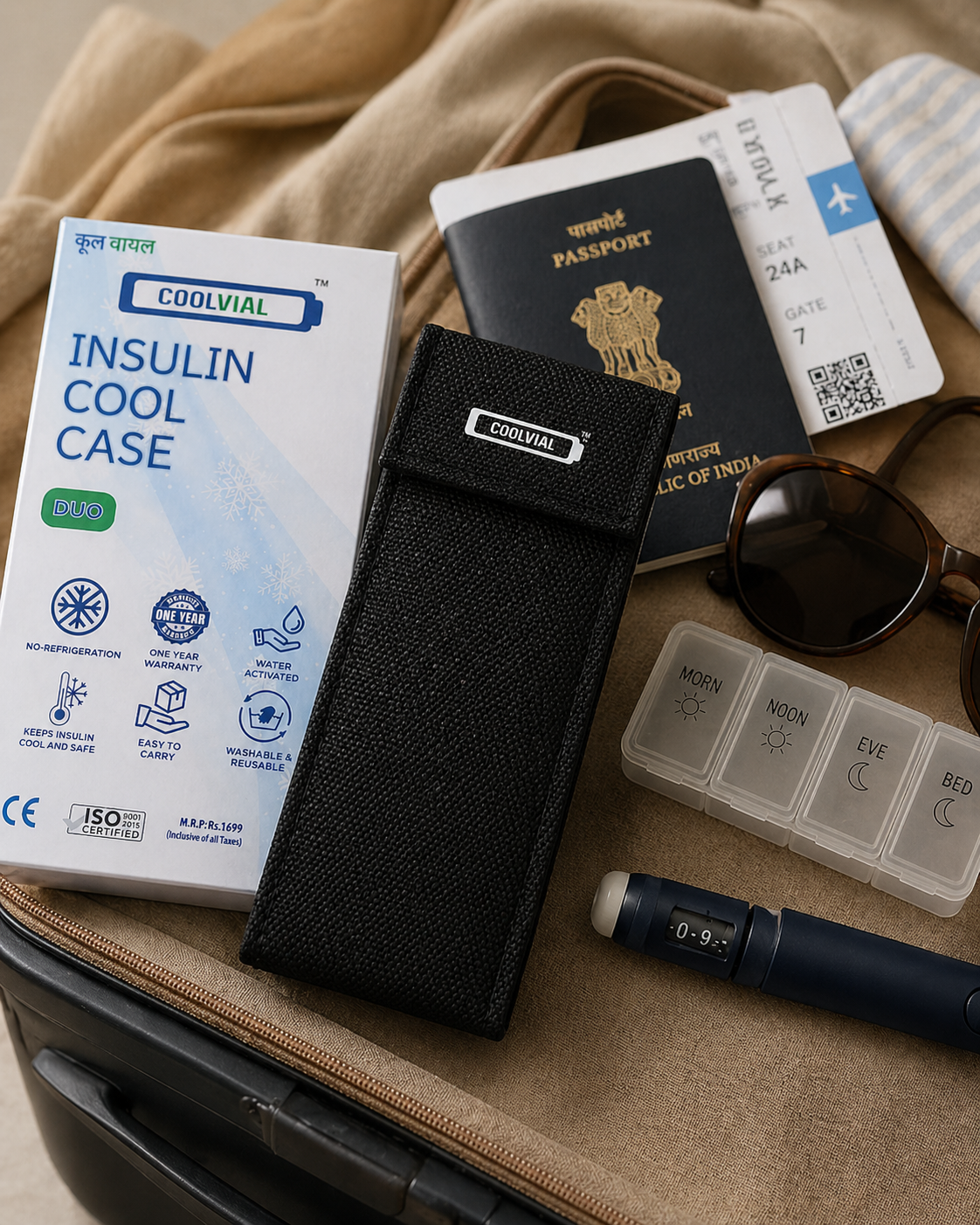
For Bengaluru’s unique climate, water-activated evaporative cooling cases like the COOLVIAL Duo offer a superior solution. The COOLVIAL Duo is designed to hold 2 pens and 1 vial, keeping your insulin cool for 12-16 hours without electricity. This means whether you’re stuck in traffic on MG Road, dealing with a power cut in Whitefield, or facing a humidity spike, your insulin remains safe between 18-26°C – the optimal range for opened insulin.
- Why COOLVIAL Duo is Ideal for Bengaluru Monsoon Insulin Management:
- Humidity Protection: The evaporative cooling mechanism inherently protects insulin from external humidity, creating a micro-climate within the case.
- Power Cut Resilience: No dependence on electricity means your insulin is safe even during unexpected outages in Jayanagar or Yelahanka.
- Traffic & Travel Ready: Its 12-16 hour cooling duration makes it perfect for long commutes, weekend trips from Lalbagh to Mysuru, or navigating monsoon traffic bottlenecks.
- Cost-Effective: At Rs 1,099 with code COOLHEAL (MRP Rs 1,699), it’s a valuable investment compared to alternatives like FRIO (around Rs 1,900), offering similar or better performance tailored for Indian conditions.
- Certified & Made in India: CE certified, ISO 9001:2015 compliant, and comes with a 1-year warranty, ensuring quality and reliability.
Choosing a robust storage solution like the COOLVIAL Duo is a smart decision for any diabetic navigating the Bengaluru monsoon. It provides peace of mind, knowing your vital medication is protected, come rain or (mild) shine. You can learn more about proper storage practices on our insulin storage tips page.
Daily Best Practices for Insulin Care During the Rains
Beyond having the right storage solution, adopting good daily habits is crucial for maintaining insulin efficacy during the Bengaluru monsoon. These practices ensure your insulin is always ready when you need it, even amidst the city’s rainy season quirks.
- Daily Insulin Care Checklist for Monsoon:
- Always Use a Cooling Case for Outings: Even for short trips to Cubbon Park or a coffee run on Indiranagar 100ft Road, carry your insulin in a reliable cooling case like the COOLVIAL Duo. The “mild” weather can be deceptive, and a sudden humidity increase or unexpected delay can compromise unprotected insulin.
- Regularly Check Insulin Appearance: Before each injection, visually inspect your insulin.
- Clear Insulin: Should be clear and colorless. Discard if it appears cloudy, discolored, or has particles.
- Cloudy Insulin (NPH): Should be uniformly cloudy. Discard if it has clumps or crystals.
- Changes in appearance can indicate degradation, potentially due to temperature or humidity fluctuations.
- Keep Insulin Dry: Avoid direct contact with rain or moisture. Always store your insulin case inside a waterproof bag if you’re venturing out in heavy rain. Even a small amount of water can damage the pen’s mechanics or labels.
- Maintain Hygiene: The monsoon can bring increased risk of infections. Ensure your hands are clean before handling insulin pens or vials. Keep your storage case clean and dry when not in use.
- Monitor Room Temperature and Humidity: While Bengaluru’s temperatures are moderate, keep an eye on your indoor climate. If your home feels particularly damp or warm, take extra precautions for insulin stored at room temperature. A simple hygrometer can help monitor indoor humidity levels.
- Rotate Stock: Use insulin pens or vials with earlier expiry dates first. This ensures you’re always using the freshest possible insulin.
- Never Leave Insulin in a Parked Vehicle: Even on a mild monsoon day, the interior of a parked car can heat up significantly or become very humid, rapidly degrading insulin. Always take your insulin with you, ideally in your COOLVIAL Duo.
By integrating these practices into your daily routine, you can effectively manage your insulin storage during the Bengaluru monsoon, ensuring its potency and your well-being. For more in-depth information on managing diabetes in the city, check out our Complete Diabetes Care Guide for Bengaluru Residents — 2026 Edition.
Bengaluru Monsoon & Insulin — 7 Smart Storage Strategies During the Rainy Season
Staying Informed: Local Advisories and Hospital Guidance
In Bengaluru, staying informed about local conditions and expert advice is paramount during the monsoon. Civic bodies and healthcare institutions often issue advisories that can directly impact your diabetes management.
- Sources of Local Information and Guidance:
- Bengaluru Civic Body Advisories: During peak monsoon weeks, the Bruhat Bengaluru Mahanagara Palike (BBMP) often issues advisories regarding:
- Waterlogging Hotspots: Knowing which roads (e.g., certain stretches of Outer Ring Road near Marathahalli, or connecting roads in Koramangala) are experiencing severe waterlogging can help you plan pharmacy visits or avoid specific routes.
- Traffic Diversions: Heavy rains often lead to traffic diversions, especially in busy areas like MG Road or near major hospitals.
- Power Outage Schedules (if any): While often unscheduled, some planned power maintenance might coincide with rain, and being aware helps.
- Manipal Hospital (Old Airport Road) Guidance: Leading hospitals like Manipal, Apollo (Bannerghatta Road), and Fortis (Cunningham Road) often provide general health advisories during monsoon. While not always specific to insulin, these can cover:
- Infection Prevention: Monsoon often sees a rise in water-borne and vector-borne diseases. Diabetics are more susceptible to infections, so following general hygiene advice is crucial.
- Emergency Contact Information: Ensure you have the emergency contact numbers for your hospital and doctor readily available.
- Pharmacy Networks (Apollo Pharmacy, MedPlus): Your local pharmacists at Davaindia, Apollo Pharmacy, or MedPlus outlets can be a valuable source of real-time information. They might be aware of local supply chain disruptions or have advice on stocking up before forecasted heavy spells.
- Local News & Weather Apps: Reputable local news channels and weather applications (e.g., IMD Bengaluru) provide real-time updates on rainfall intensity, forecasts, and local alerts. Pay attention to warnings for heavy rainfall.
- Bengaluru Civic Body Advisories: During peak monsoon weeks, the Bruhat Bengaluru Mahanagara Palike (BBMP) often issues advisories regarding:
By actively monitoring these sources, you can make informed decisions about when to venture out for supplies, which routes to take, and when to prioritize staying indoors. This proactive approach minimizes risks and ensures your Bengaluru monsoon insulin management remains on track.
Frequently Asked Questions (FAQs)
Q: Can I store my insulin in a regular plastic box during the Bengaluru monsoon? A: No, a regular plastic box offers no temperature control or protection against humidity. Insulin requires specific temperature and humidity conditions to remain effective, which a simple plastic box cannot provide.
Q: How does Bengaluru’s moderate monsoon still affect insulin, even without extreme heat? A: Bengaluru’s moderate monsoon brings high humidity, which can degrade insulin over time and damage insulin pens. Traffic and power cuts also disrupt access to pharmacies and cold storage, making proper insulin management challenging.
Q: Is it safe to leave my insulin in my car while I’m at work in Whitefield during the monsoon? A: No, it is not safe. Even on mild monsoon days, a parked car’s interior can experience significant temperature fluctuations and high humidity, which can quickly degrade your insulin’s effectiveness.
Q: What is the ideal temperature range for storing opened insulin pens during the monsoon? A: Opened insulin pens should generally be stored at room temperature, typically below 25°C or 30°C (check your specific insulin’s instructions), for up to 28 days. A cooling case like COOLVIAL Duo maintains temperatures around 18-26°C.
Q: Where can I get my insulin supplies if traffic is bad in Jayanagar or Koramangala? A: During heavy traffic or waterlogging in areas like Jayanagar or Koramangala, consider ordering from online pharmacies like Netmeds or PharmEasy, or visit a local Davaindia or MedPlus pharmacy if accessible by foot or a short, safe distance. Always stock up in advance if possible.
Q: How long can COOLVIAL Duo keep insulin cool without electricity? A: The COOLVIAL Duo can keep insulin cool for 12-16 hours without electricity, making it an excellent solution for managing insulin during power cuts, long commutes, or travel during the Bengaluru monsoon.
Q: What should I do if my insulin looks cloudy or discolored after monsoon exposure? A: If your clear insulin appears cloudy, discolored, or has particles, or if your cloudy insulin has clumps or crystals, it indicates degradation. You should discard it immediately and use fresh, properly stored insulin.
Conclusion: Embrace the Monsoon, Protect Your Insulin
The Bengaluru monsoon, with its refreshing showers and cooler climes, is a beloved season for many. For diabetics, however, it presents a unique set of challenges that demand vigilance and proactive planning. From the hidden threat of humidity degrading your insulin to the logistical nightmares of traffic jams in South Bengaluru and waterlogged streets in Central areas, safe insulin storage is not a luxury, but a necessity.
By understanding Bengaluru’s specific climate, anticipating disruptions, and adopting smart storage strategies, you can navigate the rainy season with confidence. Investing in a reliable, non-electric cooling solution like the COOLVIAL Duo is a practical and effective step. Priced competitively at Rs 1,099 with code COOLHEAL (MRP Rs 1,699), and offering 12-16 hours of cooling for 2 pens and 1 vial, it provides the peace of mind you need to ensure your insulin remains potent and your diabetes management stays on track, no matter what the Bengaluru monsoon throws your way. Embrace the beauty of the Garden City’s rainy season, knowing your health essentials are secure.
Order COOLVIAL Duo at Rs 1,099 with code COOLHEAL at coolvial.com or via WhatsApp wa.me/918766952300.
Medical Disclaimer
This article is for general information. Always consult your endocrinologist or diabetologist before changing insulin storage or dosing practices.
How We Researched This
This article was developed using information from RSSDI guidelines, ICMR-INDIAB data, local Bengaluru hospital directories (including Manipal Hospital, Apollo Hospital, Fortis Hospital), and insights into local pharmacy networks like Apollo Pharmacy and MedPlus, alongside general climate data for Bengaluru.
Bengaluru Monsoon & Insulin — 7 Smart Storage Strategies During the Rainy Season
48+ hours at 2-8°C. No electricity. CE certified. Free delivery across India.
Order on WhatsApp — ₹1,099🛒 Buy Now — ₹1,099