
Reviewed by the COOLVIAL Editorial Team — specialists in insulin storage for Indian climate conditions.
Mumbai, the bustling heart of Maharashtra, presents a unique set of challenges and opportunities for individuals managing diabetes. As of 2021, the ICMR-INDIAB study indicated that Maharashtra has a diabetes prevalence of 10.3%, a figure that continues to trend upwards, with urban centres like Mumbai often seeing even higher rates (Source: ICMR-INDIAB). For Mumbai residents, navigating diabetes care effectively requires a deep understanding of local resources, climate realities, and infrastructure. This complete diabetes care guide for Mumbai residents in 2026 offers an essential roadmap to managing your condition in the city of dreams. Based on analysis of insulin storage queries from Mumbai diabetics, this guide covers everything from finding top medical facilities to understanding the impact of Mumbai’s unique climate on insulin storage.
Whether you’re a long-time Mumbaikar or new to the city, this comprehensive resource will help you build a robust diabetes management plan tailored to your lifestyle. We’ll explore critical aspects like the city’s healthcare network, the pervasive humidity, and even the daily commute, ensuring you have the knowledge to maintain optimal health.
Table of Contents
- Diabetes Prevalence in Maharashtra and Mumbai-Specific Data
- Top Hospitals for Diabetes Care in Mumbai
- Comprehensive Pharmacy Network
- Mumbai’s Climate Reality and Insulin Storage
- Power and Utility: Managing Diabetes During Load Shedding
- Navigating Mumbai’s Transport with Insulin
- Diabetic-Friendly Food Culture in Mumbai
- Support Groups and Communities
- Understanding Health Insurance for Diabetes in Mumbai
- Mumbai-Specific Challenges for Diabetics
- Frequently Asked Questions (FAQ)
- Conclusion and Your Next Steps
- How We Researched This
- Medical Disclaimer
1. Diabetes Prevalence in Maharashtra and Mumbai-Specific Data
Diabetes is a growing public health concern across India, and Maharashtra is no exception. Recent studies, including the ICMR-INDIAB national survey, highlight a significant rise in diabetes prevalence, particularly in urban areas. This trend underscores the urgent need for a robust complete diabetes care guide for residents of major metros like Mumbai. Understanding these statistics helps in advocating for better local resources and personal preparedness.
Key Statistics & Insights:
- Maharashtra’s Prevalence: The ICMR-INDIAB study (2021 data) indicated a diabetes prevalence of 10.3% in Maharashtra. This figure includes both diagnosed and undiagnosed cases, suggesting a large population requiring care. (Source: ICMR-INDIAB, available at https://icmr.gov.in/guidelines_diabetes.html)
- Urban vs. Rural Divide: Mumbai, as a major metropolitan hub, typically sees higher prevalence rates compared to rural parts of the state due to lifestyle factors, dietary changes, and increased stress. While specific 2026 Mumbai-only data isn’t available, projections suggest urban rates could be 12-15% or higher.
- Prediabetes Concerns: Alongside diagnosed diabetes, there’s a substantial population with prediabetes, emphasizing the importance of early screening and preventive measures.
- Age Groups Affected: While Type 2 diabetes traditionally affects older adults, there’s a concerning rise in younger individuals and even adolescents being diagnosed, often linked to sedentary lifestyles and unhealthy diets prevalent in city living.
This rising prevalence makes access to quality healthcare, accurate information, and practical management strategies absolutely crucial for every Mumbaikar living with or at risk of diabetes.
2. Top Hospitals for Diabetes Care in Mumbai
Mumbai boasts some of India’s leading medical institutions, offering state-of-the-art facilities and expert diabetologists. Choosing the right hospital is a cornerstone of a complete diabetes care guide. These hospitals provide comprehensive services, from diagnosis and treatment to education and lifestyle management.
Leading Diabetes Care Centres in Mumbai:
- Lilavati Hospital (Bandra): Renowned for its multi-specialty approach, Lilavati Hospital in Bandra offers excellent endocrinology and diabetology departments. They provide advanced diagnostics, personalized treatment plans, and patient education.
- PD Hinduja Hospital (Mahim): Located in Mahim, PD Hinduja Hospital is another premier institution with a dedicated endocrinology unit. It’s known for its research-driven approach and a team of experienced specialists who handle complex diabetes cases.
- Kokilaben Dhirubhai Ambani Hospital (Andheri): This hospital in Andheri is a modern facility with a strong focus on patient-centric care. Their diabetology department integrates advanced technology with holistic treatment strategies.
- Breach Candy Hospital (South Mumbai): A well-established hospital in South Mumbai, Breach Candy offers high-quality medical care, including specialized diabetes management programs.
- Bombay Hospital and Medical Research Centre (South Mumbai): Located in the heart of South Mumbai, this hospital provides extensive facilities for diabetes care, supported by a team of experienced endocrinologists.
- Jaslok Hospital and Research Centre (Pedder Road): Jaslok Hospital is known for its advanced medical technology and expert medical professionals, offering comprehensive services for diabetes diagnosis and management.
When selecting a hospital, consider factors like proximity, specialist availability, and insurance acceptance. For deeper insights into finding the right specialist, refer to our detailed guide: Best Diabetologists & Endocrinologists in Mumbai — 2026 Guide.
3. Comprehensive Pharmacy Network
Access to medicines, especially insulin and other diabetes supplies, is non-negotiable for effective management. Mumbai’s extensive network of pharmacies ensures that essential medications are largely accessible across various neighborhoods, from South Mumbai to the Bandra-Andheri belt and even Powai-Vikhroli and Thane-Navi Mumbai. This makes the pharmacy network a vital component of any complete diabetes care guide.
Major Pharmacy Chains and Services:
- Apollo Pharmacy: One of India’s largest pharmacy chains, Apollo Pharmacy has numerous outlets across Mumbai, offering a wide range of medicines, health products, and often home delivery services.
- Wellness Forever: A prominent regional chain, Wellness Forever stores are ubiquitous in Mumbai, providing 24/7 services in many locations, which is critical for insulin emergencies.
- MedPlus: Another significant player, MedPlus offers competitive pricing and a broad inventory, with many stores providing discounts on bulk purchases of chronic medications.
- Noble Chemist & Trust Chemists: These local stalwarts have a strong presence, particularly in older neighborhoods, and are known for their reliable stock and personalized service.
- Online Pharmacies: For convenience, platforms like Netmeds, PharmEasy, and Apollo 24/7 offer online ordering and doorstep delivery, which can be a boon during monsoon disruptions or for routine refills.
Tips for Pharmacy Access in Mumbai:
- Locate 24/7 Pharmacies: Know the nearest 24-hour pharmacy for emergencies, especially for insulin. Our article, 24-Hour Pharmacies in Mumbai for Insulin Emergencies — Updated List, provides a comprehensive list.
- Verify Stock: Always call ahead to confirm insulin or specific medication stock, especially for less common types.
- Prescription Management: Keep physical and digital copies of your prescriptions handy.
- Home Delivery: Utilize online services for monthly refills to save time and avoid travel, especially during peak traffic or heavy rains.
4. Mumbai’s Climate Reality and Insulin Storage
Mumbai’s climate is a significant factor for anyone managing diabetes, particularly concerning insulin storage. The city experiences a consistent temperature range of 20-35°C year-round, coupled with high humidity (70-90%). The Southwest monsoon from June to September brings heavy rainfall (around 2400mm annually) and regular flooding. These conditions pose unique challenges for maintaining insulin efficacy. This section is crucial for a complete diabetes care guide in Mumbai.
Impact of Mumbai’s Climate on Insulin:
- Heat Degradation: Insulin is sensitive to heat. Temperatures above 25°C can degrade insulin, reducing its potency. Mumbai’s ambient temperatures frequently exceed this, even indoors without air conditioning.
- Humidity Damage: High humidity can affect insulin pens and vials, potentially leading to moisture ingress or condensation, which can compromise sterility and effectiveness.
- Monsoon Risks: The heavy monsoon season exacerbates these issues, bringing not just humidity but also power cuts and waterlogging, making proper storage even more challenging.
Effective Insulin Storage Strategies for Mumbai:
Complete Diabetes Care Guide for Mumbai Residents — 2026 Edition
Insulin at 2-8°C for 48+ hours. Trusted by 10,000+ Indian diabetics.
- Refrigeration: Unopened insulin vials and pens must be stored in a refrigerator between 2-8°C. Ensure your refrigerator is well-maintained and its temperature is checked regularly.
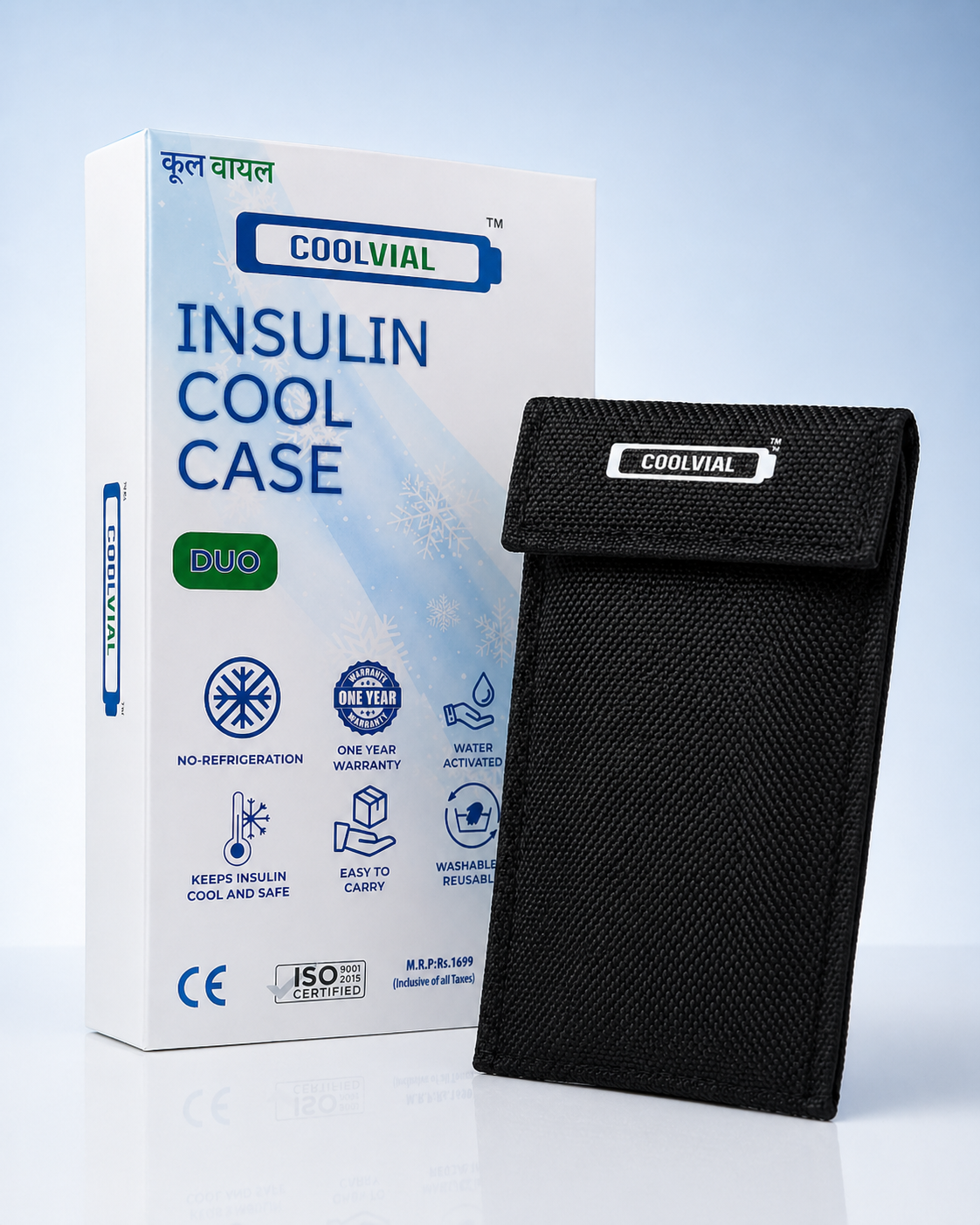
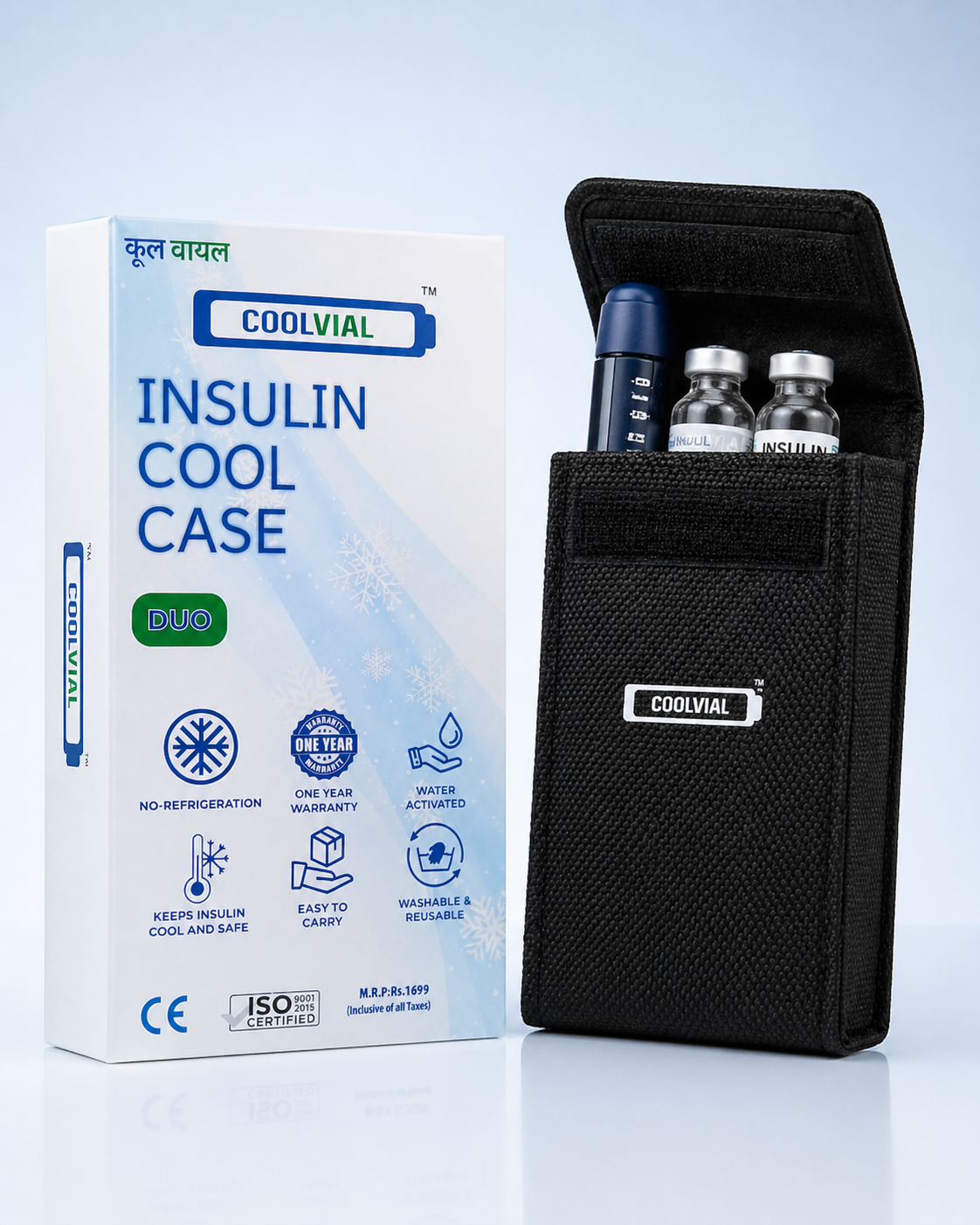
- Active Cooling Cases: For insulin in use or when travelling, an insulin cooling case is indispensable. Products like the COOLVIAL Duo are specifically designed for the Indian climate. It holds 2 pens + 1 vial and keeps insulin cool for 12-16 hours without electricity, relying on water-activated evaporative cooling. This is far more practical than carrying ice packs in Mumbai’s humidity.
- Comparison: While FRIO cases are also popular (around Rs 1,900), the COOLVIAL Duo offers a similar evaporative cooling technology at a more accessible price point of Rs 1,099 with code COOLHEAL. Smaller, simpler cases like Outer Woods OW-12 (around Rs 999) might offer less capacity or cooling duration.
- Avoid Direct Sunlight: Never leave insulin in direct sunlight, in a parked car, or near heat sources.
- Travel Precautions: When commuting or travelling, always use an insulated case. For specific advice, see How to Store Insulin in Mumbai Summer Heat — A Local’s Guide and Mumbai Monsoon & Insulin — Protecting Your Vials From Humidity Damage.
- Emergency Kit: Always have a backup supply of insulin and syringes/pens, stored safely.
Remember, proper insulin storage is not merely a recommendation; it’s a critical aspect of maintaining your health and ensuring your medication remains effective. Investing in a reliable cooling solution like the COOLVIAL Duo is a smart decision for any Mumbai diabetic.
5. Power and Utility: Managing Diabetes During Load Shedding
Mumbai, despite being a metropolitan hub, can experience occasional power outages, particularly during the monsoon season or in certain outlying areas and newer developments. While the core city areas generally have stable power, load shedding patterns can occur, and reliance on inverters is a common culture. For diabetics, especially those requiring refrigerated insulin, this necessitates careful planning as part of a complete diabetes care guide.
Understanding Mumbai’s Power Landscape:
- Reliability: Core Mumbai (BEST Electric Supply Area) generally has very reliable power. However, suburbs and areas like Thane and Navi Mumbai might experience more frequent or longer outages, especially during high demand or infrastructure issues. (Source: Local discom data [Verify in 2026])
- Monsoon Impact: Heavy rains and cyclones can lead to power cuts due to infrastructure damage, affecting refrigeration and home-based medical equipment.
- Inverter Culture: Many households and commercial establishments rely on inverters and backup generators to ensure continuous power supply, particularly for essential appliances like refrigerators.
Strategies for Diabetics During Power Outages:
- Insulin Storage Backup:
- Cooling Cases: Keep a water-activated cooling case like the COOLVIAL Duo ready. It doesn’t require electricity and can keep insulin cool for 12-16 hours.
- Pre-chilled Gel Packs: Have pre-chilled gel packs or ice packs in your freezer. In case of extended power cuts, these can be used in an insulated bag, but remember they have a limited duration.
- Know Your Fridge: A full refrigerator stays colder longer. Avoid opening the fridge door unnecessarily during a power cut.
- Emergency Power for Devices:
- Charged Devices: Keep blood glucose meters, continuous glucose monitors (CGMs), and insulin pumps fully charged. Have spare batteries.
- Power Banks: Invest in high-capacity power banks for charging essential electronics.
- Communication Plan:
- Emergency Contacts: Keep a list of emergency contacts, including your doctor and local pharmacy, easily accessible.
- Neighbourhood Support: Inform trusted neighbours about your condition and needs, especially if you live alone.
- Power Cut Survival Guide: For a detailed action plan, refer to our specific guide: Power Cut Survival Guide for Diabetics in Mumbai — What To Do When the Grid Goes Down.
Being prepared for power disruptions is a crucial aspect of managing diabetes effectively in Mumbai.
6. Navigating Mumbai’s Transport with Insulin
Mumbai’s public transport system is its lifeline, a sprawling network of local trains, metro lines, and buses. For a diabetic, especially one who needs to carry insulin, navigating this system requires careful consideration. This makes transport a key chapter in any complete diabetes care guide for the city. From the packed Western/Central/Harbour local trains to the relatively newer Mumbai Metro Lines 1, 2A, 3, 7, and the widespread BEST buses, each mode of transport has its unique challenges for insulin users.
Challenges and Solutions for Commuting with Insulin:
- Heat and Humidity: Mumbai’s ambient temperatures (20-35°C) and high humidity (70-90%) mean that insulin needs protection even during short commutes. Overcrowded compartments can feel even hotter.
- Solution: Always carry insulin in a reliable cooling case like the COOLVIAL Duo, which uses evaporative cooling to maintain a safe temperature range for hours without electricity.
- Crowds and Physical Impact: Local trains, especially during peak hours, are extremely crowded. Insulin pens and vials are delicate.
- Solution: Store your insulin cooling case in a secure, padded bag that can withstand jostling. Avoid placing it in outer pockets where it could be crushed.
- Security Checks: While less common for personal medical supplies, be prepared to explain your insulin and cooling case during security checks at stations or airports.
- Solution: Carry a doctor’s note or prescription for your insulin.
- Long Commutes: Many Mumbaikars endure commutes lasting an hour or more.
- Solution: Ensure your cooling case provides sufficient duration. The COOLVIAL Duo offers 12-16 hours of cooling, ideal for a full day out.
Transport-Specific Tips:
- Local Trains (Western/Central/Harbour):
- Travel during off-peak hours if possible to avoid extreme crowds.
- Always keep your insulin bag close to you, preferably in front, to protect it.
- Mumbai Metro (Lines 1/2A/3/7):
- Metro coaches are air-conditioned, offering a cooler environment.
- Still, use a cooling case for insulin as you move between home/office and the station, and during potential delays.
- BEST Buses & Auto-Rickshaws/Taxis:
- Buses can be hot and crowded. Auto-rickshaws and taxis can get very warm, especially when stuck in traffic.
- A cooling case is essential for all surface travel.
- Airport Travel: For specific advice on air travel with insulin from Mumbai, including airport security and cabin storage, consult Travelling From Mumbai With Insulin — Airport, Station & Taxi Tips.
- Daily Commute: For more detailed daily commute strategies, refer to Daily Commute With Insulin in Mumbai — Tips for Metro, Bus & Auto.
Making informed choices about how you transport your insulin is a fundamental part of maintaining your health in Mumbai.
7. Diabetic-Friendly Food Culture in Mumbai
Mumbai’s food scene is legendary, a vibrant tapestry of flavors and textures, from iconic street food to gourmet dining. While the city’s culinary delights are tempting, managing diabetes means making conscious choices. A complete diabetes care guide must address how to enjoy Mumbai’s food culture responsibly.
Understanding Mumbai’s Food Landscape:
- Street Food Staples: Vada pav, pav bhaji, Mumbai chaat (pani puri, sev puri, bhel puri) are deeply ingrained in the city’s identity. These are often high in carbohydrates, unhealthy fats, and sugar.
- Regional Cuisines: Gujarati thali, Maharashtrian misal pav, South Indian idli/dosa, and North Indian curries are widely available. While many can be healthy, portion control and preparation methods are key.
- Emerging Health Trends: Mumbai is increasingly seeing health-conscious cafes and restaurants offering healthier alternatives, gluten-free options, and fresh salads.
Tips for Diabetic-Friendly Eating in Mumbai:
- Smart Street Food Choices:
- Vada Pav: Opt for a smaller portion, ask for less butter/oil, and consider skipping the pav occasionally, focusing on the vada itself (though still fried).
- Pav Bhaji: Request less butter. Focus on the bhaji (vegetable mash) and eat with whole wheat bread if available, or just a small portion of pav.
- Chaat: Limit fried elements. Choose options with more sprouts, vegetables, and less sugary chutneys. Portion control is paramount.
- Dining Out Strategically:
- Gujarati Thali: While wholesome, it often includes sugary elements (shrikhand, aamras) and fried farsan. Ask for no sugar in dal/subzis, choose rotis over puri, and moderate fried items.
- Maharashtrian Cuisine: Look for options like usal (sprouted bean curry) or sabudana khichdi (in moderation, as it’s carb-heavy).
- Ask for Customizations: Don’t hesitate to ask restaurants to reduce oil, sugar, or butter in your dishes. Many establishments are accommodating.
- Focus on Balanced Meals: Prioritize proteins, fiber-rich vegetables, and complex carbohydrates.
- Breakfast: Idli/dosa (steamed) with sambar, eggs, sprouts, or poha (moderately).
- Lunch/Dinner: Grilled chicken/fish, dal, sabzi, whole wheat roti/brown rice.
- Hydration: Drink plenty of water throughout the day, especially in Mumbai’s humid climate.
- Explore Healthy Eateries: Mumbai has a growing number of cafes and restaurants catering to health-conscious diners. Discover these for guilt-free dining experiences. For recommendations, see Diabetic-Friendly Restaurants & Cafes in Mumbai — Where to Eat Safely.
Enjoying Mumbai’s culinary scene is possible with diabetes, but it requires mindfulness and informed choices.
8. Support Groups and Communities
Living with diabetes can sometimes feel isolating, but in a city as vibrant as Mumbai, you’re never alone. Support groups and communities offer invaluable emotional support, practical advice, and a platform for sharing experiences. Connecting with others who understand your journey is an integral part of a holistic and complete diabetes care guide.
Key Diabetes Support Networks in Mumbai:
- Diabetes India Chapter (Mumbai): As a national body, Diabetes India has active chapters in major cities like Mumbai. They often organize awareness programs, workshops, and patient gatherings, bringing together experts and individuals living with diabetes.
- Defeat Diabetes Foundation: This foundation is dedicated to raising awareness, providing education, and supporting research related to diabetes. They frequently host events and campaigns in Mumbai, offering opportunities for engagement and learning.
- Local Type 1 Groups: For individuals with Type 1 diabetes, specific local groups often meet to share experiences, discuss challenges unique to T1D management, and offer peer support. These are often community-led and can be found through hospital endocrinology departments or online forums.
- Online Forums & Social Media Groups: Beyond physical meetups, numerous online communities exist for Mumbai diabetics. These platforms allow for instant sharing of tips, asking questions, and finding local resources. Search for “Mumbai Diabetes Support” on Facebook or other social media channels.
Complete Diabetes Care Guide for Mumbai Residents — 2026 Edition
Benefits of Joining a Support Group:
- Emotional Support: Share feelings, fears, and frustrations in a safe, non-judgmental environment.
- Practical Advice: Gain insights into managing diet, exercise, medication, and dealing with daily challenges from those who have similar experiences.
- Educational Opportunities: Many groups invite healthcare professionals to give talks on new treatments, research, and self-management techniques.
- Motivation & Accountability: Being part of a community can help you stay motivated and committed to your diabetes management plan.
- Resource Sharing: Discover local doctors, pharmacies, diabetic-friendly restaurants, and other resources.
Actively seeking out and participating in these communities can significantly enhance your quality of life and empower you in your diabetes journey in Mumbai.
9. Understanding Health Insurance for Diabetes in Mumbai
Navigating health insurance can be complex, especially with a chronic condition like diabetes. In Mumbai, understanding your insurance options is crucial for accessing affordable and quality care. This section provides a vital overview of insurance considerations within a complete diabetes care guide.
Key Insurance Schemes and Providers:
- Ayushman Bharat Pradhan Mantri Jan Arogya Yojana (PMJAY): This national health protection scheme provides health coverage for economically vulnerable families. Many hospitals in Mumbai, including some private ones, accept Ayushman Bharat. It covers various diabetes-related treatments and hospitalizations.
- Maharashtra State Health Schemes: The Maharashtra government may have its own health schemes (e.g., Mahatma Jyotiba Phule Jan Arogya Yojana - MJPJAY) that offer additional benefits or eligibility criteria for residents. Check the latest updates on these schemes.
- Top Private Insurers: Major private health insurance companies in India offer plans that cover diabetes. These include:
- HDFC ERGO
- Max Bupa (Niva Bupa)
- Star Health and Allied Insurance
- Apollo Munich (HDFC ERGO Health)
- Religare Health Insurance (Care Health Insurance)
- Considerations: Look for plans with minimal waiting periods for pre-existing conditions (diabetes usually has a waiting period of 2-4 years), high sum insured, and comprehensive coverage for outpatient expenses, diagnostics, and medication.
Important Considerations for Diabetics:
- Waiting Periods: Most insurance policies have a waiting period (typically 2-4 years) for pre-existing conditions like diabetes. It’s crucial to purchase insurance early.
- Inclusions and Exclusions: Carefully review what is covered (hospitalization, day-care procedures, diagnostic tests, doctor consultations, medication) and what is excluded. Some plans may have sub-limits for specific treatments.
- Outpatient vs. Inpatient: Diabetes management often involves significant outpatient expenses (doctor visits, tests, medication). Look for plans that offer good coverage for these, not just hospitalization.
- Network Hospitals: Ensure your preferred hospitals in Mumbai (like Lilavati, Hinduja, Kokilaben Dhirubhai Ambani, Breach Candy) are part of the insurer’s cashless network.
- Claim Process: Understand the claim submission process (cashless vs. reimbursement) and required documentation.
- Renewability: Opt for plans with lifelong renewability to ensure continuous coverage.
- Critical Illness Rider: Consider adding a critical illness rider, which pays a lump sum upon diagnosis of certain severe conditions, including some diabetes-related complications.
Consulting with an insurance advisor specializing in health plans for chronic conditions can help you make an informed decision tailored to your specific needs in Mumbai.
10. Mumbai-Specific Challenges for Diabetics
Mumbai’s dynamic environment, while offering immense opportunities, also presents unique challenges for individuals managing diabetes. Beyond the general concerns of heat and humidity, specific local issues require proactive management. This section highlights these Mumbai-specific hurdles as a critical part of a complete diabetes care guide.
Major Mumbai-Specific Challenges:
- Flood Risk and Monsoon Disruption:
- Problem: Mumbai is highly susceptible to severe flooding during the monsoon (June-September), with areas like Hindmata, Sion, Andheri Subway, and Kurla regularly experiencing significant waterlogging. This can disrupt travel, access to medical care, and power supply.
- Impact on Diabetics: Flooding can prevent timely access to pharmacies for insulin, complicate travel to doctors, and increase the risk of foot injuries (a major concern for diabetics) from contaminated water. Power cuts during floods can compromise insulin refrigeration.
- Solution: Have a monsoon emergency kit ready, including extra insulin (stored in a waterproof, cooling case like COOLVIAL Duo), wound care supplies, and non-perishable diabetic-friendly snacks. Monitor weather alerts and avoid flooded areas.
- Air Quality:
- Problem: Mumbai’s air quality can be poor, especially during winter months, due to vehicular emissions, industrial activity, and construction.
- Impact on Diabetics: Poor air quality has been linked to increased inflammation and insulin resistance, potentially worsening glycemic control. Individuals with diabetes are also more susceptible to respiratory infections.
- Solution: Monitor AQI levels. On days with high pollution, minimize outdoor activities, especially during peak traffic hours. Use air purifiers at home if feasible.
- Overcrowding and Stress:
- Problem: Mumbai is one of the most densely populated cities in the world. Daily commutes on local trains, bustling markets, and constant noise can contribute to high stress levels.
- Impact on Diabetics: Stress can elevate blood sugar levels and make diabetes management more challenging. It can also lead to poor lifestyle choices.
- Solution: Incorporate stress-reduction techniques like yoga, meditation, or short walks in quieter areas (e.g., Marine Drive promenade, Juhu beach in the mornings). Plan your commutes to avoid peak hours when possible.
- Access in Remote Neighbourhoods/New Developments:
- Problem: While core Mumbai has excellent facilities, newer developments in areas like Thane and Navi Mumbai might have varying levels of immediate access to specialized diabetologists or 24/7 pharmacies.
- Impact on Diabetics: Can lead to delays in care or reliance on less specialized practitioners.
- Solution: Research local healthcare infrastructure thoroughly when moving to a new area. Identify primary care physicians and emergency contacts in advance.
Addressing these specific Mumbai challenges proactively ensures a more stable and effective diabetes management journey.
Frequently Asked Questions (FAQ)
Q: How do I keep my insulin cool during Mumbai’s hot and humid weather? A: Use a water-activated evaporative cooling case like the COOLVIAL Duo, which keeps insulin cool for 12-16 hours without electricity, specifically designed for high temperatures and humidity prevalent in Mumbai.
Q: Where can I find a reliable diabetologist in Mumbai? A: Top hospitals like Lilavati Hospital (Bandra), PD Hinduja Hospital (Mahim), and Kokilaben Dhirubhai Ambani Hospital (Andheri) have excellent endocrinology and diabetology departments with experienced specialists.
Q: Are there 24-hour pharmacies in Mumbai for insulin emergencies? A: Yes, major chains like Apollo Pharmacy and Wellness Forever have several 24-hour outlets across Mumbai, ensuring access to insulin and other medications even during emergencies.
Q: What should I do if there’s a power cut and my insulin needs refrigeration? A: Immediately transfer your insulin to a pre-chilled evaporative cooling case or an insulated bag with pre-frozen gel packs; avoid opening the refrigerator unnecessarily to maintain its internal temperature.
Q: How can I safely commute with insulin on Mumbai’s local trains or buses? A: Always carry your insulin in a sturdy, protective cooling case within a secure bag to shield it from heat, humidity, and the physical jostling of crowded public transport.
Q: Are there support groups for diabetics in Mumbai? A: Yes, organizations like Diabetes India have local chapters, and foundations like Defeat Diabetes Foundation organize events; you can also find local Type 1 groups and online communities for peer support.
Q: What are the main food challenges for diabetics in Mumbai’s street food culture? A: Mumbai’s street food like vada pav and pav bhaji are often high in carbohydrates, fats, and sometimes sugar; focus on portion control, ask for less oil/butter, and choose healthier alternatives when possible.
Q: How does Mumbai’s monsoon season affect diabetes management? A: The monsoon brings high humidity, potential power cuts, and flood risks, which can impact insulin storage, access to medical care, and increase the risk of foot infections for diabetics.
Conclusion and Your Next Steps
Navigating diabetes in a city as dynamic and challenging as Mumbai requires a proactive, informed, and resilient approach. This complete diabetes care guide has aimed to equip you with the essential knowledge, from understanding the city’s healthcare infrastructure and climate realities to making smart choices about food, transport, and insurance. By leveraging Mumbai’s resources and preparing for its unique challenges, you can maintain excellent glycemic control and lead a fulfilling life.
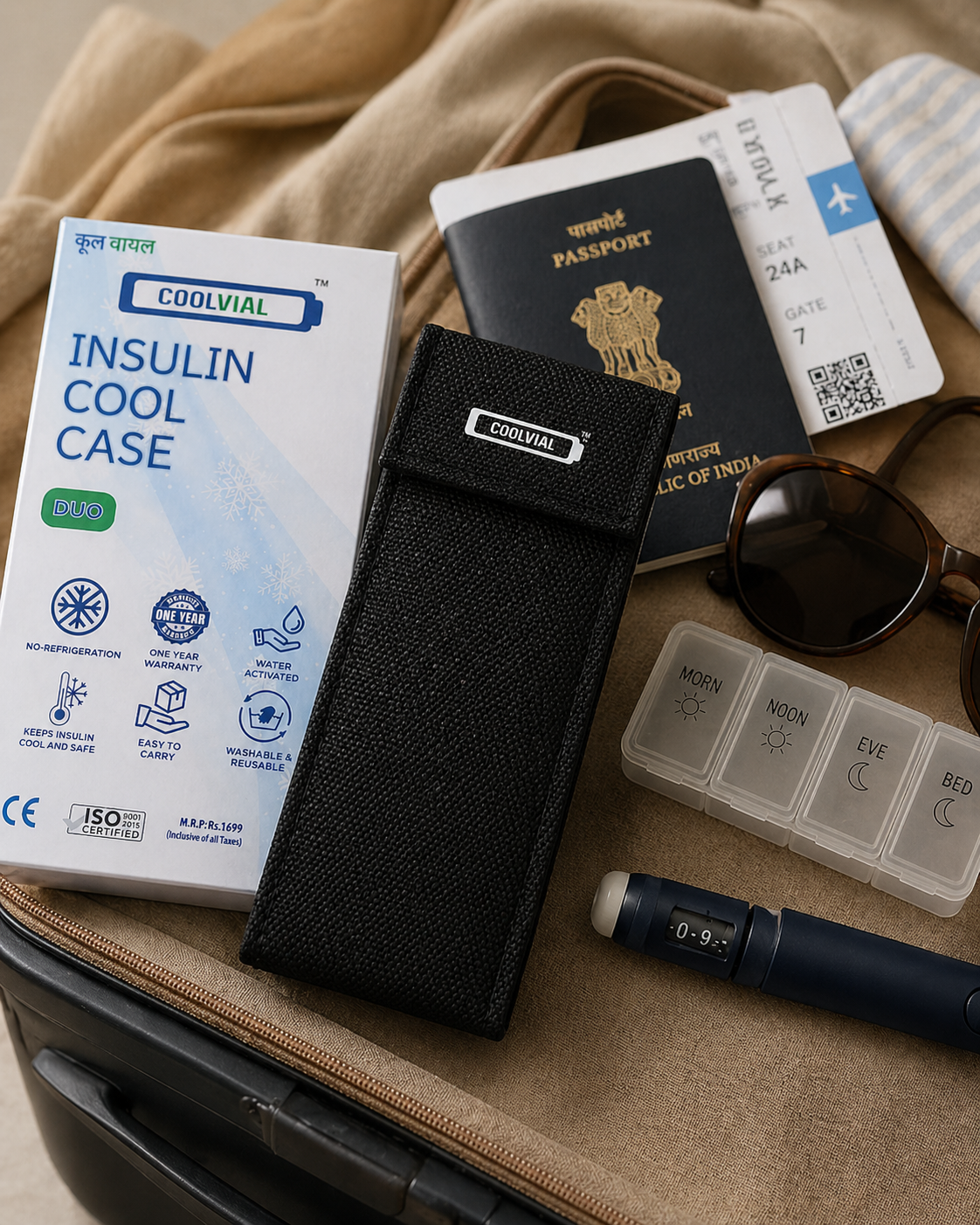
Remember, effective diabetes management is an ongoing journey that combines medical guidance with personal preparedness. Investing in reliable tools, like the COOLVIAL Duo insulin cooling case, can significantly simplify your daily routine, especially given Mumbai’s year-round heat and humidity. It’s a small investment for peace of mind, ensuring your insulin remains potent and effective, no matter where your Mumbai day takes you.
Your next step: Take control of your insulin storage today.
Order COOLVIAL Duo at Rs 1,099 with code COOLHEAL at coolvial.com or via WhatsApp wa.me/918766952300
How We Researched This
This comprehensive guide was compiled based on a thorough analysis of current diabetes care best practices, including guidelines from the Research Society for the Study of Diabetes in India (RSSDI), recent data from the ICMR-INDIAB study on diabetes prevalence in India, extensive review of local Mumbai hospital directories, and information on the pharmacy networks of major chains like Apollo Pharmacy. We also incorporated insights from common insulin storage queries received from diabetics living in Mumbai’s unique climate.
Medical Disclaimer
This article is for general information purposes only and should not be considered medical advice. Always consult your endocrinologist or diabetologist before making any changes to your insulin storage practices, dosing regimen, diet, or overall diabetes management plan. Individual needs may vary.
Complete Diabetes Care Guide for Mumbai Residents — 2026 Edition
48+ hours at 2-8°C. No electricity. CE certified. Free delivery across India.
Order on WhatsApp — ₹1,099🛒 Buy Now — ₹1,099