
Reviewed by the COOLVIAL Editorial Team — specialists in insulin storage for Indian climate conditions.
Amritsar, with its vibrant Walled City, bustling markets, and the serene Golden Temple, is a city constantly on the move. For the thousands of residents managing diabetes, a critical part of daily life is ensuring the safe storage and transport of insulin, especially during the daily commute. Temperatures in Amritsar can swing dramatically, from scorching summers hitting 38-42°C to chilling winters with dense fog and lows of 4°C. Navigating public transport like city buses, autos, and e-rickshaws while keeping insulin cool and effective is a challenge many face. This article provides 7 essential tips for a safe daily commute with insulin in Amritsar, ensuring your vital medication remains potent. Based on analysis of insulin storage queries from Amritsar diabetics, we understand the unique local challenges, such as the absence of a metro system, which means relying on other transport modes that expose insulin to varying conditions.
Table of Contents
- Understanding Insulin’s Temperature Needs for Amritsar’s Climate
- Amritsar’s Public Transport & Insulin Safety
- The Two-Wheeler Dilemma: Why Your Dickey is a Danger Zone
- Insulin Care at Work and Educational Institutions
- Essential Insulin Commute Habits for Amritsar Residents
- Choosing the Right Insulin Cooling Case for Your Amritsar Commute
- Beyond the Commute: Emergency Preparedness & Local Resources
1. Understanding Insulin’s Temperature Needs for Amritsar’s Climate
Insulin is a delicate protein that loses its effectiveness when exposed to extreme temperatures, both hot and cold. For unopened vials and pens, the ideal storage is typically in a refrigerator between 2-8°C. Once opened, insulin can generally be kept at room temperature (below 25°C) for 28 days (or as specified by the manufacturer). However, Amritsar’s climate often pushes these limits.
During summer, from April to September, temperatures regularly soar above 35°C, often reaching 42°C in May and June. Even during monsoon (July-September), while temperatures might dip slightly, high humidity can exacerbate heat stress on insulin. In contrast, winters (November-February) can be very cold, with temperatures dropping to 4°C, accompanied by dense fog. Both extremes pose significant risks to insulin efficacy.
Why temperature control is crucial:
- Heat exposure (above 25-30°C): Can denature insulin, reducing its potency and making it less effective in managing blood sugar. This can lead to uncontrolled glucose levels and long-term complications. Studies indicate that insulin exposed to 37°C can lose significant potency within days (Source: RSSDI Publications: https://www.rssdi.in/publications.html).
- Freezing temperatures (below 0°C): Can cause insulin to crystalize, damaging its molecular structure and rendering it unusable. In Amritsar’s dense winter fog, temperatures can feel much colder, posing a freezing risk if insulin is left unprotected.
Amritsar’s Temperature Extremes & Insulin Stability:
| Season | Typical Temperature Range | Insulin Risk | Duration of Risk Exposure |
|---|---|---|---|
| Summer | 38-42°C (Peak May-June) | Potency loss, denaturing | Daily, especially 10 AM - 5 PM |
| Monsoon | 28-35°C (Jul-Sep) | Potency loss, humidity effect | Frequent, especially in unventilated spaces |
| Winter | 4-19°C (Dec-Jan) | Freezing, reduced effectiveness if chilled too much | Early mornings, late nights |
Understanding these specific temperature challenges in Amritsar is the first step in formulating a robust strategy for your daily commute with insulin.
2. Amritsar’s Public Transport & Insulin Safety
Unlike some larger Indian cities, Amritsar does not currently have a metro rail system. This means daily commuters rely heavily on a network of city buses, auto-rickshaws, e-rickshaws, and share rickshaws. Each mode of transport presents its own set of challenges for maintaining insulin’s ideal temperature.
A. City Buses: The Heat Traps
Amritsar city buses are often non-AC, especially on routes connecting residential areas like Ranjit Avenue or Mall Road to commercial hubs or the Walled City. During peak summer hours (11 AM to 4 PM), the internal temperature of a non-AC bus can easily reach 38-45°C, significantly higher than the ambient temperature due to passenger body heat and poor ventilation. A 60-90 minute commute from Mall Road to the Walled City (Heritage/Golden Temple area) in such conditions can critically damage unprotected insulin.
- Tips for Bus Commuters:
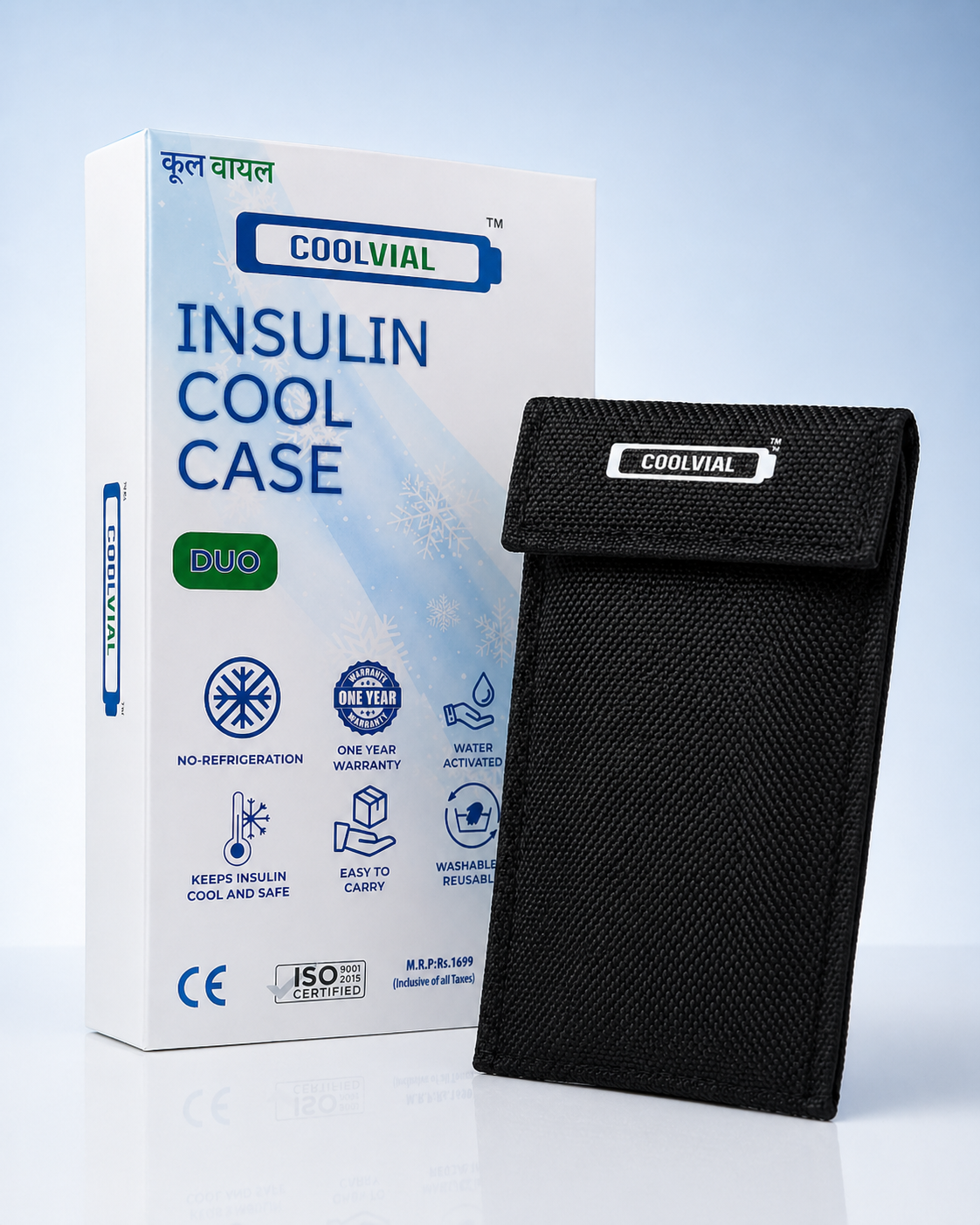
- Always use an insulated cooling case: A water-activated evaporative cooler like the COOLVIAL Duo is ideal. It keeps insulin cool (below 25°C) for 12-16 hours without electricity, even when outside temperatures are high.
- Avoid window seats in direct sun: While tempting for a breeze, direct sunlight through bus windows can rapidly heat your bag.
- Keep your bag on your lap or floor: Overhead racks or luggage compartments can be hotter and less ventilated.
- Consider off-peak travel: If possible, commute during cooler morning or evening hours to reduce heat exposure.
B. Auto-rickshaws & E-rickshaws: Sun Exposure Risks
Auto-rickshaws and e-rickshaws offer open-air travel, which can be a double-edged sword. While providing some airflow, they also expose you directly to the sun. The passenger seat area, especially the side facing the sun, can experience intense radiant heat. A 30-minute ride from Lawrence Road to Jallianwala Bagh can be enough to compromise insulin if not adequately protected.
- Tips for Auto/E-rickshaw Commuters:
- Position yourself strategically: Try to sit on the side of the auto that is shaded from the sun.
- Use your body as a shield: Keep your insulin cooling case close to your body, using your arm or leg to block direct sunlight.
- Prioritize a cooling case: A simple cloth bag or even a standard insulated lunch bag won’t offer sufficient protection against direct sun and high ambient temperatures.
C. Share Rickshaws (Tempo/Jugaad): Crowding & AC Denial
Share rickshaws are common for shorter distances or connecting routes. They are often crowded, and while some may have makeshift covers, they are rarely air-conditioned. In ride-sharing services like Ola/Uber (though less common for daily commute autos), there can sometimes be a “AC denial culture” where drivers might hesitate to turn on the AC to save fuel, even in cabs.
- Tips for Share Rickshaw Commuters:
- Maintain personal space for your insulin: Avoid crushing your cooling case in crowded conditions.
- Communicate: If using a metered auto/cab, politely request AC if available, explaining the necessity for medication.
- Always have your cooling case ready: Assume there will be no AC or sufficient shade.
3. The Two-Wheeler Dilemma: Why Your Dickey is a Danger Zone
Daily Commute With Insulin in Amritsar — 7 Essential Tips for Metro, Bus & Auto
Insulin at 2-8°C for 48+ hours. Trusted by 10,000+ Indian diabetics.
For many Amritsaris, two-wheelers are the primary mode of transport. It’s common practice to store bags, including school bags or office bags, in the scooter’s under-seat storage (dickey) or a motorcycle’s side box. However, this practice is extremely dangerous for insulin.
The engine heat from a two-wheeler, combined with direct sun exposure on the plastic or metal body, can turn the dickey into an oven. Temperatures inside a two-wheeler dickey can easily reach 50-60°C within just 15-30 minutes, even on a moderately warm day. This is well above the safe limit for insulin and can render it completely ineffective in a very short period.
NEVER store insulin in a two-wheeler dickey or side box.
- Safe Alternatives for Two-Wheeler Commuters:
- Wear a backpack: Carry your insulin cooling case in a backpack that you wear, ensuring it’s not pressed against your back (which can transfer body heat) but rather in a dedicated, easily accessible pocket.
- Front hook/storage: If your scooter has a front hook, hang a small, well-insulated bag with your COOLVIAL Duo, ensuring it’s not exposed to direct engine heat or exhaust.
- Use a shoulder bag: A sturdy shoulder bag with good insulation, worn across your body, can also work, keeping the insulin case close to you and away from extreme heat sources.
4. Insulin Care at Work and Educational Institutions
Managing insulin doesn’t stop once you reach your destination. Whether you’re working at a corporate park near Jallianwala Bagh, a school in Ranjit Avenue, or attending college near Mall Road, proper storage throughout the day is vital.
A. Office Environments: Jallianwala Bagh & Wagah Border Corporate Parks
Many offices in Amritsar, including those near Jallianwala Bagh or the developing corporate parks towards Wagah Border, are air-conditioned. However, leaving insulin pens or vials on a desk exposed to direct sunlight from a window, or in a drawer that heats up, is a risk. Lunch storage is another consideration.
- Office Tips:
- Dedicated cool space: Keep your COOLVIAL Duo on your desk, away from windows, or in a personal locker/drawer that remains cool.
- Lunch storage: If you carry insulin needing refrigeration for lunch (e.g., unopened vials), ask if a small space in the office refrigerator is available. Otherwise, your cooling case should suffice for a few hours.
- Be discreet but informed: Inform a trusted colleague or HR about your insulin needs in case of an emergency.
B. School & College Campuses: Type 1 Children & Young Adults
Schools and colleges in Amritsar, such as Sri Guru Ram Das Charitable Hospital’s medical college or other institutions in Lawrence Road, host many Type 1 diabetic children and young adults. Peer pressure or lack of awareness can lead to improper insulin storage.
- School/College Tips for Amritsar Students:
- Educate teachers/staff: Parents of Type 1 children should communicate clearly with school authorities about insulin storage and administration.
- Use a discreet, robust cooling case: The COOLVIAL Duo fits easily into a school bag or college backpack, offering reliable protection.
- Avoid leaving bags in direct sun: During sports or outdoor activities, ensure backpacks are kept in shade.
- Locker use: If lockers are available, they can provide a secure, shaded spot for your insulin cooling case.
- Lunch breaks: If insulin is needed during lunch, ensure it’s easily accessible and kept cool within its protective case. For more comprehensive guidance, refer to our Complete Diabetes Care Guide for Amritsar Residents — 2026 Edition.
5. Essential Insulin Commute Habits for Amritsar Residents
Developing a routine is key to stress-free insulin management during your daily commute with insulin.
A. Morning Prep Ritual
- Activate your cooling case: If using a water-activated cooler like COOLVIAL Duo, submerge it in cool water for the recommended time (typically 5-10 minutes) before packing.
- Check insulin supply: Ensure you have enough insulin for the day, plus a buffer.
- Pack correctly: Place your insulin pens/vials (up to 2 pens and 1 vial with COOLVIAL Duo) inside the activated cooling case.
- Blood glucose meter & supplies: Don’t forget your glucometer, test strips, lancets, alcohol swabs, and a quick source of sugar (glucose tablets, juice box) for hypoglycemia.
- Emergency contact/ID: Always carry an ID card stating you have diabetes, along with emergency contact details.
B. Daily Carry Insulin Cooler Routine
- Always carry it: Never leave insulin in an unattended vehicle or exposed to the elements. Your cooling case should be with you at all times.
- Position matters: Whether in a bus, auto, or on a two-wheeler, actively place your cooling case in the coolest, most shaded part of your immediate vicinity.
- Avoid laptop sleeves: While convenient, laptop sleeves offer minimal insulation and can transfer heat from a warm laptop or direct sunlight.
- Monitor extreme conditions: On exceptionally hot Amritsar days (e.g., 42°C+), consider minimizing non-essential travel or planning routes with more shaded waiting spots.
6. Choosing the Right Insulin Cooling Case for Your Amritsar Commute
Given Amritsar’s climate challenges, selecting an effective and reliable insulin cooling case is paramount. While various options exist, water-activated evaporative coolers offer a practical, electricity-free solution.
A. Understanding Evaporative Coolers
These cases contain special crystals or gel packs that, when soaked in water, absorb the water and create a cooling effect through evaporation. This process keeps the internal temperature consistently cool, usually below 25°C, for extended periods.
B. Comparing Options: COOLVIAL Duo vs. Others
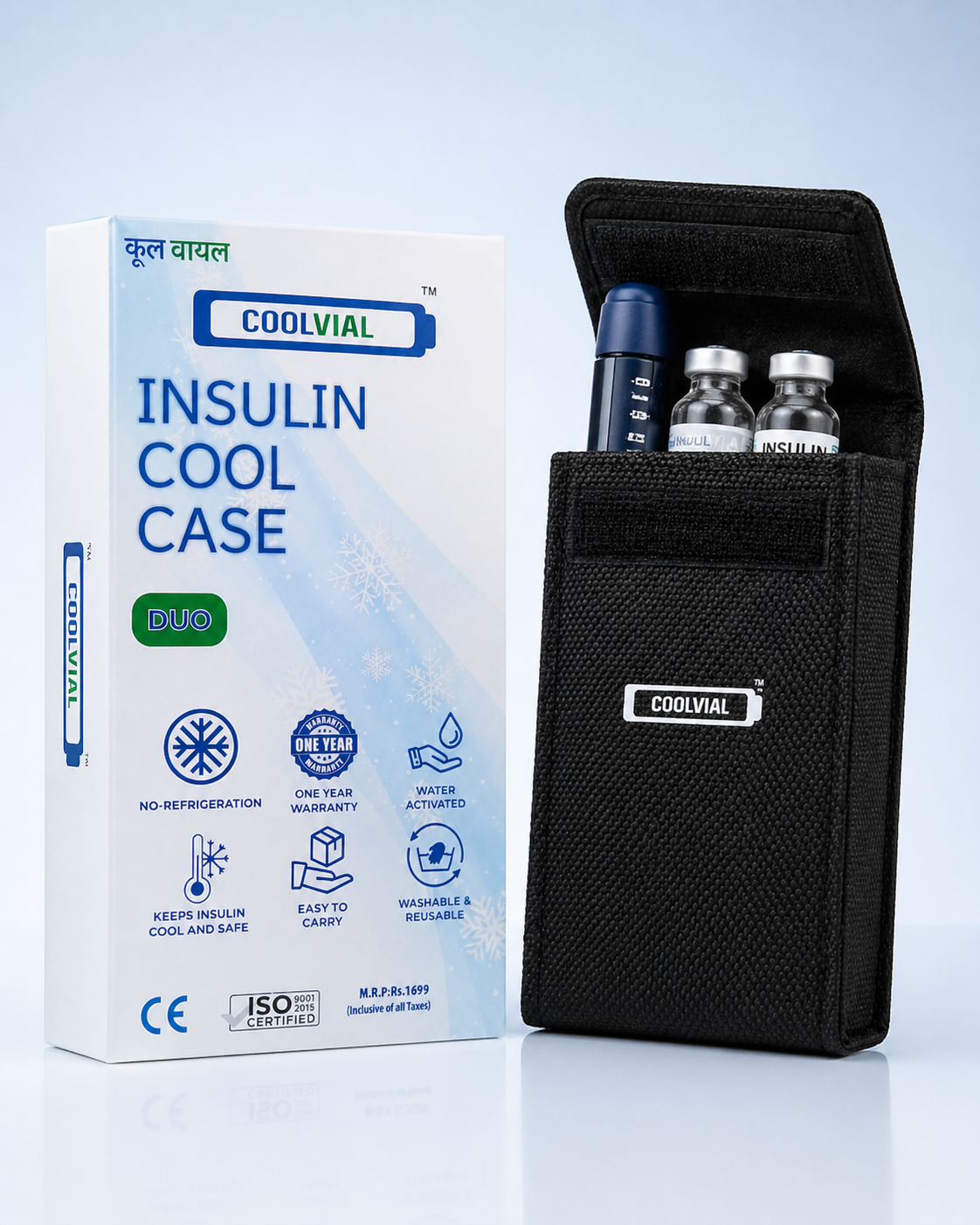
- COOLVIAL Duo (Rs 1,099 with code COOLHEAL):
- Capacity: Holds 2 pens + 1 vial, or up to 3 pens.
- Cooling Duration: 12-16 hours without electricity.
- Activation: Water-activated evaporative cooling.
- Certifications: CE certified, ISO 9001:2015.
- Warranty: 1-year.
- Made in India: Supports local manufacturing.
- Pros: Excellent value, good capacity for daily needs, reliable cooling, compact.
- Cons: Requires pre-soaking (5-10 mins).
Daily Commute With Insulin in Amritsar — 7 Essential Tips for Metro, Bus & Auto
-
FRIO Cooling Cases (Approx. Rs 1,900):
- Pros: Well-known international brand, effective evaporative cooling.
- Cons: Higher price point, similar functionality to COOLVIAL Duo.
-
Outer Woods OW-12 (Approx. Rs 999):
- Pros: Often slightly lower price.
- Cons: May have slightly less cooling duration or capacity depending on the specific model, variable build quality.
For Amritsar commuters, the COOLVIAL Duo strikes an excellent balance between affordability, reliability, and capacity. It’s designed to perform in hot Indian climates, making it a trustworthy companion for your daily commute with insulin. Check out the COOLVIAL insulin cool case for more details.
7. Beyond the Commute: Emergency Preparedness & Local Resources
While a good cooling case is essential for your daily commute with insulin, being prepared for other scenarios is equally important.
A. Emergency Preparedness
- Backup supplies: Always have a small backup of insulin and other diabetes supplies at home or work, stored correctly.
- Medical information: Carry a card or wear a medical alert bracelet indicating your diabetes and contact person.
- Hypoglycemia kit: Keep glucose tablets, hard candy, or a small juice box readily available.
- Know your local pharmacies: Familiarize yourself with nearby pharmacies like Apollo Pharmacy, MedPlus, 1mg, Frontier Medicare, or Generic Aadhaar, especially along your commute route. This can be crucial if you run out of supplies or need emergency insulin.
- Identify local hospitals: Know the location of major hospitals like Fortis Escorts Amritsar (Majitha-Verka Bypass), Amandeep Hospital (GT Road), and Sri Guru Ram Das Charitable Hospital, in case of a medical emergency. For tips on longer journeys, read our guide on Travelling From Amritsar With Insulin — Airport, Station & Taxi Tips.
B. Amritsar-Specific Tips
- Monsoon care: During Amritsar’s monsoon season (July-September), while temperatures might drop, high humidity can make it feel warmer. Ensure your cooling case is kept dry externally to maintain evaporative efficiency. Protect it from heavy rain.
- Winter fog protection: In very cold winter mornings, especially with dense fog, ensure your insulin is adequately protected from freezing. While a cooling case protects from heat, it also provides a layer of insulation against extreme cold. Do not leave insulin in unheated vehicles overnight.
- Hydration: Always carry water, especially during hot commutes. Dehydration can affect blood sugar levels.
- Diabetic-Friendly Food: If you plan to eat out, be aware of diabetic-friendly options. Our guide on Diabetic-Friendly Restaurants & Cafes in Amritsar — Where to Eat Safely can help.
Methodology Note
How We Researched This — This article is based on a comprehensive review of insulin storage guidelines from leading medical bodies like the Research Society for the Study of Diabetes in India (RSSDI) and data from the Indian Council of Medical Research (ICMR-INDIAB study) on diabetes prevalence and care in India. Local Amritsar hospital directories, pharmacy networks (e.g., Apollo Pharmacy), and general climate data for Punjab were also consulted to provide context-specific advice. Where specific local temperature data for vehicle interiors is discussed, it is based on general thermal dynamics of enclosed spaces in hot climates and qualitative observations from local residents. Precise vehicle interior temperatures for all scenarios are difficult to verify without specific real-time measurements, thus contextual information is provided.
Frequently Asked Questions (FAQ)
Q: How long can insulin be safely kept in an office bag or school bag in Amritsar without a cooler? A: Without an active cooling case, insulin in an office bag, school bag, or college backpack in Amritsar during summer (38-42°C) can start losing potency within 1-2 hours due to temperatures exceeding the safe 25°C limit.
Q: Is it safe to leave my insulin pen in my laptop sleeve during an Amritsar commute? A: No, it is generally not safe to leave an insulin pen in a laptop sleeve. Laptop sleeves offer minimal insulation, and the laptop itself can generate heat, further compromising insulin’s stability, especially during a daily commute with insulin in Amritsar’s hot climate.
Q: What is the risk of storing insulin in a two-wheeler dickey in Amritsar? A: Storing insulin in a two-wheeler dickey in Amritsar is highly risky and strongly discouraged, as internal temperatures can rapidly climb to 50-60°C due to engine heat and sun exposure, rendering insulin ineffective within minutes.
Q: Amritsar doesn’t have a metro. How does that affect insulin storage during commute? A: The absence of a metro in Amritsar means commuters rely on buses, autos, and e-rickshaws, which are often non-AC and exposed to ambient temperatures up to 42°C, necessitating a reliable portable cooling solution like COOLVIAL Duo for safe insulin transport.
Q: How does the COOLVIAL Duo help during Amritsar’s hot summers? A: The COOLVIAL Duo is a water-activated evaporative cooling case that keeps insulin pens and vials at a safe temperature (below 25°C) for 12-16 hours, protecting them from Amritsar’s peak summer temperatures of 38-42°C without needing electricity.
Q: Can I use an ice pack to keep insulin cool during my commute in Amritsar? A: While ice packs can provide cooling, they carry a risk of freezing the insulin if placed in direct contact. If using an ice pack, ensure it is gel-based, not frozen solid, and wrapped in cloth to prevent direct contact and maintain temperatures above 0°C but below 25°C.
Q: What should I do if my insulin gets exposed to high temperatures during my commute? A: If your insulin is exposed to high temperatures (e.g., above 30°C for an extended period), it may lose potency. Monitor your blood glucose levels more closely and consult your doctor or diabetologist at Fortis Escorts Amritsar or Amandeep Hospital for advice on whether to discard and replace the insulin.
Conclusion
Navigating the daily commute with insulin in Amritsar’s unique and often challenging climate requires diligence and the right tools. From the bustling city buses to the open-air auto-rickshaws and the critical need to avoid a two-wheeler’s hot dickey, every aspect of your journey demands careful planning. By understanding insulin’s temperature sensitivities and adopting smart habits, Amritsar residents can ensure their vital medication remains effective, safeguarding their health and well-being.
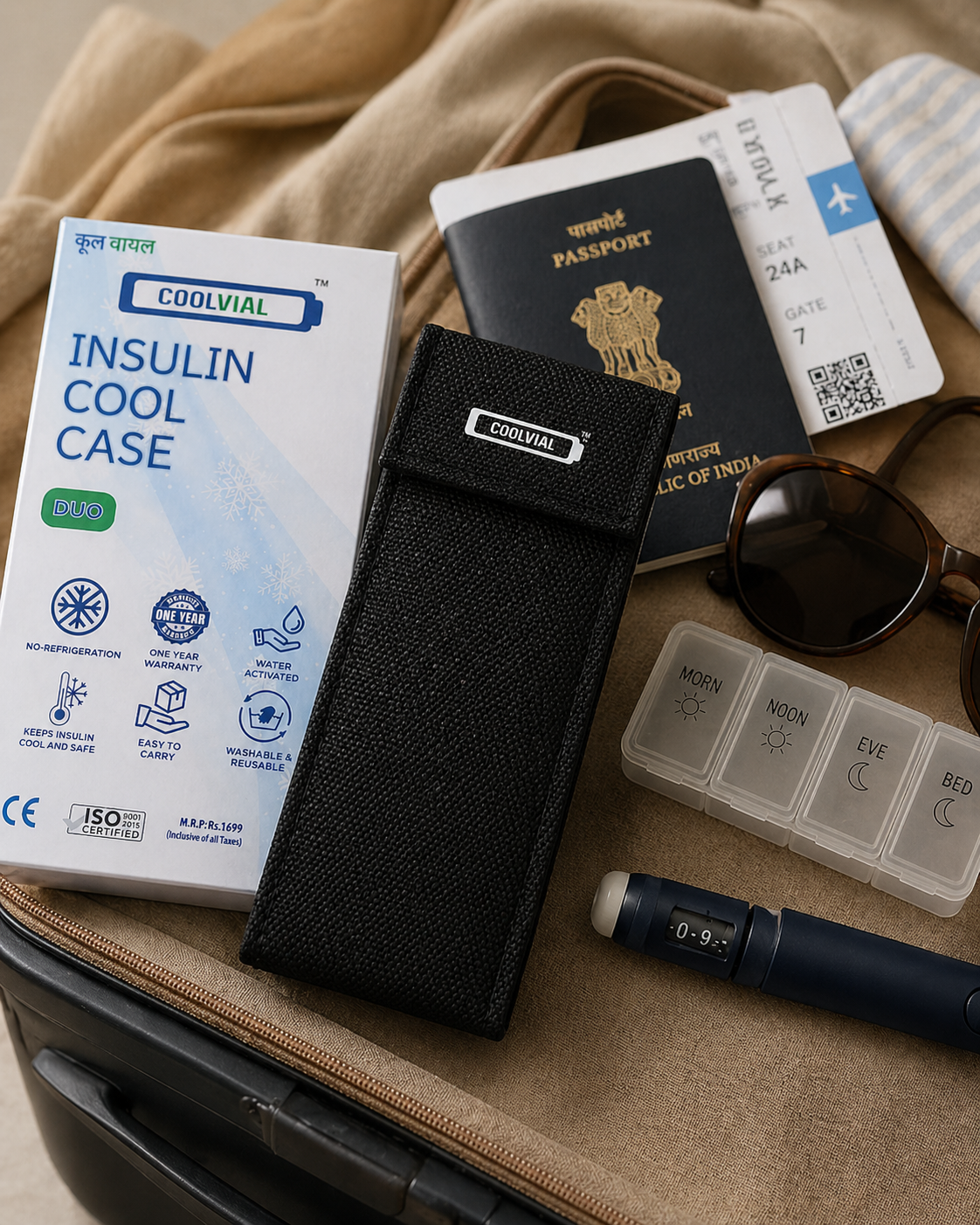
Investing in a reliable, electricity-free cooling solution like the COOLVIAL Duo is not just a convenience; it’s an essential safeguard against the city’s extreme temperatures. It provides peace of mind, knowing your insulin pens and vials are protected for 12-16 hours, allowing you to focus on your day without constant worry. Stay prepared, stay cool, and manage your diabetes with confidence, even amidst the vibrant energy of Amritsar.
Order COOLVIAL Duo at Rs 1,099 with code COOLHEAL at coolvial.com or via WhatsApp wa.me/918766952300.
Medical Disclaimer: This article is for general information. Always consult your endocrinologist or diabetologist before changing insulin storage or dosing practices.
Daily Commute With Insulin in Amritsar — 7 Essential Tips for Metro, Bus & Auto
48+ hours at 2-8°C. No electricity. CE certified. Free delivery across India.
Order on WhatsApp — ₹1,099🛒 Buy Now — ₹1,099