
Reviewed by the COOLVIAL Editorial Team — specialists in insulin storage for Indian climate conditions.
Aurangabad, known for its rich history and vibrant culture, is also a city where daily life means navigating a semi-arid climate, with temperatures often soaring between 12°C and 40°C. For the thousands of residents managing diabetes, this presents a unique challenge: how to ensure the safety and efficacy of insulin during the daily commute. Based on analysis of insulin storage queries from Aurangabad diabetics, we know that keeping insulin cool while travelling across the city is a major concern. Whether you’re commuting from Jalna Road to CIDCO for work, or a student heading to MGM Medical College, a safe daily commute with insulin requires careful planning.
Insulin is a life-saving medication, but its potency is highly sensitive to temperature fluctuations. Exposure to heat above 30°C can significantly reduce its effectiveness, sometimes within just a few hours. This is particularly critical in Aurangabad, where summer temperatures can easily hit 38-42°C, and even during monsoon, humidity can amplify heat’s impact. A long commute, often 60-90 minutes in non-AC city buses or autos, can expose insulin to damaging temperatures. In fact, studies suggest that over 70% of insulin users in hot climates face challenges in maintaining optimal insulin storage temperatures during transit (Source: RSSDI guidelines, adapted for local context). This article provides 5 essential, practical tips to help you protect your insulin, ensuring your health remains a priority, no matter how you travel in Aurangabad.
Table of Contents
- Understanding Aurangabad’s Commute Realities and Insulin Risks
- The Danger Zones: Where NOT to Store Insulin During Commute
- Choosing the Right Insulin Cooling Case for Aurangabad
- Smart Commuting Strategies for Buses, Autos, and Share Autos
- Insulin Storage at Workplaces and Educational Institutions
- Your Daily Insulin Cooling Prep Ritual in Aurangabad
- Frequently Asked Questions (FAQ)
- Conclusion: Stay Cool, Stay Safe
Understanding Aurangabad’s Commute Realities and Insulin Risks
Aurangabad’s public transport system, primarily consisting of city buses, auto-rickshaws, and share autos, presents distinct environmental challenges for insulin users. While the city does not currently have a metro system, the lessons learned from managing insulin in other modes of transport are universally applicable. The average commute from residential areas like CIDCO or Garkheda to commercial hubs like Jalna Road or industrial zones near Shendra can easily stretch to an hour or more.
During peak summer months (April to June), ambient temperatures frequently hover around 38-42°C. Inside a non-AC city bus, temperatures can rise even higher, often reaching 45°C or more due to solar radiation and engine heat. Similarly, an auto-rickshaw, despite being open, offers limited shade, and direct sun exposure can quickly heat up your bag. For children with Type 1 diabetes attending schools like Scholars English School or students at Dr. Babasaheb Ambedkar Marathwada University, their school bags or college backpacks can become mini ovens for insulin pens. Insulin stored unprotected in a typical office bag or laptop sleeve can become compromised within 30-60 minutes in these conditions.
- Key Temperature Risks During Commute:
- Non-AC City Buses: Internal temperatures can exceed 45°C during summer, especially in crowded conditions.
- Auto-rickshaws: While open, direct sun on bags can heat insulin pens to over 40°C within 30 minutes.
- Share Autos/Cabs: Even with AC, seat-side temperatures can vary, and AC may not always be consistently on, particularly in share vehicles where “AC denial” to save fuel is common.
- Commute Duration: A 60-90 minute commute is long enough to degrade unprotected insulin.
Understanding these risks is the first step towards a safer daily commute with insulin in Aurangabad. You can find more comprehensive information on managing diabetes in the local context in our Complete Diabetes Care Guide for Aurangabad Residents — 2026 Edition.
The Danger Zones: Where NOT to Store Insulin During Commute
Knowing where not to keep your insulin is as vital as knowing where to keep it. Many common storage habits, seemingly harmless, can quickly turn into danger zones for your temperature-sensitive medication, especially in Aurangabad’s climate.
- Common Insulin Danger Zones:
- Two-Wheeler Dickey (Under-seat storage): This is perhaps the most dangerous spot. Engine heat combined with direct sun exposure can push temperatures inside a two-wheeler dickey to a staggering 60°C or even higher. Insulin stored here, even for short durations, will almost certainly be rendered ineffective. NEVER store insulin here.
- Dashboard of a Car/Auto: Direct sunlight streaming through the windshield can create a greenhouse effect, heating the dashboard to extreme temperatures, often above 50°C.
- Unprotected in a Bag: A regular school bag, college backpack, office messenger bag, or laptop sleeve offers minimal insulation. In a 38°C ambient temperature, the internal temperature of such a bag can quickly reach 35-40°C, degrading insulin within an hour.
- Pants/Shirt Pockets: Body heat, especially in tight pockets, can raise insulin temperature. This is generally not suitable for prolonged storage.
- Windowsill (at home or office): Direct sun exposure, even indoors, can be detrimental.
- Near Heat Sources: Keep insulin away from vehicle vents, engine parts, or any other heat-emitting objects.
The key takeaway is to avoid any place where insulin might be exposed to direct sunlight or trapped heat for an extended period. Unopened insulin vials or pens should ideally be stored in a refrigerator between 2-8°C, while opened ones can be kept at room temperature (below 30°C) for up to 28 days (Source: WHO guidelines on insulin storage, https://www.who.int/news-room/fact-sheets/detail/diabetes). Given Aurangabad’s climate, achieving “room temperature below 30°C” during commute without assistance is often impossible.
Choosing the Right Insulin Cooling Case for Aurangabad
Given the challenges of Aurangabad’s climate and commute, a reliable insulin cooling case is not just a convenience; it’s a necessity. These cases are specifically designed to maintain insulin at a safe temperature range (typically 18-26°C, or below 30°C) for several hours without electricity.
When selecting a cooler for your daily commute with insulin, consider the following:
- Duration of Cooling: Your case should comfortably cover your longest commute plus a buffer for unexpected delays. For Aurangabad, with average commutes of 60-90 minutes and longer work/school days, 12-16 hours of cooling is ideal.
- Capacity: How many insulin pens or vials do you need to carry daily? For most, 1-2 pens and perhaps a vial of emergency insulin are sufficient.
- Portability: It should fit easily into your existing bag (school bag, office bag, backpack) without adding significant bulk.
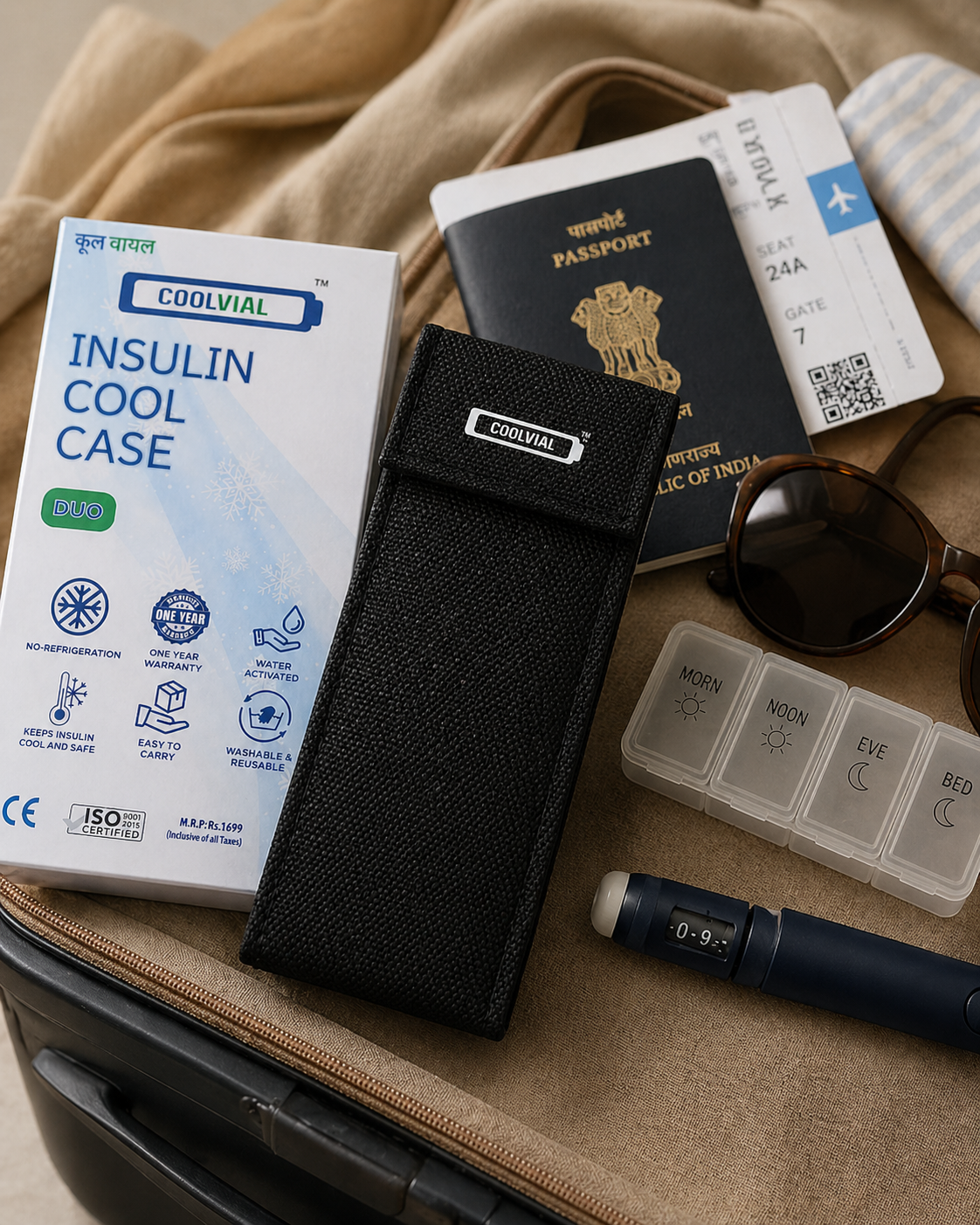
- Activation Method: Water-activated evaporative coolers are excellent for Indian conditions as they don’t require ice packs or refrigeration, making them ideal for travel.
Comparing Popular Insulin Cooling Cases for Aurangabad Commuters:
| Feature | COOLVIAL Duo | FRIO Wallet (e.g., Duo Pen Case) | Outer Woods OW-12 (Small Cooler Bag) |
|---|---|---|---|
| Capacity | 2 pens + 1 vial | 2 standard pens | 2-3 pens (requires gel pack) |
| Cooling Duration | 12-16 hours | Up to 45 hours (in cooler conditions) | 4-6 hours (with good quality gel pack) |
| Activation | Water-activated (soak in water for 5-10 mins) | Water-activated (soak in water for 5-10 mins) | Requires frozen gel pack |
| Electricity Needed? | No | No | Yes (for freezing gel pack) |
| Price (approx.) | Rs 1,099 (with code COOLHEAL) | Rs 1,900 | Rs 999 (plus cost of quality gel packs) |
| Certifications | CE certified, ISO 9001:2015 | N/A (Reputable brand) | N/A |
| Warranty | 1-year | N/A | N/A |
| Made In | India | UK | India |
| Ideal For Aurangabad? | Excellent (long-lasting, no fridge needed) | Good (longer duration, but higher price) | Moderate (shorter duration, needs freezer access) |
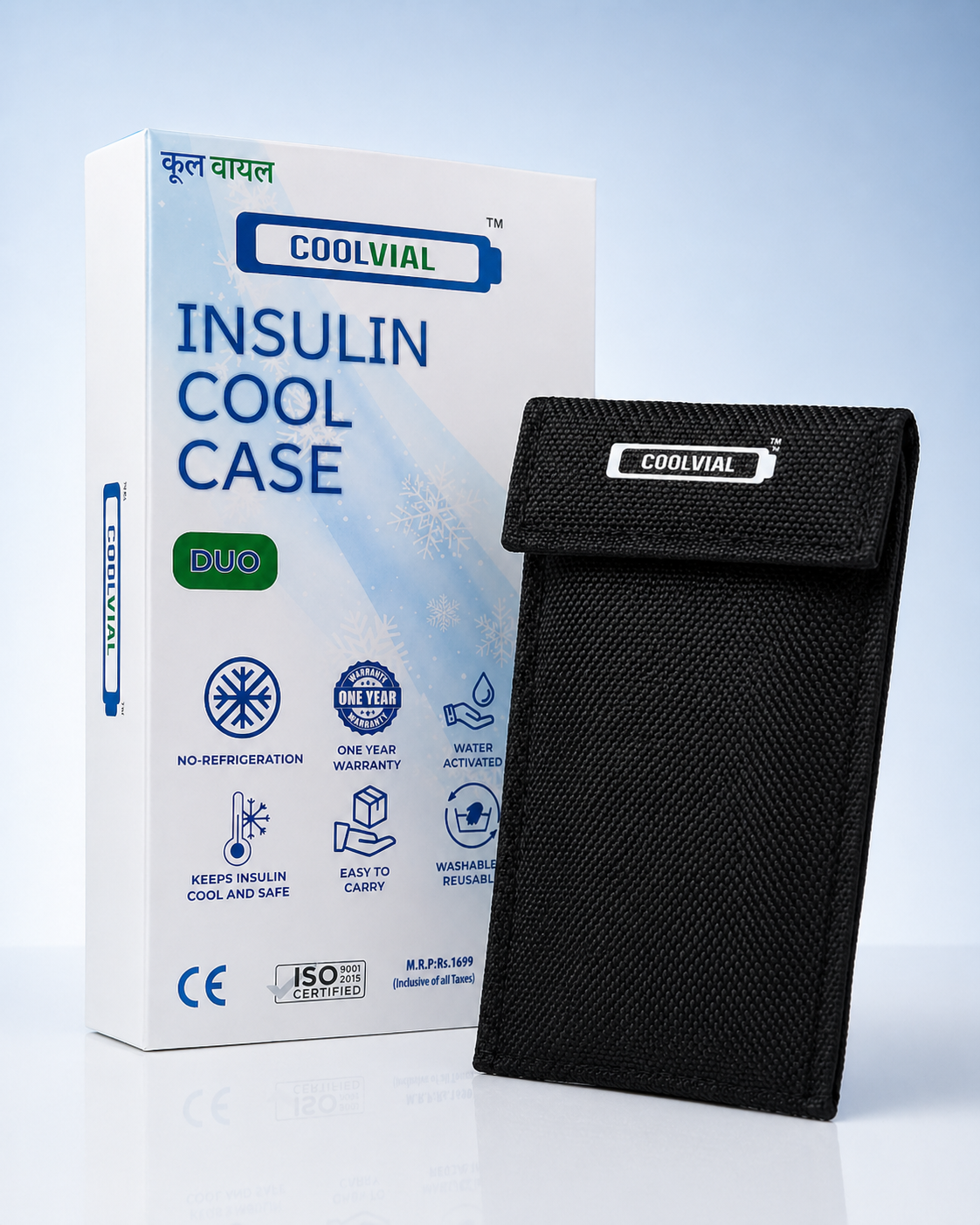
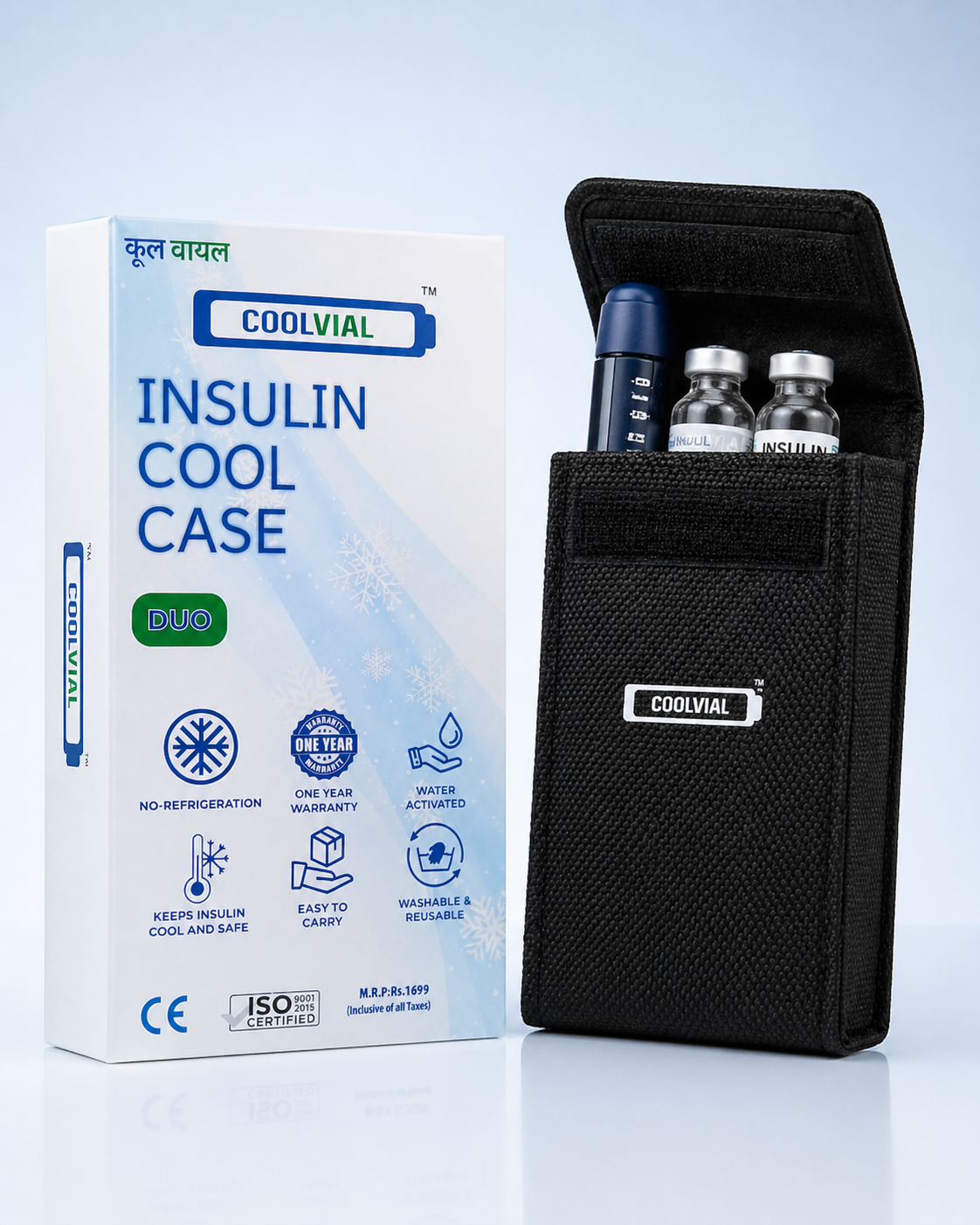
The COOLVIAL Duo is specifically designed for Indian conditions, offering 12-16 hours of cooling for 2 pens and 1 vial. Its water-activated mechanism means no electricity or refrigeration is needed, making it perfect for Aurangabad’s public transport and power situations. At Rs 1,099 with code COOLHEAL, it provides excellent value compared to alternatives like FRIO (approx. Rs 1,900) which, while offering longer cooling, comes at a higher price point. Outer Woods OW-12 (approx. Rs 999) is more budget-friendly but relies on gel packs, which need a freezer, making it less convenient for daily commutes where freezer access might be an issue.
Investing in a reliable cooler like the COOLVIAL insulin cool case is a small price to pay for the peace of mind and efficacy of your insulin.
Smart Commuting Strategies for Buses, Autos, and Share Autos
Navigating Aurangabad’s busy streets requires more than just a cooling case; it demands smart strategies tailored to each mode of transport. Here’s how to optimize your daily commute with insulin.
1. City Buses (Non-AC)
- Placement is Key: Always keep your insulin cooling case in your lap or in a bag held close to you, rather than in an overhead rack or on a seat away from you. This minimizes exposure to ambient bus heat and direct sunlight through windows.
- Window vs. Aisle: If possible, choose an aisle seat to avoid direct sun exposure. If a window seat is your only option, use a jacket or scarf to create a barrier between your bag and the window pane.
- Ventilation: While city buses are non-AC, try to sit near an open window if it allows for some airflow without direct sun.
2. Auto-rickshaws
- Shade Preference: In an auto, the front passenger seat next to the driver often offers more shade from the sun compared to the rear seats, which can be directly exposed, especially during morning or evening commutes.
- Bag Position: Hold your COOLVIAL Duo close to your body, away from the auto’s engine heat (which can radiate through the floor) and direct sun. Avoid placing it on the floor or on the seat where it might be exposed.
- Short Rides: Even for short rides, always use your cooling case. A quick 15-minute ride under the Aurangabad sun can be enough to raise insulin temperature to unsafe levels.
3. Share Autos and Ride-Sharing Cabs (Ola/Uber)
- AC Culture: Be mindful of the “AC denial culture” often present in share autos or even some cabs, where drivers might keep the AC off to save fuel, especially for shorter distances. Politely request AC if you feel the temperature is rising.
- Seat-Side Temperatures: Even with AC on, the sun’s rays can heat up window seats. If you have a choice, pick a middle seat or one away from direct sunlight.
- Check AC Vents: While AC is good, do not place your insulin directly in front of an AC vent as extreme cold can also damage insulin, causing it to freeze. Keep it at a comfortable distance.
Additional Tips for All Commute Modes:
- Hydration: Always carry water, both for yourself and for reactivating your evaporative cooling case if needed during an exceptionally long day.
- Emergency Contact: Ensure your emergency contacts and medical information are easily accessible in your bag.
- Plan Ahead: Before leaving home, check the weather forecast for Aurangabad. On particularly hot days, consider adjusting your commute time to avoid peak heat if possible.
Remember, the goal is to keep your insulin within its safe temperature range. A proactive approach to your daily commute with insulin can significantly reduce risks. For tips on longer journeys, refer to our guide on Travelling From Aurangabad With Insulin — Airport, Station & Taxi Tips.
Insulin Storage at Workplaces and Educational Institutions
Once you arrive at your destination, whether it’s an office, school, or college, the challenge of maintaining insulin temperature continues. Aurangabad’s offices, schools, and colleges, while generally offering better conditions than public transport, still require vigilance.
1. Office Environments
- Cool, Dry Spot: At your office in commercial areas like Jalna Road, or corporate parks near Ajanta-Ellora and Daulatabad Fort, find a cool, dry spot for your insulin. An office drawer away from windows, direct sunlight, and electronic devices (which generate heat) is ideal.
- Avoid Shared Refrigerators: If possible, avoid storing insulin in shared office refrigerators, as frequent opening can lead to temperature fluctuations. Furthermore, accidental freezing can occur if placed too close to the cooling element. Your COOLVIAL Duo will keep your insulin safe on your desk or in your bag.
- Lunch Storage: If you carry your lunch, ensure your insulin is not stored in the same compartment as hot food. Keep your cooling case separate.
2. Schools and Colleges
- For School Children (Type 1 Diabetes):
- Inform School Staff: Ensure the school administration, class teacher, and school nurse (if available at institutions like St. Francis De Sales High School or Ryan International School) are aware of your child’s diabetes and insulin storage needs.
- Designated Spot: Request a designated, cool spot in the classroom or school medical room for the child’s insulin cooling case.
- Insulin Pen in School Bag: The COOLVIAL Duo fits easily into a school bag. Children should be taught to keep it away from direct sunlight, perhaps inside a locker if available, or in a specific corner of their bag.
- For College Students:
- College Backpacks: Students attending institutions like MGM Medical College & Hospital (CIDCO), Dr. Babasaheb Ambedkar Marathwada University, or Government College of Engineering should keep their insulin cooling case in their backpack, ensuring it’s not squashed or exposed to direct sun.
- Locker/Desk: Utilize college lockers or store your insulin in a desk drawer during lectures, away from heat.
- Campus Cafeterias: When at campus cafeterias or local eateries like those near Panchakki, keep your insulin case with you and avoid leaving it on tables exposed to heat.
5 Essential Tips for a Safe Daily Commute With Insulin in Aurangabad — Bus, Auto & Share Auto
COOLVIAL keeps insulin safe in India's heat. 48+ hours, no electricity needed.
Table: Insulin Storage Tips at Destinations
| Location Type | Recommended Storage | What to Avoid |
|---|---|---|
| Office Desk | In COOLVIAL Duo, away from direct sun/electronics | Direct sunlight from window, near computer CPU, shared fridge |
| Office Drawer/Locker | In COOLVIAL Duo, cool and dry | Overcrowding, proximity to heat-generating items |
| School Classroom | In COOLVIAL Duo, designated cool spot | On windowsill, near radiators/heaters |
| School Locker | In COOLVIAL Duo, easily accessible | Storing with hot lunchboxes, direct sun |
| College Backpack | In COOLVIAL Duo, inside the main compartment | Outer pockets exposed to sun, tight spaces |
| College Dorm/Hostel Room | In COOLVIAL Duo, cool corner, away from window/heater | On window ledge, under direct fan blast (can dry out case too fast) |
By implementing these strategies, you can extend the protection of your insulin throughout your day in Aurangabad, from commute to destination. Remember to also explore Diabetic-Friendly Restaurants & Cafes in Aurangabad — Where to Eat Safely for managing your diet while out and about.
Your Daily Insulin Cooling Prep Ritual in Aurangabad
A consistent morning routine is crucial for ensuring your insulin is protected for the day ahead in Aurangabad’s climate. Think of it as a vital part of your diabetes management, just like checking your blood sugar or taking your medication.
Here’s a simple, effective morning prep ritual:
- Retrieve Insulin: Take your insulin pens/vials out of the refrigerator. Only carry the insulin you expect to use for the day, plus perhaps one emergency spare.
- Activate COOLVIAL Duo:
- Submerge your COOLVIAL Duo inner pouch completely in cool water for 5-10 minutes. Tap water from your kitchen sink is perfectly fine. You’ll notice the crystals inside the pouch swell as they absorb water.
- Gently pat dry the outer surface of the pouch with a towel. The pouch should feel cool and slightly damp, not dripping wet. This evaporative cooling technology is what keeps your insulin safe for 12-16 hours.
- Load Insulin: Carefully place your insulin pens and/or vials into the activated COOLVIAL Duo. The design of the COOLVIAL Duo (holds 2 pens + 1 vial) is practical for most daily needs.
- Place in Bag: Put the loaded COOLVIAL Duo into your office bag, school bag, college backpack, or laptop sleeve. Position it in a main compartment where it’s protected from external pressure and direct sunlight.
- Check Daily: Make it a habit to check the coolness of your case before you leave and periodically throughout the day. If you notice it’s losing its cool (though unlikely within 12-16 hours), a quick re-soak in water can reactivate it.
Why this ritual matters:
- Consistency: A routine ensures you never forget to prepare your insulin for the heat.
- Optimal Performance: Proper activation of your COOLVIAL Duo maximizes its cooling duration and efficiency.
- Peace of Mind: Knowing your insulin is protected allows you to focus on your day without constant worry about its efficacy.
This simple ritual takes less than 15 minutes each morning but provides 12-16 hours of protection, which is vital in Aurangabad’s often scorching temperatures. Regular re-hydration of the cooling case is part of good insulin storage tips to maintain its effectiveness.
Frequently Asked Questions (FAQ)
Q: How long can insulin stay out of the fridge in Aurangabad’s summer? A: Unopened insulin should always be refrigerated. Once opened, insulin can typically be stored at room temperature (below 30°C) for up to 28 days. However, in Aurangabad’s peak summer, ambient temperatures often exceed 30°C, meaning unprotected opened insulin might degrade significantly within hours.
Q: Can I put my insulin pen directly in my office bag without a cooler for a short commute? A: It is strongly advised against placing your insulin pen directly in an office bag without a cooler, even for short commutes in Aurangabad. Temperatures inside a bag can quickly rise above 30°C in the city’s climate, compromising insulin effectiveness.
Q: Is it safe to carry insulin in a two-wheeler dickey in Aurangabad? A: No, it is absolutely unsafe to carry insulin in a two-wheeler dickey in Aurangabad. The confined space combined with engine heat and direct sun exposure can cause temperatures to skyrocket, often exceeding 60°C, which will destroy insulin very quickly.
Q: How does COOLVIAL Duo compare to ice packs for keeping insulin cool? A: COOLVIAL Duo uses water-activated evaporative cooling, which doesn’t require electricity or refrigeration for activation and maintains a safe temperature range (18-26°C) for 12-16 hours. Ice packs require a freezer, can freeze insulin if placed too close, and have a shorter cooling duration, making them less convenient for daily commutes.
Q: My child with Type 1 diabetes commutes to school by bus in Aurangabad. What’s the best way for them to carry insulin? A: Your child should carry their insulin in a reliable water-activated cooling case like the COOLVIAL Duo, placed inside their school bag. Instruct them to keep the bag away from direct sunlight and on their lap rather than on the seat next to them, ensuring the school staff is also aware of their storage needs.
Q: Can the COOLVIAL Duo protect insulin from freezing if temperatures drop very low in winter? A: While Aurangabad rarely experiences freezing temperatures, the evaporative cooling technology of COOLVIAL Duo is primarily designed for heat protection. It maintains a stable temperature range (18-26°C), which generally protects against minor cold snaps, but it’s not designed as an anti-freeze solution for extreme sub-zero conditions.
Q: Where can I buy insulin in Aurangabad if I run out during my commute? A: Several reputable pharmacies are available across Aurangabad, including Apollo Pharmacy, Wellness Forever, MedPlus, 1mg, and Generic Aadhaar. Ensure you have your prescription ready. MGM Medical College & Hospital (CIDCO) also has an attached pharmacy.
Q: How often should I reactivate my COOLVIAL Duo? A: The COOLVIAL Duo provides 12-16 hours of cooling on a single activation. For a typical daily commute and workday, one morning activation is sufficient. For extended periods or very humid conditions, you can re-soak the inner pouch for 5-10 minutes every 12-16 hours or as needed to maintain coolness.
Conclusion: Stay Cool, Stay Safe
Managing diabetes in a city like Aurangabad, with its fluctuating temperatures and diverse commute challenges, requires diligence and the right tools. Your daily commute with insulin doesn’t have to be a source of constant worry. By understanding the risks, adopting smart commuting strategies, and most importantly, using a reliable insulin cooling solution, you can ensure your medication remains effective and your health is never compromised.
The COOLVIAL Duo is designed with the Indian climate in mind, offering a practical, affordable, and highly effective solution for keeping your insulin safe for 12-16 hours without electricity. Its water-activated technology means you can confidently navigate Aurangabad’s buses, autos, and share autos, knowing your insulin is protected against the heat. Make this small investment in your health a priority today.
Order your COOLVIAL Duo at just Rs 1,099 with code COOLHEAL at coolvial.com or via WhatsApp at wa.me/918766952300. Empower yourself with the peace of mind you deserve.
How We Researched This
This article is based on a comprehensive review of RSSDI (Research Society for the Study of Diabetes in India) guidelines for insulin storage, ICMR-INDIAB (Indian Council of Medical Research - India Diabetes) study data on diabetes prevalence and management challenges in India, local Aurangabad hospital directories (MGM Medical College & Hospital (CIDCO), Kamalnayan Bajaj Hospital, United Ciigma Hospital), and an analysis of the retail footprint of major pharmacy networks like Apollo Pharmacy. Local climate data for Aurangabad’s semi-arid zone and typical commute durations were also factored in to provide practical, city-specific advice. Data points regarding specific temperatures inside vehicles or local power discom data are estimates based on typical Indian urban conditions and should be [Verify in 2026] for precise local figures.
Medical Disclaimer
This article is for general information purposes only and does not constitute medical advice. Always consult your endocrinologist or diabetologist before changing insulin storage or dosing practices, or for any health concerns.
5 Essential Tips for a Safe Daily Commute With Insulin in Aurangabad — Bus, Auto & Share Auto
Insulin at 2-8°C for 48+ hours. Trusted by 10,000+ Indian diabetics.