
Reviewed by the COOLVIAL Editorial Team — specialists in insulin storage for Indian climate conditions.
Bengaluru, India’s Silicon Valley, is known for its pleasant climate, vibrant culture, and unfortunately, its notorious traffic. For the over 1.5 million diabetics residing in this bustling metropolis (Source: ICMR-INDIAB, 2022), maintaining optimal insulin storage during their daily commute with insulin is not just a recommendation, it’s a critical necessity. Insulin, a life-saving medication, is highly sensitive to temperature fluctuations. Exposure to heat, especially above 30°C, can rapidly diminish its potency, rendering it less effective or even ineffective, leading to dangerous blood sugar levels. Given that many Bengaluru commuters spend 60-90 minutes traveling from areas like Whitefield or Marathahalli to Central hubs like MG Road or Indiranagar, understanding how to protect your insulin across various transport modes is paramount.
This comprehensive guide, based on analysis of insulin storage queries from Bengaluru diabetics, offers 10 essential tips to navigate Bengaluru’s Namma Metro, BMTC buses, and auto-rickshaws, ensuring your insulin stays safe and potent from home to destination.
Table of Contents
- Understanding Bengaluru’s Climate and Insulin Needs
- The Namma Metro Experience: Keeping Cool on the Purple, Green, and Pink Lines
- Navigating BMTC Buses: The Heat Challenge
- Autorickshaws, Cabs, and Ride-Shares: Managing Unpredictable Temperatures
- Two-Wheeler Commutes: The Absolute No-Go Zone for Insulin
- Daily Routine for Insulin Commuters: Your Morning Prep Ritual
- Insulin Storage at Work, School, and College in Bengaluru
- Choosing the Right Insulin Cooling Case for Your Bengaluru Commute
- Key Insulin Storage Guidelines for Bengaluru Residents
- Frequently Asked Questions (FAQs)
- Conclusion
1. Understanding Bengaluru’s Climate and Insulin Needs
Bengaluru enjoys a relatively mild climate compared to other Indian cities, with temperatures typically ranging from 18-33°C year-round. However, during peak summer months (April-May) or even within non-AC vehicles, internal temperatures can soar well above the safe limit for insulin. The southwest monsoon from June to October brings moderate rainfall (~970mm), which can increase humidity, but the core challenge remains heat exposure. Insulin, once opened, should ideally be stored at room temperature (below 30°C) for up to 28 days. Unopened vials and pens require refrigeration between 2-8°C. The Indian Council of Medical Research (ICMR) and the Research Society for the Study of Diabetes in India (RSSDI) provide comprehensive guidelines on insulin storage, emphasizing the need to protect it from extreme temperatures (Source: RSSDI Publications).
Consider these temperature realities in Bengaluru:
- Average Ambient Temperature: 25-30°C (most of the year)
- Peak Summer Ambient Temperature: 33-38°C (April-May)
- Inside Non-AC Buses/Autos: Can reach 38-42°C, especially during midday and afternoon commutes.
- Two-Wheeler Dickey/Glove Box: Can exceed 50-60°C rapidly due to engine heat and direct sun.
- Insulin’s Safe Limit (opened): Below 30°C. Above this, potency starts to degrade.
These figures underscore why passive cooling solutions are indispensable for your daily commute with insulin.
2. The Namma Metro Experience: Keeping Cool on the Purple, Green, and Pink Lines
Namma Metro, covering major arteries like the Purple Line (Whitefield to Challaghatta), Green Line (Silk Institute to Madavara), and the upcoming Pink Line, offers a relatively controlled environment for commuters. The air conditioning in metro coaches is generally reliable, maintaining comfortable temperatures, often around 24-26°C. This makes it one of the safest public transport options for carrying insulin.
Key considerations for metro travel:
- AC Reliability: Metro coaches are almost always air-conditioned and well-maintained.
- Seat-Side Temperatures: While the overall cabin is cool, direct sunlight through windows on certain sides of the train can cause localized warming. Try to sit away from direct sun if possible.
- Crowd Factor: During peak hours (8 AM-10 AM and 5 PM-8 PM), coaches can be extremely crowded. While the AC still works, body heat from numerous passengers can slightly raise the ambient temperature within your immediate personal space.
Even in the metro’s relatively cool environment, it’s prudent to keep your insulin in a protective cooling case. This provides an extra layer of insulation against minor temperature fluctuations and accidental impacts, ensuring peace of mind during your daily commute with insulin.
3. Navigating BMTC Buses: The Heat Challenge
BMTC buses are the lifeline of Bengaluru, connecting every nook and corner of the city. However, a significant portion of the fleet comprises non-AC buses, which pose a considerable challenge for insulin storage. During peak summer, the internal temperature of a non-AC bus can easily climb to 38-42°C, far exceeding insulin’s safe storage limit of 30°C. Even during the milder months, prolonged exposure to ambient temperatures in the mid-30s can be detrimental.
Tips for BMTC bus commuters:
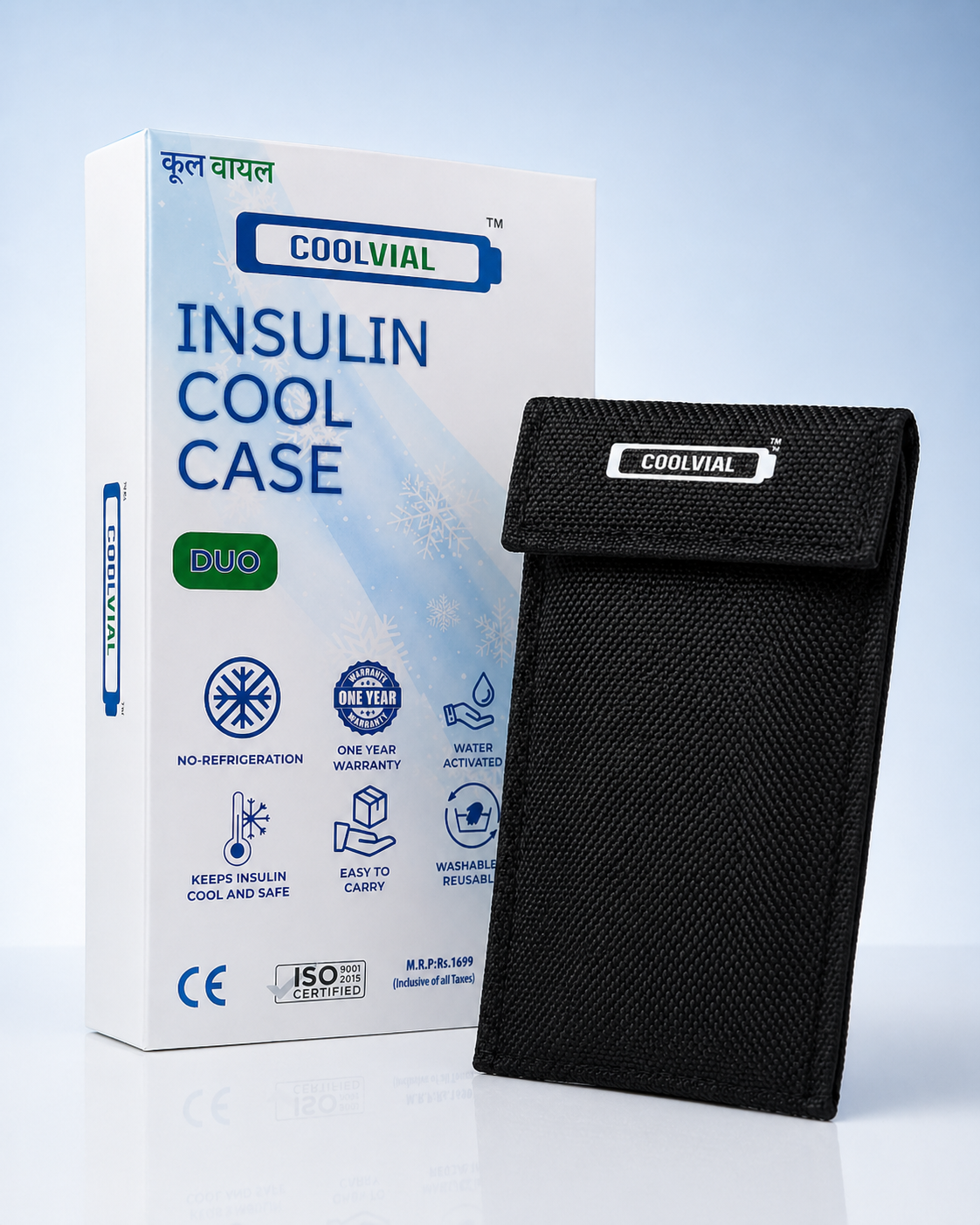
- Always Use a Cooling Case: This is non-negotiable for BMTC bus travel. An evaporative cooler like COOLVIAL Duo can maintain insulin at safe temperatures for 12-16 hours, even when the ambient temperature is high.
- Choose AC Buses if Available: If your route has AC Vayu Vajra or other AC services, prioritize them, especially for longer commutes.
- Window Seats with Caution: While a window seat offers airflow, direct sunlight can heat your bag significantly. Position your bag, especially your insulin cooler, away from direct sun exposure.
- Short Commutes: Even for a 15-20 minute ride, if the bus is hot, your insulin pen in a regular bag can quickly get warm. Assume temperatures inside your bag will rapidly match the ambient bus temperature.
A pen carried in a regular office bag or school bag without proper cooling can become dangerously warm within 30-45 minutes in a hot bus. For children with Type 1 diabetes commuting to schools like Bishop Cotton Boys’ School or NPS Koramangala, this is a critical concern that requires a robust cooling solution.
4. Autorickshaws, Cabs, and Ride-Shares: Managing Unpredictable Temperatures
Autorickshaws are synonymous with Bengaluru’s streets, notorious for their quick maneuvers and, at times, meter refusal. Cabs (Ola/Uber) and bike taxis (Rapido) are also popular. The challenge with these modes lies in the unpredictable temperature control.
- Autorickshaws: While open on the sides, providing some airflow, the black canopy and engine heat can trap warmth. Direct sunlight on your bag can be intense. Always keep your insulin cooler on your lap or between your feet, shielded from direct sun.
- Cabs (Ola/Uber): While many cabs are AC, the “AC denial culture” is prevalent where drivers might switch off the AC to save fuel, especially for shorter rides or if not explicitly requested and paid for. Always confirm AC usage upfront.
- Tip: Politely ask the driver to keep the AC on for health reasons if you’re carrying medication.
- Ride-Sharing Bikes (Rapido): This is essentially an open-air commute. Your insulin will be fully exposed to ambient temperatures, which can be particularly concerning during midday or afternoon rides. A well-insulated, water-activated cooling case is absolutely essential here.
For a 60-minute ride from Jayanagar to Whitefield, for instance, in a non-AC auto or a cab with AC off, your insulin pen in a standard backpack or laptop sleeve will reach ambient temperatures within minutes. This can compromise its efficacy long before you reach your destination.
5. Two-Wheeler Commutes: The Absolute No-Go Zone for Insulin
Bengaluru has a vast number of two-wheeler commuters. While convenient, carrying insulin in a two-wheeler’s dickey (under-seat storage) or a tank bag is an absolute no-go. The heat generated by the engine, combined with direct sun exposure, can push temperatures inside these compartments to extreme levels, often exceeding 50-60°C within a short period. This is well beyond the temperature at which insulin is safely stored and can lead to rapid and irreversible degradation.
- Never: Store insulin in a two-wheeler dickey, glove compartment, or tank bag.
- Alternative: If you must commute on a two-wheeler, carry your insulin in a high-quality, water-activated cooling case, securely placed in a backpack that you wear. This provides some insulation from direct engine heat and allows you to monitor its exposure. Ensure the backpack itself isn’t baking in the sun while parked.
6. Daily Routine for Insulin Commuters: Your Morning Prep Ritual
A consistent morning ritual is key to ensuring your insulin is protected for your daily commute with insulin, regardless of Bengaluru’s climate or traffic.
- Activate Your Cooling Case:
- For water-activated evaporative cases like COOLVIAL Duo, submerge the inner pouch in cool water for 5-10 minutes as per instructions.
- Ensure the crystals fully expand, forming a gel.
- Gently towel-dry the pouch to remove excess water.
- Pack Your Insulin:
- Place your insulin pens and/or vials into the activated cooling pouch.
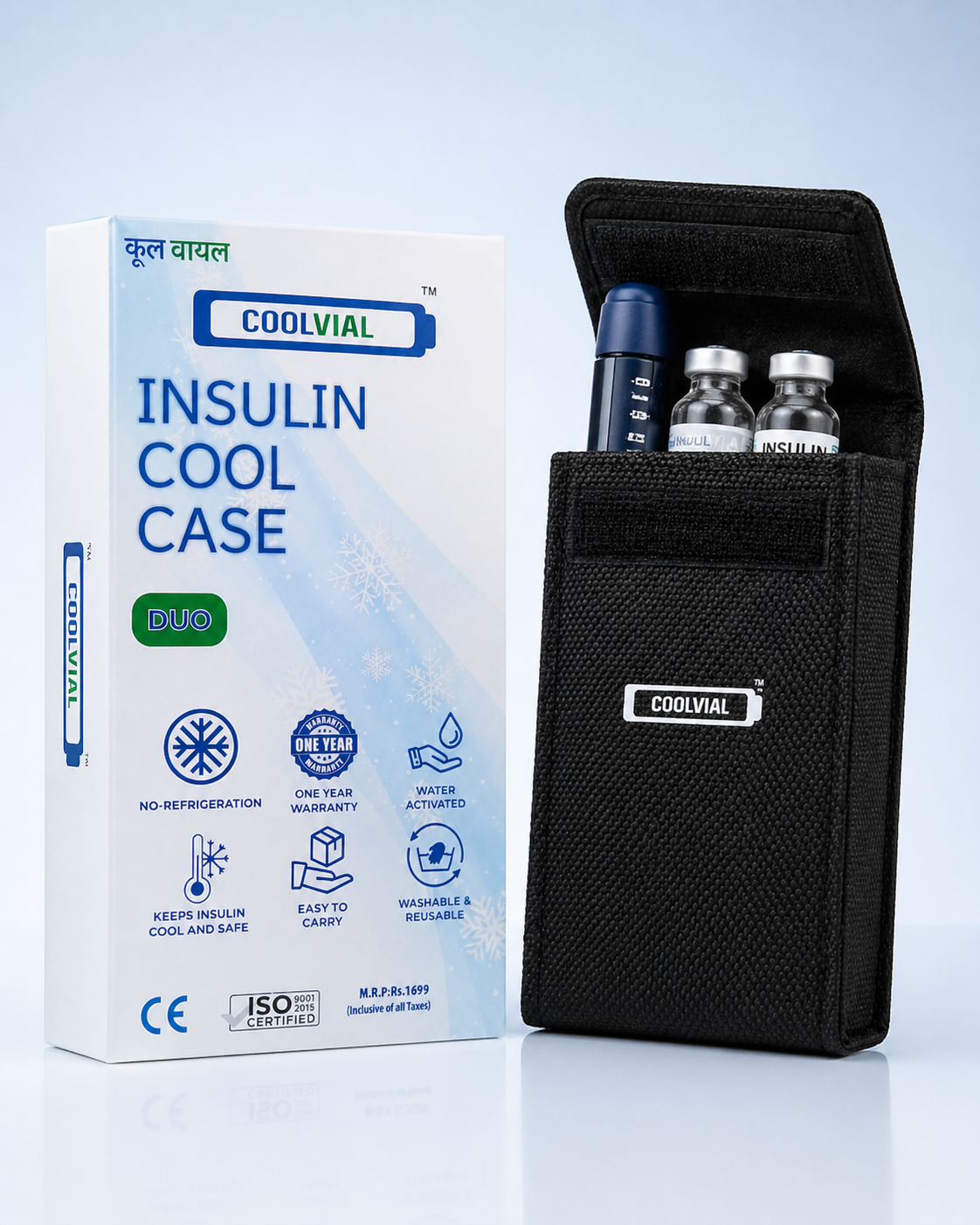
- The COOLVIAL Duo can hold 2 pens + 1 vial, offering ample space for a day’s needs.
- Place in Outer Cover:
- Slide the activated pouch into its protective outer cover. This helps maintain the cooling effect and protects your insulin from external elements.
- Strategic Placement in Your Bag:
- Always keep your cooling case in the main compartment of your office bag, school bag, or college backpack.
- Avoid placing it in side pockets or laptop sleeves where it might be exposed to more direct heat or pressure.
- Avoid Direct Sun:
- Whether in an auto, bus, or even walking short distances (e.g., from Namma Metro station to office near Cubbon Park), keep your bag out of direct sunlight.
- If using a bike, ensure the cooling case is in a worn backpack and not in a storage compartment.
This routine takes only a few minutes each morning but provides 12-16 hours of temperature-controlled storage, crucial for those long Bengaluru commutes.
7. Insulin Storage at Work, School, and College in Bengaluru
Once you’ve safely transported your insulin, the next step is secure storage at your destination. Bengaluru’s corporate parks around Cubbon Park, Lalbagh, and across various neighborhoods like Indiranagar 100ft Road, Whitefield, and Koramangala, often have AC environments. Similarly, major educational institutions like Christ University, St. Joseph’s College, or RV College of Engineering usually offer temperature-controlled classrooms or staff rooms.
- At Work:
- Office Desk: Most modern offices in Bengaluru have central air conditioning, maintaining temperatures between 22-25°C. Your insulin can safely remain on your desk in its cooling case.
- Office Fridge: If your office has a common refrigerator, you can store unopened insulin vials/pens there (2-8°C). Ensure it’s clearly labeled and placed in a protective container to avoid contamination or accidental disposal.
- Lunch Bags: If carrying a lunch bag, avoid placing insulin directly next to hot food items.
- At School/College:
- Teacher/Staff Room: For children with Type 1 diabetes, coordinate with school staff (e.g., at Delhi Public School, Brigade School) to store insulin in the staff room refrigerator or a designated cool, dry place.
- Locker/Backpack: During class hours, the cooling case can remain in the student’s locker or backpack, provided the classroom itself is temperature-controlled. Avoid leaving bags in open corridors or direct sun.
- Emergency Kit: Always ensure an emergency kit with quick-acting glucose and glucagon is readily accessible, and school staff are trained in its use.
For detailed advice on managing diabetes in various settings in Bengaluru, you might find our “Complete Diabetes Care Guide for Bengaluru Residents — 2026 Edition” helpful.
8. Choosing the Right Insulin Cooling Case for Your Bengaluru Commute
When it comes to protecting your insulin during the daily grind in Bengaluru, not all cooling solutions are created equal. You need something reliable, portable, and effective against varying temperatures.
Here’s a comparison of common options:
10 Essential Tips for a Safe Daily Commute With Insulin in Bengaluru — Metro, Bus & Auto
COOLVIAL keeps insulin safe in India's heat. 48+ hours, no electricity needed.
| Feature | COOLVIAL Duo (Water-Activated) | FRIO (Water-Activated) | Outer Woods OW-12 (Gel Pack) | Standard Insulated Pouch |
|---|---|---|---|---|
| Cooling Method | Evaporative cooling (water-activated polymer crystals) | Evaporative cooling (water-activated polymer crystals) | Gel pack (requires freezer) | Basic insulation |
| Cooling Duration | 12-16 hours | Up to 45 hours | 8-12 hours | 2-4 hours |
| Temperature Range | Keeps insulin below 25°C even in 38°C ambient | Keeps insulin below 25°C even in 38°C ambient | Maintains cool for limited time, depends on ambient | Minimal |
| Portability | Highly portable, lightweight, no electricity needed | Highly portable, lightweight, no electricity needed | Moderately portable, gel pack adds weight/bulk | High |
| Activation | Submerge in water for 5-10 minutes | Submerge in water for 5-10 minutes | Freeze gel pack for 6-8 hours | None |
| Capacity | Holds 2 pens + 1 vial | Varies by model (e.g., 2 pens) | Varies by model (e.g., 1 pen) | Varies |
| Price (approx.) | Rs 1,099 with code COOLHEAL (MRP Rs 1,699) | Rs 1,900+ | Rs 999+ | Rs 200-500 |
| Certifications | CE Certified, ISO 9001:2015 | CE Certified | [Verify in 2026] | None |
| Warranty | 1-year | [Verify in 2026] | [Verify in 2026] | None |
| Made in India | Yes | No | Yes | Varies |
For the demanding conditions of a Bengaluru commute, a water-activated evaporative cooler like the COOLVIAL Duo stands out. It’s designed specifically for Indian climate conditions, offering a balance of performance, affordability, and convenience without needing electricity. Its ability to keep insulin cool for 12-16 hours means it comfortably covers even the longest commutes and a full workday or school day, providing crucial protection against Bengaluru’s varying temperatures.
9. Key Insulin Storage Guidelines for Bengaluru Residents
Adhering to general insulin storage best practices, tailored for Bengaluru’s environment, is crucial for your health.
- Check Expiry Dates: Always verify the expiry date on your insulin pens and vials.
- Visual Inspection: Before use, inspect your insulin. It should be clear (unless it’s NPH insulin, which is cloudy). Discard if it looks discolored, clumpy, or has particles.
- Avoid Extreme Temperatures: The golden rule is to keep insulin away from direct sunlight, freezing temperatures, and excessive heat. Freezing can damage the insulin molecule, while heat degrades its potency.
- Keep it Private: While at places like Apollo Pharmacy, MedPlus, or Netmeds HQ, you’ll find trained pharmacists, ensure your insulin is always handled and stored according to manufacturer instructions.
- Travel Prepared: If you’re traveling from Bengaluru, even for a short trip, similar principles apply. Our article, “Travelling From Bengaluru With Insulin — Airport, Station & Taxi Tips,” offers more specific advice.
- Emergency Contact: Always carry an emergency contact card with your diabetes information and details of your endocrinologist at Manipal Hospital (Old Airport Road), Apollo Hospital (Bannerghatta Road), or Fortis Hospital (Cunningham Road).
For more comprehensive insulin storage tips, visit our mission page: Insulin Storage Tips.
10. Frequently Asked Questions (FAQs)
Q: How long can insulin be safely stored in a regular bag during a Bengaluru commute? A: An insulin pen or vial in a regular office bag, school bag, or college backpack without a cooling solution can reach unsafe temperatures (above 30°C) within 30-45 minutes in a non-AC bus or auto, especially during peak summer when ambient temperatures are 38-42°C.
Q: Is it safe to carry insulin in a Namma Metro coach? A: Namma Metro coaches are generally air-conditioned, maintaining temperatures around 24-26°C, making them relatively safe. However, using a cooling case provides an extra layer of protection against minor temperature fluctuations and direct sun through windows.
Q: What is the maximum temperature insulin can withstand before losing potency? A: Insulin begins to lose potency if exposed to temperatures above 30°C for extended periods. Above 40°C, degradation is significant and rapid, compromising its effectiveness.
Q: Can I store my insulin in my two-wheeler’s dickey or glove box in Bengaluru? A: No, absolutely not. The temperatures inside a two-wheeler’s dickey or glove box can exceed 50-60°C due to engine heat and direct sunlight, leading to rapid and irreversible damage to your insulin.
Q: How does a water-activated cooling case like COOLVIAL Duo work? A: Water-activated cooling cases contain polymer crystals that absorb water to form a gel. This gel then slowly evaporates, drawing heat away from the insulin and maintaining it at a safe, cool temperature (typically below 25°C) for several hours without electricity.
Q: Where can I buy insulin and other diabetes supplies in Bengaluru? A: You can purchase insulin and diabetes supplies from major pharmacy chains like Apollo Pharmacy, MedPlus, Davaindia, or online platforms such as Netmeds (headquartered in Bengaluru) and PharmEasy.
Q: My office near Indiranagar 100ft Road has AC. Do I still need a cooling case for my insulin during the commute? A: Yes, a cooling case is still recommended for your commute. While your office is AC, the journey to and from, especially in non-AC transport or during delays, can expose your insulin to high temperatures. The cooling case ensures protection throughout the entire travel duration.
Q: How can I ensure my child’s insulin is safe during their school commute in Bengaluru? A: Equip your child with a reliable water-activated cooling case like the COOLVIAL Duo for their school bag. Coordinate with school authorities for safe storage options in the staff room fridge or a designated cool area once they reach institutions like National Public School or The International School Bangalore.
Conclusion
Navigating Bengaluru’s dynamic urban landscape with diabetes requires proactive planning, especially when it comes to protecting your vital insulin supply. From the air-conditioned comfort of Namma Metro to the challenging heat of BMTC buses and auto-rickshaws, understanding the unique thermal realities of each transport mode is crucial. Remember, your insulin’s potency directly impacts your health outcomes, and compromising its storage can lead to unpredictable blood sugar levels.
By adopting smart habits, leveraging the right tools like the COOLVIAL Duo, and being mindful of your environment, you can ensure your daily commute with insulin is worry-free and safe. Equip yourself with the knowledge and the right cooling solution, and continue living your life to the fullest in the Garden City.
Order your COOLVIAL Duo today and experience peace of mind during your Bengaluru commutes. It holds 2 pens + 1 vial and keeps insulin cool for 12-16 hours without electricity.
Order COOLVIAL Duo at Rs 1,099 with code COOLHEAL at coolvial.com or via WhatsApp wa.me/918766952300
How We Researched This: This article is based on a thorough review of RSSDI guidelines on insulin storage, ICMR-INDIAB data on diabetes prevalence in urban India, local Bengaluru hospital directories, and an understanding of the operational networks of major pharmacies like Apollo Pharmacy. We also factored in typical Bengaluru commute patterns and climate conditions to provide practical, location-specific advice.
Medical Disclaimer: This article is for general information and educational purposes only. It is not intended to be a substitute for professional medical advice, diagnosis, or treatment. Always consult your endocrinologist or diabetologist before making any changes to your insulin storage or dosing practices.
10 Essential Tips for a Safe Daily Commute With Insulin in Bengaluru — Metro, Bus & Auto
Insulin at 2-8°C for 48+ hours. Trusted by 10,000+ Indian diabetics.