
Reviewed by the COOLVIAL Editorial Team — specialists in insulin storage for Indian climate conditions.
Bhubaneswar, the Temple City of India, is known for its scorching summers and high humidity, with temperatures often soaring between 38°C and 43°C during peak season. For the thousands of residents managing diabetes, a safe daily commute with insulin is not just a convenience, but a critical health necessity. Whether you’re navigating the bustling streets from Old Town (Lingaraj area) to Sahid Nagar, or commuting to corporate parks near Khandagiri-Udayagiri Caves, protecting your insulin from the extreme heat is paramount. Unrefrigerated insulin can lose its potency significantly within just a few hours above 25°C, making your daily dose ineffective. Based on analysis of insulin storage queries from Bhubaneswar diabetics, we understand these challenges intimately. This comprehensive guide offers 7 essential tips to ensure your insulin remains effective and safe throughout your daily journeys across Bhubaneswar.
Table of Contents
- Understanding Bhubaneswar’s Climate & Insulin’s Vulnerability
- The Risks of Unprotected Insulin During Your Daily Commute
- Choosing the Right Transport for Insulin Safety in Bhubaneswar
- Bhubaneswar Metro: AC Reliability and Seat-Side Temperatures
- OSRTC City Buses: The Heat Challenge
- Autorickshaws & E-rickshaws: Shade vs. Sun
- App-Based Cabs (Ola/Uber): The AC Denial Culture
- Two-Wheelers: The Dickey Danger
- Insulin Survival: How Long Is Your Medication Safe in Common Bags?
- Office Bags & Laptop Sleeves
- School Bags & College Backpacks
- A Smart Daily-Carry Routine for Your Insulin
- COOLVIAL Duo: Your Reliable Commute Companion
- Essential Tips for Lunchtime Insulin Storage at Work/College
- Frequently Asked Questions (FAQ)
- Conclusion: Commute with Confidence
1. Understanding Bhubaneswar’s Climate & Insulin’s Vulnerability
Bhubaneswar experiences a hot, humid tropical climate, characterized by intense summers and a heavy monsoon season. From March to June, temperatures routinely hit 38-42°C, often accompanied by high humidity, making the “real feel” even higher. The monsoons (June-September) bring heavy rainfall (around 1500mm annually) and while temperatures might drop slightly, the humidity remains oppressive. This climate poses a significant threat to insulin, which is a protein-based medication.
Insulin’s efficacy is highly dependent on proper storage temperatures. Unopened insulin should be kept refrigerated between 2°C and 8°C. Once opened, most insulins can be stored at room temperature (up to 25-30°C, depending on the brand) for 28 days. However, Bhubaneswar’s daily temperatures often exceed this safe range, even indoors, let alone during a commute. Exposure to temperatures above 25°C for extended periods can degrade insulin, reducing its effectiveness and potentially leading to uncontrolled blood sugar levels, which can have serious health consequences. (Source: RSSDI Guidelines on Insulin Storage). According to the Indian Council of Medical Research - India Diabetes (ICMR-INDIAB) study, Odisha has a significant diabetes prevalence, underscoring the need for robust insulin management strategies for its residents. [Verify in 2026]
Key Temperature Thresholds for Insulin:
- Optimal Storage (Unopened): 2°C to 8°C (refrigerated)
- Safe for Use (Opened): Up to 25-30°C (check specific brand guidelines, typically 28 days)
- Risk Zone: Above 25-30°C. Potency begins to degrade.
- High-Risk Zone: Above 30°C. Rapid degradation, significant loss of potency.
- Extreme Risk Zone: Above 40°C. Insulin can become completely ineffective quickly.
2. The Risks of Unprotected Insulin During Your Daily Commute
Imagine a typical 60-90 minute commute from Old Town to Sahid Nagar during a Bhubaneswar summer. Your insulin pen, if simply tossed into a bag, will be exposed to significant heat. Inside a non-AC OSRTC city bus or an auto, temperatures can easily reach 38-42°C, mimicking the outside ambient temperature, or even higher due to trapped heat. This environment is highly detrimental to insulin.
Potential Consequences of Heat-Damaged Insulin:
- Reduced Potency: The most common effect is that the insulin becomes less effective, meaning you might inject your usual dose but it won’t lower your blood sugar as expected. This can lead to hyperglycemia.
- Increased Blood Sugar Levels: Consistently high blood sugar can cause symptoms like fatigue, increased thirst, frequent urination, and blurred vision in the short term, and serious complications like nerve damage, kidney disease, and heart issues in the long term.
- Unexpected Hypoglycemia: If partially degraded insulin is mixed with fresh, potent insulin, or if you compensate by taking more of the degraded insulin, it can lead to unpredictable blood sugar fluctuations, including dangerous lows (hypoglycemia).
- Visible Changes (Less Common but Possible): Insulin might appear cloudy, clumped, or discolored. If you notice any such changes, never use it and discard it immediately.
Protecting your insulin during your daily commute is an investment in your health and well-being. It ensures that the medication you rely on daily performs as intended, keeping your diabetes management on track.
3. Choosing the Right Transport for Insulin Safety in Bhubaneswar
Navigating Bhubaneswar’s transport landscape requires strategic thinking when carrying insulin. Each mode of transport presents unique challenges.
Bhubaneswar Metro: AC Reliability and Seat-Side Temperatures
While the Bhubaneswar Metro is still under development, once operational, it promises to be a game-changer for many. AC coaches will offer a significant respite from the heat. However, even in AC environments, localized temperatures can vary. Direct sunlight through windows or proximity to heat-generating components can raise temperatures near your seat.
- Tips for Metro Travel:
- Choose your seat wisely: Avoid seats directly under strong sunlight coming through windows.
- Keep it close: If your cooling case is in your lap or a bag at your feet, it will benefit from the ambient AC more than if it’s in an overhead rack.
- Monitor AC performance: If the AC seems weak or non-functional, be extra vigilant about your insulin’s temperature.
OSRTC City Buses: The Heat Challenge
OSRTC city buses, especially the non-AC variants, are a major concern during summer. As mentioned, internal temperatures can easily match or exceed ambient temperatures of 38-42°C. A 60-90 minute ride in such conditions is more than enough to compromise insulin potency.
- Strategies for Bus Commutes:
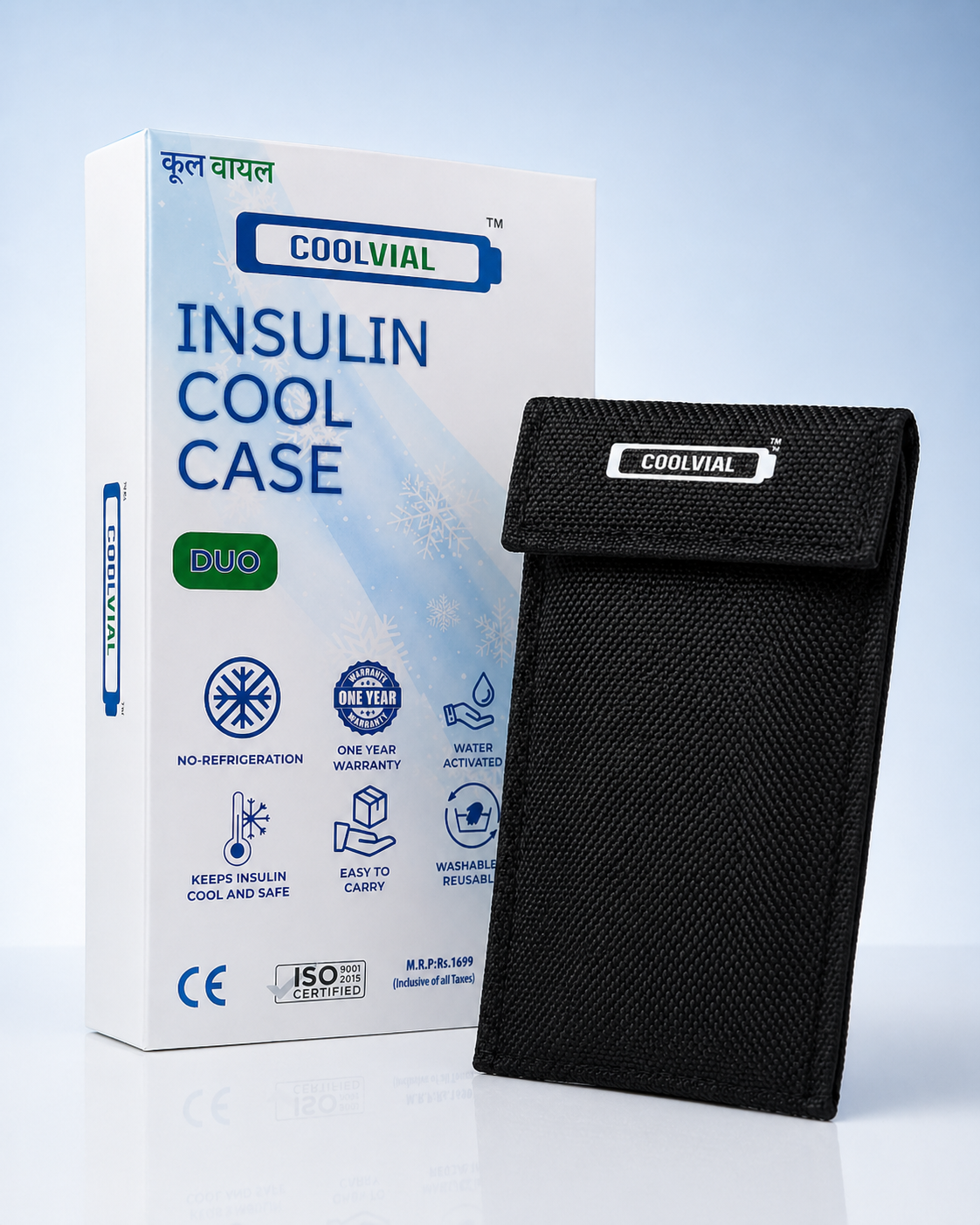
- Always use a cooling case: This is non-negotiable for OSRTC buses. A water-activated evaporative cooler like the COOLVIAL Duo is ideal as it doesn’t require electricity and keeps insulin cool for 12-16 hours.
- Minimize direct sun exposure: If possible, sit on the shaded side of the bus. Keep your bag under the seat or in your lap, away from direct sunlight through windows.
- Plan shorter trips: If your journey is exceptionally long, consider breaking it up or finding alternative transport for parts of the journey.
Autorickshaws & E-rickshaws: Shade vs. Sun
Autorickshaws offer open-air travel, which can be a mixed blessing. While there’s airflow, direct sun exposure is a major issue. E-rickshaws, often with more enclosed cabins, can trap heat.
- Auto/E-rickshaw Best Practices:
- Prioritize shade: Always carry your insulin in a cooling case. In an auto, try to sit on the side that is shaded from the sun.
- Hand-carry if possible: Holding your cooling case in your lap can provide a slight buffer from ambient heat compared to placing it on a hot seat or floor.
- Be aware of trapped heat: E-rickshaws, despite being electric, can become very hot inside if parked in the sun or during long commutes.
App-Based Cabs (Ola/Uber): The AC Denial Culture
While app-based cabs generally offer AC, a common issue in many Indian cities, including Bhubaneswar, is the “AC denial culture” where drivers might be reluctant to switch on the AC to save fuel, especially for shorter rides or when asked by passengers not to.
- Navigating Cab Rides:
- Request AC explicitly: When booking, select AC options. Upon entering, politely but firmly request the AC to be turned on.
- Evaluate quickly: If the AC is weak or off, your cooling case becomes even more crucial. A 15-20 minute ride without AC in 40°C heat can still affect unprotected insulin.
- Keep your cooling case handy: Don’t rely solely on the cab’s AC.
Two-Wheelers: The Dickey Danger (NEVER!)
Many Bhubaneswar residents rely on two-wheelers for their daily commute. It’s crucial to understand that storing insulin in a two-wheeler’s dickey (under-seat storage) is extremely dangerous and must NEVER be done.
-
Why the Dickey is a No-Go:
- Extreme Heat Buildup: The engine underneath the dickey generates immense heat. On a hot day, temperatures inside the dickey can easily soar to 60°C or even higher within minutes. This is far beyond the safe limit for insulin and will render it ineffective almost instantly.
- No Airflow: The enclosed space traps heat, creating an oven-like environment.
-
Safe Two-Wheeler Carry:
- Use a dedicated cooling case: Carry your COOLVIAL Duo in a backpack or sling bag that you wear, ensuring it’s not pressed against your back (which can transfer body heat) but has some airflow.
- Consider a handlebar bag: Some two-wheelers can accommodate small, insulated handlebar bags. Ensure it’s not exposed to direct sun for prolonged periods.
This comprehensive approach to transport choices, coupled with a reliable cooling solution, forms the backbone of safe insulin management for your daily commute with insulin.
4. Insulin Survival: How Long Is Your Medication Safe in Common Bags?
Without a proper cooling case, insulin’s survival time in various bags during a Bhubaneswar summer is alarmingly short. This is where understanding the limits can prevent costly mistakes.
Office Bags & Laptop Sleeves
Many professionals commute daily to areas like Sahid Nagar or the corporate hubs near Konark Sun Temple (nearby) and Khandagiri-Udayagiri Caves. An office bag or laptop sleeve offers virtually no thermal protection.
- Typical Scenario: A standard office bag, even if made of leather or synthetic material, acts as an insulator, trapping ambient heat. Inside, temperatures can easily reach 35-40°C within 30-45 minutes on a hot day.
- Insulin Survival: An insulin pen placed directly in an office bag or laptop sleeve might only remain effective for 30-60 minutes in Bhubaneswar’s peak summer temperatures (38-42°C ambient). Beyond this, its potency will start to degrade rapidly.
- Recommendation: Never rely on an office bag or laptop sleeve alone for insulin storage during your daily commute with insulin.
School Bags & College Backpacks
For children with Type 1 diabetes attending schools or college students at institutions like KIIT or AIIMS Bhubaneswar, the challenge is similar, if not greater, due to longer exposure times and less awareness of storage needs.
- Typical Scenario: School bags and college backpacks, often made of canvas or synthetic fabrics, offer minimal thermal insulation. They are frequently left in direct sunlight (e.g., on a bus seat, in a locker, or on a bench during breaks).
- Insulin Survival: In such conditions, an insulin pen in a school bag or college backpack could degrade significantly within 45-90 minutes. Children, especially, might not monitor their bag’s exposure to heat.
- Recommendation: Parents and students must equip themselves with an effective cooling solution. Education about proper insulin handling is vital for young diabetics.
5. A Smart Daily-Carry Routine for Your Insulin
Establishing a consistent morning prep ritual and daily-carry routine is crucial for diabetes management in Bhubaneswar.
Your Morning Prep Ritual:
- Activate Your Cooling Case: If you’re using a water-activated evaporative cooler like COOLVIAL Duo, submerge it in cool water for the recommended time (e.g., 5-10 minutes). Ensure the crystals expand fully and evenly. Squeeze out excess water to prevent dampness.
- Pack Essential Supplies:
- Your insulin pens/vials (in the cooling case).
- Lancets and test strips.
- Blood glucose meter.
- Alcohol swabs.
- Glucagon emergency kit (if prescribed).
- Fast-acting glucose source (glucose tablets, juice box, candy) for hypoglycemia.
- A small snack.
- Place in Your Bag Strategically: Position your activated cooling case within your office bag, school bag, or college backpack. Avoid placing it directly next to heat-generating items like laptops or power banks.
- Check Local Temperatures: Before leaving, quickly check the day’s forecast. If it’s an exceptionally hot day, you might want to take extra precautions, like ensuring your cooling case is optimally activated.
- Inform Others: Ensure family members, teachers, or colleagues know about your insulin storage needs and where your cooling case is kept.
Daily-Carry Best Practices:
- Always Carry Your Cooler: Make it a habit to never leave home without your activated insulin cooling case, even for short trips to local pharmacies like Apollo Pharmacy or MedPlus.
- Avoid Direct Sunlight: Whether you’re walking, waiting for a bus, or in an auto, keep your bag (and thus your insulin) out of direct sunlight as much as possible.
- Keep it Accessible: Ensure your insulin is easy to access for your doses, but also secure within its cooling case.
- Educate Your Circle: If you have children with diabetes, ensure their teachers and school staff at institutions like St. Joseph’s High School or DAV Public School know how to handle and store their insulin during school hours.
Daily Commute With Insulin in Bhubaneswar — 7 Essential Tips for Metro, Bus & Auto
COOLVIAL keeps insulin safe in India's heat. 48+ hours, no electricity needed.
By integrating these steps into your daily life, you create a robust defense against the heat, safeguarding your insulin and your health.
6. COOLVIAL Duo: Your Reliable Commute Companion
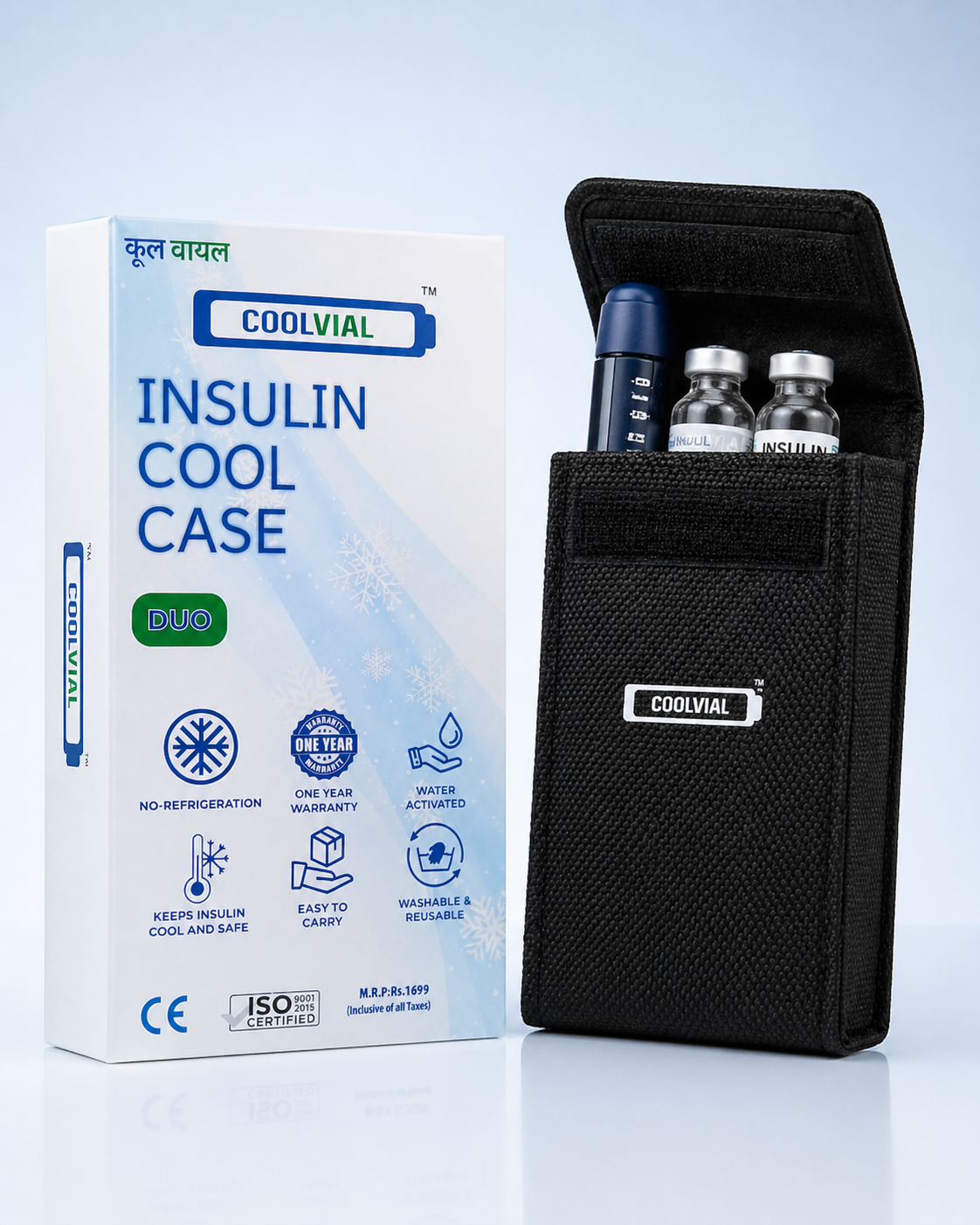
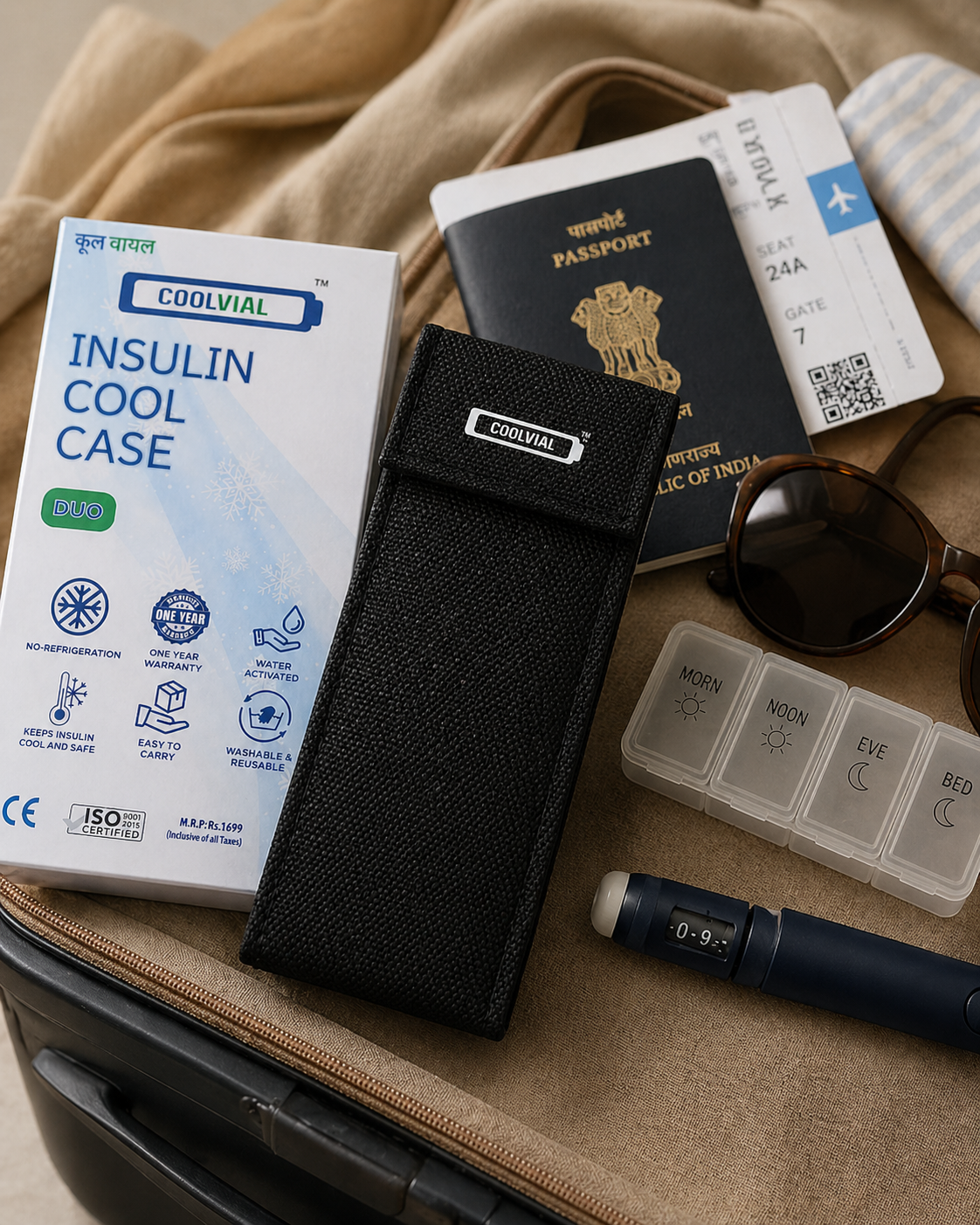
When it comes to safeguarding your insulin during the challenging Bhubaneswar climate, a reliable cooling solution is non-negotiable. The COOLVIAL Duo is specifically designed for the Indian context, offering an effective, electricity-free solution for your daily commute with insulin.
Why COOLVIAL Duo is Ideal for Bhubaneswar:
- Water-Activated Evaporative Cooling: Unlike ice packs that melt and become bulky, COOLVIAL Duo uses a simple water-activated gel pack that provides 12-16 hours of cooling. Just soak it in water for a few minutes, and it’s ready. This is perfect for those 60-90 minute commutes and full workdays.
- Optimal Temperature Range: It maintains insulin at a safe temperature range (typically 18-26°C) even when ambient temperatures reach 38-43°C, ensuring your insulin retains its full potency.
- Capacity for Your Needs: The COOLVIAL Duo holds 2 insulin pens and 1 vial, making it versatile for most users.
- Convenient & Portable: Its compact design fits easily into office bags, school bags, or college backpacks without adding significant weight or bulk.
- Durable & Reusable: Made with quality materials, it’s designed for daily use and comes with a 1-year warranty. It’s CE certified and ISO 9001:2015 compliant, assuring quality.
- Affordable Indian Innovation: Priced at just Rs 1,099 with code COOLHEAL (MRP Rs 1,699), COOLVIAL Duo offers an accessible solution compared to some international brands like FRIO (which typically retail around Rs 1,900 or more). While brands like Outer Woods OW-12 might be slightly cheaper at Rs 999, COOLVIAL Duo offers a proven track record and specific design for insulin pens and vials, making it a trusted choice. Moreover, it’s proudly Made in India.
For Bhubaneswar residents, this means no more worrying about insulin spoilage during your journey from Patia to Old Town, or while attending classes at Kalinga Institute of Medical Sciences (KIMS). The peace of mind that comes with knowing your vital medication is protected is invaluable. Learn more about optimal insulin storage on our insulin storage tips page.
7. Essential Tips for Lunchtime Insulin Storage at Work/College
Your daily commute with insulin doesn’t end when you reach your destination. What happens to your insulin during the day, especially if you need a dose with lunch?
At Offices (e.g., Konark Sun Temple & Khandagiri-Udayagiri Corporate Parks):
Many corporate offices in Bhubaneswar, particularly those in areas like Chandrasekharpur or near the Khandagiri-Udayagiri Caves, provide air-conditioned environments. However, relying solely on office AC can be risky.
- Dedicated Space: If possible, store your COOLVIAL Duo in a cool, dry place away from direct sunlight, such as a drawer or a locker.
- Office Refrigerator (with caution): If your office has a refrigerator, you might be able to store your insulin there. However, ensure it’s not placed near the freezer compartment (which can freeze insulin) and is clearly labeled to avoid accidental disposal. Using a small, sealed container within the fridge is advisable.
- Personal Cooler: The COOLVIAL Duo is designed to keep your insulin safe for 12-16 hours, covering a full workday without needing a refrigerator. Simply leave it in your bag, ensuring the bag itself isn’t exposed to direct sunlight or excessive heat.
- Lunch Break Prep: Take your insulin out of the cooler only when you’re about to administer your dose. Return it promptly after use.
At Schools & Colleges (e.g., KIIT, AIIMS Bhubaneswar, KIMS):
Children and young adults at Bhubaneswar’s educational institutions need specific strategies.
- Educate Staff: Ensure the school nurse, a designated teacher, or hostel warden is aware of your child’s diabetes and the need for proper insulin storage. Provide them with instructions on how to handle the cooling case.
- Locker/Desk Storage: Advise students to keep their COOLVIAL Duo in their locker or desk, away from direct sunlight.
- No Sharing: Emphasize that insulin is personal medication and should not be shared or tampered with.
- Refill/Reactivate: If it’s a very long day, or if the cooling case is older, teach older students how to reactivate their water-activated cooler if needed (e.g., during a sports break, if there’s access to water).
- Emergency Plan: Have a clear emergency plan in place with school authorities, including contact numbers and what to do in case of a hypoglycemic episode.
For more comprehensive guidance on living with diabetes in Bhubaneswar, including local resources and support, refer to our Complete Diabetes Care Guide for Bhubaneswar Residents — 2026 Edition. If you’re planning longer trips, our article on Travelling From Bhubaneswar With Insulin — Airport, Station & Taxi Tips might also be helpful.
Frequently Asked Questions (FAQ)
Q: Can I store my insulin in my office refrigerator in Bhubaneswar? A: You can store insulin in an office refrigerator, but ensure it’s in a sealed container, clearly labeled, and not near the freezer compartment to prevent accidental freezing or cross-contamination.
Q: How do I know if my insulin has gone bad due to heat exposure? A: If your insulin appears cloudy, discolored, has clumps, or if you experience unexplained high blood sugar levels after taking a dose, it might be compromised due to heat exposure.
Q: Is it safe to carry insulin in my pocket during a Bhubaneswar commute? A: Carrying insulin directly in your pocket is generally not recommended as body heat can raise its temperature, and direct sunlight exposure can also be an issue during your daily commute with insulin.
Q: What is the ideal temperature range for storing insulin during travel? A: During travel, insulin should ideally be kept between 18°C and 26°C, within the room temperature range recommended by most manufacturers for opened vials/pens.
Q: How long can insulin be out of the refrigerator in Bhubaneswar’s heat? A: In Bhubaneswar’s peak summer temperatures (38-42°C), unprotected insulin can start to degrade significantly in as little as 30-60 minutes, making a cooling case essential.
Q: Can I reuse a COOLVIAL Duo cooling case? A: Yes, COOLVIAL Duo is fully reusable. Simply reactivate it by submerging it in cool water for a few minutes whenever you need to maintain the cool temperature for your insulin.
Q: Where can I buy insulin in Bhubaneswar if I run out during my commute? A: You can find insulin at major pharmacies across Bhubaneswar, including Apollo Pharmacy outlets in Sahid Nagar, MedPlus stores in Patia, Frank Ross Pharmacy, or through online platforms like 1mg and Generic Aadhaar.
Q: Are there any diabetic-friendly restaurants in Bhubaneswar where I can safely eat out? A: Yes, Bhubaneswar offers several diabetic-friendly dining options. You can explore our guide on Diabetic-Friendly Restaurants & Cafes in Bhubaneswar — Where to Eat Safely for recommendations.
Conclusion: Commute with Confidence
Managing diabetes in a city like Bhubaneswar, with its unique climate and commuting challenges, requires diligence and the right tools. Your daily commute with insulin doesn’t have to be a source of constant worry about spoilage. By understanding the risks, choosing appropriate transport strategies, and adopting a smart daily-carry routine, you can ensure your insulin remains potent and effective.
The COOLVIAL Duo stands as a robust, Made in India solution, specifically designed to meet these needs, offering 12-16 hours of electricity-free cooling. It’s an investment in your health, providing peace of mind whether you’re traveling from Patia to Chandrasekharpur or across the city for a doctor’s appointment at AIIMS Bhubaneswar. Don’t let the Bhubaneswar heat compromise your diabetes management. Empower yourself with reliable protection.
Order COOLVIAL Duo at Rs 1,099 with code COOLHEAL at coolvial.com or via WhatsApp wa.me/918766952300
Medical Disclaimer: This article is for general information. Always consult your endocrinologist or diabetologist before changing insulin storage or dosing practices.
How We Researched This: This article is based on a thorough review of RSSDI (Research Society for the Study of Diabetes in India) guidelines, ICMR-INDIAB (Indian Council of Medical Research - India Diabetes) data for regional diabetes prevalence, local Bhubaneswar hospital directories (AIIMS Bhubaneswar, Apollo Hospitals, KIMS), and information from established pharmacy networks like Apollo Pharmacy. We also considered local meteorological data for Bhubaneswar’s climate patterns.
Daily Commute With Insulin in Bhubaneswar — 7 Essential Tips for Metro, Bus & Auto
Insulin at 2-8°C for 48+ hours. Trusted by 10,000+ Indian diabetics.