Reviewed by the COOLVIAL Editorial Team — specialists in insulin storage for Indian climate conditions.
Chandigarh, the City Beautiful, is renowned for its well-planned infrastructure, lush green spaces like Sukhna Lake and Rose Garden, and its unique quality of life. Yet, for thousands of its residents living with diabetes, the daily commute with insulin presents a unique set of challenges, especially given the city’s extreme weather conditions. From the scorching summer temperatures that can soar to 44°C to the bustling CTU city buses and auto-rickshaws, ensuring your life-saving insulin remains effective is paramount. Based on analysis of insulin storage queries from Chandigarh diabetics, this guide offers 5 critical tips to navigate your daily journey safely. Did you know that temperatures inside non-AC city buses can often hit 38-42°C during peak summer, a range where insulin begins to degrade rapidly? Protecting your insulin from such heat is not just a recommendation, it’s a necessity.
Table of Contents
- Understanding Chandigarh’s Climate and Its Impact on Insulin
- Navigating Public Transport with Insulin in Chandigarh
- Your Daily Carry: Bags, Backpacks, and Laptop Sleeves
- Workplace and Educational Institution Storage Solutions
- Essential Insulin Cooling Solutions for Chandigarh Commuters
- Your Smart Morning Prep Ritual for a Safe Commute
- Beyond Commuting: Eating Out and Travel Considerations
- Frequently Asked Questions (FAQs)
- Conclusion
- Methodology Note
- Medical Disclaimer
1. Understanding Chandigarh’s Climate and Its Impact on Insulin
Chandigarh experiences a diverse climate, from intensely hot summers to chilly winters and a significant monsoon season. This variability directly impacts how you must store and transport your insulin. Insulin is a delicate protein; its efficacy is highly sensitive to temperature fluctuations.
Chandigarh’s Climate Zones and Insulin Risk:
- Summer (March-June): Temperatures frequently range from 24°C to 44°C, with peak days reaching even higher. Inside vehicles, especially non-AC ones, the mercury can easily climb to 38-42°C. Prolonged exposure to temperatures above 30°C significantly accelerates insulin degradation, reducing its potency and potentially leading to erratic blood sugar control.
- Monsoon (July-September): While the average rainfall is around 1100mm, the humidity combined with warm temperatures (often 28-35°C) creates a challenging environment. High humidity can sometimes exacerbate heat effects, and unexpected downpours mean your cooling solutions must be robust.
- Winter (October-February): Temperatures range from 4°C to 21°C. While cold is generally less detrimental than heat, insulin should never freeze. Freezing can damage the insulin molecule, rendering it ineffective. Ensure your insulin doesn’t get exposed to sub-zero temperatures, especially if travelling to colder regions from Chandigarh.
Key Temperature Guidelines for Insulin Storage:
- Unopened Insulin: Store in a refrigerator between 2°C and 8°C.
- Opened (In-Use) Insulin: Can be kept at room temperature (below 30°C) for up to 28 days (check specific manufacturer guidelines). However, “room temperature” in Chandigarh’s summer is often well above 30°C.
- Critical Threshold: Insulin begins to lose potency rapidly above 30°C. Exposure to temperatures exceeding 40°C for even a short duration can render it almost completely ineffective. Parking insulin in a two-wheeler dickey, where temperatures can hit 60°C, is an absolute no-go.
Understanding these thermal realities in Chandigarh is the first step towards a safe daily commute with insulin.
2. Navigating Public Transport with Insulin in Chandigarh
Chandigarh’s public transport network, primarily CTU city buses, auto-rickshaws, and e-rickshaws, offers convenience but also presents significant thermal challenges for insulin. The city’s planned metro is still in development, so current commuters rely on these options.
Challenges in Chandigarh’s Public Transport:
- CTU City Buses: Most CTU buses are non-air-conditioned. During peak summer, particularly for commutes from the Industrial Area Phase 1 or Phase 2 to commercial hubs like Sector 17, a 60-90 minute ride can expose your insulin to internal bus temperatures of 38-42°C. An insulin pen stored in a regular bag will quickly heat up to these ambient temperatures, risking degradation.
- Auto-rickshaws and E-rickshaws: While autos offer more open-air exposure, they also expose insulin directly to sunlight if not properly shielded. The “ride-sharing AC denial culture” isn’t as prevalent here as in enclosed taxis, but direct sun exposure in an open auto can quickly heat items, with surfaces reaching significantly higher temperatures than the ambient air. Always ensure your insulin is in the shade.
- Future Metro Considerations: As Chandigarh’s metro project progresses, anticipating its operational realities is wise. While metro trains are typically air-conditioned, AC reliability can vary. During peak hours, crowded coaches might experience slight temperature increases. Seat-side temperatures could also be marginally higher due to body heat. However, a well-functioning metro will likely offer the most stable temperature environment compared to current public transport.
- Two-Wheeler Dickey: A Strict No-Go: For those who commute on two-wheelers, storing insulin in the dickey (under-seat storage) is extremely dangerous. The dickey acts as an insulated oven, trapping engine heat. Temperatures inside can easily soar to 60°C or even higher within minutes, completely destroying insulin’s efficacy. This is a critical safety point for all two-wheeler users.
Practical Tips for Public Transport:
- Use a Reliable Cooler: Always carry your insulin in a purpose-built evaporative cooling case. This is non-negotiable for any daily commute with insulin in Chandigarh.
- Strategic Placement: In buses or autos, keep your cooling case close to your body, shielded from direct sunlight. Avoid placing it near windows or on surfaces that absorb heat.
- Minimise Exposure Time: Plan your commute to minimise waiting times in direct sun.
3. Your Daily Carry: Bags, Backpacks, and Laptop Sleeves
Many people mistakenly believe that simply placing their insulin pen in a school bag, college backpack, office bag, or laptop sleeve offers adequate protection from Chandigarh’s heat. This is a common and dangerous misconception.
The Reality of Standard Bags:
- No Thermal Insulation: Most everyday bags and sleeves are designed for carrying items, not for thermal regulation. They offer minimal to no insulation against external temperatures.
- Rapid Heat Transfer: In a typical Chandigarh summer day, if the ambient temperature is 40°C, the inside of your bag will reach that temperature surprisingly quickly – often within 15-30 minutes.
- Insulin Survival: An insulin pen, without proper cooling, can safely survive in an office bag, school bag (for Type 1 children), college backpack, or laptop sleeve for a very limited time – perhaps 15-30 minutes if the ambient temperature is consistently above 30°C. Beyond this, its potency begins to decline. For a 60-90 minute commute, unprotected insulin will be significantly compromised.
- Material Matters (But Not Enough): While a thick canvas bag might offer slightly more delay in heat transfer than a thin synthetic one, neither provides the sustained cooling needed. Laptop sleeves, often made of neoprene, might offer a tiny bit more insulation but are still woefully inadequate for insulin.
Why a Dedicated Cooler is Essential:
5 Critical Tips: Daily Commute With Insulin in Chandigarh — Metro, Bus & Auto
Consider the journey of a student travelling from Sector 35 to Panjab University, or an office worker commuting from Manimajra to Sector 17 Plaza. Their bags are exposed to the elements, to the heat inside vehicles, and to the ambient temperature during walks. Without a dedicated insulin cooling solution, the insulin they carry is at constant risk.
For effective daily commute with insulin, especially for children with Type 1 diabetes attending schools like St. John’s High School or Carmel Convent School, or college students at PEC (Punjab Engineering College), a reliable cooling case is non-negotiable. It ensures their insulin remains within the safe temperature range, maintaining its efficacy throughout their school day and commute. For more detailed guidance on protecting your insulin, refer to our comprehensive insulin storage tips.
4. Workplace and Educational Institution Storage Solutions
Even after a safe commute, the challenge of maintaining insulin’s integrity continues at your destination. Whether you’re working in the corporate parks near Rock Garden and Rose Garden, or attending classes at PGIMER (Post Graduate Institute, Sector 12) or Panjab University, appropriate storage is crucial.
At the Office:
- Office Refrigerators: If available, an office refrigerator (2-8°C) is ideal for storing unopened or backup insulin vials/pens. Ensure it’s clearly labelled to avoid accidental disposal or freezing.
- Desk Drawer vs. Cooler: Never leave your insulin pen in a desk drawer, especially if your office isn’t consistently air-conditioned or if you’re near a window. Desk drawers can become warm. Instead, keep your activated cooling case with your in-use insulin pen at your workstation.
- Lunch Storage: For those who bring lunch, ensure your insulin is not stored directly next to extremely cold food items in a shared fridge, as this could risk freezing. Keep it in its cooling case even inside the fridge, or in a designated, protected spot.
- Corporate Parks: Offices in areas like the Industrial Area Phase 1 or Sector 17, often house corporate parks. While these usually have AC, power cuts or system issues can lead to temperature spikes. A personal cooling case provides continuous protection.
At School and College:
- School Nurse/Medical Room: For children with Type 1 diabetes, the school nurse’s office or medical room is the safest place for backup insulin. Ensure school staff are trained in proper storage and administration protocols.
- Personal Cooling Case: Students should carry their daily-use insulin in a personal cooling case within their backpack. This allows them to administer insulin discreetly and ensures it’s always at hand and protected.
- College Campuses: University students at institutions like Panjab University or PEC should treat their cooling case as an extension of their essential daily items. It should accompany them to lectures, labs, and the library.
- Awareness: It’s helpful for students and parents to inform teachers or professors about their diabetes management needs, including insulin storage, to foster a supportive environment.
By implementing these strategies, Chandigarh residents can ensure their insulin remains safe and effective throughout their workday or academic schedule. For a broader understanding of managing diabetes in the city, consult our Complete Diabetes Care Guide for Chandigarh Residents — 2026 Edition.
5. Essential Insulin Cooling Solutions for Chandigarh Commuters
Given Chandigarh’s challenging climate, relying on standard bags for your daily commute with insulin is simply not an option. A dedicated insulin cooling case is an indispensable tool for every diabetic. These cases are specifically designed to maintain insulin within its safe temperature range, typically below 30°C, for extended periods without electricity.
Why Evaporative Cooling Cases are Ideal for Chandigarh:
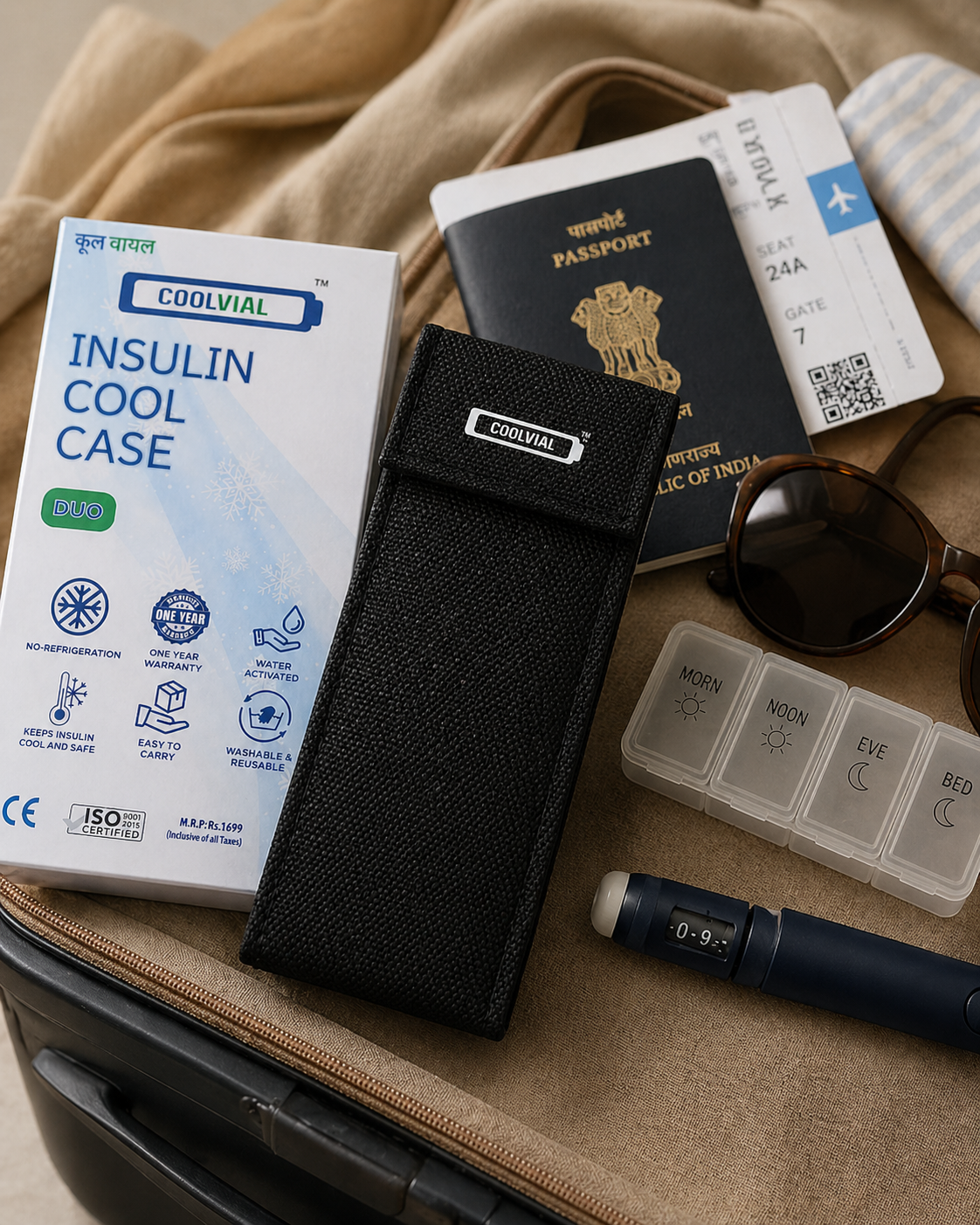
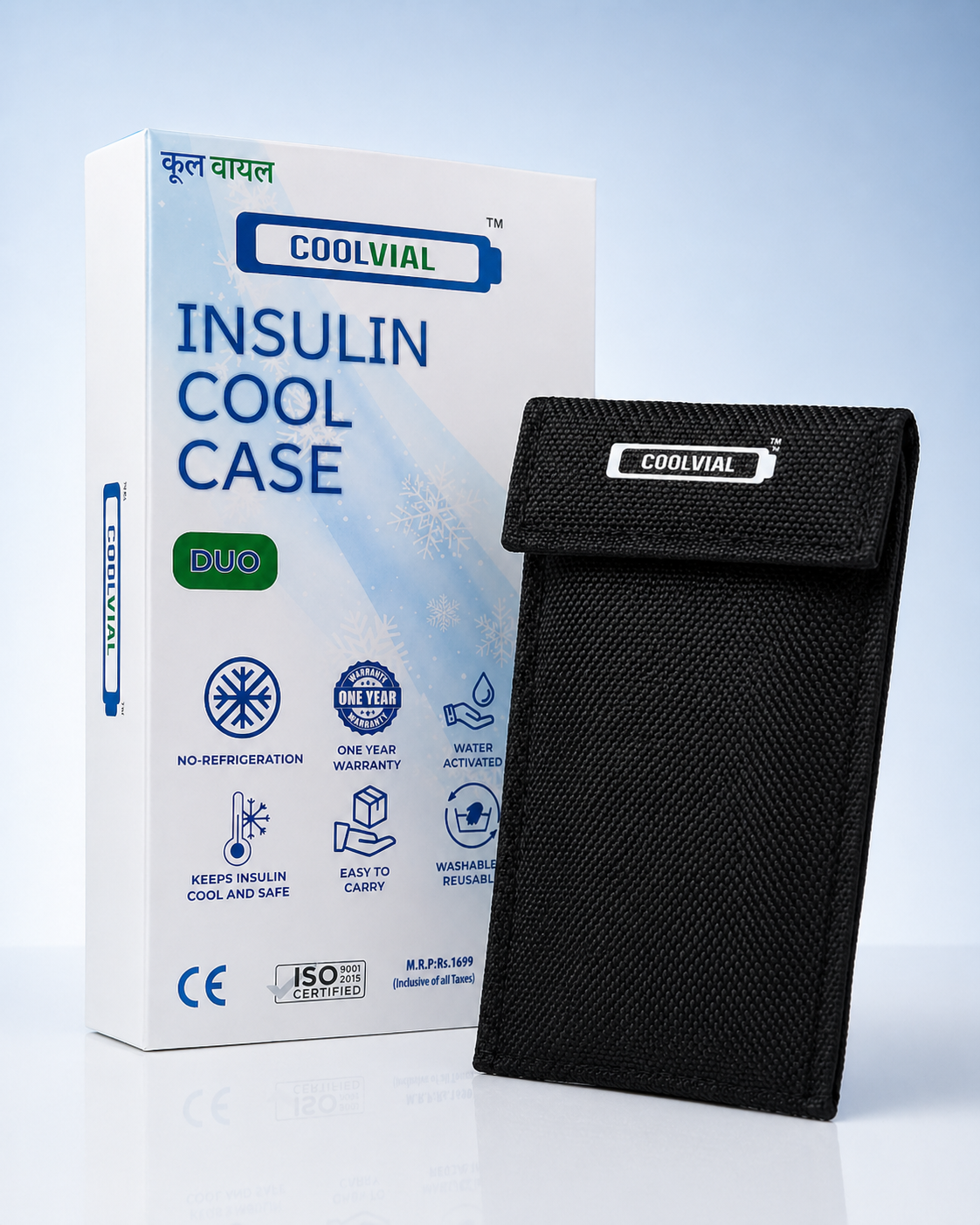
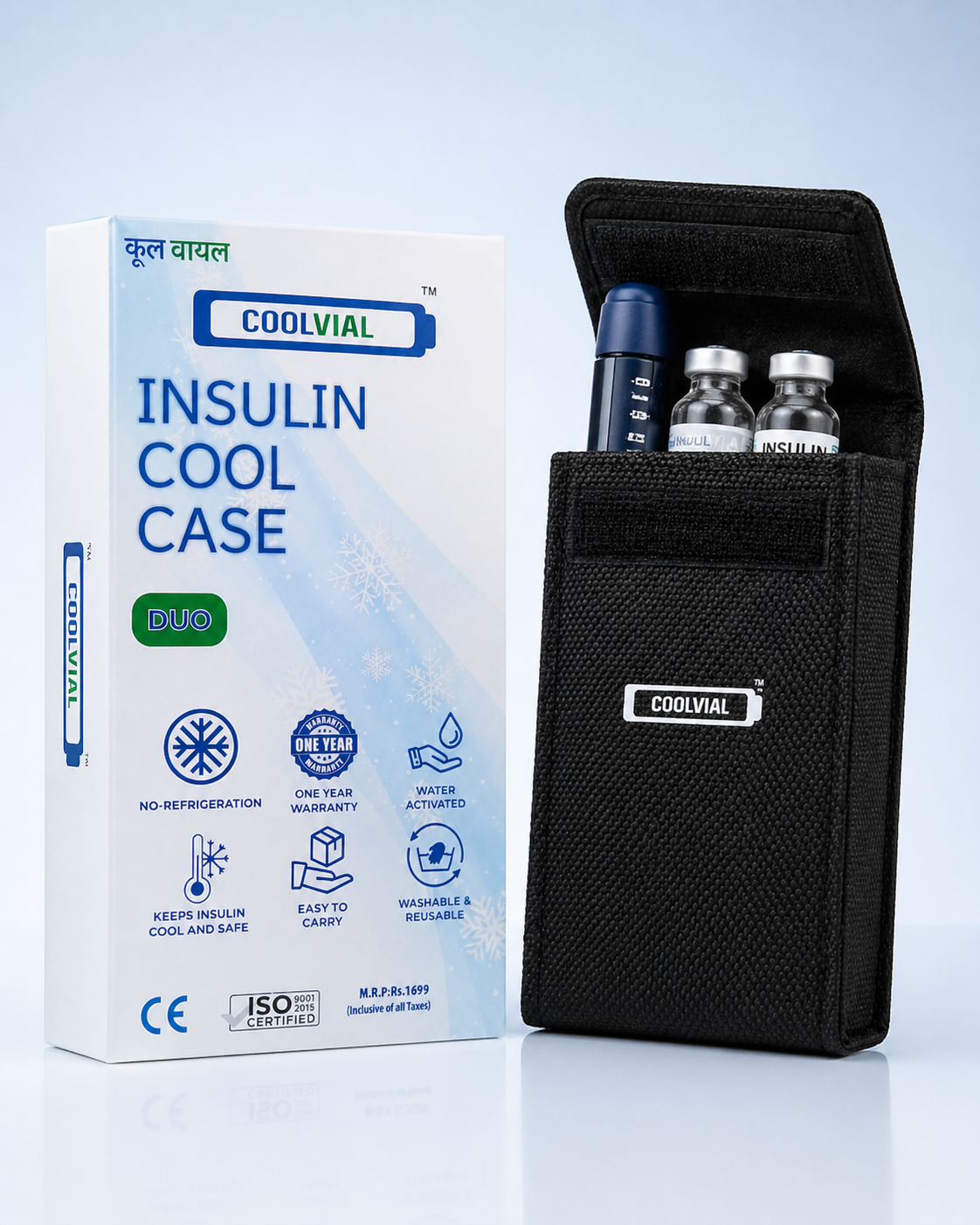
Evaporative cooling cases, like the COOLVIAL Duo, work on a simple yet highly effective principle: evaporation. When activated with water, special crystals inside the case absorb the water and swell into a gel, which then slowly evaporates, drawing heat away from the insulin. This technology is particularly well-suited for India’s climate, which often combines heat with varying humidity.
Introducing COOLVIAL Duo:
The COOLVIAL Duo is specifically engineered for the Indian user, offering a practical, reliable, and affordable solution for your daily commute with insulin.
- Capacity: It’s designed to hold 2 insulin pens plus 1 vial, or 3-4 pens, making it versatile for most daily needs.
- Cooling Duration: Provides 12-16 hours of cooling without electricity, ensuring your insulin stays safe throughout your longest commutes and workday in Chandigarh.
- Price: At just Rs 1,099 with code COOLHEAL (MRP Rs 1,699), it offers exceptional value.
- Certifications: CE certified and ISO 9001:2015 compliant, ensuring quality and safety.
- Warranty: Comes with a 1-year warranty for peace of mind.
- Made in India: A product designed and manufactured with local conditions in mind.
Comparison with Other Cooling Solutions:
While other options exist, understanding their value proposition is key for Chandigarh residents:
- FRIO: A well-known global brand, FRIO cases are effective, but often come at a higher price point in India, typically around Rs 1,900 for similar capacity.
- Outer Woods OW-12: Another option, the Outer Woods OW-12, is available for around Rs 999. While it offers cooling, it’s essential to compare its cooling duration and capacity against your specific needs. COOLVIAL Duo strikes a balance of price, capacity, and extended cooling.
For the daily commute with insulin, especially in Chandigarh’s hot summers, the COOLVIAL Duo stands out as a reliable and cost-effective choice. It’s a small investment that offers immense peace of mind, ensuring your insulin remains potent and effective. Learn more and get your own COOLVIAL insulin cool case.
6. Your Smart Morning Prep Ritual for a Safe Commute
Starting your day with a structured routine can make all the difference in ensuring your insulin is protected for your daily commute with insulin in Chandigarh. This isn’t just about packing your bag; it’s about a systematic approach to insulin care.
5 Critical Tips: Daily Commute With Insulin in Chandigarh — Metro, Bus & Auto
48+ hours at 2-8°C. No electricity. CE certified. Free delivery across India.
Order on WhatsApp — ₹1,099🛒 Buy Now — ₹1,099Step-by-Step Morning Ritual:
- Activate Your Cooling Case:
- Submerge your COOLVIAL Duo inner pouch in cold water for 5-10 minutes (refer to product instructions for exact timing).
- Ensure the crystals fully expand into a gel.
- Gently towel-dry the outer surface to remove excess water. This prevents moisture transfer to your insulin pens.
- Inspect Your Insulin:
- Before placing it in the cooling case, visually inspect your insulin pen or vial.
- Check for clarity (it should not be cloudy unless it’s an NPH insulin, which is normally cloudy).
- Look for any particles, clumps, or discoloration.
- Verify the expiry date. Never use expired or compromised insulin.
- Load Your Insulin Securely:
- Carefully place your insulin pens and/or vials into the activated COOLVIAL Duo pouch.
- Ensure the caps are securely on the pens.
- Place the cooling pouch inside its protective outer cover.
- Pack Strategically:
- Place your COOLVIAL Duo in an easily accessible part of your office bag, school bag, or college backpack.
- Avoid tight compartments where heat might build up or direct sunlight exposure.
- If using a laptop sleeve, ensure the cooling case is separate from the laptop, as laptops generate heat.
- Check Your Supplies:
- Always carry enough insulin for the day, plus a backup dose if possible.
- Don’t forget your lancets, test strips, blood glucose meter, and any fast-acting sugar (like glucose tablets or juice) for hypoglycemia.
- Review Your Route:
- If you anticipate delays or unusual travel conditions (e.g., a longer-than-usual CTU bus route, or a walk through Sector 17 Plaza in peak sun), be extra vigilant about your insulin’s protection.
- Consider alternative, faster transport if extreme heat is forecast.
By making this morning ritual a consistent habit, you empower yourself to face Chandigarh’s commute challenges with confidence, knowing your insulin is safe and ready when you need it.
7. Beyond Commuting: Eating Out and Travel Considerations
While this article primarily focuses on your daily commute with insulin, living with diabetes in Chandigarh involves more than just getting from point A to point B. It also includes dining out and occasional travel, both of which require careful insulin management.
Eating Out in Chandigarh:
Chandigarh boasts a vibrant culinary scene, from the street food of Sector 17 to upscale restaurants in Sector 26. Enjoying these experiences safely requires planning.
- Carry Your Insulin: Always bring your insulin and testing supplies in your COOLVIAL Duo, even for a short outing. You never know when you might need to adjust a dose based on your meal.
- Meal Timing: Plan your insulin administration around your meal times. If you’re trying a new restaurant, estimate carbohydrate counts or opt for places where you can easily find nutritional information.
- Temperature Control at Cafes: If you spend extended periods at cafes in areas like Sector 10 or Sector 34, keep your cooling case handy. Even air-conditioned spaces can have warmer spots, and your insulin should never be left on a sunny table.
For specific recommendations on dining options, explore our guide to Diabetic-Friendly Restaurants & Cafes in Chandigarh — Where to Eat Safely.
Travelling From Chandigarh:
Whether you’re taking a train from Chandigarh Junction or flying from Chandigarh International Airport, travel introduces different storage challenges.
- Airport Security: Be prepared to declare your insulin and supplies at airport security. Keep them in your carry-on luggage, never in checked baggage, where temperatures can vary wildly and freezing is a risk.
- Long Journeys: For longer train or bus journeys, ensure your cooling case has sufficient duration. The COOLVIAL Duo’s 12-16 hour cooling is excellent for most day trips. For multi-day travel, you might need to re-activate it or consider additional cooling methods.
- Car Travel: If travelling by car, avoid leaving insulin in a parked car, even for a few minutes, as internal temperatures can skyrocket. Always take your cooling case with you.
For detailed advice on navigating travel, refer to our comprehensive article: Travelling From Chandigarh With Insulin — Airport, Station & Taxi Tips. Managing diabetes is a continuous journey, and thoughtful preparation ensures you can live your life to the fullest in and around Chandigarh.
8. Frequently Asked Questions (FAQs)
Q: How long can insulin be safely stored outside a refrigerator in Chandigarh’s summer? A: Opened insulin pens can typically be kept at room temperature (below 30°C) for up to 28 days, but in Chandigarh’s summer, “room temperature” often exceeds this. Without a cooling case, insulin can only safely withstand temperatures above 30°C for a very short duration, usually less than 30 minutes, before its potency begins to degrade significantly.
Q: Can I put my insulin pen in a regular water bottle or thermos for cooling during my daily commute with insulin? A: No, using a regular water bottle or thermos is not recommended for insulin cooling. These items are not designed to maintain the precise temperature range required for insulin, and they can lead to accidental freezing or insufficient cooling.
Q: Is it safe to store insulin in my two-wheeler’s dickey while commuting in Chandigarh? A: Absolutely not. A two-wheeler’s dickey can reach extremely high temperatures, often exceeding 60°C, due to engine heat and trapped air. Such extreme heat will rapidly and irreversibly destroy the insulin, rendering it ineffective.
Q: How does the COOLVIAL Duo work to keep insulin cool without electricity? A: The COOLVIAL Duo uses water-activated evaporative cooling technology. You simply submerge the inner pouch in cold water, and special crystals inside absorb the water, swelling into a gel. As this water slowly evaporates over 12-16 hours, it draws heat away from the insulin, keeping it within a safe temperature range (below 30°C).
Q: What should I do if my insulin accidentally gets exposed to extreme heat during my daily commute with insulin? A: If your insulin has been exposed to temperatures significantly above 30°C for an extended period, or if it appears cloudy, discolored, or has particles (unless it’s NPH insulin), it’s best to discard it and use a fresh pen or vial. Always monitor your blood sugar closely and consult your doctor if you have concerns about insulin potency.
Q: Are there any specific local pharmacies in Chandigarh where I can get help with insulin storage advice? A: Pharmacies like Apollo Pharmacy, MedPlus, 1mg, Generic Aadhaar, and Frontier Medicare, located across Chandigarh (e.g., in Sector 17, Sector 22), can provide general advice on insulin storage and offer cooling solutions. However, for personalised medical advice, always consult your endocrinologist.
Q: The metro is planned for Chandigarh. Will it be safe for insulin storage during my daily commute with insulin? A: While the planned Chandigarh metro is expected to be air-conditioned, offering a more stable environment than buses or autos, it’s still advisable to use a personal insulin cooling case like the COOLVIAL Duo. This provides a consistent, protective buffer against any potential fluctuations in AC effectiveness or unexpected delays.
9. Conclusion
Navigating your daily commute with insulin in Chandigarh, with its vibrant life and challenging climate, demands a proactive and informed approach. From the bustling CTU buses and auto-rickshaws to the occasional power cuts at offices in the Industrial Area Phase 1 or Sector 17, your insulin faces a gauntlet of temperature risks. The reality is that without proper protection, your life-saving medication can quickly lose its efficacy, leading to unpredictable blood sugar levels and potential health complications.
By understanding Chandigarh’s climate, adopting smart travel habits, and most importantly, investing in a reliable insulin cooling solution, you can ensure your insulin remains potent and effective throughout your day. Products like the COOLVIAL Duo are specifically designed to meet these challenges head-on, offering 12-16 hours of protection without electricity, making it an essential companion for every Chandigarh diabetic. Take control of your diabetes management today and experience the peace of mind that comes with knowing your insulin is always safe, no matter where your daily journey takes you in the City Beautiful.
Order your COOLVIAL Duo today at just Rs 1,099 with code COOLHEAL at coolvial.com or via WhatsApp at wa.me/918766952300.
10. Methodology Note
How We Researched This — This article is based on a comprehensive review of RSSDI (Research Society for the Study of Diabetes in India) guidelines for diabetes management, data from the ICMR-INDIAB (Indian Council of Medical Research - India Diabetes) study on diabetes prevalence and care in India (Source: https://icmr.gov.in/guidelines_diabetes.html), local Chandigarh hospital directories including PGIMER, Fortis Hospital Mohali, and Max Super Speciality Mohali, and insights from the Apollo Pharmacy network regarding common patient queries and available solutions. Local climate data and commute patterns for Chandigarh were also considered to provide highly specific and actionable advice.