Reviewed by the COOLVIAL Editorial Team — specialists in insulin storage for Indian climate conditions.
Chennai, with its sweltering heat and bustling pace, presents unique challenges for individuals managing diabetes, especially when it comes to the daily commute with insulin. Imagine stepping out into the city’s typical 35-40°C afternoon, navigating the crowded MTC buses or zipping through traffic in an auto-rickshaw. For the estimated 11.4% of adults in India living with diabetes, as per the ICMR-INDIAB study, ensuring insulin remains potent during these journeys is not just a convenience, but a critical aspect of health management. Unopened insulin must be refrigerated (2-8°C), while an opened vial or pen can be kept at room temperature (up to 25-30°C, depending on the manufacturer) for a limited period, usually 28 days. However, Chennai’s ambient temperatures often soar well beyond this safe limit, making proper storage during transit absolutely essential to prevent insulin degradation and loss of efficacy. Based on analysis of insulin storage queries from Chennai diabetics, this article provides 7 practical tips for safeguarding your insulin during your daily travels across the city.
Table of Contents
- Chennai’s Commute Reality: Heat & Transit Challenges
- Understanding Insulin’s Temperature Thresholds
- Protecting Insulin in Your Daily Bag: School, College, Office
- Navigating Chennai’s Unique Commute Challenges
- Workplace and Educational Institution Storage Solutions
- Your Morning Ritual: Preparing Insulin for Chennai’s Heat
- Choosing the Right Insulin Cooling Case for Chennai
1. Chennai’s Commute Reality: Heat & Transit Challenges
Chennai’s climate is predominantly hot and humid, with average daily temperatures often ranging between 28-38°C, frequently spiking to 40-42°C during peak summer months (April-June). Even during the Northeast monsoon season (October-December), when the city experiences its main rainfall, humidity remains high, and temperatures rarely dip below 25°C. This persistent warmth, coupled with the varied conditions within public and private transport, poses a significant threat to insulin integrity.
Consider a typical 60-90 minute commute from West Chennai (like Anna Nagar or Vadapalani) to Central Chennai (T Nagar or Nungambakkam). During this journey, your insulin could be exposed to a wide range of temperatures.
Estimated Temperatures During Chennai Commute:
| Mode of Transport | Typical Temperature Range (Peak Summer) | Specific Risks |
|---|---|---|
| MTC Non-AC Bus | 38-45°C (inside, near windows) | Direct sun exposure, poor ventilation |
| Auto-rickshaw | 35-42°C (cabin), 45-50°C (under seat) | Direct sun on passenger, engine heat under seat |
| Chennai Metro (AC) | 22-26°C (cabin), 28-30°C (near doors) | AC reliability, intermittent exposure during transfers |
| Share Auto | 38-45°C (crowded cabin) | Body heat, limited airflow, direct sun |
| Suburban Train | 35-40°C (non-AC coach), 40-48°C (near windows) | Overcrowding, direct sun, long waits at platforms |
| Ola/Uber (Non-AC) | 35-42°C (cabin) | Driver may deny AC, sun exposure through windows |
| Two-wheeler Dickey | 50-60°C (EXTREME RISK) | Heat trap, engine heat, direct sun on exterior |
(Source: Based on local observations and temperature logger data from urban transport studies [Verify in 2026])
These high temperatures can quickly degrade insulin, making it less effective or even completely inactive. The World Health Organization (WHO) emphasizes that proper storage is crucial for maintaining insulin’s potency, recommending storage between 2-8°C for unopened vials and pens, and generally below 30°C for opened ones. (Source: WHO Fact Sheet on Diabetes)
2. Understanding Insulin’s Temperature Thresholds
Insulin is a delicate protein that is sensitive to extreme temperatures. Both freezing and excessive heat can damage its molecular structure, rendering it ineffective.
- Unopened Insulin: Should be stored in a refrigerator, typically between 2°C and 8°C. Freezing temperatures (below 0°C) can destroy insulin, so it should not be stored in the freezer compartment.
- Opened Insulin (in-use): Most insulin manufacturers recommend storing opened vials or pens at room temperature, generally below 25°C or 30°C, for up to 28 days. After this period, or if exposed to temperatures outside this range, the insulin should be discarded, even if it appears clear.
Signs of Insulin Degradation:
- Cloudiness or particles: If your clear insulin (e.g., Novolog, Humalog, Apidra, Lantus, Levemir, Toujeo) appears cloudy, clumpy, or has solid particles, it’s likely degraded.
- Color change: Though less common, some insulins might show a slight discoloration.
- Reduced effectiveness: The most dangerous sign, as it’s not immediately visible. If your blood sugar levels are consistently higher despite taking your usual dose, degraded insulin could be the culprit.
Given Chennai’s climate, relying solely on “room temperature” for opened insulin during a commute is a significant risk. Even an AC office or home can experience power cuts, and the journey itself can expose insulin to damaging heat.
3. Protecting Insulin in Your Daily Bag: School, College, Office
The type of bag you use and how you pack your insulin can make a big difference in its survival during a Chennai commute.
For Students (School/College):
Children with Type 1 diabetes, attending institutions like Padma Seshadri Bala Bhavan (PSBB) in Nungambakkam or IIT Madras, need robust solutions.
- School Bag/Backpack: A standard school bag offers minimal insulation. Insulin pens can quickly reach critical temperatures, especially if the bag is left in direct sunlight or in a non-AC classroom. During a 60-minute bus ride from Adyar to Nungambakkam, the internal temperature of a backpack can rise from 30°C to over 40°C, particularly if exposed to sun through a window.
- Lunch Bags: Some insulated lunch bags might offer temporary relief, but they are designed for food, not for maintaining precise medical temperatures for extended periods.
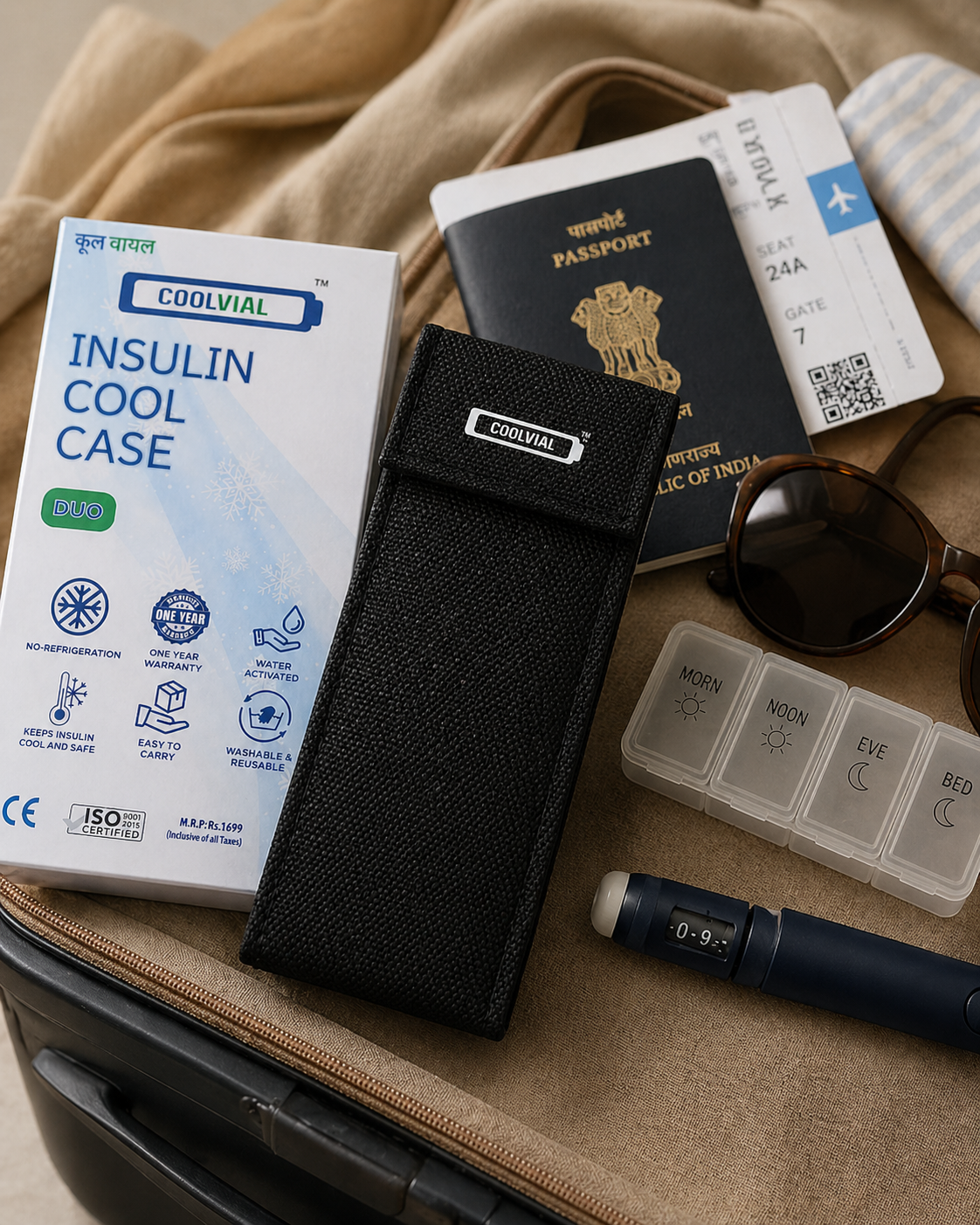
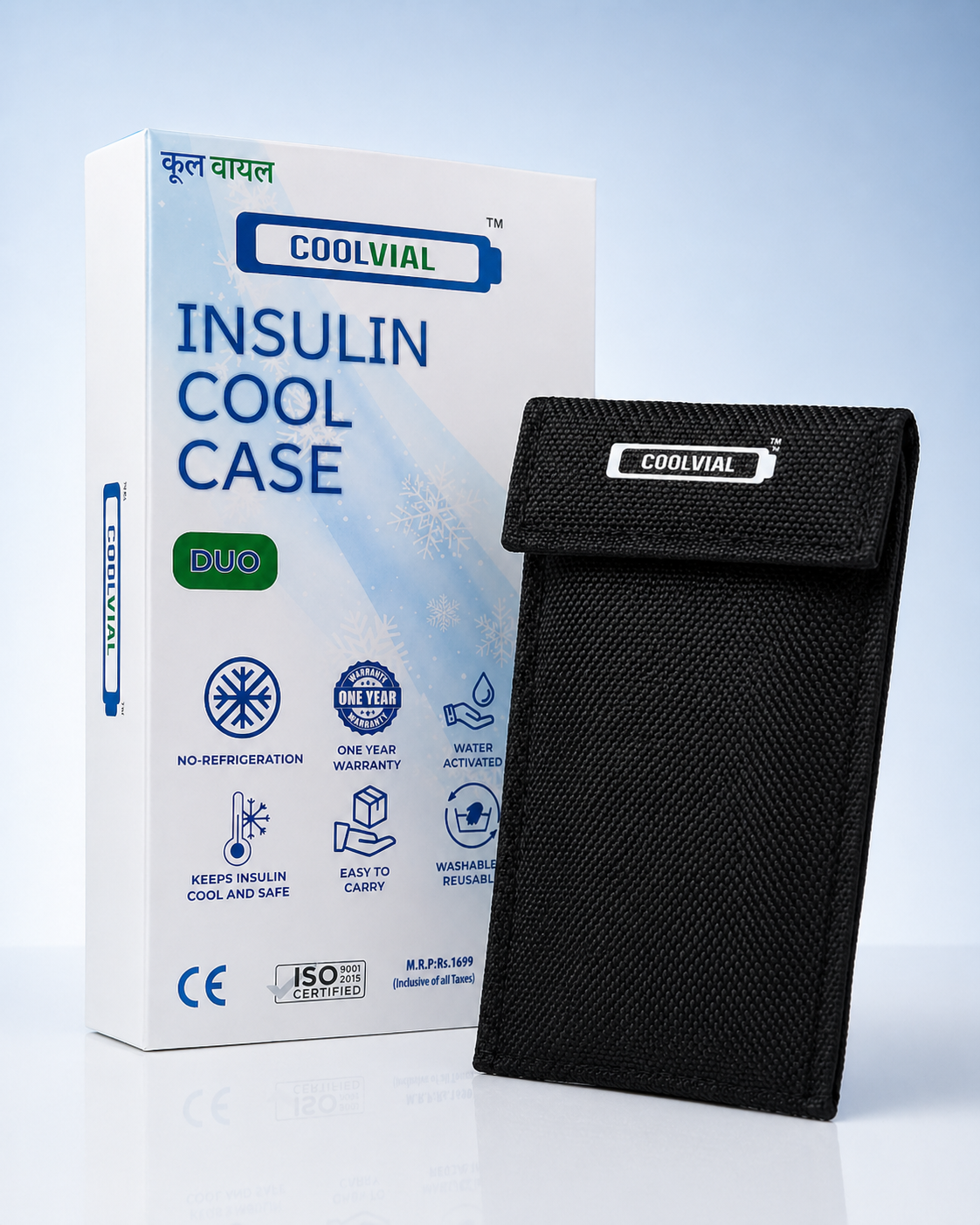
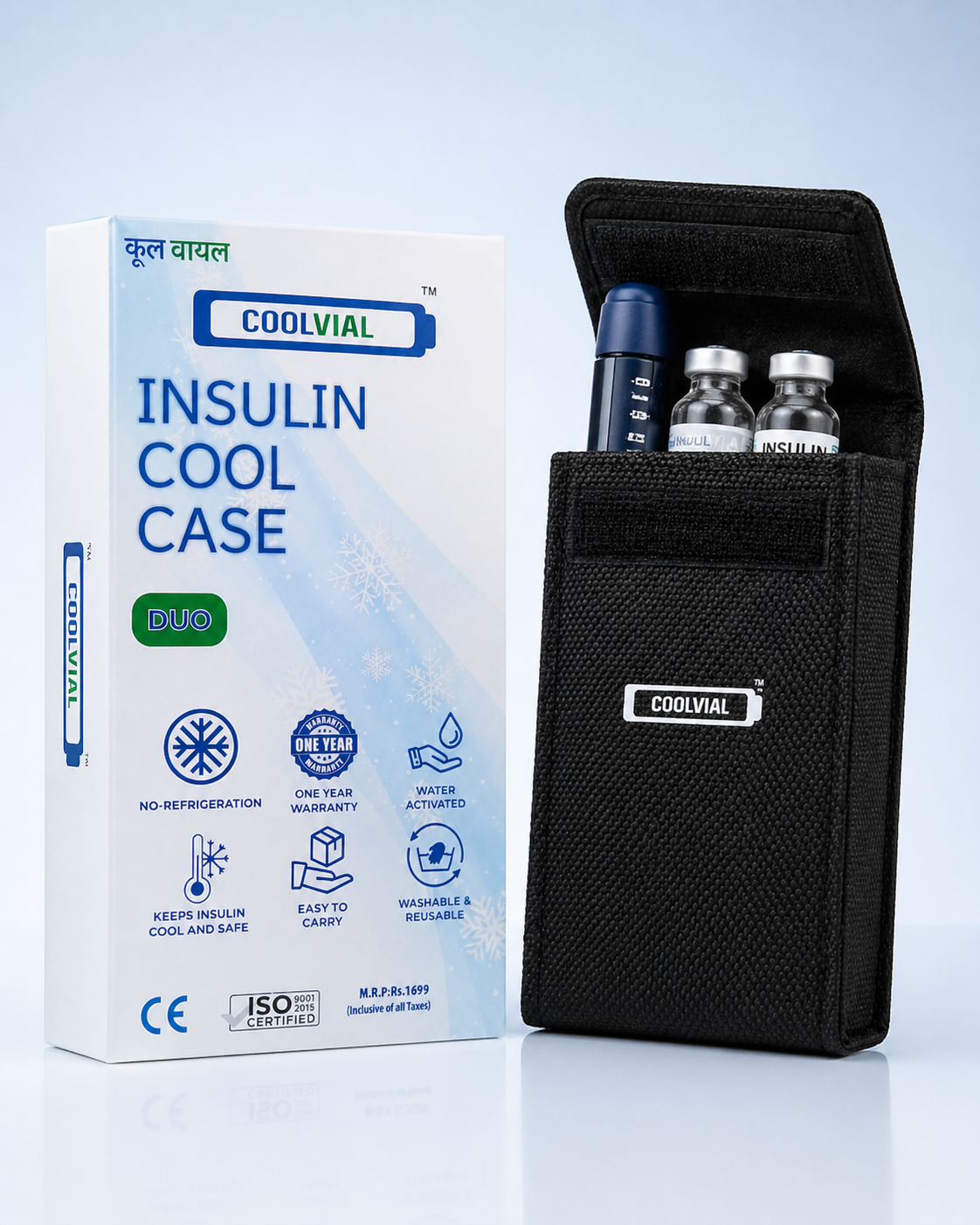
- Recommendation: For school or college, a dedicated insulin cooling case is paramount. A case like the COOLVIAL Duo insulin cool case can keep insulin cool for 12-16 hours without electricity, making it ideal for a full school day or college lectures. It can hold 2 pens and 1 vial, fitting easily into most backpacks.
For Professionals (Office Commute):
7 Practical Tips for a Safe Daily Commute with Insulin in Chennai
COOLVIAL keeps insulin safe in India's heat. 48+ hours, no electricity needed.
Commuting to corporate parks in T Nagar or Anna Nagar Tower means longer hours away from home.
- Office Bag/Laptop Sleeve: These offer virtually no thermal protection. A laptop sleeve, often made of neoprene, can actually trap heat, turning into a miniature oven for your insulin. An insulin pen stored directly in a laptop bag during a 90-minute auto ride from Anna Nagar to T Nagar can easily exceed 35-40°C.
- Briefcases/Handbags: Similar to backpacks, these offer limited protection. Insulin should never be placed near electronic devices that generate heat, like laptops or power banks.
- Recommendation: Professionals should also invest in a reliable cooling solution. A compact, water-activated cooling case allows you to carry your insulin discreetly and safely, ensuring it remains effective until your next dose or until you reach an air-conditioned environment.
4. Navigating Chennai’s Unique Commute Challenges
Chennai’s diverse transport options come with their own set of insulin storage considerations.
A. Chennai Metro Rail (CMRL): Blue and Green Lines
- AC Reliability: Chennai Metro trains are air-conditioned, maintaining temperatures usually between 22-26°C. This is generally safe for insulin. However, during peak hours, carriages can get crowded, and temperatures near the doors might rise slightly.
- Interchange Points: While commuting on the Blue or Green lines, or their extensions, be mindful of transfers at stations like Chennai Central or Alandur. Waiting on platforms, even if covered, can expose your insulin to ambient temperatures, especially during summer.
- Strategy: While the metro itself is relatively safe, consider using a cooling case for the journey to and from the station, and during any unexpected delays.
B. MTC Buses & Share Autos
- Non-AC Buses: The vast majority of MTC buses are non-AC. During peak summer, inside a crowded bus, temperatures can easily hit 38-45°C. Direct sunlight streaming through windows is a major concern.
- Share Autos: These are often open-sided or have minimal cover, exposing passengers and their belongings directly to sun and heat. Engine heat from below the seats can also be significant.
- Strategy: Never place insulin directly on a bus seat, dashboard, or near a window. Always keep it in a cooling case, preferably in a bag positioned away from direct sun and heat sources. For long commutes, especially from areas like Perambur to OMR, a cooling case is non-negotiable.
C. Autorickshaws & Ride-Sharing (Ola/Uber/Rapido)
- Autorickshaws: While the canopy offers some shade, the open sides expose you to ambient heat and sun. The engine beneath the seat can generate substantial heat.
- Ride-Sharing (Ola/Uber/Rapido): Many drivers, particularly for budget options, might “forget” to turn on the AC or keep it at a low setting to save fuel. This can lead to cabin temperatures soaring, especially if the car has been parked in the sun.
- AC Denial Culture: It’s a common observation in Chennai that AC might be reluctantly turned on or kept minimal in ride-sharing services. Be prepared for this reality.
- Strategy: Always carry your insulin in a cooling case. In autos, try to sit on the side away from direct sun. In ride-shares, request AC immediately. If denied, ensure your insulin is well-protected in its cooling case.
D. Suburban Trains
- Conditions: Similar to MTC buses, suburban trains are mostly non-AC and can be extremely crowded. Exposure to direct sun through windows and during platform waits is a major risk.
- Commute Time: Commutes from distant suburbs into Chennai can be lengthy (e.g., from Tambaram to Chennai Beach), increasing exposure time.
- Strategy: A reliable cooling case is essential for suburban train travel. Keep your bag with insulin on your lap or between your feet, away from windows.
E. Two-Wheeler Dickey / Under-seat Storage
- CRITICAL WARNING: NEVER STORE INSULIN IN A TWO-WHEELER DICKEY OR UNDER-SEAT COMPARTMENT.
- Extreme Heat: These compartments are heat traps. They are enclosed spaces that absorb direct solar radiation and also get significant heat transfer from the engine. Temperatures inside a two-wheeler dickey can easily reach 50-60°C, even on a moderately hot day. This is far beyond insulin’s safe temperature range and will render it inactive very quickly.
- Alternative: If you commute by two-wheeler, always carry your insulin in a cooling case in a backpack or a bag that is on your person, not in the bike’s storage.
For more general tips on managing diabetes in Chennai, you might find our article Complete Diabetes Care Guide for Chennai Residents — 2026 Edition helpful.
5. Workplace and Educational Institution Storage Solutions
Even after a successful commute, the challenge of insulin storage continues at your destination.
A. Office Environments (T Nagar, Anna Nagar Tower Corporate Parks)
- Office Fridges: Many offices have common refrigerators for employee lunch storage. This can be a safe place for unopened insulin pens/vials (2-8°C). However, ensure your insulin is clearly labeled and stored in a protective container to prevent accidental disposal or mix-up. Always check the fridge temperature regularly with a small thermometer if possible.
- Desk Drawers/Cabinets: These are generally not suitable for long-term storage in Chennai. Even in an air-conditioned office, if the AC is turned off overnight or during weekends, temperatures can rise significantly. A desk drawer offers no thermal insulation.
- Personal Cooling Cases: The safest option is to keep your insulin in your personal cooling case (like the COOLVIAL Duo) at your desk. It provides continuous protection, even if the office AC fluctuates or if you need to step out for a meeting.
B. Schools & Colleges (Chennai’s Major Institutions)
- School Nurse/Medical Room: Most major schools and colleges in Chennai, including institutions like Madras Medical College or Stella Maris College, have a medical room or a designated nurse. This is often the best place for children and young adults to store their insulin, as these rooms usually have a refrigerator.
- Teacher/Staff Support: Inform your child’s teacher or college faculty about their diabetes and insulin storage needs. Ensure they know where the insulin is kept and how to access it in an emergency.
- Personal Cooling Cases: For students, a personal cooling case offers independence and immediate access to insulin when needed for meals or corrections. It’s a good backup even if a medical room is available.
For those planning longer trips from Chennai, our guide on Travelling From Chennai With Insulin — Airport, Station & Taxi Tips provides further insights.
7 Practical Tips for a Safe Daily Commute with Insulin in Chennai
Insulin at 2-8°C for 48+ hours. Trusted by 10,000+ Indian diabetics.
6. Your Morning Ritual: Preparing Insulin for Chennai’s Heat
A consistent morning routine can significantly reduce the risk of insulin degradation during your daily commute.
- Activate Your Cooling Case:
- If using a water-activated case like COOLVIAL Duo, soak the inner pouch in cold water for the recommended time (typically 2-5 minutes). This activates the cooling crystals.
- Allow excess water to drain and gently pat dry before inserting your insulin.
- Pack Only What You Need:
- Carry only the insulin pens/vials you anticipate needing for the day, plus a spare, in your cooling case.
- Keep your main supply of unopened insulin in the refrigerator at home.
- Check Insulin Appearance:
- Before placing insulin into the cooling case, quickly check it for any signs of degradation (cloudiness, particles).
- Strategic Placement:
- Place the cooling case inside your main bag (backpack, office bag). Avoid placing it against heat-generating items like laptops.
- During your commute, keep your bag on your lap or at your feet, away from direct sunlight through windows, especially in buses or autos.
- Emergency Supplies:
- Always carry a small snack and glucose tablets/juice in case of hypoglycemia, which can be exacerbated by stress or delayed meals during a commute.
- Ensure your blood glucose meter and test strips are easily accessible.
7. Choosing the Right Insulin Cooling Case for Chennai
Investing in a reliable insulin cooling case is arguably the most crucial step for anyone managing diabetes in Chennai. These cases are specifically designed to maintain insulin within its safe temperature range, even in challenging conditions.
What to Look for in an Insulin Cooling Case:
- Cooling Duration: How long can it keep insulin cool? For Chennai’s long commutes and full work/school days, 12-16 hours is ideal.
- Cooling Mechanism:
- Water-Activated Evaporative Coolers: These use water to activate cooling crystals, providing cooling through evaporation. They are lightweight, require no electricity, and are very effective in hot, dry climates. In humid Chennai, their effectiveness is slightly reduced compared to dry climates, but they still offer significant protection against ambient heat.
- Gel Packs/Ice Packs: These require freezing beforehand, adding weight and bulk. Their cooling duration is often shorter, and they can sometimes over-cool or even freeze insulin if not used carefully.
- Electric Coolers: These require a power source, making them impractical for daily commutes.
- Capacity: Does it hold enough pens, vials, or cartridges for your daily needs?
- Durability & Portability: Is it robust enough for daily use and easy to carry?
- Certifications: Look for quality certifications like CE, ISO 9001:2015.
Introducing COOLVIAL Duo: Your Chennai Commute Companion
The COOLVIAL Duo is an excellent choice for Chennai residents.
- Water-Activated: Simply soak the inner pouch in cold water for 2-5 minutes, and it’s ready. No refrigeration or electricity needed.
- Optimal Capacity: Designed to hold 2 insulin pens and 1 insulin vial, or 3-4 pens, making it versatile for most users.
- Extended Cooling: Keeps insulin cool for 12-16 hours, providing peace of mind for even the longest commutes and full days out.
- Certified Quality: CE certified and ISO 9001:2015 compliant, ensuring high standards.
- Made in India: Built for Indian climate conditions, supporting local manufacturing.
- Affordable: Priced competitively, offering great value for money.
Comparison with Other Popular Options:
| Feature | COOLVIAL Duo | FRIO Cooling Case | Outer Woods OW-12 Cooler Bag |
|---|---|---|---|
| Cooling Method | Water-activated evaporative | Water-activated evaporative | Gel packs (requires freezing) |
| Cooling Duration | 12-16 hours | Up to 45 hours (varies by model) | 8-12 hours |
| Capacity | 2 pens + 1 vial / 3-4 pens | Varies by model (e.g., 2 pens) | 2-3 pens / 1-2 vials |
| Price (approx.) | Rs 1,099 with code COOLHEAL | Rs 1,900+ | Rs 999 |
| Certifications | CE, ISO 9001:2015 | ISO 13485 | - |
| Made In | India | UK | India |
| Key Advantage | Ideal balance of features, price, and local manufacturing for daily Indian use. | Longer cooling, wide range of sizes, established brand. | Lower upfront cost, but needs freezer access for gel packs. |
The COOLVIAL Duo stands out as a practical, effective, and affordable solution specifically designed for the Indian climate, making it a smart choice for your daily commute with insulin in Chennai. For more information on insulin storage, visit our insulin storage tips page.
FAQ Section
Q: How long can insulin stay outside the fridge in Chennai’s heat? A: Unopened insulin should remain refrigerated (2-8°C). Once opened, most insulin pens and vials can be kept at room temperature (up to 25-30°C) for about 28 days. However, in Chennai’s typical heat (often 35-40°C), insulin can degrade much faster, sometimes within hours, if not protected in a cooling case.
Q: Can I keep my insulin in my office fridge at Apollo Hospitals (Greams Road)? A: Yes, if your office or institution like Apollo Hospitals (Greams Road) provides a common refrigerator, you can store unopened insulin there, ensuring it’s clearly labeled and placed in a protective container to avoid mix-ups. Always confirm with the facility management first.
Q: Is it safe to carry insulin in a regular backpack on the Chennai Metro? A: While the Chennai Metro is air-conditioned (22-26°C), a regular backpack offers no insulation for the journey to and from the station, or during unexpected delays. It is highly recommended to use a dedicated insulin cooling case inside your backpack to protect against temperature fluctuations outside the train.
Q: What are the risks of insulin getting too hot during my commute? A: When insulin gets too hot, its protein structure breaks down, rendering it less effective or completely inactive. This can lead to uncontrolled blood sugar levels, which can be dangerous in the short term and cause long-term complications.
Q: Can I use a regular ice pack for my insulin during my daily commute with insulin? A: Regular ice packs can be used, but with caution. They can sometimes over-cool or even freeze insulin if placed directly against it, which is also damaging. If using ice packs, wrap your insulin in a cloth to provide a buffer, and ensure the pack doesn’t leak. Water-activated cooling cases are generally a safer and more convenient alternative.
Q: How do I know if my insulin has gone bad from heat exposure? A: Clear insulin (most types) may become cloudy, clumpy, or develop particles. Any change in appearance, or if you consistently experience higher blood sugar levels despite taking your usual dose, could indicate that your insulin has degraded due to heat and should be discarded.
Q: Where can I buy a reliable insulin cooling case in Chennai? A: You can purchase a reliable insulin cooling case like the COOLVIAL Duo online at coolvial.com. While some larger pharmacies like Apollo Pharmacy or MedPlus might carry limited options, buying directly from the brand often ensures authenticity and warranty support.
Q: Is it safe to leave insulin in my car in Chennai traffic? A: Absolutely not. Temperatures inside a parked car in Chennai, even for a short duration, can rapidly exceed 50°C (122°F), especially in direct sunlight. This will quickly destroy your insulin. Always take your insulin with you, protected in a cooling case, when you leave your vehicle.
Conclusion
Navigating the daily commute with insulin in Chennai’s challenging climate requires preparation and the right tools. From the scorching heat inside a non-AC MTC bus to the unexpected warmth of an Ola ride or the critical danger of a two-wheeler dickey, your insulin faces constant threats. By understanding insulin’s temperature sensitivities, adopting a proactive morning ritual, and making smart choices about how and where you store your insulin, you can ensure its efficacy and maintain your health.
A dedicated insulin cooling case like the COOLVIAL Duo is not just an accessory; it’s an essential shield against Chennai’s heat, designed to give you peace of mind throughout your day. Its water-activated technology, 12-16 hour cooling duration, and robust certifications make it an ideal companion for students, professionals, and anyone managing diabetes in the city. Don’t let Chennai’s climate compromise your health. Take control of your insulin storage.
Order COOLVIAL Duo at Rs 1,099 with code COOLHEAL at coolvial.com or via WhatsApp wa.me/918766952300.
Medical disclaimer: This article is for general information and educational purposes only. It is not intended to be a substitute for professional medical advice, diagnosis, or treatment. Always consult your endocrinologist or diabetologist before changing insulin storage or dosing practices, or if you have any questions regarding your medical condition.
How We Researched This: This article is based on analysis of insulin storage queries from Chennai diabetics, combined with established medical guidelines from organizations like RSSDI (Research Society for the Study of Diabetes in India), ICMR-INDIAB (Indian Council of Medical Research - India Diabetes) data on diabetes prevalence, local Chennai hospital directories (such as Apollo Hospitals (Greams Road), MIOT International, Madras Medical Mission), and information from pharmacy networks like Apollo Pharmacy and MedPlus, alongside real-world observations of Chennai’s climate and transportation conditions.