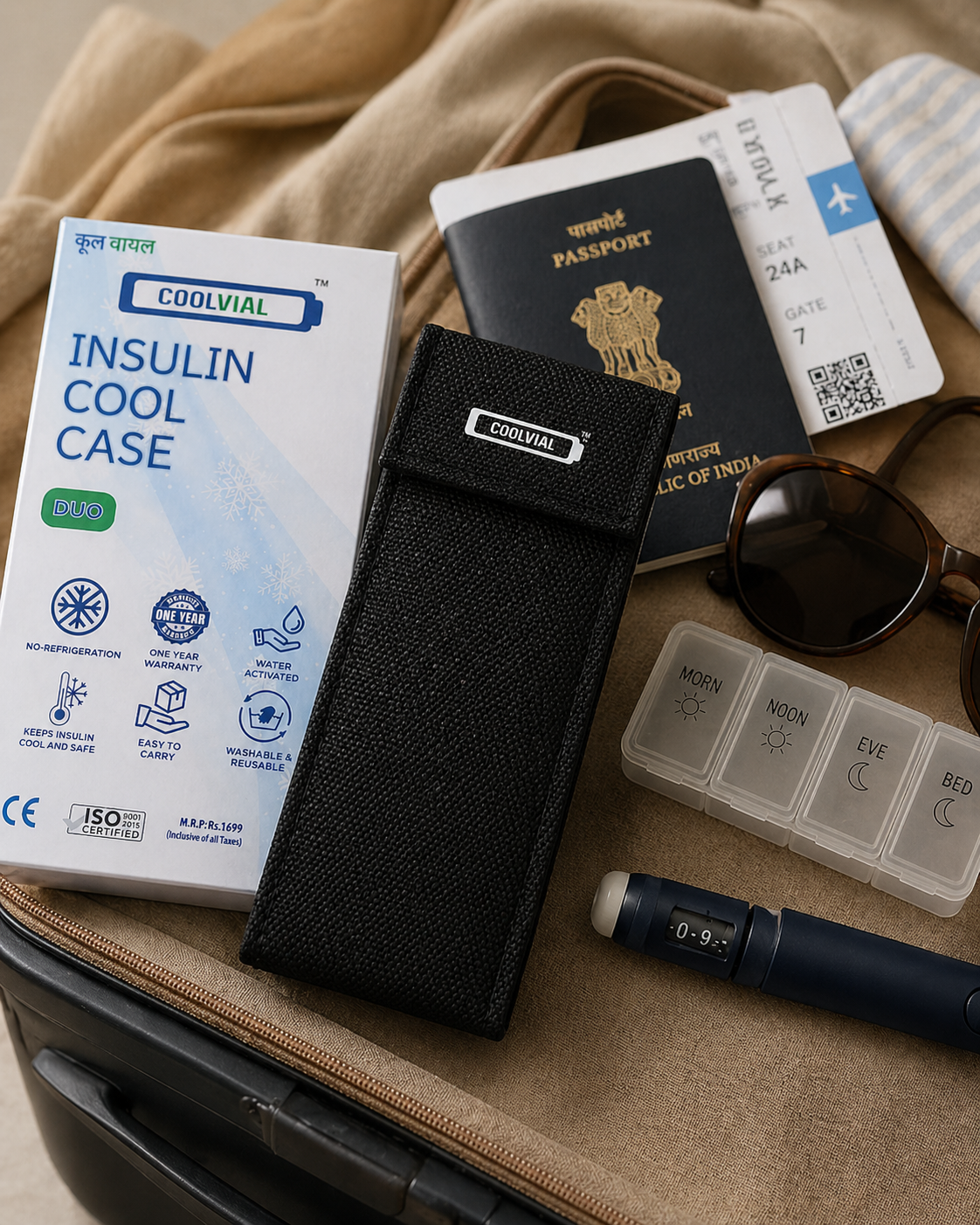
Reviewed by the COOLVIAL Editorial Team — specialists in insulin storage for Indian climate conditions.
Dehradun, the picturesque capital of Uttarakhand, offers a unique blend of urban life and natural beauty. However, for residents managing diabetes, the daily commute with insulin presents a specific set of challenges, especially given the city’s varied climate. From the cool winters (5-20°C) to scorching summers (up to 38-42°C) and heavy monsoons, maintaining insulin’s efficacy requires careful planning. Based on analysis of insulin storage queries from Dehradun diabetics, we’ve found that temperature fluctuations during travel are a major concern. Did you know that insulin exposed to temperatures above 30°C for even a few hours can begin to lose potency, potentially leading to inconsistent blood sugar control? This article provides 5 essential, practical tips to ensure your insulin remains safe and effective during your daily commute in Dehradun, whether you’re heading from Clement Town to Rajpur Road or anywhere in between.
Table of Contents
- Dehradun’s Climate: Why Insulin Needs Extra Care
- Navigating Dehradun’s Commute: Buses, Autos, and E-Rickshaws
- How Long Can Insulin Survive in Your Bag?
- Insulin Safety at Work and Educational Institutions
- Your Essential Daily-Carry Insulin Cooler Routine
- Why COOLVIAL Duo is Your Smart Commute Partner
- Avoiding Common Insulin Storage Mistakes in Dehradun
- Frequently Asked Questions (FAQ)
- Conclusion: Smart Choices for a Healthy Commute
Dehradun’s Climate: Why Insulin Needs Extra Care
Dehradun experiences a diverse climate that directly impacts insulin storage. Understanding these conditions is the first step in safeguarding your medication.
- Summer (March to June): Temperatures can soar to 38-42°C, especially in May and June. Inside non-AC vehicles, temperatures can be even higher, creating a significant risk for insulin. Insulin vials and pens, once opened, should ideally be stored below 30°C and away from direct sunlight. Unopened insulin must be refrigerated between 2-8°C.
- Monsoon (July to September): While temperatures might drop slightly (around 22-30°C), high humidity (often above 80%) can still be detrimental. Moisture can damage insulin pens and cooling cases not designed for humid conditions. Dehradun receives approximately 2200mm of rainfall during this period, making waterproof protection crucial.
- Winter (October to February): The weather is generally pleasant, ranging from 5-20°C. While less of a heat concern, extreme cold (below 2°C) can also damage insulin, causing it to freeze and lose potency. Though rare in Dehradun, protecting insulin from cold drafts, especially on two-wheelers, is important.
Impact of Temperature on Insulin:
| Temperature Range | Effect on Insulin | Recommendation |
|---|---|---|
| Below 2°C | Freezes, loses potency | Avoid |
| 2-8°C | Ideal storage for unopened | Refrigerate |
| 8-30°C | Acceptable for opened, short-term | Keep cool, away from sun |
| Above 30°C | Rapid degradation, loss of potency | Avoid |
| 38-42°C (Vehicle interior) | Significant damage in <1 hour | Critical to use cooling case |
According to the Research Society for the Study of Diabetes in India (RSSDI), proper insulin storage is paramount for effective diabetes management, emphasizing the need to avoid temperature extremes (Source: RSSDI Publications).
Navigating Dehradun’s Commute: Buses, Autos, and E-Rickshaws
Unlike major metropolitan areas, Dehradun does not currently have a metro system. Commuters rely heavily on city buses, auto-rickshaws, e-rickshaws, and share autos. Each mode presents unique challenges for maintaining the integrity of your insulin during the daily commute with insulin.
-
City Buses:
- Challenge: Non-AC city buses, especially during peak summer (May-June), can reach internal temperatures of 38-42°C. A 60-90 minute commute from Clement Town to Rajpur Road, a central upmarket area, can expose insulin to these damaging temperatures for extended periods.
- Tip: Always carry your insulin in a dedicated cooling case. Choose a seat away from direct sunlight filtering through windows. Keep your bag on your lap or between your feet rather than in overhead racks, which can be hotter.
-
Auto-Rickshaws & E-Rickshaws:
- Challenge: While providing some airflow, auto-rickshaws offer limited protection from direct sun exposure, which can heat insulin rapidly. E-rickshaws are often slower and even more exposed. The “ride-sharing AC denial culture” in many shared cabs or private autos, where drivers might refuse to turn on AC to save fuel, further exacerbates heat issues.
- Tip: If possible, choose an auto where you can sit in the shade. Keep your cooling case protected in a backpack or on your lap, never on the seat where it might be directly exposed to sun for the duration of your ride.
-
Share Autos:
- Challenge: These are often crowded, and your bag might get jostled or end up in a spot with direct sun.
- Tip: Prioritize keeping your insulin cooling case close to you, ideally in a personal bag that provides an extra layer of insulation.
-
Two-Wheelers:
- Challenge: Storing insulin in a two-wheeler dickey is a strict NEVER. The confined space, combined with engine heat and direct sun, can push temperatures inside a dickey to a staggering 60°C or even higher, ruining insulin in minutes.
- Tip: If you commute by two-wheeler, invest in a high-quality, compact cooling case that can be securely carried in a small backpack worn on your back, away from engine heat.
Commute Time Temperature Exposure: A typical 60-90 minute commute from Clement Town to Rajpur Road, or from Patel Nagar to FRI, can be critical. Without proper protection, insulin in a regular bag will quickly exceed safe temperatures.
How Long Can Insulin Survive in Your Bag?
The question of how long an insulin pen safely survives in an office bag, school bag (for Type 1 children), college backpack, or laptop sleeve is critical for Dehradun’s climate. The answer, unfortunately, is “not long enough” without a cooling solution.
-
Without a Cooling Case:
- Summer (38-42°C ambient): In an office bag, school bag, or backpack, insulin can reach critical temperatures (above 30°C) within 30-45 minutes in direct sunlight or within a closed, hot vehicle. Its potency will begin to degrade noticeably within 1-2 hours.
- Monsoon (22-30°C ambient, high humidity): While less of a heat risk, humidity can still affect pen mechanisms. Insulin might remain stable for 2-3 hours in shade, but direct sun exposure still poses a threat.
- Winter (5-20°C ambient): Insulin is generally safe from heat in winter. However, prolonged exposure to temperatures below 2°C (e.g., leaving a bag in an unheated car overnight during a cold snap) could be an issue.
-
With a Basic Insulated Pouch:
- These might offer an additional 30-60 minutes of protection compared to a regular bag, but they are often insufficient for Dehradun’s peak summer conditions or longer commutes.
5 Essential Tips for Your Daily Commute With Insulin in Dehradun
- With a Water-Activated Evaporative Cooling Case (like COOLVIAL Duo):
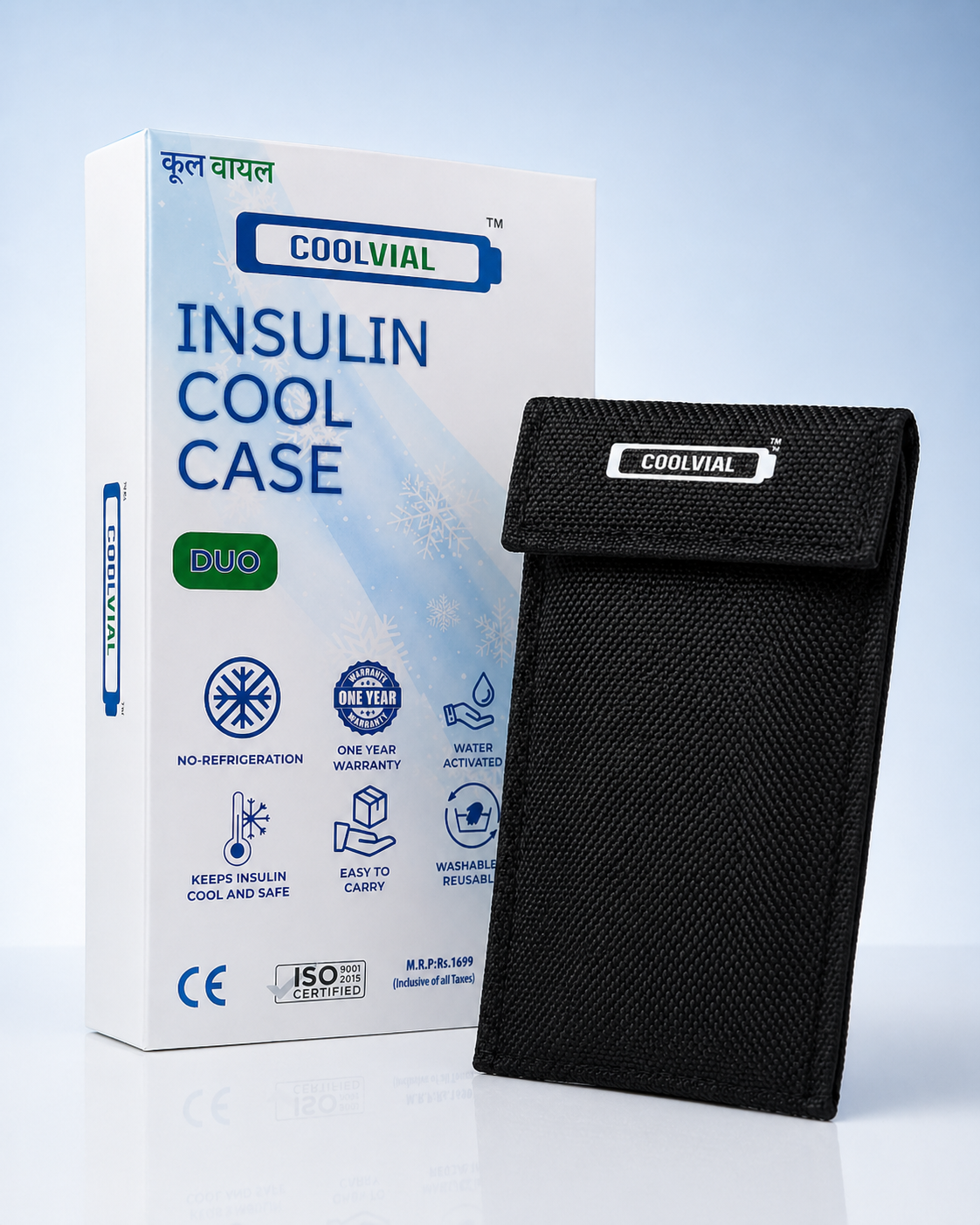
- Designed for climates like Dehradun’s, these cases can keep insulin cool for 12-16 hours below 30°C, even when ambient temperatures reach 38-42°C. This provides a reliable buffer for daily commutes, office hours, and even unexpected delays.
Key Factors Affecting Insulin Life in a Bag:
- Ambient Temperature: The higher the outside temperature, the faster insulin heats up.
- Direct Sunlight: Direct sun exposure significantly accelerates heating.
- Bag Material & Color: Darker bags absorb more heat. Thicker, insulated bags offer minimal protection.
- Airflow: Poor airflow in a tight backpack or laptop sleeve traps heat.
- Duration of Exposure: The longer the exposure, the greater the degradation.
For a Dehradun resident, relying on a standard bag for insulin storage during a daily commute is a risky gamble.
Insulin Safety at Work and Educational Institutions
Once you arrive at your destination in Dehradun, whether it’s an office, school, or college, the need for proper insulin storage continues.
For Office Professionals
Dehradun has several corporate parks and institutions, such as those near Sahastradhara and the Forest Research Institute (FRI). Many offices may have AC, but relying solely on office AC can be risky if there are power cuts or if you leave your desk for meetings.
-
Storing Insulin at Your Desk:
- Keep your insulin in its cooling case, even at your desk.
- Avoid placing it directly under a window where sunlight might hit it, or near heat sources like computers or printers.
- If your office has a refrigerator, you can store unopened vials/pens there, but remember to take them out in their cooling case before your commute home.
-
Lunch Storage:
- If you carry lunch, keep your insulin separate from any hot food items. A cooling case will prevent cross-contamination of temperatures.
- Example: At corporate campuses near Sahastradhara, where many employees bring lunch, ensure your insulin is never left in a lunch bag that might be exposed to heat from food or ambient office temperatures.
For Students (School & College)
Dehradun is home to many reputed schools and colleges. For Type 1 diabetic children and college students, carrying insulin safely is paramount.
-
School Tips:
- Communication: Parents must inform the school nurse or designated staff about the child’s diabetes and insulin storage needs.
- Cooling Case: Children should be taught to always carry their insulin in a personal cooling case like COOLVIAL Duo in their school bag.
- Safe Spot: Instruct children to store their school bag in a cool, shaded spot in the classroom, away from windows or radiators.
- Lunch Break: Ensure insulin is not left in a hot classroom during lunch breaks. If possible, have the child take their cooling case to the dining area or a designated cool spot.
- Example: At institutions like Welham Girls’ School or Doon School (while not necessarily daily commute for all, principles apply), ensuring proper storage and staff awareness is key.
-
College Tips:
- Personal Responsibility: College students have more autonomy, making personal responsibility for insulin storage even more critical.
- Backpack Storage: Always keep your insulin cooling case within your backpack, but ensure the backpack itself is not left in direct sun (e.g., on a bench outside during a break).
- Hostel Living: For students living in hostels, ensure your room has a cool, secure place for your insulin. If a mini-fridge is allowed, it’s ideal for unopened pens/vials.
- Campus Cafeterias: When at the Pacific Mall food court or other campus cafeterias, keep your cooling case with you and avoid leaving it on tables exposed to sun or heat.
Your Essential Daily-Carry Insulin Cooler Routine
A consistent routine is your best defense against insulin degradation during your daily commute with insulin in Dehradun.
Morning Prep Ritual
- Activate Your Cooling Case:
- For water-activated cases like COOLVIAL Duo, submerge the inner pouch in cool water for 5-10 minutes as per instructions. Squeeze out excess water gently. This activates the evaporative cooling technology.
- If you use an ice pack cooler, ensure the ice packs are thoroughly frozen overnight.
- Pack Your Insulin:
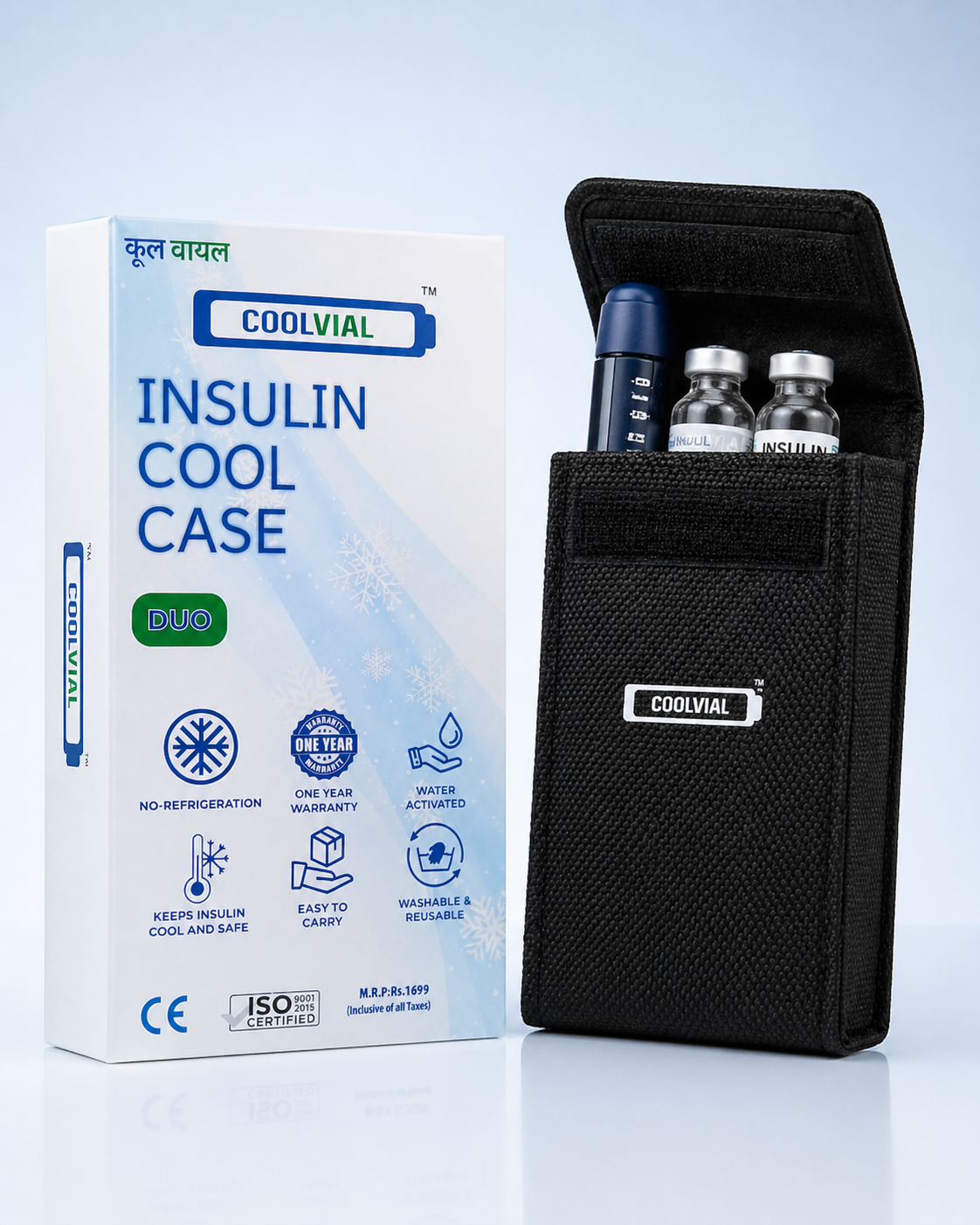
- Place your insulin pens and vials into the activated cooling pouch/case. The COOLVIAL Duo is designed to hold 2 pens and 1 vial comfortably.
- Assemble Your Diabetes Kit:
- In addition to your insulin, pack your glucometer, test strips, lancets, alcohol swabs, and a quick source of sugar (glucose tablets or juice box) for hypoglycemia.
- Choose Your Bag Wisely:
- Place your cooling case inside a larger personal bag (backpack, office bag). Avoid placing it in outer pockets that might get more sun exposure.
- COOLVIAL Duo’s advantage: Its compact size (fits easily in most bags) and robust cooling for 12-16 hours make it ideal for Dehradun’s long commutes and varied daily schedules. Other options like FRIO (around Rs 1,900) offer similar technology but can be more expensive, while simpler insulated pouches like Outer Woods OW-12 (around Rs 999) might not offer the same duration or temperature control in extreme heat.
Throughout Your Day
5 Essential Tips for Your Daily Commute With Insulin in Dehradun
48+ hours at 2-8°C. No electricity. CE certified. Free delivery across India.
Order on WhatsApp — ₹1,099🛒 Buy Now — ₹1,099- Keep it Close: Whether in a bus, auto, or at your destination, keep your insulin cooling case close to you. Avoid leaving it in unattended bags or in places prone to direct sunlight.
- Monitor Conditions: Be aware of your surroundings. If you feel uncomfortably hot, your insulin likely does too. A quick check of your cooling case’s outer layer can give you an indication of its performance.
- Reactivation (if needed): For evaporative coolers, if you’re on an extended trip or face unusually high temperatures, you can reactivate the cooling pouch by re-submerging it in water. However, for a typical 12-16 hour day, the COOLVIAL Duo should perform reliably on a single activation.
Why COOLVIAL Duo is Your Smart Commute Partner
When it comes to the daily commute with insulin in a city like Dehradun, a reliable cooling solution is non-negotiable. The COOLVIAL Duo stands out as an excellent choice for several reasons, specifically tailored for Indian conditions.
- Designed for Indian Climates: Water-activated evaporative cooling technology is highly effective in diverse Indian climates, including Dehradun’s hot summers and humid monsoons. It maintains insulin at safe temperatures (below 30°C) without needing electricity, batteries, or ice packs.
- Optimal Capacity for Daily Needs: The COOLVIAL Duo holds 2 insulin pens and 1 vial, which is perfect for most Type 1 and Type 2 diabetics’ daily requirements. This means you can carry your primary and backup pens, plus any additional vial, without compromise.
- Extended Cooling Duration: Providing 12-16 hours of cooling, the COOLVIAL Duo easily covers your entire workday, school day, or a full day of outings, including your commute. This gives you peace of mind that your insulin is protected from morning till evening.
- Cost-Effective and Durable: Priced at Rs 1,099 with code COOLHEAL (MRP Rs 1,699), it offers significant value compared to some international brands like FRIO (which typically retail around Rs 1,900+). While other Indian brands like Outer Woods OW-12 might be slightly cheaper (around Rs 999), the COOLVIAL Duo’s specific design for both pens and vials, coupled with its performance, makes it a superior investment for comprehensive insulin protection. It’s also reusable for several years, offering long-term savings.
- Certifications for Peace of Mind: Being CE certified and ISO 9001:2015 compliant, the COOLVIAL Duo meets stringent quality and safety standards. Furthermore, it comes with a 1-year warranty, ensuring reliability.
- Made in India: Supporting a local brand means the product is specifically engineered with Indian environmental conditions and user needs in mind.
Using a COOLVIAL insulin cool case isn’t just about convenience; it’s about maintaining the integrity of your life-saving medication and, by extension, your health. For more general insulin storage tips, visit our mission page: insulin storage tips.
Avoiding Common Insulin Storage Mistakes in Dehradun
Ensuring the efficacy of your insulin during your daily commute with insulin and throughout the day requires vigilance and avoiding common pitfalls.
- Never Store in a Two-Wheeler Dickey: As mentioned, the heat trapped in a motorcycle or scooter dickey can reach extreme temperatures (60°C+) very quickly, rendering insulin useless. Always carry your cooling case in a backpack worn on your person.
- Avoid Direct Sunlight: Even a few minutes of direct sun exposure on an insulin pen or vial can initiate degradation. Whether in an auto, bus, or while waiting, always keep your insulin shielded from the sun’s rays. This is especially true for clear plastic windows in autos.
- Don’t Rely on Bag Insulation Alone: Standard office bags, school bags, or laptop sleeves offer minimal to no thermal insulation. They are not sufficient for protecting insulin in Dehradun’s summer heat or even moderate temperatures for prolonged periods.
- Beware of “Ride-Sharing AC Denial”: In many shared cabs or private autos, drivers might be reluctant to turn on the AC. Be prepared for this by having your insulin in a robust cooling case.
- Not Planning for Power Cuts: Dehradun, like other Indian cities, can experience power outages. If you rely on a refrigerator for storing insulin at work or home, ensure you have a backup plan, such as a fully activated cooling case, especially for opened pens/vials.
- Leaving Insulin in a Parked Car: Even on a pleasant day, the interior of a parked car can quickly become a furnace. Never leave your insulin in a parked vehicle, even for a short errand at Pacific Mall.
- Overlooking Monsoon Humidity: While not a heat issue, high humidity can affect the functionality of insulin pens and the outer casings of cooling devices. Ensure your cooling case is designed to handle moisture effectively.
By consciously avoiding these mistakes, Dehradun residents can significantly improve their daily diabetes management. For a comprehensive guide on managing diabetes in the city, check out our Complete Diabetes Care Guide for Dehradun Residents — 2026 Edition. If you’re planning to travel out of Dehradun, our guide on Travelling From Dehradun With Insulin — Airport, Station & Taxi Tips offers further advice.
Frequently Asked Questions (FAQ)
Q: How long can insulin be unrefrigerated in Dehradun’s summer? A: Insulin can be kept at room temperature (below 30°C) for up to 28 days once opened. However, in Dehradun’s summer heat, ambient temperatures often exceed 30°C, meaning insulin will degrade much faster, potentially losing potency within hours if unprotected.
Q: Is it safe to carry insulin in a standard backpack during a Dehradun commute? A: No, it is generally not safe to carry insulin in a standard backpack without a cooling case, especially during summer or even moderately warm days in Dehradun. The backpack offers minimal insulation, and internal temperatures can quickly rise above safe limits.
Q: What is the ideal temperature range for storing insulin? A: Unopened insulin should be stored in a refrigerator between 2-8°C. Once opened, it can be kept at room temperature, ideally below 30°C, for up to 28 days, but never frozen.
Q: Can I store insulin in my office refrigerator in Dehradun? A: Yes, if your office has a refrigerator and you have permission, it’s a good option for storing unopened insulin vials or pens. Remember to use a cooling case for your daily commute to and from the office.
Q: How does COOLVIAL Duo work without electricity? A: The COOLVIAL Duo uses evaporative cooling technology. You activate an inner pouch by soaking it in water; the evaporation of this water from the pouch’s surface draws heat away, keeping the insulin cool for 12-16 hours.
Q: What if I forget my COOLVIAL Duo at home? A: If you forget your cooling case, try to minimize insulin exposure to heat. Seek out an air-conditioned space immediately, or a cool, shaded area. For short periods, wrapping it in a damp cloth might offer temporary relief, but this is not a reliable long-term solution. Consider contacting a nearby pharmacy like Apollo Pharmacy or MedPlus for advice, but be aware they may not offer storage facilities.
Q: Can I take my insulin cooling case into a Dehradun hospital? A: Yes, you can absolutely take your insulin cooling case into any hospital, including Max Super Speciality Hospital (Mussoorie Diversion), CMI Hospital, or Synergy Hospitals. Medical facilities understand the critical need for proper insulin storage.
Conclusion: Smart Choices for a Healthy Commute
Navigating your daily commute with insulin in Dehradun’s dynamic climate demands proactive planning and reliable tools. From the bustling streets of Karanpur/Dalanwala to the scenic routes leading to FRI, ensuring your insulin remains at its optimal potency is fundamental to effective diabetes management. By understanding Dehradun’s unique environmental challenges and adopting smart storage practices, you can safeguard your health and maintain consistent blood sugar control.
Investing in a high-quality, electricity-free cooling solution like the COOLVIAL Duo is not just a convenience; it’s an essential part of your daily diabetes care kit. Its ability to keep insulin cool for 12-16 hours, coupled with its robust design and affordability, makes it the ideal companion for every Dehradun resident with diabetes. Make the smart choice today for a worry-free commute and a healthier tomorrow. And for your dining needs, don’t forget to check out our guide to Diabetic-Friendly Restaurants & Cafes in Dehradun — Where to Eat Safely.
Order COOLVIAL Duo at Rs 1,099 with code COOLHEAL at coolvial.com or via WhatsApp wa.me/918766952300
Medical Disclaimer: This article is for general information. Always consult your endocrinologist or diabetologist before changing insulin storage or dosing practices.