Reviewed by the COOLVIAL Editorial Team — specialists in insulin storage for Indian climate conditions.
Delhi, a bustling metropolis, presents unique challenges for individuals managing diabetes, especially when it comes to the daily commute with insulin. Whether you’re navigating the extensive Delhi Metro network, braving the city’s buses, or hopping into an auto-rickshaw, ensuring your insulin remains potent and safe from temperature fluctuations is crucial. With summer temperatures soaring to 40-46°C and even non-AC city buses reaching 38-42°C inside during peak hours, insulin can degrade rapidly if not stored correctly. This guide offers 7 essential, practical tips to help Delhi residents protect their life-saving medication. Based on analysis of insulin storage queries from Delhi diabetics, we understand the real-world scenarios you face every day.
Insulin, a vital hormone for millions, is highly sensitive to heat and light. Exposure to temperatures above 25-30°C can significantly reduce its effectiveness, leading to unpredictable blood sugar levels and potential health complications. The Indian Council of Medical Research (ICMR) notes a rising prevalence of diabetes across urban India (Source: ICMR-INDIAB Study, 2020), making safe insulin management a pressing concern for a growing number of commuters in cities like Delhi.
This article will delve into the specific nuances of Delhi’s diverse transport systems and environments, providing actionable advice for keeping your insulin safe, effective, and ready for use, no matter where your daily journey takes you.
Table of Contents
- Understanding Insulin’s Temperature Sensitivity in Delhi’s Climate
- The Delhi Metro: A Cooler Commute, But Not Without Risks
- Navigating Delhi’s Buses & Auto-Rickshaws with Insulin
- Ride-Sharing (Ola/Uber) and Two-Wheelers: The Hidden Dangers
- Insulin Storage Beyond Transit: Office, School & College Life in Delhi
- Your Daily-Carry Insulin Cooler Routine: The COOLVIAL Advantage
- Essential Practical Tips for Your Daily Commute with Insulin in Delhi
- Frequently Asked Questions (FAQ)
- Conclusion
- Medical Disclaimer
- How We Researched This
Understanding Insulin’s Temperature Sensitivity in Delhi’s Climate
Insulin is a protein, and like many proteins, its structure can be damaged by extreme temperatures. This damage can reduce its efficacy, meaning it might not lower blood glucose as expected, or even render it completely ineffective. For individuals with Type 1 diabetes, compromised insulin can be life-threatening, while for those with Type 2, it can lead to poor glycemic control and long-term complications.
Delhi’s climate is notoriously extreme. Summers (May-June) routinely see temperatures between 40-46°C, making ambient air alone a threat to insulin. Even during cooler months, indoor temperatures can fluctuate, and insulated bags are still recommended. The monsoon season (July-September) brings high humidity, which, while not directly impacting insulin’s chemical stability as much as heat, can contribute to overall discomfort and the perception of heat.
-
Optimal Insulin Storage Ranges:
- Unopened vials/pens: Must be refrigerated at 2-8°C until their expiry date.
- Opened/in-use vials/pens: Can be stored at room temperature (up to 25-30°C) for a specific period (usually 28 days, but check your specific insulin’s leaflet).
- Critical Threshold: Temperatures consistently above 30°C, or even short exposures to much higher temperatures (like 40°C+), can rapidly degrade insulin.
-
Signs of Compromised Insulin:
- Cloudiness or particles: If your clear insulin (e.g., rapid-acting) becomes cloudy or contains small particles.
- Discoloration: Any change in color from its original clear or uniformly cloudy appearance.
- Frosting: If it has been frozen, do not use it, as freezing also damages insulin.
- Reduced effectiveness: Unexplained high blood sugar levels despite correct dosing and administration.
- Unusual texture: If it feels grainy or has an altered consistency.
The key takeaway is that maintaining insulin within its safe temperature range is non-negotiable for its effectiveness. In Delhi’s challenging environment, this requires proactive measures, especially when you are on the move for your daily commute with insulin.
The Delhi Metro: A Cooler Commute, But Not Without Risks
The Delhi Metro is often hailed as the lifeline of the city, offering a relatively cooler and more efficient mode of transport. With its extensive network of 10 lines (and growing), connecting neighborhoods from Dwarka to Noida and Gurugram, it’s a preferred choice for millions. While the Metro’s air conditioning provides a welcome respite from the outside heat, it’s not entirely foolproof for sensitive medications like insulin.
-
Metro AC Reliability and Seat-Side Temperatures:
- Generally, Metro coaches maintain a comfortable temperature of around 22-25°C, which is well within the safe range for in-use insulin.
- However, during peak hours (8 AM - 11 AM and 5 PM - 8 PM), coaches can become extremely crowded. Body heat from hundreds of passengers can raise localized temperatures, especially if you’re standing in a packed compartment.
- Seat-side temperatures might be slightly cooler than standing areas, but direct sun exposure through windows (especially on elevated sections) can still cause localized warming.
-
Transfer Points and Exposure:
- Interchange stations like Rajiv Chowk, Kashmere Gate, and Hauz Khas can be very busy and involve walking significant distances, often through areas with less effective AC or even open-air sections, exposing your insulin to outside temperatures.
- The Rapid Metro to Gurugram, while connected, also involves transit time and potential exposure.
-
Metro Line Specific Considerations:
- Yellow Line (Samaypur Badli-HUDA City Centre): Connects major hubs like AIIMS Delhi, INA, and Central Secretariat. Often very crowded.
- Blue Line (Dwarka Sec 21-Noida Electronic City/Vaishali): High traffic, especially connecting West Delhi (Rajouri Garden, Janakpuri) to Central Delhi (CP) and East Delhi.
- Violet Line (Kashmere Gate-Raja Nahar Singh): Connects Old Delhi to South Delhi (Khan Market, Saket).
- Pink Line (Majlis Park-Shiv Vihar): The longest line, encircling most of Delhi, offers good connectivity but longer travel times.
-
Simulated Metro Temperature Observations (with a cooling case): | Metro Line | Average Coach Temp (with AC) | Peak Hour Temp (crowded) | Impact on Insulin (without cooler) | Impact on Insulin (with cooler) | | :--------- | :-------------------------- | :---------------------- | :-------------------------------- | :------------------------------ | | Yellow | 23-25°C | 26-28°C ([Verify in 2026]) | Minimal if short; risk if prolonged | Safe and stable | | Blue | 23-25°C | 27-29°C ([Verify in 2026]) | Minimal if short; risk if prolonged | Safe and stable | | Violet | 24-26°C | 27-28°C ([Verify in 2026]) | Minimal if short; risk if prolonged | Safe and stable | | Green | 23-25°C | 26-27°C ([Verify in 2026]) | Minimal if short; risk if prolonged | Safe and stable | | Magenta | 24-26°C | 27-28°C ([Verify in 2026]) | Minimal if short; risk if prolonged | Safe and stable | Note: These are anecdotal observations and may vary. Always carry your insulin in a dedicated cooling solution.
Even in the relatively cool environment of the Metro, the safest approach for your daily commute with insulin is to use a reliable cooling case. This provides an extra layer of protection against unexpected AC failures, localized heat, or extended exposure during transfers.
Navigating Delhi’s Buses & Auto-Rickshaws with Insulin
For many Delhiites, DTC buses and auto-rickshaws are indispensable for their daily commute. However, these modes of transport pose significant challenges for insulin storage due to their exposure to ambient temperatures and lack of consistent climate control.
7 Essential Tips for Your Daily Commute With Insulin in Delhi — Metro, Bus & Auto
-
Non-AC DTC Buses: A Heat Trap:
- During peak summer months (May-June), the internal temperature of non-AC DTC buses can skyrocket. It’s common for temperatures inside to be 38-42°C, and sometimes even higher, especially during a 60-90 minute commute from West Delhi (Rajouri Garden, Janakpuri) to South Delhi (GK, Saket, Vasant Kunj).
- Even in cooler months, direct sunlight through windows can create hot spots.
- The sheer number of passengers adds to the internal heat, trapping it within the bus.
-
Auto-Rickshaws: Shade vs. Sun:
- Auto-rickshaws offer more open-air ventilation than buses, but this also means direct exposure to the sun.
- If you’re sitting on the sunny side of the auto, your bag (and insulin) can quickly heat up. Even in the shade, the ambient temperature can be well above 30°C on a hot day.
- The engine heat can also radiate into the passenger compartment, especially during slow-moving traffic.
-
Commute Duration and Insulin Safety:
- A typical commute of 60-90 minutes from areas like Rajouri Garden or Janakpuri to destinations in South Delhi such as Greater Kailash (GK), Saket, or Vasant Kunj can expose insulin to dangerously high temperatures for extended periods.
- An insulin pen safely survives in an ordinary office bag, school bag (for Type 1 children), college backpack, or laptop sleeve for a very limited time – perhaps 15-30 minutes if the ambient temperature is 35°C+, and even less in direct sunlight. Beyond this, its efficacy is compromised.
-
Strategies for Bus & Auto Travel:
- Always use a cooling case: This is non-negotiable for these modes of transport.
- Keep your bag close: Avoid placing your bag in direct sunlight or on hot surfaces. Keep it on your lap or between your feet, away from the engine.
- Use body as a shield: In an auto, try to position yourself or your bag in the shade created by the auto’s canopy or your own body.
- Minimise exposure time: If possible, plan your commute during cooler parts of the day, though this is often not feasible for a daily routine.
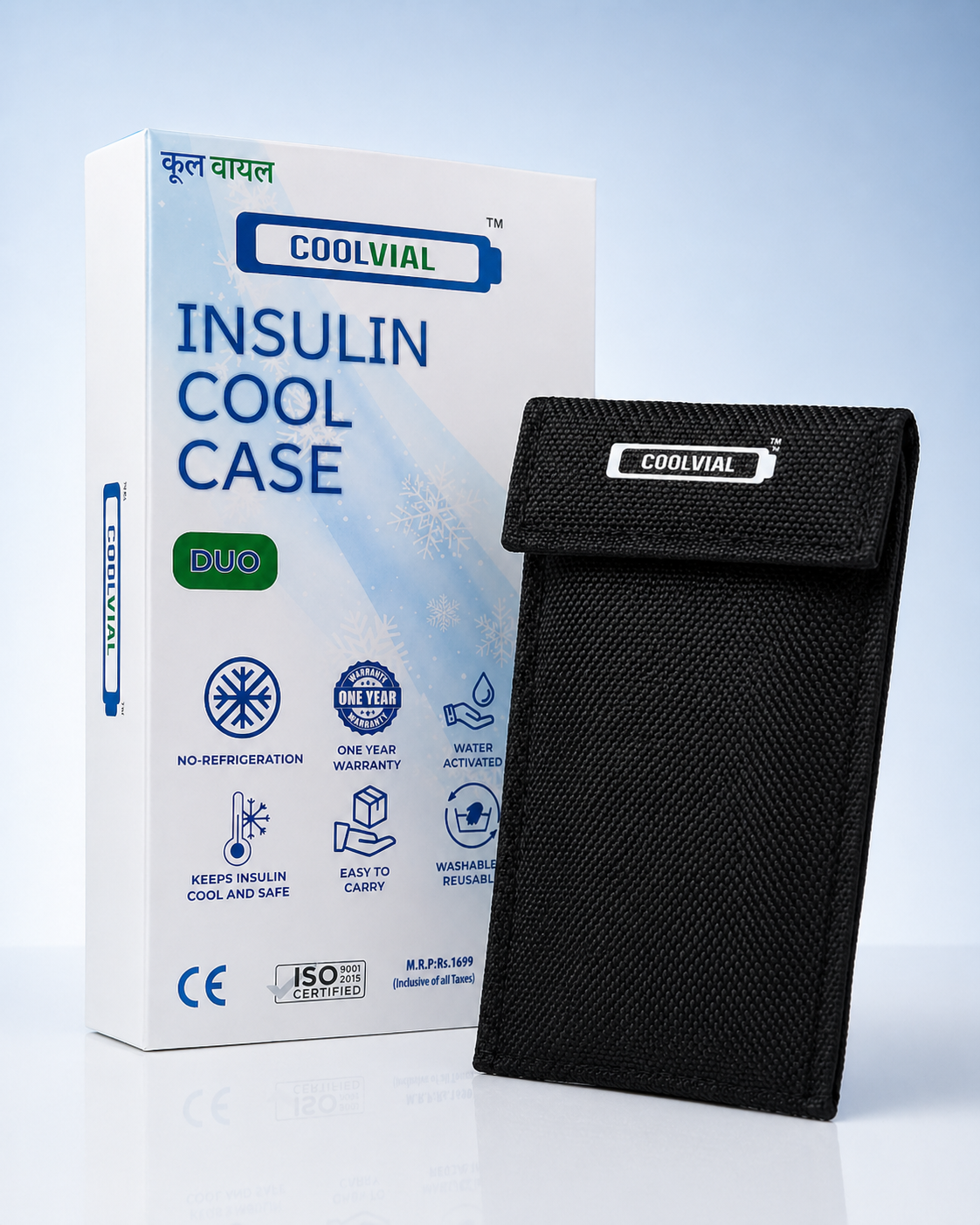
For your daily commute with insulin via bus or auto, a reliable evaporative cooling case like the COOLVIAL Duo is not just a convenience, but a necessity to maintain insulin integrity.
Ride-Sharing (Ola/Uber) and Two-Wheelers: The Hidden Dangers
Modern commuting often involves ride-sharing services and two-wheelers, which present their own set of challenges for safe insulin storage in Delhi’s climate.
-
Ola/Uber: The AC Denial Culture:
- While ride-sharing apps offer AC cars, there’s a prevalent “AC denial” culture in Delhi, especially for shorter rides or when drivers try to save fuel. You might find the AC is only switched on after repeated requests, or it’s kept at a low setting.
- Even with AC on, if the car has been parked in the sun, the interior can take a long time to cool down. Surfaces like seats and dashboards can retain heat, transferring it to your bag.
- Always ensure the AC is fully functional and cooling the cabin effectively from the start of your journey.
-
Two-Wheeler Dickey: A Death Trap for Insulin:
- NEVER, under any circumstances, store insulin in a two-wheeler’s dickey (under-seat storage) or a top box. These compartments are enclosed, poorly ventilated, and directly above the engine.
- Temperatures inside a two-wheeler dickey can easily hit 50-60°C within minutes, even on a moderately warm day. This extreme heat will render insulin completely ineffective and potentially dangerous to use.
- Similarly, avoid keeping insulin in trouser pockets or jacket pockets where body heat combined with ambient heat can be detrimental.
-
Backpack vs. Pocket Storage:
- When on a two-wheeler, if you must carry insulin, it should be in a dedicated cooling case, placed in a backpack worn on your back. This provides some insulation from direct sun and engine heat, though it’s still not ideal for very long rides in extreme heat.
- For short distances, carrying it in a cooling case in a small bag slung across your chest might be an option, ensuring it’s not compressed or exposed to direct sun for too long.
-
Safety Checks for Ride-Sharing:
- Verify AC: Before starting the ride, politely confirm with the driver that the AC is working effectively.
- Avoid direct sun: Position your bag, especially if it contains insulin, away from direct sunlight coming through the windows.
- Use a cooler: Even in an AC car, a cooling case provides an extra layer of protection against fluctuations or if the AC is not as effective as expected.
The unique conditions of Delhi’s transport system demand vigilance. For your daily commute with insulin, especially on two-wheelers, proper cooling solutions are not just recommended, but absolutely essential to safeguard your health.
Insulin Storage Beyond Transit: Office, School & College Life in Delhi
Your journey with insulin doesn’t end when you reach your destination. Offices, schools, and colleges in Delhi present their own unique environments for insulin storage, requiring continued attention to temperature control.
-
Office Lunch Storage in Corporate Parks (India Gate, Khan Market):
- Many offices, especially in corporate hubs like those around India Gate, Connaught Place, or Khan Market, have communal refrigerators. If you plan to store an unopened vial or pen, ensure it’s clearly labelled and placed in a sealed container to prevent contamination or accidental disposal.
- For in-use pens, a drawer or a personal locker in an AC-controlled room is generally acceptable, provided the room temperature remains consistently below 30°C. However, office AC can sometimes be switched off after hours or on weekends, posing a risk.
- It’s always safer to keep your insulin in a personal cooling case, even in the office, especially if you need to access it frequently or if your office environment has variable AC.
-
School/College Tips for Delhi’s Major Institutions:
- For Type 1 Children in Schools: Parents should communicate clearly with school authorities and the child’s teacher about insulin storage needs.
- The school nurse’s office or a designated, temperature-controlled area should be used for storing emergency insulin.
- For daily doses, children should carry their insulin in a personal cooling case in their school bag. This allows them to administer their dose independently and ensures the insulin is always with them.
- Schools near AIIMS Delhi, like those in South Delhi, might have staff more aware of diabetes management, but it’s always best to provide clear instructions.
- College Students (e.g., Delhi University, JNU, Amity Noida/Gurugram):
- College campuses can involve a lot of walking between classes and varied indoor temperatures.
- Students should carry their insulin in a cooling case in their backpack.
- Identify on-campus medical facilities or trusted faculty members who are aware of your condition and can assist in an emergency.
- Be mindful of storing insulin in hostel rooms, especially if AC is not consistently available or if rooms get direct sunlight. A personal cooler is vital here.
- For Type 1 Children in Schools: Parents should communicate clearly with school authorities and the child’s teacher about insulin storage needs.
-
How Long an Insulin Pen Safely Survives in Various Bags:
- Office Bag/Laptop Sleeve: In an AC-controlled office (22-26°C), an insulin pen can be safe for the day. However, if the bag is left in a hot car (40°C+) even for 30 minutes, or in a non-AC room, the insulin is at risk.
- School Bag (for children): Similar to office bags. If the child’s bag is left in the sun during recess or during transit in a non-AC school bus, insulin will quickly degrade. A cooling case is crucial for children, especially since they might not be as vigilant about temperature.
- College Backpack: College students often spend extended hours outside or in varied environments. Without a cooling case, insulin in a backpack can be exposed to harmful temperatures, particularly during breaks or travel between buildings.
-
Best Practices for Various Settings:
- Always use a dedicated insulin cooling case: This is the most reliable method for daily carry.
- Educate others: Inform close colleagues, friends, or teachers about your insulin storage needs.
- Plan for power outages: Have a backup plan if refrigeration at work/school is unavailable.
- Check insulin regularly: Visually inspect your insulin before each use.
For a comprehensive approach to managing diabetes in the capital, you might find our “Complete Diabetes Care Guide for Delhi Residents — 2026 Edition” helpful.
Your Daily-Carry Insulin Cooler Routine: The COOLVIAL Advantage
7 Essential Tips for Your Daily Commute With Insulin in Delhi — Metro, Bus & Auto
48+ hours at 2-8°C. No electricity. CE certified. Free delivery across India.
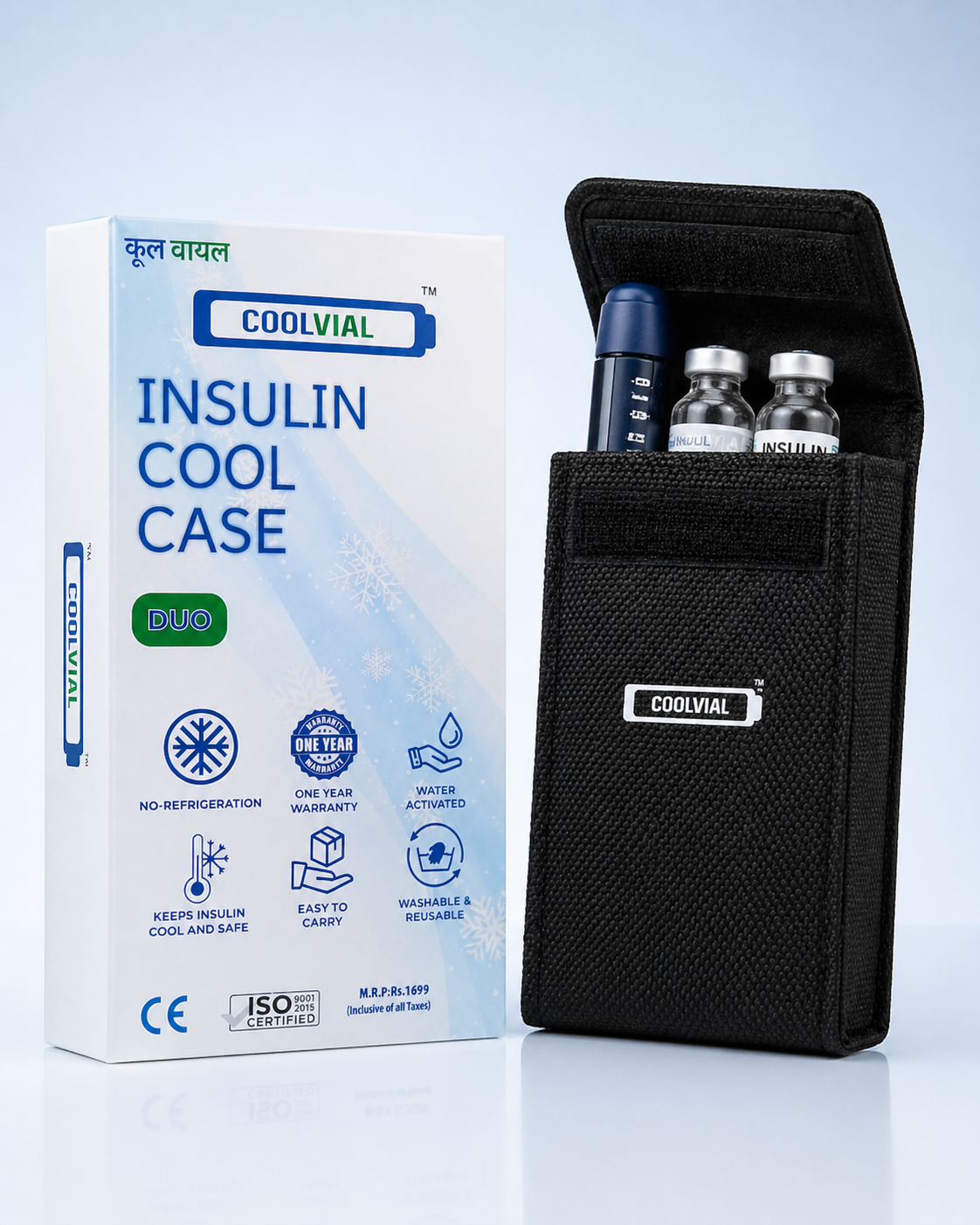
Order on WhatsApp — ₹1,099🛒 Buy Now — ₹1,099Given Delhi’s challenging climate, making an insulin cooling case a non-negotiable part of your daily commute with insulin is paramount. The COOLVIAL Duo is designed specifically to address these real-world Indian conditions, offering a reliable and electricity-free solution.
The COOLVIAL Duo holds 2 insulin pens and 1 vial, keeping your medication cool for 12-16 hours without any external power source. This evaporative cooling case is CE certified and ISO 9001:2015 compliant, assuring you of its quality and effectiveness. Proudly Made in India, it comes with a 1-year warranty, reflecting our confidence in its durability.
-
Understanding Evaporative Cooling:
- The COOLVIAL Duo works on the principle of evaporative cooling. It contains special crystals that, when activated by water, absorb moisture and expand into a gel.
- As water slowly evaporates from the fabric casing, it draws heat away from the insulin stored inside, maintaining a safe temperature (typically 18-26°C) for extended periods, even when the ambient temperature is much higher (e.g., 40°C+). This process is similar to how sweat cools the human body.
-
Morning Prep Ritual for Your COOLVIAL Duo:
- Immerse: In the morning, before leaving for your commute, immerse the inner pouch of your COOLVIAL Duo in cold water (preferably tap water, not ice water) for 5-10 minutes.
- Activate: The crystals inside will absorb the water and turn into a gel.
- Drain Excess: Remove the pouch and gently squeeze out any excess water. Pat it dry with a towel. The pouch should feel cool and slightly damp, not dripping wet.
- Insert Insulin: Place your insulin pens and/or vials into the activated pouch.
- Place in Outer Cover: Slide the activated inner pouch into the protective outer cover.
- Ready to Go: Your COOLVIAL Duo is now ready to keep your insulin cool for the next 12-16 hours, providing peace of mind throughout your workday or school day.
- Re-activation is typically needed every 2-3 days, depending on the ambient temperature and humidity.
-
COOLVIAL Duo vs. Other Options:
- COOLVIAL Duo: Priced at an affordable Rs 1,099 (with code COOLHEAL, MRP Rs 1,699), it offers 12-16 hours of cooling for 2 pens + 1 vial. It’s an excellent value proposition, especially being Made in India and backed by certifications.
- FRIO: A well-known international brand, FRIO cases are effective but generally come at a higher price point, often around Rs 1,900 or more, for similar capacity.
- Outer Woods OW-12: Another Indian brand, the OW-12 is typically priced around Rs 999. While competitive on price, users should compare specific features, cooling duration, and capacity with COOLVIAL Duo to ensure it meets their needs.
When considering an insulin cool case, the COOLVIAL Duo provides a robust, certified, and cost-effective solution tailored for the Indian climate. It’s an investment in your health and peace of mind. Learn more about the COOLVIAL insulin cool case and our insulin storage tips.
Essential Practical Tips for Your Daily Commute with Insulin in Delhi
Beyond carrying a reliable cooling case, several other practical measures can significantly enhance the safety and comfort of your daily commute with insulin in Delhi.
- Stay Hydrated: Delhi’s heat, especially during summer, can lead to dehydration, which can affect blood glucose levels. Carry a water bottle and sip regularly. This is crucial for overall health, particularly for individuals with diabetes.
- Carry Glucose Tablets/Candy: Hypoglycemia (low blood sugar) can strike unexpectedly, especially when commuting. Always have quick-acting carbohydrates like glucose tablets, hard candy, or a small juice box readily available.
- Wear Light, Breathable Clothing: Opt for loose-fitting, light-colored cotton clothing. This helps your body regulate temperature better, reducing sweating and discomfort during hot commutes.
- Inform a Trusted Companion: If you regularly commute with a friend, family member, or colleague, let them know you have diabetes and how to assist you in case of an emergency (e.g., if you experience hypoglycemia).
- Know Your Local Pharmacies: Familiarize yourself with nearby pharmacies along your commute route or near your destination. Major chains like Apollo Pharmacy, MedPlus, Generic Aadhaar, 98.4 Pharmacy, and Frank Ross have a strong presence across Delhi, including neighborhoods like South Delhi (GK, Saket, Vasant Kunj), Central Delhi (CP, Karol Bagh), West Delhi (Rajouri Garden, Janakpuri), and East Delhi (Mayur Vihar, Preet Vihar). Knowing where to get supplies in a pinch can be invaluable.
- Emergency Contacts: Keep emergency contact information readily accessible, both on your phone and a physical card in your wallet. Include your doctor’s number and a family member’s contact.
- Medical Identification: Wear a medical ID bracelet or carry a card indicating you have diabetes. This can be life-saving in an emergency when you might be unable to communicate.
These tips, combined with effective insulin cooling, create a comprehensive strategy for managing diabetes while navigating the complexities of Delhi. For further reading on managing your health in the capital, explore our blog on “Diabetic-Friendly Restaurants & Cafes in Delhi — Where to Eat Safely” and “Travelling From Delhi With Insulin — Airport, Station & Taxi Tips”.
Globally, diabetes affects an estimated 537 million adults aged 20-79 years (Source: International Diabetes Federation (IDF) Diabetes Atlas, 10th Edition). This highlights the widespread need for effective management strategies, including safe insulin storage during daily activities.
Frequently Asked Questions (FAQ)
Q: How long can insulin be out of the fridge in Delhi’s summer? A: An opened, in-use insulin pen or vial can typically be kept at room temperature up to 25-30°C for up to 28 days. However, in Delhi’s summer, with ambient temperatures often exceeding 40°C, direct exposure for even 15-30 minutes can significantly compromise insulin’s effectiveness.
Q: Can I store insulin in a regular insulated lunch bag? A: A regular insulated lunch bag offers minimal protection. It might keep insulin cool for a very short period if packed with ice packs, but the ice packs will melt quickly in Delhi’s heat, and the temperature inside the bag will rise rapidly, making it unreliable for insulin storage during a daily commute.
Q: What if my insulin gets too hot during my commute? Should I still use it? A: If you suspect your insulin has been exposed to temperatures significantly above 30°C for an extended period, or if you notice any physical changes (cloudiness, discoloration), it’s best not to use it. Using compromised insulin can lead to unpredictable blood sugar levels.
Q: Is it safe for children with Type 1 diabetes to carry insulin to school in Delhi? A: Yes, it is safe and often necessary for children with Type 1 diabetes to carry their insulin to school. However, it must be stored in a reliable evaporative cooling case, like the COOLVIAL Duo, within their school bag to protect it from heat during transit and throughout the school day.
Q: How often do I need to re-activate my COOLVIAL Duo? A: The COOLVIAL Duo typically provides 12-16 hours of cooling per activation. Depending on the ambient temperature and humidity in Delhi, you might need to re-activate it every 2-3 days by immersing the inner pouch in water for 5-10 minutes.
Q: Can I put my insulin cooling case in the refrigerator? A: No, evaporative cooling cases like COOLVIAL Duo should not be placed in the refrigerator. The cooling mechanism relies on evaporation, which requires airflow. Refrigeration can prevent this process and may also over-cool the insulin if the case is damp, risking freezing.
Q: Where can I buy a COOLVIAL Duo in Delhi? A: You can conveniently order the COOLVIAL Duo online directly from coolvial.com. It is an Indian brand, ensuring easy availability and delivery across Delhi and NCR.
Conclusion
Navigating Delhi’s dynamic urban landscape while managing diabetes requires a strategic approach, especially when it comes to the daily commute with insulin. From the relatively cooler Delhi Metro to the challenging heat of non-AC buses and auto-rickshaws, and the hidden risks of ride-sharing or two-wheelers, temperature control is your greatest ally. Insulin’s sensitivity to heat means that even a short exposure to Delhi’s peak summer temperatures can compromise its efficacy, leading to potential health risks.
By adopting a proactive mindset and integrating reliable solutions like the COOLVIAL Duo into your daily routine, you can ensure your insulin remains potent and safe. Remember the 7 essential tips: understand insulin’s sensitivity, choose your transport wisely, protect your insulin at your destination, and always carry necessary emergency supplies. These measures empower you to live a full and active life in Delhi, without letting diabetes management hinder your mobility.
Take charge of your health today. Order your COOLVIAL Duo at Rs 1,099 with code COOLHEAL at coolvial.com or via WhatsApp wa.me/918766952300 and commute with confidence.
Medical Disclaimer
This article is for general information purposes only and should not be considered medical advice. Always consult your endocrinologist or diabetologist before making any changes to your insulin storage or dosing practices.
How We Researched This
This article is based on a thorough review of insulin storage guidelines from reputable bodies such as RSSDI (Research Society for the Study of Diabetes in India), data from the ICMR-INDIAB study on diabetes prevalence in India, local Delhi hospital directories (including AIIMS Delhi, Sir Ganga Ram Hospital, Apollo Indraprastha), and information from major pharmacy networks like Apollo Pharmacy. We also considered anecdotal evidence and common commuting challenges faced by Delhi residents with diabetes.