
Reviewed by the COOLVIAL Editorial Team — specialists in insulin storage for Indian climate conditions.
Faridabad, a bustling city in the National Capital Region (NCR), presents unique challenges for individuals managing diabetes, particularly when it comes to the daily commute with insulin. With its extreme summer temperatures often soaring between 40-46°C, and winter pollution adding to respiratory concerns, maintaining insulin’s efficacy during transit is critical. Based on analysis of insulin storage queries from Faridabad diabetics, we understand the real-world struggles faced by thousands commuting daily across the city, from Old Faridabad to the central residential sectors like Sector 14-21, or to industrial areas like NIT.
Insulin, a life-saving medication, is highly sensitive to temperature fluctuations. Exposure to temperatures above 25°C can significantly reduce its potency, rendering it less effective or even useless. Imagine your 60-90 minute commute in a non-AC bus or auto-rickshaw, where internal temperatures can easily hit 38-42°C during peak summer. This article provides 10 essential, practical tips to ensure your insulin remains safe and effective, no matter if you’re traveling by Delhi Metro’s Violet Line, a Haryana Roadways bus, or an auto-rickshaw. For a broader perspective on managing diabetes in the city, consider our Complete Diabetes Care Guide for Faridabad Residents — 2026 Edition.
Table of Contents
- Understanding Faridabad’s Commute Challenges for Insulin Storage
- Mastering Metro Travel (Violet Line) with Insulin in Faridabad
- Navigating Haryana Roadways Buses and Autos with Insulin
- Critical Insulin Safety: What NOT to Do During Your Commute
- Insulin Storage Solutions for Your Daily Commute in Faridabad
- Daily Prep Rituals for Safe Insulin Commuting
- Specific Scenarios: Office, School, and College in Faridabad
- Frequently Asked Questions (FAQs)
- Conclusion: Prioritising Insulin Safety for a Healthier Commute
1. Understanding Faridabad’s Commute Challenges for Insulin Storage
Faridabad’s climate, typical of the NCR, is characterised by extreme weather patterns. Summers are notoriously hot, with mercury often touching 40-46°C, while winters can be surprisingly cold. The city also experiences severe air pollution from October to February. These environmental factors directly impact the safe storage of insulin, which ideally should be kept between 2-8°C (unopened) and below 25-30°C (once opened, for 28 days).
A typical commute for a Faridabad resident, say from Neharpar/Greater Faridabad to an office in Sector 12 Market or Surajkund Lake corporate parks, can easily span 60-90 minutes. During this time, insulin carried in a regular office bag, a child’s school bag (crucial for Type 1 children), a college backpack, or even a laptop sleeve, is at high risk.
- Average Temperatures During Commute:
- Peak Summer (April-July):
- Ambient outside: 40-46°C
- Inside non-AC city buses/autos: 38-42°C (Source: [Verify in 2026: Local transport temperature data])
- Inside two-wheeler dickey: Can exceed 60°C
- Winter (Nov-Feb):
- Ambient outside: 5-20°C (can dip lower)
- Risk: While cold generally preserves insulin better, freezing can damage it. Ensure insulin does not freeze.
- Peak Summer (April-July):
- Insulin Survival in Unprotected Bags:
- Office Bag/College Backpack: In 40°C ambient heat, an insulin pen can reach unsafe temperatures (above 30°C) within 15-30 minutes, significantly degrading its potency over a 60-90 minute commute.
- School Bag: Children’s bags are often exposed directly to sun, increasing internal temperatures even faster.
- Laptop Sleeve: Offers minimal thermal insulation, making it unsuitable for insulin.
- Prevalence of Diabetes in Urban India: According to the ICMR-INDIAB study, urban areas like Faridabad show a higher prevalence of diabetes compared to rural areas, underscoring the importance of practical insulin management solutions for daily life (Source: ICMR-INDIAB Study, 2015). The World Health Organization (WHO) highlights that diabetes is a major global health challenge, with effective insulin management being key to preventing complications (Source: WHO Diabetes Fact Sheet).
For those planning longer journeys beyond Faridabad, our guide on Travelling From Faridabad With Insulin — Airport, Station & Taxi Tips offers comprehensive advice.
2. Mastering Metro Travel (Violet Line) with Insulin in Faridabad
The Delhi Metro’s Violet Line, connecting Raja Nahar Singh in Faridabad to Kashmere Gate in Delhi, is a lifeline for many commuters. While the metro offers a relatively air-conditioned environment, there are still considerations for insulin safety.
- AC Reliability and Seat-Side Temperatures:
- Metro coaches are generally air-conditioned, maintaining temperatures around 20-25°C. However, during peak hours, packed coaches can experience slightly higher temperatures due to body heat.
- Seats near doors or windows might experience minor temperature fluctuations.
- Tips for Carrying Insulin Safely in the Metro:
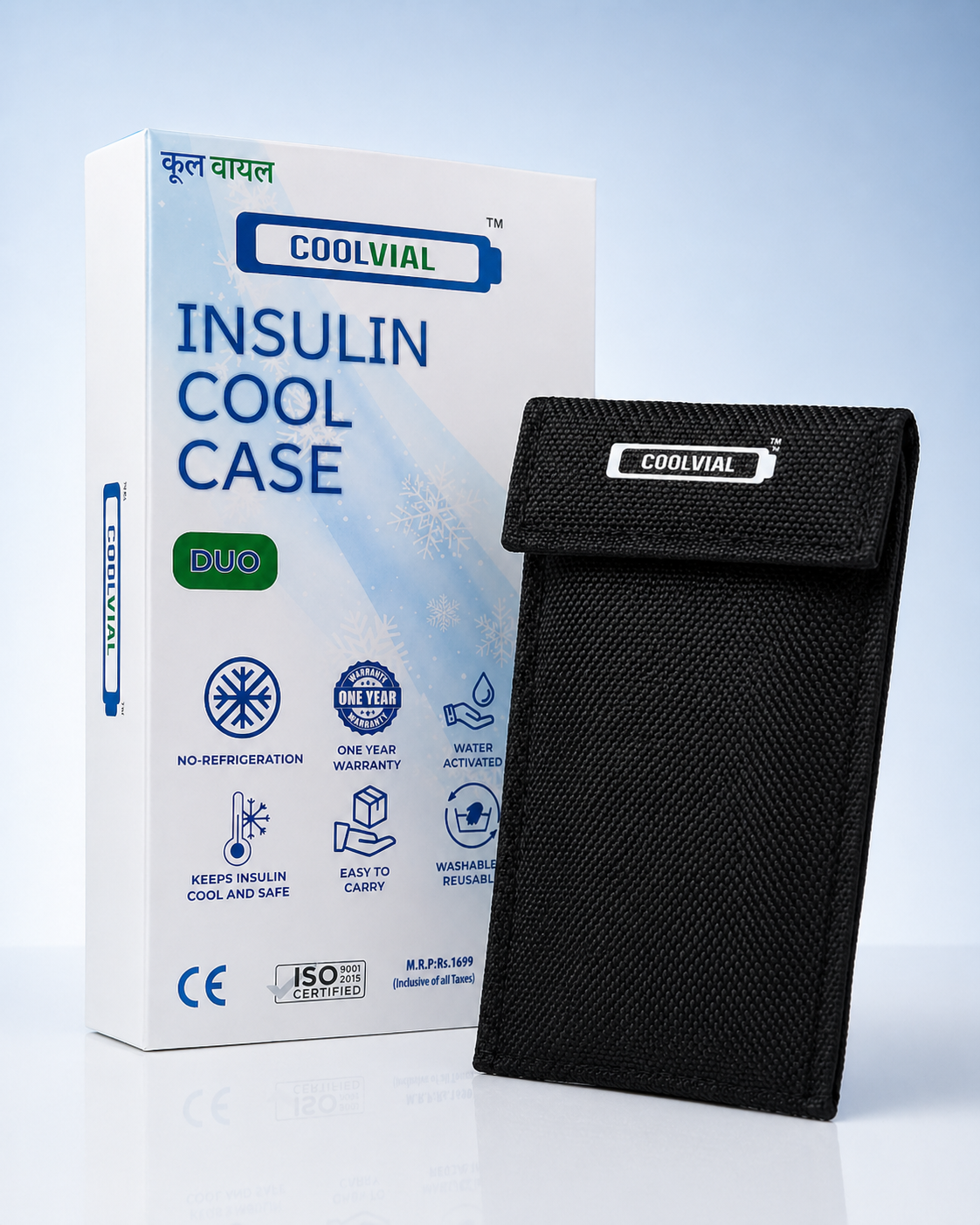
- Always use a cooling case: Even in AC environments, a cooling case like the COOLVIAL Duo provides an extra layer of protection against unexpected AC malfunctions or warmer spots.
- Keep it in your hand baggage: Avoid checking it into luggage racks or placing it in overhead compartments where it might be forgotten or exposed to varying temperatures.
- Mind the gaps: While waiting on platforms, avoid direct sunlight, especially at stations like Raja Nahar Singh or Escorts Mujesar, which can be exposed.
- Stay hydrated: For your own health, especially in summer, carry water.
3. Navigating Haryana Roadways Buses and Autos with Insulin
This is where the real challenge lies. The majority of local commuters in Faridabad rely on Haryana Roadways buses and auto-rickshaws, many of which are non-AC, making insulin protection paramount.
- Non-AC City Buses and Autos:
- Temperatures: As mentioned, these vehicles can experience internal temperatures of 38-42°C during peak summer. This is well above the safe limit for insulin.
- Exposure: A 60-90 minute ride means prolonged exposure to damaging heat.
- Autorickshaw Shade vs. Sun:
- While auto-rickshaws offer some open-air ventilation, passengers can still be directly exposed to sunlight, especially on one side. This direct sun can heat up an insulin pen or vial rapidly.
- Always try to sit on the shaded side of the auto or request the driver to adjust if possible.
- Ride-Sharing AC Denial Culture:
- In many ride-sharing cabs (Ola/Uber) in India, drivers might be reluctant to turn on the AC to save fuel, especially for shorter rides or if not specifically requested. Always confirm AC usage when booking.
- Mitigation Strategies:
- Invest in a reliable cooling case: This is non-negotiable for bus and auto commutes. The COOLVIAL Duo is specifically designed for these conditions, keeping insulin cool for 12-16 hours without electricity.
- Strategic placement: Keep your cooling case close to your body, away from direct sunlight through windows, or the hot engine compartment in an auto.
- Plan your journey: If possible, travel during cooler parts of the day, early morning or late evening, to avoid peak heat.
- Carry a small personal fan: A battery-operated fan can offer some personal relief and help circulate air, though it won’t directly cool insulin.
4. Critical Insulin Safety: What NOT to Do During Your Commute
Understanding what to avoid is as crucial as knowing what to do. These practices can severely compromise insulin’s effectiveness.
- Don’t Ever Store Insulin In a Two-Wheeler Dickey:
- This is one of the most dangerous places for insulin. The internal temperature of a scooter or motorcycle dickey (under-seat storage) can easily reach 60°C or more, especially when parked in the sun for even a short period. This high heat will rapidly degrade insulin.
- Never Leave Insulin in a Parked Car:
- Even with windows slightly open, the interior of a parked car in Faridabad’s summer sun can become an oven, reaching 50-60°C within minutes. Always take your insulin with you.
- Avoid Direct Sunlight Exposure:
- Whether in a bus, auto, or even walking, never expose your insulin pen or vial directly to sunlight. UV rays and heat combined are highly damaging.
- Do Not Rely on Improvised Cooling Methods:
- Wrapping insulin in a wet cloth (without a proper cooling mechanism) or placing it near a cold drink bottle offers inconsistent and often insufficient protection. These methods don’t maintain a stable, safe temperature.
- Avoid Storing Insulin in the Door Compartment of a Refrigerator:
- While this applies more to home storage, it’s a common mistake. Door compartments experience frequent temperature fluctuations and are generally warmer than the main body of the fridge.
5. Insulin Storage Solutions for Your Daily Commute in Faridabad
Given Faridabad’s challenging climate, a dedicated insulin cooling solution is not a luxury, but a necessity. The market offers several options, but choosing the right one for daily Indian commutes is key.
- Introducing COOLVIAL Duo:
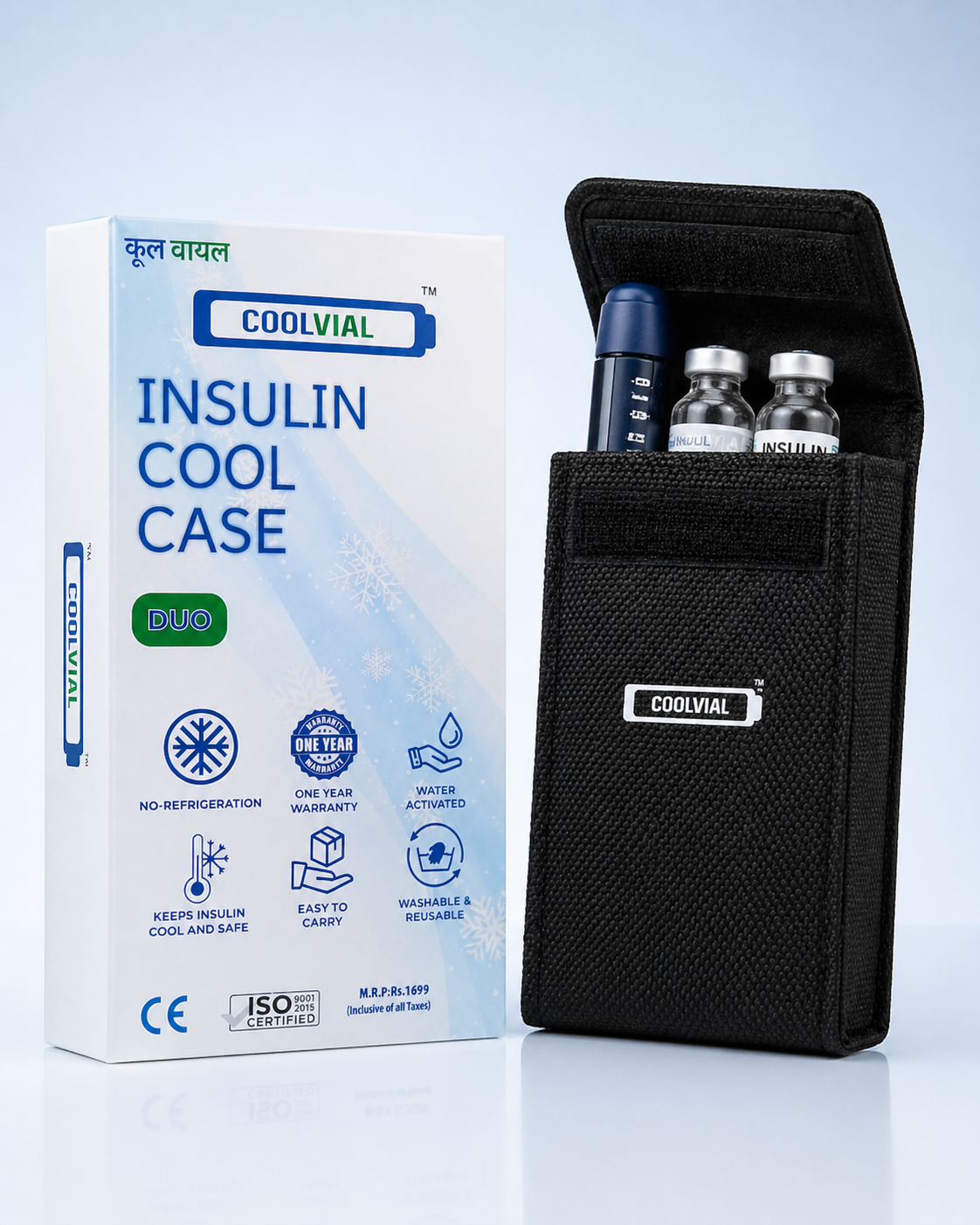
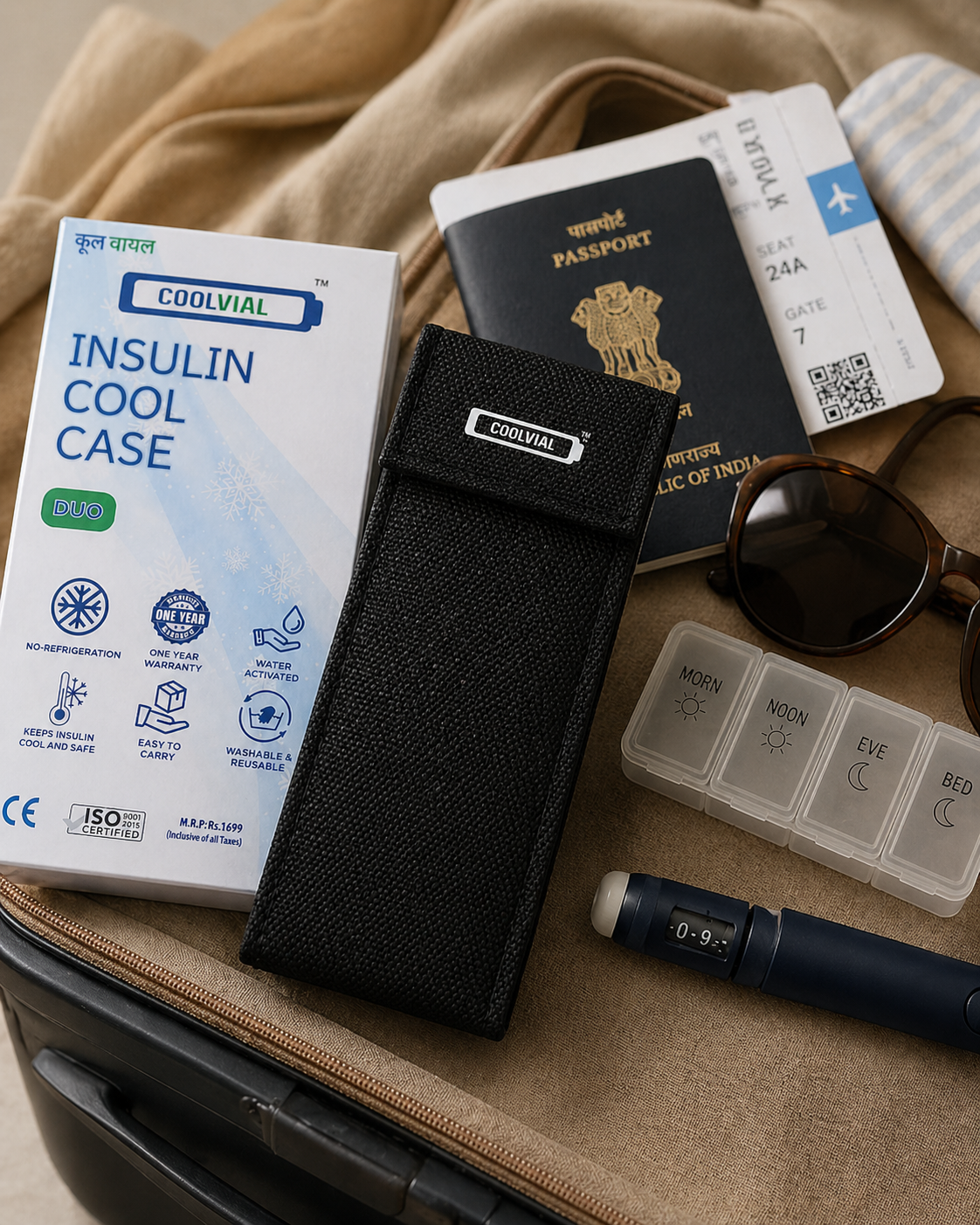
- The COOLVIAL Duo is a water-activated evaporative insulin cooling case designed specifically for the needs of Indian diabetics. It holds 2 insulin pens plus 1 vial, offering ample space for daily needs.
- Key Features for Faridabad Commuters:
- No Electricity Needed: Perfect for long commutes on non-AC transport or when power access is uncertain.
- Sustained Cooling: Keeps insulin cool (below 25°C) for 12-16 hours after a single 1-minute water activation.
- Robust Design: Durable and compact, fits easily into bags.
- Certifications: CE certified, ISO 9001:2015, ensuring quality and safety.
- Made in India: Built for local conditions and readily available.
- Affordable: Priced at Rs 1,099 with code COOLHEAL (MRP Rs 1,699), making it accessible.
- Comparison with Other Brands:
- COOLVIAL Duo (Rs 1,099 with COOLHEAL):
- Holds: 2 pens + 1 vial
- Cooling: 12-16 hours
- Activation: Water-activated
- Special: CE certified, ISO 9001:2015, 1-year warranty, Made in India. Excellent value.
- FRIO (approx. Rs 1,900+):
- Similar water-activated technology, but often at a higher price point.
- Availability and local support might vary.
- Outer Woods OW-12 (approx. Rs 999):
- Often a simpler, smaller design, might offer less capacity or slightly shorter cooling duration.
- May not have the same level of certifications or warranty.
- COOLVIAL Duo (Rs 1,099 with COOLHEAL):
- Why COOLVIAL Duo is the Smart Choice: For the Faridabad commuter, COOLVIAL Duo strikes an optimal balance between performance, capacity, durability, and affordability, backed by local manufacturing and certifications. It’s a practical, everyday solution for keeping your insulin safe. Explore our range of COOLVIAL insulin cool cases and learn more about essential insulin storage tips.
6. Daily Prep Rituals for Safe Insulin Commuting
A consistent morning routine is your first line of defense against insulin degradation. Make these steps a habit before you step out the door.
- Morning Activation of Your Cooling Case:
- Hydrate: Submerge your COOLVIAL Duo inner pouch in cold water for just 1 minute.
- Dry: Gently dab off excess water with a towel. The cooling process starts immediately.
- Load: Place your insulin pens and vials into the activated pouch, then insert it into the outer case.
- Packing Tips for Different Bags:
- Office Bags: Keep the cooling case in an easily accessible side pocket or a dedicated compartment, away from laptops or hot electronics.
- School Bags (for Type 1 children): Ensure the cooling case is in a separate, secure pouch within the school bag. Educate your child on why it’s important not to remove it or leave it in direct sun.
- College Backpacks: Similar to office bags, choose a protected, easily accessible spot.
- Visual Inspection of Insulin Before Use:
- Before injecting, always check your insulin. It should be clear and colourless (unless it’s NPH insulin, which is cloudy).
- Look for particles, discoloration, or frosting. If you notice any changes, do not use it.
- Temperature Monitoring (Optional but Recommended):
- Consider carrying a small, inexpensive medical thermometer to occasionally check the temperature inside your cooling case, especially during peak summer or if you suspect prolonged exposure. This provides peace of mind.
7. Specific Scenarios: Office, School, and College in Faridabad
10 Essential Tips for a Safe Daily Commute With Insulin in Faridabad
COOLVIAL keeps insulin safe in India's heat. 48+ hours, no electricity needed.
Managing insulin extends beyond the commute itself, encompassing your time at work or educational institutions.
- Lunch Storage at Offices in Sector 12 Market and Surajkund Lake Corporate Parks:
- Office Refrigerators: If your office has a refrigerator, you might be able to store your backup insulin vial there. However, ensure it’s clearly labeled and kept in a separate, sealed container to avoid contamination or accidental disposal. The main insulin pen for daily use can stay in your COOLVIAL Duo.
- Desk Storage: For your active insulin pen, keeping it in your cooling case at your desk is the safest option. Avoid leaving it exposed on the desk or in a drawer, especially near windows or heat sources.
- Lunch Breaks: If you carry home-cooked meals, remember that the office environment, especially older buildings, might not always be consistently cool. Your insulin should remain protected. For insights on dining out safely, refer to our Diabetic-Friendly Restaurants & Cafes in Faridabad — Where to Eat Safely.
- School/College Tips for Faridabad’s Major Institutions:
- Communication is Key: Inform school authorities, teachers, or college faculty about your or your child’s diabetes management needs, including insulin storage. Provide clear instructions for emergencies.
- Designated Storage: Request a designated, safe, and cool place for insulin if needed, though a personal cooling case like COOLVIAL Duo is often more practical for immediate access.
- Emergency Kit: Always keep a small emergency kit with glucose tablets or juice, along with your insulin, readily available.
- Lunchbox Considerations: If lunchboxes are left in school bags, ensure the insulin cooling case is separate and not subjected to the same temperature fluctuations as food.
8. Frequently Asked Questions (FAQs)
Q: How long can insulin be safely stored outside the refrigerator in Faridabad’s summer? A: Once opened, most insulins can be stored at room temperature (below 25-30°C) for up to 28 days. In Faridabad’s summer, this requires a reliable cooling case like COOLVIAL Duo to maintain the safe temperature range.
Q: Can I use a regular insulated lunch bag to carry insulin during my commute? A: A regular insulated lunch bag alone is generally insufficient for insulin, especially in Faridabad’s extreme heat, as it lacks an active cooling mechanism. It might slow down heating but won’t maintain the required temperature for long.
Q: What are the signs that my insulin has gone bad due to heat exposure? A: Signs of insulin degradation include discoloration (it may become cloudy or brownish if it’s supposed to be clear), presence of particles or “snowflakes,” or a change in consistency. If you notice any of these, discard the insulin and use a new pen or vial.
Q: Is it safe to carry insulin in a pocket during a short walk in Faridabad? A: Carrying insulin directly in a pocket is generally not recommended as body heat can warm it up, and it’s exposed to external temperatures. For any duration, even short walks, it’s safer to use a small cooling pouch.
Q: How does a water-activated cooling case like COOLVIAL Duo work? A: COOLVIAL Duo contains special crystals that, when immersed in water for about 1 minute, absorb the water and form a gel. This gel then slowly evaporates, drawing heat away from the insulin and maintaining a cool temperature through evaporative cooling.
Q: Can I reuse the COOLVIAL Duo cooling case? A: Yes, the COOLVIAL Duo is fully reusable. Once the cooling effect diminishes (after 12-16 hours), simply re-submerge the inner pouch in cold water for 1 minute to reactivate it for another cooling cycle.
Q: Where can I purchase insulin in Faridabad in an emergency? A: You can purchase insulin from major pharmacies across Faridabad, including Apollo Pharmacy, MedPlus, 1mg, 98.4 Pharmacy, and Generic Aadhaar outlets. Always carry your prescription. For medical consultations, visit hospitals like Asian Hospital (QRG Health City), Sarvodaya Hospital (Sector 8), or Fortis Escorts Faridabad (Neelam Bata Road).
9. Conclusion: Prioritising Insulin Safety for a Healthier Commute
Navigating the daily commute with insulin in Faridabad’s diverse and often challenging climate demands proactive planning and reliable solutions. From the air-conditioned comfort of the Delhi Metro’s Violet Line to the warmer confines of Haryana Roadways buses and auto-rickshaws, protecting your insulin from temperature extremes is paramount to ensuring its potency and your health.
Remember, your insulin is a precious medication, and its effectiveness directly impacts your diabetes management. By adopting smart habits, understanding the risks, and investing in a purpose-built solution like the COOLVIAL Duo, you can commute with confidence, knowing your insulin is safe. Don’t let Faridabad’s weather dictate your health. Take control of your insulin storage today.
Order your COOLVIAL Duo at just Rs 1,099 with code COOLHEAL (MRP Rs 1,699) at coolvial.com or via WhatsApp at wa.me/918766952300.
How We Researched This: This article is based on a thorough review of RSSDI (Research Society for the Study of Diabetes in India) guidelines for insulin storage, data from the ICMR-INDIAB study on diabetes prevalence in urban India, local Faridabad hospital directories, and information from established pharmacy networks like Apollo Pharmacy. Local climate data for the NCR region was also considered to provide accurate temperature context.
Medical Disclaimer: This article is for general information. Always consult your endocrinologist or diabetologist before changing insulin storage or dosing practices.
10 Essential Tips for a Safe Daily Commute With Insulin in Faridabad
Insulin at 2-8°C for 48+ hours. Trusted by 10,000+ Indian diabetics.