
Reviewed by the COOLVIAL Editorial Team — specialists in insulin storage for Indian climate conditions.
For Gurugram residents managing diabetes, the daily commute with insulin is a unique challenge. With peak summer temperatures soaring between 40-46°C and long travel times from areas like Sohna Road/Sector 47-67 to corporate hubs like Cyber Hub/DLF Phases often exceeding 60-90 minutes, keeping insulin at its optimal temperature of below 30°C is critical. Based on analysis of insulin storage queries from Gurugram diabetics, we know that insulin’s potency can significantly degrade if exposed to temperatures above 30°C for even a few hours (Source: IDF Diabetes Atlas). This can lead to ineffective doses and poor blood sugar control. This comprehensive guide offers 10 essential, practical tips to ensure your insulin remains potent and safe, no matter how you navigate Gurugram’s bustling streets – be it by Delhi Metro, Rapid Metro, Haryana Roadways bus, auto, or ride-sharing.
Table of Contents
- Understanding Insulin’s Vulnerability in Gurugram’s Climate
- Daily Commute Realities: Gurugram Metro and Rapid Metro
- Navigating Non-AC Public Transport: Buses and Autorickshaws
- The Ride-Sharing Dilemma: Ola and Uber in Gurugram
- Insulin Storage in Bags: Office, School, College, and Laptop Sleeves
- A Strict No-Go: Two-Wheeler Dickey Storage
- Lunchtime & Office Storage: Kingdom of Dreams and DLF Cyber City
- Special Considerations for Students: School and College Tips
- Your Daily Insulin Cooling Ritual: The COOLVIAL Advantage
- Essential Daily Carry Checklist for Gurugram Commuters
- Frequently Asked Questions (FAQs)
- Conclusion: Empowering Your Diabetes Management
- How We Researched This
- Medical Disclaimer
Understanding Insulin’s Vulnerability in Gurugram’s Climate
Gurugram’s climate, part of the NCR region, presents significant challenges for insulin storage. From scorching summers where temperatures can hit 46°C to relatively cold winters, the constant fluctuation and extreme heat are major concerns. Insulin, a protein, is highly sensitive to temperature. Unopened insulin should be refrigerated between 2-8°C. Once opened, most insulin pens and vials can be stored at room temperature (up to 25-30°C) for 28 days. However, exceeding this range, especially for prolonged periods, can lead to irreversible damage.
- Heat Degradation: Above 30°C, insulin molecules start to break down, reducing their effectiveness. Above 38-40°C, this degradation accelerates rapidly, potentially rendering insulin almost useless within hours.
- Cold Damage: While less common during Gurugram commutes, insulin can also be damaged by freezing. Never store insulin in a freezer.
- Visible Signs of Damage: Look for changes in clarity (cloudiness, particles), colour, or texture. However, often, insulin can lose potency without any visible signs. This invisible degradation is why proper storage is paramount.
- Prevalence: Diabetes is a growing concern in India. According to the International Diabetes Federation, over 74 million adults in India are living with diabetes (Source: IDF Diabetes Atlas 10th Edition). A significant portion of these individuals rely on insulin daily, making safe storage a widespread necessity.
Daily Commute Realities: Gurugram Metro and Rapid Metro
The Delhi Metro (Yellow Line) and Rapid Metro Gurugram are lifelines for thousands commuting to and from Cyber Hub, DLF Cyber City, and other corporate areas. While generally air-conditioned, the metro environment still demands attention.
- AC Reliability: Metro AC systems are usually robust. However, during peak hours or unexpected technical glitches, compartments can become warm. Seat-side temperatures can also be slightly higher due to body heat.
- Crowding: Heavy crowding during peak hours (e.g., 8-11 AM and 5-8 PM) can raise ambient temperatures within the coach and increase direct body heat exposure to your bag.
- Transfer Points: Transfers, especially at busy stations like Sikanderpur or MG Road Metro, involve walking through crowded, sometimes non-AC corridors, exposing your insulin to outside temperatures.
Metro Commute Tips:
- Use an Insulated Case: Always carry your insulin in a dedicated cooling case like the COOLVIAL insulin cool case. This provides a buffer against temperature fluctuations inside the metro.
- Strategic Bag Placement: Avoid keeping your bag directly against your body for extended periods, as body heat can transfer. Place it on your lap or between your feet if space allows.
- Monitor Your Journey: For longer commutes, like from Huda City Centre to Arjan Garh (part of the Yellow Line connecting Gurugram to Delhi), be mindful of the journey duration, which can be over 30-40 minutes within Gurugram itself.
Navigating Non-AC Public Transport: Buses and Autorickshaws
For many Gurugram residents, Haryana Roadways buses and autorickshaws are primary modes of transport, particularly for connecting to metro stations or for shorter distances within neighborhoods like Sector 14/15 or Sohna Road. These modes pose the highest risk for insulin degradation.
- Extreme Heat: During summer (April-July), temperatures inside non-AC city buses and autos can easily reach 38-42°C, especially during midday and afternoon commutes. Imagine a 60-90 minute ride from Sector 67 to Cyber Hub in these conditions. This is well above the safe storage limit for insulin.
- Direct Sun Exposure: In an auto, direct sunlight can hit your bag, intensifying heat exposure. The “shade” offered by the auto’s roof is often insufficient against the fierce Gurugram sun.
- Air Pollution: While not directly affecting insulin temperature, severe October-February air pollution can exacerbate other health conditions for diabetics.
Tips for Buses & Autos:
- Never Go Without a Cooler: This is non-negotiable. Your insulin will get damaged without active cooling in these vehicles.
- Positioning in Auto: Try to place your bag on the floor, away from the open side exposed to direct sun. If possible, use your body as a shield from the sun.
- Bus Window Seats: Avoid placing your bag on a window seat or near a window where direct sunlight can penetrate.
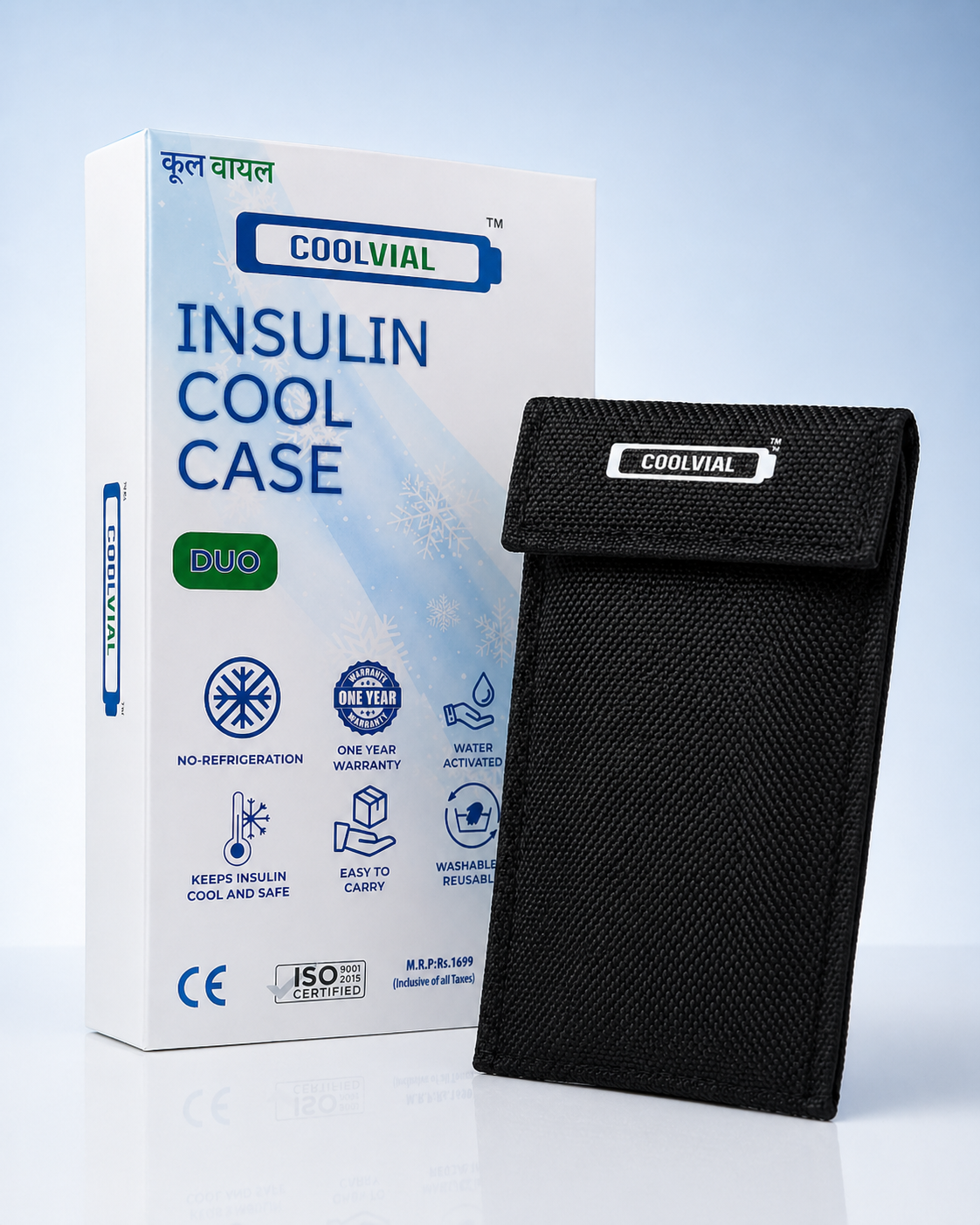
- Short Rides vs. Long Rides: Even short rides of 15-20 minutes in extreme heat can be detrimental. A COOLVIAL Duo, designed to keep insulin cool for 12-16 hours without electricity, is an ideal solution for these challenging conditions. It costs just Rs 1,099 with code COOLHEAL, significantly less than the potential cost of damaged insulin or adverse health effects.
The Ride-Sharing Dilemma: Ola and Uber in Gurugram
Ola and Uber are ubiquitous in Gurugram, offering convenience but also a peculiar challenge: the “AC denial culture.” Many drivers are reluctant to turn on the AC to save fuel, especially for shorter rides or if not explicitly requested and sometimes even after request.
10 Essential Tips for a Safe Daily Commute With Insulin in Gurugram
48+ hours at 2-8°C. No electricity. CE certified. Free delivery across India.
Order on WhatsApp — ₹1,099🛒 Buy Now — ₹1,099- Internal Car Temperatures: A car parked in the sun can reach 50-60°C within minutes. Even while driving without AC, internal temperatures can quickly climb to 35-40°C on a hot Gurugram day.
- AC Negotiation: You might have to explicitly ask for the AC to be switched on, and sometimes insist. For a diabetic, this isn’t just about comfort; it’s about medication integrity.
Ride-Sharing Best Practices:
- Pre-Cooling: If you anticipate a ride-sharing trip, ensure your insulin is already in its cooling case.
- Politely Insist on AC: Explain that you are carrying temperature-sensitive medication. Most drivers will comply once they understand the health implications.
- Window Down Strategically: If AC is off, opening windows can provide some airflow, but be wary of direct hot air and dust.
- Short Rides: For very short distances (e.g., within Cyber Hub), consider walking or taking an e-rickshaw if the weather permits, reducing your reliance on potentially non-AC vehicles.
Insulin Storage in Bags: Office, School, College, and Laptop Sleeves
A common mistake is assuming that an ordinary bag provides sufficient protection for insulin. This is far from the truth, especially in Gurugram’s climate.
- Office Bag/School Bag/College Backpack: These bags offer minimal thermal insulation. Inside a bag, temperatures can quickly mirror the ambient temperature, or even exceed it if the bag is exposed to direct sunlight or stored in a hot environment.
- Scenario: An insulin pen in a regular school bag left in a non-AC classroom or school bus during summer can easily reach 35-40°C within 30-60 minutes.
- Laptop Sleeve: A laptop sleeve is designed for impact protection, not thermal insulation. Laptops generate heat, and placing insulin directly with a warm laptop can accelerate degradation. Never store insulin in a laptop sleeve or directly next to an active laptop.
- How Long is Safe?: Without a cooling case, an insulin pen generally survives safely for only 15-30 minutes in direct Gurugram summer heat (above 38°C) before significant potency loss begins. In a shaded, but still hot environment (30-35°C), it might last 1-2 hours. This is why a dedicated cooling solution is indispensable for any daily commute with insulin.
Smart Bag Storage:
- Always Use a Cooling Case: This is the primary defence. Place your COOLVIAL insulin cool case inside your office bag, school bag, or college backpack.
- Choose the Right Spot: Within your bag, keep the cooling case towards the centre, away from the outer fabric that might absorb more heat.
- Avoid Heat Sources: Do not place your bag near car heaters, direct sunlight on a desk, or next to electronic devices that generate heat.
A Strict No-Go: Two-Wheeler Dickey Storage
For the significant number of Gurugram residents who commute by two-wheeler, the ‘dickey’ or under-seat storage compartment might seem like a convenient place for insulin. However, this is one of the most dangerous places to store insulin.
- Extreme Temperatures: The engine heat, combined with direct sunlight on the seat and the enclosed, unventilated space, can cause temperatures inside a two-wheeler dickey to skyrocket. It is common for temperatures to reach 50-60°C or even higher, even on moderately warm days. This is an absolute death trap for insulin.
- Rapid Degradation: Insulin exposed to such extreme temperatures will degrade almost instantly, becoming completely ineffective within a very short period.
Two-Wheeler Insulin Safety:
- Never, Ever Use the Dickey: This cannot be stressed enough. Find an alternative.
- Body-Worn Cooler: If you must carry insulin on a two-wheeler, a compact, water-activated cooling case like COOLVIAL Duo should be carried in a backpack or a small sling bag worn on your person, ideally against your back, away from direct sun and engine heat. Ensure it’s not compressed tightly, allowing for some airflow if possible.
- Shortest Possible Exposure: Minimize the time insulin is on the two-wheeler.
Lunchtime & Office Storage: Kingdom of Dreams and DLF Cyber City
Gurugram’s corporate hubs like DLF Cyber City and areas around Kingdom of Dreams are bustling with offices. While offices are typically air-conditioned, the journey to and from them, and storage during lunch breaks, needs careful consideration.
- Office AC Reliability: Most modern offices in Gurugram maintain a comfortable 22-24°C. However, office AC can sometimes be switched off after hours or on weekends, or even occasionally during the day for maintenance.
- Lunch Breaks: If you step out for lunch, your insulin should not be left in your bag in a non-AC area (e.g., a car, a hot cafeteria table). If you take your bag with you, ensure the insulin remains protected.
- Desk vs. Fridge: While an office fridge is ideal for unopened insulin vials, opened pens and vials can typically be kept at your desk if the office temperature is consistently below 30°C. However, for absolute peace of mind, especially if you’re unsure about weekend AC schedules or power cuts, a personal cooling case is best.
Office Storage Strategies:
- COOLVIAL on Your Desk: Keep your COOLVIAL Duo on your desk. It provides a constant, safe temperature environment for your insulin throughout the workday, even if the office AC temporarily falters.
- Office Fridge for Backup: If you have extra insulin vials, store them in the office refrigerator (2-8°C). Label them clearly.
- Lunch Outing: If you carry your bag for lunch, ensure your insulin remains in its cooling case. Consider exploring some of Gurugram’s diabetic-friendly restaurants & cafes where you might need your insulin handy.
Special Considerations for Students: School and College Tips
Gurugram is home to many educational institutions. For children with Type 1 diabetes and college students, managing insulin during their daily routine requires specific planning.
- Major Institutions: Students attending schools like Amity International School (Sector 46), DPS Gurugram (Sector 45), or colleges such as Management Development Institute (MDI) Gurugram (Sector 17) and G.D. Goenka University (Sohna Road) face varied commute challenges and on-campus storage needs.
- Playtime/Outdoor Activities: Children often leave their bags unattended during play. Insulin must be secured in a cool place.
- Excursions/Field Trips: These can involve prolonged outdoor exposure or travel in non-AC vehicles.
Tips for Students:
- Educate School Staff: Ensure teachers, school nurses, and bus drivers are aware of the student’s diabetes and the importance of insulin storage.
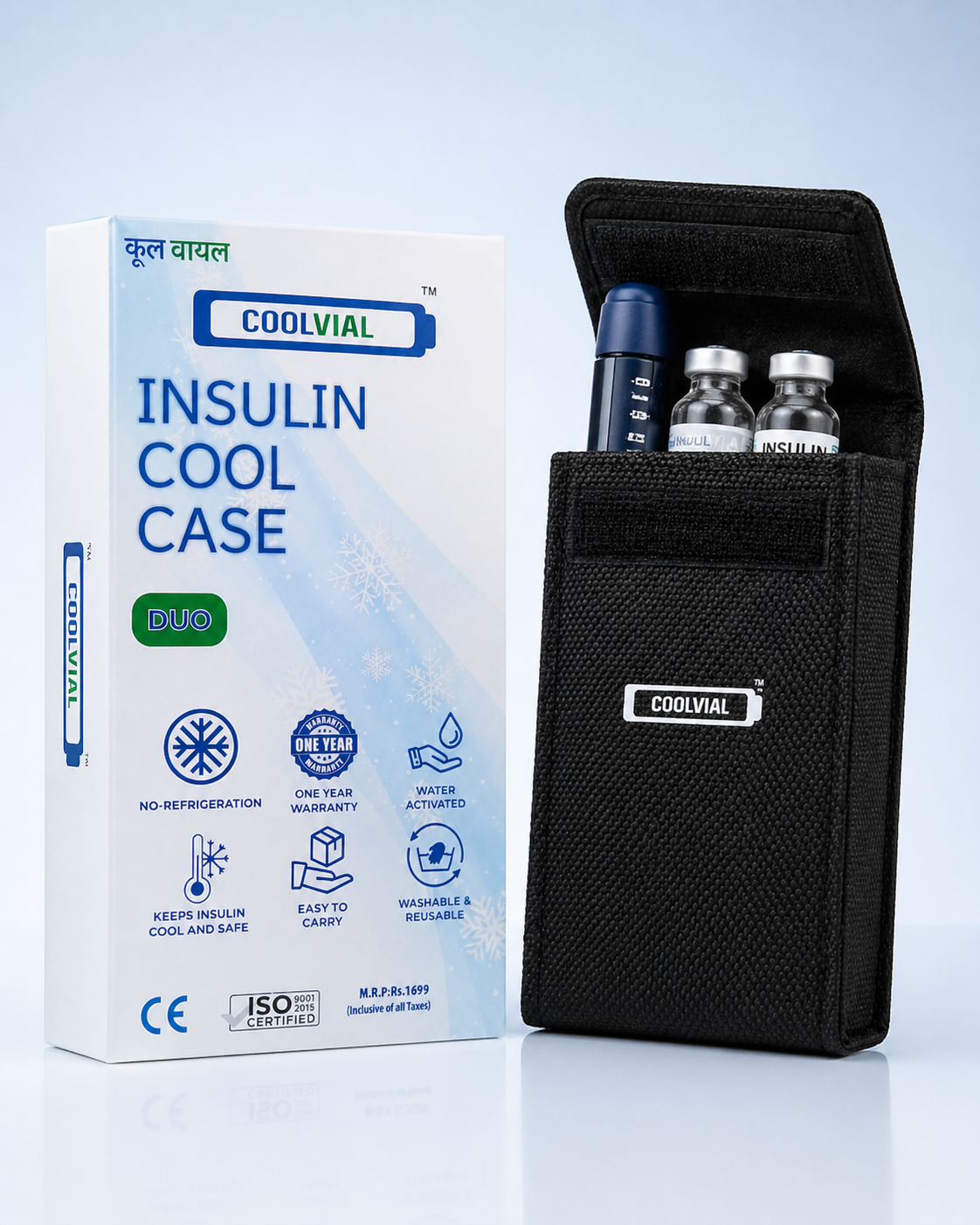
- Dedicated Cooling Case: A COOLVIAL Duo is ideal for students. It’s compact, durable, and discreet enough to fit into a school or college bag.
- For Younger Children: Teach them how to activate and care for their cooling case. Parents should prepare it every morning.
- For College Students: Encourage them to carry their COOLVIAL Duo to classes, labs, and the library.
- Lunch Box Integration: If carrying a lunch box, ensure the insulin cooling case is kept separate or in a specifically designed compartment to avoid direct contact with warm food.
- Emergency Kit: Along with insulin, students should carry glucose tablets or juice for hypoglycemic episodes. For a more comprehensive approach to managing diabetes, refer to our Complete Diabetes Care Guide for Gurugram Residents.
Your Daily Insulin Cooling Ritual: The COOLVIAL Advantage
A reliable insulin cooling solution is not a luxury; it’s a necessity in Gurugram. COOLVIAL Duo offers an effective, affordable, and made-in-India solution, keeping your insulin safe for 12-16 hours without electricity.
- Morning Prep Ritual:
- Activate Your COOLVIAL: Submerge the inner pouch of your COOLVIAL Duo in cold water for 5-10 minutes. The special crystals inside will absorb the water and turn into a gel, providing evaporative cooling.
- Dry Excess Water: Gently towel-dry the outer surface of the pouch.
- Load Insulin: Place your insulin pens (up to 2) and a vial (if applicable) into the activated pouch.
- Insert into Outer Cover: Slide the pouch into the protective outer cover.
- Pack: Place your COOLVIAL Duo securely in your daily bag.
- Comparison with Alternatives:
- FRIO: A well-known global brand, FRIO pouches typically cost around Rs 1,900-2,500 in India. While effective, COOLVIAL Duo offers similar water-activated evaporative cooling technology at a more accessible price point (Rs 1,099 with code COOLHEAL).
- Outer Woods OW-12: Priced around Rs 999, Outer Woods offers a passive cooler bag with gel packs. While cheaper, it requires freezing the gel packs overnight and offers shorter cooling duration (often 6-8 hours) compared to COOLVIAL’s 12-16 hours without needing a freezer, making it less convenient for daily commuters.
- Benefits of COOLVIAL Duo:
- Extended Cooling: 12-16 hours of cooling, perfect for long Gurugram commutes and full workdays.
- No Refrigeration Needed: Activates with just water, ideal for travel and situations without access to a fridge.
- Portable and Discreet: Compact design fits easily into any bag.
- Durable and Reusable: Built for daily use, year after year.
- Cost-Effective: An affordable long-term solution compared to buying new insulin due to spoilage.
- Certifications: CE certified, ISO 9001:2015, ensuring quality and safety.
- Made in India: Supporting local manufacturing.
For more detailed information on insulin storage, visit our insulin storage tips page. If you’re planning travel beyond Gurugram, our guide on Travelling From Gurugram With Insulin offers specific advice for airports, stations, and taxis.
Essential Daily Carry Checklist for Gurugram Commuters
Being prepared is key to stress-free diabetes management during your daily commute in Gurugram.
- Your COOLVIAL Duo: Activated and ready with your insulin pens and/or vials.
- Blood Glucose Meter: With fresh test strips and lancets.
- Hypoglycemia Treatment: Glucose tablets, juice box, or hard candy.
- Snacks: Healthy, slow-release carbohydrates for unexpected delays.
- Alcohol Swabs: For injection sites.
- Sharps Container (Small): For used needles (dispose of properly at home).
- Medical ID: Wear a medical alert bracelet or carry an ID card stating you have diabetes.
- Emergency Contact Info: Keep a card with emergency contacts and your doctor’s details.
Frequently Asked Questions (FAQs)
Q: Can I store my insulin pen in my wallet or pocket during my Gurugram commute? A: Storing an insulin pen in a wallet or pocket is highly discouraged during a Gurugram commute, especially in summer. Body heat combined with ambient temperatures (often 38-42°C in non-AC transport) will quickly degrade insulin potency, rendering it less effective.
Q: How long can insulin typically survive in a non-AC bus in Gurugram during summer? A: In a non-AC bus during Gurugram’s summer (38-42°C ambient), insulin can start to lose significant potency within 15-30 minutes. Prolonged exposure for 60-90 minute commutes can severely compromise its effectiveness, making a cooling case essential.
Q: Is it safe to leave my insulin in my bag in an office cabin if the AC is switched off overnight? A: No, it is not safe to leave insulin in a regular bag in an office cabin if the AC is off overnight, particularly in Gurugram. Room temperatures can rise significantly without AC, potentially exceeding 30°C and damaging your insulin. A cooling case like COOLVIAL Duo would provide protection for 12-16 hours in such scenarios.
Q: What is the ideal temperature range for storing opened insulin during daily use? A: Once opened, most insulin pens and vials should be stored at room temperature, ideally between 15-30°C, for up to 28 days. Exceeding 30°C, common in Gurugram’s climate, necessitates a cooling solution to maintain potency.
Q: Can I use ice packs to keep my insulin cool during my commute? A: While ice packs can keep things cool, direct contact with insulin can freeze it, which is equally damaging. If using ice packs, ensure the insulin is wrapped in a cloth to prevent direct contact and monitor the temperature carefully. Water-activated cooling cases like COOLVIAL Duo offer a safer, more consistent cooling method without the risk of freezing.
Q: Where can I dispose of used insulin needles safely in Gurugram? A: Used insulin needles should be collected in a puncture-proof container (like a sharps container) and disposed of responsibly. Many pharmacies like Apollo Pharmacy or MedPlus may have collection points, or you can contact local hospitals like Medanta The Medicity (Sector 38) for guidance on biomedical waste disposal [Verify in 2026]. Never dispose of them directly in household trash.
Q: My child carries insulin to school in Gurugram. What’s the best way to ensure it stays cool? A: For children, a COOLVIAL Duo is an excellent solution. It’s easy to activate daily and ensures insulin stays cool for the entire school day. Educate the school nurse or a designated teacher about the need to keep the cooling case in a shaded, cool spot and how to re-activate it if needed for after-school activities.
Conclusion: Empowering Your Diabetes Management
Navigating Gurugram’s dynamic environment with diabetes requires vigilance and the right tools. The extreme temperatures, long commute durations, and varied transport options present real challenges to maintaining insulin potency. By understanding these risks and adopting smart storage practices, such as consistently using a reliable water-activated cooling case like COOLVIAL Duo, you can ensure your insulin remains effective and your diabetes management stays on track. Don’t let the Gurugram heat compromise your health. Take control of your daily routine with confidence and peace of mind.
Order COOLVIAL Duo at Rs 1,099 with code COOLHEAL at coolvial.com or via WhatsApp wa.me/918766952300.
How We Researched This
This article is based on a comprehensive review of insulin storage guidelines from reputable bodies such as RSSDI (Research Society for the Study of Diabetes in India) and general diabetes care recommendations. We also incorporated data from ICMR-INDIAB (Indian Council of Medical Research - India Diabetes) studies for diabetes prevalence insights. Local Gurugram context, including hospital directories (e.g., Medanta The Medicity, Artemis Hospital, Fortis Memorial Research Institute), pharmacy networks (Apollo Pharmacy, MedPlus, 98.4 Pharmacy), and common commute routes and conditions, was integrated to provide highly relevant and actionable advice specific to the city. Local temperature data points were derived from historical weather patterns typical for the NCR climate zone.
Medical Disclaimer
This article is for general information purposes only and does not constitute medical advice. Always consult your endocrinologist or diabetologist before making any changes to your insulin storage, dosing practices, or diabetes management plan. Individual needs may vary.
10 Essential Tips for a Safe Daily Commute With Insulin in Gurugram
COOLVIAL keeps insulin safe in India's heat. 48+ hours, no electricity needed.