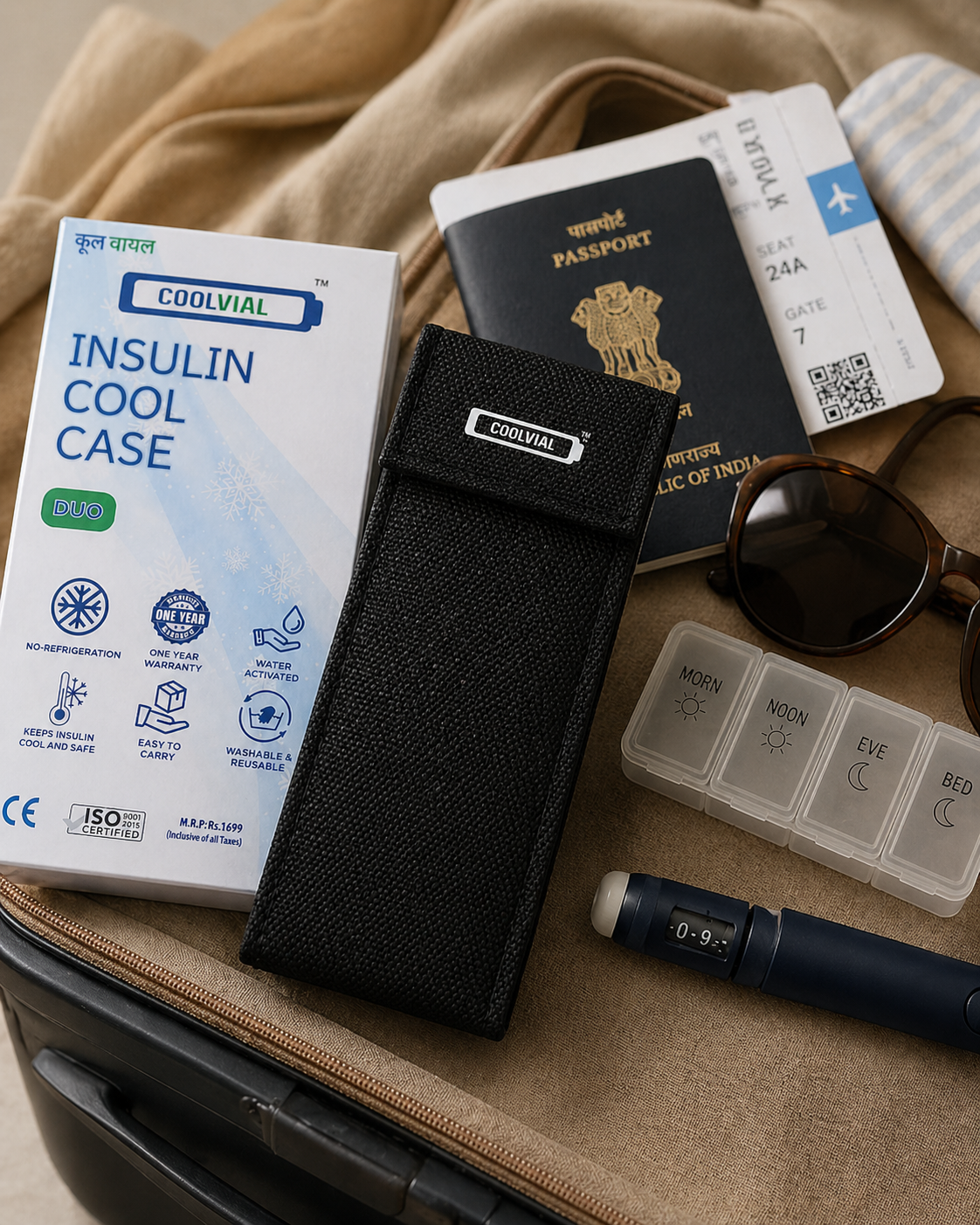
Reviewed by the COOLVIAL Editorial Team — specialists in insulin storage for Indian climate conditions.
Kota, the coaching hub of India, is a city brimming with ambition, often under the scorching Rajasthani sun. For thousands of residents managing diabetes, a safe daily commute with insulin is not just a convenience, but a critical health imperative. Imagine a typical summer day, with temperatures soaring past 40°C, and you’re commuting from Indraprastha Industrial area to Talwandi for work or classes. The insulin in your bag can be exposed to internal temperatures of 38-42°C in a non-AC city bus or auto-rickshaw. At these temperatures, unprotected insulin can begin to degrade in as little as 60-90 minutes, losing its effectiveness and putting your health at risk. This article, based on analysis of insulin storage queries from Kota diabetics, offers 5 essential tips to ensure your insulin remains potent and your health uncompromised, no matter how you travel in Kota.
Table of Contents
- Understanding Kota’s Climate and Insulin’s Vulnerability
- Navigating Public Transport in Kota: Buses, Autos, and E-rickshaws
- The Danger Zone: Bags, Backpacks, and Two-Wheeler Dickeys
- Workplace and Educational Institutions: Keeping Insulin Safe
- The Smart Solution: Why a Daily-Carry Insulin Cooler is Essential in Kota
- Your Morning Prep Ritual for a Worry-Free Commute
- Kota Metro: A Glimpse into Future Commutes and AC Reliability
- Ride-Sharing and AC: Navigating the “Denial Culture”
- Frequently Asked Questions (FAQ)
- Conclusion and Call to Action
- How We Researched This
- Medical Disclaimer
1. Understanding Kota’s Climate and Insulin’s Vulnerability
Kota’s climate presents a significant challenge for insulin storage. The city experiences extreme temperatures, ranging from a low of 8°C in winter to a blistering 46°C in peak summer (April to June). The dry heat is intense, and even during the monsoon season (July-September), with an average rainfall of ~750mm, high humidity combined with temperatures still in the 30s can be detrimental. Insulin, a protein, is highly sensitive to temperature fluctuations. Its ideal storage temperature is between 2°C and 8°C when unopened, and typically below 25°C or 30°C (depending on the specific brand) once opened for use. Exposing insulin to temperatures above its recommended range can cause it to lose potency, sometimes irreversibly.
- Key Temperature Thresholds for Insulin:
- Unopened: 2°C to 8°C (refrigerator)
- Opened/In-use: Below 25°C to 30°C (room temperature, specific to brand)
- Danger Zone: Above 30°C, especially 38-42°C, can lead to rapid degradation.
- Freezing: Below 0°C, also damaging to insulin structure.
Even a brief exposure to high temperatures can compromise insulin’s effectiveness. This means that a 60-90 minute daily commute with insulin in Kota’s summer heat can significantly reduce the insulin’s ability to lower blood sugar, leading to poor glycemic control and potential health complications. For a comprehensive overview of managing diabetes in the local context, you can refer to our Complete Diabetes Care Guide for Kota Residents — 2026 Edition.
2. Navigating Public Transport in Kota: Buses, Autos, and E-rickshaws
Kota’s public transport, primarily city buses, auto-rickshaws, and e-rickshaws, forms the backbone of daily commutes. While convenient, these modes of transport often lack temperature control, turning them into mobile ovens during summer.
- City Buses: Non-AC city buses can reach internal temperatures of 38-42°C during peak summer hours, especially if stuck in traffic. Even in cooler months, temperatures can easily exceed 25°C.
- Auto-rickshaws: While offering some open-air ventilation, auto-rickshaws provide minimal protection from direct sunlight. The ambient temperature, coupled with radiant heat from the road and engine, can still push temperatures well beyond safe limits for insulin. Direct sun exposure on an insulin pen can be particularly damaging.
- E-rickshaws: Popular among students in areas like Talwandi and Vigyan Nagar, e-rickshaws are often open-sided. While this provides airflow, it offers no insulation from the external heat.
Consider a student commuting from Vigyan Nagar to a coaching center in Talwandi, a journey that can take 30-45 minutes. Or an office worker traveling from Civil Lines to Indraprastha Industrial, a 60-90 minute journey. During such commutes, unprotected insulin is at constant risk.
- Tips for Public Transport in Kota:
- Always use a cooling case: This is non-negotiable for any daily commute with insulin in Kota.
- Seek shade in autos: If traveling by auto-rickshaw, try to sit on the shaded side or use a scarf/dupatta to create additional shade for your bag.
- Avoid direct sunlight: Never place your insulin bag directly on a sun-exposed seat or floor.
- Minimize exposure time: Plan your commutes during cooler parts of the day if possible, though this isn’t always practical.
- Stay hydrated: While not directly for insulin, staying hydrated helps you cope with the heat and reduces the physiological stress that can impact blood sugar.
3. The Danger Zone: Bags, Backpacks, and Two-Wheeler Dickeys
Many people mistakenly believe that keeping insulin in their everyday bags offers sufficient protection. This is a critical misconception, especially in Kota’s climate.
- Office Bag/School Bag/College Backpack: A typical office bag, school bag (for Type 1 children), or college backpack provides virtually no insulation. The internal temperature of these bags quickly matches the ambient temperature, or even exceeds it if exposed to direct sunlight. At 38-42°C, insulin can start losing potency within an hour.
- Laptop Sleeve: Laptop sleeves are designed for impact protection, not thermal insulation. They offer minimal barrier against heat, making them unsafe for insulin storage.
- Two-Wheeler Dickey (Storage Compartment): This is perhaps the most dangerous place for insulin storage. The dickey of a two-wheeler, especially under the seat, can reach extreme temperatures, often exceeding 60°C, due to engine heat and direct sun exposure. Never, under any circumstances, store insulin in a two-wheeler dickey. A brief stop for groceries at Apollo Pharmacy or MedPlus can turn your insulin into an ineffective solution.
Here’s an estimation of insulin survival in different storage methods in Kota’s summer heat (average 38°C ambient):
| Storage Method | Estimated Internal Temperature | Insulin Survival Time (Approx.) |
|---|---|---|
| Two-wheeler Dickey | 50-60°C | < 30 minutes (highly dangerous) |
| Office/School Bag, Backpack | 38-42°C | 60-90 minutes before degradation |
| Laptop Sleeve | 38-42°C | 60-90 minutes before degradation |
| Non-AC Bus/Auto (exposed) | 38-42°C | 60-90 minutes before degradation |
| COOLVIAL Duo (activated) | 18-26°C | 12-16 hours (safe and effective) |
This table clearly illustrates why relying on standard bags for your daily commute with insulin is a risky gamble with your health. The COOLVIAL Duo maintains insulin at safe temperatures for significantly longer, protecting its integrity.
4. Workplace and Educational Institutions: Keeping Insulin Safe
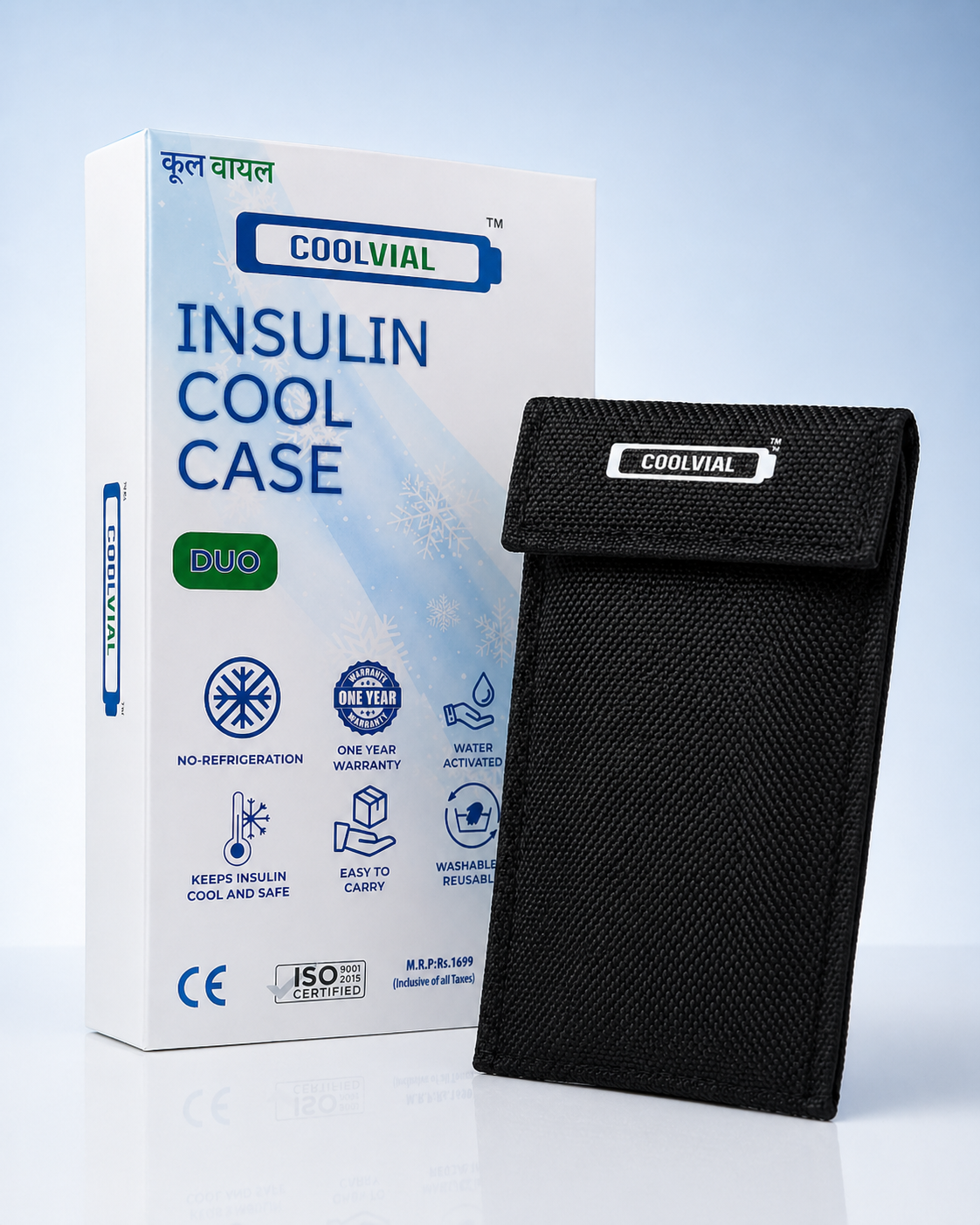
5 Essential Tips for a Safe Daily Commute with Insulin in Kota
COOLVIAL keeps insulin safe in India's heat. 48+ hours, no electricity needed.
Once you arrive at your destination, whether it’s an office in the Chambal Riverfront area or a coaching institute in Talwandi, the challenge of safe insulin storage continues. Many offices or schools might not have dedicated medical refrigerators or consistent AC.
-
Office Environments (Chambal Garden, Kota Barrage Corporate Parks):
- Lunch Storage: If you carry your lunch, you might use the office refrigerator. However, ensure your insulin is clearly labeled and stored safely, ideally in a separate container within the fridge, to prevent accidental freezing or mishandling.
- Desk Storage: Even in an AC office, desk-side temperatures can fluctuate, especially near windows or vents. Avoid leaving insulin exposed on your desk.
- Power Outages: Kota, like many Indian cities, can experience power cuts. If your office AC goes off, your insulin needs immediate protection.
-
School/College/Coaching Hubs (Talwandi, Vigyan Nagar):
- Communication is Key: For students, especially those with Type 1 diabetes, it’s crucial for parents to communicate with school authorities (e.g., at New Medical College Hospital affiliated institutions or private coaching centers) about insulin storage needs.
- Designated Storage: Request access to a staff refrigerator or a secure, consistently cool place for insulin.
- Personal Cooling Case: Even if a fridge is available, a personal cooling case like COOLVIAL Duo offers independence and protection during movement between classes or during breaks.
- Awareness: Educate friends and teachers about your diabetes and the importance of insulin storage.
-
Actionable Tips for Workplaces & Schools:
- Always carry your insulin in a personal cooling case. This provides continuous protection, even if you move between different temperature zones within the building.
- Identify a safe spot: At work, find a consistently air-conditioned area or a shared refrigerator. At school, speak to the school nurse or administration.
- Avoid direct sunlight: Keep your bag and cooling case away from windows or direct sun exposure.
- Have a backup plan: In case of a power cut or AC failure, know where you can temporarily store your insulin or how long your cooling case will last.
- Utilize nearby pharmacies: In an emergency, pharmacies like Apollo Pharmacy or MedPlus in Talwandi or Vigyan Nagar might offer temporary storage, though this should not be a primary solution.
For tips on eating out safely in Kota, which often involves carrying insulin, check our guide on Diabetic-Friendly Restaurants & Cafes in Kota — Where to Eat Safely.
5. The Smart Solution: Why a Daily-Carry Insulin Cooler is Essential in Kota
Given Kota’s challenging climate and the realities of daily commutes, a dedicated insulin cooling case is not a luxury, but a necessity. The COOLVIAL Duo is specifically designed to address these challenges, offering a reliable and affordable solution for your daily commute with insulin.
COOLVIAL Duo is a water-activated evaporative cooling case. It works by absorbing water into special polymer crystals, which then slowly evaporate, drawing heat away from the insulin and maintaining it at a safe temperature (typically 18-26°C) for 12-16 hours. This means your insulin pens and vials are protected for your entire workday or school day, plus your commute, without needing electricity or ice packs.
- Key Features of COOLVIAL Duo:
- Capacity: Holds 2 insulin pens + 1 insulin vial, or 3-4 insulin pens.
- Cooling Duration: Keeps insulin cool for 12-16 hours per activation.
- Activation: Simply soak in water for 10 minutes.
- Portability: Compact and lightweight, easily fits into your bag.
- Durability: Designed for daily use in Indian climate conditions.
- Certifications: CE certified, ISO 9001:2015 compliant.
- Warranty: Comes with a 1-year warranty.
- Made in India: Proudly manufactured locally, ensuring quality and availability.
- Affordable: Priced at Rs 1,099 with code COOLHEAL (MRP Rs 1,699), making it accessible for daily use.
When compared to other options like FRIO (often around Rs 1,900 for similar capacity) or Outer Woods OW-12 (around Rs 999 but might offer shorter cooling or different features), COOLVIAL Duo strikes an excellent balance of performance, capacity, and affordability. It’s an investment in your health, ensuring that every dose of insulin you take is fully effective. Protect your vital medication with a COOLVIAL insulin cool case for peace of mind.
6. Your Morning Prep Ritual for a Worry-Free Commute
Incorporating the COOLVIAL Duo into your morning routine is simple and takes just a few minutes, guaranteeing safe insulin for your entire daily commute with insulin and beyond.
- Morning Checklist for Insulin Protection:
- Activate your COOLVIAL Duo: In the morning, or the night before, soak your COOLVIAL Duo inner pouch in cool water for 10 minutes. The crystals inside will expand, ready for evaporative cooling.
- Load your insulin: Once the pouch is activated and gently towel-dried, place your insulin pens and/or vials into the cooling case.
- Pack it securely: Place the COOLVIAL Duo into your office bag, school bag, or college backpack. Ensure it’s not squashed, allowing for proper air circulation around the case for effective evaporation.
- Check insulin expiry/condition: Before packing, quickly check your insulin pens/vials for any signs of damage, cloudiness (for clear insulin), or expiry.
- Carry a small water bottle (optional): For longer commutes or extremely hot days, a small bottle of water can be useful for re-activating the cooling case if needed, though typically 12-16 hours is sufficient for a full day.
- Refill supplies: If you’re running low on insulin or needles, make a mental note to visit a nearby pharmacy like 1mg or Generic Aadhaar after work.
This simple ritual ensures that from the moment you leave your home near Kishore Sagar Lake until you return, your insulin is protected from Kota’s harsh climate. For more general advice on keeping your insulin safe, visit our insulin storage tips page.
7. Kota Metro: A Glimpse into Future Commutes and AC Reliability
While Kota does not currently have an operational metro system, plans for such infrastructure are often discussed as cities grow. Should a metro system be implemented in Kota in the future, it would significantly change the dynamics of daily commutes.
-
Potential Benefits of a Future Kota Metro:
- Controlled Environment: Metro trains typically offer air-conditioned compartments, providing a stable, cooler environment for passengers and their belongings, including insulin. This would be a welcome relief from the scorching temperatures of buses and autos.
- Reduced Travel Time: Faster travel times would mean less prolonged exposure to the elements, even if you are carrying your insulin in a cooling case.
- Predictable Conditions: Unlike buses or autos, where AC might be unreliable or non-existent, metro AC systems are usually consistent.
-
Considerations for Future Metro Users with Insulin:
- Platform Temperatures: Even with AC inside the train, metro platforms can be hot, especially during peak summer. Ensure your insulin is protected while waiting.
- Reliability: While metros are generally reliable, occasional breakdowns or power outages could occur. Always have a personal cooling solution.
- Intermodal Transfers: If your commute involves transferring from a metro to a non-AC bus or auto, the cooling case remains vital for the unprotected segments of your journey.
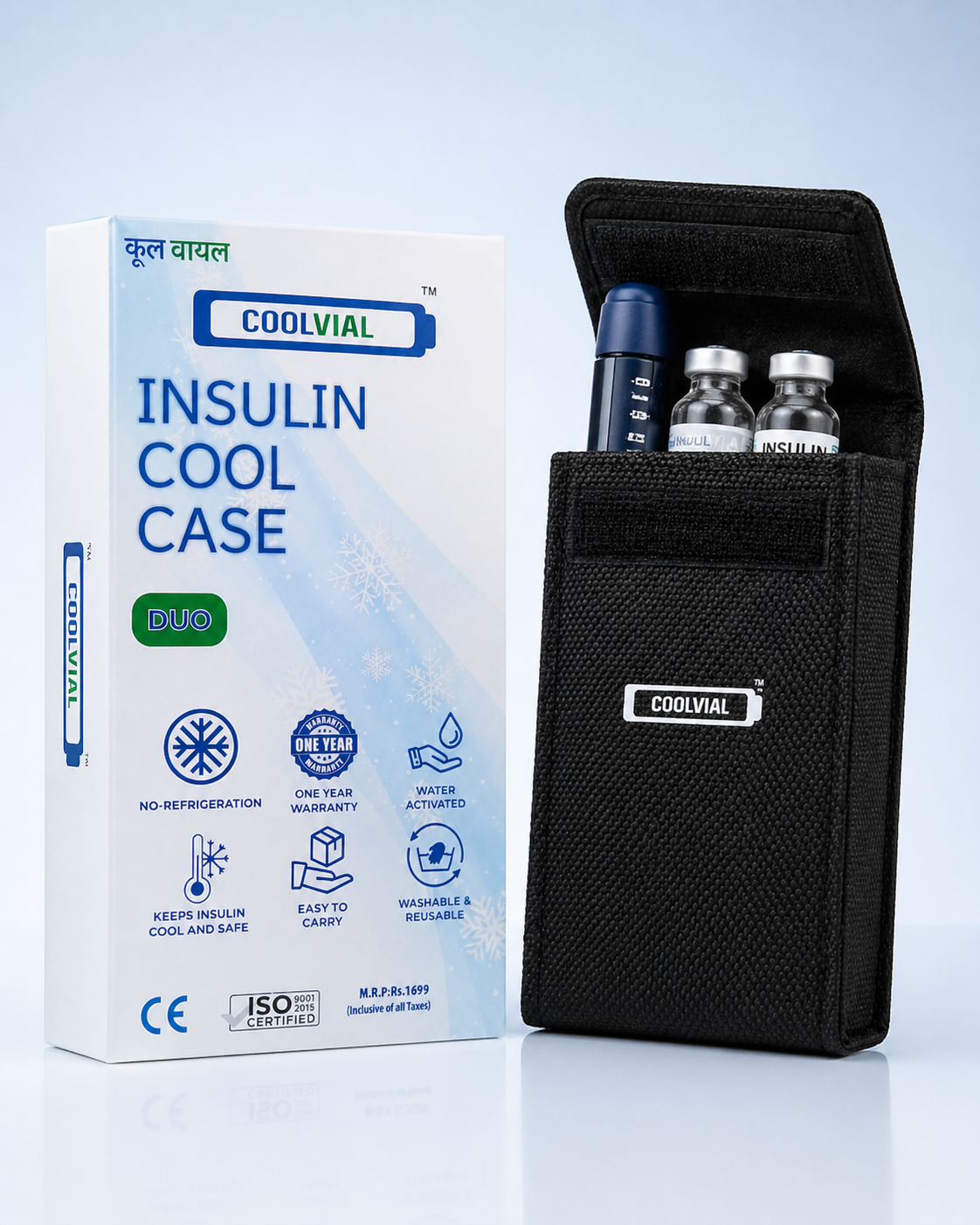
5 Essential Tips for a Safe Daily Commute with Insulin in Kota
Insulin at 2-8°C for 48+ hours. Trusted by 10,000+ Indian diabetics.
For longer journeys outside Kota, involving trains or flights, specific precautions apply, which you can read about in our guide: Travelling From Kota With Insulin — Airport, Station & Taxi Tips.
8. Ride-Sharing and AC: Navigating the “Denial Culture”
Ride-sharing services like Ola or Uber are increasingly popular in Kota, offering a convenient alternative to autos. However, a common challenge, often referred to as “AC denial culture,” can impact insulin safety. Drivers may sometimes switch off the AC or deny turning it on to save fuel, especially for shorter rides or during non-peak hours.
-
Challenges with Ride-Sharing AC:
- Driver Discretion: AC use is often at the driver’s discretion, leading to inconsistent cooling.
- Cost Saving: Drivers might avoid AC to reduce fuel consumption, particularly if the ride fare is low.
- Perceived Misuse: Some drivers may believe that passengers don’t require AC for short distances.
-
Strategies for Ride-Shares with Insulin:
- Request AC upfront: When booking, select an AC option if available. Politely confirm with the driver upon arrival that the AC will be on.
- Be assertive but polite: If the AC is off, politely request it to be turned on, explaining the medical necessity for a cool environment for your medication.
- Use a cooling case: Even with AC on, your COOLVIAL Duo provides an extra layer of protection, especially during initial warm-up or if the AC is weak.
- Rate and review: Provide feedback on AC usage. This helps improve service quality for other passengers with similar needs.
- Consider premium options: If possible, opt for slightly more expensive AC categories within ride-sharing apps that guarantee AC.
Remember, your insulin’s integrity is paramount. Don’t hesitate to prioritize its safety during your daily commute with insulin, even if it means a brief conversation with your driver.
Frequently Asked Questions (FAQ)
Q: How long can insulin be kept out of the refrigerator in Kota’s climate? A: Once opened, insulin can typically be kept at room temperature (below 25-30°C, depending on the brand) for up to 28 days. However, in Kota’s summer, ambient temperatures often exceed 30°C, meaning unprotected insulin can degrade rapidly, sometimes within 60-90 minutes at 38-42°C.
Q: Can I store insulin in a regular lunch bag with an ice pack? A: A regular lunch bag with an ice pack offers limited protection. Ice packs can directly freeze insulin if in contact, which is damaging. Also, ice packs melt quickly in Kota’s heat, losing their cooling effect within 1-2 hours, leaving insulin vulnerable.
Q: What happens if my insulin gets too hot? A: If insulin gets too hot, its protein structure can break down, causing it to lose potency. This means it won’t lower your blood sugar effectively, leading to hyperglycemia. You might notice changes in appearance (cloudiness, particles) or it may appear normal but be ineffective.
Q: Is it safe to carry insulin in my pocket during commute? A: No, carrying insulin directly in your pocket is not safe. Body heat can raise the insulin’s temperature above safe limits, especially during physical activity or in a hot environment. Always use a proper cooling case.
Q: How do I know if my insulin has gone bad due to heat exposure? A: Signs of insulin degradation include a cloudy appearance (for clear insulin), changes in color, or the presence of particles. However, insulin can lose potency without visible changes. If you suspect heat exposure, monitor your blood sugar closely and consult your doctor or a pharmacist at Maharao Bhim Singh Hospital (MBS) or Suwidhi Hospital.
Q: Can I keep insulin in a thermos flask for cooling? A: A thermos flask is designed to maintain the temperature of its contents, whether hot or cold. While it can offer some insulation, it doesn’t actively cool. If the insulin is already cool, a thermos might help maintain it for a short period, but it’s not as effective or reliable as a purpose-built evaporative cooling case like COOLVIAL Duo for sustained cooling in high ambient temperatures.
Q: What temperature should insulin be stored at when I’m at home in Kota? A: Unopened insulin should be stored in the refrigerator between 2°C and 8°C. Once an insulin pen or vial is opened for use, it can generally be stored at room temperature (below 25°C or 30°C, check specific brand instructions) for up to 28 days. However, given Kota’s climate, it’s often safer to keep in-use insulin in a cool, dark place or even in a COOLVIAL Duo if your home frequently exceeds 30°C.
Conclusion and Call to Action
Navigating daily life with diabetes in a city like Kota requires vigilance, especially when it comes to protecting your vital medication. The extreme temperatures, coupled with the realities of public transport and busy schedules, make thoughtful insulin storage during your daily commute with insulin absolutely essential. Unprotected insulin is ineffective insulin, and that can have serious implications for your health and well-being.
By understanding Kota’s unique climate challenges and adopting smart, proactive strategies – particularly by investing in a reliable cooling solution – you can ensure your insulin remains potent and effective, day in and day out. The COOLVIAL Duo is engineered to provide this peace of mind, offering robust, electricity-free cooling for 12-16 hours at an accessible price.
Don’t let Kota’s heat compromise your health. Take control of your insulin safety today.
Order your COOLVIAL Duo at Rs 1,099 with code COOLHEAL at coolvial.com or via WhatsApp wa.me/918766952300
How We Researched This
This article is based on a thorough review of insulin storage guidelines from the Research Society for the Study of Diabetes in India (RSSDI), data from the Indian Council of Medical Research - India Diabetes (ICMR-INDIAB) study regarding diabetes prevalence and management challenges across India, local temperature data for Kota, and information gathered from local Kota hospital directories (Maharao Bhim Singh Hospital (MBS), Suwidhi Hospital, New Medical College Hospital) and pharmacy networks (Apollo Pharmacy, MedPlus, 1mg, Generic Aadhaar, Kota Pharmacy). We cross-referenced this with common queries and challenges faced by individuals managing diabetes in similar hot climates.
Medical Disclaimer
This article is for general information purposes only and does not constitute medical advice. Always consult your endocrinologist or diabetologist before making any changes to your insulin storage practices, dosing regimen, or diabetes management plan. The information provided herein is not a substitute for professional medical guidance.