
Reviewed by the COOLVIAL Editorial Team — specialists in insulin storage for Indian climate conditions.
Mangaluru, with its stunning coastal beauty and bustling city life, presents a unique set of challenges for individuals managing diabetes, especially when it comes to the daily commute with insulin. The city’s tropical climate, characterized by high humidity and temperatures often soaring between 19°C and 35°C year-round, with peak summers reaching 38-42°C in non-AC vehicles, demands careful planning for insulin storage. Based on analysis of insulin storage queries from Mangaluru diabetics, we understand that a journey from Bejai to Hampankatta, which can take 60-90 minutes by bus or auto, exposes insulin to conditions that can rapidly degrade its efficacy. Did you know that unrefrigerated insulin, once opened, is typically stable only for about 28 days at temperatures up to 25-30°C? Exceeding this can lead to significant potency loss. This comprehensive guide offers 10 essential tips to ensure your insulin remains potent and safe during your everyday travels across Mangaluru, whether you’re using the city bus, an auto-rickshaw, or the emerging metro network.
Table of Contents
- Understanding Mangaluru’s Climate and Its Impact on Insulin
- The Realities of Daily Commute Transport in Mangaluru
- Insulin’s Lifespan in Common Bags During Mangaluru Commutes
- Navigating Mangaluru Metro and Two-Wheelers with Insulin
- Safe Insulin Storage at Work and Educational Institutions in Mangaluru
- Your Essential Morning Ritual for Insulin Cooling in Mangaluru
- Choosing the Right Insulin Cooling Solution for Mangaluru’s Heat
- Practical Tips for Managing Insulin During Unexpected Delays
- Key Considerations for Type 1 Children and Students
- Sourcing Insulin and Supplies in Mangaluru
1. Understanding Mangaluru’s Climate and Its Impact on Insulin
Mangaluru’s tropical coastal climate means constant high temperatures and humidity, which are significant threats to insulin integrity. The intense southwest monsoon from June to September, bringing around 3500mm of rain, doesn’t necessarily cool down ambient temperatures but rather increases humidity, making it feel even warmer. For insulin, exposure to temperatures above 30°C for even short periods can start to compromise its effectiveness.
Consider these factors:
- Ambient Temperatures: Daily highs often reach 30-35°C, but inside vehicles, especially non-AC ones, they can easily climb to 38-42°C during peak summer months.
- Humidity: High humidity increases the perceived temperature and can affect the longevity of insulin if not stored correctly in a sealed, temperature-controlled environment.
- Direct Sunlight: Even a few minutes of direct sun exposure can heat insulin rapidly to damaging levels, far exceeding safe storage recommendations.
According to guidelines from the Research Society for the Study of Diabetes in India (RSSDI), proper storage is paramount to maintain insulin efficacy. Prolonged exposure to heat can denature the protein structure of insulin, rendering it less effective or even ineffective, leading to fluctuating blood sugar levels (Source: RSSDI Publications). This is particularly crucial given that diabetes prevalence in Karnataka stands at approximately 10.3%, as per ICMR-INDIAB data, highlighting the large number of residents relying on insulin for daily management.
2. The Realities of Daily Commute Transport in Mangaluru
Mangaluru’s public transport system largely relies on KSRTC city buses, auto-rickshaws, and share autos. While convenient, these modes of transport present distinct challenges for insulin users.
-
KSRTC City Buses:
- Non-AC Environment: The vast majority of city buses are non-AC. During peak hours and summer afternoons, internal temperatures can soar to 38-42°C. A 60-90 minute commute from Kankanady to Surathkal in such conditions is a serious risk for insulin.
- Crowding: Packed buses mean insulin pens in bags are often pressed against bodies, absorbing body heat, or exposed to direct sunlight filtering through windows.
- Vibrations & Shocks: Constant movement, braking, and acceleration can cause physical agitation to insulin, though temperature is usually a greater concern.
-
Auto-Rickshaws:
- Open-Air but Hot: While seemingly open-air, auto-rickshaws offer limited shade. Direct sunlight can easily enter the vehicle, baking any items in a bag placed on the seat or floor.
- Engine Heat: The engine, located near the passenger compartment, can radiate significant heat, especially during long rides or traffic jams.
- Short Rides: For shorter commutes, like from Hampankatta to City Centre Mall, the risk is slightly lower, but cumulative exposure over multiple daily rides adds up.
-
Share Autos:
- Similar to Regular Autos: Share autos share the same heating issues as regular autos but often involve more frequent stops and starts, potentially prolonging overall travel time and heat exposure.
- Crowding: More passengers mean less space and potentially more body heat contributing to the internal temperature.
-
App-Based Cabs (Limited AC Reliability):
- AC Denial Culture: While app-based taxis (like Ola/Uber) do operate, drivers sometimes “deny” AC usage to save fuel, despite it being paid for. Always confirm AC functionality before starting your ride.
- Temperature Fluctuation: Even with AC, if the car has been parked in the sun, it takes time to cool down, exposing insulin to high initial temperatures.
Commute Temperature Assessment:
| Transport Mode | Typical Internal Temperature Range (Summer Peak) | Risk Level for Insulin (60-90 min commute) |
|---|---|---|
| Non-AC City Bus | 38-42°C | High |
| Auto-Rickshaw | 35-40°C (with sun exposure) | High |
| Share Auto | 35-40°C (with sun exposure) | High |
| App-Based Cab (AC off) | 35-40°C | High |
| App-Based Cab (AC on) | 25-30°C (after cooling) | Moderate (initial heat up) |
| Mangaluru Metro (AC) | 22-25°C (ideal) | Low |
3. Insulin’s Lifespan in Common Bags During Mangaluru Commutes
How long can an insulin pen safely survive in an ordinary bag? Not long, especially in Mangaluru’s heat. Insulin, once opened, is typically stable at room temperature (below 25-30°C) for 28 days. Above this, its potency begins to degrade rapidly.
- Office Bag/School Bag/College Backpack:
- No Protection: These bags offer minimal thermal insulation. A laptop sleeve, for instance, provides zero temperature control.
- Heat Absorption: Dark-colored bags absorb more solar radiation, accelerating internal temperature rise.
- Insulin Degradation: In a 38-42°C environment, insulin can lose significant potency within hours. A 60-90 minute commute is more than enough to cause damage. After just 30-45 minutes in these conditions, your insulin could already be compromised.
- Visibility Check: Always check your insulin for cloudiness, discoloration, or crystals. If you notice any changes, discard it immediately.
Scenario: Insulin in an Ordinary Bag
| Ambient Temperature | Time to Reach 30°C Internal Temp (approx.) | Time to Reach 35°C Internal Temp (approx.) | Risk of Degradation |
|---|---|---|---|
| 30°C | 30-45 minutes | 60-90 minutes | Moderate to High |
| 35°C | 15-20 minutes | 30-45 minutes | High |
| 40°C | 5-10 minutes | 15-20 minutes | Very High |
Key takeaway: Relying on an ordinary bag for your daily commute with insulin in Mangaluru is a high-risk gamble. It’s simply not designed to protect temperature-sensitive medication from the local climate.
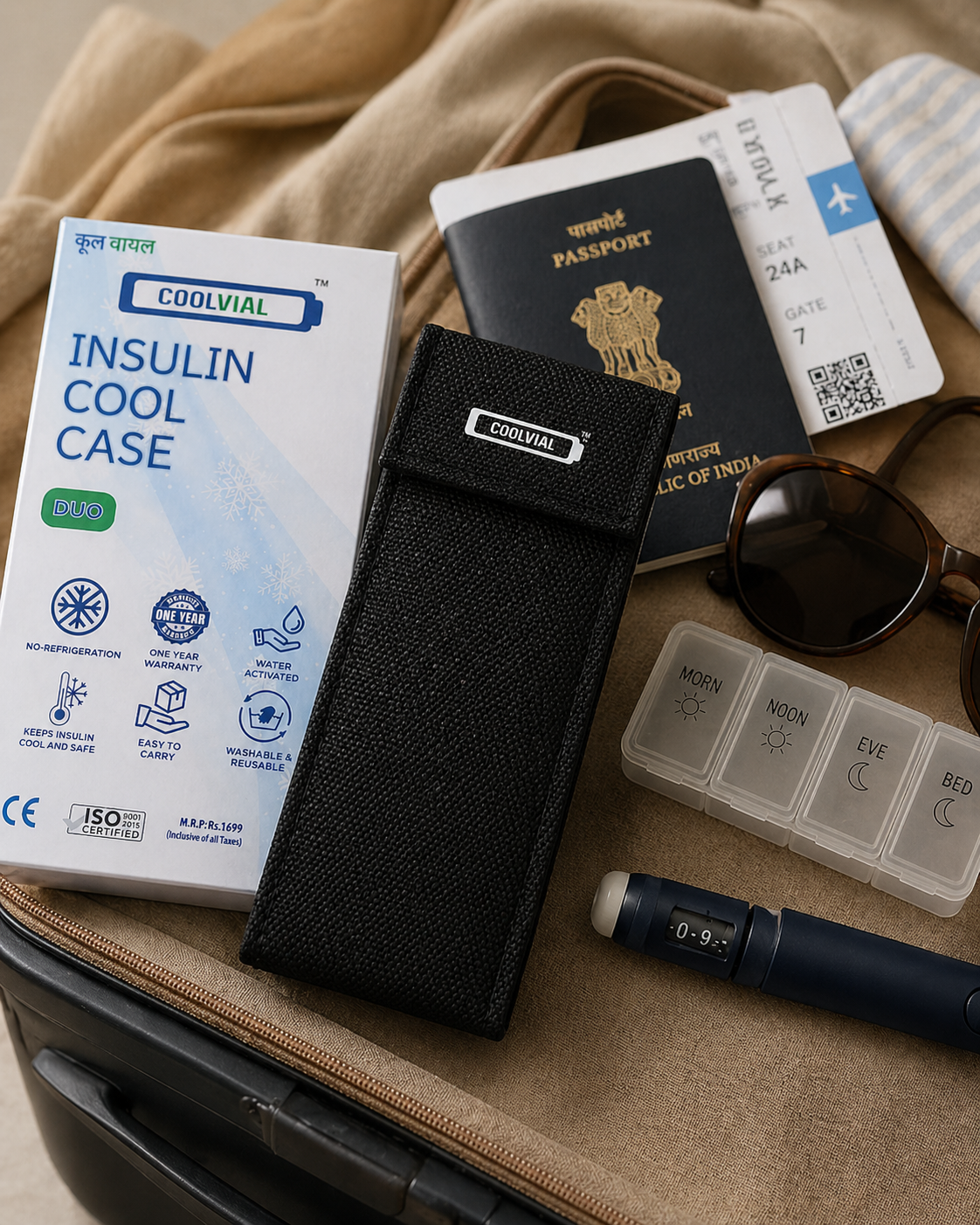
For reliable protection, consider a purpose-built cooling solution like the COOLVIAL insulin cool case. It’s designed specifically for such challenging conditions.
4. Navigating Mangaluru Metro and Two-Wheelers with Insulin
As Mangaluru’s infrastructure develops, new transport options emerge, each with its own insulin storage considerations.
10 Essential Tips: Daily Commute With Insulin in Mangaluru — Metro, Bus & Auto
Insulin at 2-8°C for 48+ hours. Trusted by 10,000+ Indian diabetics.
-
Mangaluru Metro (Upcoming/Limited AC Reliability):
- AC Comfort: Once fully operational, the metro promises air-conditioned comfort, maintaining temperatures typically between 22-25°C, which is ideal for insulin.
- Seat-Side Temperatures: Even in AC compartments, seats near windows can experience slightly higher temperatures due to solar radiation. Always place your insulin kit towards the aisle or in an overhead compartment away from direct sun.
- Power Outages/Delays: While rare, be prepared for potential AC failures or delays. Always carry your insulin in a cooling case, even in AC environments, as a backup.
-
Two-Wheelers (Motorcycles, Scooters):
- The Dickey Dilemma (NEVER!): Parking insulin in a two-wheeler dickey is one of the most dangerous practices. A dickey can easily reach 60°C or more, even on a moderately sunny day, turning into an oven for your insulin. This will render your insulin unusable within minutes.
- Front Storage/Under Seat: Similarly, storing insulin in the front storage compartment or under the seat is equally risky due to direct sun exposure and engine heat.
- Backpack on Rider: If you must carry insulin on a two-wheeler, always keep it in a well-insulated cooling case within a backpack worn by the rider, ensuring it’s not exposed to direct sun or engine heat. Even then, continuous exposure to ambient heat through the backpack can be an issue.
Safe Two-Wheeler Practices:
- Always use a cooling case: Even for short rides.
- Carry on person: In a backpack or sling bag, close to your body (but not directly heating it), away from direct sun.
- Never in the dickey: This is non-negotiable for insulin.
5. Safe Insulin Storage at Work and Educational Institutions in Mangaluru
Whether you’re working at a corporate park in Tannirbhavi Beach or studying at KMC Hospital (Kasturba Medical College) or Father Muller Medical College Hospital, proper insulin storage during the day is critical.
-
Office Environment:
- Desk Drawer/Locker: If your office has reliable air conditioning, a desk drawer or locker can be suitable for your cooling case. However, avoid placing it near heat sources like computers or direct sunlight through windows.
- Shared Refrigerators: If available, a dedicated space in a shared refrigerator (in a sealed container) is ideal. Always label your insulin clearly.
- Lunch Storage: For those bringing lunch, storing insulin alongside your meal in a personal cooler bag can work, provided the cooler maintains the correct temperature for both.
- Corporate Parks: Offices in areas like Tannirbhavi Beach and Sultan Battery corporate parks often have good AC, but ensure your specific workspace maintains consistent cool temperatures.
-
Educational Institutions (Schools/Colleges):
- School Nurses/Office: For children with Type 1 diabetes, the safest option is to store insulin with the school nurse or in the main office refrigerator. Ensure staff are trained on handling and administration.
- College Lockers: College students at institutions like AJ Institute of Medical Sciences or NITK (Surathkal) should use lockers away from direct sun. An evaporative cooling case, like the COOLVIAL Duo, is essential for carrying insulin between classes and for day-long storage.
- Cafeteria/Canteen: If you need to store insulin during lunch, check if the cafeteria has a refrigerator that can accommodate your cooling case.
Checklist for Work/School Insulin Storage:
- Confirm AC reliability: Is the area consistently air-conditioned?
- Avoid direct sunlight: Ensure your storage spot is out of the sun’s path.
- Keep away from heat sources: No placement near electronics, vents, or heating pipes.
- Use a personal cooling case: Even if a fridge is available, a personal cooling case provides an extra layer of protection, especially during transit to and from the fridge.
- Inform colleagues/teachers: Let a trusted few know where your insulin is and what to do in an emergency.
6. Your Essential Morning Ritual for Insulin Cooling in Mangaluru
A consistent morning routine is your best defense against insulin degradation in Mangaluru’s climate.
-
Activate Your Cooling Case:
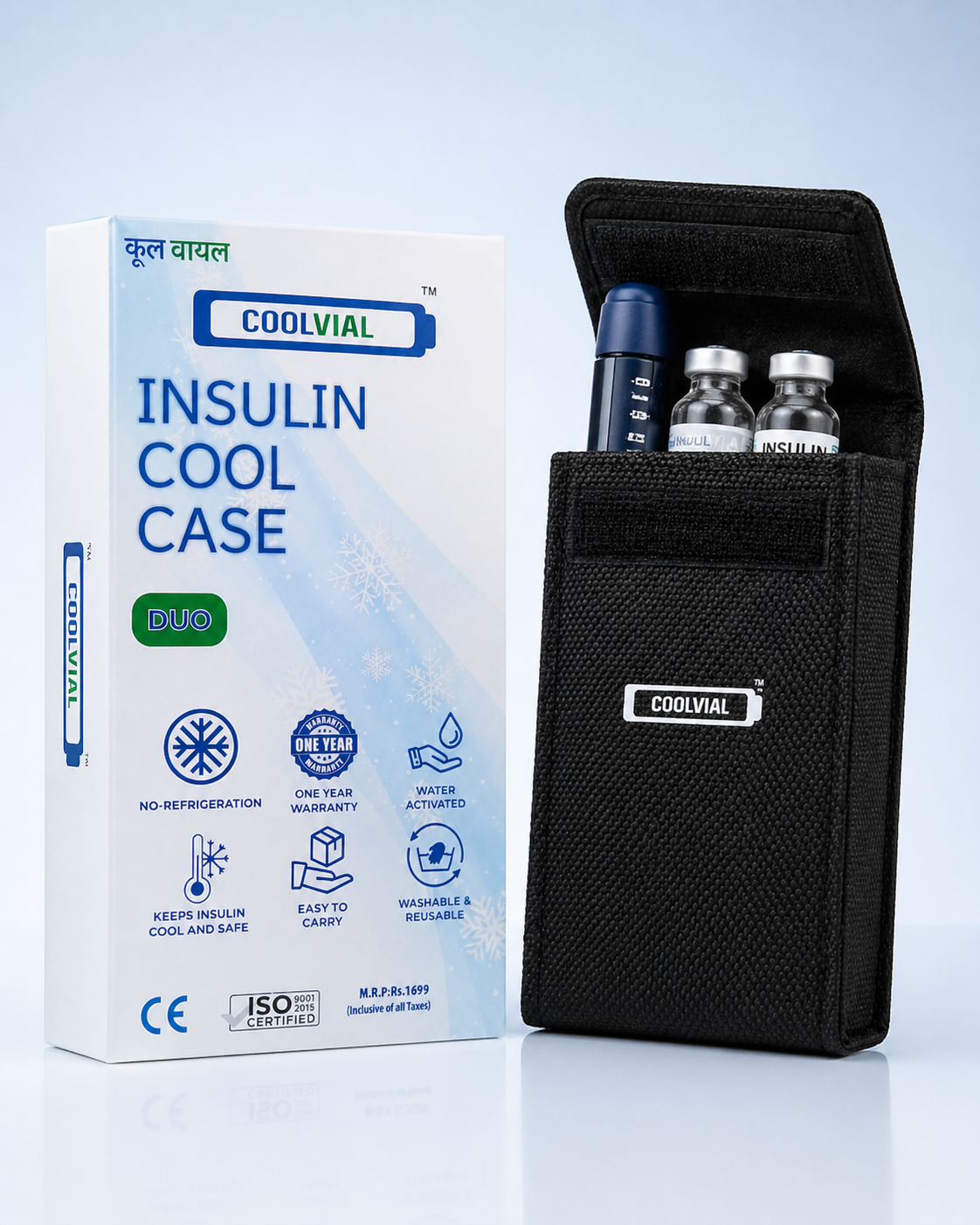
- COOLVIAL Duo: Simply immerse the inner pouch in cool water for 1-2 minutes. The special crystals inside will absorb the water, forming a gel that provides evaporative cooling for 12-16 hours. Squeeze out excess water gently, pat dry, and place your insulin pens/vials inside. It’s ready!
- Other Cases: Follow manufacturer instructions (e.g., freezing gel packs, soaking).
-
Pack Smart:
- Place your activated cooling case, containing your insulin pens and/or vials, into your office bag, school bag, or backpack.
- Ensure it’s easily accessible but protected from crushing or excessive agitation.
- Include your blood glucose monitor, test strips, lancets, and a fast-acting glucose source (e.g., glucose tablets, fruit juice) in a separate, easily reachable compartment.
-
Check Your Insulin:
- Before you leave, quickly inspect your insulin for any changes in appearance (cloudiness, crystals, discoloration). If anything looks unusual, do not use it.
- Verify the expiry date.
-
Plan Your Route:
- If possible, choose routes that minimize direct sun exposure for you and your bag.
- For longer commutes, consider slightly earlier or later travel times to avoid the absolute peak heat of the day.
This simple morning ritual takes only a few minutes but provides peace of mind throughout your daily commute with insulin in Mangaluru.
7. Choosing the Right Insulin Cooling Solution for Mangaluru’s Heat
Selecting an appropriate insulin cooling case is paramount for Mangaluru’s challenging climate. Not all coolers are created equal.
-
Evaporative Cooling Cases (e.g., COOLVIAL Duo, FRIO):
- How they work: These cases use a water-activated gel that cools through evaporation, keeping insulin at a safe temperature (typically 18-26°C) even when ambient temperatures are much higher.
- Advantages: No electricity or ice packs needed. Lightweight, reusable, and highly effective for daily use.
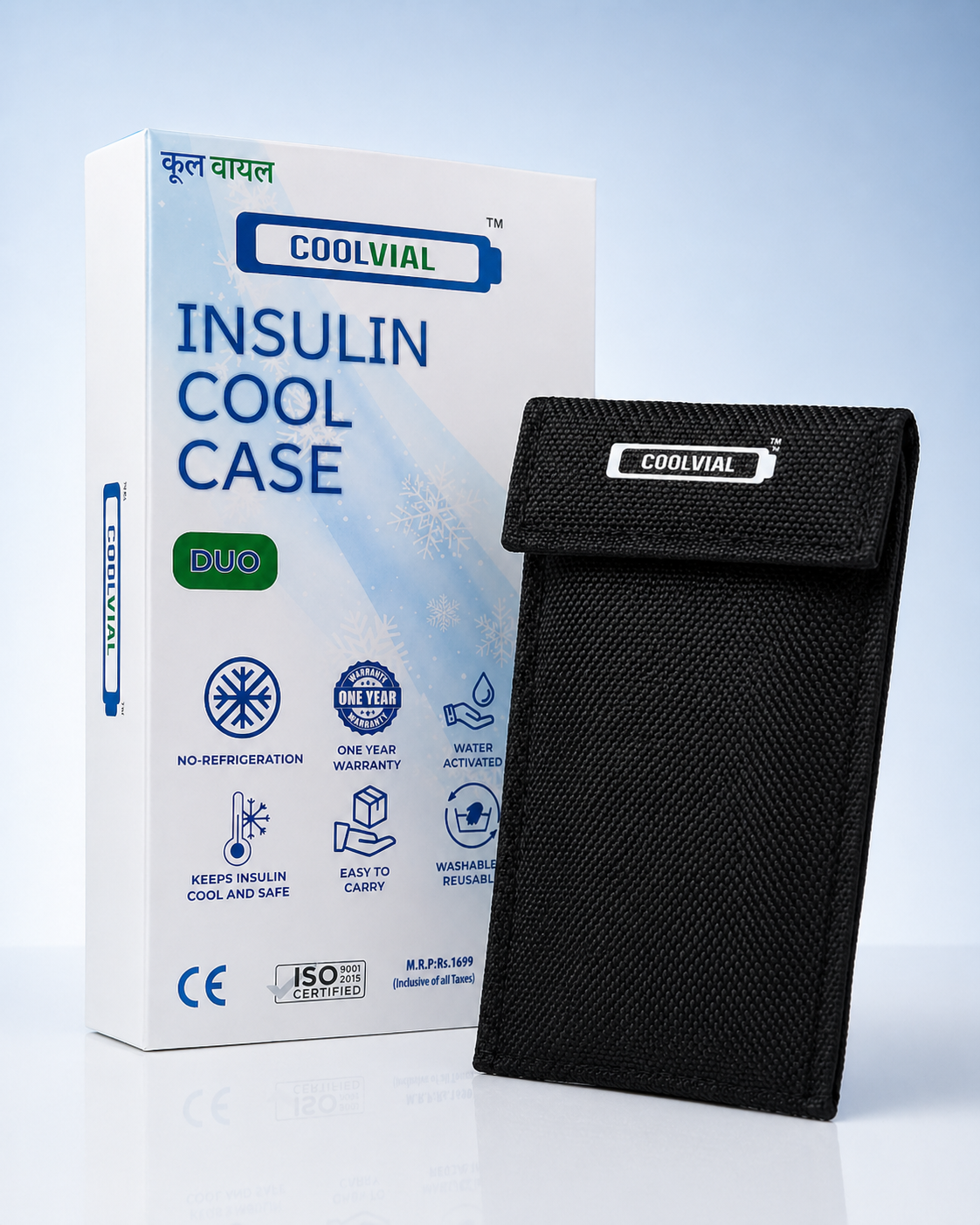
- COOLVIAL Duo: Our COOLVIAL Duo holds 2 pens and 1 vial, providing 12-16 hours of cooling. It’s CE certified and ISO 9001:2015 compliant, ensuring quality and safety. At Rs 1,099 with code COOLHEAL (MRP Rs 1,699), it offers excellent value. Made in India, it’s designed specifically for Indian conditions.
- FRIO: A popular international brand, FRIO also uses evaporative cooling. While effective, they are typically priced higher (around Rs 1,900) and might not be as readily available in local pharmacies.
- Comparison: Both COOLVIAL Duo and FRIO are excellent choices for Mangaluru’s climate. COOLVIAL Duo offers similar performance with the added benefit of being Made in India and more budget-friendly.
-
Insulated Pouches with Gel Packs (e.g., Outer Woods OW-12):
- How they work: These rely on pre-frozen gel packs to maintain coolness.
- Advantages: Can achieve lower temperatures initially.
- Disadvantages: Gel packs need freezing every 8-12 hours, which might not be practical during a long workday or if you don’t have access to a freezer. Once the gel pack thaws, its cooling effect diminishes quickly.
- Outer Woods OW-12: Priced around Rs 999, it’s a budget-friendly option, but requires constant freezer access for its gel packs, making it less convenient for daily, extended commutes compared to evaporative coolers.
Recommendation for Mangaluru: For the consistent, long-duration cooling required for a daily commute with insulin in Mangaluru’s humid heat, a water-activated evaporative cooling case like the COOLVIAL Duo is generally the most practical and reliable choice. Its 12-16 hour cooling duration without needing electricity or refreezing makes it ideal for a full day out.
8. Practical Tips for Managing Insulin During Unexpected Delays
Delays are an unavoidable part of daily life, especially during Mangaluru’s monsoon season or unexpected traffic. Having a plan can prevent insulin spoilage.
- Carry a Backup Cooling Pouch: For very long days or unforeseen circumstances, a small, secondary evaporative cooling pouch can be a lifesaver.
- Seek Shade Immediately: If you’re stuck outdoors, move to the nearest shaded area. Even a few minutes out of direct sun can make a difference.
- Hydrate Your Cooling Case: If your evaporative cooling case feels less cool than usual and you have access to water, quickly re-immerse it for a minute to reactivate the cooling process.
- Emergency Contact: Keep a list of emergency contacts, including your doctor at KMC Hospital or Father Muller Medical College Hospital, and a trusted family member.
- Know Your Local Pharmacies: Familiarize yourself with nearby pharmacies like Apollo Pharmacy, MedPlus, or even online options like Netmeds and 1mg, in case you need to source new insulin due to spoilage.
- Monitor Insulin Appearance: Always check your insulin before injection. If it looks cloudy, discolored, or has particles, discard it.
- Stay Calm: Panicking can lead to mistakes. Take a deep breath, assess the situation, and follow your emergency plan.
10 Essential Tips: Daily Commute With Insulin in Mangaluru — Metro, Bus & Auto
9. Key Considerations for Type 1 Children and Students
Managing Type 1 diabetes for children attending schools in Mangaluru or college students at institutions like NITK Surathkal requires special attention during their daily commute with insulin.
-
School Communication:
- Educate Staff: Work closely with the school administration, teachers, and the nurse (if available) to ensure they understand insulin storage, administration, and emergency procedures.
- Emergency Kit: Provide the school with a clearly labeled emergency kit containing insulin, glucagon, and contact information.
- Lunch Time: Discuss safe storage of insulin during lunch breaks, perhaps in the school’s refrigerator or a designated cool spot. For example, students attending schools near Hampankatta or Kankanady might have longer commutes, making a cooling case indispensable.
-
Student Responsibility & Empowerment:
- Teach Self-Management: As children grow, gradually empower them to manage their own insulin, including proper storage and carrying their cooling case.
- Peer Awareness: Encourage older students to inform a trusted friend about their diabetes and what to do in an emergency.
- Cooling Case as a Buddy: Emphasize the importance of their COOLVIAL Duo as a constant companion for their insulin, ensuring it’s always with them and properly activated.
-
College Life:
- Hostel Storage: For students living in hostels at AJ Institute of Medical Sciences, ensure access to a refrigerator or a reliable cooling system for their insulin.
- Campus Mobility: Moving between lecture halls, labs, and the library across large campuses requires insulin to be in a portable cooling solution.
- Social Activities: Remind students to maintain their insulin storage routine even during social outings or trips to places like Panambur Beach or Tannirbhavi Beach. For tips on eating out safely, refer to our guide on Diabetic-Friendly Restaurants & Cafes in Mangaluru — Where to Eat Safely.
10. Sourcing Insulin and Supplies in Mangaluru
Knowing where to reliably get your insulin and diabetes supplies in Mangaluru is crucial for uninterrupted management, especially if your current stock is compromised due to heat exposure.
-
Major Hospital Pharmacies:
- KMC Hospital (Kasturba Medical College, Attavar)
- Father Muller Medical College Hospital
- AJ Institute of Medical Sciences These hospital pharmacies are generally well-stocked and reliable.
-
Retail Pharmacy Chains:
- Apollo Pharmacy (multiple outlets across Mangaluru, e.g., in Hampankatta, Kankanady)
- MedPlus These chains offer a wide range of insulin brands and diabetes supplies.
-
Online Pharmacies:
- Netmeds
- 1mg
- Davaindia Online pharmacies can deliver to your doorstep, which is convenient but requires planning for delivery times, especially for temperature-sensitive items. Always ensure they use proper cold chain packaging for insulin.
-
Local Chemists: Many independent chemists also stock insulin. It’s advisable to build a relationship with a local chemist near your home or workplace (e.g., in Bejai/Bunts Hostel Road area) who understands your needs.
For a comprehensive resource on managing diabetes in the city, check out our Complete Diabetes Care Guide for Mangaluru Residents — 2026 Edition. For travel outside the city, refer to Travelling From Mangaluru With Insulin — Airport, Station & Taxi Tips.
Frequently Asked Questions (FAQ)
Q: How long can insulin be unrefrigerated in Mangaluru’s climate? A: Once opened, insulin is typically stable at room temperature (below 25-30°C) for 28 days. In Mangaluru’s climate, where ambient temperatures often exceed 30°C, direct exposure to such heat for even short periods (e.g., a 60-90 minute commute in a non-AC bus at 38-42°C) can degrade insulin significantly.
Q: Is it safe to carry insulin in a regular backpack or office bag during my daily commute in Mangaluru? A: No, it is not safe to carry insulin in a regular backpack or office bag during your daily commute in Mangaluru. These bags offer no thermal insulation, and insulin can quickly reach damaging temperatures (above 30°C) within 15-30 minutes, especially in non-AC vehicles or direct sunlight.
Q: Can I store my insulin in a two-wheeler dickey in Mangaluru? A: Absolutely not. A two-wheeler dickey can reach extreme temperatures, often exceeding 60°C, which will quickly and irreversibly damage insulin, rendering it ineffective. Insulin should never be stored in a two-wheeler dickey.
Q: How does the Mangaluru Metro affect insulin storage? A: The Mangaluru Metro, being air-conditioned, maintains ideal temperatures (22-25°C) for insulin storage during transit. However, it’s still advisable to carry insulin in a cooling case as a precaution against potential AC failures or delays.
Q: What is the best type of insulin cooling case for Mangaluru’s humid climate? A: Water-activated evaporative cooling cases, like the COOLVIAL Duo, are highly recommended for Mangaluru’s humid climate. They provide 12-16 hours of cooling without needing electricity or ice packs, maintaining insulin at a safe temperature (18-26°C) through evaporation.
Q: How often should I check my insulin for spoilage during daily commutes? A: You should visually inspect your insulin before every injection. Look for changes in appearance such as cloudiness, discoloration, or the presence of particles or crystals. If any changes are observed, discard the insulin immediately.
Q: Are there specific tips for students carrying insulin to colleges like NITK Surathkal or AJ Institute? A: Yes, students should always carry their insulin in a reliable evaporative cooling case. They should also explore options for refrigerator access in hostels or college canteens, and inform a trusted friend or faculty member about their diabetes management plan.
Q: Where can I buy insulin and diabetes supplies in Mangaluru? A: You can purchase insulin and diabetes supplies from major hospital pharmacies like KMC Hospital (Kasturba Medical College) and Father Muller Medical College Hospital, retail chains such as Apollo Pharmacy and MedPlus, or through online pharmacies like Netmeds and 1mg.
Conclusion
Navigating your daily commute with insulin in Mangaluru’s tropical coastal climate requires a proactive and informed approach. The city’s unique transport realities, from the often-sweltering KSRTC buses and auto-rickshaws to the humid ambient conditions, pose a constant threat to insulin integrity. By understanding these challenges and adopting smart storage practices, you can ensure your insulin remains potent and effective, allowing you to live your life without unnecessary worries.
Remember, your insulin is a vital lifeline. Protecting it from the heat is not merely a convenience but a critical aspect of your diabetes management. Investing in a reliable cooling solution, like the COOLVIAL Duo, is a small step that makes a monumental difference. It provides the peace of mind to tackle your day, whether you’re heading to Kankanady for work, attending classes in Bejai, or simply enjoying the vibrant pulse of Mangaluru.
Take control of your diabetes management today.
Order your COOLVIAL Duo at just Rs 1,099 with code COOLHEAL at coolvial.com or via WhatsApp wa.me/918766952300.
Medical Disclaimer
This article is for general information purposes only and is not a substitute for professional medical advice. Always consult your endocrinologist or diabetologist before changing insulin storage or dosing practices, or if you have any health concerns.
How We Researched This
This article is based on analysis of insulin storage queries from Mangaluru diabetics, alongside comprehensive research utilizing RSSDI guidelines, ICMR-INDIAB data on diabetes prevalence, local Mangaluru hospital directories (KMC Hospital, Father Muller Medical College Hospital, AJ Institute of Medical Sciences), and information on the Apollo Pharmacy network. Local climate data and transport specifics were also factored in to provide tailored, practical advice for Mangaluru residents.
10 Essential Tips: Daily Commute With Insulin in Mangaluru — Metro, Bus & Auto
48+ hours at 2-8°C. No electricity. CE certified. Free delivery across India.
Order on WhatsApp — ₹1,099🛒 Buy Now — ₹1,099