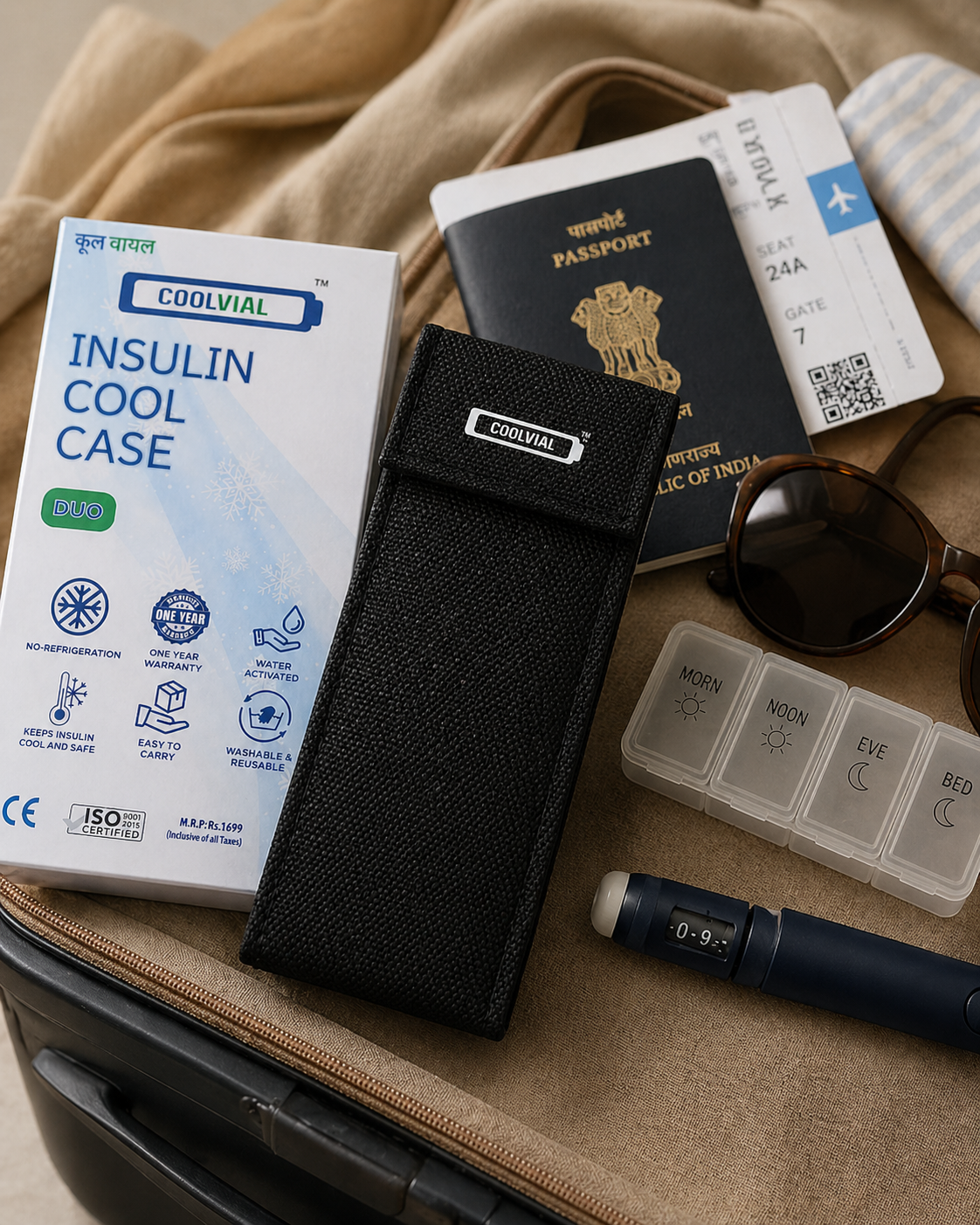
Reviewed by the COOLVIAL Editorial Team — specialists in insulin storage for Indian climate conditions.
Nashik, with its pleasant climate for most of the year, is a beautiful city to live and work in. However, for the thousands of residents managing diabetes with insulin, the daily commute presents a unique set of challenges, especially during the peak summer months when temperatures can soar to 38-42°C. Ensuring your insulin remains effective and safe throughout your “daily commute with insulin” is crucial for your health and treatment efficacy. Based on analysis of insulin storage queries from Nashik diabetics, we know that many struggle with maintaining insulin’s integrity during typical 60-90 minute journeys, such as from Indira Nagar to College Road. This comprehensive guide offers 10 essential tips to help you navigate Nashik’s public transport – be it NMC city buses, auto-rickshaws, or e-rickshaws – while keeping your insulin cool and potent.
Table of Contents
- Understanding Nashik’s Climate & Insulin’s Sensitivity
- Navigating Nashik’s Public Transport: Buses, Autos & E-Rickshaws
- The Danger Zone: Why Your Bag Isn’t Enough
- Essential Strategies for a Cool Insulin Commute in Nashik
- Insulin Storage at Work, School & College in Nashik
- Planning Your Nashik Commute: Routes & Timing
- Recognizing Compromised Insulin & Emergency Preparedness
- Frequently Asked Questions (FAQ)
- Conclusion
- Methodology Note
- Medical Disclaimer
1. Understanding Nashik’s Climate & Insulin’s Sensitivity
Nashik, nestled in the Western Ghats, generally enjoys a mild climate, with temperatures ranging from a cool 11°C in winters to a comfortable 36°C during pleasant periods. However, the pre-monsoon summer (April-June) can see mercury levels frequently hitting 38-42°C, with heatwaves pushing it even higher. The monsoon season (June-September) brings humidity and around 750mm of rainfall, which can also influence perceived temperatures and the internal environment of vehicles.
Insulin, a life-saving hormone, is highly sensitive to temperature fluctuations. Its efficacy can be significantly reduced if exposed to temperatures outside its recommended range.
- Unopened Insulin: Should be stored in a refrigerator at 2-8°C until its expiration date.
- Opened Insulin (in use): Can be kept at room temperature (typically below 25°C) for up to 28 days (check your specific brand’s leaflet). However, “room temperature” in Nashik during summer often far exceeds this.
- Temperature Extremes: Exposure to temperatures above 25-30°C can cause insulin to degrade, losing its potency. Freezing temperatures can also damage its structure.
This sensitivity means that even a short exposure to Nashik’s summer heat can impact your insulin’s effectiveness, potentially leading to fluctuating blood sugar levels and ineffective diabetes management. According to ICMR-INDIAB study data, maintaining stable insulin potency is a critical factor in achieving glycemic control across India (Source: ICMR Guidelines on Diabetes Management).
2. Navigating Nashik’s Public Transport: Buses, Autos & E-Rickshaws
Unlike metropolitan cities, Nashik currently does not have a metro system. Commuters rely primarily on NMC city buses, auto-rickshaws, and e-rickshaws for their daily travel. Each mode presents unique challenges for insulin storage.
-
NMC City Buses:
- Non-AC Reality: The vast majority of NMC city buses are non-air-conditioned. During peak summer, internal temperatures can easily match or even exceed outside temperatures, often reaching 38-42°C, sometimes even higher due to trapped heat and passenger body warmth.
- Commute Duration: A typical commute from Indira Nagar to College Road can take 60-90 minutes, exposing insulin to high temperatures for extended periods.
- Vibrations & Shocks: Constant movement, braking, and acceleration can also add stress to insulin vials and pens, though temperature is the primary concern.
-
Auto-rickshaws:
- Shade vs. Sun: While open-sided, auto-rickshaws offer little protection from direct sunlight, especially during midday commutes. The side facing the sun can become intensely hot.
- Trapped Heat: Even in the shade, the ambient temperature inside an auto can be very high, particularly when stuck in traffic.
- Ride-sharing AC Denial: If you opt for app-based ride-sharing services that offer AC cabs, drivers sometimes deny AC use to save fuel, forcing you into a hot environment. Always confirm AC functionality before starting your ride.
-
E-rickshaws:
- Similar to auto-rickshaws, e-rickshaws are open-sided and offer minimal protection from direct sun and ambient heat. Their slower speeds might prolong exposure in certain conditions.
Here’s a snapshot of temperature realities:
| Commute Scenario | Estimated Temperature Range (Summer Peak) | Insulin Risk Factor |
|---|---|---|
| Outside Ambient Air (Nashik Summer) | 38-42°C | High |
| Inside Non-AC NMC City Bus | 38-45°C | Very High (extended exposure) |
| Inside Auto-rickshaw (Direct Sun) | 40-50°C (localized) | Extreme (rapid degradation) |
| Inside Auto-rickshaw (Shaded/Ambient) | 38-42°C | High |
| Two-wheeler Dickey (Parked in Sun) | 50-60°C | Critical (insulin rendered ineffective within minutes) |
10 Essential Tips for a Safe Daily Commute With Insulin in Nashik
3. The Danger Zone: Why Your Bag Isn’t Enough
Many Nashik residents mistakenly believe that storing insulin in their everyday bags provides sufficient protection from heat. This is a critical misconception. Your typical office bag, school bag, college backpack, or even a laptop sleeve offers virtually no thermal insulation against Nashik’s summer heat.
- Office Bag/Laptop Sleeve: While these might provide some physical protection, they do not shield insulin from ambient temperatures. If your bag is sitting in a hot bus, an auto exposed to the sun, or even in a car without AC, the internal temperature of the bag will quickly equalize with the external heat. An insulin pen can safely survive perhaps 15-30 minutes at temperatures above 35°C before its potency begins to significantly decline. For a 60-90 minute commute, this is simply not enough.
- School Bag (for Type 1 children): Children with Type 1 diabetes need to carry insulin to school. Their school bags are often left in classrooms, lockers, or carried during outdoor activities, exposing insulin to varied temperatures. This is particularly concerning as children may not be fully aware of the dangers of heat exposure.
- College Backpack: College students often have longer commutes and frequently move between classes, canteens, and libraries, where bags may be left in varying temperature environments.
- Two-wheeler Dickey (NEVER!): This is perhaps the most dangerous place to store insulin. The enclosed space of a two-wheeler dickey (under the seat storage) can rapidly become an oven when parked in the sun, reaching temperatures of 50-60°C or even higher. Insulin stored here will be rendered ineffective within minutes. Always carry your insulin with you, in a proper cooling solution, never in the dickey.
4. Essential Strategies for a Cool Insulin Commute in Nashik
Given the challenges of Nashik’s climate and transport, a proactive approach to insulin storage is non-negotiable. This involves a daily-carry insulin cooler routine and a disciplined morning prep ritual.
- Invest in a Reliable Insulin Cooling Case:
- For Nashik’s climate, a water-activated evaporative cooling case is ideal. These cases don’t require electricity or ice packs, making them perfect for daily commutes on public transport.
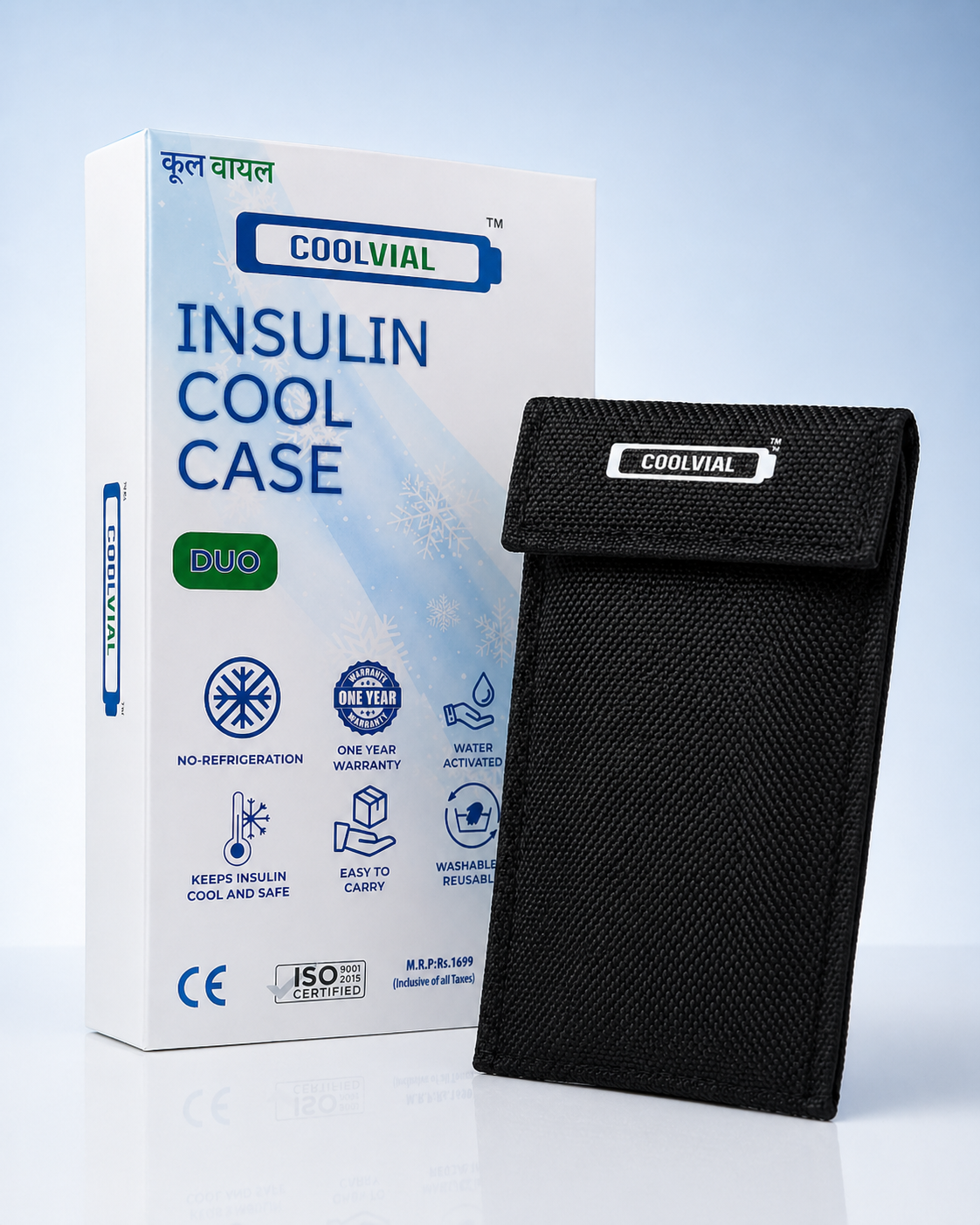
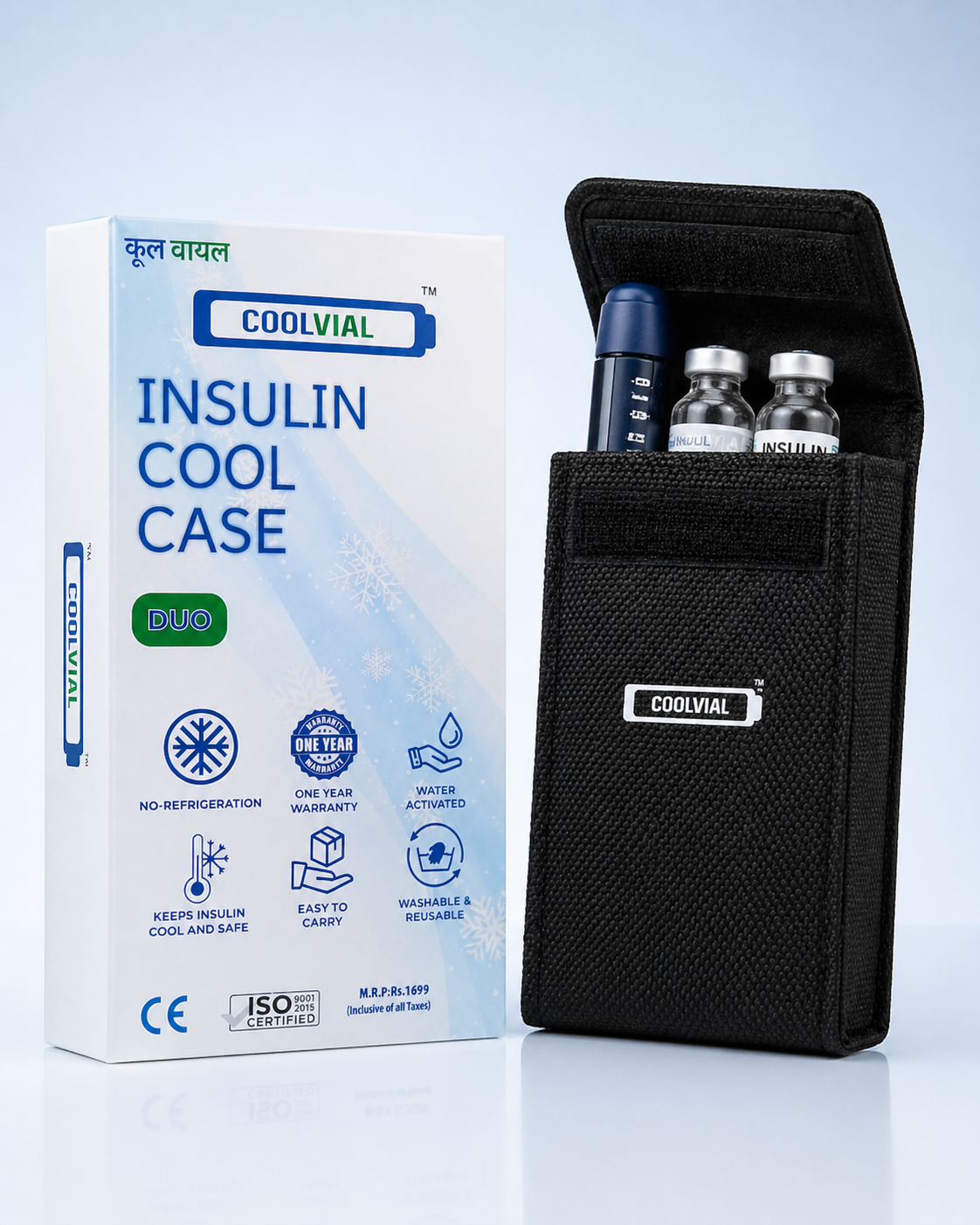
- The COOLVIAL Duo is specifically designed for Indian conditions. It holds 2 insulin pens and 1 vial, keeping your insulin cool at 18-26°C for 12-16 hours, even when the ambient temperature is up to 38°C. At just Rs 1,099 with code COOLHEAL (MRP Rs 1,699), it offers excellent value. It’s CE certified, ISO 9001:2015 compliant, and comes with a 1-year warranty. Plus, it’s proudly Made in India.
- Comparison: While other brands like FRIO (~Rs 1,900) also offer evaporative coolers, COOLVIAL Duo provides a cost-effective and robust solution tailored for daily use. Outer Woods OW-12 (~Rs 999) is another option, but always compare capacity and cooling duration for your specific needs.
- Your Morning Prep Ritual:
- Activate Your COOLVIAL Duo: Submerge your COOLVIAL Duo inner pouch in cold water for 5-10 minutes each morning. The polymer crystals inside will absorb the water and swell, creating a cooling gel.
- Drain Excess Water: Gently squeeze out any excess water from the pouch. It should feel damp, not dripping wet.
- Insert Insulin: Place your insulin pens and/or vials into the activated pouch.
- Place in Outer Cover: Insert the pouch into the COOLVIAL Duo’s protective outer cover.
- Pack Smartly: Place your COOLVIAL Duo in your backpack, office bag, or school bag. Position it away from direct sunlight, if possible, even inside your bag.
By following this routine, you ensure your insulin stays within its safe temperature range throughout your entire daily commute and work/school day in Nashik. For more general insulin storage tips, visit our dedicated guide.
5. Insulin Storage at Work, School & College in Nashik
Your commute is only part of the challenge; what happens to your insulin once you reach your destination is equally important.
-
At Offices (Sula Vineyards, Pandavleni Caves corporate parks):
- Fridge Access: If available, store your COOLVIAL Duo in the office refrigerator. This is ideal for long workdays. Always label your case clearly.
- Desk Storage: If no fridge access, keep your COOLVIAL Duo on your desk, away from direct sunlight, windows, or heat-emitting electronics.
- Lunch Storage: If you carry lunch that needs refrigeration, ensure your insulin is stored separately from very cold items to avoid accidental freezing.
- Communicate: Inform your HR or office manager about your medical needs, especially regarding fridge access.
-
At Schools & Colleges (College Road, Gangapur Road, Indira Nagar institutions):
- Inform Staff: Parents of Type 1 children should inform school staff (teacher, nurse, principal) about their child’s diabetes management plan and insulin storage needs.
- Locker/Classroom: Teach students to store their COOLVIAL Duo in a locker or a designated cool, shaded spot in the classroom, away from windows.
- Emergency Kit: Ensure the school has an emergency kit with glucagon and fast-acting glucose, and that staff are trained to use it.
- College Students: Carry your COOLVIAL Duo with you. Avoid leaving it in unattended bags in sunny spots or hot vehicles. Utilise college canteens or staff rooms if they offer cool storage.
For a broader understanding of diabetes management in Nashik, refer to our Complete Diabetes Care Guide for Nashik Residents — 2026 Edition.
6. Planning Your Nashik Commute: Routes & Timing
Strategic planning can significantly reduce the heat exposure for your insulin, especially for longer commutes.
- Route Optimisation:
- Shaded Routes: If possible, choose routes that offer more shade, reducing direct sun exposure while walking to or waiting for public transport.
- Less Congested Roads: Traffic jams mean longer exposure to heat. While difficult to avoid entirely, try to identify routes that are generally less congested during your travel times from areas like Indira Nagar to College Road.
- Timing Your Travel:
- Avoid Peak Heat: If your schedule allows, try to avoid commuting during the hottest parts of the day, typically between 1 PM and 4 PM in summer. Morning and evening commutes are generally cooler.
- Early Departures: Starting your commute earlier in the morning can mean cooler ambient temperatures and potentially less crowded buses or autos.
- Stay Informed:
- Weather Forecasts: Keep an eye on Nashik’s daily weather forecasts, especially for temperature predictions, to anticipate potential challenges.
- Traffic Updates: Use navigation apps to check real-time traffic updates and adjust your departure time if heavy congestion is expected.
Consider these factors when planning your “daily commute with insulin” to minimise risks. For long-distance travel, our guide on Travelling From Nashik With Insulin — Airport, Station & Taxi Tips offers further insights.
10 Essential Tips for a Safe Daily Commute With Insulin in Nashik
48+ hours at 2-8°C. No electricity. CE certified. Free delivery across India.
Order on WhatsApp — ₹1,099🛒 Buy Now — ₹1,0997. Recognizing Compromised Insulin & Emergency Preparedness
Even with the best precautions, it’s vital to know how to identify insulin that might have been compromised by heat and what steps to take in an emergency.
-
Signs of Degraded Insulin:
- Appearance Change: Clear insulin (like regular or rapid-acting) should remain clear. If it becomes cloudy, discolored, or develops particles or clumps, it may be degraded.
- Texture Change: Insulin should be consistently uniform. If you notice it becoming grainy or stringy, it’s likely compromised.
- Reduced Effectiveness: If your blood sugar levels are consistently higher than usual despite your regular dose, and you haven’t changed your diet or activity significantly, it could be a sign of ineffective insulin.
- Sweet/Sour Smell: While less common, a change in smell can also indicate degradation.
-
What to Do if Insulin is Exposed to Heat:
- If you suspect your insulin has been exposed to extreme heat (e.g., left in a hot car for hours), it’s safer to discard it and start a new vial or pen, even if it looks normal. The risk of ineffective insulin is too high.
- Never try to “re-cool” insulin that has been overheated, as the damage is often irreversible.
- Always have a backup supply of insulin at home, stored correctly in the refrigerator.
-
Emergency Preparedness:
- Extra Supplies: Always carry a few extra alcohol swabs, lancets, and test strips.
- Fast-Acting Glucose: Keep glucose tablets, juice, or hard candies on hand for treating hypoglycemia.
- Medical ID: Wear a medical identification bracelet or necklace indicating you have diabetes.
- Emergency Contacts: Ensure your phone has emergency contacts easily accessible.
- Local Pharmacies: Know the locations of major pharmacies like Apollo Pharmacy, Wellness Forever, MedPlus, 1mg, and Generic Aadhaar in key Nashik neighborhoods like College Road, Gangapur Road, and Cidco/Nashik Road, in case you need to purchase new supplies.
For information on managing your diet while out and about in Nashik, check out our guide on Diabetic-Friendly Restaurants & Cafes in Nashik — Where to Eat Safely.
Frequently Asked Questions (FAQ)
Q: Can I store my insulin in a regular lunchbox with ice packs for my daily commute in Nashik? A: While a lunchbox with ice packs might offer temporary cooling, it’s not ideal for insulin. Ice packs can accidentally freeze insulin, rendering it ineffective, and their cooling duration is often insufficient for longer Nashik commutes.
Q: How do I know if my insulin has gone bad due to heat exposure? A: Signs of degraded insulin include cloudiness, discoloration, or particles in clear insulin, a grainy or stringy texture, or a noticeable decrease in its effectiveness in controlling your blood sugar levels.
Q: Is it safe to leave my insulin in my office drawer in Nashik during summer? A: Leaving insulin in an office drawer without proper cooling is generally unsafe during Nashik’s summer months, as ambient room temperatures can exceed 25°C, causing the insulin to degrade over time.
Q: What is the maximum safe temperature for insulin in use? A: Insulin in use should ideally be kept below 25°C. Exposure to temperatures above 30°C for extended periods can significantly reduce its potency.
Q: Can I carry insulin in my pocket during a short walk in Nashik? A: It’s generally not recommended to carry insulin directly in your pocket, as body heat can raise its temperature. Even for short walks, using a small, dedicated cooling case is a safer option.
Q: My auto-rickshaw driver denied AC. What should I do to protect my insulin? A: If AC is denied or unavailable, ensure your insulin is securely stored in a water-activated cooling case like the COOLVIAL Duo inside your bag, and try to keep your bag in the shadiest part of the auto, away from direct sunlight.
Q: What if I forget my COOLVIAL Duo at home? A: If you forget your cooling case, try to minimize your insulin’s exposure to heat. Keep it deep inside your bag, away from direct sunlight, and make your commute as short as possible. Acquire a new cooling solution or return home for your case as soon as feasible.
Conclusion
Navigating your daily commute with insulin in Nashik, especially during its warmer months, requires diligence and the right tools. By understanding the climate’s impact on insulin, being aware of the thermal realities of local transport, and adopting smart storage solutions, you can ensure your insulin remains potent and your diabetes management stays on track. Investing in a reliable, water-activated cooling case like the COOLVIAL Duo is not just a convenience; it’s a critical step towards safeguarding your health and maintaining consistent glycemic control. Take charge of your commute, stay cool, and live well.
Order your COOLVIAL Duo today at just Rs 1,099 with code COOLHEAL – visit coolvial.com or reach out via WhatsApp at wa.me/918766952300.
Methodology Note
This article was researched and compiled using information derived from RSSDI (Research Society for the Study of Diabetes in India) guidelines, ICMR-INDIAB data on diabetes prevalence and management in India, local Nashik hospital directories (including Apollo Hospitals Nashik, Wockhardt Hospital Nashik, and Suyash Hospital), and the pharmacy network information of Apollo Pharmacy. Local temperature data for Nashik’s climate zones was referenced from historical weather patterns and local climate reports. While every effort has been made to provide accurate and current information, some localized data, particularly on specific internal vehicle temperatures, are estimates based on typical Indian urban climate conditions and may vary [Verify in 2026].
Medical Disclaimer
This article is for general information and educational purposes only. It is not intended to be a substitute for professional medical advice, diagnosis, or treatment. Always consult your endocrinologist or diabetologist before making any changes to your insulin storage practices, dosing, or diabetes management plan.