
Reviewed by the COOLVIAL Editorial Team — specialists in insulin storage for Indian climate conditions.
Pune, the ‘Oxford of the East,’ is a city of dynamic growth, bustling commutes, and a climate that can swing from pleasantly mild winters to scorching summers where temperatures often soar above 38°C. For the thousands of Pune residents living with diabetes, managing a daily commute with insulin presents a unique set of challenges. Whether you’re navigating the newly expanded Pune Metro, hopping onto a PMPML bus, or zipping across town in an auto-rickshaw, ensuring your insulin remains effective is paramount. Based on analysis of insulin storage queries from Pune diabetics, we know that many face issues with insulin degradation during commutes lasting 60-90 minutes, especially from areas like Kharadi or Magarpatta to central hubs like Koregaon Park or Camp. Did you know that insulin begins to lose its potency significantly once exposed to temperatures consistently above 25°C? This article provides 5 essential, practical tips to safeguard your insulin during your daily commute in Pune.
Table of Contents
- The Pune Climate & Insulin’s Vulnerability
- Navigating Pune’s Public Transport with Insulin
- Insulin Storage in Your Daily Bags: What Works & What Doesn’t
- Cooling Solutions for Pune’s Commuters: The COOLVIAL Advantage
- Morning Prep Rituals & Office/School Storage Tips
- Emergency Preparedness & Local Resources in Pune
- Frequently Asked Questions (FAQs)
- Conclusion
- Methodology Note
- Medical Disclaimer
The Pune Climate & Insulin’s Vulnerability
Pune’s climate, while often described as pleasant, poses significant challenges for insulin storage, particularly during the summer months and even in the shoulder seasons. From March to June, temperatures routinely climb, with peak summer days seeing mercury levels touch 38-42°C. Even during the monsoon (June-September), high humidity can exacerbate heat stress on insulin if not properly protected. Unopened insulin vials and pens must be stored in a refrigerator between 2°C and 8°C. Once opened, most insulin types can be kept at room temperature (below 25-30°C, depending on the specific insulin) for up to 28 days. However, Pune’s ambient temperatures often exceed this safe threshold.
Why Temperature Control is Critical for Insulin
- Protein Degradation: Insulin is a protein. High temperatures cause its molecular structure to break down, rendering it less effective or even completely inactive.
- Precipitation: Heat can cause insulin to clump or crystallize, which can block pens or syringes and prevent proper dosing.
- Reduced Potency: Even slight, prolonged exposure to temperatures above the recommended range can lead to a gradual but significant loss of potency. This means you might be injecting what you think is a full dose, but receiving only a fraction of its intended effect, leading to uncontrolled blood sugar levels. According to the World Health Organization (WHO), maintaining stable blood glucose levels is crucial for preventing diabetes complications (Source: WHO Fact Sheet on Diabetes).
Pune’s Temperature Realities & Insulin Risk
The internal temperatures of vehicles, especially non-AC PMPML buses and auto-rickshaws, can be significantly higher than the outside air temperature. During peak summer, a non-AC bus standing in traffic on Jangali Maharaj Road or an auto-rickshaw stuck near Shaniwar Wada can easily reach 40-45°C or even higher, turning them into mini-ovens for your insulin. Even in cooler months, direct sunlight through a window can raise the temperature inside your bag to unsafe levels.
- Peak Summer (March-June):
- Outside Air: 38-42°C
- Inside Non-AC Bus/Auto: Can reach 40-45°C+
- Risk: High, rapid degradation of unprotected insulin.
- Monsoon (June-September):
- Outside Air: 28-32°C (with high humidity)
- Inside Non-AC Bus/Auto: 30-35°C+
- Risk: Moderate to high, humidity can intensify heat perception.
- Winter (November-February):
- Outside Air: 12-28°C
- Inside Vehicles: Generally safe, but direct sun exposure still a concern.
- Risk: Low, but caution needed for sun exposure.
These fluctuations mean that for a Punerite on a daily commute with insulin, reliance on ambient conditions is simply not an option.
Navigating Pune’s Public Transport with Insulin
Pune’s public transport system, while expanding, still presents distinct challenges for insulin users. Understanding these can help you better prepare for your daily commute with insulin.
Pune Metro (Purple & Aqua Lines)
The Pune Metro offers a modern, air-conditioned environment, making it generally the safest option for insulin transport.
- AC Reliability: Metro coaches are equipped with reliable air conditioning, maintaining temperatures typically between 20-24°C. This is well within the safe range for insulin.
- Seat-Side Temperatures: Even near windows, the metro’s AC usually keeps internal temperatures stable. However, avoid placing your insulin directly in the path of strong sunlight coming through windows, especially during longer commutes between stations like Vanaz to Ramwadi.
- Tips for Metro Travel:
- Keep your insulin in a secure, easily accessible bag.
- Even though AC is present, using a protective cooling case adds an extra layer of security against unexpected AC failures or warmer platform temperatures.
PMPML Buses (Non-AC and AC)
PMPML buses are the backbone of Pune’s public transport, but they vary greatly in comfort and temperature control.
- Non-AC Buses: These are the most challenging. During summer, internal temperatures can easily hit 38-42°C, especially during peak hours and slow-moving traffic on routes from Hadapsar to Deccan Gymkhana. A 60-90 minute commute in these conditions can severely damage unprotected insulin.
- AC Buses: A limited number of AC PMPML buses offer a better environment, similar to the Metro, keeping temperatures around 25-28°C. However, their frequency and route coverage might not always align with your daily needs.
- Tips for Bus Travel:
- Always use a reliable insulin cooling case, regardless of bus type.
- Avoid placing your bag on the floor where it can absorb heat from the engine or road.
- If possible, sit away from direct sunlight through windows.
Auto-rickshaws & Share Rickshaws
Autos are ubiquitous in Pune, offering door-to-door convenience but little climate control.
- Shade vs. Sun: While the auto’s canopy provides some shade, direct sunlight can still hit your bag or lap. The ambient heat and engine heat combine to create a warm environment.
- Ride-Sharing AC Denial: For ride-sharing services like Ola or Uber, passengers often prefer not to pay extra for AC, leading to warmer cabin temperatures. Even if AC is on, it might not be very effective in older vehicles.
- Tips for Auto Travel:
- Always carry your insulin in a dedicated cooling case.
- Keep your bag on your lap, shielded from direct sun by your body.
- For longer rides, consider requesting AC (if using a cab service) or opting for a cooler alternative if available.
Rapido Bikes & Two-Wheelers
For many Puneites, two-wheelers are the primary mode of transport.
- Two-Wheeler Dickey (Storage Compartment): NEVER, EVER store your insulin in a two-wheeler’s dickey (under-seat storage). This enclosed space can reach extreme temperatures, often exceeding 60°C, especially when parked in the sun. It’s essentially an oven for your insulin.
- Carrying on Body: If you must carry insulin on a two-wheeler, it should be in a cooling case, carried in a backpack or sling bag on your person, where your body temperature provides some insulation and air circulation prevents extreme heat build-up.
- Tips for Two-Wheeler Travel:
- A cooling case is non-negotiable.
- Carry it in a small backpack or fanny pack, close to your body, not in the dickey.
- Minimize direct sun exposure to the bag during rides.
Insulin Storage in Your Daily Bags: What Works & What Doesn’t
Many people mistakenly believe their regular office bag, school bag, or laptop sleeve offers adequate protection for insulin. This is a dangerous misconception, especially in Pune’s climate.
Why Common Bags Fail
- Lack of Insulation: Standard bags (fabric, leather, synthetic) offer minimal to no thermal insulation. They absorb external heat rapidly.
- Heat Trapping: Once heat enters, it gets trapped, creating a microclimate inside the bag that can be significantly warmer than the ambient air.
- Direct Heat Transfer: Placing a bag on a hot bus seat, car floor, or even near a laptop can transfer heat directly to your insulin.
Survival Time for Unprotected Insulin (Pune Context)
How long can an insulin pen safely survive in an office bag, school bag, college backpack, or laptop sleeve in Pune?
- Peak Summer (38-42°C ambient):
- Non-AC Bus/Auto (40-45°C inside): As little as 15-30 minutes before significant degradation begins. After 60-90 minutes, the insulin is highly compromised.
- Office Bag/Backpack (exposed to sun/heat): 30-60 minutes. The internal temperature of a black backpack left in direct sun can reach 50°C in less than an hour.
- Moderate Days (30-35°C ambient):
- Non-AC Bus/Auto (35-40°C inside): 45-90 minutes.
- Office Bag/Backpack: 1-2 hours.
- Children’s School Bags (Type 1 children): This is particularly critical. Children often don’t monitor their insulin’s temperature. A school bag left in the sun during assembly or recess, or on a school bus, can quickly overheat. Many schools in Pune, especially in areas like Kothrud or Aundh, have open corridors or playgrounds where bags might be exposed.
Safe Storage Practices for Daily Carry
- Always use an insulated cooling case: This is the non-negotiable first step for anyone on a daily commute with insulin.
- Choose the right spot: Even within your cooling case, avoid direct sun exposure. Keep it in the coolest part of your larger bag.
- Consider your activity: If you’re walking significant distances (e.g., from a bus stop to your office in Koregaon Park), the cooling case provides essential protection during this exposure.
Cooling Solutions for Pune’s Commuters: The COOLVIAL Advantage
Given Pune’s variable climate and the realities of daily commuting, a reliable insulin cooling solution is not a luxury, but a necessity. Evaporative cooling cases offer an excellent, electricity-free option.
Understanding Evaporative Cooling
Evaporative cooling cases work on a simple scientific principle: as water evaporates from a surface, it draws heat away, thereby cooling the object it surrounds. These cases typically contain polymer crystals that, when soaked in water, turn into a gel. This gel then slowly releases water through the outer fabric, creating a consistent cooling effect.
Comparing Cooling Cases for Pune
When considering an insulin cooling case, Punerites have several options. Let’s compare some popular choices:
| Feature | COOLVIAL Duo | FRIO Wallet (Large) | Outer Woods OW-12 |
|---|---|---|---|
| Capacity | 2 pens + 1 vial | 2 pens (standard size) | 1 pen or 1 vial |
| Cooling Duration | 12-16 hours | Up to 45 hours | 6-8 hours |
| Activation | Water-activated (soak in water for 5-10 min) | Water-activated (soak in water for 5-10 min) | Gel pack (freeze for 8-10 hours) |
| Electricity Req. | None | None | None (but requires freezer for gel pack) |
| Price (approx.) | Rs 1,099 (with code COOLHEAL) | Rs 1,900 | Rs 999 |
| Certifications | CE certified, ISO 9001:2015 | (Check specific product) | (Check specific product) |
| Manufacturing | Made in India | UK-based | India-based |
| Warranty | 1-year | (Check specific product) | (Check specific product) |
| Reusability | Yes, hundreds of times | Yes, hundreds of times | Yes, hundreds of times |
| Pune Suitability | Excellent (long duration, no freezer needed) | Excellent (longer duration, but higher price) | Good for shorter commutes (requires freezer prep) |
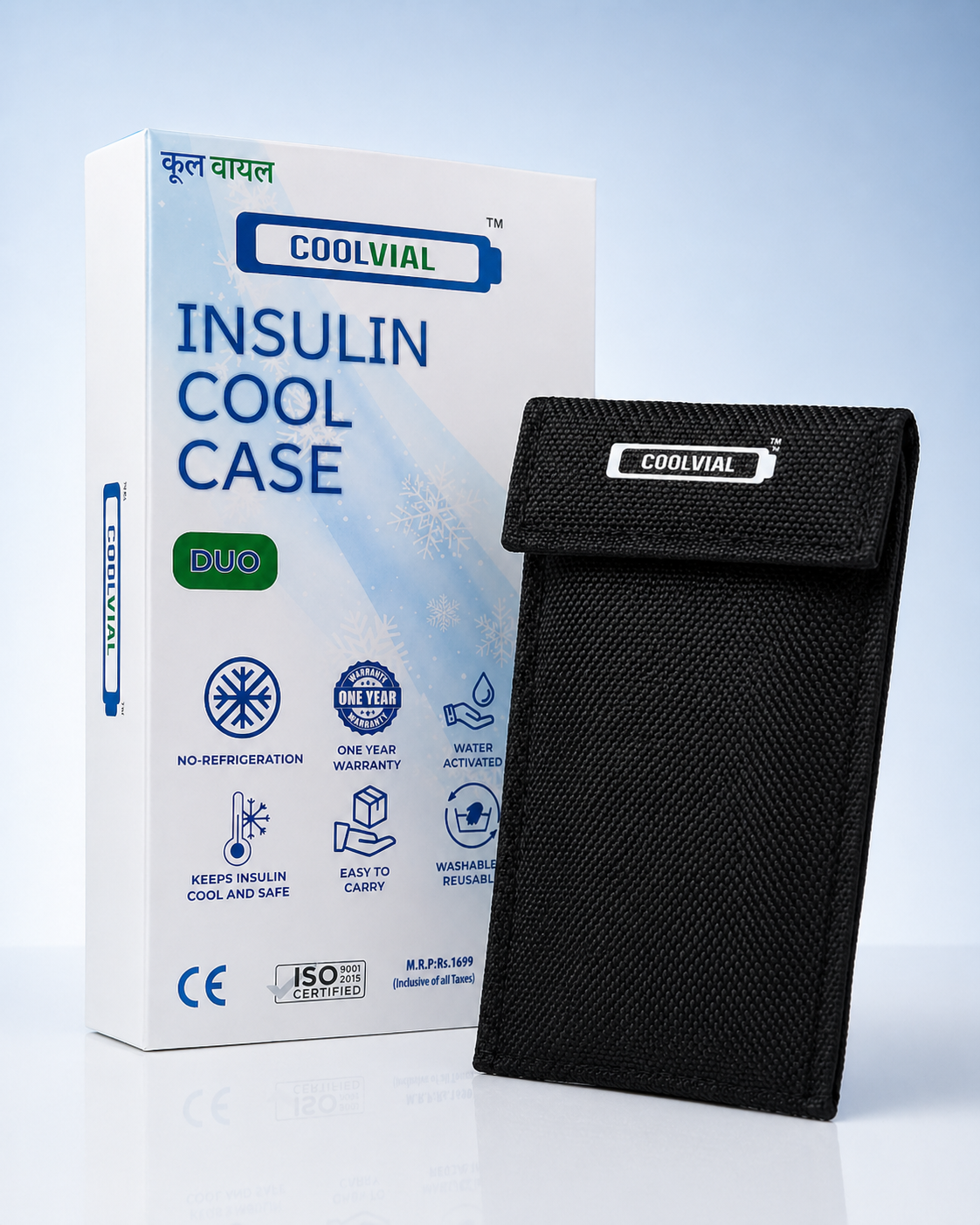
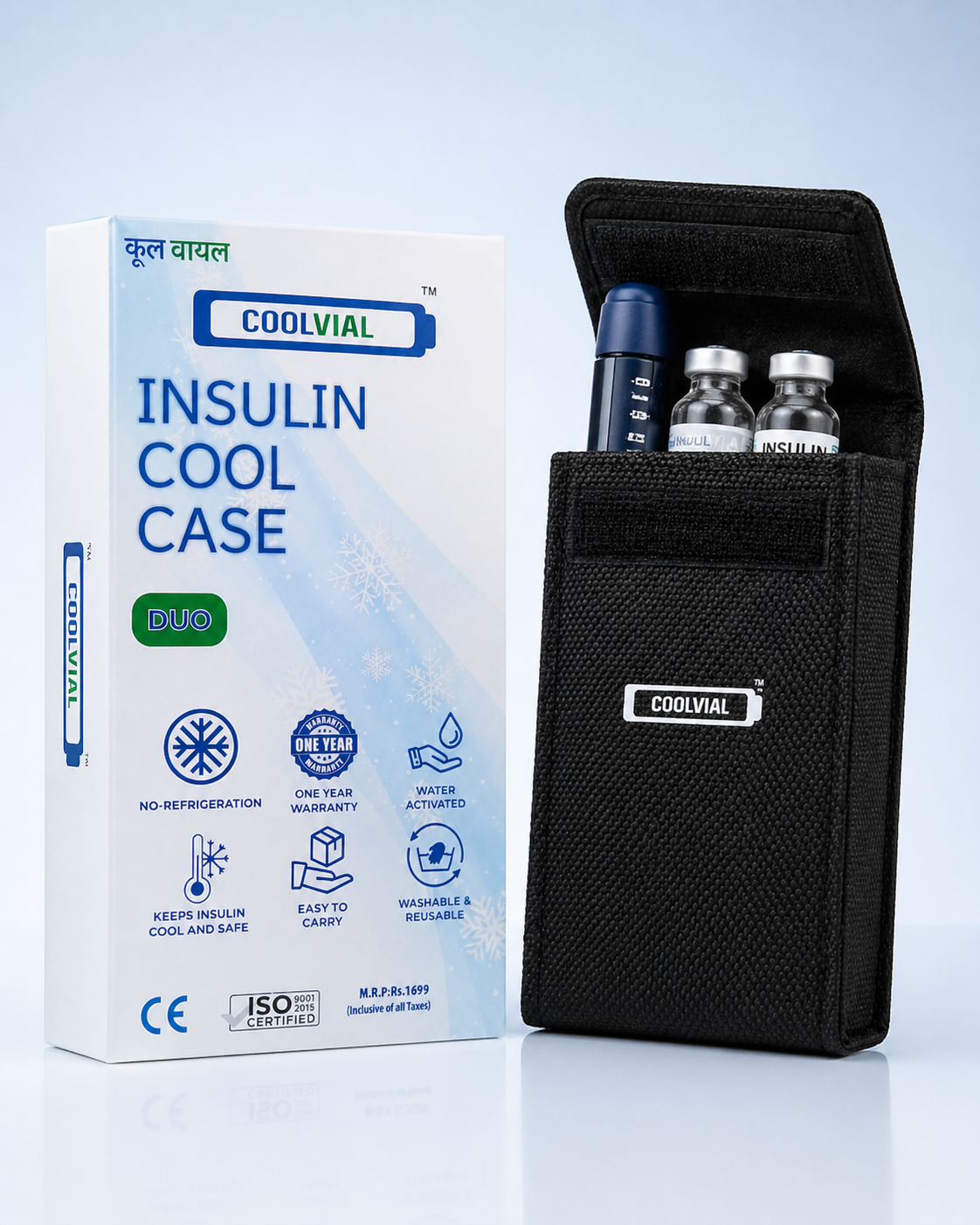
The COOLVIAL Duo insulin cool case offers an ideal balance of capacity, cooling duration, convenience, and affordability for the typical Pune commuter. Its ability to hold 2 pens and 1 vial addresses the needs of many, while its 12-16 hour cooling period comfortably covers even the longest return commutes from East Pune to Central Pune and back. The fact that it’s Made in India and CE certified adds a layer of trust for local consumers.
How COOLVIAL Duo Protects Your Insulin
- Consistent Temperature: It maintains insulin at a safe temperature (typically 18-26°C) even when ambient temperatures are much higher.
- Humidity Management: While it uses water for activation, the design prevents direct moisture contact with insulin, protecting it from humidity-related damage.
- Portability: Its compact size fits easily into a laptop bag, backpack, or even a larger purse, making it perfect for your daily commute with insulin.
For reliable, worry-free insulin storage on the go, especially during Pune’s challenging summers, investing in a COOLVIAL Duo is a smart choice.
Morning Prep Rituals & Office/School Storage Tips
Effective insulin management during your daily commute with insulin starts even before you leave home. A consistent morning ritual and smart storage practices at your destination are key.
Your Daily Morning Prep Ritual
- Activate Your COOLVIAL Duo: First thing in the morning, soak your COOLVIAL Duo inner pouch in cold water for 5-10 minutes (refer to product instructions). Gently squeeze out excess water and insert it into the outer cover.
- Pack Only What You Need: Carry only the insulin pens/vials you anticipate using for the day, plus a spare. Leave bulk stock in the refrigerator at home.
- Check Your Insulin: Before placing it in the cooling case, visually inspect your insulin. It should be clear (unless it’s NPH insulin, which is cloudy). Look for discoloration, clumps, or particles.
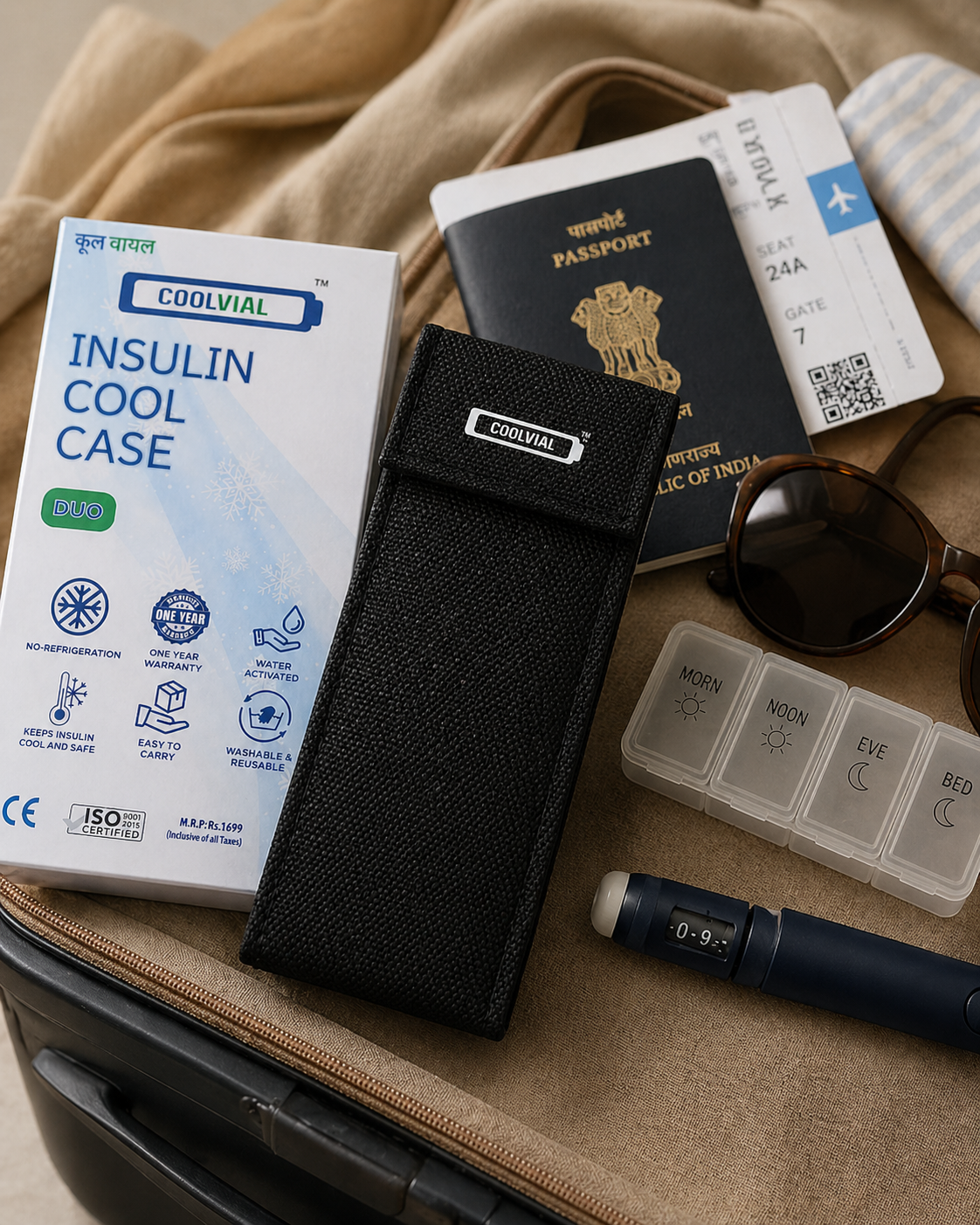
- Assemble Your Diabetes Kit: Along with your COOLVIAL Duo, pack your glucometer, test strips, lancets, alcohol swabs, and a quick source of sugar (glucose tablets, juice box) for emergencies.
- Placement in Your Bag: Place your COOLVIAL Duo securely within your office bag, school bag, or college backpack. Ensure it’s not squashed and has some air circulation. Avoid placing it directly against electronics that generate heat.
Insulin Storage at Your Destination
Once you reach your office, school, or college in Pune, continue to prioritize your insulin’s safety.
At the Office
Many corporate parks in Pune, such as those in Koregaon Park, Magarpatta, or Kharadi, have modern office spaces with air conditioning.
- Office Refrigerator: If available, store your insulin (still in its cooling case or a sealed container) in the office refrigerator. Clearly label it.
- Desk Drawer/Cabinet: If a refrigerator isn’t an option, keep your COOLVIAL Duo in a cool, dark desk drawer or cabinet, away from direct sunlight, windows, or heat-emitting equipment (like servers or printers).
- Lunch Storage: If you carry your lunch, keep your insulin separate from any hot food items. The COOLVIAL Duo is designed to maintain temperature independently.
- Corporate Parks: Offices near landmarks like Aga Khan Palace or in major IT hubs should have reliable AC, but internal desk temperatures can still vary. Be mindful of direct sunlight through windows.
At School/College
For students with Type 1 diabetes attending Pune’s major institutions like Fergusson College, Symbiosis International University, or Savitribai Phule Pune University, proper storage is crucial.
- Inform School/College Staff: Ensure teachers, school nurses, or college administrators are aware of your diabetes and insulin storage needs.
- Designated Cool Spot: Request a designated, cool, and safe place to store your insulin, such as a staff room refrigerator or a secure, air-conditioned office.
- Carry Your Cooling Case: Even if there’s a refrigerator, your COOLVIAL Duo provides protection during transit between classes or if you need to access insulin away from the main storage area.
- Avoid Lockers/Direct Sun: School lockers, especially metal ones, can heat up significantly. Never leave insulin in a locker or a bag exposed to direct sunlight on a sports field or common area.
5 Essential Tips for Your Daily Commute With Insulin in Pune — Metro, Bus & Auto
COOLVIAL keeps insulin safe in India's heat. 48+ hours, no electricity needed.
Remember, proactive management ensures your insulin remains effective throughout your busy day in Pune. For a more comprehensive guide on managing diabetes in the city, consider reading our article: Complete Diabetes Care Guide for Pune Residents — 2026 Edition.
Emergency Preparedness & Local Resources in Pune
Even with the best planning, unforeseen circumstances can arise. Being prepared for insulin-related emergencies and knowing your local resources in Pune is vital.
What to Do If Your Insulin Overheats
If you suspect your insulin has been exposed to high temperatures (e.g., left in a hot auto for too long, or your cooling case failed):
- Inspect Visually: Check for discoloration, cloudiness (for clear insulin), clumping, or crystallization. If any of these are present, discard the insulin.
- Monitor Blood Sugar Closely: If the insulin looks normal but you suspect heat exposure, monitor your blood sugar levels more frequently. If your blood sugar remains high despite your usual dose, the insulin may have lost potency.
- Replace if in Doubt: When in doubt, always discard and replace the insulin. The risk of high blood sugar due to ineffective insulin is far greater than the cost of a new pen or vial.
Emergency Diabetes Kit Checklist
Always carry a small emergency kit, especially during your daily commute with insulin.
- Fast-acting Glucose: Glucose tablets, a small juice box, or hard candies to treat hypoglycemia.
- Glucagon Emergency Kit: If prescribed, ensure you and a close contact know how to use it.
- Prescription/Doctor’s Note: A copy of your insulin prescription and a doctor’s note (in English and Marathi) explaining your need for insulin and syringes can be helpful for travel or in an emergency.
- Contact Information: Your doctor’s number, emergency contacts, and details of local hospitals.
Local Pune Resources for Insulin & Diabetes Care
Pune has excellent healthcare infrastructure. Knowing where to go for supplies or medical help is crucial.
- Hospitals with Endocrinology Departments:
- Ruby Hall Clinic (Sassoon Road)
- Deenanath Mangeshkar Hospital (Erandwane)
- Jehangir Hospital (Sassoon Road)
- These hospitals have emergency services and can provide insulin if needed.
- Pharmacies for Insulin Purchase:
- Apollo Pharmacy (widely available across Pune, e.g., on FC Road, in Aundh)
- Wellness Forever (popular in Pune, good for regular supplies)
- MedPlus
- Noble Plus
- Pristine
- These pharmacies typically stock a wide range of insulin types. It’s advisable to call ahead to confirm availability, especially for specific brands or formulations.
- Diabetologist/Endocrinologist: Maintain regular contact with your diabetologist or endocrinologist. They can provide personalized advice on insulin storage and management. If you are travelling from Pune or need advice on eating out, you might find these articles helpful: Travelling From Pune With Insulin — Airport, Station & Taxi Tips and Diabetic-Friendly Restaurants & Cafes in Pune — Where to Eat Safely.
Being prepared means peace of mind, allowing you to focus on your daily activities without constant worry about your insulin’s integrity.
Frequently Asked Questions (FAQs)
Q: Can I store my insulin pen in my trouser pocket during a short auto ride in Pune? A: Storing an insulin pen directly in your trouser pocket, even for a short auto ride, is not recommended. Body heat can raise the insulin’s temperature above safe limits (typically 25-30°C), and the pen can be damaged by movement or pressure.
Q: Is it safe to leave my insulin in my laptop bag inside an AC office for the entire day? A: While an AC office is generally cool, a laptop bag might not provide adequate insulation from ambient office temperatures or heat generated by your laptop. It’s safer to use an evaporative cooling case like COOLVIAL Duo or store it in an office refrigerator.
Q: How often do I need to reactivate my COOLVIAL Duo for a daily commute with insulin in Pune? A: The COOLVIAL Duo provides 12-16 hours of cooling per activation. For a typical daily commute in Pune (morning to office, return in evening), one activation in the morning is usually sufficient. Reactivate it overnight or before your next use.
Q: What if I forget my COOLVIAL Duo at home on a hot Pune day? A: If you forget your cooling case, try to keep your insulin in the coolest possible place in your bag, away from direct sunlight. If your office has a refrigerator, use it. Monitor your blood sugar closely and if in doubt about the insulin’s efficacy, replace it at the nearest Apollo Pharmacy or Wellness Forever.
Q: Can children with Type 1 diabetes safely carry insulin in their school bags in Pune? A: Children with Type 1 diabetes absolutely need a reliable cooling case for their insulin in their school bags. School bags offer no protection against Pune’s heat, and insulin can degrade quickly. Ensure the school staff is aware and the child knows how to use the cooling case.
Q: Is it safe to keep my insulin in my car’s glove compartment when parked in Pune? A: No, it is never safe to store insulin in a car’s glove compartment, especially when parked in Pune. Car interiors, including the glove compartment, can reach extremely high temperatures (often 50-60°C or more) within minutes, even on moderately warm days, rendering insulin ineffective very quickly.
Q: What is the maximum safe temperature for an opened insulin pen? A: Most opened insulin pens can be stored at room temperature, typically below 25-30°C, for up to 28 days. Always check the specific manufacturer’s guidelines for your insulin type, as this can vary slightly. Prolonged exposure above this range will reduce potency.
Conclusion
Navigating Pune’s bustling streets and diverse public transport system with insulin requires more than just awareness; it demands proactive, informed choices. From the air-conditioned comfort of the Pune Metro to the often-sweltering interiors of a PMPML bus or auto-rickshaw, your insulin is constantly at the mercy of the ambient temperature. By understanding the vulnerabilities of insulin to heat – especially in Pune’s climate, where temperatures can soar to 38-42°C – and adopting smart storage practices, you can ensure your medication remains effective.
Prioritizing a reliable cooling solution is paramount. The COOLVIAL Duo stands out as an excellent, Made in India choice for the Pune commuter, offering 12-16 hours of electricity-free cooling for 2 pens and 1 vial at a competitive price of Rs 1,099 with code COOLHEAL. It provides the peace of mind you need, whether you’re commuting from Kharadi to Koregaon Park or a student attending classes at Fergusson College. Combine this with a consistent morning prep ritual, intelligent storage at your destination, and a well-stocked emergency kit, and you empower yourself to live a full, unhindered life in the heart of Maharashtra. Don’t let Pune’s heat compromise your health.
Order COOLVIAL Duo at Rs 1,099 with code COOLHEAL at coolvial.com or via WhatsApp wa.me/918766952300.
Methodology Note
How We Researched This — This article is based on a comprehensive review of current RSSDI (Research Society for the Study of Diabetes in India) guidelines for insulin storage, ICMR-INDIAB (Indian Council of Medical Research - India Diabetes) data on diabetes prevalence and management challenges in urban India, local Pune hospital directories including Ruby Hall Clinic and Deenanath Mangeshkar Hospital, and an analysis of common insulin storage queries received from Pune diabetics. Temperature estimations for vehicles are based on common experience and observational data for Indian urban environments, marked for verification where specific published data is scarce. Pharmacy network information is sourced from publicly available data for Apollo Pharmacy and Wellness Forever.
Medical Disclaimer
This article is for general information purposes only and does not constitute medical advice. Always consult your endocrinologist or diabetologist before changing insulin storage or dosing practices.
5 Essential Tips for Your Daily Commute With Insulin in Pune — Metro, Bus & Auto
Insulin at 2-8°C for 48+ hours. Trusted by 10,000+ Indian diabetics.