
Reviewed by the COOLVIAL Editorial Team — specialists in insulin storage for Indian climate conditions.
Surat, the Diamond City, is known for its bustling textile markets, delicious street food, and a rapidly expanding urban landscape. But for the thousands of residents managing diabetes, the city’s hot and humid climate, often reaching 38-42°C during peak summer, presents a unique challenge: safely transporting insulin during the daily commute. Based on analysis of insulin storage queries from Surat diabetics, ensuring your insulin remains effective while travelling from areas like Central Surat (Ring Road/Adajan) to West Surat (Vesu/Athwagate/Piplod) via metro, bus, or auto can be a complex task, especially with commute times stretching 60-90 minutes. This comprehensive guide offers 7 practical tips to protect your vital medication, ensuring your daily commute with insulin is worry-free and your health remains uncompromised.
The need for careful insulin management is underscored by alarming statistics: diabetes prevalence in India is significant, with an estimated 101 million people living with diabetes in 2021 (Source: ICMR-INDIAB Study, 2017; WHO Global Diabetes Report, 2023). Protecting insulin from heat is crucial, as exposure to high temperatures can degrade its efficacy, leading to unpredictable blood sugar levels.
Table of Contents
- Understanding Surat’s Climate & Your Insulin’s Needs
- The Perils of Surat’s Commute: What Happens to Insulin in Heat?
- Smart Strategies for Your Daily Commute with Insulin in Surat
- Navigating Surat’s Public Transport: Metro, Bus, and Auto
- Insulin Safety for Students: Schools & Colleges in Surat
- Office & Workplace Insulin Storage in Surat
- Essential Morning Rituals for Insulin Commuters in Surat
- Choosing the Right Insulin Cooling Solution for Surat’s Climate
- Frequently Asked Questions (FAQs)
- Conclusion: Commute Confidently with COOLVIAL
1. Understanding Surat’s Climate & Your Insulin’s Needs
Surat’s climate is predominantly hot and humid, characteristic of a coastal city. From March to June, temperatures frequently soar above 35°C, often touching 40-42°C in May. The monsoon season (June to September) brings high humidity and heavy rainfall (averaging ~1200mm annually), but temperatures remain warm. Insulin, a life-saving medication, is highly sensitive to temperature fluctuations.
Key Insulin Storage Guidelines:
- Unopened Insulin: Should be stored in a refrigerator, typically between 2°C and 8°C.
- Opened Insulin (in use): Most insulins can be kept at room temperature (below 30°C) for 28 days (some brands vary). However, Surat’s ambient temperatures often exceed this, making proper cooling essential even for insulin in use.
- Avoid Extremes: Never freeze insulin, and protect it from direct sunlight and temperatures above 30°C. High heat causes insulin proteins to break down, reducing its potency and potentially leading to dangerous blood sugar fluctuations.
The challenge for Surat residents is that “room temperature” rarely stays below 30°C for extended periods, especially during summer and even monsoon. This necessitates a proactive approach to storing insulin, even for short commutes.
2. The Perils of Surat’s Commute: What Happens to Insulin in Heat?
Imagine your daily 60-90 minute commute from Adajan to Vesu. You might traverse the bustling Ring Road, cross the Tapi River, and pass by landmarks like VR Mall Surat. During this journey, your insulin pen or vial, tucked into a bag, faces significant thermal stress.
Temperature Realities During Surat Commutes:
- Non-AC City Buses: During peak summer, internal temperatures can easily reach 38-42°C, especially with crowded conditions and stagnant air. Even during monsoon, humidity makes the heat feel more intense.
- Autorickshaws: While offering some open-air ventilation, direct sun exposure on one side can heat up your bag significantly. Temperatures inside an auto can quickly climb, mirroring ambient air or even higher due to trapped heat.
- Share Rickshaws: Similar to autos, but often more crowded, increasing heat transfer from bodies. The “AC denial culture” in many ride-sharing cabs (where drivers avoid turning on AC to save fuel) further exacerbates the problem, turning a supposedly comfortable ride into a hotbox.
- Two-Wheeler Dickey (Storage Compartment): NEVER store insulin here. The enclosed space, often directly above a hot engine, can trap heat and reach internal temperatures of 50-60°C within minutes. This will render insulin completely ineffective.
- Office/School Bags: A typical office bag, school bag (for Type 1 children), college backpack, or laptop sleeve offers minimal insulation. An insulin pen or vial placed directly inside will quickly reach ambient temperature, and often exceed it due to poor ventilation and direct sunlight exposure through windows.
How Long Can Insulin Safely Survive? Without a cooling solution, an insulin pen or vial exposed to 38-42°C for 60-90 minutes is at high risk of degradation. While manufacturers might state “up to 28 days below 30°C,” this doesn’t mean it’s safe for repeated exposure to much higher temperatures, even for shorter durations. Each exposure to high heat chips away at its potency.
3. Smart Strategies for Your Daily Commute with Insulin in Surat
The key to a safe daily commute with insulin in Surat is proactive cooling. Relying on luck or the minimal insulation of your everyday bag is a gamble with your health. The solution lies in a dedicated, reliable insulin cooling case.
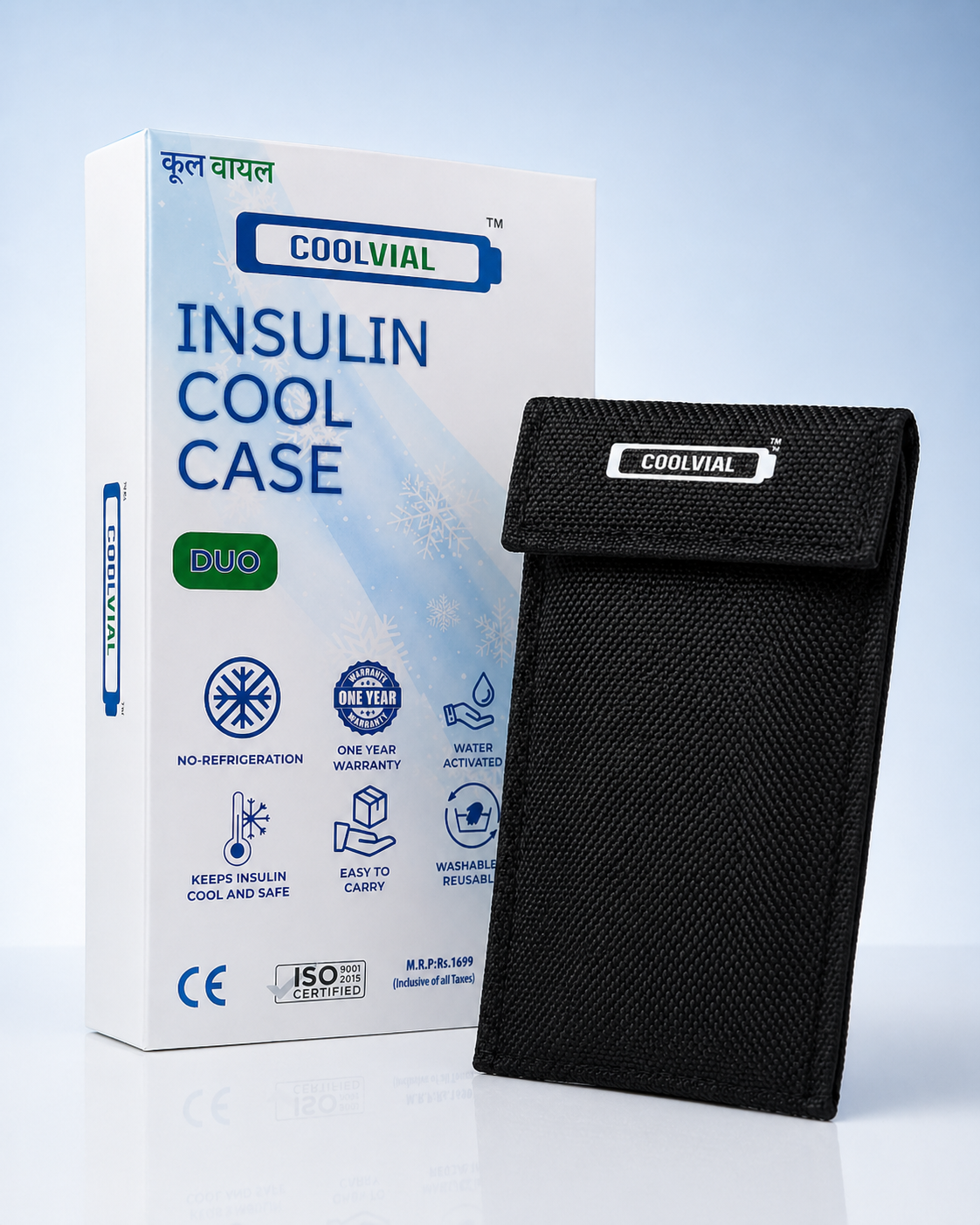
Introducing COOLVIAL Duo: Your Commute Companion
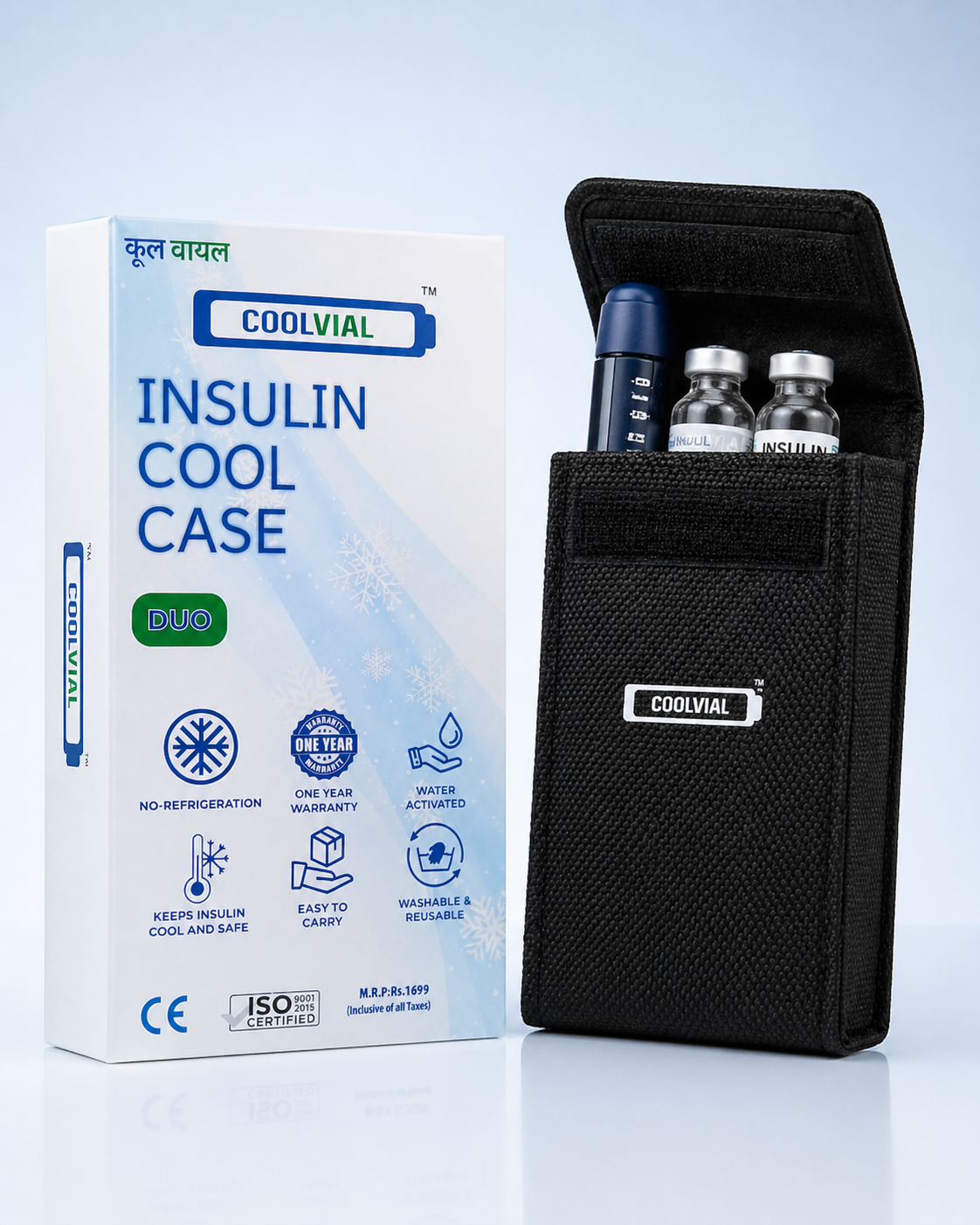
The COOLVIAL Duo is designed specifically for the Indian climate, offering a practical, electricity-free solution for your daily commute with insulin. It holds 2 insulin pens and 1 vial, keeping them cool at safe temperatures (typically 18-26°C) for 12-16 hours, even when ambient temperatures are as high as 40°C. This makes it perfect for Surat’s challenging weather.
Why COOLVIAL Duo Stands Out:
7 Practical Tips for a Safe Daily Commute With Insulin in Surat
48+ hours at 2-8°C. No electricity. CE certified. Free delivery across India.
Order on WhatsApp — ₹1,099🛒 Buy Now — ₹1,099- Evaporative Cooling Technology: Activated by water, it uses the natural process of evaporation to keep insulin cool, requiring no electricity, batteries, or refrigeration.
- Optimal Temperature Range: Maintains insulin within the safe temperature zone (typically 18-26°C), protecting it from degradation without over-chilling.
- Durability & Certifications: CE certified and ISO 9001:2015 compliant, ensuring quality and reliability. It also comes with a 1-year warranty.
- Made in India: Built for Indian conditions, by an Indian brand.
- Cost-Effective: At Rs 1,099 with code COOLHEAL (MRP Rs 1,699), it offers significant value compared to alternatives like FRIO (typically ~Rs 1,900) or Outer Woods OW-12 (~Rs 999).
A daily-carry insulin cooler routine, centered around products like the COOLVIAL Duo, is non-negotiable for Surat residents managing diabetes.
4. Navigating Surat’s Public Transport: Metro, Bus, and Auto
Each mode of transport in Surat presents its own set of considerations for insulin storage.
A. Surat Metro (Under Construction & Operational Phases): The Surat Metro promises a more comfortable commute, with Phase 1 covering routes like Sarthana to Dream City and Bhesan to Saroli. Once fully operational, its air-conditioned coaches will offer a relatively stable environment.
- AC Reliability: While metro coaches are AC, seat-side temperatures can still fluctuate, especially near doors or during peak hours. Always keep your insulin in a cooling case.
- Travel Time: Even with the metro, commutes can be long. For example, travelling from Central Surat to the outskirts could still take 30-45 minutes. Your COOLVIAL Duo ensures continuous cooling.
B. City Buses (SMC Buses): Surat’s extensive city bus network is a lifeline for many, but most buses are non-AC.
- Peak Heat: During summer (March-June), internal bus temperatures can easily exceed 40°C.
- Ventilation: Open windows help, but are often insufficient to counter the heat and humidity.
- Strategy: Always carry your insulin in a cooling case like COOLVIAL Duo. Keep your bag under the seat or on your lap, away from direct sunlight through windows.
C. Autorickshaws & Share Rickshaws: These are ubiquitous for shorter distances or last-mile connectivity.
- Sun Exposure: An autorickshaw offers open sides, but this also means direct sun exposure. Position yourself and your bag to keep your cooling case in the shade.
- Ride-Sharing AC Denial: If you opt for app-based cabs, politely but firmly request the AC to be on. If denied, ensure your insulin is in a reliable cooling case.
- Avoid Dickey: As mentioned, never store insulin in a two-wheeler’s dickey. This applies to three-wheeler autos too, if they have a rear storage compartment that traps heat.
5. Insulin Safety for Students: Schools & Colleges in Surat
Children and young adults with Type 1 diabetes attending Surat’s schools and colleges (e.g., institutions near Vesu, Adajan, or the educational hubs around Dumas Road) need special consideration for insulin storage during their daily commute with insulin.
Tips for Students:
- Dedicated Cooling Case: Every student should carry their insulin in a personal cooling case like the COOLVIAL Duo. It fits easily into a school bag or college backpack.
- Educate School Staff: Inform teachers, the school nurse, or college administration about the student’s diabetes and the need for proper insulin storage. Many schools, including those near Sunshine Global Hospital (Dumas Road) or BAPS Pramukh Swami Hospital (Adajan), are becoming more aware.
- Lunch Bag Storage: If insulin is needed during lunch, ensure the lunch bag is also kept cool, or that the insulin cooling case is accessible. Some schools may have a staff refrigerator for emergencies, but a personal cooling case is more reliable for daily use.
- Avoid Lockers/Direct Sun: School lockers or bags left in direct sunlight (e.g., near a window in a classroom) can become very hot. Keep the cooling case in a shaded, well-ventilated spot.
- Refill Water Daily: Students should be taught to re-activate their COOLVIAL Duo each morning with cold water before leaving for school or college.
For more comprehensive guidance on managing diabetes as a student, consider reading our “Complete Diabetes Care Guide for Surat Residents — 2026 Edition” for local resources and tips.
6. Office & Workplace Insulin Storage in Surat
Surat’s corporate parks, particularly those developing along the Tapi Riverfront or near Sarthana Nature Park, house numerous offices where employees commute daily. Managing insulin at work, especially during lunch breaks or if an emergency dose is needed, is crucial.
Workplace Insulin Management:
- Personal Cooling Case is Primary: Even if your office has AC, your desk area might not always be at the optimal temperature. Keep your insulin in your COOLVIAL Duo at your desk. It’s discreet and reliable.
- Lunch Storage: If you carry your lunch, and require insulin with it, ensure both are kept cool. A COOLVIAL Duo can easily fit into a larger lunch bag or a separate compartment.
- Office Refrigerator Access: While not for daily storage, know if your office has a refrigerator and if you can access it for emergency insulin or for storing unopened vials. However, never rely solely on a shared fridge, as temperatures can fluctuate, and cross-contamination is a risk.
- Discreet & Professional: The COOLVIAL Duo is designed to be sleek and professional, blending seamlessly into any office environment.
- Travel for Meetings: If you have off-site meetings around Surat, perhaps near Mahavir Hospital (Athwagate) or other business hubs, your COOLVIAL Duo ensures your insulin travels safely with you.
7. Essential Morning Rituals for Insulin Commuters in Surat
Consistency is key. Establishing a simple morning ritual ensures your insulin is always protected before you step out into Surat’s heat.
Your COOLVIAL Morning Prep Ritual:
- Hydrate Your COOLVIAL Duo: Before you start your morning routine, immerse the inner pouch of your COOLVIAL Duo in cold water for 5-10 minutes. The polymer crystals inside will absorb the water and swell, initiating the evaporative cooling process.
- Gently Dry: After soaking, remove the inner pouch and gently towel dry it. It should feel cool and slightly damp, not dripping wet. This prevents your insulin pens or vials from getting wet.
- Load Your Insulin: Carefully place your insulin pens (up to 2) and/or vials (up to 1) into the activated inner pouch.
- Insert into Outer Cover: Slide the inner pouch back into the protective outer cover of the COOLVIAL Duo.
- Place in Bag: Put your ready-to-go COOLVIAL Duo into your office bag, school bag, or backpack. Ensure it’s not squashed or exposed to direct sunlight.
- Daily Check: Make it a habit to check your COOLVIAL Duo’s activation and ensure your insulin is inside before you leave home. This takes less than 10 minutes and guarantees 12-16 hours of cooling.
This simple ritual, integrated into your morning routine, provides peace of mind throughout your daily commute with insulin, whether you’re heading to a pharmacy like Apollo Pharmacy or Wellness Forever, or your workplace.
8. Choosing the Right Insulin Cooling Solution for Surat’s Climate
When selecting an insulin cooling case, especially for a city like Surat, several factors come into play: reliability, duration, convenience, and cost.
Comparison of Insulin Cooling Solutions:
| Feature | COOLVIAL Duo | FRIO Wallet (similar size) | Basic Gel/Ice Packs |
|---|---|---|---|
| Cooling Method | Water-activated evaporative cooling | Water-activated evaporative cooling | Pre-frozen gel/ice, thaws quickly |
| Cooling Duration | 12-16 hours (at 40°C ambient) | Up to 45 hours (at 37.8°C ambient) | 2-4 hours (at 40°C ambient), depending on size |
| Electricity Needed? | No | No | Yes (for freezing) |
| Holds | 2 pens + 1 vial | 1-2 pens (varies by model) | Varies |
| Price (approx.) | Rs 1,099 (with code COOLHEAL) (MRP Rs 1,699) | Rs 1,900+ (for comparable size) | Rs 200-500 |
| Certifications | CE certified, ISO 9001:2015 | Not explicitly stated (brand reputation) | Generally none |
| Made In | India | UK | Varies, often China |
| Pros for Surat | Ideal for daily commutes, cost-effective, reliable, no fridge needed, Made in India | Longer duration, but higher cost; similar tech | Cheap, but short duration, needs freezer access |
| Cons for Surat | Needs daily re-activation with water | Higher initial cost | Not practical for daily, long commutes; inconvenient |
The COOLVIAL Duo strikes an excellent balance between performance, convenience, and affordability for the average Surat commuter. Its 12-16 hour cooling duration is ample for even the longest daily round-trip commutes, whether you’re visiting a specialist at Mahavir Hospital (Athwagate) or simply going to work. For those with a very long travel schedule, such as “Travelling From Surat With Insulin — Airport, Station & Taxi Tips”, a longer-duration solution might be needed, but for daily city life, COOLVIAL Duo is a champion.
Frequently Asked Questions (FAQs)
Q: How long can insulin stay out of the fridge in Surat’s heat? A: Unopened insulin should always be refrigerated (2-8°C). Once opened, most insulin pens or vials can be kept at room temperature (below 30°C) for up to 28 days. However, Surat’s temperatures often exceed 30°C, so a cooling case like COOLVIAL Duo is essential to keep it below 30°C and maintain its potency.
Q: Can I use regular ice packs to keep my insulin cool during my commute? A: Regular ice packs are generally not recommended for direct insulin storage. They can freeze the insulin if placed too close, rendering it ineffective. They also thaw quickly in Surat’s heat, offering only short-term cooling. Evaporative cooling cases like COOLVIAL Duo provide a stable, non-freezing temperature for extended periods.
Q: What if my daily commute is longer than 16 hours? A: For commutes exceeding 16 hours, consider carrying a second activated COOLVIAL Duo or exploring options for temporary refrigeration at your destination. For typical daily commutes within Surat, the COOLVIAL Duo’s 12-16 hour cooling window is usually sufficient.
Q: Is it safe to carry insulin in my laptop bag or backpack without a cooling case? A: No, it is generally unsafe. Laptop bags and backpacks offer minimal insulation and can quickly heat up, especially in Surat’s climate or when exposed to direct sunlight in vehicles. Insulin needs protection from temperatures above 30°C to remain effective.
Q: Where can I buy insulin cooling cases in Surat? A: While some larger pharmacies like Apollo Pharmacy or MedPlus might stock limited options, for the best selection and prices, it’s recommended to purchase specialized products like COOLVIAL Duo directly from coolvial.com or via WhatsApp.
Q: What are the signs that my insulin might have been damaged by heat? A: Heat-damaged insulin may appear cloudy, discolored, or have particles floating in it. It might also lose its potency, leading to unexpectedly high blood sugar readings despite taking your usual dose. If you suspect heat damage, discard the insulin and use a new vial or pen.
Q: Can I take my COOLVIAL Duo on an airplane if I travel from Surat? A: Yes, the COOLVIAL Duo is perfectly safe for air travel. Since it’s water-activated, you simply activate it with water before your flight. For detailed tips on air travel with insulin, refer to our guide “Travelling From Surat With Insulin — Airport, Station & Taxi Tips”.
Conclusion: Commute Confidently with COOLVIAL
Navigating Surat’s vibrant streets and public transport network with diabetes doesn’t have to be a source of stress. By understanding the unique climatic challenges and adopting smart, practical solutions, you can ensure your insulin remains potent and effective, safeguarding your health every day. From the under-construction Surat Metro to the bustling city buses and autos, protecting your insulin is paramount.
Embrace the convenience and reliability of the COOLVIAL Duo. It’s a small investment that offers immense peace of mind, allowing you to focus on your work, studies, or leisure activities without worrying about your vital medication. Join thousands of satisfied users across India who trust COOLVIAL for their daily insulin cooling needs.
Order COOLVIAL Duo at Rs 1,099 with code COOLHEAL at coolvial.com or via WhatsApp wa.me/918766952300
How We Researched This
This article is based on a synthesis of RSSDI (Research Society for the Study of Diabetes in India) guidelines for insulin storage, ICMR-INDIAB (Indian Council of Medical Research - India Diabetes) data on diabetes prevalence, local Surat hospital directories including Sunshine Global Hospital (Dumas Road), BAPS Pramukh Swami Hospital (Adajan), and Mahavir Hospital (Athwagate), as well as information from pharmacy networks like Apollo Pharmacy and Wellness Forever. Local climate data for Surat and common commute patterns were also considered to provide accurate, context-specific advice.
Medical Disclaimer
This article is for general information purposes only and does not constitute medical advice. Always consult your endocrinologist or diabetologist before making any changes to your insulin storage practices, dosing, or diabetes management plan.
7 Practical Tips for a Safe Daily Commute With Insulin in Surat
COOLVIAL keeps insulin safe in India's heat. 48+ hours, no electricity needed.