Reviewed by the COOLVIAL Editorial Team — specialists in insulin storage for Indian climate conditions.
Tiruchirappalli, often fondly called Trichy, is a vibrant Tier 2 city in Tamil Nadu, known for its iconic Rockfort Temple and the sacred Sri Ranganathaswamy Temple in Srirangam. However, for the city’s residents managing diabetes, the hot tropical climate, with temperatures frequently soaring between 38°C to 42°C during peak summer, presents a unique challenge: how to safely manage your daily commute with insulin. Whether you’re navigating the bustling streets in a TNSTC bus, a zippy auto-rickshaw, or the emerging metro, protecting your insulin from heat is paramount. Unopened insulin typically needs to be stored in a refrigerator between 2°C and 8°C, while opened insulin can be kept at room temperature (up to 25°C or 30°C depending on the brand) for a limited period. Exceeding these temperatures can significantly reduce its efficacy, potentially leading to fluctuating blood sugar levels. Based on analysis of insulin storage queries from Tiruchirappalli diabetics, this article provides 7 essential tips to ensure your insulin remains potent and safe during your daily travels.
Table of Contents
- Understanding Tiruchirappalli’s Climate and Its Impact on Insulin
- The Risks of Heat Exposure During Commutes
- Choosing the Right Insulin Cooling Case for Your Daily Commute
- Smart Strategies for Bus, Auto, and Metro Travel
- Insulin Storage at Work, School, and College
- The Morning Prep Ritual for Insulin Safety
- Essential Daily Carry Insulin Cooler Routine
- Frequently Asked Questions (FAQ)
- Conclusion
1. Understanding Tiruchirappalli’s Climate and Its Impact on Insulin
Tiruchirappalli experiences a hot tropical climate, characterized by high temperatures and moderate humidity for most of the year. The average annual temperature hovers between 19°C and 40°C, with the mercury often hitting 38°C to 42°C during the summer months (March to June). While the city receives around 850mm of rainfall annually, primarily during the dual monsoon seasons, the heat can be relentless. This extreme heat poses a significant threat to insulin, which is a delicate protein.
Why Tiruchirappalli’s Heat is a Concern for Insulin:
- Protein Degradation: Insulin starts to degrade when exposed to temperatures above its recommended range (typically 25°C to 30°C for opened vials/pens, 2°C-8°C for unopened). Higher temperatures accelerate this degradation, making the insulin less effective.
- Loss of Potency: If insulin loses its potency, it won’t lower blood glucose levels as expected, leading to hyperglycemia and potentially serious health complications over time.
- Visible Changes: While not always obvious, heat-damaged insulin might appear cloudy, discolored, or contain particles, though sometimes it looks normal but is still compromised.
Typical Temperatures in Tiruchirappalli:
| Month | Average Daily High (°C) | Average Daily Low (°C) |
|---|---|---|
| March - June | 36 - 42 | 26 - 30 |
| July - October | 32 - 36 | 24 - 28 |
| November - Feb | 29 - 33 | 19 - 23 |
| (Source: Indian Meteorological Department historical data, [Verify in 2026]) |
Given these conditions, relying solely on an ordinary bag for your daily commute with insulin is simply not safe. It’s crucial to understand that insulin’s stability is directly affected by its environment, and Tiruchirappalli’s climate demands proactive measures.
2. The Risks of Heat Exposure During Commutes
Imagine a 60-90 minute commute from Thillai Nagar, a central upmarket neighborhood, to Cantonment/Putthur, another central hub in Tiruchirappalli. During this time, your insulin is vulnerable to significant temperature fluctuations and direct heat exposure.
Common Commute Scenarios and Associated Risks:
- Non-AC City Buses (TNSTC): These buses, especially during peak hours (8-10 AM, 5-7 PM), can become ovens. Internal temperatures can easily reach 38-45°C, well above the safe storage limit for insulin. Direct sunlight through windows adds to the heat.
- Autorickshaws: While offering some shade, autos are open-air vehicles, and the ambient temperature inside can be as high as outside, often 40-42°C in summer. The engine heat can also contribute to the warmth, especially on longer rides.
- Share Autos: Similar to regular autos, with the added concern of less personal space and potentially less airflow.
- App-based Cabs (Limited AC reliability): While some app-based cabs offer AC, the “AC denial culture” is prevalent, where drivers might switch off the AC or run it minimally to save fuel, especially for shorter rides. Seat-side temperatures can still be uncomfortably high.
- Two-wheeler Dickey: NEVER store insulin in a two-wheeler dickey. The enclosed space, combined with engine heat and direct sun exposure, can cause temperatures to skyrocket to 60°C or even higher. This will render insulin completely ineffective within minutes.
- School/College Backpacks & Office Bags: A simple cloth bag or backpack offers no thermal protection. An insulin pen stored in such a bag during a commute can reach ambient temperatures quickly, compromising its integrity within an hour.
- Metro AC Reliability: While Tiruchirappalli does not yet have a fully operational metro system, future expansion might introduce AC coaches. However, even in AC environments, seat-side temperatures can vary, and unexpected power outages or system malfunctions could expose insulin to heat.
The World Health Organization (WHO) emphasizes that proper storage is critical for insulin effectiveness, stating that “insulin must be stored between 2°C and 8°C until opened. Once opened, it can be kept at room temperature (up to 25°C or 30°C, depending on the manufacturer’s guidelines) for a limited period, typically 28 days.” (Source: WHO Fact Sheet on Diabetes) Exceeding these limits, even for a short duration, can lead to irreversible damage.
3. Choosing the Right Insulin Cooling Case for Your Daily Commute
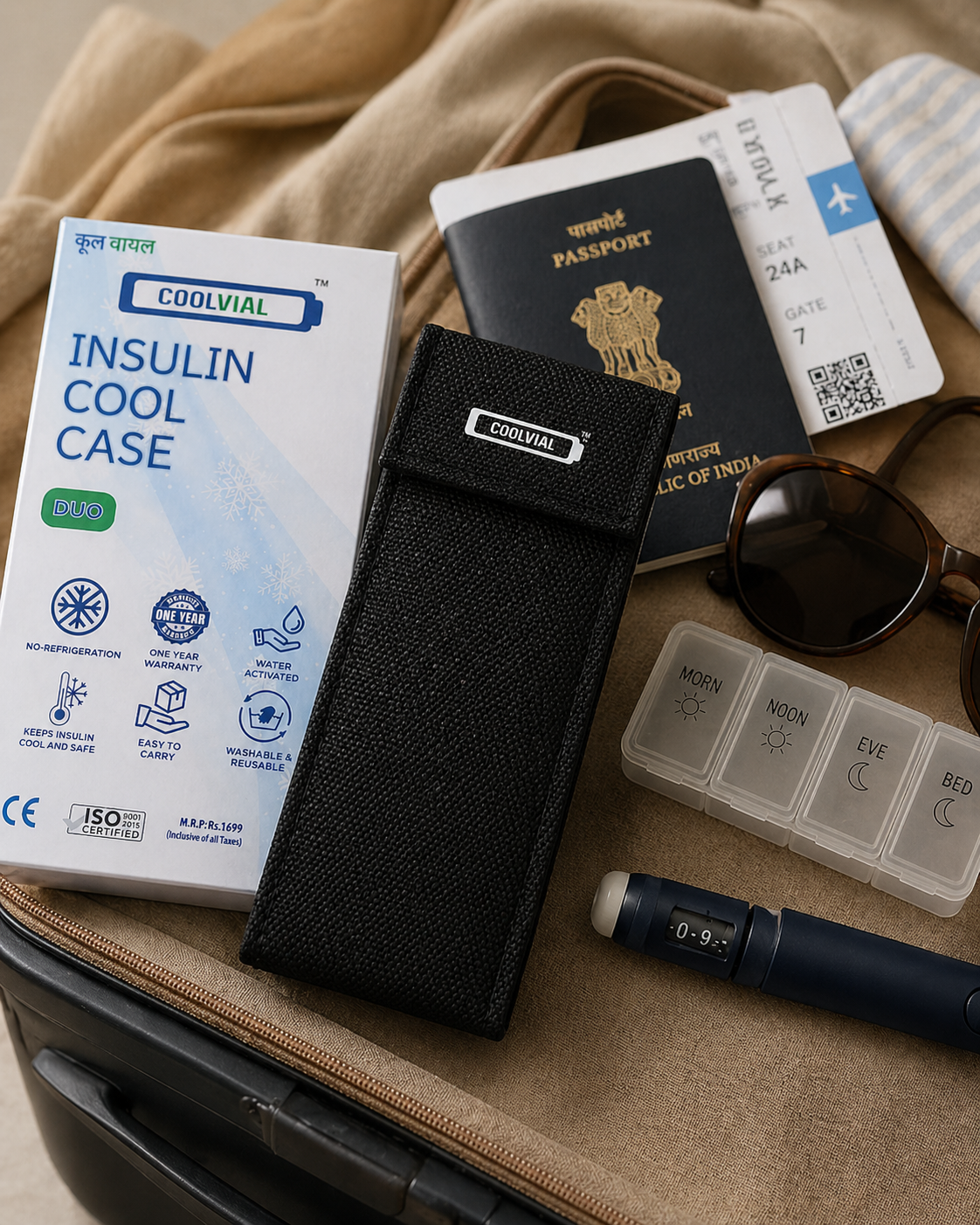
Given Tiruchirappalli’s challenging climate, a reliable insulin cooling case is not a luxury, but a necessity for anyone managing diabetes. These cases are designed to maintain insulin within its safe temperature range, regardless of external conditions.
Daily Commute With Insulin in Tiruchirappalli — 7 Essential Tips for Metro, Bus & Auto
Key Features to Look for in an Insulin Cooling Case:
- Evaporative Cooling Technology: This is ideal for Indian climates. It uses water evaporation to cool, requiring no electricity, batteries, or ice packs. Simply activate it with water.
- Duration of Cooling: For daily commutes of 60-90 minutes and full-day use, look for cases that provide 12-16 hours of cooling.
- Capacity: Consider how many pens or vials you carry daily. For many, a case holding 2 pens and 1 vial is sufficient.
- Portability & Durability: It should be compact enough to fit in a school bag, college backpack, or office bag, and robust enough to withstand daily wear and tear.
- Certification: Look for CE certification and ISO standards (like ISO 9001:2015) for quality assurance.
- Value for Money: Compare features, price, and warranty.
Comparing Cooling Case Options for Tiruchirappalli:
| Feature | COOLVIAL Duo | Frio Insulin Cooling Case (e.g., Duo Pen) | Outer Woods OW-12 (Thermal Bag) |
|---|---|---|---|
| Technology | Water-activated evaporative cooling (no electricity) | Water-activated evaporative cooling (no electricity) | Insulated thermal bag (requires ice packs) |
| Insulin Capacity | 2 pens + 1 vial | 2 pens | 1-2 pens (depends on design, fits ice packs too) |
| Cooling Duration | 12-16 hours | Up to 45 hours (varies by model) | Up to 5-8 hours with ice packs (ambient temp dependent) |
| Price (approx.) | Rs 1,099 (with code COOLHEAL) | Rs 1,900+ | Rs 999 (plus cost of ice packs) |
| Certifications | CE certified, ISO 9001:2015 | CE certified (for most models) | Often none specified for basic thermal bags |
| Warranty | 1-year | Varies by retailer | Varies by retailer |
| Made in | India | UK | India |
| Ideal for Trichy | Excellent for daily use, reliable in high heat | Excellent, but higher price point | Less reliable for long commutes in extreme heat |
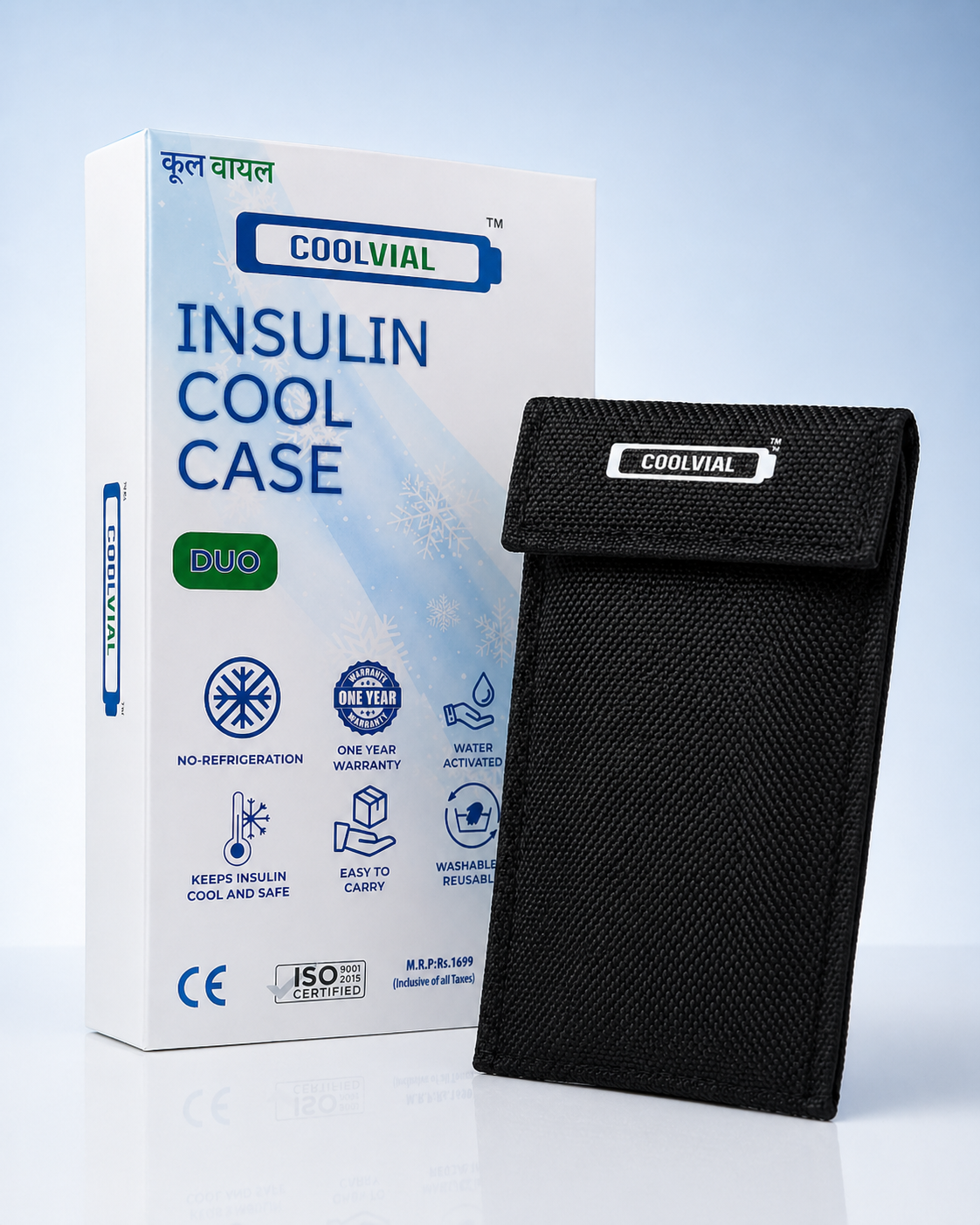
For a consistent and reliable solution for your daily commute with insulin in Tiruchirappalli, the COOLVIAL Duo offers an excellent balance of performance, capacity, and affordability, especially with the current offer. Its evaporative cooling mechanism is perfectly suited to the city’s hot and humid conditions. For more details, explore the COOLVIAL insulin cool case.
4. Smart Strategies for Bus, Auto, and Metro Travel
Navigating Tiruchirappalli’s public transport requires more than just a cooling case; it demands smart planning and habits to ensure insulin safety.
Tips for Different Modes of Transport:
- TNSTC Buses & Share Autos:
- Keep it Close: Always carry your COOLVIAL Duo in your lap or a bag placed directly in front of you, away from direct sunlight streaming through windows.
- Avoid Overhead Racks: Overhead racks in buses can be exposed to more heat, especially if close to the roof or sun-facing side.
- Ventilation: If possible, choose a seat near a window (but out of direct sun) to benefit from any airflow.
- Autorickshaws:
- Shade is Key: Position your cooling case on the side away from the sun. If you have a choice, sit on the shadier side of the auto.
- Lap Carry: Holding the COOLVIAL Duo on your lap offers the most immediate control over its exposure to heat and sun.
- Metro (Future Considerations):
- AC Reliability: While metro coaches are typically air-conditioned, be aware that AC performance can vary. Keep your cooling case protected within your bag.
- Seat-Side Temperatures: Even in AC coaches, areas near windows can experience slightly higher temperatures due to solar radiation. Keep your insulin away from direct window exposure.
General Commute Best Practices:
- Minimize Exposure Time: Plan your commute to avoid peak sun hours (12 PM - 3 PM) if possible, especially for longer journeys like from Srirangam to Karumandapam.
- Hydration: Staying hydrated yourself is also important in Trichy’s heat, which indirectly helps you stay alert to your insulin’s needs.
- Emergency Contact: Always carry an emergency contact card with your medical information, including your diabetes status and insulin type.
- Prepare for Delays: Tiruchirappalli traffic can be unpredictable. Always assume your commute might be longer than expected and ensure your cooling case has sufficient cooling duration.
For more comprehensive guidance on travel, including airport and station tips, consider reading our article on Travelling From Tiruchirappalli With Insulin — Airport, Station & Taxi Tips.
5. Insulin Storage at Work, School, and College
Your daily commute with insulin doesn’t end when you reach your destination. Proper storage throughout the day at your office, school, or college in Tiruchirappalli is equally crucial.
Workplace Storage (e.g., Corporate Parks near Sri Ranganathaswamy Temple Srirangam or Jambukeshwar Temple):
- Office Refrigerator: If available, an office refrigerator is ideal for unopened insulin vials or pens, mimicking home storage. Ensure it’s clearly labeled to avoid accidental disposal.
- Desk Drawer/Locker: For opened insulin pens/vials (which can be stored at room temp up to 25-30°C), a cool, dark desk drawer or locker can suffice, provided the office environment is consistently air-conditioned.
- COOLVIAL Duo at Desk: If your office is not consistently cool or you prefer not to use a shared fridge, keeping your COOLVIAL Duo on your desk is an excellent option. It continues to provide evaporative cooling for 12-16 hours.
- Lunch Storage: If you carry lunch, ensure your insulin is not stored near warm food items. A separate compartment or your cooling case is essential.
School/College Tips (e.g., National College, St. Joseph’s College, Holy Cross College):
- Educate Staff: Inform school nurses, teachers, or college administration about your child’s (or your own) diabetes and insulin storage needs.
- Personal Cooling Case: For Type 1 children, a COOLVIAL Duo in their school bag or backpack is non-negotiable. It ensures their insulin stays safe throughout the school day, from morning assembly to after-school activities.
- Avoid Lockers in Sun: School lockers, especially those exposed to direct sunlight in corridors or outdoor areas, can become very hot. Advise against storing insulin there.
- Designated Cool Spot: Encourage schools to identify a cool, safe spot (like the nurse’s office or a staff room) where students can store their insulin if needed.
- Awareness: Promote awareness among peers about diabetes management and the importance of insulin.
6. The Morning Prep Ritual for Insulin Safety
Daily Commute With Insulin in Tiruchirappalli — 7 Essential Tips for Metro, Bus & Auto
48+ hours at 2-8°C. No electricity. CE certified. Free delivery across India.
Order on WhatsApp — ₹1,099🛒 Buy Now — ₹1,099A consistent morning routine is your first line of defense against heat damage during your daily commute with insulin in Tiruchirappalli. Establishing a ritual ensures you never leave home unprepared.
Your Essential Morning Prep Checklist:
- Activate Your COOLVIAL Duo:
- Soak: Immerse the inner pouch of your COOLVIAL Duo in clean, cold water for 5-10 minutes. Ensure the crystals evenly absorb water and swell.
- Dry: Gently pat dry the outer surface with a towel. It should feel cool to the touch but not wet.
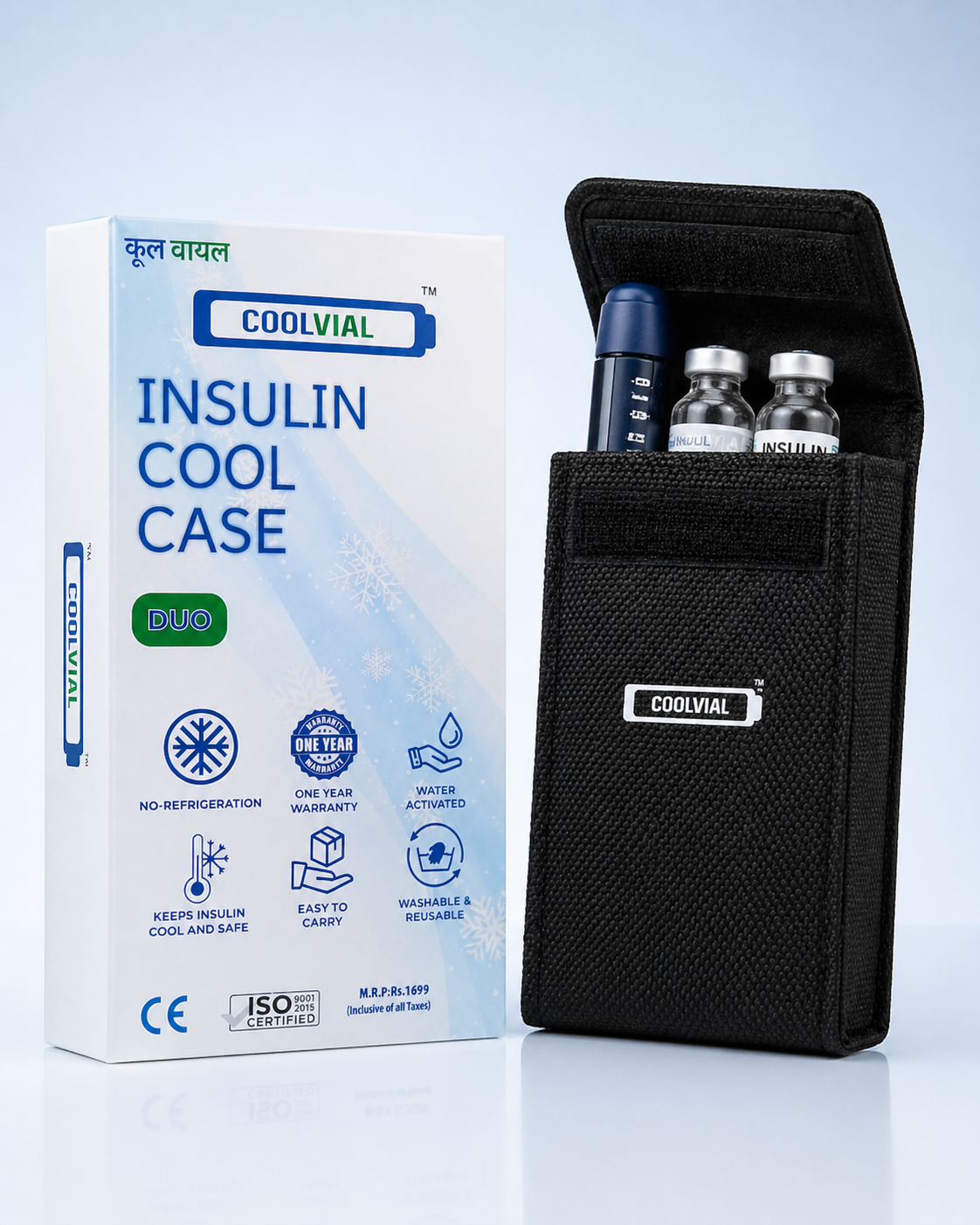
- Insert: Place your insulin pens and/or vials into the activated pouch, then slide it into the outer cover. Your cooling case is now ready for 12-16 hours of protection.
- Check Insulin Vials/Pens:
- Visual Inspection: Before placing them in the cooling case, quickly check your insulin. It should be clear (unless it’s NPH insulin, which is cloudy). Look for any discoloration, cloudiness, or particles, which could indicate damage.
- Expiration Date: Verify the expiration date on all insulin products.
- Pack Smartly:
- Dedicated Spot: Always keep your COOLVIAL Duo in a dedicated, easily accessible compartment in your office bag, school bag, college backpack, or laptop sleeve. This prevents it from being crushed or forgotten.
- Avoid Heat Sources: Ensure it’s not near electronics that generate heat (like a laptop or power bank) or warm food items.
- Blood Glucose Meter & Supplies: Pack your blood glucose meter, test strips, lancets, alcohol swabs, and a source of fast-acting glucose (e.g., glucose tablets or fruit juice) in an easily accessible pouch.
- Emergency Information: Double-check that your emergency contact and medical ID (including type of diabetes and insulin regimen) are readily available.
This simple morning ritual, taking just a few minutes, can provide peace of mind and safeguard your insulin throughout your day, from your home in Thillai Nagar to your office in Karumandapam. For a complete understanding of diabetes management, refer to our Complete Diabetes Care Guide for Tiruchirappalli Residents — 2026 Edition.
7. Essential Daily Carry Insulin Cooler Routine
Maintaining a consistent daily routine for your insulin cooler is as important as the morning prep. This ensures continuous protection and extends the life of your insulin.
Daily Carry Insulin Cooler Routine:
- Always Carry It: Make it a habit to always carry your COOLVIAL Duo whenever you leave home, even for short trips to the nearby Apollo Pharmacy or MedPlus. You never know when a quick errand might turn into a longer outing, especially with unexpected delays in Tiruchirappalli traffic.
- Re-activate as Needed: The COOLVIAL Duo provides 12-16 hours of cooling. Depending on the ambient temperature and humidity, you might need to re-activate it daily or every other day. If the inner pouch starts to feel less cool or less pliable, it’s time for a re-soak.
- Protect from Direct Sun and Extreme Heat: Even inside the cooling case, avoid leaving it in direct, scorching sunlight for extended periods. For example, don’t leave your bag on a bus seat directly under the sun or on the dashboard of a parked car.
- Night-time Storage: After your day, remove your insulin from the cooling case and store opened pens/vials at recommended room temperature (up to 25°C or 30°C) or unopened ones in the refrigerator (2°C-8°C). Allow the COOLVIAL Duo’s inner pouch to dry out completely overnight. This prevents mold and ensures it’s ready for re-activation.
- Regular Cleaning: Periodically clean the outer casing of your COOLVIAL Duo with a damp cloth. The inner pouch should only be re-activated with water; avoid detergents or chemicals.
- Inspection: Regularly inspect your COOLVIAL Duo for any signs of wear and tear. The 1-year warranty provides peace of mind, but proactive inspection helps ensure continuous performance.
By integrating these practices into your daily life, you take control of your diabetes management, ensuring your insulin is always ready to perform its vital role, whether you’re heading to Kauvery Hospital (Tennur) for a check-up or enjoying a meal at one of Tiruchirappalli’s Diabetic-Friendly Restaurants & Cafes.
Frequently Asked Questions (FAQ)
Q: How long can insulin stay outside a cooling case in Tiruchirappalli’s summer heat? A: In Tiruchirappalli’s peak summer temperatures (38-42°C), insulin can degrade significantly in just 1-2 hours if left outside a cooling case in an ordinary bag. It’s crucial to always use a reliable cooling solution like COOLVIAL Duo to protect its potency.
Q: Can I store my insulin in the refrigerator at my office in Thillai Nagar? A: Yes, if your office in Thillai Nagar has a refrigerator, you can store unopened insulin vials or pens there between 2°C and 8°C. For opened insulin, ensure the office air conditioning keeps the ambient temperature below 25-30°C, or continue using your cooling case.
Q: Is it safe to carry insulin in a two-wheeler dickey for a short commute in Tiruchirappalli? A: No, it is never safe to carry insulin in a two-wheeler dickey, even for short commutes in Tiruchirappalli. Temperatures inside a dickey can quickly exceed 60°C, rendering insulin ineffective almost immediately. Always carry it on your person in a dedicated cooling case.
Q: How do I know if my insulin has been damaged by heat during my commute? A: Heat-damaged insulin might appear cloudy, discolored, or have particles, but sometimes it looks normal yet has lost potency. If you suspect heat exposure, or if your blood sugar levels are unexpectedly high despite correct dosing, discard the insulin and start a new pen/vial from a safely stored batch.
Q: What if I forget my cooling case at home during my daily commute? A: If you realize you’ve forgotten your cooling case, try to minimize the insulin’s exposure to heat. Keep it in the coolest part of your bag, away from direct sunlight, and acquire a new cooling solution or return home as soon as possible. If the insulin has been exposed to high temperatures for an extended period, it’s safer to replace it.
Q: Does the COOLVIAL Duo need to be refrigerated to work? A: No, the COOLVIAL Duo uses water-activated evaporative cooling and does not require refrigeration. You simply soak the inner pouch in water for 5-10 minutes to activate it, and it will keep your insulin cool for 12-16 hours without electricity.
Q: Can I use ice packs instead of an evaporative cooling case for my insulin? A: While ice packs can provide cooling, they have a shorter duration, can create condensation (which is harmful to insulin labels and pens), and can sometimes over-chill insulin if placed directly against it. Evaporative cooling cases like COOLVIAL Duo offer more consistent, gentle, and prolonged cooling without these drawbacks, making them superior for daily commutes.
Conclusion
Navigating your daily commute with insulin in Tiruchirappalli’s warm and often challenging climate requires diligence and the right tools. From the bustling TNSTC buses to the ubiquitous auto-rickshaws and even future metro rides, protecting your insulin from the city’s average 38-42°C summer heat is non-negotiable. By understanding the risks, adopting smart travel strategies, and implementing a consistent morning prep and daily carry routine, you can ensure your insulin remains potent and effective throughout the day. Investing in a reliable, water-activated evaporative cooling case like the COOLVIAL Duo is a small step that makes a monumental difference in maintaining your health and peace of mind. Its ability to provide 12-16 hours of cooling without electricity, combined with its compact design and affordable price point, makes it an ideal companion for every diabetic in Trichy. Don’t let the heat compromise your health.
Order COOLVIAL Duo at Rs 1,099 with code COOLHEAL at coolvial.com or via WhatsApp wa.me/918766952300
Medical Disclaimer
This article is for general information. Always consult your endocrinologist or diabetologist before changing insulin storage or dosing practices.
How We Researched This
This article is based on a comprehensive review of insulin storage guidelines from reputable bodies such as RSSDI (Research Society for the Study of Diabetes in India) and global best practices. We also incorporated relevant data from ICMR-INDIAB studies on diabetes prevalence in India, alongside local Tiruchirappalli hospital directories (including Kauvery Hospital, Apollo Speciality Hospitals Trichy, KG Hospital) and pharmacy networks (Apollo Pharmacy, MedPlus, Trust Pharmacy, 1mg, Saravana Pharmacy) to provide context-specific advice. Local climate data from the Indian Meteorological Department was referenced to assess temperature impacts.