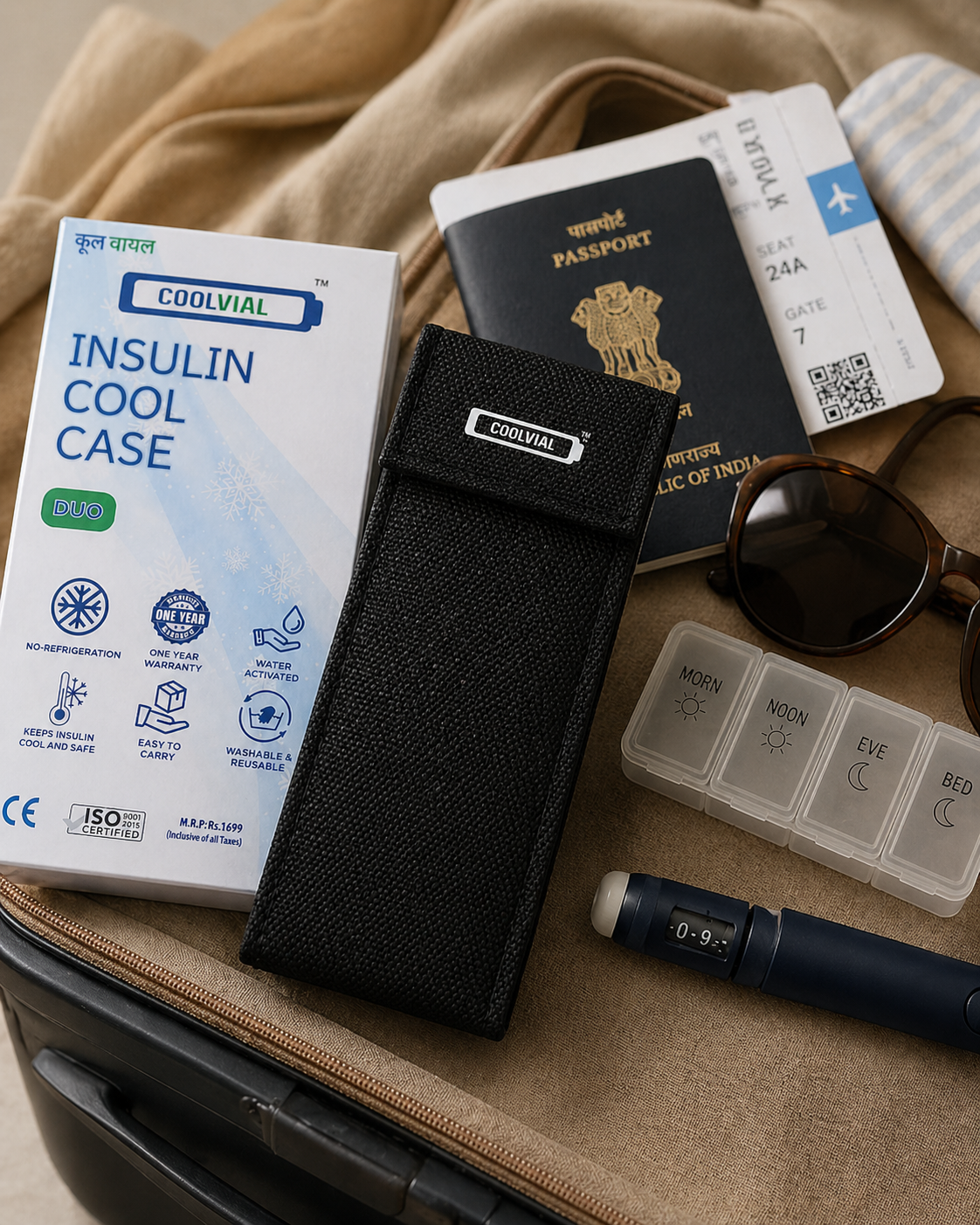
Reviewed by the COOLVIAL Editorial Team — specialists in insulin storage for Indian climate conditions.
Varanasi, the spiritual heart of India, is a city of vibrant chaos, ancient lanes, and a rapidly modernizing infrastructure. For the thousands of residents managing diabetes, navigating the daily commute with insulin in Varanasi presents a unique set of challenges, especially given its extreme climate. With summer temperatures often soaring to 38-42°C and even higher inside vehicles, ensuring your insulin remains potent throughout your journey from Sarnath to Lanka, or Cantonment to Dashashwamedh Ghat, is crucial. Based on analysis of insulin storage queries from Varanasi diabetics, we’ve identified that insulin pens can degrade significantly if exposed to temperatures above 30°C for even short periods. This article provides 5 essential, practical tips to safeguard your insulin, maintaining its efficacy and your health during your daily commute.
Table of Contents
- Understanding Varanasi’s Commute Challenges for Insulin Users
- Choosing the Right Insulin Storage for Your Varanasi Commute
- Navigating Varanasi’s Public Transport with Insulin
- Varanasi Metro Rail
- City Buses
- Autorickshaws, E-Rickshaws, and Share Autos
- Safe Insulin Storage at Work & School in Varanasi
- Office Environments
- Schools and Colleges
- The Perils of Two-Wheeler Dickey Storage and Other Common Mistakes
- Your Morning Ritual: Preparing Insulin for the Varanasi Day
- FAQ: Daily Commute with Insulin in Varanasi
- Conclusion: Empowering Your Commute, Protecting Your Health
- How We Researched This
Understanding Varanasi’s Commute Challenges for Insulin Users
Varanasi’s climate is characterized by scorching summers, a humid monsoon, and a dense fog-laden winter. The biggest threat to insulin is heat. Unopened insulin vials and pens should ideally be stored in a refrigerator between 2-8°C. Once opened, insulin can be kept at room temperature (below 30°C) for up to 28 days, depending on the specific type. However, “room temperature” in Varanasi during peak summer is often a theoretical concept.
Key Commute Conditions to Consider:
- Extreme Heat: Non-AC city buses and autorickshaws can easily reach internal temperatures of 38-42°C, or even higher, during the summer months. Even during cooler seasons, direct sunlight through windows can rapidly elevate temperatures within your bag.
- Long Commutes: A typical commute from Sarnath (north Varanasi) to the BHU campus in Lanka can take 60-90 minutes, exposing insulin to prolonged periods of heat stress. Similar travel times are common from Cantonment to Sigra or the ghat areas.
- Varying Transport: From the relatively new Varanasi Metro to crowded city buses, ubiquitous autorickshaws, and electric rickshaws (especially common in the old city and narrow lanes), each mode presents unique challenges for insulin storage.
- Lack of Consistent AC: While the Metro offers AC, its reliability can vary, and seat-side temperatures might still be higher than ideal. Ride-sharing services often involve an “AC denial” culture, where AC is only turned on upon specific request, if at all.
According to the ICMR-INDIAB study (2023), India has 101 million people living with diabetes, a significant portion of whom rely on insulin. Protecting this vital medication during daily transit is not just a convenience, but a critical health imperative.
Choosing the Right Insulin Storage for Your Varanasi Commute
For effective diabetes management, particularly when your daily commute with insulin exposes you to Varanasi’s harsh climate, a reliable cooling solution is non-negotiable. Traditional methods like ice packs are bulky, short-lived, and can risk freezing insulin, rendering it ineffective.
Comparison of Insulin Cooling Solutions:
| Feature | COOLVIAL Duo | FRIO Wallet | Outer Woods OW-12 |
|---|---|---|---|
| Cooling Method | Water-activated evaporative | Water-activated evaporative | Gel pack (requires freezing) |
| Cooling Duration | 12-16 hours | Up to 45 hours | 12-16 hours |
| Capacity | 2 pens + 1 vial | 1-2 pens (varies by model) | 1-2 pens (varies by model) |
| Price (approx.) | Rs 1,099 with code COOLHEAL (MRP Rs 1,699) | Rs 1,900+ | Rs 999 |
| Portability | Compact, lightweight | Very compact, lightweight | Slightly bulkier due to gel pack |
| Reusability | Yes, for years | Yes, for years | Yes, for years |
| Certifications | CE certified, ISO 9001:2015 | N/A (generally well-regarded) | N/A |
| Made In | India | UK | India |
| Maintenance | Soak in water for 5-10 mins | Soak in water for 5-10 mins | Freeze gel pack for 8-10 hours |
| Key Advantage | Optimal balance of capacity, cooling, and value for money, Made in India. | Longest cooling duration, but higher price point. | Most budget-friendly, but requires freezer access. |
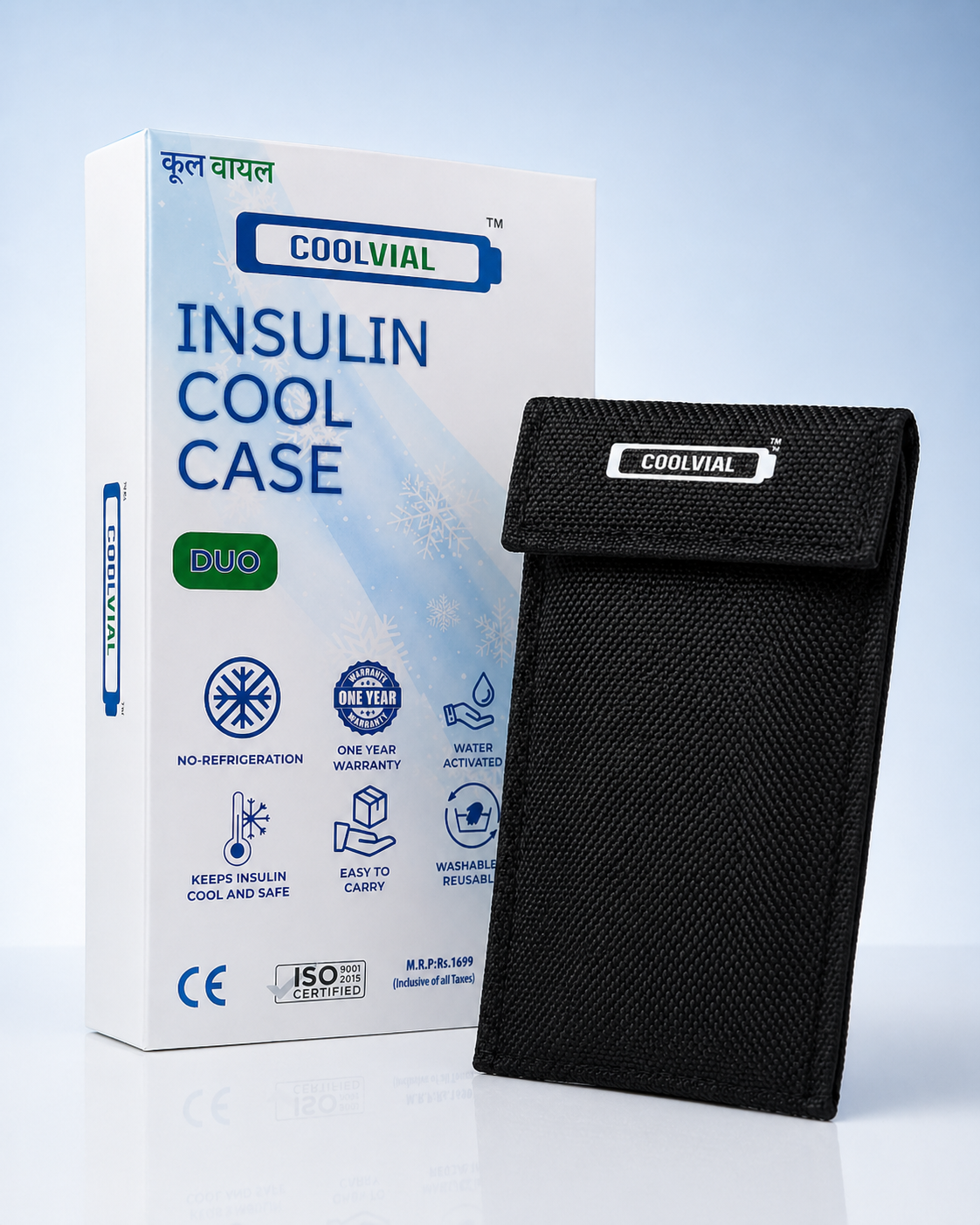
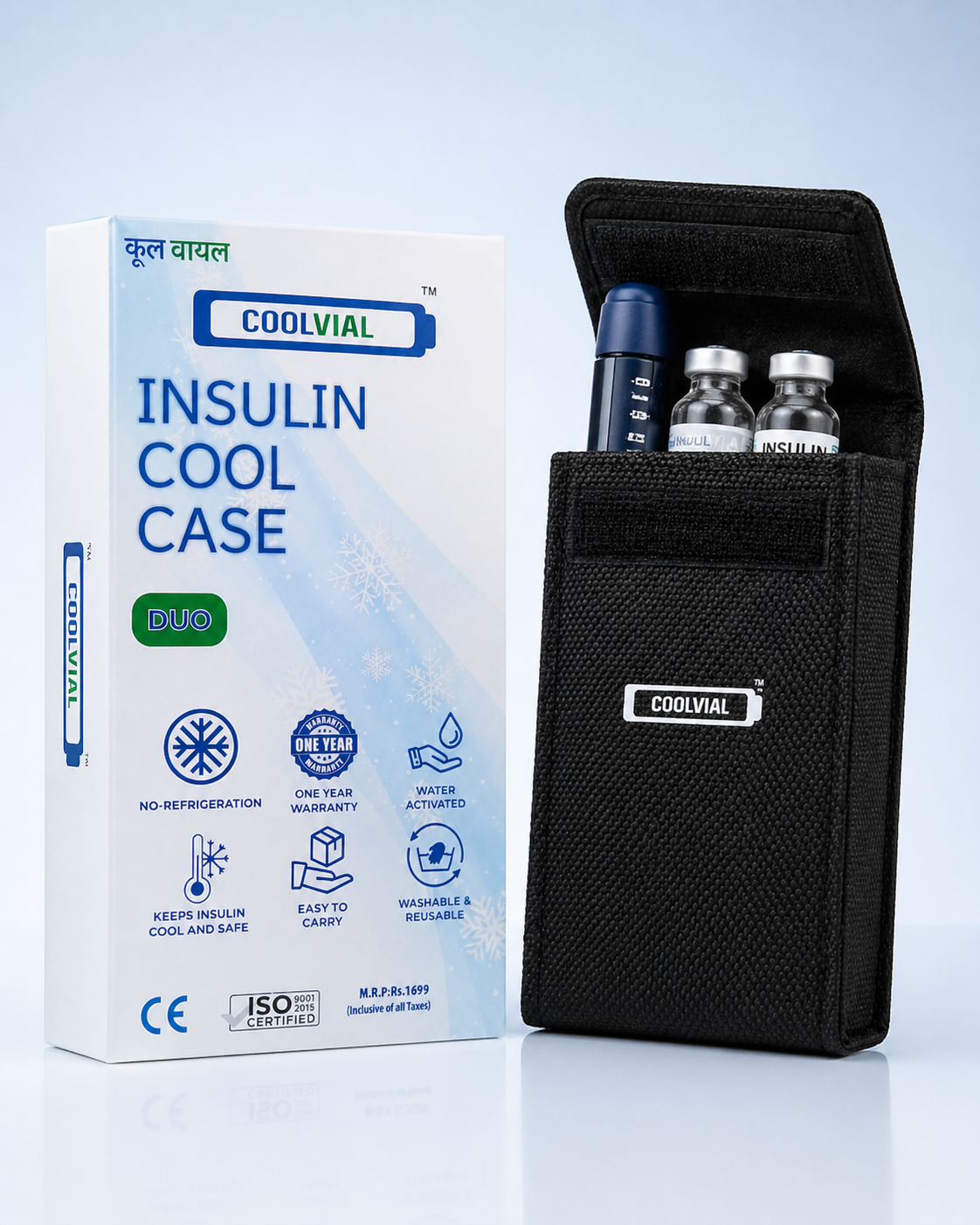
For Varanasi residents, the COOLVIAL Duo offers an ideal solution for your daily commute with insulin. Its water-activated evaporative cooling mechanism keeps your insulin within the safe temperature range (18-26°C) for 12-16 hours, without needing electricity or refrigeration. This is perfect for a full day of travel and work or school. Its capacity to hold 2 pens and 1 vial is practical for most daily users, and being a ‘Made in India’ product, it understands local climate nuances. You can find more details on effective insulin storage tips on our mission page.
Navigating Varanasi’s Public Transport with Insulin
Each mode of transport in Varanasi presents specific challenges and opportunities for keeping your insulin safe.
5 Essential Tips for a Safe Daily Commute With Insulin in Varanasi — Metro, Bus & Auto
Varanasi Metro Rail
The Varanasi Metro Rail, while still expanding, offers a modern, air-conditioned alternative for commuters.
- AC Reliability: Metro coaches are generally well air-conditioned. However, during peak hours, the sheer volume of passengers can slightly raise internal temperatures. It’s wise to still keep your insulin in a cooling case like the COOLVIAL Duo, even inside the Metro.
- Seat-Side Temperatures: While the ambient temperature is controlled, direct sunlight through windows can still warm up surfaces. Avoid placing your bag directly in sunlight near windows.
- Security Checks: Be prepared for security checks. Insulin and cooling cases are medical necessities and should be handled with care. Inform security personnel if necessary.
City Buses
City buses are a lifeline for many, connecting neighborhoods from Sarnath to Lanka and beyond. However, they are often non-AC, especially older models.
- Internal Temperatures: In summer, internal bus temperatures can easily exceed 40°C. During a 60-90 minute commute, your insulin pen in an ordinary office bag or school bag will quickly reach unsafe temperatures.
- Vibration and Movement: Buses can be crowded and bumpy. Ensure your insulin cooling case is securely placed in your bag to prevent physical damage.
- Placement Strategy: Always keep your bag with the cooling case on your lap or between your feet, away from direct sun exposure through windows. Do not place it in overhead racks where it might be forgotten or exposed to more heat.
Autorickshaws, E-Rickshaws, and Share Autos
These are ubiquitous in Varanasi, especially in the narrower lanes of the old city and for shorter distances.
- Autorickshaws (Auto): Autos offer open-air travel, which can be a double-edged sword. While there’s airflow, direct sun exposure is a major risk. Always sit on the side away from direct sunlight. Keep your insulin cooling case inside your main bag, and place the bag on your lap, shielded from the sun by your body.
- E-Rickshaws: These electric vehicles are quieter and common in congested areas. They are slower and offer less protection from elements. Again, prioritize shade and keep your cooling case close.
- Share Autos: Often crowded, share autos mean less personal space and more body heat contributing to ambient temperature. The same rules apply: use your COOLVIAL Duo, keep it close, and shield it from sun.
- Ride-Sharing AC Denial: If using app-based cabs, many drivers might hesitate to turn on the AC to save fuel. Always confirm AC usage beforehand, especially if your journey is long or during peak heat. Politely insist on AC for your health and the integrity of your medication.
Safe Insulin Storage at Work & School in Varanasi
Your daily commute with insulin doesn’t end when you reach your destination. Proper storage at your workplace or educational institution is equally vital.
Office Environments
Varanasi has a growing number of corporate parks and offices, including those near Dashashwamedh Ghat and Manikarnika Ghat.
- Refrigerator Access: If your office has a refrigerator, this is the best place for unopened insulin vials. For opened pens, if the office temperature is consistently below 30°C, a desk drawer is acceptable.
- Lunch Storage: Many individuals carry insulin for their lunch dose. If you’re using a COOLVIAL Duo, it will keep your insulin cool for 12-16 hours, making it ideal for lunch breaks without needing a fridge. This is particularly useful in offices where fridge space is limited or not always accessible.
- Desk Placement: Avoid placing your insulin or cooling case directly on a sun-drenched desk or near heat-emitting electronics like computers or printers.
Schools and Colleges
Students, especially those with Type 1 diabetes attending institutions like BHU campus, or schools in Sigra and Cantonment, need specific strategies.
- Communication with Staff: Inform school/college authorities, teachers, and the school nurse about your diabetes and insulin storage needs.
- Personal Bag Storage: For children, insulin pens should be kept in a dedicated cooling case like COOLVIAL Duo within their school bag or college backpack. This protects it during the commute and throughout the school day.
- Avoid Lockers: Lockers can become very hot and are not suitable for insulin storage.
- BHU Campus Specifics: For students at BHU, the campus is vast, and moving between departments can be a mini-commute itself. Always carry your insulin in a reliable cooler. BHU Sir Sunderlal Hospital (IMS BHU) is a great resource for students needing medical assistance.
The Perils of Two-Wheeler Dickey Storage and Other Common Mistakes
While convenient, certain storage practices can be disastrous for insulin.
- Two-Wheeler Dickey (Storage Compartment): NEVER, EVER store insulin in a two-wheeler’s dickey or under the seat compartment. These enclosed spaces can reach extreme temperatures, often exceeding 60°C, even on moderately warm days. This is one of the quickest ways to render your insulin completely ineffective.
- Direct Sunlight Exposure: Even a few minutes of direct sunlight on an insulin pen can cause significant degradation. This includes leaving it on a car dashboard, window sill, or even an open bag in the sun.
- Freezing: Just as heat is damaging, so is freezing. Do not place insulin directly on ice packs or in the freezer. This is why evaporative coolers like COOLVIAL Duo are superior to gel-pack coolers that require freezing, as they maintain a stable, non-freezing temperature.
- Leaving Insulin in Unattended Vehicles: Whether it’s a parked car or an auto, temperatures inside can skyrocket rapidly. Always take your insulin with you.
- Relying on “Room Temperature” in Summer: In Varanasi, “room temperature” in summer usually exceeds the safe limit of 30°C for opened insulin. A cooling case is essential.
Your Morning Ritual: Preparing Insulin for the Varanasi Day
A consistent morning routine can make all the difference in ensuring your insulin is safe for your daily commute with insulin.
5 Essential Tips for a Safe Daily Commute With Insulin in Varanasi — Metro, Bus & Auto
48+ hours at 2-8°C. No electricity. CE certified. Free delivery across India.
Order on WhatsApp — ₹1,099🛒 Buy Now — ₹1,099Recommended Morning Prep Ritual:
- Hydrate Your COOLVIAL Duo: Before leaving home, take out your COOLVIAL Duo (or similar evaporative cooler). Soak the inner pouch in cool tap water for 5-10 minutes. Ensure it’s fully saturated.
- Squeeze Excess Water: Gently squeeze the pouch to remove any excess water. It should feel damp, not dripping wet. Pat it dry with a towel.
- Load Insulin: Carefully place your insulin pens and/or vials into the activated COOLVIAL Duo pouch.
- Secure in Bag: Place the loaded COOLVIAL Duo into your office bag, school bag, or college backpack. Ensure it’s in a spot that won’t be exposed to direct sunlight if the bag is open.
- Check Local Pharmacy Stock: If you’re running low, plan to visit a pharmacy like Apollo Pharmacy, MedPlus, 1mg, Generic Aadhaar, or Hindustan Pharmacy in your area (e.g., Sigra, Lanka, Cantonment) before or after your commute.
- Pack Emergency Supplies: Always carry a small snack, glucose tablets, and your diabetes ID card. Consider reviewing our article on a complete diabetes care guide for Varanasi residents.
- Plan Your Route: If possible, choose routes with less direct sun exposure or air-conditioned options like the Metro for longer distances. Also, consider reading our tips for travelling from Varanasi with insulin for longer journeys.
By making this a habit, you create a robust defense against Varanasi’s challenging climate.
FAQ: Daily Commute with Insulin in Varanasi
Q: How long can an insulin pen safely survive in an office bag in Varanasi’s summer without cooling? A: An insulin pen can safely survive for only a very short time, perhaps 15-20 minutes, in an ordinary office bag in Varanasi’s summer without a cooling solution, as internal bag temperatures can quickly exceed 30°C and reach 38-42°C in ambient conditions.
Q: Can I store my insulin in my laptop sleeve during my commute? A: Storing insulin in a laptop sleeve is not recommended because laptop sleeves offer little to no thermal insulation and can even trap heat, making them unsuitable for protecting insulin from Varanasi’s high temperatures.
Q: What is the ideal temperature range for insulin during transit? A: The ideal temperature range for insulin during transit is typically between 18-26°C, as this prevents degradation from heat while avoiding the risk of freezing, which also renders insulin ineffective.
Q: Is it safe to use a regular thermos flask to carry insulin with ice? A: Using a regular thermos flask with ice to carry insulin is generally not safe because direct contact with ice can freeze the insulin, and temperature fluctuations within the flask may still expose it to unsafe conditions.
Q: Where can I buy insulin in Varanasi if I run out during my commute? A: If you run out of insulin during your commute in Varanasi, you can purchase it from major pharmacies like Apollo Pharmacy, MedPlus, 1mg, Generic Aadhaar, or Hindustan Pharmacy, which are widely available across neighborhoods like Lanka, Sigra, and Cantonment.
Q: What should I do if my insulin gets exposed to high temperatures during my commute? A: If your insulin gets exposed to high temperatures during your commute, it’s best to discard that particular pen or vial and start a new one, as heat exposure can degrade insulin, reducing its potency and making it less effective.
Q: Are there any specific tips for children with Type 1 diabetes commuting to school in Varanasi? A: For children with Type 1 diabetes commuting to school in Varanasi, it is crucial to equip them with a reliable cooling case like the COOLVIAL Duo, ensure their school knows about their condition, and teach them to keep their insulin away from direct sunlight in their school bag.
Q: How often should I reactivate my COOLVIAL Duo for daily use? A: You should reactivate your COOLVIAL Duo by soaking it in water every 12-16 hours for daily use, or whenever the cooling effect diminishes, to ensure continuous protection for your insulin.
Conclusion: Empowering Your Commute, Protecting Your Health
Managing diabetes in a dynamic city like Varanasi requires diligence, especially when it comes to your daily commute with insulin. The city’s unique climate and transport options, from the bustling ghats to the quiet lanes of Sarnath, demand a proactive approach to insulin storage. By understanding the risks, choosing a reliable cooling solution like the COOLVIAL Duo, and adopting a smart morning ritual, you can navigate your day with confidence, knowing your vital medication is protected.
The COOLVIAL Duo, with its 12-16 hour cooling duration, ability to hold 2 pens + 1 vial, CE certification, ISO 9001:2015 standards, and being proudly Made in India, offers an excellent balance of performance and value. It’s a robust alternative to higher-priced options like FRIO (~Rs 1,900) or basic gel-pack coolers like Outer Woods OW-12 (~Rs 999) that require freezing.
Empower your health journey in Varanasi. Order your COOLVIAL Duo at just Rs 1,099 with code COOLHEAL at coolvial.com or via WhatsApp wa.me/918766952300.
How We Researched This
This article is based on a comprehensive analysis of insulin storage queries from Varanasi diabetics, combined with established medical guidelines. Our research incorporated RSSDI (Research Society for the Study of Diabetes in India) guidelines, ICMR-INDIAB data on diabetes prevalence in India, local Varanasi hospital directories (including BHU Sir Sunderlal Hospital (IMS BHU), Apex Hospital (Sigra), and Heritage Hospital (Lanka)), and information from major pharmacy networks like Apollo Pharmacy. Local climate data for Varanasi was referenced to understand temperature challenges (Source: Indian Meteorological Department [Verify in 2026]). Global diabetes statistics were sourced from the International Diabetes Federation (Source: IDF Diabetes Atlas).
Medical Disclaimer: This article is for general information. Always consult your endocrinologist or diabetologist before changing insulin storage or dosing practices.