
Reviewed by the COOLVIAL Editorial Team — specialists in insulin storage for Indian climate conditions.
Visakhapatnam, the ‘City of Destiny’, with its picturesque Beach Road and bustling industrial zones like Gajuwaka, presents a unique set of challenges for individuals managing diabetes, especially concerning the safe storage of insulin during their daily commute. The city’s tropical coastal climate, characterized by year-round temperatures between 20-35°C, high humidity, and monsoons from June to October, means insulin is constantly at risk of losing its potency if not stored correctly. Based on analysis of insulin storage queries from Visakhapatnam diabetics, it’s clear that many underestimate the impact of ambient temperatures inside APSRTC buses, autos, and even share autos, where temperatures can soar to 38-42°C during peak summer. This guide provides 10 essential tips for a safe daily commute with insulin, ensuring your vital medication remains effective, even during a 60-90 minute journey from Gajuwaka to RK Beach.
Insulin, once opened, can typically be stored at room temperature (below 25°C) for up to 28 days. However, Visakhapatnam’s climate often exceeds this threshold, making it critical to have a reliable cooling solution. Without proper protection, insulin can degrade, leading to reduced efficacy and potentially dangerous blood sugar fluctuations. This article will help you navigate the city’s transport systems, from the proposed metro to ubiquitous autos, armed with the knowledge and tools to keep your insulin safe.
Table of Contents
- Understanding Visakhapatnam’s Climate and Insulin Needs
- The Critical Role of an Insulin Cooling Case
- Navigating Public Transport: Buses, Autos, and E-Rickshaws
- Safe Insulin Storage in Your Bag: What to Avoid
- Insulin Care for School and College Students in Vizag
- Workplace Insulin Storage: Offices on Kailasagiri Hill & Submarine Museum Parks
- The Morning Insulin Prep Ritual
- Addressing Ride-Sharing AC Denial and Two-Wheeler Risks
- Backup Plans and Emergency Preparedness
- The COOLVIAL Advantage: A Smart Choice for Vizag Commuters
- Frequently Asked Questions (FAQ)
- Conclusion
- Medical Disclaimer
- How We Researched This
1. Understanding Visakhapatnam’s Climate and Insulin Needs
Visakhapatnam’s climate is a beautiful yet formidable adversary for insulin stability. The city experiences consistent warmth, with average temperatures rarely dipping below 20°C, and often reaching 35°C or higher, especially during the summer months from March to May. Coupled with high humidity, this creates an environment where insulin can quickly degrade. According to the Indian Council of Medical Research (ICMR) INDIAB study, diabetes prevalence in urban areas of India is significant, and while specific Visakhapatnam data is not consistently published, these general trends highlight the large number of residents managing this condition (Source: ICMR Guidelines for Diabetes).
Insulin manufacturers typically recommend storing unopened vials and pens in a refrigerator at 2-8°C. Once opened, most insulin types can be kept at room temperature, but strictly below 25°C, for up to 28 days. Exposing insulin to temperatures above 25°C, even for short periods, can compromise its effectiveness.
- Key Climate Factors in Visakhapatnam:
- Temperature: 20-35°C year-round, often higher in peak summer.
- Humidity: Consistently high, exacerbating heat’s impact.
- Monsoon Season: June to October, bringing humidity and intermittent heat.
- Cyclone Prone: Bay of Bengal proximity means occasional extreme weather, potentially affecting power supply for refrigeration.
| Season | Typical Temperature Range | Commute Impact |
|---|---|---|
| Summer (Mar-May) | 28-40°C | Extreme heat in non-AC transport, high risk of insulin degradation. |
| Monsoon (Jun-Oct) | 25-33°C | High humidity, occasional heavy rains, still warm. |
| Winter (Nov-Feb) | 20-28°C | Mildest, but still often exceeds 25°C threshold. |
2. The Critical Role of an Insulin Cooling Case
Relying on an office bag, school bag, college backpack, or laptop sleeve to protect your insulin in Visakhapatnam’s heat is a gamble you cannot afford to take. These conventional bags offer minimal thermal insulation, meaning the internal temperature will quickly equalize with the external ambient temperature. During a 60-90 minute commute from Gajuwaka to Beach Road, an insulin pen or vial stored unprotected can easily reach 38-42°C, especially inside a non-AC bus or auto. This exposure can render your insulin less effective, leading to unpredictable blood sugar levels.
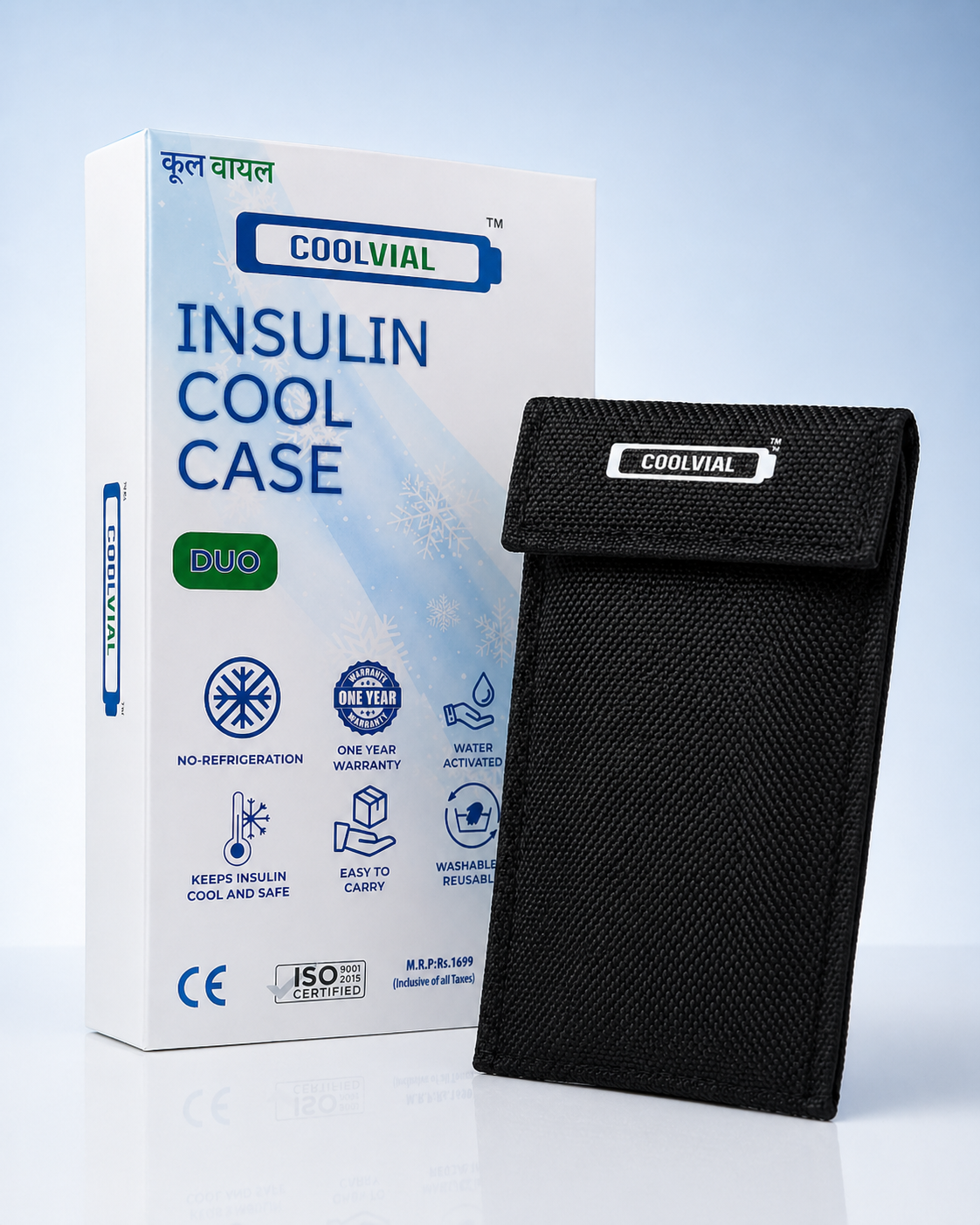
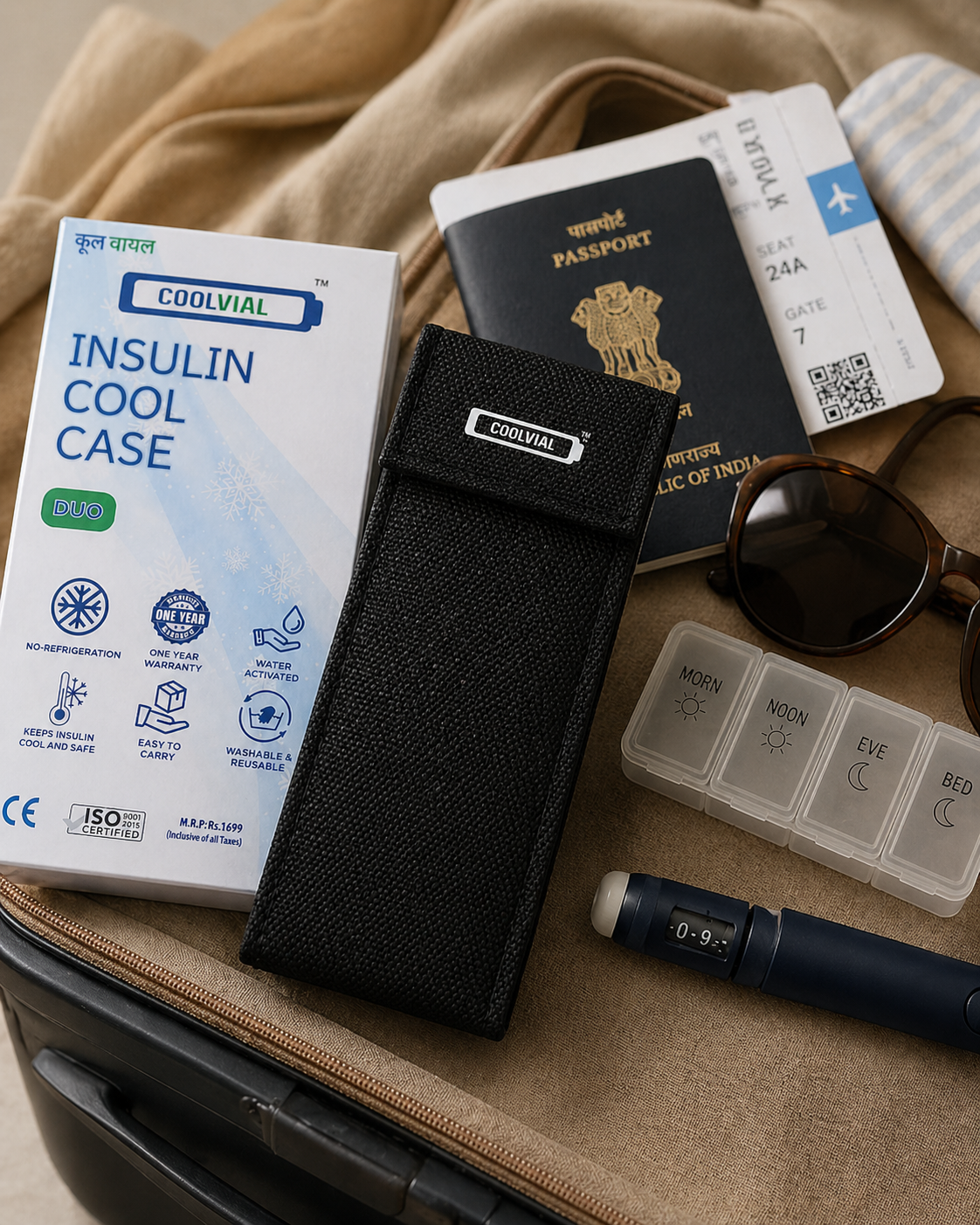
A dedicated insulin cooling case, like the COOLVIAL Duo, is not just a convenience; it’s an essential medical accessory for diabetics in Visakhapatnam. These cases utilize evaporative cooling technology, which doesn’t require electricity or ice packs. You simply activate them with water, and the natural evaporation process keeps your insulin cool within the safe temperature range (typically 18-26°C) for extended periods.
- Why a Cooling Case is Indispensable:
- Consistent Temperature: Maintains insulin at 18-26°C, even when ambient temperatures are 35°C+.
- Portability: Lightweight and compact, fits easily into any bag.
- No Electricity Needed: Ideal for commutes, travel, and power outages.
- Protection: Shields insulin from direct heat and physical damage.
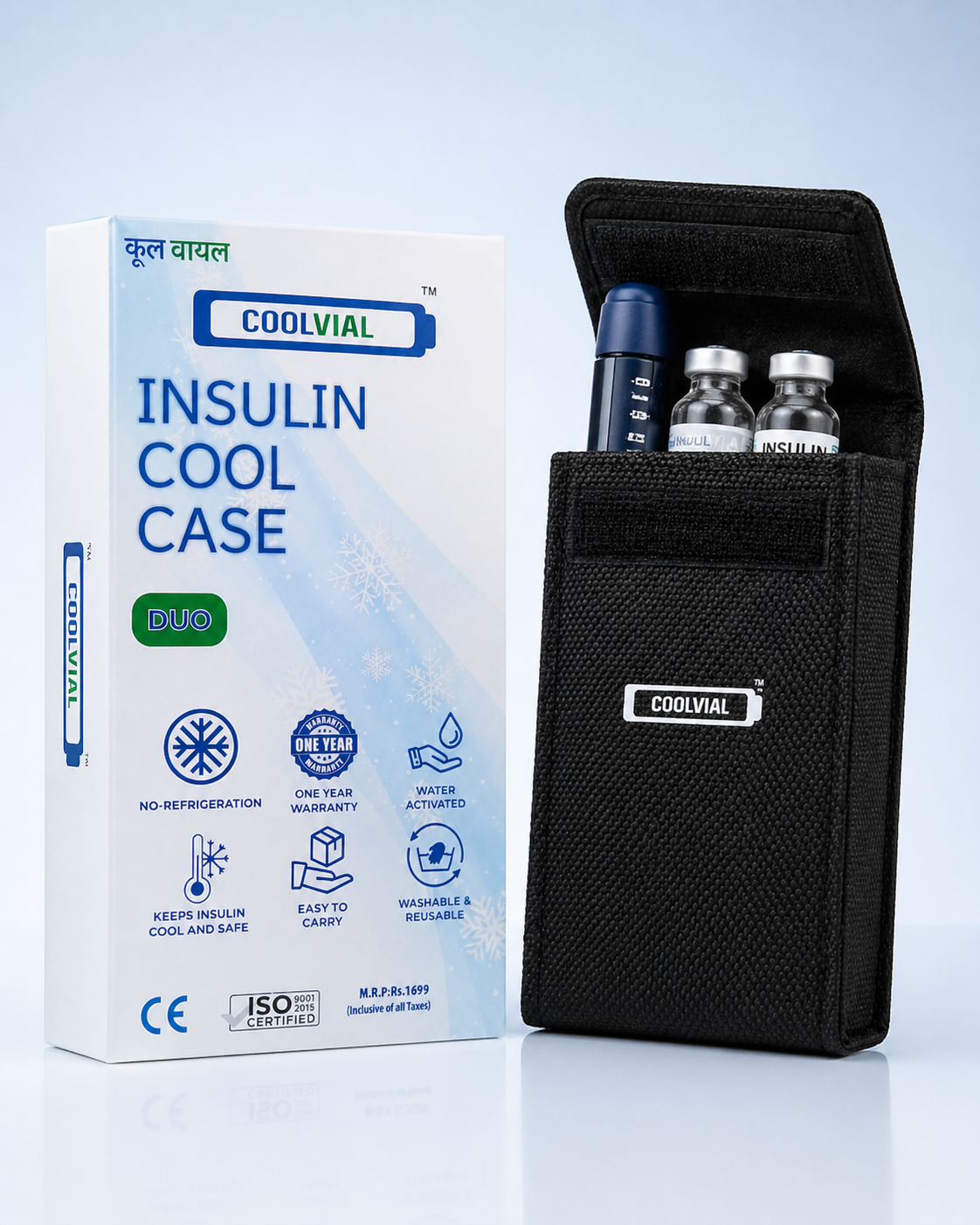
The COOLVIAL Duo, for instance, is designed to hold 2 insulin pens and 1 vial, keeping them cool for 12-16 hours. This is significantly longer than most daily commutes and provides a crucial buffer for unexpected delays or extended periods away from refrigeration. Its CE certification and ISO 9001:2015 standards assure quality, and being Made in India, it’s tailored for local conditions.
3. Navigating Public Transport: Buses, Autos, and E-Rickshaws
Commuting in Visakhapatnam often involves a mix of APSRTC city buses, share autos, regular autorickshaws, and increasingly, e-rickshaws. Each mode presents its own set of challenges for insulin storage.
APSRTC City Buses
Non-AC APSRTC buses, especially during peak hours, can become incredibly hot and humid. The internal temperatures can easily exceed 35-40°C. While sitting by a window might offer some airflow, it also exposes your bag to direct sunlight.
- Tips for Bus Commutes:
- Always carry your insulin in a reliable cooling case like COOLVIAL Duo.
- Keep your bag on your lap or between your feet to avoid direct sun exposure from windows.
- If possible, choose a seat away from direct sunlight.
Autorickshaws and Share Autos
Autorickshaws, with their open design, might seem cooler, but the direct sun exposure can be intense. The black fabric roofs absorb heat, radiating it downwards. Share autos, often cramped, can also get very warm.
- Tips for Auto Commutes:
- Hold your cooling case close to you, shielded from direct sun by your body or a cloth.
- Avoid placing your bag on the seat or floor where it might absorb heat from the vehicle’s engine or sun-warmed surfaces.
- For longer rides, consider asking the driver to stop briefly if you need to re-activate your evaporative cooler (if using a specific type that requires it, though COOLVIAL is 12-16 hours).
E-Rickshaws
E-rickshaws are a growing mode of short-distance travel. They are typically slower and more open than autos, offering more airflow but still susceptible to direct sun.
- Tips for E-Rickshaw Commutes:
- Similar to autos, prioritize shade and keep your insulin case protected from direct sunlight.
10 Essential Tips for a Safe Daily Commute with Insulin in Visakhapatnam
48+ hours at 2-8°C. No electricity. CE certified. Free delivery across India.
Order on WhatsApp — ₹1,099🛒 Buy Now — ₹1,099While Visakhapatnam currently does not have an operational metro system, a metro project is proposed. Should it materialize, an AC metro would offer a significantly more stable temperature environment. However, even in AC coaches, seat-side temperatures can vary, and it’s always best practice to keep insulin in a cooling case to guard against unexpected AC failures or temperature fluctuations.
4. Safe Insulin Storage in Your Bag: What to Avoid
It’s tempting to just toss your insulin pen or vial into your everyday bag, but this is one of the riskiest habits for diabetics in Visakhapatnam.
The Dangers of Common Bags
-
Office Bag/Laptop Sleeve: While they may offer a thin layer of material, they are not insulated against heat. A laptop generating heat inside its sleeve can further warm the insulin.
-
School Bag/College Backpack: These are often left in direct sun, in hot classrooms, or on crowded buses. Children and young adults might also forget to protect their insulin, leading to spoilage.
-
Two-wheeler Dickey (Storage Compartment): NEVER store insulin in a two-wheeler’s dickey. The internal temperature of this compartment can skyrocket to 60°C or more, especially when parked under the sun. This extreme heat will almost instantly degrade insulin, rendering it useless.
-
Best Practices for Bag Storage:
- Always place your insulin in a dedicated cooling case first.
- Then, place the cooling case inside your main bag (office bag, backpack, etc.).
- Ensure the cooling case is not squashed or subjected to extreme pressure.
- Avoid placing your bag directly against hot surfaces, like car dashboards or sun-exposed windows.
Remember, the goal is to create a consistent microclimate for your insulin that stays below 25°C, ideally closer to 18-26°C. A quality cooling case is the only way to reliably achieve this during your daily travels in Vizag’s climate.
5. Insulin Care for School and College Students in Vizag
Managing diabetes as a student in Visakhapatnam requires extra vigilance. From schools in Dwaraka Nagar to colleges in Madhurawada, students are often away from home for long hours, attending classes, engaging in extracurricular activities, and commuting.
-
Tips for School Students (Type 1 Children):
- Educate Teachers: Ensure school staff are aware of your child’s diabetes and the need for insulin storage. Provide them with emergency contact information.
- COOLVIAL Duo in Backpack: Teach your child to always carry their insulin in a COOLVIAL Duo or similar cooling case within their school bag. It’s compact and easy for children to manage.
- Lunchbox Integration: If insulin is needed at lunch, ensure it’s kept separate from hot food and in its cooling case.
- Backup Supplies: Pack a small emergency kit with extra insulin, syringes/pens, and glucose tablets.
- Avoid Playground Heat: Instruct children not to leave their bags in direct sunlight during play.
-
Tips for College Students:
- Personal Responsibility: Take full ownership of your insulin care.
- Locker Storage (if available): If your college provides lockers, ensure the locker is not in a sun-exposed area and always use your cooling case.
- Library/Cafeteria: When studying or dining, keep your insulin case with you, away from direct sunlight or hot surfaces.
- Social Activities: Even during outings with friends to RK Beach or Kailasagiri Hill, maintain strict insulin storage protocols. Don’t rely on friends’ bags or leave your insulin unattended.
It’s crucial for students to understand that insulin is sensitive and its efficacy directly impacts their health. Regular discussions with parents/guardians and healthcare providers at facilities like Apollo Hospitals (Health City Arilova) can reinforce these vital habits. For a more comprehensive guide to diabetes management in Vizag, refer to our “Complete Diabetes Care Guide for Visakhapatnam Residents — 2026 Edition” for local resources and support.
6. Workplace Insulin Storage: Offices on Kailasagiri Hill & Submarine Museum Parks
Office environments in Visakhapatnam, including corporate parks near Kailasagiri Hill or the Submarine Museum, often provide air-conditioned spaces. However, relying solely on office AC has its limitations.
-
Challenges in the Workplace:
- AC Reliability: Power cuts or AC malfunctions can lead to sudden temperature spikes.
- Desk Temperature: Desks near windows can receive direct sunlight, warming up rapidly.
- Lunch Storage: If you bring your lunch, and need insulin with it, avoid placing your insulin case directly inside a lunch bag that might contain hot food or be left in a warm pantry.
- Meetings/Travel: When moving between offices or attending off-site meetings, your insulin needs to remain cool.
-
Smart Storage Solutions for Office Workers:
- Dedicated Cooler: Keep your COOLVIAL Duo at your desk. It’s discreet, requires no power, and ensures your insulin is always at the right temperature.
- Drawer Storage: A desk drawer can offer a slightly more stable temperature than an open desk, but still requires the insulin to be in its cooling case.
- Lunchtime Protocol: If you inject insulin with lunch, retrieve it from your cooling case only when needed, and return it promptly.
- Emergency Kit: Keep a small emergency kit at your workplace with extra insulin, needles, and glucose.
- Pharmacy Access: Familiarize yourself with nearby pharmacies like Apollo Pharmacy or MedPlus in your office area for emergency refills, though it’s always best to be prepared.
Even if your office is air-conditioned, a personal cooling case provides an extra layer of security, ensuring your insulin is protected regardless of external factors. For those working near the Submarine Museum or RK Beach, a quick trip to a pharmacy might be convenient, but preparedness is paramount.
7. The Morning Insulin Prep Ritual
A consistent morning routine is your first line of defense against insulin spoilage during your daily commute with insulin. This ritual should become as ingrained as brushing your teeth.
- Your Daily Morning Insulin Prep Checklist:
- Re-activate Your Cooling Case: If using an evaporative cooler like COOLVIAL Duo, submerge the inner pouch in cool water for 5-10 minutes. Gently pat dry the outer surface. This re-activates the cooling crystals.
- Inspect Insulin: Before placing it in the cooler, visually inspect your insulin.
- Clear Insulin: Should be clear and colorless. Discard if cloudy, discolored, or contains particles.
- Cloudy Insulin (NPH): Should be uniformly cloudy. Discard if it looks clumpy, granular, or has crystals.
- Load Your Cooling Case: Carefully place your insulin pens and/or vials into the activated COOLVIAL Duo. Ensure the cap is securely fastened.
- Place in Commute Bag: Secure the cooling case within your office bag, school bag, or backpack. Position it to avoid direct sun exposure if your bag is transparent or thin.
- Check Blood Glucose: Take your morning blood glucose reading and administer your dose. This helps you track efficacy and adjust if you suspect any issues with insulin quality.
This simple ritual, taking just a few minutes, drastically reduces the risk of insulin degradation. It’s a proactive step that gives you peace of mind throughout your day, whether you’re heading to KIMS ICON Hospital (Sheelanagar) for a check-up or simply to work.
8. Addressing Ride-Sharing AC Denial and Two-Wheeler Risks
Visakhapatnam’s ride-sharing culture, particularly for autos and taxis, sometimes involves drivers being reluctant to use AC to save fuel, even when temperatures are high. This, combined with the extreme heat of two-wheeler storage, poses significant risks.
Ride-Sharing AC Denial
If you opt for an AC ride-sharing service (e.g., app-based taxis), always confirm with the driver that the AC will be on. If they refuse or switch it off, politely insist. If that doesn’t work, consider cancelling the ride, especially if your commute is long. Your insulin’s safety is non-negotiable.
- Strategies for AC Denial:
- Pre-ride message: Use the app to message the driver to confirm AC usage.
- Be firm but polite: Explain the medical necessity.
- Always use a cooling case: Even in an AC car, the cabin temperature can fluctuate, or the AC might be less effective. Your COOLVIAL Duo acts as a consistent buffer. For those considering longer trips, our guide on “Travelling From Visakhapatnam With Insulin — Airport, Station & Taxi Tips” offers more in-depth advice.
Two-Wheeler Dickey: A Strict No-Go
As mentioned earlier, the internal temperature of a two-wheeler’s dickey (under-seat storage) can reach extreme levels, well over 60°C, within minutes when exposed to direct sunlight. This temperature will instantly destroy insulin.
- Alternative for Two-Wheelers:
- Front Storage: If you must carry insulin on a two-wheeler, use your COOLVIAL Duo and carry it in a small, insulated bag placed securely in front of you, not in the dickey. This allows for better airflow and keeps it closer to your body’s temperature, offering some protection from direct sun.
- Backpack: A well-ventilated backpack with your cooling case inside is another option, ensuring it’s not compressed against your back, which can generate heat.
Always prioritize direct body contact or a well-ventilated area for your insulin cooling case over enclosed, unventilated compartments like the dickey.
9. Backup Plans and Emergency Preparedness
Even with the best planning, unforeseen circumstances can arise during your daily commute with insulin. Having a backup plan is crucial for managing diabetes effectively in Visakhapatnam.
-
Essential Backup Components:
- Extra Insulin Supply: Keep a small, unopened vial or pen of insulin (refrigerated at home) as an emergency backup. If you suspect your current insulin has been compromised, you’ll need a fresh supply.
- Emergency Contact Information: Have contact details for your endocrinologist or diabetologist at KIMS ICON Hospital (Sheelanagar) or Care Hospitals (Ramnagar), and a trusted family member or friend.
- Glucose Source: Always carry fast-acting glucose (e.g., glucose tablets, juice box, hard candies) to treat hypoglycemia.
- Pharmacy Locations: Know the locations of major pharmacies along your commute route or near your workplace. Apollo Pharmacy, MedPlus, and Heritage Pharmacy are widely available in Visakhapatnam. Generic Aadhaar also offers cost-effective options.
- Medical ID: Wear a medical ID bracelet or carry a card stating you have diabetes and use insulin. This is vital in case of an emergency where you cannot communicate.
-
When to Suspect Insulin Spoilage:
- Visible Changes: Insulin appears cloudy (if it should be clear), clumpy, granular, or discolored.
- Reduced Efficacy: Your blood sugar levels are consistently higher than usual, despite taking your regular dose and following your diet.
- Unusual Odor: A faint, unusual smell might indicate spoilage.
If you suspect your insulin has been compromised by heat, do not use it. Discard it and use fresh insulin. Contact your healthcare provider immediately for advice. This ensures your safety and prevents potential complications from ineffective medication.
10. The COOLVIAL Advantage: A Smart Choice for Vizag Commuters
When it comes to protecting your insulin in Visakhapatnam’s challenging climate, the COOLVIAL Duo stands out as a smart, reliable, and cost-effective solution. Designed specifically for Indian conditions, it offers peace of mind for your daily commute with insulin.
- Why COOLVIAL Duo is Ideal for Visakhapatnam:
- Extended Cooling: Keeps insulin cool for 12-16 hours, covering even the longest commutes and unforeseen delays.
- Water-Activated Evaporative Technology: No need for electricity, batteries, or bulky ice packs, making it perfect for buses, autos, and any outdoor activity.
- Capacity: Holds 2 pens and 1 vial, accommodating most daily insulin regimens.
- Durability and Certification: CE certified and ISO 9001:2015 compliant, ensuring high quality and reliability. It also comes with a 1-year warranty.
- Made in India: Built with local climate conditions in mind, offering a practical solution for Indian diabetics.
- Affordable: Priced at Rs 1,099 with code COOLHEAL (MRP Rs 1,699), it offers exceptional value compared to alternatives like FRIO (often around Rs 1,900) or other basic coolers like Outer Woods OW-12 (around Rs 999, but check specific cooling duration and capacity). COOLVIAL offers a superior balance of capacity, cooling duration, and price point.
- Compact Design: Easily fits into any bag without adding significant bulk.
Investing in a COOLVIAL Duo is an investment in your health and peace of mind. It simplifies your daily routine and ensures your insulin remains potent, allowing you to focus on your day without worrying about your medication. Learn more about optimal insulin storage tips on our mission page.
Frequently Asked Questions (FAQ)
Q: How long can insulin be out of the fridge in Visakhapatnam’s climate? A: Once opened, most insulin can be kept at room temperature (below 25°C) for up to 28 days. In Visakhapatnam’s typical climate, where temperatures often exceed 25°C, insulin should ideally be stored in a cooling case like COOLVIAL Duo to maintain its efficacy.
Q: Can I store insulin in my office bag or school bag without a cooling case? A: No, an office bag, school bag, or laptop sleeve offers no thermal insulation and will expose your insulin to the ambient temperature, which can easily reach 38-42°C in Visakhapatnam, degrading the insulin. Always use a dedicated cooling case.
Q: What is the risk of storing insulin in a two-wheeler dickey in Vizag? A: Storing insulin in a two-wheeler dickey is extremely dangerous as temperatures inside can quickly soar to 60°C or more, especially when parked in the sun, which will instantly destroy the insulin’s effectiveness.
Q: How does the COOLVIAL Duo work without electricity? A: The COOLVIAL Duo uses water-activated evaporative cooling technology. Simply submerge the inner pouch in cool water for a few minutes, and the natural evaporation process will keep your insulin cool (18-26°C) for 12-16 hours.
Q: Where can I get emergency insulin refills in Visakhapatnam? A: Major pharmacy chains like Apollo Pharmacy, MedPlus, and Heritage Pharmacy, as well as Generic Aadhaar outlets, are widely available across Visakhapatnam for emergency insulin refills.
Q: What are the signs that my insulin might be spoiled due to heat? A: Signs of spoiled insulin include changes in appearance (cloudiness in clear insulin, clumping in cloudy insulin, discoloration), an unusual odor, or consistently high blood sugar levels despite regular dosing.
Conclusion
Managing diabetes in Visakhapatnam, with its warm and humid climate, requires diligent attention to insulin storage, especially during your daily commute. Whether you’re navigating the bustling streets in an APSRTC bus, a share auto, or heading to an office on Kailasagiri Hill, protecting your insulin from heat is paramount to ensuring its efficacy and, ultimately, your health. The journey from Gajuwaka to RK Beach or Madhurawada can expose your vital medication to temperatures that rapidly degrade it, making traditional storage methods insufficient.
By understanding the unique climate challenges, adopting a consistent morning prep ritual, and most importantly, investing in a reliable, water-activated evaporative cooling case like the COOLVIAL Duo, you can confidently manage your diabetes without fear of insulin spoilage. This Made in India, CE certified solution offers 12-16 hours of cooling for 2 pens and 1 vial, all without electricity, for an unbeatable price. Don’t let Visakhapatnam’s heat compromise your health.
Order your COOLVIAL Duo today at Rs 1,099 with code COOLHEAL at coolvial.com or via WhatsApp wa.me/918766952300 and experience peace of mind on every journey.
Medical Disclaimer
This article is for general information and educational purposes only. It is not a substitute for professional medical advice, diagnosis, or treatment. Always consult your endocrinologist or diabetologist before changing insulin storage or dosing practices, or if you have any questions about your medical condition.
How We Researched This
This article is based on a comprehensive review of insulin storage guidelines from leading medical bodies like the RSSDI (Research Society for the Study of Diabetes in India), general diabetes prevalence data from the ICMR-INDIAB study, local Visakhapatnam hospital directories including KIMS ICON Hospital, Apollo Hospitals, and Care Hospitals, and pharmacy network information from Apollo Pharmacy and MedPlus. Local climate data and common commute patterns in Visakhapatnam were also factored in to provide practical, city-specific advice.
10 Essential Tips for a Safe Daily Commute with Insulin in Visakhapatnam
COOLVIAL keeps insulin safe in India's heat. 48+ hours, no electricity needed.