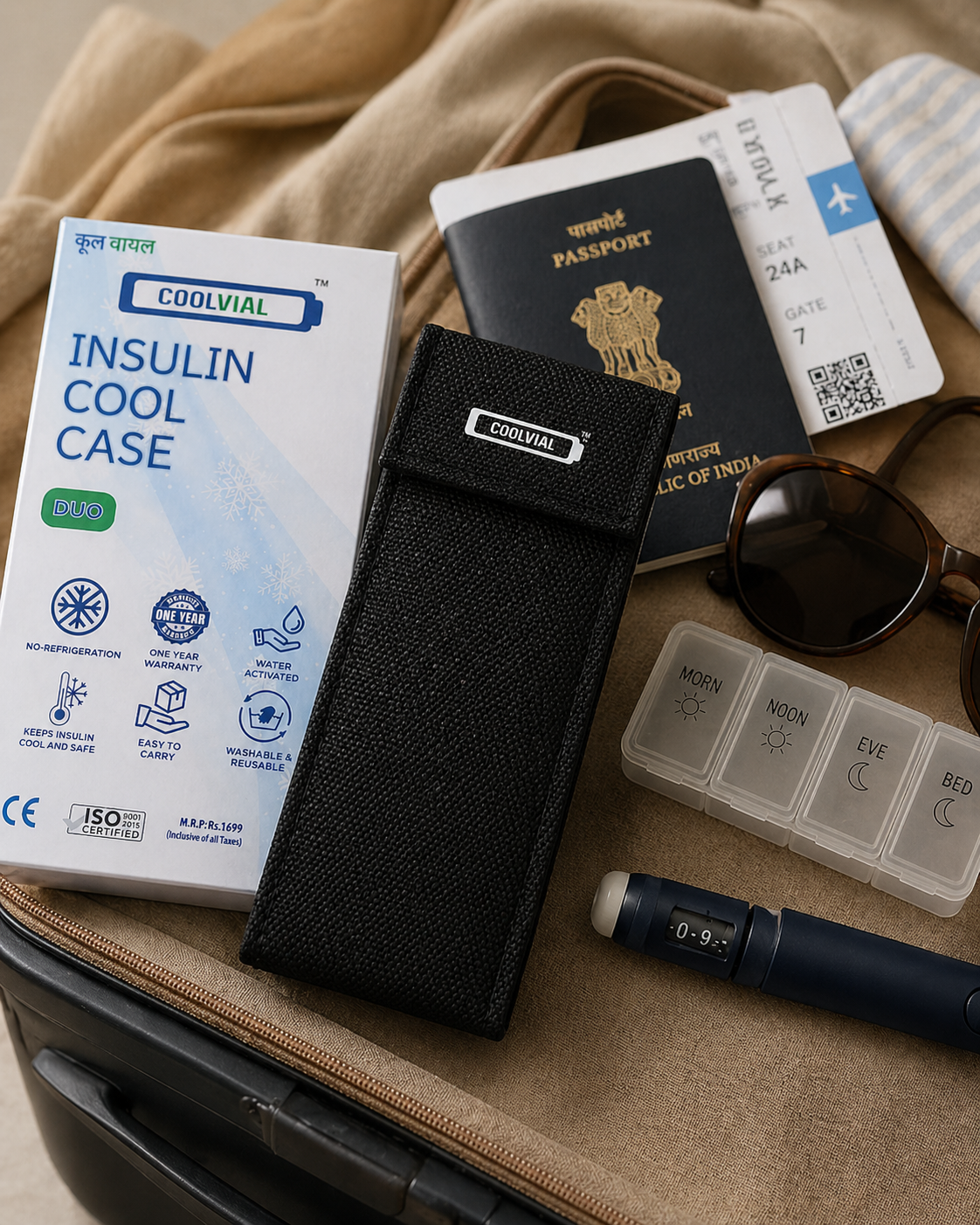
Reviewed by the COOLVIAL Editorial Team — specialists in insulin storage for Indian climate conditions.
Ahmedabad, the heart of Gujarat, is renowned for its vibrant culture, delicious food, and unfortunately, its notoriously scorching summers. With temperatures regularly soaring past 40°C in May and June, maintaining the potency of life-saving medications like insulin becomes a critical daily challenge for thousands of residents. In fact, a significant portion of Gujarat’s adult population lives with diabetes, making proper insulin storage an urgent health priority (Source: ICMR-INDIAB study). If you’re an Ahmedabad resident wondering how to store insulin effectively when the mercury touches 43°C, this comprehensive guide is for you. Based on analysis of insulin storage queries from Ahmedabad diabetics, we’ll delve into practical strategies tailored to our city’s unique climate, from the dry heat along the Sabarmati Riverfront to the bustling lanes of Manek Chowk.
Table of Contents
- Ahmedabad’s Climate Reality: Understanding the Heat and Humidity
- The Unseen Threat: Fridge Stability During Ahmedabad Power Cuts
- Evaporative Cooling: An Ahmedabad-Specific Solution for Insulin Storage
- Navigating Ahmedabad: Storage Realities Across Neighborhoods
- May-June Peak Heat & Power Cut Combo: Your Action Plan
- Expert Recommendations: What Apollo Hospitals International (Bhat) Advises
- Choosing the Right Insulin Cooling Case for Ahmedabad
- Frequently Asked Questions (FAQ)
- Conclusion: Staying Cool and Safe with Your Insulin
- Medical Disclaimer
- How We Researched This
Ahmedabad’s Climate Reality: Understanding the Heat and Humidity
Ahmedabad’s climate presents a unique set of challenges for insulin storage. Our city experiences three distinct seasons, each impacting how we must protect our medication:
- Summer (April-June): This is the most critical period, characterized by intense dry heat. Daytime temperatures consistently range from 25°C to a searing 43°C, with peak highs often observed in May. Even at night, temperatures in non-AC Ahmedabad homes can hover uncomfortably between 33°C and 38°C, far exceeding the safe storage range for insulin. This dry heat, however, makes evaporative cooling solutions particularly effective.
- Monsoon (July-September): Following the summer, the monsoon brings significant humidity (around 800mm rainfall) and slightly lower but still warm temperatures (25-35°C). While the extreme dry heat subsides, the increased moisture in the air poses its own set of challenges, as high humidity can sometimes affect certain cooling methods or lead to condensation.
- Winter (October-March): Winters are generally mild and pleasant, with temperatures ranging from 12°C to 30°C. During this season, insulin storage is typically less challenging, as ambient temperatures often fall within or close to the recommended range for in-use vials.
The primary concern for Ahmedabad residents is the prolonged exposure to high temperatures during summer. Insulin, a protein, denatures and loses its effectiveness when exposed to temperatures above 25°C for extended periods. This means that a vial left out in a typical non-air-conditioned Ahmedabad home during summer, even overnight, will likely degrade rapidly.
Here’s a snapshot of Ahmedabad’s seasonal impact on insulin storage:
- April-June (Dry Summer):
- Challenge: Extreme high temperatures (up to 43°C).
- Indoor Reality: Non-AC homes can be 33-38°C.
- Solution Focus: Evaporative cooling, robust insulation.
- July-September (Monsoon):
- Challenge: High humidity, moderate heat (25-35°C).
- Indoor Reality: Prone to dampness, still warm.
- Solution Focus: Humidity protection, consistent cooling (refer to our guide: Ahmedabad Monsoon & Insulin — Protecting Your Vials From Humidity Damage).
- October-March (Mild Winter):
- Challenge: Occasional dips below 2°C (rare).
- Indoor Reality: Generally safe, but monitor for extreme cold.
- Solution Focus: Basic protection, temperature monitoring.
Understanding these climatic nuances is the first critical step in learning how to store insulin effectively in Ahmedabad.
The Unseen Threat: Fridge Stability During Ahmedabad Power Cuts
For many Ahmedabad households, the refrigerator is the primary storage location for unopened insulin vials, which should ideally be kept between 2°C and 8°C. However, the reliability of refrigeration can be severely compromised by the frequent and often unpredictable power cuts that plague certain parts of Ahmedabad, especially during the peak summer months.
When electricity supply is interrupted, the internal temperature of a refrigerator begins to rise, potentially pushing insulin beyond its safe storage range within a few hours. This is particularly concerning if a power cut occurs overnight or when residents are away from home. While Ahmedabad’s major power distribution companies like Torrent Power generally offer good service in many areas, localized outages and load shedding can still happen, especially in older neighborhoods or during periods of high demand.
To mitigate the risks associated with fridge instability during power cuts, consider these practical steps:
- Minimize Door Opening: Keep the refrigerator door closed as much as possible during a power outage to trap the cold air inside. A full fridge retains cold better than an empty one.
- Monitor Temperature: Invest in a reliable refrigerator thermometer. Regularly check the temperature, especially after power returns, to ensure it has dropped back to the safe range (2-8°C).
- Strategic Placement: Store insulin vials in the coldest parts of the fridge, typically at the back, away from the door. Avoid placing them in the door shelves where temperatures fluctuate more.
- Backup Cooling: Always have a backup plan. This is where a reliable, non-electric cooling case becomes indispensable. Even if your fridge is working, having an alternative ensures continuous cold chain for your insulin if you need to travel or if a longer power cut occurs.
- Check Expiry Dates: If you suspect your insulin has been exposed to unsafe temperatures due to a power cut, it’s safer to discard it and use a fresh vial. Always consult your doctor or pharmacist at Apollo Pharmacy or MedPlus for guidance.
By being proactive about fridge stability, you can significantly reduce the risk of insulin degradation due to power fluctuations. This is a vital component of how to store insulin safely in our city.
Evaporative Cooling: An Ahmedabad-Specific Solution for Insulin Storage
Given Ahmedabad’s climate, especially the dry heat of April to June, evaporative cooling stands out as an incredibly effective and practical method for keeping insulin cool without electricity. This technology relies on the simple principle of evaporation: as water evaporates from a surface, it draws heat away, thereby cooling the object.
How Evaporative Cooling Works for Insulin Cases: Evaporative cooling cases, like the COOLVIAL Duo, typically consist of a porous inner pouch that, when soaked in water, absorbs and holds the water. As the water slowly evaporates from the surface of this pouch, it naturally cools the air within the case, keeping the insulin pens or vials at a safe temperature range (typically 18-26°C or below ambient) for extended periods.
Effectiveness in Ahmedabad’s Climate:
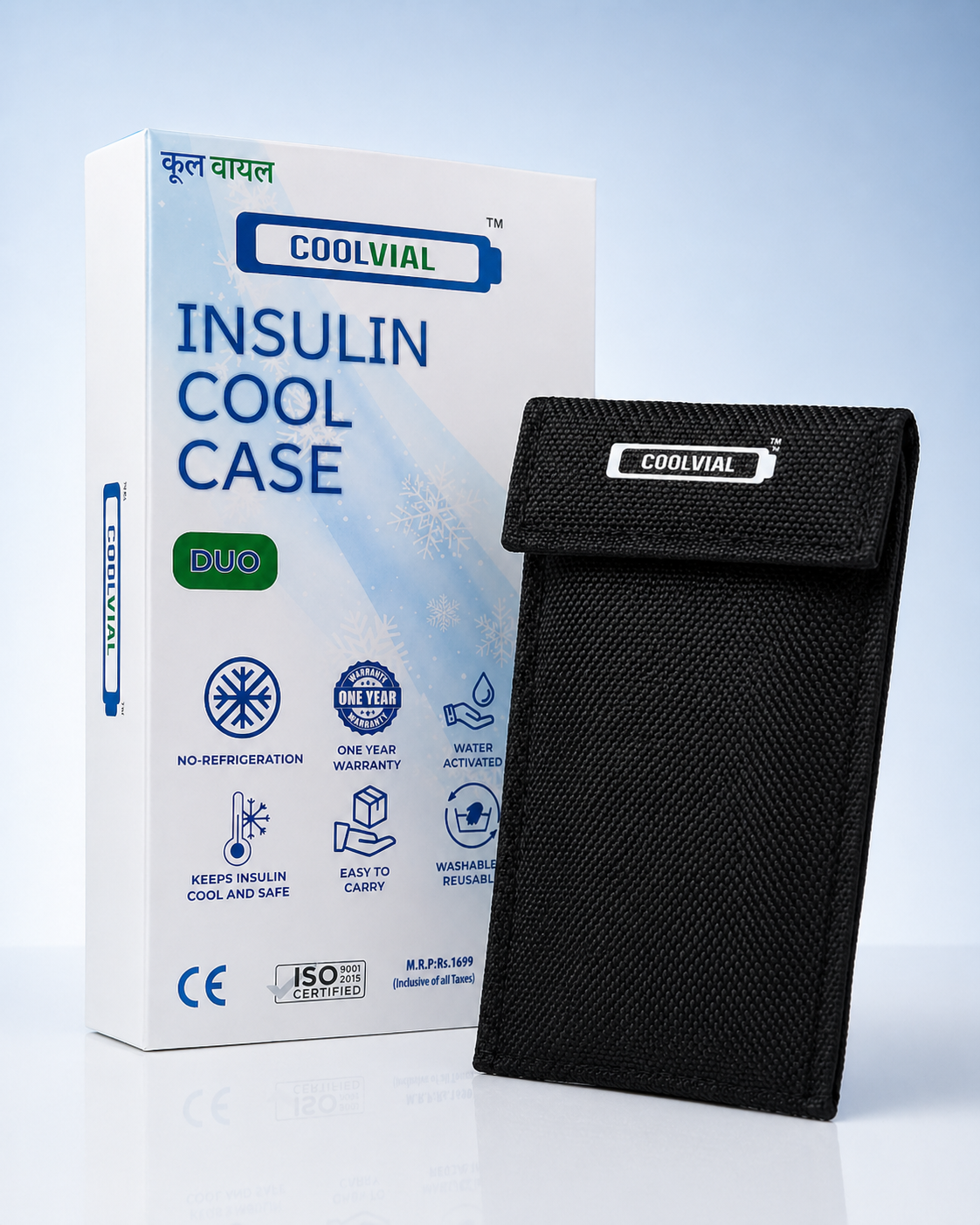
5 Critical Steps: How to Store Insulin Safely in Ahmedabad Summer Heat
COOLVIAL keeps insulin safe in India's heat. 48+ hours, no electricity needed.
- Dry Summer (April-June): This is where evaporative cooling shines. The low humidity during Ahmedabad’s dry summer months allows water to evaporate quickly and efficiently, maximizing the cooling effect. A COOLVIAL Duo can maintain insulin at safe temperatures for 12-16 hours, even when ambient temperatures soar to 40°C+. This makes it ideal for daily use, travel, or during power cuts.
- Monsoon (July-September): While still effective, the higher humidity during the monsoon season (as experienced along the Sabarmati Riverfront during heavy rains) might slightly reduce the evaporative cooling efficiency and duration compared to the dry summer. However, these cases still provide crucial protection against ambient temperatures that often remain above 25°C.
Water Quality Concerns for Activation: Ahmedabad, like many Indian cities, can have varying water quality, including hard water in certain zones. For optimal performance and longevity of your evaporative cooling case, it’s crucial to use clean water for activation.
- Recommendation: Always use bottled water or RO (Reverse Osmosis) filtered water to activate your evaporative cooling case. Tap water, especially in hard-water zones, can leave mineral deposits on the cooling pouch over time, reducing its efficiency and lifespan.
- Where to find: Bottled water is readily available at any local kirana store or larger pharmacies like Wellness Forever and Generic Aadhaar across Ahmedabad.
Comparing Cooling Solutions:
| Feature | COOLVIAL Duo | FRIO (Similar Product) | Outer Woods OW-12 (Budget Option) |
|---|---|---|---|
| Cooling Method | Evaporative cooling (water activated) | Evaporative cooling (water activated) | Gel pack cooling (refrigerator required) |
| Capacity | 2 pens + 1 vial | Varies, e.g., 2 pens | 2-3 pens |
| Cooling Duration | 12-16 hours | 45 hours (claimed, varies by model) | 6-8 hours |
| Electricity Needed | No | No | No (but gel pack needs fridge pre-cooling) |
| Activation | Soak in water for 5-10 minutes | Soak in water for 5-10 minutes | Freeze gel pack for 8-12 hours |
| Price (approx.) | Rs 1,099 (with COOLHEAL code) (MRP Rs 1,699) | Rs 1,900+ (for similar capacity) | Rs 999 (for similar capacity) |
| Certifications | CE certified, ISO 9001:2015 | Varies by model | Varies by model |
| Warranty | 1-year | Varies | Varies |
| Made In | India | UK | India |
| Ahmedabad Suitability | Excellent for dry heat, good for monsoon | Excellent for dry heat, good for monsoon | Limited by gel pack duration, less convenient |
For Ahmedabad’s climate, a water-activated evaporative cooling case like the COOLVIAL insulin cool case offers an unparalleled blend of convenience, reliability, and cost-effectiveness. It’s a smart choice for anyone seeking how to store insulin safely without constant reliance on electricity.
Navigating Ahmedabad: Storage Realities Across Neighborhoods
Ahmedabad is a city of contrasts, and insulin storage challenges can vary significantly depending on the neighborhood you live in. The infrastructure, housing types, and even access to consistent power supply differ, influencing the best storage strategies.
West Ahmedabad (Bodakdev, SG Highway, Vastrapur)
- Characteristics: These areas are known for modern high-rise apartments, gated communities, and newer housing societies. Air conditioning is more prevalent, and power supply tends to be more stable due to modern electrical infrastructure.
- Storage Realities:
- Indoor Temperatures: Homes often maintain cooler indoor temperatures (25-30°C) due to AC, reducing the daily stress on insulin.
- Refrigerator Reliability: Generally higher, but unexpected outages can still occur.
- Travel: Residents here often commute along SG Highway or travel frequently, requiring portable solutions.
- Recommendations:
- Even with AC, keep insulin in a dedicated cool case like COOLVIAL Duo when travelling or if stepping out for extended periods at places like Law Garden or Kankaria Lake.
- Monitor fridge temperatures, especially during summer, as even modern power grids can face strain.
South Ahmedabad (Maninagar, Vatva)
- Characteristics: These are more established residential and industrial areas, with a mix of older standalone homes and newer developments. AC penetration might be lower in older homes, and power infrastructure can be more susceptible to localized outages.
- Storage Realities:
- Indoor Temperatures: Non-AC homes can easily reach 35-38°C during summer nights.
- Refrigerator Reliability: Potentially more frequent or longer power cuts compared to West Ahmedabad.
- Daily Life: Residents may spend more time outdoors in local markets or commuting by public transport.
- Recommendations:
- A reliable evaporative cooler is almost essential for daily use, even within the home, to supplement fridge storage or during commutes.
- Always carry a COOLVIAL Duo when out for errands or visiting friends, especially if your destination may not have consistent AC.
Old City (Lal Darwaja, Manek Chowk)
- Characteristics: The historic core of Ahmedabad, characterized by dense housing, chawls, narrow lanes, and older infrastructure. AC is less common, and power fluctuations can be more prevalent.
- Storage Realities:
- Indoor Temperatures: Homes can become extremely hot, often mirroring outdoor temperatures closely.
- Refrigerator Reliability: Most vulnerable to power cuts and voltage fluctuations.
- Lifestyle: Daily life often involves walking through crowded areas and spending time in non-AC environments.
- Recommendations:
- An evaporative cooling case is a critical necessity. It provides a reliable, non-electric cooling solution that can handle the high ambient temperatures and frequent power interruptions.
- Ensure easy access to bottled water for activating your cooling case.
- Consider keeping a backup vial of insulin stored in a COOLVIAL Duo even if you have fridge access, purely for peace of mind.
North Ahmedabad (Naranpura, Sabarmati)
- Characteristics: A mix of older and developing residential areas, including proximity to the Sabarmati Riverfront. Infrastructure is improving, but some older pockets may still experience challenges.
- Storage Realities:
- Indoor Temperatures: Varies, but can be high in non-AC homes.
- Refrigerator Reliability: Generally moderate, but riverfront areas can sometimes experience specific micro-climates or power demands.
- Recommendations:
- Regular monitoring of indoor temperatures is key.
- A portable cooling solution is beneficial for walks along the Sabarmati Riverfront or trips to nearby areas.
Regardless of your neighborhood, understanding these local nuances is crucial for developing a robust strategy on how to store insulin effectively.
May-June Peak Heat & Power Cut Combo: Your Action Plan
The combination of Ahmedabad’s peak summer heat (often 40-43°C) and an unexpected power cut is arguably the most challenging scenario for insulin storage. This situation demands a clear, pre-planned action strategy to prevent your insulin from losing potency.
Here’s your critical action plan for when the heat peaks and the lights go out:
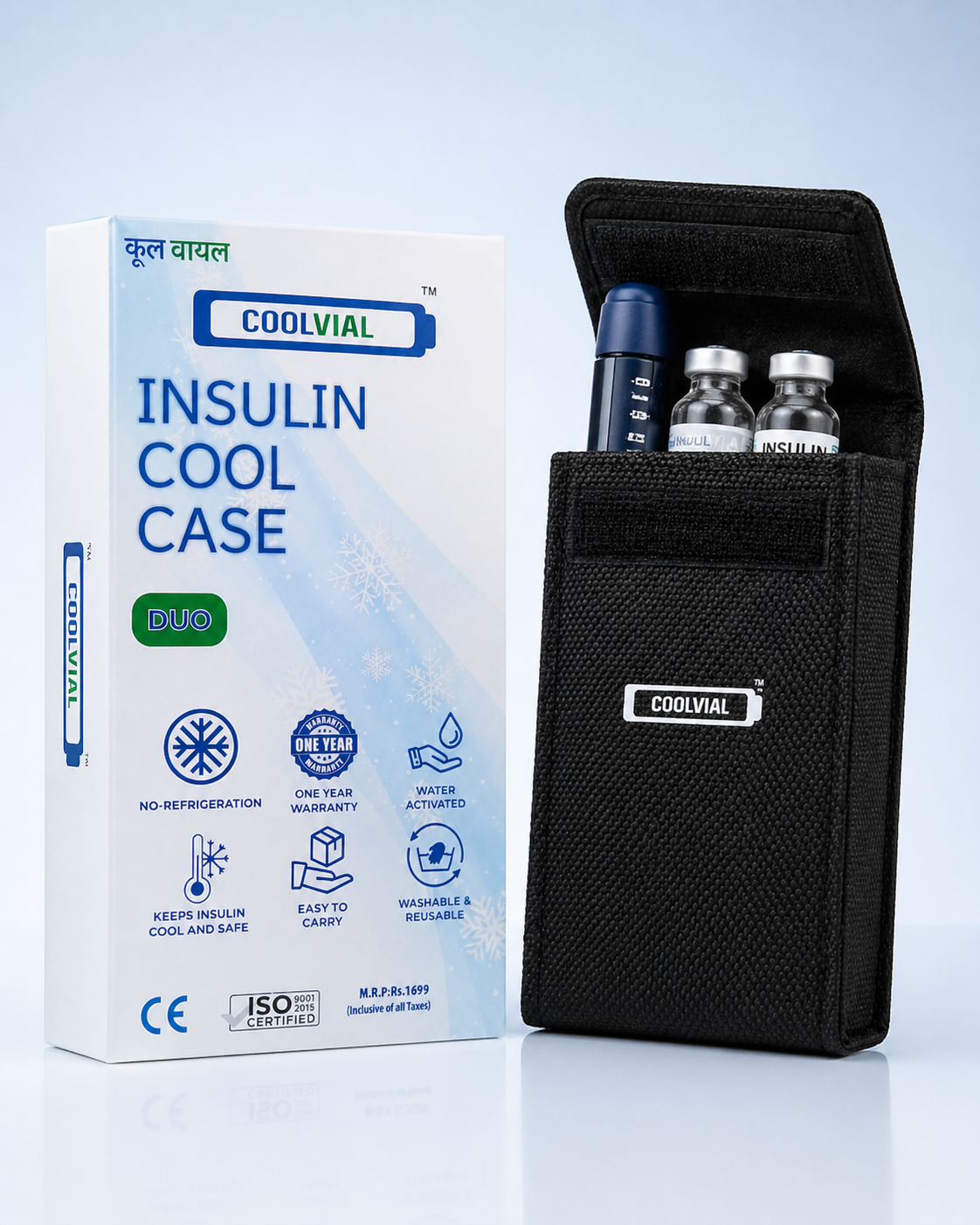
5 Critical Steps: How to Store Insulin Safely in Ahmedabad Summer Heat
Insulin at 2-8°C for 48+ hours. Trusted by 10,000+ Indian diabetics.
- Immediate Transfer to Portable Cooler: The moment you realize there’s a power cut, especially during May-June, immediately transfer your active insulin pens and vials from the refrigerator to a pre-activated evaporative cooling case like your COOLVIAL Duo. If you anticipate a power cut (e.g., scheduled maintenance), activate your cooling case in advance.
- Ensure Cooling Case is Ready: Always keep your evaporative cooling case in a ready-to-use state during summer. This means having it clean and having access to bottled or RO water for quick activation. The COOLVIAL Duo requires just 5-10 minutes of soaking to activate its cooling properties.
- Minimize Case Opening: Once the insulin is in the cooling case, resist the urge to open it frequently. Each time the case is opened, warm air enters, reducing its internal cooling efficiency and duration.
- Seek Cooler Environment: If possible, move to the coolest available spot in your home during a prolonged power cut. This might be a ground floor room, a room with thicker walls, or simply a shaded area away from direct sunlight. The goal is to reduce the ambient temperature around your cooling case.
- Stay Hydrated: While not directly about insulin storage, maintaining your own hydration helps you stay alert and better manage your diabetes during stressful conditions like extreme heat and power outages.
- Have a Backup Supply: Ideally, have a small emergency supply of insulin (e.g., one or two pens/vials) that can be accessed quickly or is already stored in a separate, reliable cooling method, perhaps at a relative’s house in a different part of the city if feasible.
- Consult Your Pharmacy/Doctor: If the power cut is very long (many hours) and you are unsure if your insulin has maintained a safe temperature, contact your local Apollo Pharmacy, MedPlus, or your doctor at Sterling Hospital (Memnagar) for advice. It’s always better to err on the side of caution and replace potentially compromised insulin.
By following these steps, you can significantly enhance your ability to protect your insulin during Ahmedabad’s most challenging climate scenarios. This proactive approach is fundamental to how to store insulin safely and maintain your health.
Expert Recommendations: What Apollo Hospitals International (Bhat) Advises
Leading medical institutions in Ahmedabad, such as Apollo Hospitals International (Bhat), consistently emphasize the critical importance of proper insulin storage to maintain its efficacy and ensure optimal diabetes management. Their endocrinology departments provide guidelines aligned with international best practices, tailored for the local climate.
Here are the key recommendations often shared by diabetologists and endocrinologists in Ahmedabad:
- Unopened Insulin:
- Refrigerator Storage: Unopened insulin vials and pens should always be stored in the refrigerator, typically between 2°C and 8°C. This ensures maximum shelf life, often until the expiry date printed on the packaging.
- Avoid Freezing: Never freeze insulin. Freezing can damage the insulin molecule, rendering it ineffective. If insulin has been frozen, it must be discarded.
- Opened (In-Use) Insulin:
- Room Temperature Storage: Once opened, most insulin types can be stored at room temperature (below 25°C) for up to 28 days. However, in Ahmedabad’s summer, “room temperature” often far exceeds 25°C.
- COOLVIAL Duo is Key: For Ahmedabad’s climate, this means not leaving in-use insulin exposed to typical indoor temperatures of 33-38°C. Instead, an evaporative cooling case like COOLVIAL Duo is highly recommended to keep in-use insulin within the safe 18-26°C range, extending its potency even after opening.
- Protection from Extremes:
- Heat: Direct sunlight, car dashboards, and hot bags are absolute no-gos. Insulin degrades rapidly in high heat.
- Light: Keep insulin away from direct light, as it can also contribute to degradation.
- Shaking: Avoid vigorous shaking of insulin, as it can damage the protein structure.
- Travel Advice:
- Always carry insulin in a protective cooling case when traveling, whether within Ahmedabad (e.g., commuting from Vastrapur to GIFT City) or outside the city.
- Do not store insulin in checked luggage on flights, as cargo holds can experience extreme temperatures.
- Visual Inspection:
- Before each use, visually inspect your insulin. It should be clear and colorless (unless it’s a cloudy type like NPH).
- Look for any changes in color, cloudiness (in clear insulin), particles, or crystallization. If you notice any of these, the insulin may have been compromised and should not be used.
- Emergency Preparedness:
- Always have a plan for power cuts and unexpected travel. A reliable, non-electric cooling solution is your best defense.
For a broader understanding of diabetes management in Ahmedabad, refer to our Complete Diabetes Care Guide for Ahmedabad Residents — 2026 Edition. Adhering to these expert recommendations is crucial for anyone learning how to store insulin safely and effectively.
Choosing the Right Insulin Cooling Case for Ahmedabad
Selecting the right insulin cooling case is a critical decision for anyone living with diabetes in Ahmedabad. With the city’s challenging climate, your choice can significantly impact the effectiveness of your insulin and, consequently, your health. While several options exist, an evaporative cooling case like the COOLVIAL Duo offers specific advantages tailored to Ahmedabad’s conditions.
Here’s why the COOLVIAL Duo stands out as an excellent choice for Ahmedabad residents:
- No Electricity Required: This is perhaps the most significant benefit, especially considering Ahmedabad’s summer power cuts. The COOLVIAL Duo operates purely on the principle of water evaporation, meaning you never have to worry about finding an electrical outlet or carrying bulky power banks. This makes it ideal for daily commutes, trips to Manek Chowk, or even during prolonged outages at home.
- Optimal Temperature Range: Designed to keep insulin within the safe 18-26°C range for 12-16 hours, the COOLVIAL Duo effectively shields your medication from Ahmedabad’s soaring ambient temperatures, which can easily hit 43°C. This prevents degradation and ensures your insulin remains potent.
- Generous Capacity: The COOLVIAL Duo is designed to hold 2 insulin pens and 1 vial. This provides ample space for both your active pen and a backup, or for managing different types of insulin, offering flexibility for most users.
- “Made in India” Advantage: As an Indian brand, COOLVIAL understands the specific climatic challenges and user needs within the country. Being “Made in India” also ensures local support and accessibility.
- Certifications for Peace of Mind: The COOLVIAL Duo is CE certified and ISO 9001:2015 compliant, assuring you of its quality and adherence to international standards. It also comes with a 1-year warranty, providing confidence in your purchase.
- Cost-Effective Solution: Priced at an MRP of Rs 1,699, the COOLVIAL Duo is already a competitive option. With the special code COOLHEAL, you can get it for just Rs 1,099, making it an affordable yet highly effective solution compared to alternatives like FRIO (often above Rs 1,900 for similar capacity) or even some basic gel-pack cases which require constant freezing (like Outer Woods OW-12 at ~Rs 999 but with shorter cooling duration).
- Perfect for Ahmedabad’s Dry Heat: The dry summer air in Ahmedabad is perfect for maximizing the efficiency of evaporative cooling, ensuring your insulin stays cool even on the hottest days.
When considering how to store insulin in Ahmedabad, investing in a reliable evaporative cooling case like the COOLVIAL Duo is not just a convenience; it’s a necessity for maintaining your insulin’s integrity and your health. For more detailed information on proper care and usage, visit our insulin storage tips page.
Frequently Asked Questions (FAQ)
Q: Can I store my insulin in a regular water bottle or thermos with ice in Ahmedabad summer? A: No, a regular water bottle or thermos with ice is not recommended for insulin storage as it can lead to freezing, which damages insulin, or inconsistent temperatures. Dedicated insulin cooling cases are designed to maintain a stable, safe temperature range without freezing.
Q: How long can insulin be kept out of the fridge in Ahmedabad’s summer heat? A: Unopened insulin should ideally be refrigerated until first use. Once opened, most insulin types can be stored at room temperature (below 25°C) for up to 28 days. However, in Ahmedabad’s summer, typical indoor temperatures often exceed 33-38°C, making an evaporative cooling case like COOLVIAL Duo essential to keep it below 25°C.
Q: Is it safe to carry insulin in my bag or car while traveling in Ahmedabad? A: Carrying insulin in your regular bag or leaving it in a parked car in Ahmedabad’s summer is extremely risky, as temperatures can quickly rise to damaging levels (e.g., 50°C+ in a car). Always use an insulin cooling case like COOLVIAL Duo to protect it during travel.
Q: What should I do if my insulin has been exposed to extreme heat during a power cut? A: If your insulin has been exposed to extreme heat (above 25°C for several hours or above 30°C for even a short period), it’s best to discard it, even if it looks normal, as its potency may be compromised. Always consult your endocrinologist or a pharmacist at Apollo Pharmacy for advice.
Q: Do I need to use special water to activate evaporative cooling cases like COOLVIAL Duo in Ahmedabad? A: For optimal performance and longevity of your evaporative cooling case, it is highly recommended to use bottled or RO (Reverse Osmosis) filtered water for activation. This prevents mineral buildup from hard tap water, which can reduce efficiency over time.
Q: Where can I get new insulin pens or vials in Ahmedabad? A: You can purchase insulin pens and vials from any reputable pharmacy across Ahmedabad, including major chains like Apollo Pharmacy, Wellness Forever, MedPlus, or local independent stores like Pristine Pharmacy and Generic Aadhaar. Always ensure you have a valid prescription.
Q: How can I tell if my insulin has gone bad due to heat? A: Insulin that has gone bad due to heat may appear discolored, cloudy (for clear insulin), or have particles or crystals floating in it. It might also lose its effectiveness, leading to higher blood sugar levels. If you notice any changes, discard it and use a fresh vial or pen.
Conclusion: Staying Cool and Safe with Your Insulin
Ahmedabad’s climate, particularly its intense summer heat, presents significant challenges for individuals relying on insulin. However, by understanding these challenges and implementing smart, localized storage strategies, you can ensure your medication remains potent and effective. From safeguarding your fridge during power cuts to embracing the power of evaporative cooling, every step you take contributes to better diabetes management.
Remember, protecting your insulin means protecting your health. Don’t let the Ahmedabad sun compromise your well-being. Equip yourself with the right knowledge and tools.
Order your COOLVIAL Duo today at just Rs 1,099 with the special code COOLHEAL. Visit coolvial.com or reach out via WhatsApp at wa.me/918766952300 to secure your reliable insulin cooling solution. Stay cool, stay healthy, Ahmedabad!
Medical Disclaimer
This article is for general informational purposes only and does not constitute medical advice. Always consult your endocrinologist or diabetologist before changing insulin storage or dosing practices, or if you have any concerns about the efficacy of your insulin.
How We Researched This
This article is based on a comprehensive review of current RSSDI (Research Society for the Study of Diabetes in India) guidelines, data from the ICMR-INDIAB study on diabetes prevalence in India (Source: https://www.idf.org/aboutdiabetes/what-is-diabetes/facts-figures.html), local Ahmedabad hospital directories (e.g., Apollo Hospitals International, Sterling Hospital, Civil Hospital), and information from established pharmacy networks like Apollo Pharmacy. Local climate data and typical indoor temperature ranges for Ahmedabad were cross-referenced with general climate resources and local observations [Verify in 2026]. The recommendations are tailored to address the specific environmental conditions and practical realities faced by Ahmedabad residents.