Reviewed by the COOLVIAL Editorial Team — specialists in insulin storage for Indian climate conditions.
Bhubaneswar, the Temple City of India, is renowned for its rich cultural heritage, from the majestic Lingaraj Temple to the ancient Khandagiri-Udayagiri Caves. However, beneath its spiritual charm lies a climatic reality that poses unique challenges for residents managing diabetes: intense heat and humidity. With summer temperatures often soaring to 43°C and beyond, knowing how to store insulin correctly becomes not just a recommendation, but a critical necessity for maintaining its efficacy and your health. Based on analysis of insulin storage queries from Bhubaneswar diabetics, it’s clear that local conditions demand a tailored approach.
Insulin, a life-saving medication for millions, is highly sensitive to temperature fluctuations. Exposure to heat, especially above 25°C, can degrade its potency, rendering it less effective or even useless. In a city like Bhubaneswar, where typical indoor temperatures in non-AC homes during April-June often range between 33-38°C even at night, relying on standard room temperature storage is simply not an option. This guide offers 7 essential, practical tips specifically for Bhubaneswar residents, helping you navigate the unique climate challenges and ensure your insulin remains safe and effective.
Table of Contents
- Understanding Bhubaneswar’s Climate Reality and Insulin Sensitivity
- The Challenge of Indoor Temperatures in Bhubaneswar Homes
- Refrigeration Stability During Power Cuts: A Common Concern
- The Effectiveness of Evaporative Cooling in Bhubaneswar’s Humidity
- Water Quality for Insulin Cooling Cases in Bhubaneswar
- Navigating Insulin Storage in Bhubaneswar’s Diverse Neighborhoods
- Action Plan for May-June Peak Heat + Power Cut Combo
- Introducing COOLVIAL Duo: Your Reliable Partner for Insulin Storage
- Frequently Asked Questions About Insulin Storage in Bhubaneswar
- Conclusion: Staying Cool and Safe with Your Insulin
- How We Researched This
1. Understanding Bhubaneswar’s Climate Reality and Insulin Sensitivity
Bhubaneswar experiences a hot humid tropical climate, characterized by scorching summers, high humidity, and a monsoon season that brings heavy rainfall and, at times, cyclones from the Bay of Bengal. The annual temperature range can swing from 14°C in milder winters to a blistering 43°C or more during peak summer months (April to June). This extreme heat, coupled with high humidity, creates a hostile environment for insulin storage.
Insulin, whether in vials or pens, must be stored within specific temperature ranges to remain stable and effective. Unopened insulin should ideally be kept refrigerated between 2°C and 8°C. Once opened, most insulin types can be stored at room temperature (below 25°C) for a period of 28 days, though some might vary. The critical point here is “room temperature below 25°C,” which is a rare luxury in Bhubaneswar for much of the year.
- Key Temperature Guidelines for Insulin:
- Unopened: 2°C to 8°C (refrigerated)
- Opened (in-use): Generally below 25°C (room temperature), check specific insulin manufacturer guidelines for exact duration (usually up to 28 days).
- Avoid: Freezing, direct sunlight, temperatures above 30°C.
- Impact of Heat: High temperatures can cause insulin proteins to degrade, leading to a loss of potency. This means even if the insulin looks normal, it might not be working effectively, leading to uncontrolled blood sugar levels.
(Source: RSSDI Clinical Practice Recommendations, 2024)
2. The Challenge of Indoor Temperatures in Bhubaneswar Homes
For many Bhubaneswar residents, especially those living in areas like Old Town near Lingaraj Temple or in the bustling lanes of Sahid Nagar, air conditioning is not a universal solution. Even in homes with AC, it’s not always running 24/7. This leads to a common but critical problem: typical indoor temperatures in non-AC Bhubaneswar homes during April-June often hover between 33°C and 38°C, even late into the night. This is significantly above the recommended maximum of 25°C for in-use insulin.
Consider a scenario where you’ve just opened a new insulin pen. If it sits on your bedside table or kitchen counter in a non-AC room, it could be exposed to temperatures far exceeding safe limits for hours, or even days, without you realizing the damage being done. This constant exposure to elevated temperatures can rapidly reduce the insulin’s effectiveness, making it harder to manage blood glucose.
- Understanding Your Home’s Microclimate:
- Measure: Use a simple indoor thermometer to monitor temperatures in different parts of your home, especially where you store insulin. You might be surprised by how high they get.
- Ventilation: Improve airflow by opening windows during cooler parts of the day (early morning, late evening), but close them during peak heat to prevent hot air from entering.
- Shade: Utilize curtains, blinds, or even strategically placed plants to block direct sunlight from entering rooms, especially those facing east or west.
- Traditional Methods: Wetting floors or hanging damp cloths can offer a marginal cooling effect through evaporative cooling indoors, but this is often insufficient for insulin.
3. Refrigeration Stability During Power Cuts: A Common Concern
Power cuts, or “load shedding,” are an unfortunate reality across many parts of India, and Bhubaneswar is no exception. While major areas like Chandrasekharpur or Patia might experience fewer outages, even in central Sahid Nagar, unexpected disruptions can occur, especially during peak summer or monsoon storms. This poses a significant challenge for insulin stored in refrigerators.
A standard refrigerator can maintain cold temperatures for a few hours (typically 2-6 hours) during a power cut, provided its door remains closed. However, prolonged outages, which can sometimes last 6-8 hours or more, particularly during cyclonic weather or grid overloads (Source: Local Discom Data [Verify in 2026]), can cause internal temperatures to rise above the safe 8°C threshold for unopened insulin. Moreover, frequent opening of the fridge door during an outage quickly dissipates the stored cold air.
- Strategies for Refrigerator Storage During Power Cuts:
- Minimize Door Opening: During an outage, avoid opening the refrigerator door unless absolutely necessary.
- Backup Power: If feasible and critical, consider a small inverter or power backup for your refrigerator, especially if you have a large stock of unopened insulin.
- Pre-cool Containers: Keep a small, insulated cooler bag or box ready. If a prolonged power cut is anticipated, you can transfer your insulin (both opened and unopened) into this with ice packs, ensuring it remains cool.
- Monitor Temperature: Invest in a refrigerator thermometer to accurately track internal temperatures, especially after power is restored.
For in-use insulin, relying solely on a refrigerator during frequent power cuts isn’t ideal, as the constant temperature fluctuations can be as damaging as sustained heat. This is where a reliable, non-electric cooling solution becomes indispensable.
How to Store Insulin in Bhubaneswar Summer Heat — 7 Essential Tips for Locals
4. The Effectiveness of Evaporative Cooling in Bhubaneswar’s Humidity
Evaporative cooling is an excellent method for keeping insulin cool without electricity. It works on the principle that as water evaporates, it draws heat away from the surrounding environment. Products like the COOLVIAL insulin cool case utilize this natural process. However, the effectiveness of evaporative cooling is directly influenced by ambient humidity.
Bhubaneswar, with its hot and humid tropical climate, has consistently high humidity levels, especially during the monsoon (June-September) when average relative humidity can exceed 80-90% (Source: IMD Bhubaneswar Data). In such conditions, the rate of water evaporation slows down, which can slightly reduce the cooling efficiency of evaporative coolers.
- Optimizing Evaporative Cooling in Humid Conditions:
- Choose a Quality Product: A well-designed evaporative cooler, like the COOLVIAL Duo, is engineered to perform optimally even in challenging climates. Its multi-layered construction helps mitigate the impact of high humidity by providing sustained cooling.
- Ventilation is Key: Ensure the cooling case is kept in a well-ventilated area, if possible, rather than a confined space. Airflow promotes evaporation.
- Reactivation Frequency: In very high humidity, you might need to reactivate (re-wet) your COOLVIAL case a little more frequently than the stated 12-16 hours, perhaps every 10-12 hours, to maintain peak cooling.
- Protection from Direct Rain/Moisture: During the monsoon, while humidity is high, protect your evaporative cooler from direct rain or excessive external moisture. For more specific advice on monsoon insulin care, you can refer to our detailed guide: Bhubaneswar Monsoon & Insulin — Protecting Your Vials From Humidity Damage.
Evaporative cooling cases offer a crucial advantage over ice packs or gel packs, which often become messy or lose their cooling capacity quickly in high temperatures. COOLVIAL cases maintain a stable, cool temperature (typically 18-25°C, or 6-8°C below the ambient temperature) for extended periods, making them ideal for daily use and travel within Bhubaneswar and beyond.
5. Water Quality for Insulin Cooling Cases in Bhubaneswar
Activating an evaporative cooling case like COOLVIAL involves submerging it in water. Given Bhubaneswar’s water supply, which can sometimes be hard or vary in quality across different localities, it’s important to consider the type of water you use. Hard water, rich in minerals, can leave mineral deposits on the cooling crystals over time, potentially affecting the case’s efficiency and lifespan.
While COOLVIAL cases are designed for durability, using appropriate water can prolong their effectiveness. For residents in zones known for hard water, such as parts of Old Town or even newly developed areas with borewell reliance, using filtered or bottled water for activation is a wise precaution.
- Water Quality Best Practices for COOLVIAL Activation:
- Tap Water: Generally safe for use. If you notice white mineral residue after drying, consider alternatives.
- Bottled Water/RO Water: Recommended in Bhubaneswar’s hard-water zones. This minimizes mineral buildup and ensures optimal performance over time.
- Avoid: Saltwater, chemically treated water (other than standard municipal purification), or hot water.
- Maintenance: Occasionally wipe down the inside of the activated case with a damp cloth to prevent any residue buildup.
Using clean, suitable water ensures your COOLVIAL case continues to provide consistent and reliable cooling for your insulin pens and vials, day in and day out.
6. Navigating Insulin Storage in Bhubaneswar’s Diverse Neighborhoods
Bhubaneswar is a city of contrasts, with modern hubs like Patia (known for the KIIT belt) and Chandrasekharpur coexisting with historic areas like Old Town and the centrally located Sahid Nagar. Each neighborhood presents slightly different realities for insulin storage.
- Sahid Nagar (Central): Being a commercial and residential hub, Sahid Nagar often experiences higher population density and more concrete structures, which can contribute to the “urban heat island” effect. Indoor temperatures might be slightly elevated compared to greener outskirts. Residents here often rely on air conditioning, but frequent power cuts remain a concern. Proximity to pharmacies like Apollo Pharmacy and MedPlus makes accessing supplies easy, but storage at home needs careful planning.
- Patia (North, KIIT Belt) & Chandrasekharpur: These are more modern, planned areas with better infrastructure, including potentially more stable electricity supply. However, the sheer density of buildings and commercial activity still means high ambient temperatures. Many residents in these areas might have AC, but even then, a robust backup plan for insulin cooling is essential for outings or unexpected outages.
- Old Town (Lingaraj Area): Characterized by older constructions, narrower lanes, and dense housing, the Old Town area around Lingaraj Temple can feel particularly stifling in summer. Homes here might be less likely to have constant AC, making natural cooling methods and portable solutions even more critical. The traditional architecture, while charming, may not offer the best insulation against intense heat.
Regardless of your neighborhood, the core principle remains: protect your insulin from heat. AIIMS Bhubaneswar endocrinology recommendations consistently emphasize the importance of maintaining insulin below 25°C. This means that for daily life, travel, or even short excursions to landmarks like Esplanade One Mall or Kalinga Stadium, a portable, reliable cooling solution is non-negotiable.
- Local Storage Considerations:
- Home: Use a dedicated cooling case like COOLVIAL Duo for in-use insulin. Keep unopened vials in the fridge, but have a backup plan for power cuts.
- Travel: Whether commuting within the city or visiting nearby Konark Sun Temple, always carry your insulin in a cooling case. The Indian Directorate General of Civil Aviation (DGCA) permits carrying insulin and related supplies in cabin baggage (Source: https://dgca.gov.in/pages/medical-requirements.html), making travel with a cooling case hassle-free.
- Errands: Even a quick trip to a local Apollo Pharmacy or Frank Ross store can expose insulin to heat if left in a vehicle or carried unprotected.
For a comprehensive approach to diabetes management in Bhubaneswar, including local resources and care options, consider reading our guide: Complete Diabetes Care Guide for Bhubaneswar Residents — 2026 Edition.
7. Action Plan for May-June Peak Heat + Power Cut Combo
The May-June period in Bhubaneswar is the peak of summer, often bringing the highest temperatures (40-43°C) and increased strain on the electricity grid, leading to more frequent power cuts. This “peak heat + power cut” combo is the most challenging scenario for insulin storage.
How to Store Insulin in Bhubaneswar Summer Heat — 7 Essential Tips for Locals
48+ hours at 2-8°C. No electricity. CE certified. Free delivery across India.
Order on WhatsApp — ₹1,099🛒 Buy Now — ₹1,099Scenario: It’s May, outside temperature is 42°C, your non-AC home is at 36°C, and there’s a 6-hour power cut. Your refrigerator is slowly warming up, and your in-use insulin is at risk.
- Your Action Plan:
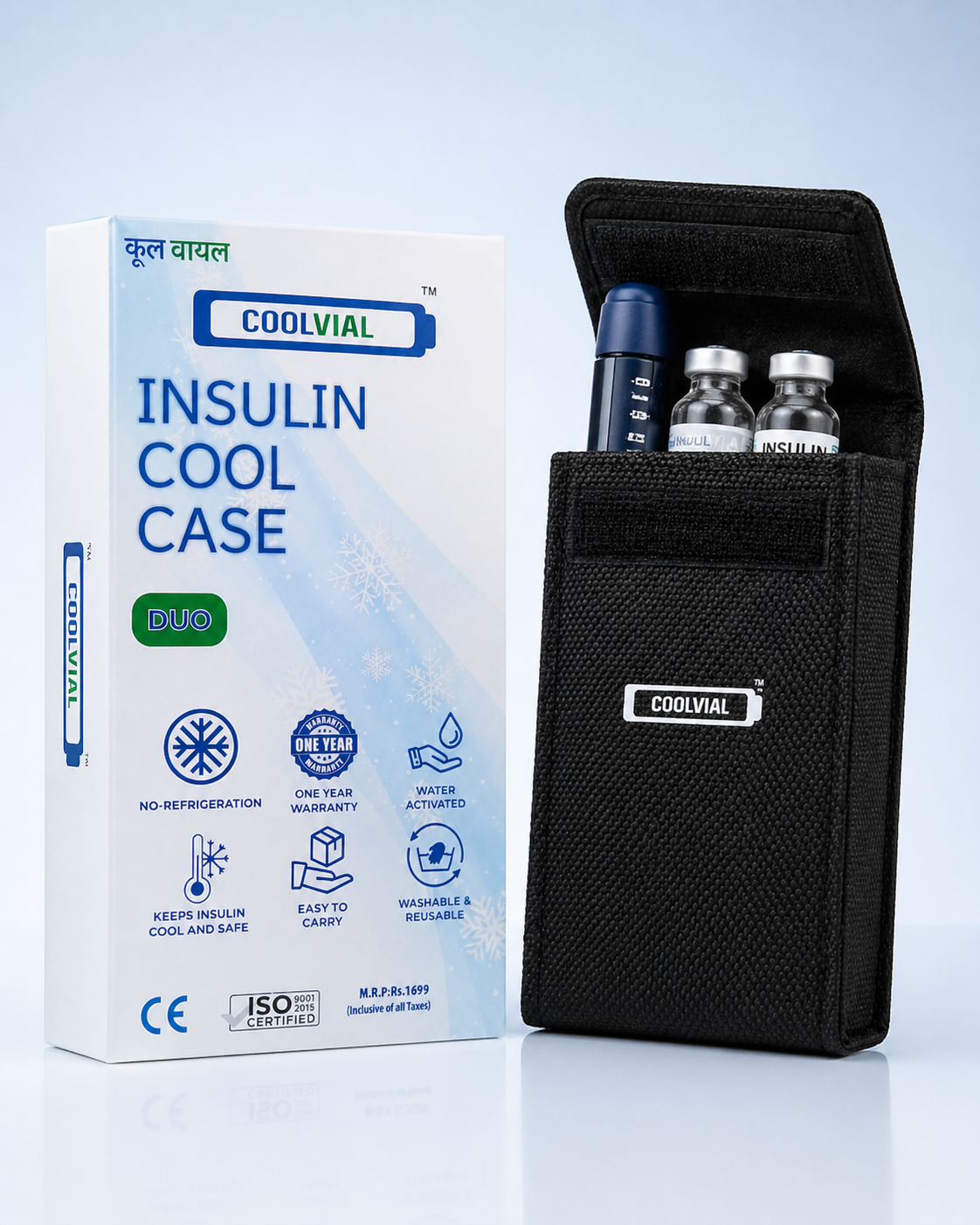
- Prioritize In-Use Insulin: Your currently used insulin pens/vials are the most vulnerable. Immediately transfer them to your COOLVIAL Duo case, which should be pre-activated and ready. COOLVIAL Duo holds 2 pens + 1 vial, perfectly accommodating your immediate needs.
- Protect Unopened Insulin: If the power cut is prolonged (over 3-4 hours), and you have a significant stock of unopened insulin in the fridge, transfer it to a separate insulated cooler with fresh ice packs or gel packs (wrapped to prevent direct contact and freezing).
- Monitor Your Environment: Keep a thermometer handy. If your home temperature is consistently above 30°C, even a cooling case will work harder. Try to move to the coolest room in the house, or a shaded, well-ventilated area.
- Stay Hydrated: While not directly about insulin storage, managing your own body temperature is crucial for overall diabetes management in extreme heat.
- Emergency Supplies: Always keep a small buffer stock of insulin (e.g., one extra pen) stored safely in a cooling case, ready for unexpected emergencies.
- Seek Medical Advice: If you suspect your insulin has been exposed to extreme heat for too long and its efficacy is compromised, contact your doctor at AIIMS Bhubaneswar, Apollo Hospitals on Sainik School Road, or Kalinga Institute of Medical Sciences (KIMS) immediately. Do not use insulin you suspect is damaged.
8. Introducing COOLVIAL Duo: Your Reliable Partner for Insulin Storage
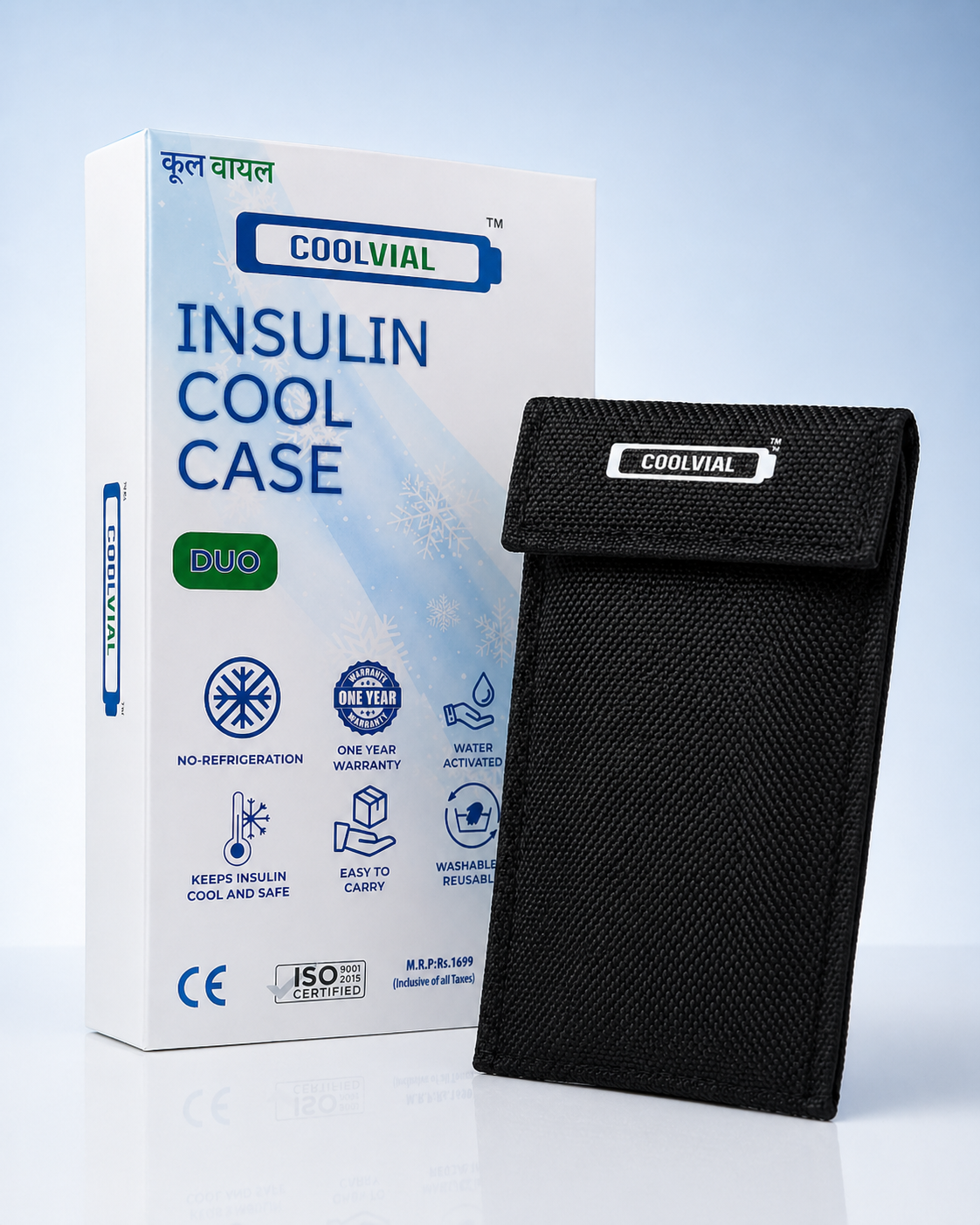
In Bhubaneswar’s challenging climate, a reliable insulin cooling solution isn’t a luxury; it’s a necessity. The COOLVIAL Duo is specifically designed to meet these demands, offering a water-activated evaporative cooling solution that keeps your insulin cool and safe without electricity.
Why COOLVIAL Duo is Ideal for Bhubaneswar Residents:
- Sustained Cooling: Keeps insulin at safe temperatures (typically 18-25°C) for 12-16 hours on a single activation, even when ambient temperatures are up to 43°C. This is crucial during long power cuts or extended outings.
- Capacity: The COOLVIAL Duo is designed to hold 2 insulin pens and 1 vial, providing ample space for your daily and emergency needs.
- No Refrigeration Needed: Perfect for travel, daily commutes, or situations where refrigeration isn’t available or reliable. Just soak it in water for a few minutes, and it’s ready.
- Durable & Reusable: Made with high-quality materials, it’s built to last, providing years of service. It’s CE certified and ISO 9001:2015 compliant, assuring quality and safety.
- Made in India: Developed with local climate conditions in mind, offering a tailored solution for Indian users.
- Affordable: Priced at an MRP of Rs 1,699, you can get the COOLVIAL Duo for just Rs 1,099 using the special code COOLHEAL. This makes it an accessible solution for many.
When comparing to other options in the market, COOLVIAL Duo offers a compelling balance of performance and value. While brands like FRIO offer similar evaporative cooling technology, their cases typically retail around Rs 1,900 or more. On the other hand, some generic cooling pouches like Outer Woods OW-12 might be slightly cheaper (around Rs 999), but they might offer less capacity or shorter cooling durations, potentially compromising on reliability in Bhubaneswar’s extreme heat. COOLVIAL Duo strikes the perfect balance, delivering premium quality and extended cooling at a competitive price point. Explore the full range of COOLVIAL insulin cool cases to find the perfect fit for your needs.
Frequently Asked Questions About Insulin Storage in Bhubaneswar
Q: Can I store insulin in a normal insulated lunch bag with ice packs in Bhubaneswar? A: While an insulated lunch bag with ice packs can offer temporary cooling, it’s not ideal for prolonged storage in Bhubaneswar’s heat. Ice packs can freeze insulin if in direct contact, or they melt quickly, leading to temperature fluctuations that can damage the medication.
Q: How do I know if my insulin has gone bad due to heat exposure? A: Signs of insulin damage include discoloration (cloudiness, particles), changes in consistency, or reduced effectiveness in lowering blood sugar. If you suspect damage, do not use the insulin and consult your doctor at AIIMS Bhubaneswar or Apollo Hospitals.
Q: Is it safe to carry insulin in my bag or pocket while commuting in Bhubaneswar? A: No, it is not safe to carry insulin unprotected in your bag or pocket in Bhubaneswar’s climate. Body heat and ambient temperatures will quickly expose the insulin to temperatures above 25°C, degrading its potency. Always use a dedicated insulin cooling case.
Q: What if I’m traveling from Bhubaneswar to a cooler climate? Do I still need a cooling case? A: Yes, even when traveling to a cooler climate, you should use a cooling case. The journey itself, including time spent in hot vehicles or airports, can expose insulin to damaging temperatures. A COOLVIAL case ensures protection throughout your travel.
Q: Can I use a regular water bottle to activate my COOLVIAL case? A: Yes, you can use a regular water bottle to soak your COOLVIAL case, as long as the water is clean and at room temperature. Ensure the case is fully submerged for the recommended activation time.
Q: My house has an inverter. Is it enough to protect my refrigerator and insulin during power cuts? A: An inverter can certainly help maintain refrigeration during power cuts. However, its backup duration depends on battery capacity and refrigerator load. For critical medication like insulin, it’s still prudent to have a non-electric backup like a COOLVIAL case, especially for in-use pens/vials that need stable temperatures on the go.
Q: Where can I buy a COOLVIAL Duo in Bhubaneswar? A: You can conveniently order your COOLVIAL Duo directly from coolvial.com. It will be delivered to your doorstep in Bhubaneswar, whether you live in Patia, Old Town, Sahid Nagar, or Chandrasekharpur.
Conclusion: Staying Cool and Safe with Your Insulin
Living with diabetes in Bhubaneswar, with its hot and humid tropical climate, demands proactive and informed choices about insulin storage. From the scorching indoor temperatures of non-AC homes to the unpredictability of power cuts, every aspect of your daily life needs to factor in the delicate nature of your life-saving medication. By understanding the local climate realities and implementing smart storage strategies, you can ensure your insulin remains potent and effective, empowering you to lead a healthier life.
The 7 essential tips discussed, from monitoring indoor temperatures to preparing for peak summer power cuts, are designed to give you peace of mind. Investing in a reliable, electricity-free cooling solution like the COOLVIAL Duo is one of the most practical steps you can take. It offers consistent protection against Bhubaneswar’s intense heat and humidity, ensuring your insulin is always ready when you need it, wherever you are. For more insulin storage tips and to explore our range of products, visit our website.
Don’t let Bhubaneswar’s heat compromise your diabetes management. Take control of your insulin storage today.
Order COOLVIAL Duo at Rs 1,099 with code COOLHEAL at coolvial.com or via WhatsApp wa.me/918766952300
Medical Disclaimer
This article is for general information and educational purposes only. It is not intended to be a substitute for professional medical advice, diagnosis, or treatment. Always consult your endocrinologist or diabetologist before changing insulin storage or dosing practices, or if you have any medical questions or concerns.