
Reviewed by the COOLVIAL Editorial Team — specialists in insulin storage for Indian climate conditions.
Dehradun, nestled in the serene Doon Valley, is renowned for its salubrious climate. With temperatures generally ranging from a cool 5°C in winter to a warm 36°C in summer, it often feels like a paradise compared to the scorching plains. This pleasant weather, however, can sometimes lead to a false sense of security when it comes to storing vital medications like insulin. Based on analysis of insulin storage queries from Dehradun diabetics, many believe the mild conditions mitigate the need for strict precautions. But this isn’t entirely true. To ensure your insulin remains effective and safe, understanding how to store insulin correctly in Dehradun’s specific climate, including its brief but heavy monsoon season (Jul-Sep, averaging ~2200mm rainfall), is absolutely essential. This guide offers 7 practical tips tailored for Dehradun residents, from managing daily home storage in areas like Rajpur Road and Karanpur/Dalanwala to keeping your pens safe during a quick getaway to Mussoorie.
Table of Contents
- Dehradun’s Climate: A Closer Look at What “Mild” Really Means for Your Insulin
- Everyday Insulin Storage in Dehradun: Home, Office, and Local Commutes
- Monsoon Mayhem: Protecting Your Insulin During Dehradun’s Humid Rains
- Escaping to the Hills: Insulin Storage for Dehradun’s Weekend Getaways
- The Unseen Threats: Car Heat, Power Cuts, and Microclimates in Doon Valley
- Choosing the Right Insulin Cooling Solution for Dehradun’s Lifestyle
- Expert Advice: Insulin Storage Guidelines from Dehradun’s Medical Community
- 7 Critical Insulin Storage Mistakes Dehradun Residents Must Avoid
- Frequently Asked Questions (FAQ)
- Conclusion and Call to Action
Dehradun’s Climate: A Closer Look at What “Mild” Really Means for Your Insulin
Dehradun’s foothill climate is indeed a blessing. Most of the year, the weather is delightful, making it a popular destination and a comfortable place to live. However, for those managing diabetes, “mild” doesn’t mean “risk-free” when it comes to insulin storage. Insulin, a temperature-sensitive medication, requires careful handling to maintain its potency.
Here’s a breakdown of Dehradun’s climate and its implications for insulin:
- Spring (March-May): Pleasant with temperatures often between 15°C and 30°C. Days can get warm, especially towards May.
- Summer (May-June): While not as extreme as the plains, temperatures can reach up to 36°C. The sun can be intense.
- Monsoon (July-September): This is the most critical period. Dehradun receives heavy rainfall, averaging around 2200mm annually, primarily during these months. Humidity soars, often exceeding 90%.
- Autumn (October-November): Post-monsoon, the weather is crisp and clear, with temperatures typically between 15°C and 25°C.
- Winter (December-February): Cool and often foggy, with temperatures ranging from 5°C to 20°C. Frost can occur on colder mornings.
The ideal storage temperature for unopened insulin is typically 2°C to 8°C (refrigerated), while opened insulin can be kept at room temperature (up to 25°C or 30°C depending on the brand) for a limited period, usually 28 days. Any deviation from these ranges, especially exposure to temperatures above 30°C, can degrade insulin rapidly, rendering it less effective or even ineffective.
Everyday Insulin Storage in Dehradun: Home, Office, and Local Commutes
For Dehradun residents, daily routines present distinct challenges for insulin storage. Whether you live in a modern apartment on Rajpur Road, a traditional home in Karanpur/Dalanwala, or commute to an IT corridor, thoughtful planning is key.
At-Home Storage Considerations:
- Refrigeration Practices:
- Always store unopened insulin vials and pens in the refrigerator, ideally in the main compartment, not the door (due to frequent temperature fluctuations) or near the freezer (to avoid freezing).
- For opened insulin, if your home temperature consistently stays below 25°C (which is common in winter and during pleasant months), you can keep it at room temperature for its specified duration (usually 28 days).
- Many work-from-home professionals in Dehradun find it convenient to store their in-use pens in the fridge, especially during warmer months, but remember to take it out 30 minutes before injection to avoid discomfort.
- Neighborhood Specifics:
- Rajpur Road Apartments: Modern apartments often have better insulation, but direct sunlight through windows can still heat specific spots. Ensure insulin is kept away from windows.
- Karanpur/Dalanwala Homes: Older constructions might have thicker walls, offering natural cooling. However, these areas can also experience more humidity during monsoon if not well-ventilated.
Office and Commute Storage:
- IT Corridor Commuters: If you’re an IT professional commuting daily or spending long hours at an office on Rajpur Road, carrying insulin pens requires a reliable solution. A standard backpack offers no thermal protection.
- Short Trips: Even short trips to local pharmacies like Apollo Pharmacy or MedPlus, or a visit to landmarks like Forest Research Institute (FRI) or Pacific Mall, can expose insulin to heat if left in a bag or car.
To maintain efficacy, always consider the micro-environment your insulin will be in, not just the ambient temperature of Dehradun.
Monsoon Mayhem: Protecting Your Insulin During Dehradun’s Humid Rains
Dehradun’s monsoon season, typically from July to September, transforms the valley into a lush green paradise. However, for insulin users, it brings a new set of challenges: high humidity and intermittent heavy rainfall. While temperatures might drop slightly, the pervasive moisture can be detrimental.
Monsoon-Specific Risks:
- Humidity Degradation: High humidity, often above 90%, can accelerate the degradation of insulin, even if the temperature is within an acceptable range. This is particularly true for insulin pens that are not hermetically sealed.
- Fungal Growth: While less common for insulin itself, high humidity can promote mold or fungal growth on packaging or carrying cases, which is unhygienic and can potentially compromise the sterility of the insulin if packaging is damaged.
- Power Fluctuations: Heavy rains often lead to power cuts, especially in outlying areas of Dehradun. This can affect refrigerator temperatures, posing a risk to unopened insulin. (Source: Local DISCOM data [Verify in 2026])
Smart Storage During the Rainy Season:
- Airtight Containers: For insulin stored at room temperature, consider placing it in an airtight container with a desiccant packet to protect against humidity.
- Reliable Cooling Cases: This is where a water-activated evaporative cooling case becomes invaluable. It uses the natural process of evaporation to keep insulin cool, even in humid conditions, without needing electricity.
- Monitor Fridge Temperatures: During power cuts, avoid opening the refrigerator door frequently. A full fridge can maintain its temperature for about 4 hours, and a freezer for about 48 hours, if the door remains closed.
- Stay Informed: For a deeper dive into managing your insulin during the rainy season, refer to our detailed article: [Dehradun Monsoon & Insulin — Smart Storage During the Rainy Season](/blog/dehradun-monsoon-insulin-smart-storage-during the-rainy-season).
7 Essential Tips: How to Store Insulin in Dehradun's Mild Year-Round Climate — A Local's Guide
48+ hours at 2-8°C. No electricity. CE certified. Free delivery across India.
Order on WhatsApp — ₹1,099🛒 Buy Now — ₹1,099Escaping to the Hills: Insulin Storage for Dehradun’s Weekend Getaways
Dehradun’s strategic location makes it a gateway to popular hill stations like Mussoorie and Rishikesh. Spontaneous weekend trips are a way of life for many residents. While these getaways offer a refreshing change, they also introduce unique challenges for insulin storage, especially for trips lasting 2-3 days.
Travel-Specific Risks:
- Temperature Swings: Hill stations, while generally cooler, can still experience significant temperature variations between day and night, and sunny versus shaded areas. A car parked in the sun in Mussoorie can still reach concerning temperatures.
- Lack of Refrigeration: Hotels or guesthouses in remote areas might not always have mini-fridges in rooms, or their reliability can be questionable. Relying on hotel staff for refrigeration can also be risky.
- Activity-Induced Heat: If you’re trekking to Robber’s Cave or exploring Sahastradhara, your insulin pen might be exposed to body heat or direct sunlight in a backpack.
Keeping Insulin Cool on the Go:
- Insulated Travel Cases: For any travel beyond a few hours, a dedicated insulin cooling case is non-negotiable. These cases are designed to maintain insulin within its safe temperature range for extended periods.
- Pre-planning: Always check the temperature forecast for your destination. Pack enough insulin for your trip plus a buffer.
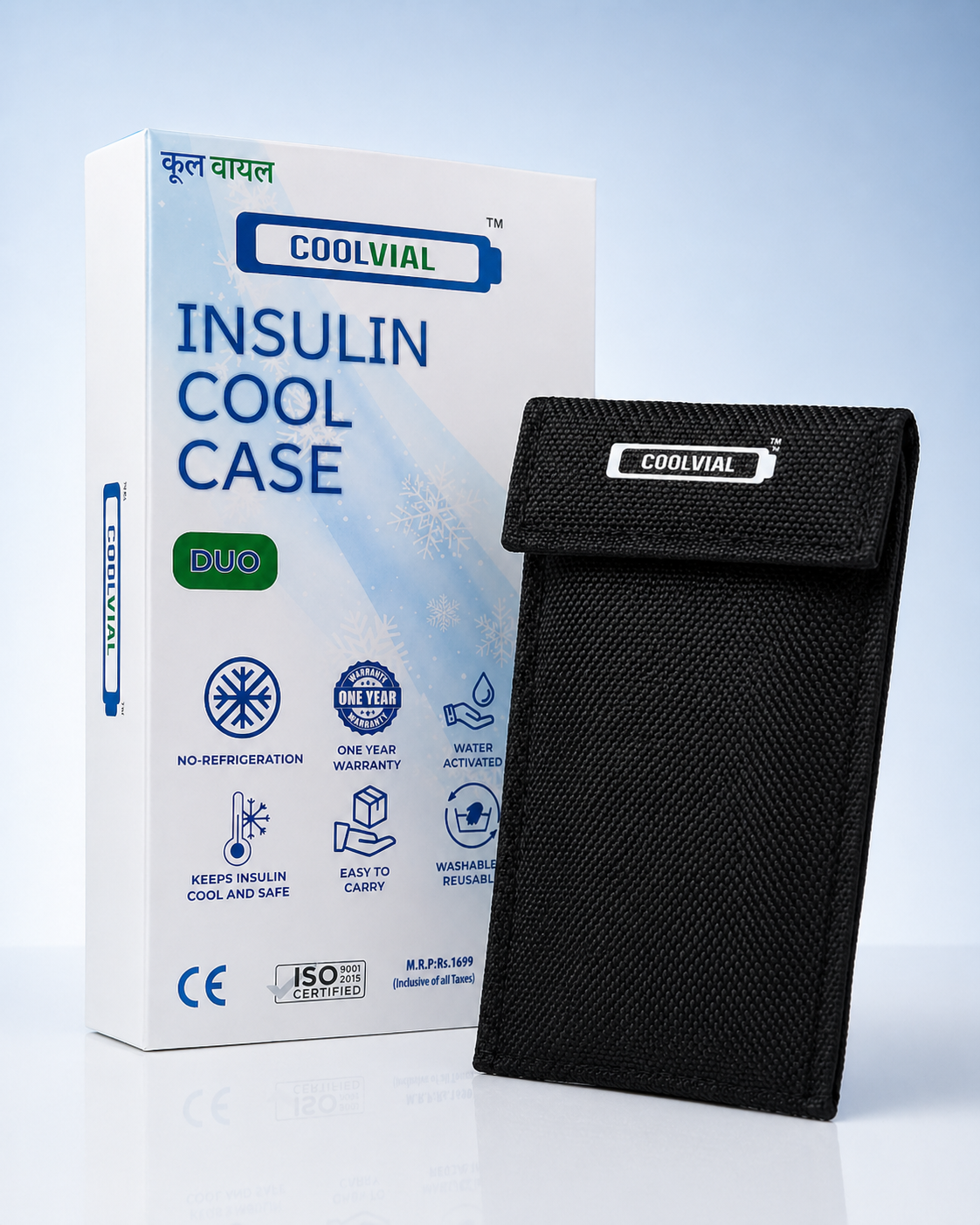
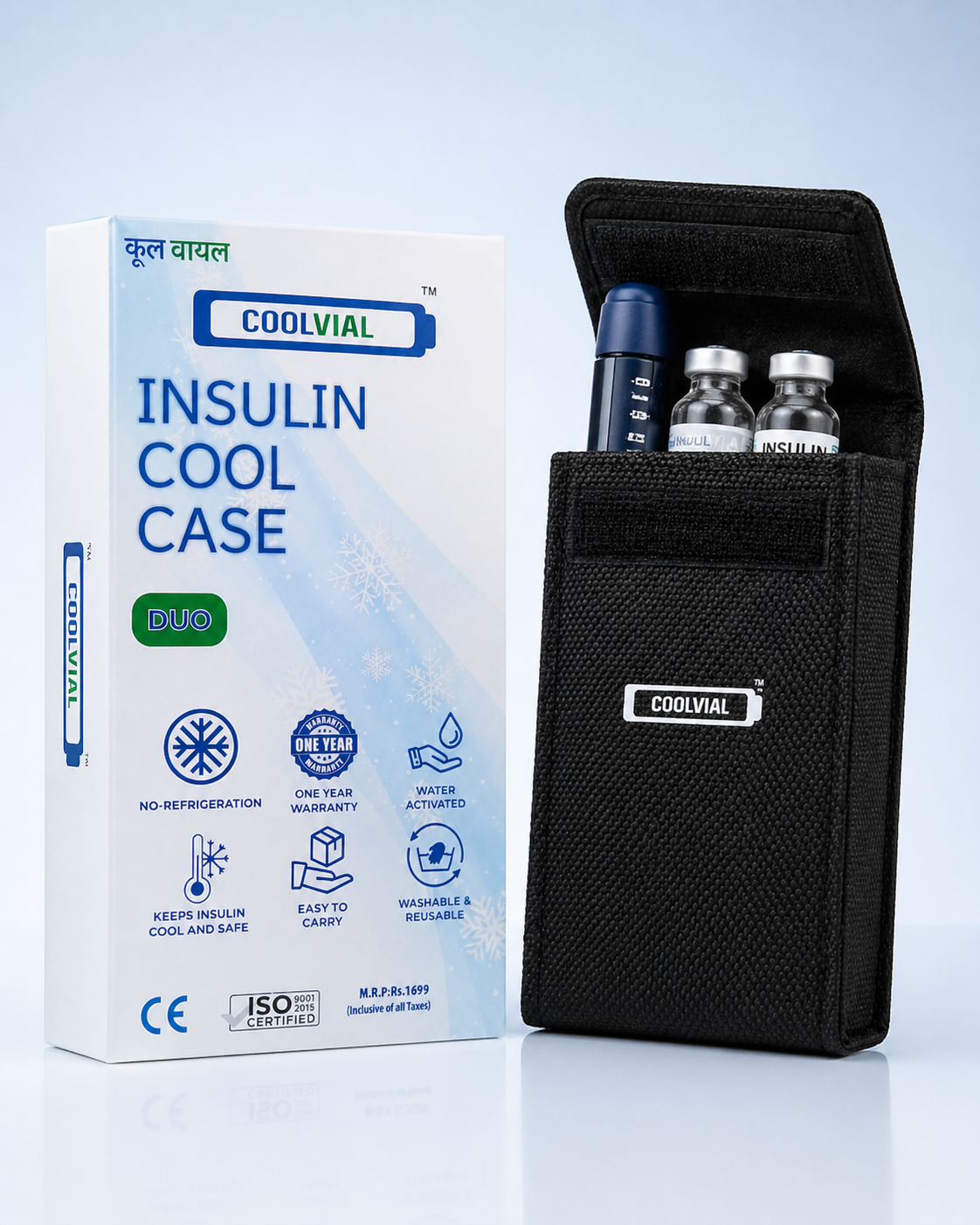
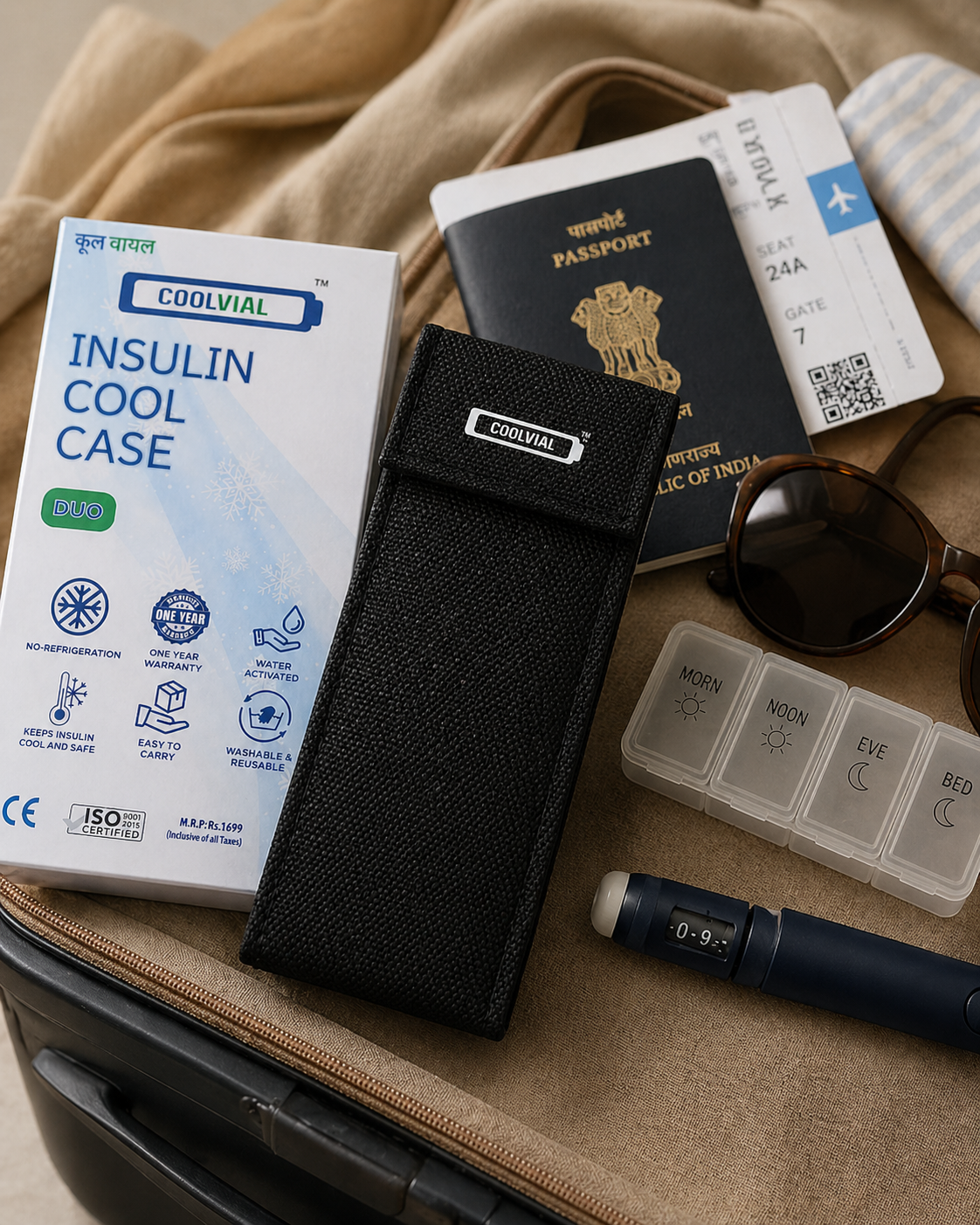
- The COOLVIAL Duo Advantage: This is precisely where the COOLVIAL Duo proves invaluable. Designed to hold 2 pens and 1 vial, it keeps insulin cool for 12-16 hours using only water. No electricity or ice packs needed. Just activate it with water, and you’re set for your journey to Rishikesh or a relaxing stay in Mussoorie. It’s a reliable companion for Dehradun’s adventurers.
Remember, the mild climate of the hills can be deceptive. Constant movement and varied environments demand a proactive approach to insulin storage.
The Unseen Threats: Car Heat, Power Cuts, and Microclimates in Doon Valley
Beyond the general climate, Dehradun presents several subtle but potent threats to insulin stability. These often go unnoticed but can significantly compromise your medication.
1. The Baking Car Interior:
Even on a seemingly mild 28°C day in Dehradun, the interior of a parked car can quickly reach a dangerous 35°C or higher within minutes, especially if exposed to direct sunlight. On hotter summer days (35°C ambient), interior temperatures can easily soar to 50°C+. Leaving insulin in a glove compartment or on a car seat, even for a short errand to a pharmacy like 1mg or Generic Aadhaar, is a major risk. Insulin can degrade rapidly at these temperatures.
2. Frequent Power Cuts:
While Dehradun generally has stable electricity, localized power cuts are not uncommon, particularly during heavy monsoon rains or peak summer demand.
- Impact on Refrigerated Insulin: If you rely solely on your home refrigerator for unopened insulin, prolonged power cuts can push temperatures above the safe 8°C limit.
- Backup Plans: Always have a backup plan. A simple cooler with ice packs can work for very short durations, but a dedicated insulin cooling case offers a more reliable solution without electricity.
3. Dehradun’s Varied Microclimates:
The Doon Valley isn’t uniform. Temperatures and humidity can vary significantly across different neighborhoods:
- Higher Altitudes (e.g., areas towards Mussoorie Diversion): May experience slightly cooler temperatures but potentially more fog and dampness in winter.
- Valley Floor (e.g., Clement Town, Patel Nagar): Can feel hotter in summer and more humid during monsoon due to less air circulation.
- Urban Heat Islands: Densely built areas around commercial centers like Pacific Mall can trap heat, making them warmer than surrounding green spaces.
Always consider the specific environment your insulin is in. A seemingly mild day can still hold hidden thermal risks.
Choosing the Right Insulin Cooling Solution for Dehradun’s Lifestyle
Given Dehradun’s climate nuances, investing in a reliable insulin cooling solution is not just an option, but a necessity for optimal diabetes management. The market offers various options, but for the Indian context, evaporative cooling cases stand out.
Key Considerations for a Cooling Case:
- Reliability: Must consistently maintain safe temperatures.
- Portability: Easy to carry for daily commutes or travel.
- Independence from Electricity: Crucial for power cuts and travel.
- Capacity: Should hold enough pens/vials for your needs.
- Durability: Must withstand daily use.
Comparing Options:
-
COOLVIAL Duo:
- Price: Rs 1,099 (with code COOLHEAL) – MRP Rs 1,699.
- Capacity: Holds 2 pens + 1 vial.
- Cooling Duration: 12-16 hours without electricity, activated by water.
- Certifications: CE certified, ISO 9001:2015.
- Warranty: 1-year.
- Made in India: Supports local manufacturing.
- Ideal for: Daily use, short trips, monsoon humidity, and everyday protection against temperature spikes.
-
FRIO (similar evaporative coolers):
- Price: Typically around Rs 1,900 for comparable capacity.
- Functionality: Similar water-activated evaporative cooling.
- Availability: Widely available.
- Outer Woods OW-12 (insulated pouches):
- Price: Around Rs 999.
- Functionality: Primarily insulated, may require ice packs for prolonged cooling. Less effective in high humidity without active cooling.
- Ideal for: Very short durations or supplementing other cooling methods.
For Dehradun’s specific blend of mild weather, occasional heat, and significant monsoon humidity, the COOLVIAL Duo offers an optimal balance of performance, convenience, and affordability. It’s designed to keep your insulin safe, whether you’re working from home, commuting to Synergy Hospitals (Rajpur Road), or enjoying a day out at Mindrolling Monastery. This is an excellent way to maintain proper how to store insulin practices on the go.
Expert Advice: Insulin Storage Guidelines from Dehradun’s Medical Community
Healthcare providers in Dehradun, including those at Max Super Speciality Hospital (Mussoorie Diversion) and CMI Hospital (Convent Road), consistently emphasize the critical importance of proper insulin storage. Their guidance aligns with national and international standards, adapted for local conditions.
Key Recommendations from Local Experts:
- Strict Adherence to Temperature Ranges: Max Super Speciality Hospital endocrinologists advise patients to strictly follow the manufacturer’s recommended temperature ranges for both unopened (refrigerated, 2-8°C) and opened insulin (room temperature, typically up to 25°C or 30°C for 28 days).
- Never Freeze Insulin: Freezing damages insulin. If you suspect your insulin has frozen, discard it. In Dehradun’s winters, avoid placing insulin near windows or external walls where temperatures can drop significantly.
- Avoid Direct Sunlight: Direct exposure to sunlight, even for short periods, can rapidly degrade insulin. Always store insulin in a cool, dark place at home and use a protective case outdoors.
- Check Expiry Dates: Regularly check the expiry dates on your insulin vials and pens. Even if stored perfectly, expired insulin loses potency.
- Travel Preparedness: Medical professionals at Synergy Hospitals often recommend patients invest in a reliable cooling solution for travel, especially for day trips or longer journeys outside Dehradun.
- Consult Your Doctor: If you have any doubts about insulin storage, or if you suspect your insulin has been compromised, always consult your diabetologist or endocrinologist. Your doctor can provide personalized advice based on your specific insulin type and lifestyle.
For a more comprehensive understanding of diabetes management in the region, including local resources and care options, explore our Complete Diabetes Care Guide for Dehradun Residents — 2026 Edition.
7 Critical Insulin Storage Mistakes Dehradun Residents Must Avoid
Even with Dehradun’s mild climate, certain common mistakes can jeopardize your insulin’s effectiveness. Avoiding these pitfalls is crucial for anyone wondering how to store insulin safely and effectively.
- Leaving Insulin in a Parked Car: As discussed, car interiors can become dangerously hot, even on pleasant days. This is perhaps the most frequent and impactful mistake. Always take your insulin with you, even for a quick stop.
- Storing Insulin in the Freezer: Unopened insulin must be refrigerated (2-8°C), never frozen. Freezing destroys insulin’s protein structure, rendering it unusable. Check your fridge’s temperature regularly.
- Exposing Insulin to Direct Sunlight: Whether on a windowsill at home, in a bag on a sunny bench, or during outdoor activities, direct UV radiation and heat from the sun can rapidly degrade insulin. Keep it in a shaded spot or a protective case.
- Ignoring Monsoon Humidity: While temperatures might be moderate during monsoon, high humidity (often exceeding 90% in Dehradun) can still compromise insulin. Relying on simple room temperature storage without humidity control is risky.
- Relying Solely on Home Refrigeration for Travel: For trips, especially those lasting more than a few hours, your home fridge won’t cut it. A dedicated travel cooling case is essential. Don’t assume hotel fridges will be available or reliable.
- Using Expired or Discolored Insulin: Always check the expiry date. Also, visually inspect your insulin before each use. Clear insulin should remain clear. If it appears cloudy (unless it’s a specific type meant to be cloudy), discolored, or has particles, discard it.
- Storing Insulin Near Heat Sources: Avoid placing insulin near kitchen stoves, radiators, electronic devices that generate heat, or even direct light from a lamp. These localized heat sources can create micro-environments that are too warm for safe storage.
By being mindful of these common errors, Dehradun residents can significantly improve their insulin storage practices and ensure their medication remains potent and safe. For more general advice, consider visiting our insulin storage tips page.
Frequently Asked Questions (FAQ)
Q: Can I store my opened insulin pen at room temperature in Dehradun during winter? A: Yes, during Dehradun’s winter (5-20°C), if your indoor room temperature consistently stays below 25°C (or 30°C, depending on the specific insulin), you can safely store an opened insulin pen at room temperature for its specified duration, usually 28 days.
Q: What should I do if my insulin was accidentally left in a hot car in Dehradun? A: If your insulin was left in a hot car and exposed to temperatures above its recommended range (typically >30°C), it’s safest to discard it and use a new pen or vial. High heat can quickly degrade insulin, making it less effective or ineffective.
Q: Is it safe to carry insulin in my regular backpack when commuting to work in Dehradun? A: No, a regular backpack offers no thermal protection, making it unsafe for carrying insulin, especially during warmer days or if you’re exposed to direct sunlight or a hot vehicle. Always use an insulated or evaporative cooling case.
Q: How does Dehradun’s monsoon humidity affect insulin storage? A: Dehradun’s high monsoon humidity (often over 90%) can accelerate insulin degradation even if temperatures are moderate. Using an evaporative cooling case like COOLVIAL Duo or storing opened insulin in an airtight container with a desiccant can help mitigate this risk.
Q: Where can I get reliable insulin storage advice in Dehradun? A: For personalized and reliable insulin storage advice in Dehradun, always consult your endocrinologist or diabetologist at hospitals like Max Super Speciality Hospital (Mussoorie Diversion) or CMI Hospital (Convent Road). Local pharmacies like Apollo Pharmacy also offer guidance.
Q: How long can COOLVIAL Duo keep insulin cool in Dehradun’s climate? A: The COOLVIAL Duo is designed to keep insulin cool for 12-16 hours after being activated with water, making it suitable for a full day of activity, travel, or managing through short power cuts in Dehradun.
Q: What is the ideal temperature range for storing unopened insulin in Dehradun? A: Unopened insulin should always be stored in a refrigerator at a temperature between 2°C and 8°C. Ensure it is not placed near the freezer compartment to prevent accidental freezing.
Conclusion
Dehradun’s pleasant climate offers a wonderful quality of life, but it demands an informed and proactive approach to insulin storage. The city’s unique blend of mild temperatures, a brief but intense monsoon season, and everyday scenarios like car heat and weekend trips to Mussoorie or Rishikesh, all pose specific challenges. Simply assuming the “mild” weather will protect your insulin is a risk no one with diabetes should take.
By understanding the local climate nuances and implementing smart storage practices—from vigilant home refrigeration to utilizing advanced cooling solutions for travel and daily commutes—you can ensure your insulin remains potent and effective. Remember, your health and the efficacy of your medication depend on these crucial steps. Make informed choices, stay vigilant, and embrace the peace of mind that comes with proper insulin care.
Don’t let Dehradun’s deceptive mildness compromise your health. Take control of your insulin storage today.
Order COOLVIAL Duo at Rs 1,099 with code COOLHEAL at coolvial.com or via WhatsApp wa.me/918766952300.
Methodology Note:
How We Researched This — This article is based on a comprehensive review of RSSDI (Research Society for the Study of Diabetes in India) guidelines for insulin storage, data from the ICMR-INDIAB study on diabetes prevalence across India (Source: https://www.idf.org/aboutdiabetes/what-is-diabetes/facts-figures.html), local Dehradun hospital directories, and information from established pharmacy networks like Apollo Pharmacy. Local climate data and common scenarios were derived from meteorological averages and typical resident experiences in Dehradun.
Medical Disclaimer:
This article is for general information. Always consult your endocrinologist or diabetologist before changing insulin storage or dosing practices.
7 Essential Tips: How to Store Insulin in Dehradun's Mild Year-Round Climate — A Local's Guide
COOLVIAL keeps insulin safe in India's heat. 48+ hours, no electricity needed.