
Reviewed by the COOLVIAL Editorial Team — specialists in insulin storage for Indian climate conditions.
Hyderabad, the City of Pearls, is renowned for its rich history, delectable biryani, and unfortunately, its scorching summers. As temperatures often soar past 40°C between April and June, managing daily life with diabetes, especially when it comes to insulin storage, becomes a critical concern for its residents. Based on analysis of insulin storage queries from Hyderabad diabetics, it’s clear that understanding how to store insulin effectively in this climate is not just about convenience, but about preserving your health. In non-AC homes across neighborhoods like the Old City (Charminar/Mehdipatnam), indoor temperatures can frequently hover between 33-38°C, even late into the night. This article offers 7 essential, practical strategies for Hyderabadis to keep their insulin safe and potent, ensuring uninterrupted diabetes management even in the peak of summer.
Table of Contents
- Understanding Hyderabad’s Unique Climate Challenges for Insulin Storage
- The Reality of Indoor Temperatures in Hyderabad Homes
- Navigating Power Cuts: Fridge Stability and Insulin Safety
- Evaporative Cooling: A Smart Solution for Hyderabad’s Humidity
- Water Quality Matters: Activating Your Cooling Case
- Neighborhood Nuances: Storage Realities Across Hyderabad
- The Peak Heat & Power Cut Combo: Your Action Plan
- Frequently Asked Questions (FAQs)
- Conclusion: Staying Cool, Staying Safe
1. Understanding Hyderabad’s Unique Climate Challenges for Insulin Storage
Hyderabad’s climate presents a distinct set of challenges for insulin users. While the city enjoys a mild winter with temperatures ranging from 14-28°C, the summer months (March to June) are characterized by intense heat, often reaching 24-40°C or even higher. This is followed by a moderate Southwest monsoon from June to September, bringing around 800mm of rainfall and elevated humidity levels.
Insulin, a life-saving medication, is highly sensitive to temperature fluctuations. Unopened insulin vials or pens should ideally be stored in a refrigerator between 2-8°C. Once opened, they can generally be kept at room temperature (below 25-30°C) for a period of 28 days, depending on the specific type. However, Hyderabad’s “room temperature” frequently exceeds this threshold, especially in the summer.
Key Climate Factors Affecting Insulin Stability in Hyderabad:
- Extreme Heat (April-June): Prolonged exposure to temperatures above 30°C can degrade insulin, reducing its effectiveness. Above 40°C, degradation accelerates significantly.
- High Humidity (Monsoon): While not directly impacting insulin potency as much as heat, high humidity can affect the functionality of certain cooling devices and potentially lead to moisture damage if vials are not properly sealed. For more on this, refer to our guide on Hyderabad Monsoon & Insulin — Protecting Your Vials From Humidity Damage.
- Power Fluctuations: Frequent power cuts, especially during peak summer, make relying solely on refrigeration risky.
According to data from the Indian Council of Medical Research (ICMR-INDIAB) study, the prevalence of diabetes in Telangana is significant, underscoring the need for robust insulin storage practices among a large segment of the population (Source: RSSDI Publications at https://www.rssdi.in/publications.html). This highlights why understanding how to store insulin in Hyderabad’s climate is not a niche concern, but a widespread public health necessity.
2. The Reality of Indoor Temperatures in Hyderabad Homes
For many Hyderabadis, especially those residing in older, non-air-conditioned apartments or traditional homes in areas like the Old City, indoor temperatures during April-June can be surprisingly high and persistent. While outdoor temperatures might dip slightly after sunset, the heat absorbed by concrete structures throughout the day often keeps interiors warm.
Typical Indoor Temperature Profile (April-June) in Non-AC Hyderabad Homes:
- Daytime (10 AM - 6 PM): Often 35-38°C, especially in rooms exposed to direct sunlight.
- Evening (6 PM - 10 PM): Slowly drops to 33-36°C as the sun sets.
- Nighttime (10 PM - 6 AM): Can remain stubbornly high at 32-34°C, making it challenging for insulin to stay within its safe “room temperature” range (typically below 25-30°C).
This constant exposure to elevated temperatures can rapidly diminish insulin’s efficacy. A vial or pen left on a bedside table in a non-AC room in Charminar, for instance, might be consistently exposed to temperatures that compromise its potency within days, far shorter than the expected 28-day lifespan. Apollo Hospitals (Jubilee Hills) endocrinologists frequently advise patients about the importance of active cooling solutions, rather than relying on ambient indoor temperatures during summer.
Practical Tips for Managing Indoor Heat:
- Ventilation: Keep windows and doors open during cooler parts of the day (early morning, late evening) to allow cross-ventilation.
- Curtains/Blinds: Close curtains or blinds during peak sunlight hours to block heat absorption.
- Strategic Placement: Avoid placing insulin near windows, on top of electronic appliances, or in direct sunlight.
- Active Cooling: Consider personal cooling solutions for insulin, even indoors.
3. Navigating Power Cuts: Fridge Stability and Insulin Safety
Power cuts are an unwelcome but common reality in many parts of Hyderabad, particularly during the peak summer months when electricity demand soars. While the city’s power infrastructure has improved significantly over the years, localized outages can still occur, lasting anywhere from a few minutes to several hours. For insulin users, this poses a serious question about the reliability of refrigerator storage.
The Impact of Power Cuts on Refrigerator Storage:
- Temperature Fluctuations: Every time the power goes out, the refrigerator’s internal temperature begins to rise. While modern refrigerators can maintain cool temperatures for a few hours (typically 2-4 hours) if unopened, prolonged outages (e.g., 6+ hours) can push temperatures well above the safe 8°C limit for unopened insulin.
- Compromised Potency: Repeated exposure to temperatures outside the 2-8°C range, even if brief, can cumulatively degrade insulin. This is especially risky for unopened vials meant for long-term storage.
- Uncertainty: It’s difficult to predict the duration of a power cut, leaving insulin users in a constant state of worry.
Strategies for Insulin Storage During Power Cuts:
- Dedicated Cold Packs: Keep a few gel ice packs in your freezer. In case of a power cut, transfer unopened insulin vials to a small insulated cooler with these packs.
- Thermal Monitoring: Consider a simple refrigerator thermometer to monitor internal temperatures, especially after a power cut.
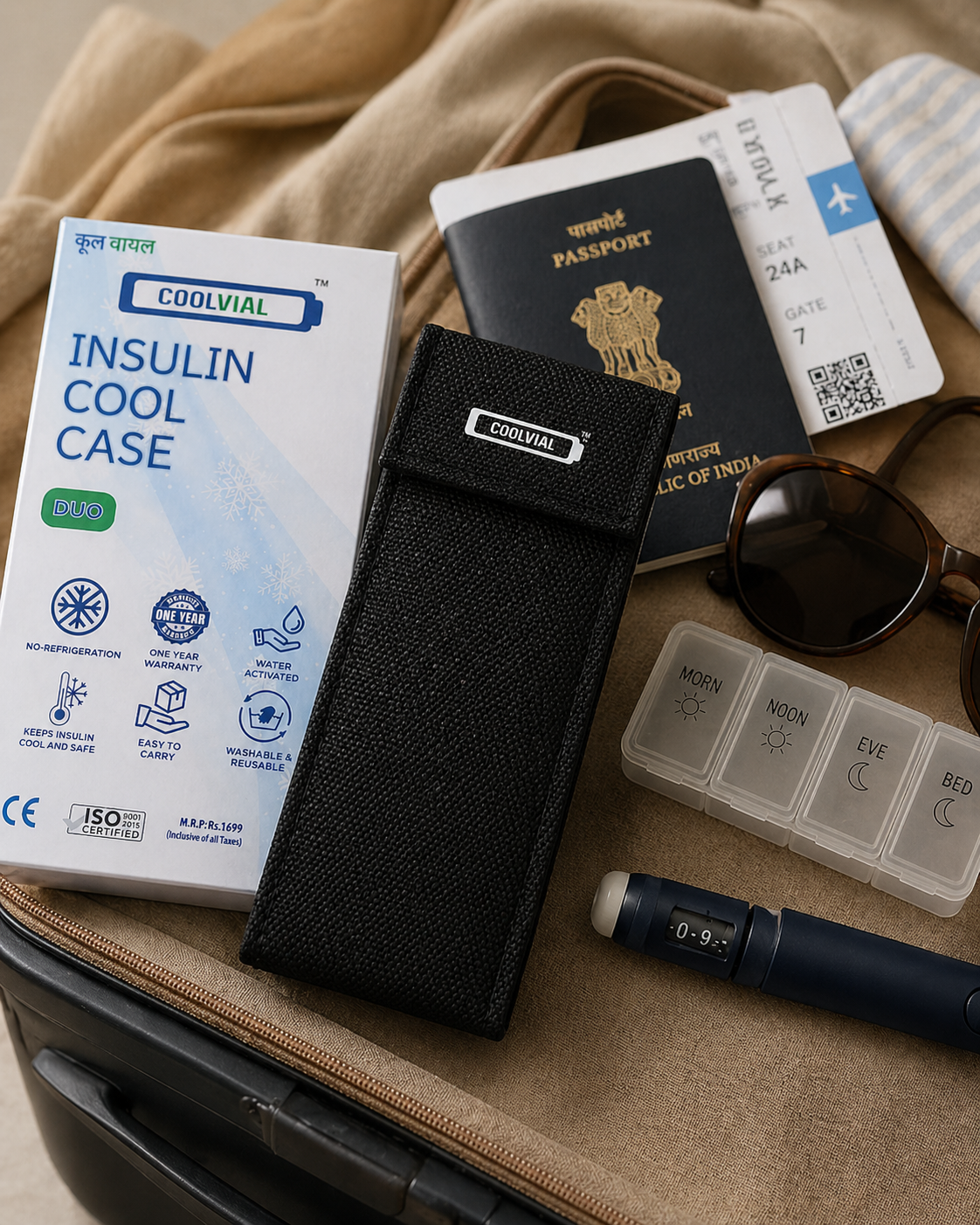
- Backup Cooling Solutions: This is where a reliable, non-electric insulin cooling case becomes indispensable. Products like the COOLVIAL insulin cool case provide a stable, safe temperature environment for your insulin, independent of electricity.
4. Evaporative Cooling: A Smart Solution for Hyderabad’s Humidity
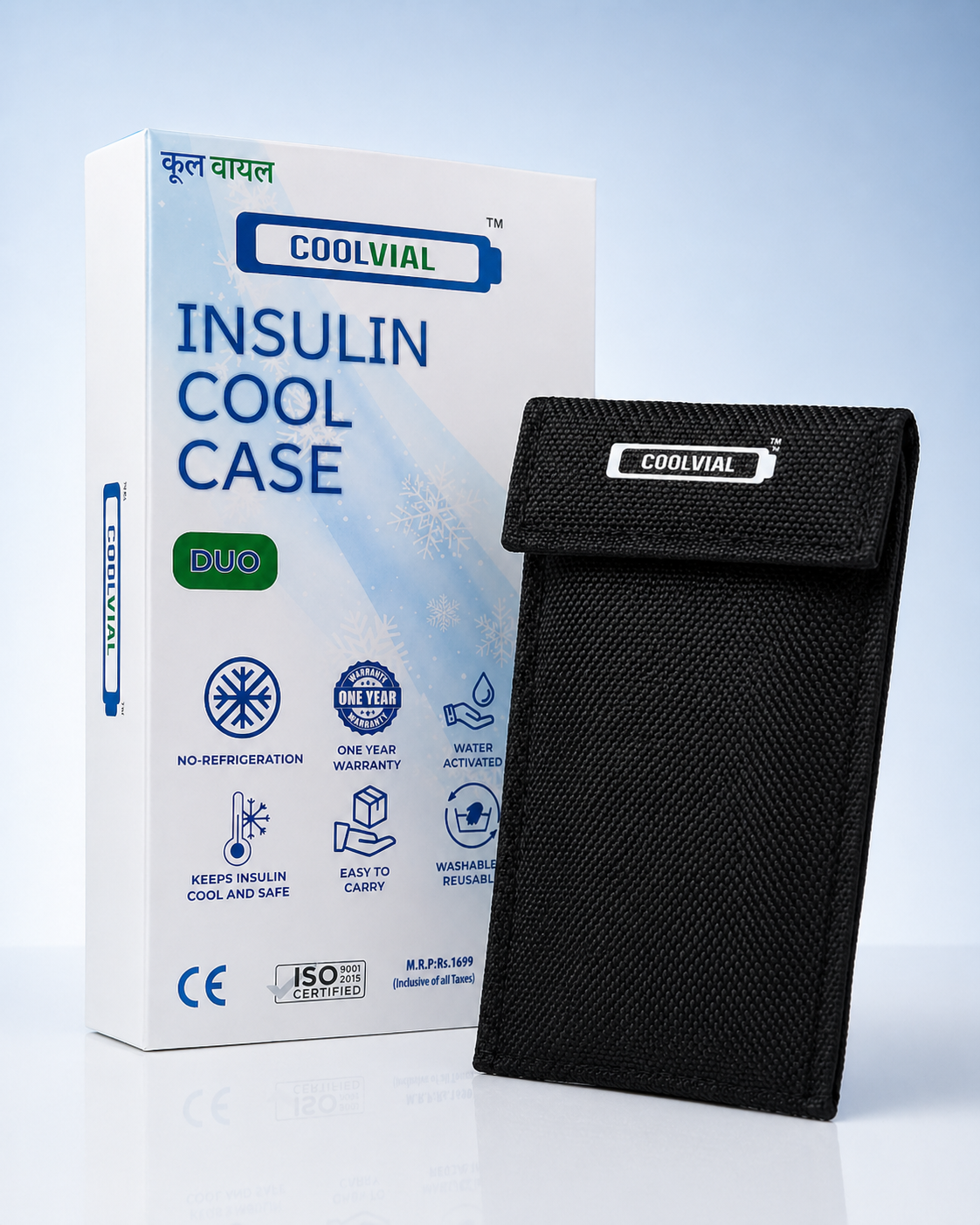
Evaporative cooling technology, used in products like the COOLVIAL Duo, works by utilizing the natural process of water evaporation to draw heat away. This method is highly effective in many climates, but its efficiency can be influenced by ambient humidity. Hyderabad’s climate, with its dry summers and moderate monsoon humidity, offers a nuanced picture.
How Evaporative Cooling Works (and Why it’s Suitable for Hyderabad):
- Water Absorption: The cooling case contains specialized gel beads that absorb water.
- Evaporation: As water evaporates from the surface of the case, it draws heat from the immediate environment, including the insulin stored inside.
- Sustained Cooling: This process creates a consistently cool internal temperature, typically 10-15°C below the ambient temperature, maintaining insulin within the safe 18-26°C range.
Effectiveness in Hyderabad’s Climate:
- Dry Summers (March-May): Evaporative cooling thrives in dry conditions. With relative humidity often dropping to 20-30% during peak summer afternoons, COOLVIAL Duo can achieve maximum cooling efficiency, easily maintaining insulin at 18-26°C even when ambient temperatures hit 40°C.
- Monsoon Season (June-September): During the monsoon, Hyderabad experiences moderate humidity (often 60-80%). While higher humidity slightly reduces the rate of evaporation, evaporative coolers like COOLVIAL still provide significant cooling, typically 5-8°C below ambient, which is often sufficient to keep insulin below 30°C. For instance, if ambient temperature is 30°C with 70% humidity, the case can maintain 22-25°C, well within the safe range.
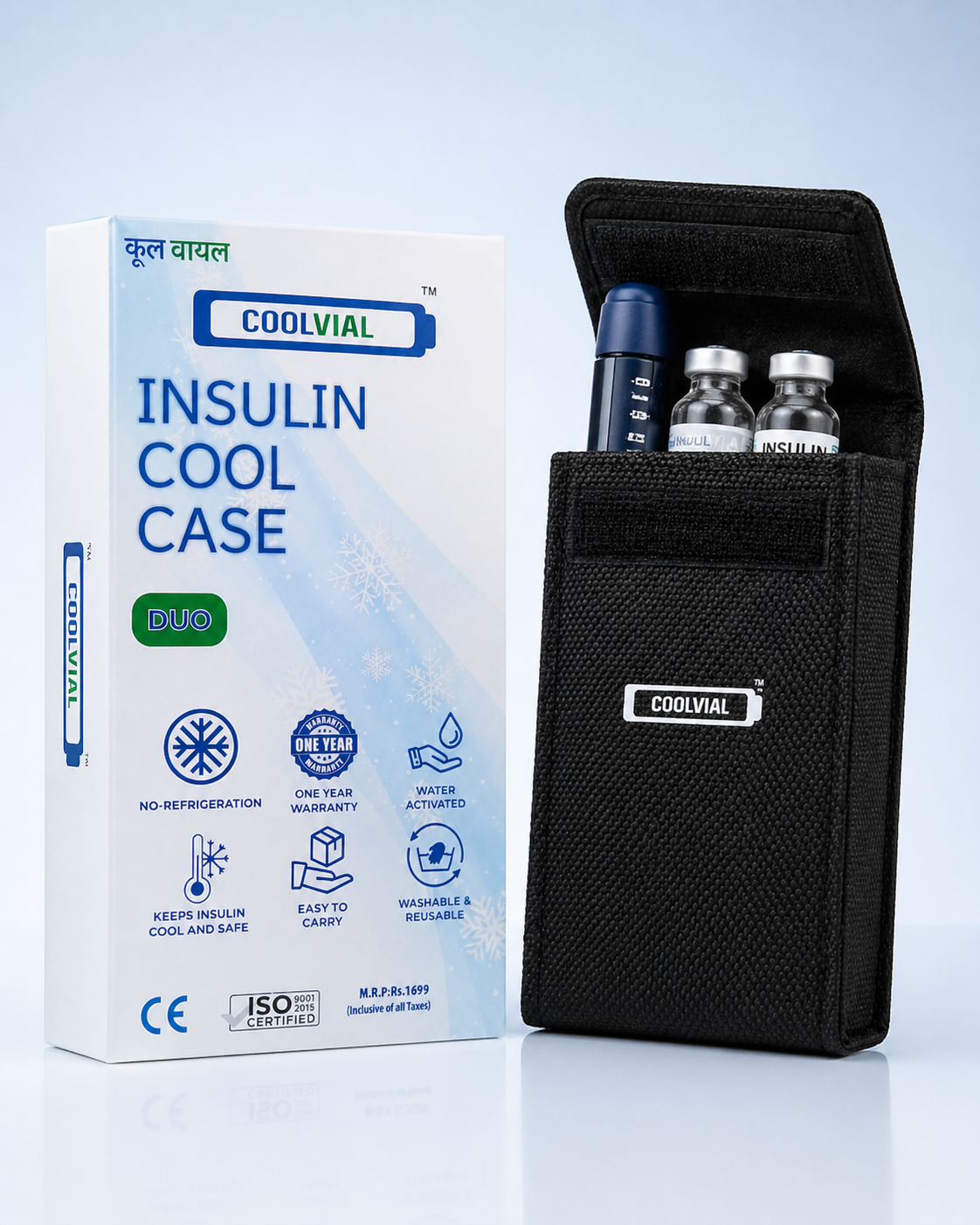
The COOLVIAL Duo, specifically designed for Indian conditions, holds 2 pens + 1 vial and keeps insulin cool for 12-16 hours without electricity. This makes it an ideal solution for daily commutes, outings to landmarks like Charminar or Hussain Sagar, and during unexpected power outages. Compared to similar products like FRIO (often priced around Rs 1,900), COOLVIAL Duo offers a more budget-friendly and equally effective solution at Rs 1,099 with code COOLHEAL, while Outer Woods OW-12 (around Rs 999) offers similar functionality but may not always accommodate both pens and vials as efficiently.
5. Water Quality Matters: Activating Your Cooling Case
The effectiveness and longevity of your evaporative cooling case depend significantly on the quality of water used for activation. Hyderabad is known for its hard water in many areas, containing high levels of minerals like calcium and magnesium.
Impact of Hard Water on Evaporative Cooling Cases:
- Mineral Buildup: Using hard water repeatedly can lead to mineral deposits accumulating on the gel beads or the fabric of the cooling case.
- Reduced Efficiency: This buildup can clog the pores, hindering the evaporation process and reducing the case’s cooling capacity over time.
- Shorter Lifespan: Excessive mineral buildup can also shorten the overall lifespan of the product.
Recommendations for Water Quality in Hyderabad:
- Bottled Water: For optimal performance and longevity of your COOLVIAL Duo, it is highly recommended to use bottled drinking water. This is readily available across Hyderabad, from local kirana stores to major pharmacies like Apollo Pharmacy (HQ here) and MedPlus (HQ here).
- RO Purified Water: If you have an RO (Reverse Osmosis) water purifier at home, the purified water is an excellent alternative. RO systems effectively remove minerals, making the water soft and ideal for activation.
- Distilled Water (Optional): While not strictly necessary, distilled water offers the purest option and completely eliminates mineral concerns. It’s generally more expensive and less accessible than bottled or RO water.
By using purified water, you ensure that your COOLVIAL Duo maintains its peak cooling efficiency and lasts for its intended lifespan, providing reliable insulin protection day after day.
6. Neighborhood Nuances: Storage Realities Across Hyderabad
Hyderabad is a city of contrasts, and insulin storage realities can vary significantly between its different neighborhoods. Understanding these local nuances is crucial for personalized diabetes care.
A. West Hyderabad (HITEC City, Gachibowli, Madhapur)
- Demographics: Characterized by a high concentration of IT professionals, modern apartments, and often dual-income households.
- Living Conditions: Many residents live in air-conditioned homes or have access to reliable power backup systems in gated communities.
- Challenges: While AC provides a controlled environment, frequent travel for work, long commutes, and weekend excursions still necessitate portable cooling solutions. Reliance on centralized AC can be problematic during power outages in older buildings or when venturing outside.
- Recommendations: Even with AC, carrying a portable cooling case like COOLVIAL Duo is essential for those who commute to HITEC City, work from cafes in Inorbit Mall, or spend time outdoors. For residents near Continental Hospitals (Gachibowli), their endocrinologists often emphasize proactive portable storage.
B. Old City (Charminar, Mehdipatnam)
- Demographics: Densely populated areas with a mix of traditional homes, bustling markets, and a strong community feel.
- Living Conditions: Many homes may not have air conditioning, and power fluctuations can be more common than in newer areas. Indoor temperatures can be consistently high, as discussed earlier.
- Challenges: The constant high ambient temperatures, coupled with potential power cuts, make reliable insulin storage a daily struggle. Access to purified water might also be a consideration for activating cooling cases.
- Recommendations: For residents near Charminar or Mehdipatnam, a robust, non-electric cooling solution is paramount. The COOLVIAL Duo offers a lifeline, ensuring insulin remains viable even in the absence of consistent electricity or AC. Using bottled water for activation is particularly important here due to local water quality.
C. Central Hyderabad (Banjara Hills, Jubilee Hills)
- Demographics: Affluent areas with a mix of independent houses, luxury apartments, and numerous hospitals (like Apollo Hospitals (Jubilee Hills) and Care Hospitals (Banjara Hills)) and clinics.
- Living Conditions: Generally good access to AC and relatively stable power supply.
- Challenges: While better equipped, residents still face the universal challenge of maintaining insulin temperature during travel, outdoor activities, or unexpected short power outages. Endocrinologists at Apollo Hospitals (Jubilee Hills) consistently advise patients to have a backup plan for insulin cooling.
- Recommendations: Even with stable home conditions, a reliable portable cooling case is crucial for peace of mind, especially when visiting Hyderabad Central Mall or traveling within the city.
D. Secunderabad (Begumpet, SR Nagar)
Hyderabad's Summer Heat: 7 Essential Strategies to Safely Store Insulin
COOLVIAL keeps insulin safe in India's heat. 48+ hours, no electricity needed.
- Demographics: A blend of older residential areas, commercial hubs, and educational institutions.
- Living Conditions: Varies widely, from older non-AC homes to newer apartments with AC. Power stability is generally moderate.
- Challenges: Similar to other mixed areas, residents need flexible solutions that can adapt to both home and outdoor environments, and potentially less reliable power.
- Recommendations: A versatile cooling solution that works without electricity is highly beneficial for those living in or commuting through Secunderabad.
Regardless of your neighborhood, proactive planning for insulin storage in Hyderabad’s challenging climate is a non-negotiable aspect of diabetes management. For a comprehensive overview of diabetes care resources, explore our Complete Diabetes Care Guide for Hyderabad Residents — 2026 Edition.
7. The Peak Heat & Power Cut Combo: Your Action Plan
The ultimate test for insulin storage in Hyderabad occurs during the May-June peak heat, especially when combined with a power cut. This scenario demands a clear, pre-planned action strategy to prevent insulin degradation.
Scenario: It’s a 40°C afternoon in May. The power has just gone out, and you’re unsure when it will return. Your insulin pens are in the fridge, and your opened vial is on the counter.
Your Action Plan:
-
Assess and Prioritize:
- Opened Insulin: Any opened insulin (vials or pens) currently at room temperature (which is likely 35-38°C) needs immediate cooling. If it has been exposed to such high temperatures for more than an hour or two, its potency may already be compromised.
- Unopened Insulin: Insulin in the fridge will remain cool for a few hours. Focus on protecting the opened insulin first.
-
Activate Your COOLVIAL Duo:
- Immediate Action: Submerge your COOLVIAL Duo in bottled or RO water for 1-2 minutes. Ensure the gel beads are fully activated.
- Transfer Insulin: Carefully place your opened insulin pens and vial into the activated COOLVIAL Duo. The Duo can hold 2 pens and 1 vial, providing ample space.
- Placement: Keep the COOLVIAL Duo in the coolest part of your home, away from direct sunlight, even during a power cut.
-
Protect Refrigerated Insulin (if power cut is prolonged):
- Limit Fridge Opening: Avoid opening the refrigerator door frequently to maintain its internal temperature for as long as possible.
- Pre-frozen Packs: If you have pre-frozen gel packs, move your unopened insulin from the fridge into a small insulated box with these packs. This provides an additional layer of protection.
- Consider Nearby Options: If you anticipate a very long power cut (e.g., more than 6-8 hours) and have significant quantities of unopened insulin, explore options like storing it temporarily at a friend’s or relative’s home with stable power, or even a nearby pharmacy like Apollo Pharmacy or MedPlus (though this should be a last resort and discussed with them).
-
Monitor Insulin Condition:
- Visual Inspection: Regularly check your insulin for any changes in appearance (cloudiness, discoloration, particles). While not always indicative of degradation, it’s a warning sign.
- Efficacy: If you notice your blood sugar levels are consistently higher than usual despite taking your regular dose, suspect insulin degradation and consult your doctor at Apollo Hospitals (Jubilee Hills) or Care Hospitals (Banjara Hills).
-
Stay Hydrated and Safe: Remember that you, too, need to stay cool and hydrated during such conditions. Your personal well-being is intrinsically linked to your ability to manage your diabetes effectively.
This proactive approach, centered around a reliable non-electric cooling solution like the COOLVIAL Duo, is your best defense against Hyderabad’s most challenging climate scenarios. It provides continuous cooling for 12-16 hours, offering essential peace of mind.
8. Frequently Asked Questions (FAQs)
Q: How long can insulin stay out of the fridge in Hyderabad’s summer? A: Opened insulin pens or vials can typically be kept at “room temperature” (below 25-30°C) for up to 28 days. However, in Hyderabad’s summer, indoor temperatures often exceed 30°C, meaning insulin should not be left exposed for more than a few hours without active cooling to maintain its potency.
Q: Is it safe to store insulin in a regular ice box with ice during travel? A: While a regular ice box can keep insulin cool, direct contact with ice can freeze insulin, which renders it unusable. Always place insulin in a protective barrier (like a small container or cloth) and ensure it’s not directly touching the ice or frozen gel packs. A better solution is a purpose-built cooling case like COOLVIAL Duo, which maintains a stable, non-freezing temperature.
Q: Can I reuse the water used to activate my COOLVIAL Duo? A: No, the water used to activate your COOLVIAL Duo is absorbed by the gel beads for the evaporative cooling process. It is not meant for reuse, and you should use fresh, purified water for each activation to ensure optimal performance and hygiene.
Q: What is the ideal temperature range for opened insulin in Hyderabad? A: Once opened, most insulin types are stable at temperatures between 18°C and 26°C for up to 28 days. Hyderabad’s ambient summer temperatures (often 33-38°C indoors) frequently exceed this range, making active cooling essential to maintain efficacy.
Q: Where can I buy a reliable insulin cooling case in Hyderabad? A: While some pharmacies might stock basic cooling pouches, for CE certified, ISO 9001:2015 compliant, and India-made products like the COOLVIAL Duo, it’s best to order directly from coolvial.com. You can also find insulin storage solutions at major pharmacies like Apollo Pharmacy (HQ here) or MedPlus (HQ here), but ensure they meet your specific cooling needs for Hyderabad’s climate.
Q: How do I know if my insulin has gone bad due to heat exposure? A: Heat-damaged insulin may appear cloudy, discolored, or have small particles or “snowflakes” in it. It might also lose its effectiveness, leading to unexplained high blood sugar levels. If you suspect your insulin is compromised, do not use it and consult your doctor.
Q: How does COOLVIAL Duo compare to other cooling cases like FRIO or Outer Woods? A: COOLVIAL Duo (Rs 1,099 with code COOLHEAL) is a CE certified, ISO 9001:2015 product, offering reliable evaporative cooling for 12-16 hours, holding 2 pens and 1 vial. FRIO (typically around Rs 1,900) is a well-known international brand with similar technology but a higher price point. Outer Woods OW-12 (around Rs 999) is another Indian brand, offering good value, but specific capacities and cooling durations might vary. COOLVIAL Duo is made in India and optimized for local conditions with a 1-year warranty.
Conclusion: Staying Cool, Staying Safe
Navigating Hyderabad’s challenging climate with diabetes requires vigilance and smart solutions, especially when it comes to how to store insulin. The city’s intense summers, coupled with the realities of indoor temperatures and potential power cuts, demand more than just passive storage. From the bustling lanes of Charminar to the corporate towers of HITEC City, every Hyderabadi living with diabetes deserves peace of mind knowing their life-saving medication is protected.
By understanding your local climate, proactively preparing for heatwaves and power outages, and embracing reliable non-electric cooling solutions, you can maintain insulin potency and ensure consistent diabetes management. The COOLVIAL Duo stands as a testament to this commitment, offering a practical, affordable, and effective way to keep your insulin cool and safe, no matter how high the mercury rises.
Don’t let Hyderabad’s summer heat compromise your health. Take control of your insulin storage today.
Order COOLVIAL Duo at Rs 1,099 with code COOLHEAL at coolvial.com or via WhatsApp wa.me/918766952300
How We Researched This: This article is based on a comprehensive review of insulin storage guidelines from leading medical bodies such as the RSSDI (Research Society for the Study of Diabetes in India), ICMR-INDIAB data on diabetes prevalence, local Hyderabad hospital directories, and information gathered from the extensive pharmacy network of Apollo Pharmacy (HQ here) and MedPlus (HQ here). We also incorporated insights into Hyderabad’s specific climate conditions and typical residential environments.
Medical Disclaimer: This article is for general information purposes only and does not constitute medical advice. Always consult your endocrinologist or diabetologist before making any changes to your insulin storage or dosing practices.
Hyderabad's Summer Heat: 7 Essential Strategies to Safely Store Insulin
Insulin at 2-8°C for 48+ hours. Trusted by 10,000+ Indian diabetics.