Reviewed by the COOLVIAL Editorial Team — specialists in insulin storage for Indian climate conditions.
Ludhiana, the industrial heart of Punjab, is known for its vibrant culture, bustling markets, and unfortunately, its notoriously harsh summers. As temperatures often soar past 40°C, reaching peak highs of 44°C from May to June, the challenge of how to store insulin safely becomes a critical concern for its residents. For individuals managing diabetes in this climate, protecting vital medication from degradation is not just a recommendation, it’s a necessity. Based on analysis of insulin storage queries from Ludhiana diabetics, we understand the unique struggles posed by fluctuating power, high humidity during monsoon, and the sheer intensity of the heat.
This comprehensive guide, tailored for Ludhiana residents, will arm you with 10 proven strategies to ensure your insulin remains effective, even when the mercury climbs. From understanding typical indoor temperatures in Civil Lines or Model Town homes to navigating power cuts in Sarabha Nagar, we cover practical advice. We’ll delve into recommendations from experts at institutions like DMC&H (Dayanand Medical College) and explore how local factors, such as water quality around Punjab Agricultural University (PAU), influence evaporative cooling solutions. Let’s ensure your diabetes management remains uninterrupted, no matter how hot it gets.
Table of Contents
- Understanding Ludhiana’s Summer Challenge: The Climate Reality
- The Science of Insulin Storage & Why Ludhiana Demands Extra Care
- Fridge Reliability & Power Cuts: A Ludhiana Reality Check
- Evaporative Cooling: A Smart Solution for Ludhiana’s Climate
- Navigating Water Quality for Evaporative Coolers in Ludhiana
- Beyond the Home: Insulin Storage for Ludhiana’s Outdoors & Travel
- Peak Heat + Power Cut: Your Emergency Action Plan for May-June
- DMC&H & Local Expert Recommendations for Insulin Care
- Neighborhood Nuances: Civil Lines vs. Model Town Storage Strategies
- Essential Insulin Storage Checklist for Ludhiana Residents
1. Understanding Ludhiana’s Summer Challenge: The Climate Reality
Ludhiana’s climate is characterized by extremes, making insulin storage a year-round consideration. The summer months, particularly from April to June, bring intense heat where daily maximums consistently hover between 33°C and 44°C. Even at night, non-AC homes across neighborhoods like Bhai Randhir Singh Nagar (BRS Nagar) or Civil Lines often struggle to cool down, with indoor temperatures frequently remaining in the 33-38°C range. This continuous exposure to high temperatures is a primary threat to insulin’s efficacy.
The monsoon season, from July to September, introduces another challenge: high humidity. While temperatures might drop slightly, the air becomes thick with moisture, averaging around 80% relative humidity. This can impact certain cooling methods and also poses a risk of condensation on improperly stored insulin. Following the monsoon, winters are quite cold, with temperatures dipping to 4°C, often accompanied by dense fog, requiring a different set of precautions. However, our immediate focus is on the blistering summer.
Here’s a snapshot of Ludhiana’s summer climate realities:
- Peak Summer Months: April, May, June
- Typical Daytime Temperatures: 38°C to 44°C
- Typical Nighttime Temperatures (Non-AC Homes): 33°C to 38°C [Verify in 2026]
- Heatwave Frequency: High, with prolonged periods of extreme heat.
- Monsoon Humidity (July-Sep): Averages 70-85%, impacting evaporative cooling efficiency and requiring vigilant protection against moisture.
Understanding these local conditions is the first step in formulating a robust plan for how to store insulin effectively.
2. The Science of Insulin Storage & Why Ludhiana Demands Extra Care
Insulin is a temperature-sensitive protein, and its stability is crucial for effective diabetes management. Unopened insulin vials or pens should ideally be stored in a refrigerator at temperatures between 2°C and 8°C. Once opened, insulin can typically be kept at room temperature (below 25°C or 30°C, depending on the specific brand and type) for 28 days (or sometimes up to 42 days, check package insert). However, “room temperature” in Ludhiana’s summer is far from ideal.
When insulin is exposed to temperatures above 25°C, especially prolonged exposure to 30°C or higher, it begins to degrade. This degradation process is irreversible and leads to:
- Reduced Potency: The insulin loses its ability to lower blood sugar effectively, requiring higher doses for the same effect.
- Visible Changes: Insulin may appear cloudy, discolored, or contain particles, though degradation can occur even without visible signs.
- Increased Risk of Complications: Inconsistent potency can lead to unpredictable blood sugar levels, increasing the risk of hyperglycemia and long-term diabetes complications.
The challenge in Ludhiana is that typical indoor temperatures in non-AC homes (33-38°C) are significantly higher than the recommended “room temperature” for opened insulin. This means that even insulin in daily use needs active cooling, not just passive room storage. For Ludhiana residents, simply keeping insulin “out of the fridge” is often insufficient and potentially dangerous during the summer.
Key points on insulin sensitivity:
- Ideal Refrigerator Temperature: 2°C to 8°C (for unopened vials/pens)
- Maximum “Room Temperature”: Usually 25°C, sometimes up to 30°C (check specific product leaflet)
- Degradation Threshold: Begins above 25°C, accelerates rapidly above 30°C.
- Signs of Degradation: Cloudiness, discoloration, particles, or reduced effectiveness.
3. Fridge Reliability & Power Cuts: A Ludhiana Reality Check
For many Ludhiana households, the refrigerator is the default solution for insulin storage. While excellent for unopened insulin, relying solely on a fridge comes with significant challenges, especially during the peak summer months. Ludhiana, like many Tier 2 cities in India, experiences frequent and often unpredictable power cuts, locally known as “bijli ke cut.” These outages can last from a few minutes to several hours, particularly when demand for electricity (driven by ACs and coolers) is at its highest.
During a power cut, the temperature inside a refrigerator quickly begins to rise. A well-maintained, relatively full refrigerator might maintain a safe temperature for a few hours (typically 2-4 hours) if left unopened. However, frequent opening of the fridge door, common in any household, dramatically reduces this safe period. If the power cut extends for a longer duration, say 6-8 hours – a scenario not uncommon in some parts of Ludhiana, especially in older areas of Civil Lines or during peak demand – the internal temperature can easily exceed 8°C, compromising insulin integrity.
Consider these factors regarding fridge use in Ludhiana:
- Power Cut Duration: Can vary, from short 30-minute interruptions to multi-hour outages, especially in residential areas during peak summer evenings.
- Fridge Capacity & Usage: A fuller fridge stays cold longer. Frequent opening of the door allows warm air in, accelerating temperature rise.
- Backup Power: Not all homes have inverters or generators strong enough to run a refrigerator continuously during long power cuts.
- Monitoring: Without a fridge thermometer, it’s hard to know if the internal temperature has stayed within the safe range.
For insulin in daily use, which is often kept out for convenience, a cooling solution independent of electricity is paramount. Even for backup, having an alternative for power cut scenarios is vital.
4. Evaporative Cooling: A Smart Solution for Ludhiana’s Climate
Evaporative cooling technology offers an ingenious, electricity-free method to keep insulin within its safe temperature range, making it an excellent option for Ludhiana’s hot climate. These cases work on the principle of evaporative cooling: when water evaporates, it draws heat away from the surrounding environment.
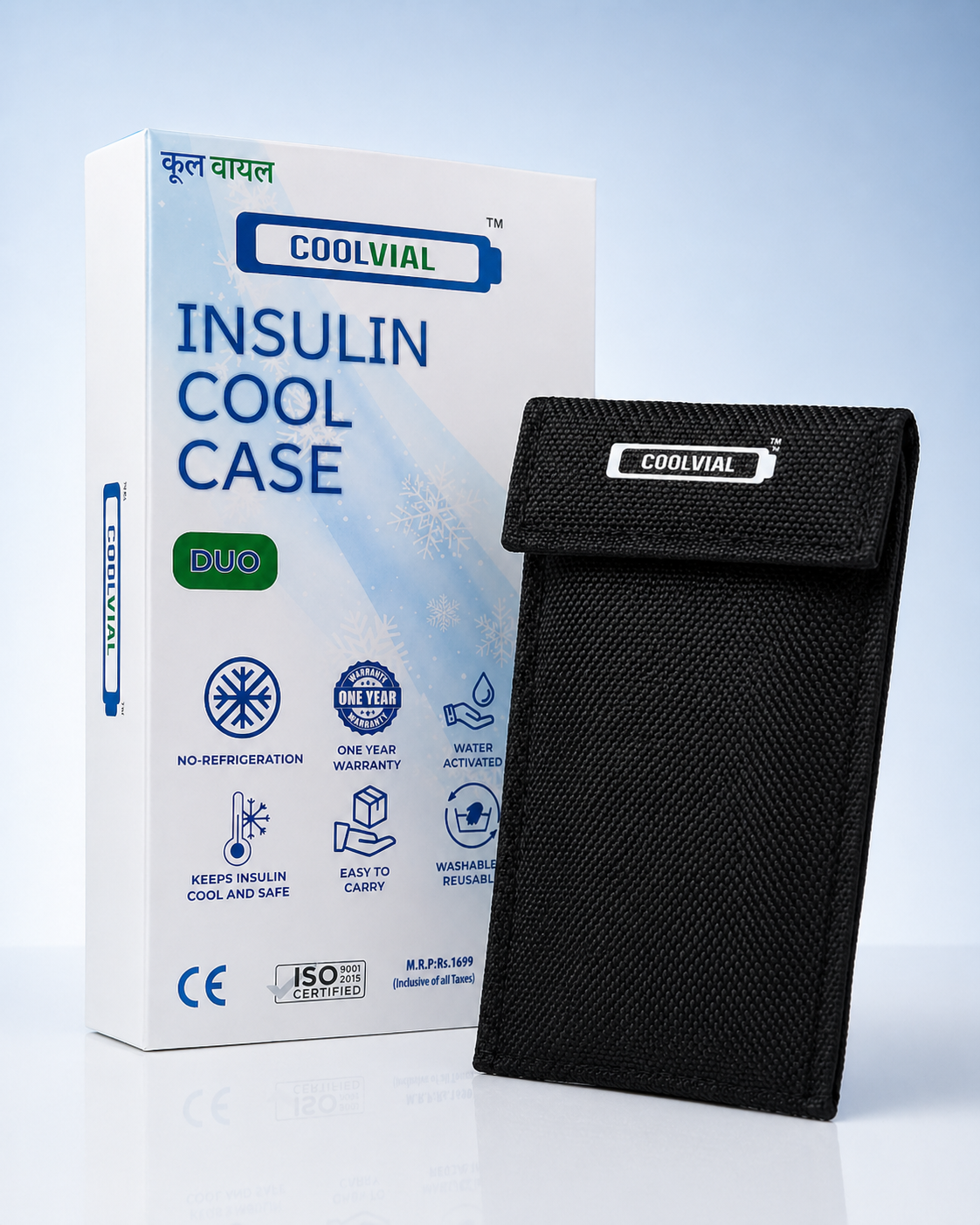
10 Proven Strategies: How to Store Insulin in Ludhiana Summer Heat — A Local's Guide
COOLVIAL keeps insulin safe in India's heat. 48+ hours, no electricity needed.
A water-activated evaporative cooling case, like the COOLVIAL insulin cool case, contains specialized cooling crystals or polymers. When soaked in water for a few minutes, these crystals absorb the water and expand into a gel, which then slowly evaporates. This evaporation process continuously cools the contents inside the case.
Benefits of Evaporative Cooling for Ludhiana:
- Electricity-Free: Ideal for power cuts and travel, offering complete independence from power sources.
- Consistent Cooling: Maintains insulin at safe temperatures (typically 18-26°C) for extended periods, usually 12-16 hours, even in ambient temperatures of 30-40°C.
- Portability: Lightweight and compact, perfect for carrying insulin to work, during errands, or while visiting landmarks like the Lodhi Fort or Punjab Agricultural University.
- Reusability: Can be reactivated simply by re-soaking in water, offering a cost-effective, long-term solution.
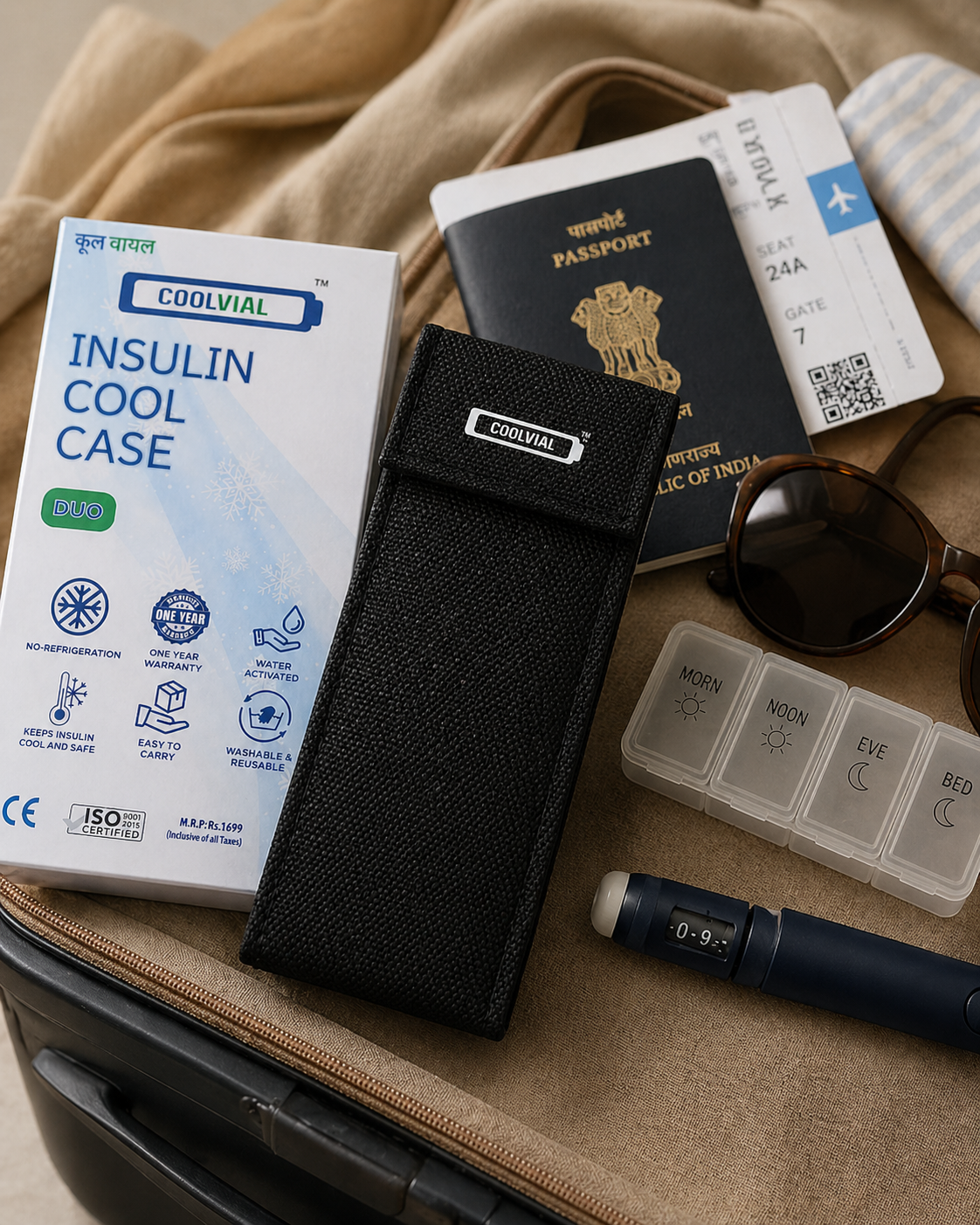
COOLVIAL Duo, for instance, is designed to hold 2 insulin pens and 1 vial, keeping them cool for 12-16 hours. Priced at Rs 1,099 with code COOLHEAL (MRP Rs 1,699), it offers a compelling alternative to other options. While FRIO cases are also popular (often priced around Rs 1,900), and simpler cooler bags like Outer Woods OW-12 (around Rs 999) offer basic insulation, COOLVIAL Duo provides active evaporative cooling with specific capacity for pens and vials, and importantly, is CE certified and ISO 9001:2015 compliant, providing peace of mind.
While evaporative cooling is highly effective, its efficiency can be slightly reduced in extremely high humidity environments (like Ludhiana during peak monsoon). However, for the dry heat of April-June, it performs exceptionally well. Even in monsoon, it still offers significant temperature reduction compared to ambient conditions, making it a reliable choice. You can learn more about protecting your insulin during the monsoon in our article, Ludhiana Monsoon & Insulin — Protecting Your Vials From Humidity Damage.
5. Navigating Water Quality for Evaporative Coolers in Ludhiana
The effectiveness and longevity of your water-activated evaporative cooling case can be influenced by the quality of the water used for activation. Ludhiana, particularly in areas like Bhai Randhir Singh Nagar and Sarabha Nagar, is known for its relatively hard water. Hard water contains high concentrations of minerals like calcium and magnesium.
Concerns with Hard Water:
- Residue Build-up: Repeated use of hard water can lead to mineral deposits accumulating on the fabric of the cooling case. This residue can clog the pores of the material, reducing its evaporative efficiency over time.
- Reduced Lifespan: While not immediately damaging, prolonged exposure to hard water and mineral build-up can shorten the effective lifespan of the cooling crystals or the outer fabric.
- Aesthetic Impact: White mineral stains might become visible on the case, especially if it’s a darker color.
Recommendation for Ludhiana Residents:
To ensure optimal performance and extend the life of your COOLVIAL Duo or any other evaporative cooling case, it is highly recommended to use bottled water or RO (Reverse Osmosis) filtered water for activation.
Here’s a practical guide:
- Bottled Water: Readily available at any Apollo Pharmacy, MedPlus, or local store in Ludhiana. A small bottle is usually sufficient for activation.
- RO Water: Many Ludhiana homes, especially in newer developments like Model Town and BRS Nagar, have RO water purifiers. This is an excellent, convenient source of purified water.
- Tap Water (Caution): If bottled or RO water is not available in an emergency, tap water can be used sparingly. However, make it a point to rinse the case with purified water when possible or clean it gently to prevent mineral build-up.
- Activation Process: Always follow the manufacturer’s instructions for soaking time (typically 5-10 minutes) to allow the crystals to fully absorb water without over-soaking.
This simple step of using clean, soft water can significantly enhance your evaporative cooler’s performance and durability, providing reliable insulin protection day after day.
6. Beyond the Home: Insulin Storage for Ludhiana’s Outdoors & Travel
Ludhiana residents are active, whether commuting to work, enjoying a day out at Pavilion Mall, visiting family, or taking a stroll through the Punjab Agricultural University (PAU) campus. Carrying insulin safely outside the home requires careful planning, especially when exposed to the city’s intense summer heat.
Challenges of Outdoor Storage:
- Vehicle Heat: Car interiors can become extremely hot, often reaching 50-60°C or even higher when parked in direct sunlight. Never leave insulin in a parked car.
- Direct Sunlight: Even brief exposure to direct sunlight can rapidly degrade insulin.
- Prolonged Exposure: Day-long outings mean insulin needs continuous cooling for many hours.
Strategies for Outdoor & Travel Storage:
- Use a Water-Activated Cooling Case: This is the most practical solution. A COOLVIAL Duo, for example, can keep your insulin cool for 12-16 hours. Simply activate it with water before you leave home. It’s discreet and fits easily into a bag.
- Avoid Direct Sunlight: Always keep your cooling case or any insulin carrier in the shade. If you’re at Hardy’s World or the Tiger Safari, ensure your bag is not left in the sun.
- Insulated Bags (with caution): While insulated bags can provide some protection, they are not actively cooling. They only delay the temperature rise. For short trips (1-2 hours) in moderate heat, they might suffice, but for longer periods, an active cooling solution is essential.
- Air-Conditioned Environments: When possible, keep your insulin in an air-conditioned space, such as an office, shopping mall, or a cooled section of a pharmacy like Apollo Pharmacy.
- Travel by Train/Bus: If traveling by train or inter-city bus, keep your insulin in your carry-on luggage with your cooling case. Avoid storing it in overhead racks near windows that might get direct sunlight. For longer journeys, consider bringing extra water for re-activation.
- Air Travel: Always carry insulin in your hand luggage. The cargo hold of an airplane can experience extreme temperatures. Inform airport security about your medical supplies.
For those who frequently travel or spend significant time outdoors in Ludhiana, investing in a reliable, portable cooling solution is non-negotiable for maintaining insulin potency and peace of mind.
7. Peak Heat + Power Cut: Your Emergency Action Plan for May-June
The combination of Ludhiana’s peak summer heat (May-June, often 40-44°C) and an extended power cut is a high-risk scenario for insulin users. This is when your preparedness truly matters. Having an emergency plan can prevent costly insulin degradation and potential health risks.
Emergency Action Plan:
- Immediate Transfer to Backup Cooler:
- If you have an activated evaporative cooling case (e.g., COOLVIAL Duo): Immediately transfer your in-use insulin pens/vials from the fridge (if stored there) into the activated COOLVIAL Duo. This is its primary purpose during such emergencies.
- If you don’t have one: Keep a small, high-quality insulated lunch bag or cooler box ready. Fill it with frozen gel packs or ice packs. Transfer insulin here. Crucially, ensure insulin doesn’t directly touch ice, as freezing can also damage it. Wrap insulin in a cloth before placing it with ice packs.
- Monitor Refrigerator Temperature (if used): If you have a fridge thermometer, check the temperature. If it goes above 8°C for unopened insulin, consider it compromised if the power cut is prolonged.
- Minimize Fridge Opening: During a power cut, avoid opening the refrigerator door unless absolutely necessary. Each opening allows warm air in, raising the internal temperature faster.
- Seek Cooler Environment: If your home becomes excessively hot (above 30°C for extended periods), consider moving to an air-conditioned space if safe and practical – perhaps a relative’s home, a local community center, or even a nearby mall like Pavilion Mall for a few hours.
- Stay Hydrated: While not directly related to insulin storage, managing diabetes in extreme heat requires extra personal care. Drink plenty of fluids to avoid dehydration.
- Have a Plan B for Re-activation Water: In an extended emergency, ensure you have access to bottled or RO water for reactivating your evaporative cooler. Pharmacies like MedPlus or 1mg typically stock bottled water.
Remember, proactive preparation is key. Having an evaporative cooling case like COOLVIAL Duo ready and knowing your emergency steps can make all the difference in protecting your insulin when Ludhiana’s summer hits its peak.
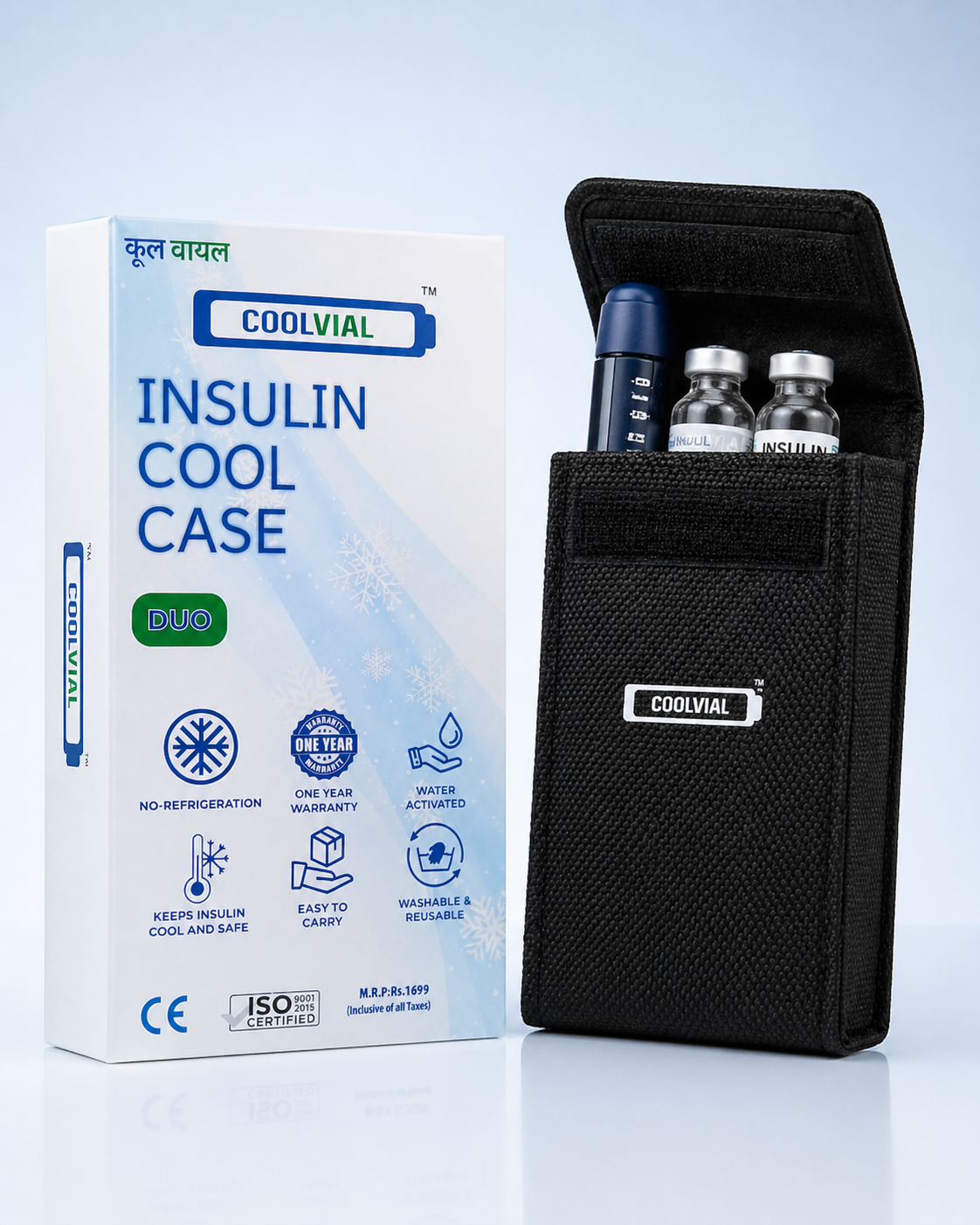
10 Proven Strategies: How to Store Insulin in Ludhiana Summer Heat — A Local's Guide
Insulin at 2-8°C for 48+ hours. Trusted by 10,000+ Indian diabetics.
8. DMC&H & Local Expert Recommendations for Insulin Care
Local medical professionals in Ludhiana, particularly endocrinologists and diabetologists at institutions like DMC&H (Dayanand Medical College) and CMC Ludhiana (Christian Medical College), consistently emphasize the importance of proper insulin storage. Their recommendations are often tailored to the specific climate challenges faced by patients in Punjab.
Key Recommendations from Local Experts:
- Prioritize Temperature Control: Dr. [Endocrinologist Name, Verify in 2026] from DMC&H often advises patients that “room temperature” in Ludhiana’s summer is rarely suitable for insulin in active use. Active cooling solutions are essential.
- Educate on Insulin Degradation: Patients are encouraged to understand the signs of degraded insulin (cloudiness, particles, reduced efficacy) and to discard any suspicious vials or pens.
- Invest in Reliable Cooling: Many doctors recommend portable cooling solutions for daily use, travel, and power cut backups. They often highlight the need for CE certified and ISO compliant products to ensure reliability.
- Check Package Inserts: Always refer to the specific insulin product’s package insert for precise storage instructions, as recommendations can vary slightly between brands and types.
- Don’t Freeze Insulin: Freezing insulin can damage its protein structure, rendering it ineffective. Avoid direct contact with ice packs.
- Regular Consultations: Maintain regular follow-ups with your endocrinologist. Discuss your storage practices, especially if you notice unexplained fluctuations in blood sugar levels, which could indicate insulin degradation.
The RSSDI (Research Society for the Study of Diabetes in India) also provides comprehensive guidelines for diabetes management in India, including insulin storage (Source: RSSDI Publications). These national guidelines, combined with local expert advice, form the bedrock of safe insulin practices in Ludhiana. For more detailed local guidance, consider our Complete Diabetes Care Guide for Ludhiana Residents — 2026 Edition.
9. Neighborhood Nuances: Civil Lines vs. Model Town Storage Strategies
While Ludhiana faces a common climate challenge, the practicalities of insulin storage can differ slightly based on neighborhood characteristics. Factors like housing type, access to consistent electricity, and even the pace of life in different areas can influence the best approach.
Civil Lines (Central & Older Areas):
- Housing: Often features older, more traditional homes, some with thicker walls that provide better insulation, but also many without central air conditioning.
- Power Supply: While improving, some older pockets might experience slightly more frequent or longer power cuts compared to newer developments.
- Water Quality: Harder water might be more prevalent.
- Storage Reality: Residents here might rely more heavily on traditional refrigeration, making backup solutions like evaporative coolers even more critical during power outages. Emphasis on using bottled/RO water for cooling cases is higher.
Model Town, Sarabha Nagar, Bhai Randhir Singh Nagar (BRS Nagar) (Newer & Affluent Areas):
- Housing: Predominantly modern apartments and independent houses, with a higher prevalence of air conditioning and inverters/generators.
- Power Supply: Generally more stable, but still susceptible to peak summer power cuts, especially during high demand.
- Water Quality: RO purifiers are common, making access to suitable water for evaporative coolers easier.
- Storage Reality: While AC provides a comfortable “room temperature,” portability for outdoor activities (e.g., trips to Pavilion Mall or club activities) and protection during power cuts remain key. Evaporative cooling cases are ideal for maintaining a cool temperature when stepping out of AC comfort.
General Strategies for All Ludhiana Neighborhoods:
- Universal Need for Portable Cooling: Regardless of your neighborhood, an electricity-free cooling solution like COOLVIAL Duo is invaluable for carrying insulin safely outside.
- Be Prepared for Power Cuts: Even with inverters, a long power cut can test battery limits. Always have a backup plan for insulin.
- Local Pharmacy Access: Pharmacies like Frontier Medicare and Generic Aadhaar are spread across the city, providing convenient access to bottled water or emergency supplies.
Understanding these subtle differences allows residents to tailor their insulin storage practices for maximum safety and effectiveness within their specific Ludhiana context.
10. Essential Insulin Storage Checklist for Ludhiana Residents
To consolidate all the advice, here’s a practical, actionable checklist for every Ludhiana resident managing diabetes, ensuring your insulin stays potent and safe, even through the hottest days.
- For Unopened Insulin:
- Store in the refrigerator between 2°C and 8°C.
- Place a thermometer in your fridge to monitor temperature daily.
- Keep insulin away from the freezer compartment to prevent accidental freezing.
- For Opened/In-Use Insulin:
- Do NOT rely on “room temperature” in Ludhiana’s summer. Assume ambient indoor temperatures are too high (often 33-38°C).
- Use an active cooling solution: A water-activated evaporative cooling case like COOLVIAL Duo is highly recommended for daily use and travel.
- Check product leaflet: Always confirm the specific storage duration (e.g., 28 or 42 days) once opened.
- During Power Cuts:
- Have an activated COOLVIAL Duo ready, or a small insulated bag with gel/ice packs (ensure insulin doesn’t touch ice).
- Minimize opening the refrigerator door.
- Consider moving to an AC environment if a prolonged outage makes your home too hot.
- Outdoor & Travel:
- Always carry insulin in a portable cooling case.
- Never leave insulin in a parked car, even for a few minutes.
- Avoid direct sunlight exposure at all costs.
- Water Quality for Evaporative Coolers:
- Use bottled water or RO filtered water for activating your cooling case to prevent mineral build-up and ensure optimal performance.
- General Vigilance:
- Inspect insulin regularly for any changes in appearance (cloudiness, discoloration, particles).
- If in doubt about insulin’s integrity due to heat exposure, discard it and use fresh insulin.
- Maintain regular consultations with your diabetologist at DMC&H or CMC Ludhiana.
By following these 10 proven strategies, Ludhiana residents can confidently manage their insulin storage, ensuring their medication remains effective and their health remains a priority, no matter how intense the summer heat.
FAQ Section
Q: What is the safest way to store insulin in Ludhiana during a power cut? A: The safest way to store insulin during a power cut in Ludhiana is to transfer it immediately into a water-activated evaporative cooling case like COOLVIAL Duo, which can maintain safe temperatures for 12-16 hours without electricity, or into a well-insulated cooler bag with non-freezing gel packs.
Q: Can I keep my opened insulin at room temperature in Ludhiana during summer? A: No, it is generally unsafe to keep opened insulin at typical Ludhiana summer room temperatures, which often range from 33-38°C in non-AC homes; this significantly exceeds the recommended maximum of 25-30°C and can cause insulin to degrade quickly.
Q: How does Ludhiana’s hard water affect evaporative cooling cases for insulin? A: Ludhiana’s hard water can cause mineral deposits to build up on evaporative cooling cases over time, potentially reducing their efficiency and lifespan, making it advisable to use bottled or RO water for activation.
Q: Where can I get reliable information on insulin storage in Ludhiana? A: For reliable information on insulin storage in Ludhiana, consult your endocrinologist or diabetologist at hospitals like DMC&H or CMC Ludhiana, and refer to guidelines from reputable organizations like RSSDI.
Q: What should I do if my insulin was accidentally left in a hot car in Ludhiana? A: If your insulin was accidentally left in a hot car in Ludhiana, it is highly likely that its potency has been compromised due to the extreme temperatures (often exceeding 50°C), and for safety, it should be discarded and replaced with fresh insulin.
Q: Are there specific cooling cases recommended for Ludhiana’s climate? A: Water-activated evaporative cooling cases like COOLVIAL Duo are highly recommended for Ludhiana’s climate because they are electricity-free, portable, and designed to keep insulin cool for extended periods even in high ambient temperatures.
Q: How often should I reactivate my evaporative cooling case in Ludhiana’s summer? A: You should reactivate your evaporative cooling case by re-soaking it in water according to the manufacturer’s instructions, typically every 12-16 hours, to ensure continuous cooling in Ludhiana’s summer heat.
Conclusion
Navigating diabetes in Ludhiana’s challenging climate requires diligence and smart choices, especially when it comes to insulin storage. The city’s intense summer heat, coupled with the realities of power cuts and varying indoor temperatures, demands more than just casual storage. By understanding the science behind insulin degradation and embracing practical, electricity-free cooling solutions, you can safeguard your vital medication and maintain consistent blood sugar control.
Remember, proactive measures, such as utilizing a CE certified, ISO 9001:2015 compliant cooling case like COOLVIAL Duo, using appropriate water for activation, and having an emergency plan for peak heat and power cut scenarios, are not just convenient – they are essential for your well-being. Don’t let Ludhiana’s summer compromise your health. Take control of your insulin storage today.
Order COOLVIAL Duo at Rs 1,099 with code COOLHEAL at coolvial.com or via WhatsApp wa.me/918766952300
Medical Disclaimer: This article is for general information and educational purposes only. It is not intended as medical advice. Always consult your endocrinologist or diabetologist before changing insulin storage or dosing practices, or if you have any concerns about your diabetes management.
Methodology Note: How We Researched This — This article is based on a comprehensive review of insulin storage guidelines from the Research Society for the Study of Diabetes in India (RSSDI), data from the ICMR-INDIAB study on diabetes prevalence in India, analysis of local Ludhiana hospital directories (DMC&H, CMC Ludhiana, SPS Hospitals), and insights derived from the pharmacy networks of Apollo Pharmacy and MedPlus regarding common patient queries and product availability in the region. Local climate data and common residential conditions in Ludhiana’s neighborhoods were also considered.