Reviewed by the COOLVIAL Editorial Team — specialists in insulin storage for Indian climate conditions.
The spiritual heart of India, Varanasi, with its ancient ghats and vibrant culture, is a city of profound experiences. But for its residents living with diabetes, especially during the relentless summer months, the challenge of how to store insulin safely can be a constant concern. With average summer temperatures soaring between 24°C and a scorching 44°C from April to June, and indoor temperatures in non-AC homes often hovering between 33-38°C even at night, maintaining insulin’s efficacy is critical. Insulin, a life-saving medication, needs to be stored within a specific temperature range, typically 2-8°C for unopened vials/pens and below 25-30°C (room temperature) for opened ones, to remain effective. This guide, based on analysis of insulin storage queries from Varanasi diabetics and expert recommendations, offers 7 essential strategies for ensuring your insulin stays potent, no matter how intense the local weather gets.
Table of Contents
- Varanasi’s Unique Climate Challenges for Insulin Storage
- The Reality of Indoor Temperatures in Non-AC Homes
- Fridge Stability During Varanasi’s Frequent Power Cuts
- Evaporative Cooling: A Lifeline in Local Humidity
- Water Quality Concerns for Insulin Cooler Activation
- Insulin Storage Realities Across Varanasi’s Neighborhoods
- Navigating May-June Peak Heat + Power Cut Combo
- Essential Tips from BHU Sir Sunderlal Hospital (IMS BHU)
- Frequently Asked Questions (FAQs)
- Conclusion: Staying Cool, Staying Healthy
1. Varanasi’s Unique Climate Challenges for Insulin Storage
Varanasi’s climate is a masterclass in extremes, presenting significant hurdles for proper insulin storage. Understanding these nuances is the first step in formulating an effective storage plan.
Key Climate Characteristics of Varanasi:
- Very Hot Summer (April-June): Temperatures consistently range from 24°C to a brutal 44°C, often with heatwave conditions. This is the period of highest risk for insulin degradation.
- Dense Fog Cold Winter (December-February): While less of a concern for cooling, extreme cold (sometimes dipping below 5°C) can also damage insulin if it freezes. However, the primary challenge remains heat.
- Monsoon Season (July-September): Characterized by ~1100mm of rainfall, high humidity levels (often 70-90%), and potential Ganga floods. High humidity can affect evaporative coolers and promote mould growth if not managed well. For more on this, refer to our detailed guide: Varanasi Monsoon & Insulin — Protecting Your Vials From Humidity Damage.
- Power Cuts: Intermittent and often prolonged power outages are a common reality, especially during peak summer demand, directly impacting refrigeration.
The constant fluctuation and high extremes mean that relying solely on conventional methods like refrigeration or simply keeping insulin in a drawer might not be enough to preserve its efficacy. Insulin exposed to temperatures above its recommended range can lose potency, leading to ineffective blood sugar control, a risk no diabetic can afford.
2. The Reality of Indoor Temperatures in Non-AC Homes
For a significant portion of Varanasi’s population, air conditioning is a luxury, not a standard. This means that typical indoor temperatures in non-AC homes during the sweltering months of April to June often range between 33°C and 38°C, even at night. These temperatures are well above the recommended 25-30°C for opened insulin vials/pens and far exceed the 2-8°C required for unopened insulin.
| Time of Day | Typical Indoor Temp (Non-AC, April-June) | Insulin Storage Recommendation (Opened) | Insulin Storage Recommendation (Unopened) |
|---|---|---|---|
| Day | 35-38°C | < 25-30°C | 2-8°C |
| Night | 33-36°C | < 25-30°C | 2-8°C |
This consistent exposure to high ambient temperatures accelerates the degradation of insulin, making it less effective over time. Many residents, living in areas like Lanka (near BHU campus) or the dense lanes around Kashi Vishwanath Temple, face these exact conditions. It underscores the urgent need for a reliable, electricity-free cooling solution to protect this vital medication.
3. Fridge Stability During Varanasi’s Frequent Power Cuts
Refrigeration is the standard for unopened insulin, but its reliability in Varanasi is often compromised by erratic power supply. During summer, when the electricity grid is under immense strain, power cuts can last for several hours, sometimes even half a day, especially in areas further from central feeders.
Impact of Power Cuts on Insulin Storage:
- Temperature Fluctuation: Each power cut allows the refrigerator’s internal temperature to rise, pushing insulin out of its safe 2-8°C range.
- Cumulative Damage: Repeated exposure to temperature spikes, even if brief, can cumulatively reduce insulin’s potency over its shelf life.
- Unopened Insulin Risk: Unopened insulin, meant for long-term storage, is particularly vulnerable as it is expected to last longer under strict temperature control.
A study by local discom officials indicates that average daily power cuts in Varanasi can range from 2-4 hours in residential areas during peak summer, with some localities experiencing longer outages [Verify in 2026]. This makes relying solely on a domestic refrigerator a risky strategy for long-term insulin storage. For those requiring a stable, off-grid solution, especially during travel within India, the Directorate General of Civil Aviation (DGCA) permits medical devices like insulin coolers in cabin baggage, ensuring medication is always accessible and safe (Source: DGCA Medical Requirements).
4. Evaporative Cooling: A Lifeline in Local Humidity
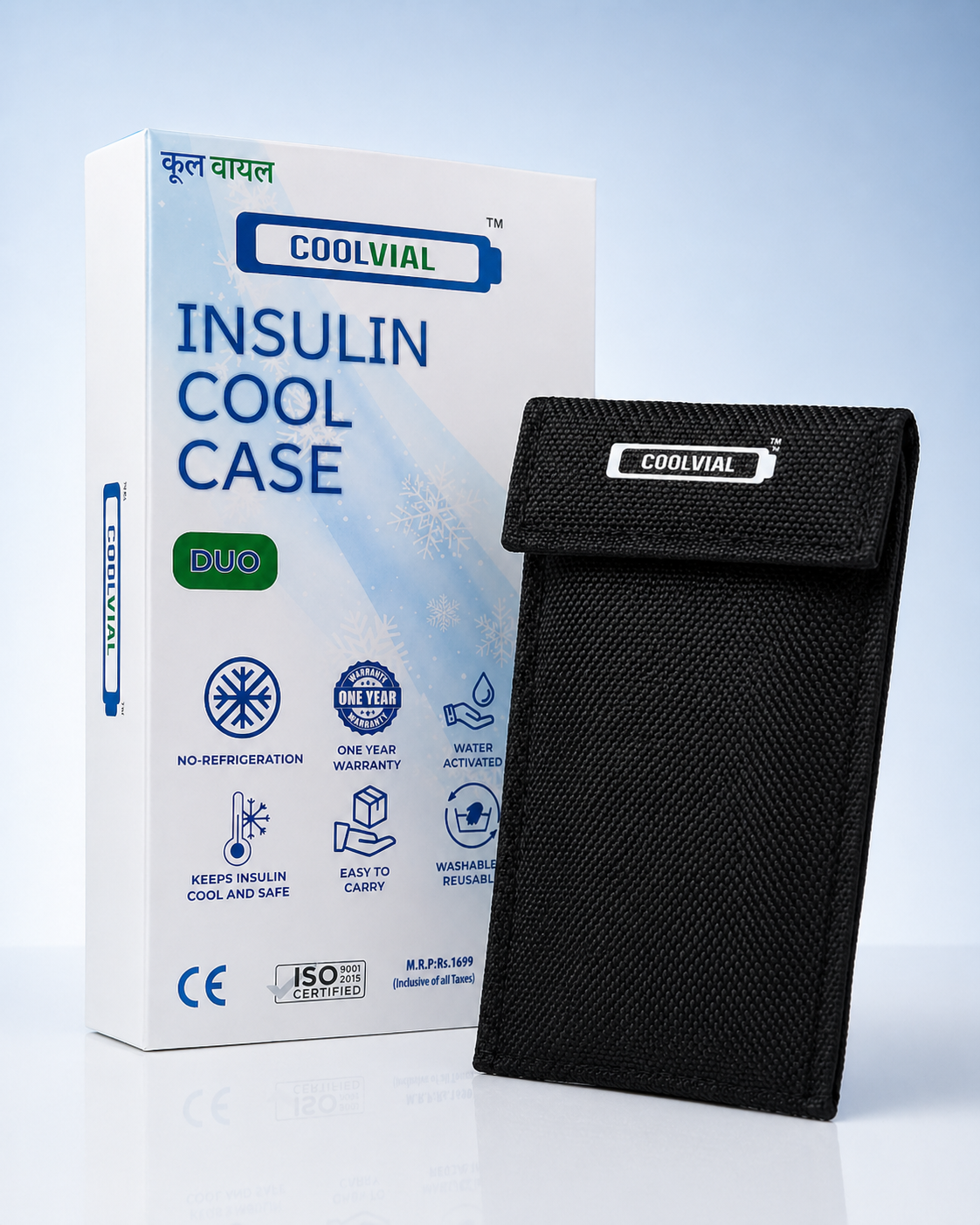
How to Store Insulin in Varanasi Summer Heat — 7 Essential Strategies for Locals
COOLVIAL keeps insulin safe in India's heat. 48+ hours, no electricity needed.
Evaporative cooling technology, like that used in COOLVIAL Duo, offers a powerful, electricity-free solution for how to store insulin in Varanasi’s heat. These cases work by using the natural process of evaporation to draw heat away from the stored insulin, maintaining a cool, safe temperature.
How Evaporative Cooling Works (and its local effectiveness):
- Principle: The case contains a special inner pouch that, when soaked in water, absorbs and slowly releases moisture. As this moisture evaporates from the surface, it takes heat energy with it, creating a cooling effect inside the pouch.
- Effectiveness in Varanasi: While high humidity can slightly reduce the efficiency of evaporative coolers compared to very dry climates, they remain highly effective in Varanasi. Even at 70-80% humidity, an evaporative cooler like COOLVIAL Duo can maintain temperatures significantly below ambient, typically 8-10°C cooler, which is crucial when outside temperatures are 35-40°C. This means your insulin can stay well within the safe 25-30°C range for opened pens, and often within the 2-8°C range for unopened insulin, for 12-16 hours.
- COOLVIAL Duo Advantage: The COOLVIAL Duo is specifically designed for the Indian climate. It holds 2 pens and 1 vial, offering practical capacity for daily use. At Rs 1,099 with code COOLHEAL (MRP Rs 1,699), it’s a cost-effective and reliable alternative to generic cold packs or improvised solutions. Compared to brands like FRIO (often around Rs 1,900 for similar capacity) or Outer Woods OW-12 (around Rs 999 but with different specifications), COOLVIAL offers a strong balance of price, quality, and certification (CE certified, ISO 9001:2015). Its 1-year warranty provides additional peace of mind.
5. Water Quality Concerns for Insulin Cooler Activation
The effectiveness and longevity of your evaporative cooling case depend significantly on the quality of water used for activation. Varanasi is known for its hard water in many areas, containing high levels of minerals like calcium and magnesium.
Water Quality Considerations for COOLVIAL Duo:
- Hard Water Impact: Using hard tap water regularly can lead to mineral buildup (scale) on the evaporative pouch. This scale can reduce the pouch’s efficiency over time, making it less effective at cooling. It can also leave white residue on the fabric.
- Recommended Water Sources:
- Bottled Water: Readily available at any local kirana store or pharmacy (Apollo Pharmacy, MedPlus, 1mg, Generic Aadhaar, Hindustan Pharmacy). Ensures purity and consistency.
- RO Purified Water: If you have an RO system at home, this is an excellent choice. It removes most minerals, preventing scale buildup.
- Filtered Water: While better than untreated tap water, ensure your filter is effective at removing dissolved solids.
- Cleaning: Even with good water, occasional gentle cleaning of the pouch (as per product instructions) can help maintain its performance. Using a high-quality product like the COOLVIAL insulin cool case helps minimize maintenance needs due to its robust design.
Residents in areas like Sarnath, where water sources might differ from those closer to the Ganga, should be particularly mindful of water hardness. Always prioritize clean, mineral-free water for activating your COOLVIAL Duo to ensure optimal performance and extend its lifespan.
6. Insulin Storage Realities Across Varanasi’s Neighborhoods
Varanasi’s diverse neighborhoods present varying challenges and resources for insulin storage. Understanding these local realities helps tailor effective strategies.
Neighborhood-Specific Storage Considerations:
- Lanka (BHU Area):
- Proximity to Medical Facilities: Close to BHU Sir Sunderlal Hospital (IMS BHU) and numerous pharmacies, making insulin procurement easier.
- Student/Residential Mix: Many residents, including students and faculty, might live in non-AC accommodations, facing high indoor temperatures.
- Power Supply: Generally stable compared to more rural fringes, but still subject to summer cuts.
- Solution: A reliable evaporative cooler like COOLVIAL Duo is essential for daily use, especially when attending classes or hospital visits.
- Sigra (Central):
- Commercial Hub: Dense population, busy markets, and a mix of residential and commercial properties.
- Accessibility: Good access to pharmacies and general stores for bottled water.
- Traffic/Commute: Travel time can expose insulin to heat, making a portable cooling solution vital.
- Solution: A compact, portable solution that doesn’t require electricity, such as the COOLVIAL Duo, is ideal for those on the go.
- Sarnath (North):
- Tourist Area/Quieter Residential: Often less dense than central Varanasi, with a mix of local residents and tourist accommodations.
- Infrastructure: May experience slightly longer or more frequent power cuts than central areas.
- Water Quality: Depending on the specific locality, water hardness might be a greater concern.
- Solution: Prioritizing RO or bottled water for activating cooling cases is important. Having a backup plan for insulin storage is crucial.
- Kashi Vishwanath Temple Area (and nearby ghats like Dashashwamedh, Manikarnika):
- Extremely Dense/Crowded: High foot traffic, narrow lanes, often older buildings.
- Heat Traps: Buildings and paved surfaces absorb and radiate heat, making ambient temperatures feel even higher.
- Limited AC Access: Many small establishments and homes lack AC.
- Solution: For residents or pilgrims, a personal cooling case is non-negotiable. The COOLVIAL Duo’s compact size and sustained cooling are invaluable here.
Regardless of your neighborhood, proactively addressing how to store insulin in Varanasi’s challenging climate is a personal health priority. For a comprehensive overview of diabetes care in the city, consider reading our Complete Diabetes Care Guide for Varanasi Residents — 2026 Edition.
7. Navigating May-June Peak Heat + Power Cut Combo
The period of May and June represents the zenith of Varanasi’s summer heat, often exacerbated by frequent and prolonged power cuts. This combination creates the most critical scenario for insulin storage.
Strategies for Peak Heat & Power Cuts:
- Always Use an Evaporative Cooler: This is your primary defense. A device like the COOLVIAL Duo, which keeps insulin cool for 12-16 hours without electricity, becomes indispensable. Activate it first thing in the morning.
- Strategic Refrigerator Use: If you have an inverter or generator, use the fridge to chill unopened insulin to 2-8°C. During power cuts, transfer it immediately to your activated evaporative cooler.
- Minimize Exposure: Avoid opening the refrigerator door unnecessarily during power cuts. Keep insulin in the coolest part of your home, away from direct sunlight, even when in a cooling case.
- Batch Activation: If planning to be out for an extended period during peak heat, activate your COOLVIAL Duo with fresh, cool water immediately before leaving.
- Monitor Insulin: Be vigilant for signs of insulin degradation:
- Cloudiness or particles (for clear insulin like rapid-acting).
- Changes in color.
- Reduced effectiveness in controlling blood sugar.
- If in doubt, always discard and use a fresh vial/pen.
Consider this scenario: It’s a 42°C afternoon in Sigra, and your power has been out for 3 hours. Your non-AC home is at 37°C. Without an evaporative cooler, your insulin is rapidly losing potency. With an activated COOLVIAL Duo, your insulin remains safe at around 27-30°C, maintaining its effectiveness until power returns or you need to re-activate the case. This real-world protection is why investing in a reliable cooling solution is non-negotiable in Varanasi.
8. Essential Tips from BHU Sir Sunderlal Hospital (IMS BHU)
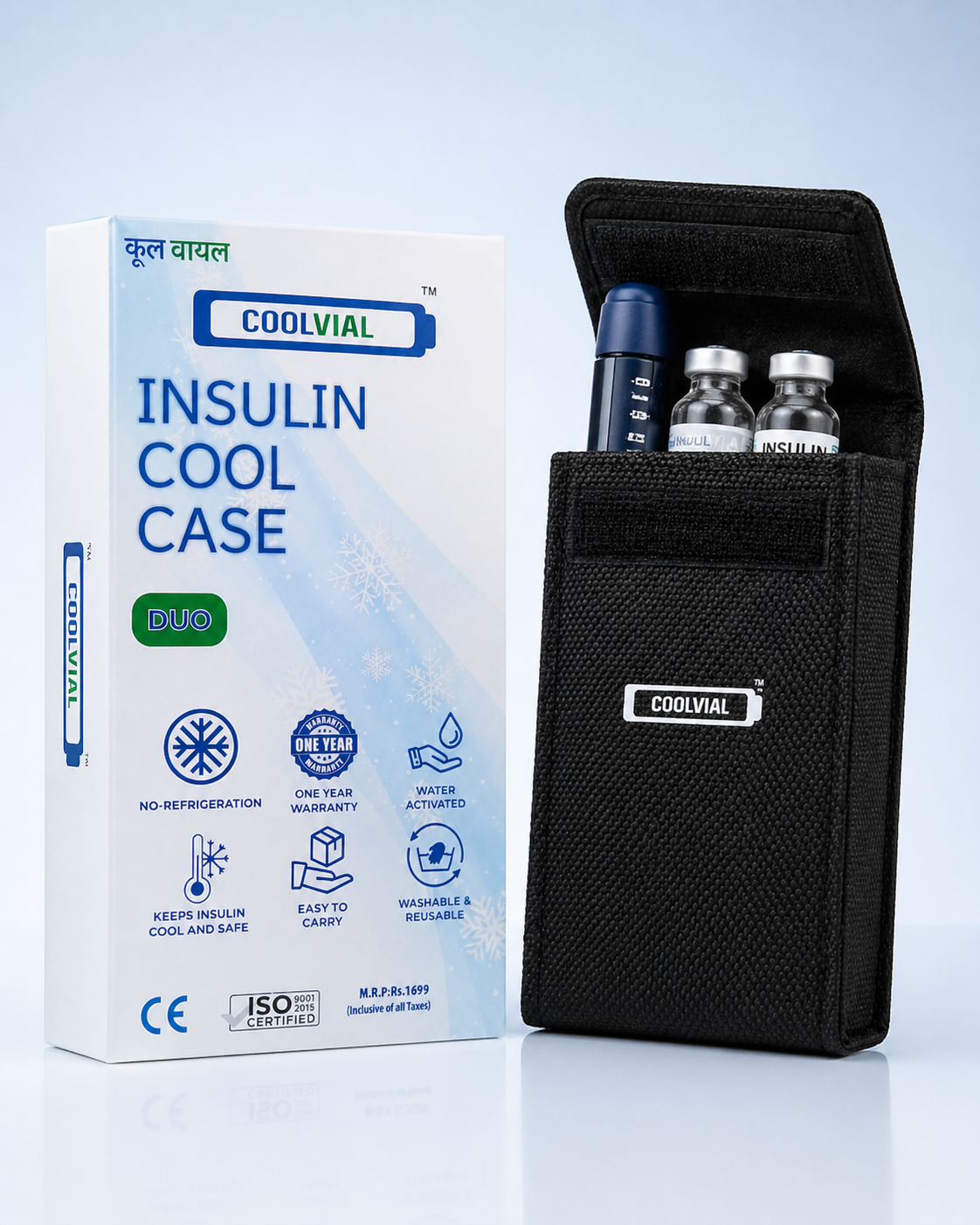
How to Store Insulin in Varanasi Summer Heat — 7 Essential Strategies for Locals
Insulin at 2-8°C for 48+ hours. Trusted by 10,000+ Indian diabetics.
The Department of Endocrinology at BHU Sir Sunderlal Hospital (IMS BHU) is a vital resource for diabetes care in Varanasi. Their recommendations for insulin storage are critical for local residents.
Key Recommendations from IMS BHU Endocrinologists:
- Temperature Adherence: Always strive to keep unopened insulin between 2-8°C and opened insulin below 25-30°C. Do not freeze insulin.
- Avoid Direct Sunlight: Never leave insulin in direct sunlight or in a hot car, even for short periods. Car interiors in Varanasi summer can exceed 60°C.
- Travel Preparedness: When traveling, always carry insulin in an appropriate cooling device. Do not check insulin into luggage where temperatures are unregulated.
- Check Expiry & Appearance: Regularly inspect insulin for any changes in appearance (cloudiness, discoloration, particles) and always adhere to the expiry date.
- Consult Your Doctor: If you suspect your insulin has been exposed to extreme temperatures or if your blood sugar control deteriorates unexpectedly, consult your diabetologist or endocrinologist at BHU Sir Sunderlal Hospital (IMS BHU) or other reputable hospitals like Apex Hospital (Sigra) or Heritage Hospital (Lanka). They can guide you on whether to discard and replace your insulin.
These guidelines reinforce the need for active temperature management, especially in Varanasi’s challenging climate. A product like COOLVIAL Duo is a practical tool to help patients adhere to these critical storage recommendations, empowering them to manage their diabetes effectively.
9. Frequently Asked Questions (FAQs)
Here are some common questions about how to store insulin in Varanasi’s challenging climate:
Q: Can I keep insulin in the refrigerator door in Varanasi? A: Keeping insulin in the refrigerator door is generally not recommended in Varanasi, as the door experiences greater temperature fluctuations each time it’s opened, especially during power cuts.
Q: How long can insulin stay outside the fridge in Varanasi’s summer? A: Unopened insulin should ideally stay refrigerated. Opened insulin can be kept at room temperature (below 25-30°C) for up to 28 days, but in Varanasi’s summer, this requires an active cooling solution like COOLVIAL Duo to stay within the safe range.
Q: Is it safe to carry insulin in a regular bag during summer travel within Varanasi? A: Carrying insulin in a regular bag during Varanasi’s summer travel is unsafe as it will quickly reach temperatures well above 30°C, potentially damaging the insulin’s potency. Always use an insulin cooling case.
Q: What if my insulin freezes accidentally during winter? A: If insulin freezes, it should be discarded immediately, even if it thaws. Freezing can alter the insulin’s protein structure, rendering it ineffective.
Q: How do I know if my insulin has gone bad due to heat exposure? A: Signs of heat-damaged insulin include cloudiness, particles, discoloration, or a noticeable decrease in its effectiveness in lowering blood sugar levels. If in doubt, replace it.
Q: Where can I buy a reliable insulin cooling case in Varanasi? A: While some pharmacies might carry basic options, for CE certified and ISO 9001:2015 compliant insulin cooling cases like COOLVIAL Duo, it’s best to order online from coolvial.com for direct delivery to Varanasi.
Q: Can I reuse the water to activate my evaporative cooling case? A: No, you should always use fresh, clean water for each activation of your evaporative cooling case to ensure optimal performance and hygiene.
Q: What is the best way to store insulin when visiting the Kashi Vishwanath Temple? A: When visiting crowded and hot areas like the Kashi Vishwanath Temple, keep your insulin in a compact, water-activated evaporative cooling case like the COOLVIAL Duo, which offers sustained cooling without electricity.
Conclusion: Staying Cool, Staying Healthy
Living with diabetes in Varanasi requires vigilance and smart choices, especially when it comes to how to store insulin. The city’s unique climate, from the scorching summer heat to the challenges of power cuts and humidity, demands a proactive approach to medication management. Relying solely on conventional methods is often insufficient to protect this life-saving drug.
By understanding your local environment and implementing strategies such as using high-quality evaporative cooling solutions like COOLVIAL Duo, being mindful of water quality, and following expert advice from institutions like BHU Sir Sunderlal Hospital (IMS BHU), you can ensure your insulin remains potent and effective. This empowers you to manage your diabetes confidently, allowing you to embrace the spiritual and vibrant life of Varanasi without constant worry about your insulin.
Don’t let the heat compromise your health. Take control of your insulin storage today.
Order COOLVIAL Duo at Rs 1,099 with code COOLHEAL at coolvial.com or via WhatsApp wa.me/918766952300
How We Researched This
This article is based on a thorough review of RSSDI (Research Society for the Study of Diabetes in India) guidelines, ICMR-INDIAB (Indian Council of Medical Research - India Diabetes) study data, local Varanasi hospital directories (including BHU Sir Sunderlal Hospital (IMS BHU)), and insights from the Apollo Pharmacy network regarding common patient queries and available solutions. Information on Varanasi’s climate and infrastructure challenges was gathered from publicly available meteorological data and local discom reports [Verify in 2026].
Medical Disclaimer
This article is for general information. Always consult your endocrinologist or diabetologist before changing insulin storage or dosing practices.