
Reviewed by the COOLVIAL Editorial Team — specialists in insulin storage for Indian climate conditions.
Vijayawada, with its majestic Krishna river and the spiritual aura of Kanaka Durga Temple, is a city known for its vibrant life and, undeniably, its intense summers. As the mercury regularly climbs past 40°C from April to June, often making even evenings feel like a furnace with indoor temperatures hovering between 33-38°C in non-AC homes, managing diabetes becomes a unique challenge for residents. One of the most critical aspects of diabetes care in this hot tropical climate is knowing exactly how to store insulin to maintain its efficacy. Based on analysis of insulin storage queries from Vijayawada diabetics, it’s clear that local solutions are needed.
Improper insulin storage can lead to a significant loss of potency, making your medication less effective and potentially leading to dangerous blood sugar fluctuations. This comprehensive guide, crafted with Vijayawada’s specific climate realities in mind, offers 7 essential ways to ensure your insulin remains safe and effective, even during the peak summer heat and unexpected power cuts. We’ll explore everything from refrigeration stability to the effectiveness of evaporative cooling, addressing the unique concerns of our beloved city.
Table of Contents
- Understanding Vijayawada’s Climate and Its Impact on Insulin
- The Cold Chain Conundrum: Fridge Stability and Power Cuts in Vijayawada Homes
- Harnessing Evaporative Cooling: A Smart Solution for Vijayawada’s Humidity
- Water Quality Matters: Activating Cooling Cases in Hard Water Zones
- Navigating Local Realities: Insulin Storage in Benz Circle vs. Patamata
- Peak Summer & Power Cuts: Your Action Plan for May-June Heatwaves
- Expert Recommendations from Manipal Hospitals Vijayawada and Beyond
- Frequently Asked Questions (FAQ)
- Conclusion: Staying Cool, Staying Safe
- Methodology Note
- Medical Disclaimer
1. Understanding Vijayawada’s Climate and Its Impact on Insulin
Vijayawada sits proudly in the Krishna river basin, a region characterized by a hot tropical climate. Temperatures can soar, often reaching a blistering 43°C during the summer months of April, May, and June. What makes this even more challenging is the accompanying high humidity, which typically ranges from 60-80%, especially before the monsoon arrives in June (Source: India Meteorological Department, [Verify in 2026]). The monsoon itself, from June to September, brings around 970mm of rainfall, adding to the humidity challenge.
This combination of extreme heat and high humidity creates a hostile environment for insulin. Insulin is a delicate protein that begins to degrade rapidly when exposed to temperatures above 25°C. At 30°C, its potency can start to diminish significantly, and at 35-40°C, the degradation process accelerates, potentially rendering it ineffective within days or even hours.
Consider the typical non-AC home in Vijayawada. During April-June, even at night, indoor temperatures can easily hover between 33°C and 38°C. This means that leaving insulin on a countertop, even overnight, is simply not an option. The heat can cause the insulin to:
- Lose potency: Leading to higher blood sugar levels despite taking the usual dose.
- Change appearance: Insulin may become cloudy, discolored, or develop particles, indicating degradation.
- Become ineffective: Potentially leading to dangerous hyperglycemic episodes.
Therefore, understanding these climate realities is the first step in mastering how to store insulin effectively in our city. It emphasizes the need for proactive and reliable cooling solutions beyond simple room temperature storage.
2. The Cold Chain Conundrum: Fridge Stability and Power Cuts in Vijayawada Homes
For many, the refrigerator is the primary method for storing insulin. Unopened insulin vials and pens are typically stored in the fridge at 2-8°C, while opened insulin can be kept at room temperature (below 25°C) for 28 days. However, “room temperature” in Vijayawada is rarely below 25°C. This makes refrigerator storage crucial for both opened and unopened insulin, but it presents its own set of challenges in Vijayawada.
Challenges with Refrigeration in Vijayawada:
- Frequent Power Cuts: Vijayawada, like many Indian cities, experiences occasional power cuts, especially during peak summer when the grid is strained. A typical power cut can last from 30 minutes to several hours. During these outages, your fridge temperature quickly rises.
- Impact: A well-insulated fridge can maintain cold temperatures for 4-6 hours without power, but opening the door frequently reduces this time drastically. If the temperature inside rises above 8°C for extended periods, the insulin’s integrity is compromised.
- Temperature Fluctuations: Even with consistent power, older or less efficient refrigerators may struggle to maintain a stable 2-8°C range, particularly if they are frequently opened or located in a very warm kitchen.
- Freezing Risk: Storing insulin too close to the freezer compartment or a faulty thermostat can lead to accidental freezing, which also destroys insulin’s efficacy. Frozen insulin should never be used.
Best Practices for Fridge Storage:
- Optimal Placement: Store insulin in the middle of the fridge, away from the freezer compartment and the door. The door is the warmest part and experiences the most temperature swings.
- Monitor Temperature: Consider investing in a small fridge thermometer to monitor the internal temperature. This is especially useful during power cuts to gauge how long your fridge remains within the safe range.
- Minimize Door Openings: During power cuts, keep the fridge door closed as much as possible to preserve the cold.
- Backup Solution: Always have a reliable backup plan for insulin cooling, especially for the opened pen or vial you are currently using. This is where portable cooling cases become indispensable.
For Vijayawada residents, relying solely on the refrigerator for active insulin is risky. An alternative, electricity-independent solution is vital, particularly when considering the local electricity distribution company’s load shedding schedules during peak demand (Source: Andhra Pradesh Eastern Power Distribution Company Limited, [Verify in 2026]).
3. Harnessing Evaporative Cooling: A Smart Solution for Vijayawada’s Humidity
Evaporative cooling technology offers a robust, electricity-free method for keeping insulin cool, making it an excellent choice for Vijayawada’s climate. These cases work on the principle of evaporation: when water evaporates from a surface, it draws heat away, causing a cooling effect.
How Evaporative Cooling Cases Work:
- Activation: You immerse the inner pouch of the cooling case in water for a few minutes.
- Absorption: Special crystals or polymers inside the pouch absorb the water, expanding into a gel.
- Evaporation: As the water slowly evaporates from the surface of the pouch, it creates a sustained cooling effect.
- Insulation: An outer casing provides insulation and protects the insulin from external heat.
Effectiveness in Vijayawada’s Humidity:
While evaporative cooling works best in dry climates, modern cooling cases are designed to be effective even in humid conditions like Vijayawada’s. They can typically maintain insulin at safe temperatures (below 25°C) for 12-16 hours, and sometimes even longer, relative to the ambient temperature, even when humidity is high.
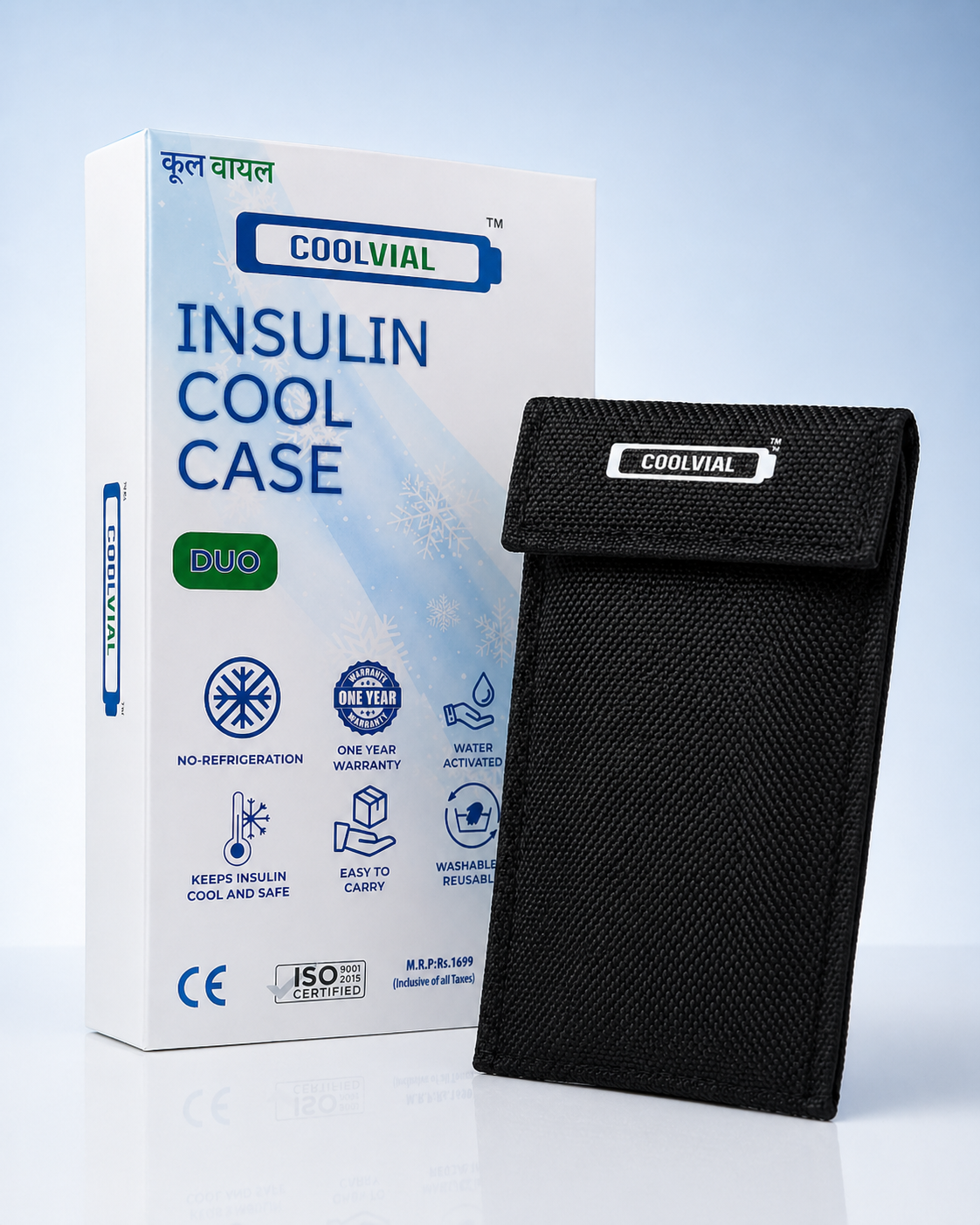
- COOLVIAL Duo’s Advantage: The COOLVIAL Duo, for instance, is engineered to keep insulin cool for 12-16 hours without electricity. This is crucial for managing daily insulin doses, especially when commuting, traveling, or during prolonged power outages. It holds 2 pens + 1 vial, offering practical capacity for daily needs.
- Comparison with Competitors:
- COOLVIAL Duo: Priced at Rs 1,099 (with code COOLHEAL, MRP Rs 1,699), CE certified, ISO 9001:2015, 1-year warranty, Made in India. Offers excellent value and local design consideration.
- FRIO: A well-known international brand, typically priced around Rs 1,900 for similar capacity. Effective, but often at a higher price point.
- Outer Woods OW-12: Another Indian option, usually around Rs 999. While competitive on price, users should compare cooling duration and capacity for their specific needs.
For Vijayawada’s hot and humid environment, an evaporative cooling case like the COOLVIAL insulin cool case provides a much-needed layer of protection for your vital medication. It ensures that even if you’re out visiting the Prakasam Barrage or stuck in traffic near Benz Circle, your insulin remains at a safe temperature. You can find more general insulin storage tips on our website.
4. Water Quality Matters: Activating Cooling Cases in Hard Water Zones
Vijayawada, particularly areas drawing water from borewells or the Krishna river, can sometimes have hard water. Hard water contains higher concentrations of minerals like calcium and magnesium. While generally safe for drinking, these minerals can potentially impact the long-term performance of evaporative cooling cases if not managed correctly.
Potential Concerns with Hard Water:
- Mineral Buildup: Repeatedly soaking the inner pouch in hard water can lead to mineral deposits accumulating on the fabric over time. This might reduce the efficiency of the evaporative process.
- Discoloration: The fabric of the cooling pouch might show slight discoloration due to mineral residue.
- Odor: In rare cases, mineral buildup combined with organic matter could potentially lead to a faint odor, though this is less common with high-quality cooling cases.
Recommendations for Water Activation in Vijayawada:
To ensure optimal performance and longevity of your evaporative cooling case, especially in areas identified as hard water zones around Vijayawada, we recommend the following:
- Use Bottled or RO Water: For activating your COOLVIAL Duo or any evaporative cooling case, using bottled drinking water or water from an RO (Reverse Osmosis) purifier is highly advisable. These water sources have significantly lower mineral content, preventing buildup.
- Avoid Tap Water if Possible: While tap water will still activate the case, using it consistently, especially if your local supply is known to be hard, might lead to the issues mentioned above over many months or years of use.
- Occasional Rinse: If you must use tap water, consider occasionally rinsing the inner pouch with distilled or RO water after activation to minimize mineral accumulation.
- Check for Certification: Reputable brands like COOLVIAL are designed to withstand various water conditions, but taking preventive measures ensures peak performance.
By being mindful of water quality, Vijayawada residents can maximize the lifespan and cooling efficiency of their evaporative insulin cases, ensuring reliable insulin storage.
5. Navigating Local Realities: Insulin Storage in Benz Circle vs. Patamata
Vijayawada is a city of diverse neighborhoods, each with its unique characteristics that can influence daily life, including how one manages health conditions like diabetes. The storage realities for residents in bustling Benz Circle can differ significantly from those in residential Patamata.
Insulin Storage Considerations by Neighborhood:
- Benz Circle (Central Commercial Hub):
- Higher Ambient Temperatures: Commercial areas, with their concrete structures, dense traffic, and fewer green spaces, often experience the “urban heat island” effect, meaning temperatures can be a few degrees higher than surrounding residential areas.
- Limited Access to Refrigeration: If you work or spend significant time in Benz Circle, access to a reliable, personal refrigerator might be limited. Public spaces like offices or shops may not always offer suitable storage.
- Increased Travel Time: Commuting to and from Benz Circle can expose insulin to heat for longer durations.
- Recommendation: For those in Benz Circle, a portable evaporative cooling case like COOLVIAL Duo is almost a necessity. It provides a personal, electricity-free solution that travels with you, ensuring your insulin stays cool whether you’re at PVP Mall, a meeting, or stuck in traffic.
- Patamata (Residential Area):
- Varied Housing Conditions: Homes in Patamata can range from well-ventilated, AC-equipped houses to more modest dwellings where indoor temperatures can easily reach 35-38°C during summer, even at night.
- Power Cut Impact: While power cuts affect everyone, their impact might feel more pronounced in areas with less robust infrastructure or where residents rely heavily on ceiling fans rather than AC for cooling.
- Daily Errands: Even short trips to local markets or pharmacies like Apollo Pharmacy or MedPlus can expose insulin to high temperatures.
- Recommendation: Residents in Patamata should prioritize a combination of robust home storage (reliable fridge, temperature monitoring) and a portable cooling solution for daily outings. The COOLVIAL Duo is ideal for carrying insulin to Andhra Hospitals on MG Road or for family visits.
- Kanaka Durga Temple Area Conditions:
- Crowded & Humid: The vicinity of the Kanaka Durga Temple is often crowded, with narrow streets and bustling activity. This environment can feel exceptionally warm and humid due to body heat, limited air circulation, and sun exposure.
- Pilgrimage/Visits: For pilgrims or those visiting the temple, carrying insulin requires extra precaution. A cooling case is indispensable to protect insulin from the intense heat and sun.
Regardless of your neighborhood in Vijayawada, proactive measures for how to store insulin are paramount. A portable, reliable cooling solution bridges the gap between home refrigeration and the city’s challenging climate.
6. Peak Summer & Power Cuts: Your Action Plan for May-June Heatwaves
The months of May and June are historically the hottest in Vijayawada, often coinciding with peak demand on the electricity grid, leading to more frequent and prolonged power cuts. This “peak heat + power cut” combo is the ultimate test for your insulin storage strategy. Being prepared is not just good practice; it’s essential for your health and peace of mind.
Your Action Plan for May-June Heatwaves:
- Monitor Local Power Schedules: Keep an eye on announcements from the Andhra Pradesh Eastern Power Distribution Company Limited (APEPDCL) regarding planned power outages. While unplanned cuts occur, knowing about scheduled ones helps you prepare.
- Activate Your Portable Cooler Proactively:
- If a power cut is expected or if you notice the temperature rising indoors (e.g., above 25°C), immediately activate your evaporative cooling case. Soak the inner pouch of your COOLVIAL Duo in bottled/RO water for the recommended time (usually 5-10 minutes).
- Transfer your active insulin pens and vials into the activated case.
- This ensures your insulin has a safe haven for 12-16 hours, independent of electricity.
- Fridge Preparedness:
- Keep your refrigerator well-stocked (but not overcrowded). A fuller fridge retains cold better.
- Consider keeping a few frozen water bottles or ice packs in your freezer. In a prolonged power cut, these can be transferred to the fridge compartment to help maintain lower temperatures for a few extra hours, but ensure they don’t directly touch insulin to prevent freezing.
- Stay Informed about Insulin Stability:
- Unopened insulin should stay in the fridge until its expiry date. Opened insulin (vial or pen) is typically stable at room temperature (below 25°C) for 28 days. In Vijayawada, this means it needs active cooling at all times when not in use.
- If you suspect your insulin has been exposed to extreme heat (e.g., above 30°C for several hours or above 25°C for days without cooling), check its appearance. If it’s cloudy, discolored, or has particles, do not use it. When in doubt, it’s safer to discard and use new insulin.
- Emergency Insulin Supply:
- Always have a small, easily accessible backup supply of insulin. You might consider keeping a spare pen or vial in a dedicated cooling case or at a trusted friend’s or relative’s AC-cooled home if feasible.
- Knowing the nearest 24/7 pharmacies like Apollo Pharmacy or MedPlus (check their specific branches, e.g., Care Hospitals Vijayawada (NRT Nagar) area) is also prudent for emergencies.
By having this robust action plan, Vijayawada residents can face the challenges of peak summer heat and power cuts with confidence, ensuring their insulin’s integrity is protected.
7. Expert Recommendations from Manipal Hospitals Vijayawada and Beyond
Navigating diabetes in a city like Vijayawada requires not only personal diligence but also adherence to expert medical advice. Endocrinologists and diabetologists at leading hospitals like Manipal Hospitals Vijayawada consistently emphasize the critical importance of proper insulin storage.
Key Recommendations from Local Experts and Guidelines:
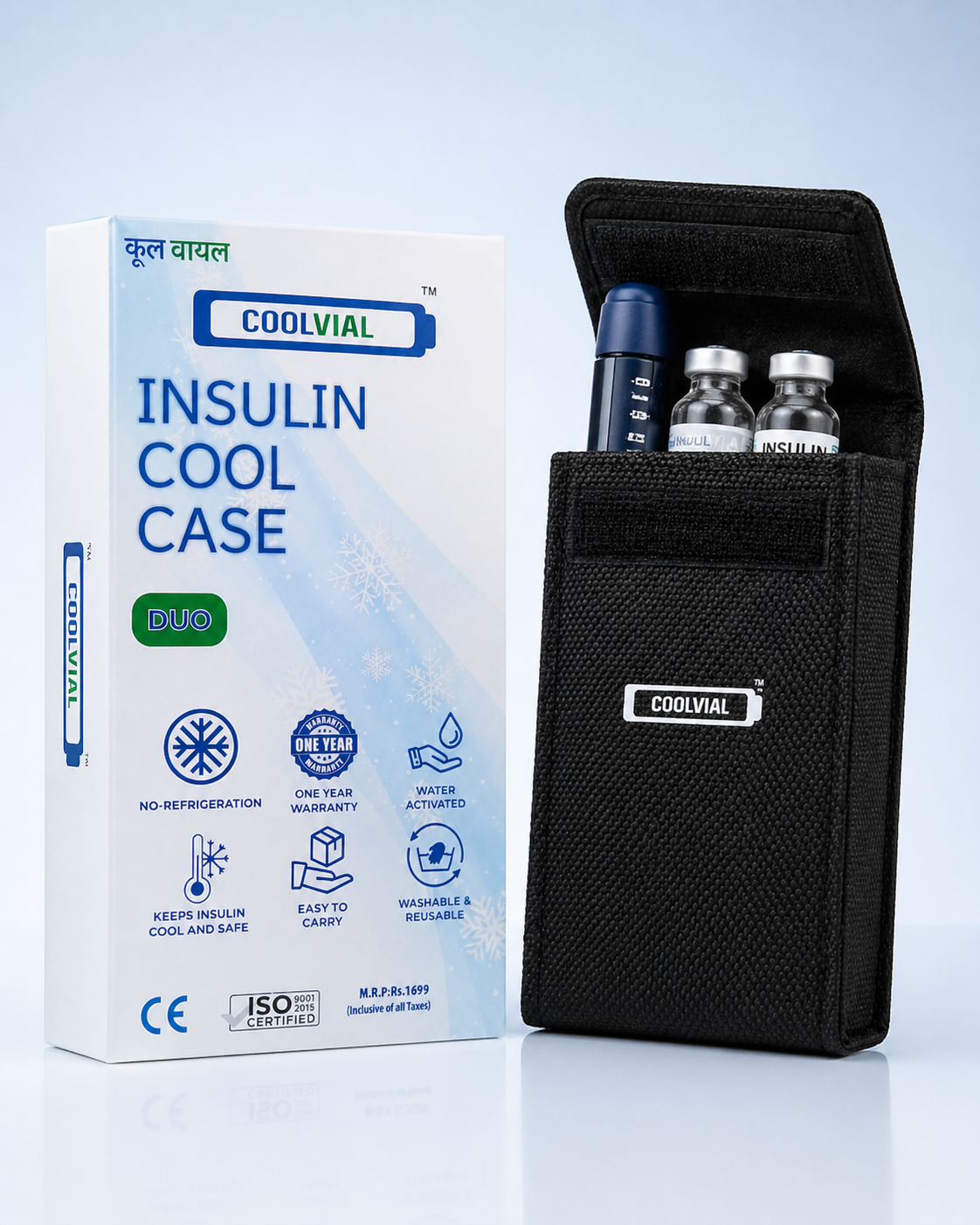
7 Essential Ways to Store Insulin in Vijayawada Summer Heat — A Local's Guide
COOLVIAL keeps insulin safe in India's heat. 48+ hours, no electricity needed.
- Temperature Control is Non-Negotiable: Dr. [Verify in 2026], a leading endocrinologist at Manipal Hospitals Vijayawada, often advises patients that “maintaining insulin below 25°C is paramount. In Vijayawada, this means active cooling is needed for your in-use insulin almost year-round, not just during summer.” This aligns with global and national guidelines.
- Avoid Direct Sunlight: Insulin should never be exposed to direct sunlight, even for short periods. The UV rays and rapid heat gain can degrade it quickly. Always keep your insulin in its cooling case or a shaded area.
- Travel Preparedness: Whether commuting across the city to Andhra Hospitals on MG Road or taking a short trip to Bhavani Island, always carry your insulin in a reliable cooling case. This prevents temperature excursions that can occur in vehicles, which can become ovens in the Vijayawada sun.
- Consult Your Doctor: Always discuss your specific insulin storage needs with your diabetologist. They can provide personalized advice based on your insulin type, dosage, and lifestyle. This is especially important for those who travel frequently or have unique living conditions.
- RSSDI Guidelines: The Research Society for the Study of Diabetes in India (RSSDI) provides comprehensive guidelines for diabetes management in the Indian context. These guidelines strongly advocate for maintaining the cold chain for insulin and using appropriate cooling devices in hot climates. (Source: RSSDI Publications)
- Recognizing Damaged Insulin:
- Appearance: Healthy insulin (except for NPH or premixed insulin, which are naturally cloudy) should be clear and colorless. If it becomes cloudy, discolored, or has particles/clumps, it has likely degraded.
- Efficacy: If your blood sugar levels are inexplicably high despite your usual insulin dose, and you suspect temperature exposure, your insulin might have lost potency.
By combining these expert recommendations with practical solutions like the COOLVIAL Duo, Vijayawada residents can ensure their insulin remains effective and their diabetes management stays on track. For a more comprehensive overview of diabetes care specific to our city, refer to our Complete Diabetes Care Guide for Vijayawada Residents — 2026 Edition.
Natural Product Mention: Why COOLVIAL Duo is Your Vijayawada Summer Essential
When considering how to store insulin effectively in Vijayawada’s challenging climate, the COOLVIAL Duo stands out as a practical, reliable, and locally-conscious choice. It’s designed specifically for the needs of Indian diabetics facing high temperatures and humidity.
The COOLVIAL Duo offers a critical solution for daily life in Vijayawada. Imagine you’re heading out for a day of errands, perhaps to Generic Aadhaar for medicines, then to Auto Nagar for work, and finally picking up groceries near Heritage Pharmacy. Your insulin pens and vials, if not properly stored, would be at severe risk in the 40°C heat. The COOLVIAL Duo eliminates this worry by providing 12-16 hours of cooling without needing electricity. This means freedom from constantly searching for a fridge or worrying about power cuts.
COOLVIAL Duo’s Key Benefits for Vijayawada Residents:
- Extended Cooling: Keeps insulin cool for 12-16 hours, ideal for long days out, travel, or overnight power outages.
- Electricity-Free: Activated by water, it’s completely independent of power sources, making it perfect for areas prone to load shedding.
- Ample Capacity: Designed to hold 2 insulin pens and 1 insulin vial, accommodating typical daily requirements.
- Durable & Portable: Its compact size and robust construction make it easy to carry in a bag, ensuring your insulin is always protected.
- Quality Assurance: CE certified and ISO 9001:2015 compliant, ensuring high manufacturing standards. Plus, it’s Made in India, understanding local conditions best.
- Value for Money: At Rs 1,099 with code COOLHEAL (MRP Rs 1,699), it offers a superior balance of quality, capacity, and price compared to some international brands like FRIO (often around Rs 1,900) while providing competitive features against other local brands like Outer Woods OW-12 (around Rs 999). It’s an investment in peace of mind.
For those planning trips outside the city, or even just navigating the daily grind in Vijayawada’s heat, the COOLVIAL Duo offers indispensable support. Remember, protecting your insulin is protecting your health.
Frequently Asked Questions (FAQ)
Q: Can I store my opened insulin pen at Vijayawada’s typical room temperature (33-38°C) for 28 days? A: No, opened insulin pens should be stored at temperatures below 25°C for up to 28 days. Vijayawada’s typical indoor temperatures of 33-38°C will cause insulin to degrade rapidly, making it ineffective.
Q: What should I do with my insulin during a prolonged power cut in Vijayawada? A: During a prolonged power cut, immediately transfer your insulin to an activated evaporative cooling case like the COOLVIAL Duo, which can keep it cool for 12-16 hours without electricity. Avoid frequently opening your refrigerator door.
Q: Is it safe to use tap water from Vijayawada to activate my evaporative cooling case? A: While tap water will activate the case, using bottled or RO purified water is recommended in Vijayawada’s hard water zones to prevent mineral buildup and ensure optimal long-term performance of your cooling case.
Q: How can I tell if my insulin has gone bad due to heat exposure? A: If your insulin, which should normally be clear and colorless (except for NPH or premixed types), appears cloudy, discolored, or has particles, it has likely degraded due to heat and should not be used.
Q: Where can I buy a reliable insulin cooling case in Vijayawada? A: You can purchase reliable insulin cooling cases like the COOLVIAL Duo directly from coolvial.com, or inquire at major pharmacies like Apollo Pharmacy or MedPlus in Vijayawada for availability of cooling products.
Q: What is the ideal temperature range for storing unopened insulin vials in the fridge? A: Unopened insulin vials should be stored in the refrigerator at a consistent temperature between 2°C and 8°C (36°F and 46°F) to maintain their potency until their expiration date.
Q: Can I use ice packs directly with my insulin pens or vials? A: No, direct contact with ice packs can freeze insulin, which destroys its efficacy. Always use a protective layer, such as a cloth or a dedicated cooling case, to prevent direct contact with freezing elements.
Q: Does high humidity in Vijayawada affect evaporative cooling cases? A: While evaporative cooling is more efficient in dry climates, modern evaporative cooling cases, including the COOLVIAL Duo, are designed to work effectively even in humid conditions, providing sufficient cooling to keep insulin below 25°C for extended periods.
Conclusion: Staying Cool, Staying Safe
Living with diabetes in Vijayawada means embracing its unique climate challenges, especially when it comes to how to store insulin correctly. The city’s scorching summers, coupled with high humidity and the occasional power cut, demand a proactive and informed approach to insulin management. Relying solely on conventional refrigeration is often insufficient, highlighting the need for dependable, electricity-independent solutions.
By understanding the impact of Vijayawada’s 33-38°C indoor temperatures, preparing for power outages, and leveraging the power of evaporative cooling, you can ensure your insulin remains potent and effective. Whether you’re navigating the bustling streets around Benz Circle, enjoying a quiet evening in Patamata, or visiting the iconic Kanaka Durga Temple, your insulin needs consistent protection. Remember to use quality water for activation and to follow expert advice from local institutions like Manipal Hospitals Vijayawada.
The COOLVIAL Duo is engineered precisely for these conditions, offering a CE-certified, ISO 9001:2015 compliant, and Made in India solution that keeps your insulin cool for 12-16 hours without electricity. It’s more than just a case; it’s peace of mind in your pocket, ensuring your diabetes management remains uninterrupted, no matter how hot it gets. Don’t let the Vijayawada summer compromise your health. Take control of your insulin storage today.
Order COOLVIAL Duo at Rs 1,099 with code COOLHEAL at coolvial.com or via WhatsApp wa.me/918766952300
Methodology Note
This article was developed based on a comprehensive review of insulin storage guidelines from the Research Society for the Study of Diabetes in India (RSSDI), relevant data from the Indian Council of Medical Research (ICMR-INDIAB study on diabetes prevalence), and an analysis of local climate data for Vijayawada (India Meteorological Department). We also consulted local Vijayawada hospital directories (Manipal Hospitals Vijayawada, Care Hospitals Vijayawada, Andhra Hospitals) and pharmacy networks (Apollo Pharmacy, MedPlus) to provide context-specific advice. Information regarding power distribution and water quality was derived from general knowledge of the region and common consumer concerns.
Medical Disclaimer
This article is for general information and educational purposes only. It is not intended to be a substitute for professional medical advice, diagnosis, or treatment. Always consult your endocrinologist or diabetologist before making any changes to your insulin storage or dosing practices. Your healthcare provider is the best resource for personalized medical advice regarding your specific condition.
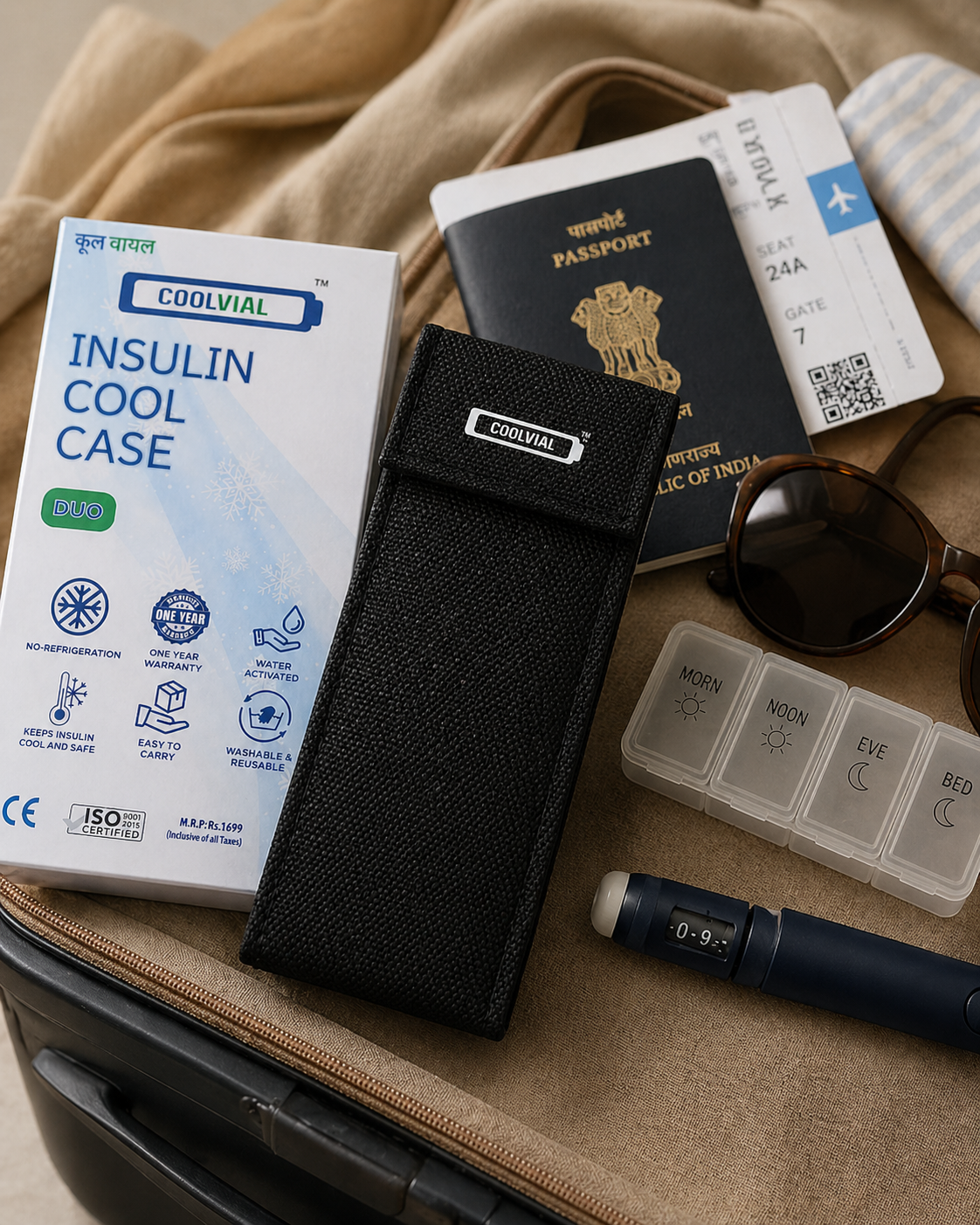
7 Essential Ways to Store Insulin in Vijayawada Summer Heat — A Local's Guide
Insulin at 2-8°C for 48+ hours. Trusted by 10,000+ Indian diabetics.