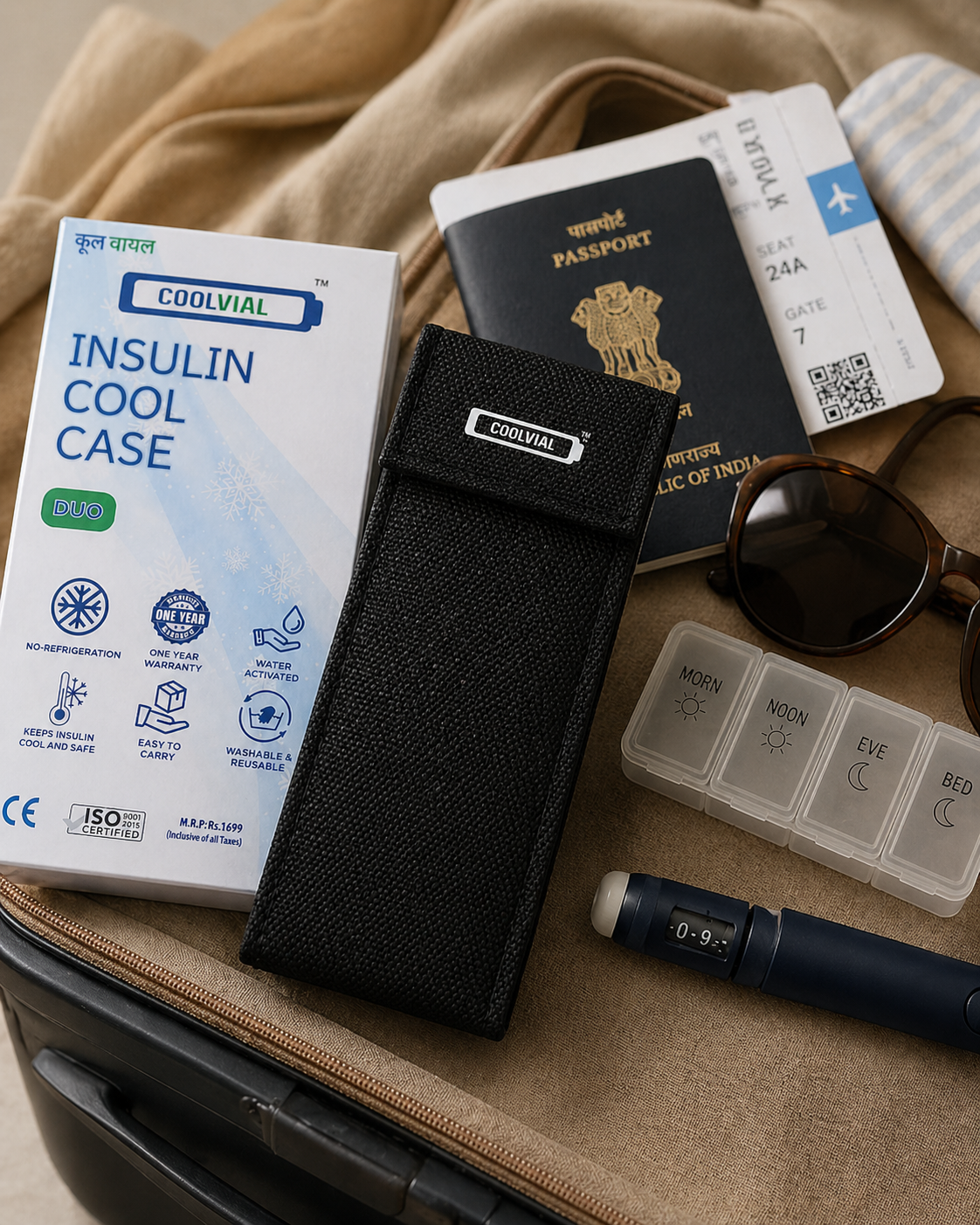
Reviewed by the COOLVIAL Editorial Team — specialists in insulin storage for Indian climate conditions.
Chandigarh, the City Beautiful, is known for its meticulous planning and serene environment. Yet, like any Indian city, it faces its share of challenges, particularly when it comes to power supply. For the thousands of diabetics residing here, a sudden power cut isn’t just an inconvenience; it can be a critical threat to their insulin supply. Insulin, a life-sustaining medication, is highly sensitive to temperature fluctuations, ideally requiring storage between 2°C and 8°C in a refrigerator (unopened) or below 25-30°C (once opened, depending on the specific type). When the grid goes down, as it often does during the fierce summer load shedding from April to June, or the heavy monsoon downpours from July to September, maintaining these temperatures becomes a significant concern.
This comprehensive power cut survival guide for diabetics in Chandigarh offers practical, localized strategies to safeguard your insulin and ensure continuity of care. Based on analysis of insulin storage queries from Chandigarh diabetics, this article will equip you with the knowledge to navigate short disruptions or extended outages, ensuring your insulin remains effective. Let’s explore how you can prepare for and manage power cuts, ensuring your health is never compromised.
Table of Contents
- Understanding Chandigarh’s Power Landscape: A Diabetic’s Perspective
- Immediate Action: What to Do During Short Power Cuts (Under 6 Hours)
- Mid-Duration Outages: Keeping Insulin Safe for 6-12 Hours
- Long-Haul Preparedness: Surviving 24+ Hour Power Disruptions
- Beyond the Grid: Exploring Backup Solutions in Chandigarh Homes
- Essential Power Cut Survival Kit for Diabetics
- Understanding Insulin Storage Requirements
- Frequently Asked Questions (FAQ)
- Conclusion
- How We Researched This
Understanding Chandigarh’s Power Landscape: A Diabetic’s Perspective
Chandigarh’s electricity supply, managed by the Chandigarh Electricity Department (also known as U.T. Electricity Department), presents a unique set of challenges for residents, particularly those dependent on temperature-sensitive medications like insulin. The city experiences distinct power patterns throughout the year that diabetics must be aware of for effective power cut survival guide planning.
- Monsoon Outages (July-September): Heavy rainfall, common in Chandigarh, often leads to cable faults, tree falls damaging lines, and transformer issues. Residential areas like Sector 22-35 and eastern parts like Manimajra are particularly susceptible to these weather-induced disruptions, which can sometimes last for several hours.
- Peak Summer Load Shedding (April-June): As temperatures soar to 40°C and beyond, the demand for air conditioning skyrockets, straining the grid. The Chandigarh Electricity Department often resorts to scheduled or unscheduled load shedding to manage this demand. These cuts can be unpredictable and prolonged, posing a significant threat to refrigerated insulin.
- Old-Building Areas without Backup: While many modern housing societies in Chandigarh boast robust backup systems, older commercial and residential pockets, such as parts of Industrial Area Phase 1-2, might lack adequate generator or inverter support. Residents here are often more vulnerable to extended outages.
- Generator and Inverter Culture: Chandigarh’s housing societies and independent houses widely adopt generators and inverters.
- Housing Societies: Most apartment complexes in residential sectors like 22-35 and 40s have centralized generator backups, providing power for essential services and often a few light/fan points in each flat. However, they rarely power refrigerators.
- Independent Houses: Many independent houses are equipped with inverters, capable of running lights, fans, and sometimes even a small refrigerator for a few hours, depending on battery capacity. Solar inverter setups are also gaining popularity in Chandigarh suburbs like Zirakpur and Mohali, offering a more sustainable long-term solution.
Understanding these local patterns is the first step in creating a robust power cut survival guide plan for your insulin.
Immediate Action: What to Do During Short Power Cuts (Under 6 Hours)
Even a brief power outage can cause anxiety for a diabetic. For cuts lasting up to 6 hours, your primary strategy revolves around preserving the cold inside your refrigerator.
- Keep Your Refrigerator Closed: This is the golden rule. An unopened refrigerator can keep food, and more importantly, your insulin, cold for approximately 4 hours, and a freezer for about 48 hours (if full) or 24 hours (if half-full). Avoid opening the door unless absolutely necessary.
- Monitor Temperature: If you have an appliance thermometer inside your fridge, keep an eye on it. Insulin must be stored between 2°C and 8°C (unopened) or below 25-30°C (opened). If the internal temperature rises significantly, be prepared to move your insulin.
- Pre-Cooling Strategy: Before an anticipated power cut (e.g., during scheduled load shedding or monsoon warnings), ensure your refrigerator is set to its coldest effective temperature, around 2°C. This provides a longer buffer.
- Quick Checklist for Short Outages:
- Verify the power cut duration (check with neighbours or local discom updates).
- Minimize fridge openings.
- Have a small, insulated lunch bag ready for insulin if temperatures start to rise.
- Consider keeping a small ice pack in your freezer for emergencies.
Mid-Duration Outages: Keeping Insulin Safe for 6-12 Hours
When a power cut extends beyond 6 hours, simple fridge management might not be enough. This is where active cooling solutions become indispensable for your power cut survival guide.
10 Essential Power Cut Survival Tips for Diabetics in Chandigarh — What To Do When the Grid Goes Down
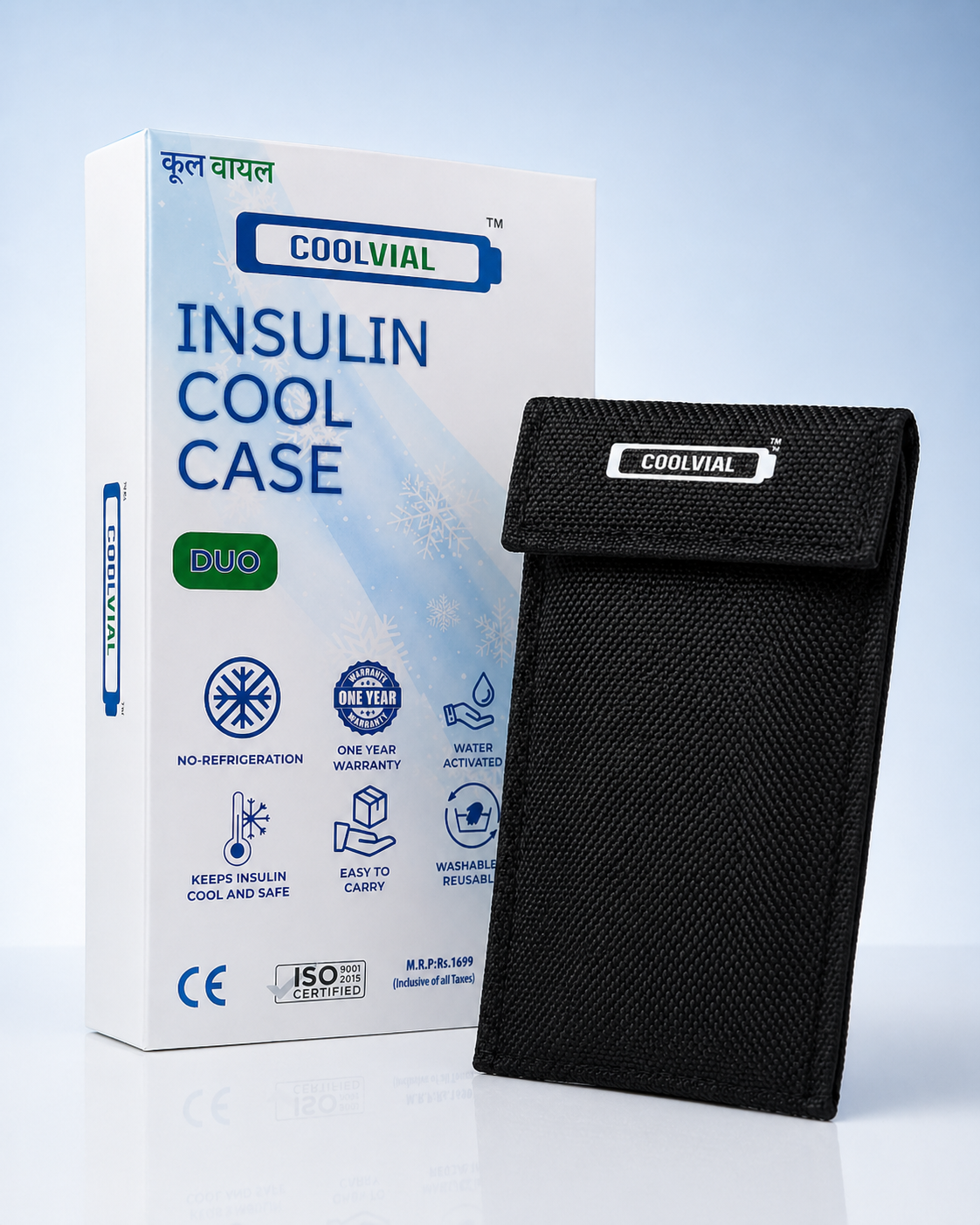
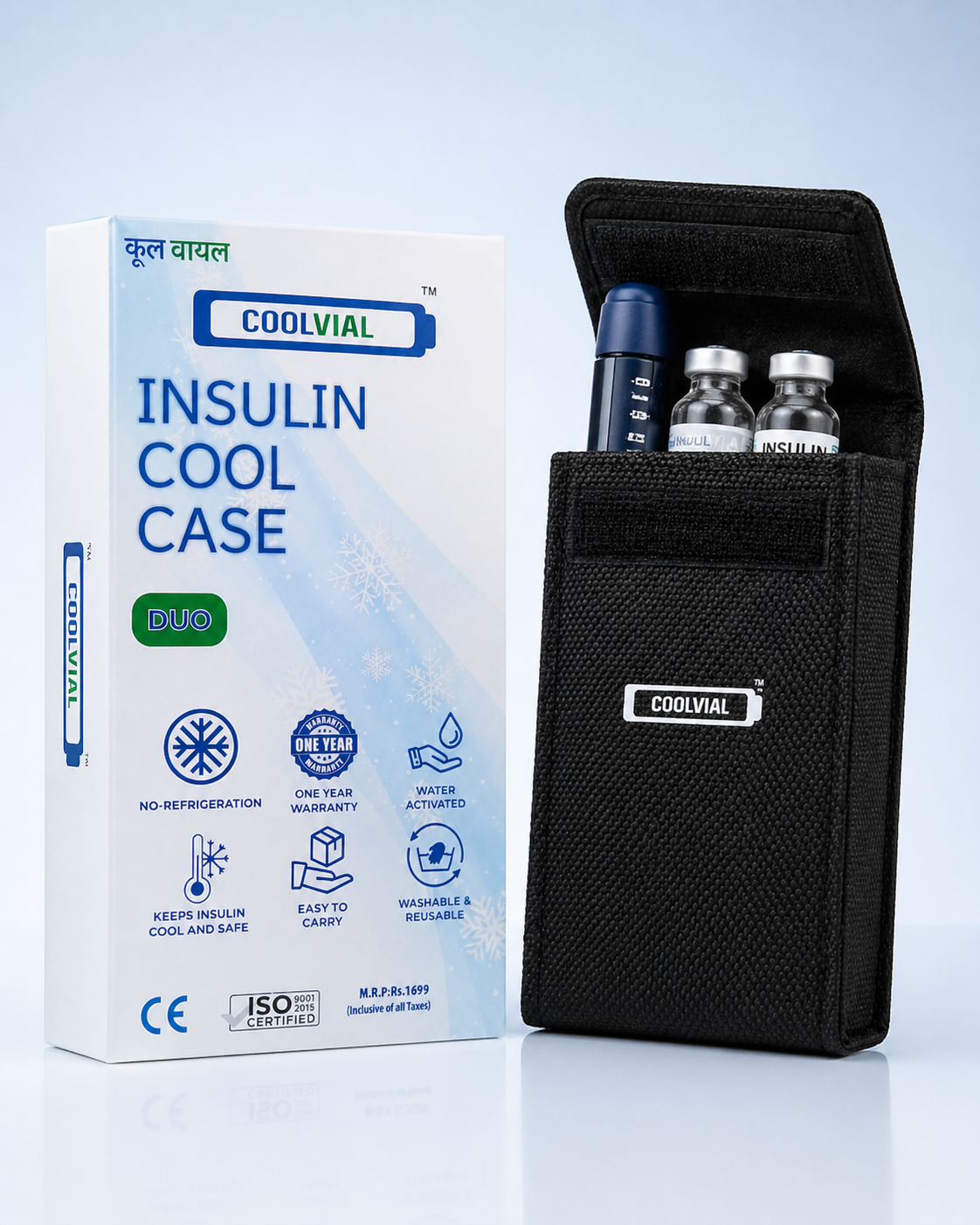
- Activate Your Insulin Cooling Case: This is the most crucial step. Products like the COOLVIAL Duo are designed specifically for such situations.
- How it works: COOLVIAL Duo utilizes evaporative cooling. You simply activate it by immersing it in water for a few minutes. The crystals inside swell, and as the water slowly evaporates, it draws heat away, keeping your insulin cool.
- Capacity: The COOLVIAL Duo holds 2 insulin pens and 1 vial, offering ample space for most diabetics’ immediate needs.
- Duration: It maintains insulin at safe temperatures (typically between 18°C and 26°C, well below the 25-30°C threshold for opened insulin) for 12-16 hours, even in ambient temperatures up to 44°C. This makes it ideal for Chandigarh’s hot summers.
- Comparison: While competitors like FRIO (typically around Rs 1,900) offer similar technology, COOLVIAL Duo provides a cost-effective solution at Rs 1,099 with code COOLHEAL, while still delivering reliable performance. Other options like Outer Woods OW-12 (around Rs 999) might be cheaper, but COOLVIAL Duo’s capacity and CE/ISO certifications offer a robust, trusted choice.
- Prepare Ice Packs/Gel Packs: If you don’t have an evaporative cooler or need additional cooling, move pre-frozen ice packs from your freezer to a small insulated cooler bag. Ensure the insulin is not in direct contact with the ice to prevent freezing. Wrap insulin pens in a cloth before placing them with ice packs.
- Thermal Flasks: For vials, a wide-mouthed thermal flask can be used. Place the insulin vial inside, surrounded by a small amount of ice (again, not direct contact) or cold water, sealing it tightly.
- Relocation Strategy (if possible): If you know a friend or family member nearby with an active inverter or generator that powers their refrigerator, consider temporarily relocating your insulin there. Ensure safe transport in an insulated bag.
For more detailed guidance on handling insulin during high temperatures, refer to our article on How to Store Insulin in Chandigarh Summer Heat — A Local’s Guide.
Long-Haul Preparedness: Surviving 24+ Hour Power Disruptions
Extended power cuts, especially those lasting beyond 24 hours, demand more proactive and community-oriented solutions. This scenario often arises during severe monsoon storms or major grid failures.
- Leverage Evaporative Cooling Cases Continuously: Your COOLVIAL Duo can be reactivated every 12-16 hours by re-immersing it in water. This allows for continuous cooling, protecting your insulin for days, not just hours. This passive, water-activated technology is a lifesaver when electricity is unavailable.
- Community Support – Neighbours’ Fridges: Reach out to neighbours or friends in your building or locality who might have a generator, robust inverter setup, or even solar power. Most people are willing to help in an emergency. Remember to transport your insulin in an insulated container.
- Emergency Pharmacy Access: Chandigarh has several pharmacies that offer extended hours or even 24-hour service.
- Apollo Pharmacy & MedPlus: These chains often have branches with longer operating hours. Identify the nearest 24-hour branch in your area (e.g., Sector 17, Sector 22, Mohali). Keep their contact numbers handy.
- Hospital Pharmacies: Hospitals like PGIMER (Post Graduate Institute, Sector 12), Fortis Hospital Mohali, and Max Super Speciality Mohali have 24-hour pharmacies that stock insulin. In a prolonged emergency, these are reliable options for temporary storage or purchasing a fresh supply if yours is compromised. PGIMER, being a government institution, often has more accessible and affordable options.
- Prioritize Fresh Stock: If you suspect your insulin has been exposed to unsafe temperatures for too long (above 30°C for more than a few hours), it’s safer to acquire a fresh vial or pen. Dispose of potentially compromised insulin and start with a new, safely stored supply.
For a comprehensive list of emergency pharmacies, consult our article: 24-Hour Pharmacies in Chandigarh for Insulin Emergencies — Updated List.
Beyond the Grid: Exploring Backup Solutions in Chandigarh Homes
Investing in reliable backup power is a smart long-term strategy for diabetics in Chandigarh. The city’s climate and power patterns make these solutions increasingly popular.
- Inverters for Apartments and Independent Houses:
- Apartment Realities: In many apartment complexes in residential sectors (e.g., Sector 32, 44), a personal inverter can be installed to power specific points in your flat, including a refrigerator. This is a significant upgrade from basic society-provided generator backup, which usually excludes heavy appliances.
- Independent Houses: Independent houses in areas like Sector 15 or 35 often have larger inverter setups. A 1.5 KVA inverter with a good battery bank (e.g., 2 x 150 Ah batteries) can run a standard refrigerator, lights, and fans for 4-6 hours, making it an excellent power cut survival guide tool.
- Generators: For more substantial backup, especially in independent houses or commercial establishments in Industrial Area Phase 1-2, a small generator can power a wider range of appliances, including refrigerators, for extended periods. However, they require fuel, maintenance, and produce noise and emissions.
- Solar Inverter Setups: Chandigarh suburbs like Mohali and Zirakpur are witnessing a rise in solar inverter installations. These systems harness solar energy to charge batteries, providing uninterrupted power even during grid outages.
- Benefits: Environmentally friendly, reduced electricity bills, and continuous power supply.
- Considerations: Higher initial investment, requires rooftop space, and performance can vary based on sunlight availability. However, for critical medical needs like insulin storage, the long-term benefits often outweigh the initial costs.
- Table: Common Backup Power Solutions in Chandigarh
| Solution | Typical Use Case | Pros | Cons | Refrigerator Support |
|---|---|---|---|---|
| Society Generator | Apartment common areas | Automatic, no personal maintenance | Rarely powers individual refrigerators | Limited/None |
| Home Inverter | Apartments, Independent Houses | Silent, automatic switchover, fuel-free | Limited backup duration, battery life | Yes (small fridge) |
| Personal Generator | Independent Houses, Shops | High power output, long duration | Noise, fuel cost, maintenance, emissions | Yes |
| Solar Inverter | Suburbs, Independent Houses | Eco-friendly, low running cost, reliable | High initial cost, space requirements | Yes |
Essential Power Cut Survival Kit for Diabetics
Preparedness is paramount for effective power cut survival guide strategies. A well-stocked kit can make all the difference during an emergency.
- Insulin Cooling Case: A water-activated evaporative cooling case like the COOLVIAL Duo is a non-negotiable item. It provides reliable cooling without electricity.
- Thermometer: A small, accurate thermometer for your fridge and a separate one for your cooling case or emergency bag.
- Emergency Contact List:
- Your endocrinologist/diabetologist’s number.
- Nearest 24-hour pharmacies (e.g., Apollo Pharmacy, MedPlus, PGIMER hospital pharmacy).
- Emergency services (112).
- Family/friends with backup power.
- Chandigarh Electricity Department helpline ([Verify in 2026] for current number).
- Basic Supplies:
- Extra insulin (if feasible to store safely).
- Extra syringes/pen needles.
- Blood glucose meter with fresh batteries.
- Glucose tablets or juice for hypoglycemia.
- A small, bright flashlight.
- A portable power bank for your phone.
- Insulated Bag with Gel Packs: A small, well-insulated bag (separate from your evaporative cooler) with reusable gel packs, kept in the freezer, is useful for short-term transport or as a secondary backup. Remember to never let insulin directly touch frozen packs.
- Water: Keep bottled water handy, especially in summer, as power cuts can also affect water supply in some areas.
For a broader perspective on managing diabetes in Chandigarh, our Complete Diabetes Care Guide for Chandigarh Residents — 2026 Edition offers valuable insights.
10 Essential Power Cut Survival Tips for Diabetics in Chandigarh — What To Do When the Grid Goes Down
48+ hours at 2-8°C. No electricity. CE certified. Free delivery across India.
Order on WhatsApp — ₹1,099🛒 Buy Now — ₹1,099Understanding Insulin Storage Requirements
Insulin is a protein, and like many proteins, its structure and effectiveness are highly sensitive to temperature. Incorrect storage can degrade insulin, making it less potent or even ineffective, which can lead to dangerously high blood sugar levels.
- Unopened Insulin: Unopened insulin vials or pens should always be stored in a refrigerator at temperatures between 2°C and 8°C. This is crucial for maintaining its full shelf life, which can be up to the expiration date printed on the packaging (Source: RSSDI guidelines).
- Opened Insulin: Once an insulin vial or pen is opened, it no longer needs refrigeration but must be kept at room temperature, typically below 25°C to 30°C, depending on the specific insulin brand. It is generally stable for 28 days (some brands for longer, always check the manufacturer’s leaflet). Exposing opened insulin to temperatures above 30°C for prolonged periods can reduce its efficacy.
- Signs of Damaged Insulin:
- Clumpiness or particles: Clear insulin should remain clear.
- Discoloration: Insulin should not change colour.
- Frosting: If insulin freezes, it’s compromised.
- Reduced effectiveness: If your blood sugar levels are unexpectedly high despite correct dosing, suspect compromised insulin.
- Key Temperature Thresholds:
- Freezing (below 0°C): Destroys insulin.
- Refrigerated (2°C - 8°C): Ideal for unopened insulin.
- Room Temperature (below 25°C - 30°C): Acceptable for opened insulin.
- High Heat (above 30°C): Accelerates degradation.
Globally, diabetes affects an estimated 537 million adults (Source: IDF Diabetes Atlas 10th edition). In India, the prevalence is significant, with studies like ICMR-INDIAB indicating a high burden. Protecting insulin is a daily necessity for millions. For more general advice on insulin care, visit our insulin storage tips page.
Frequently Asked Questions (FAQ)
Q: Can I store insulin in a normal icebox with ice during a power cut? A: Yes, an icebox or cooler with ice can be used, but ensure insulin is not in direct contact with the ice. Wrap the insulin pens/vials in a cloth or paper towel to prevent freezing, which can destroy the insulin.
Q: How long can insulin stay out of the fridge during a power cut? A: Unopened insulin can generally stay out of the fridge for a limited period, typically up to 28 days, if the ambient temperature remains below 25-30°C, similar to opened insulin. However, it’s best to return it to refrigeration as soon as power is restored or transfer it to an active cooling solution.
Q: What if my insulin freezes during a power cut? A: If insulin freezes, it must be discarded immediately, even if it thaws. Freezing destroys the insulin molecule, rendering it ineffective and potentially dangerous to use.
Q: Are there any specific areas in Chandigarh prone to longer power cuts? A: Monsoon outages are common in residential sectors like 22-35 and eastern areas like Manimajra. Peak summer load shedding can affect various parts of the city. Older areas or those with less robust infrastructure, like some parts of Industrial Area Phase 1-2, might experience longer durations without backup.
Q: How can I check for power cut updates from the Chandigarh Electricity Department? A: The Chandigarh Electricity Department often provides updates on their official website or through their customer care helpline numbers. It is advisable to have these contacts saved on your phone ([Verify in 2026] for current contact details).
Q: Can I use tap water to activate my COOLVIAL Duo? A: Yes, the COOLVIAL Duo is designed to be activated with normal tap water. Simply immerse it for the recommended duration (usually a few minutes) to activate the cooling crystals.
Q: Should I worry about my insulin if it’s only a 30-minute power cut? A: For a 30-minute power cut, your insulin inside a closed refrigerator should be perfectly safe. The internal temperature will not rise significantly in such a short period. Avoid opening the fridge door.
Conclusion
Living with diabetes in Chandigarh, while enjoying its beautiful environment, requires vigilance, especially concerning insulin storage during power cuts. From the monsoon downpours that disrupt supply in Sector 22-35 and Manimajra to the scorching summer load shedding, understanding Chandigarh’s power patterns is your first line of defence. By implementing smart strategies like minimizing fridge openings during short outages, utilizing reliable evaporative cooling cases like the COOLVIAL Duo for mid-duration cuts, and knowing your emergency pharmacy contacts (Apollo Pharmacy, MedPlus, PGIMER hospital pharmacy) for extended disruptions, you can ensure your insulin remains safe and effective.
Investing in personal backup solutions such as inverters or even exploring solar setups in the suburbs offers long-term peace of mind. Remember, a well-prepared power cut survival guide and a proactive approach are critical to maintaining your health and well-being. Don’t let power outages compromise your diabetes management. Stay prepared, stay cool, and stay safe.
Order COOLVIAL Duo at Rs 1,099 with code COOLHEAL at coolvial.com or via WhatsApp wa.me/918766952300
How We Researched This
This article is based on a thorough review of insulin storage guidelines from the Research Society for the Study of Diabetes in India (RSSDI), epidemiological data from ICMR-INDIAB studies, local Chandigarh hospital directories including PGIMER, Fortis, and Max, and an understanding of the Apollo Pharmacy and MedPlus pharmacy networks across the city. Information on local power patterns and residential backup solutions is derived from common experiences and practices observed in Chandigarh.