
Reviewed by the COOLVIAL Editorial Team — specialists in insulin storage for Indian climate conditions.
Jaipur, the Pink City, is renowned for its vibrant culture, historical landmarks like Hawa Mahal and Amer Fort, and its unique climate. However, like many rapidly developing Indian cities, residents often face unpredictable power cuts. For individuals managing diabetes, especially those reliant on insulin, these outages pose a significant challenge. Insulin, a life-saving medication, is sensitive to temperature fluctuations and can lose potency if not stored correctly. This comprehensive power cut survival guide for diabetics in Jaipur offers practical strategies to safeguard your insulin and maintain your health when the grid goes down. Based on analysis of insulin storage queries from Jaipur diabetics, we understand the unique local challenges. Did you know that an unopened vial of insulin, if kept between 2-8°C, can last until its expiry date, but once opened or kept at room temperature (up to 25°C), its potency typically lasts only 28 days? This guide will help you extend that safety window, even during Jaipur’s intense summers or monsoon disruptions.
Table of Contents
- Understanding Jaipur’s Power Outage Patterns
- The Critical Role of Temperature for Insulin Storage
- Essential Preparations for Any Power Cut
- Scenario 1: Dealing with a Short 30-Minute Power Cut
- Scenario 2: Managing a 6-Hour Power Cut
- Scenario 3: Navigating a 12-Hour Power Cut with Active Cooling
- Scenario 4: Surviving a 24-Hour+ Extended Power Cut
- Leveraging Local Resources and Community Support
- Choosing the Right Insulin Cooling Solution: COOLVIAL Duo
- Frequently Asked Questions (FAQ)
- Conclusion: Staying Prepared and Safe
- How We Researched This
- Medical Disclaimer
1. Understanding Jaipur’s Power Outage Patterns
Living in Jaipur means adapting to distinct power supply realities, varying significantly by season and locality. The local electricity provider, Jaipur Vidyut Vitran Nigam Limited (JVVNL), strives to provide uninterrupted power, but seasonal challenges often lead to disruptions.
Seasonal & Regional Power Cut Realities in Jaipur
- Monsoon Outages (July-September): During the brief but intense monsoon season, areas like C-Scheme (central Jaipur) and the sprawling residential hubs of Vaishali Nagar and Mansarovar (west Jaipur) are particularly susceptible to power cuts. Heavy rainfall, strong winds, and occasional dust storms (often preceding the monsoon) can damage overhead lines and transformers, leading to prolonged outages. Residents in these areas often report cuts lasting several hours, sometimes even a full day.
- Peak Summer Load Shedding (April-June): Jaipur’s scorching summers, with temperatures frequently soaring to 40-45°C, put immense strain on the electricity grid. This results in planned or unplanned load shedding, especially during peak demand hours. Areas like Malviya Nagar and Jagatpura in the south, particularly older pockets with less robust infrastructure, experience frequent and sometimes lengthy cuts. The challenge here is not just the lack of power, but the rapid rise in ambient temperature, which directly threatens insulin viability.
- Old Buildings vs. Modern Societies:
- Old-building areas (e.g., parts of Malviya Nagar, Jagatpura, Pink City): Many older residential and commercial structures, especially in the Walled City (Pink City) and older parts of Malviya Nagar/Jagatpura, often lack modern power backup systems. Residents here are most vulnerable during outages, relying heavily on the grid.
- Housing Societies & Apartments (e.g., Vaishali Nagar, Mansarovar, Jagatpura): Newer housing societies and apartment complexes across Jaipur typically come equipped with shared generator or inverter backup systems. While these provide relief for basic lighting and fans, they might not always support heavy appliances like refrigerators for extended periods, making insulin storage a concern. Independent houses, particularly in the suburbs, are increasingly investing in personal inverters or even solar inverter setups to mitigate this.
Key Takeaways on Jaipur’s Power Landscape:
- JVVNL Alerts: Stay informed by following JVVNL announcements for planned maintenance or emergency updates. [Verify in 2026] for specific outage-prone pin codes in C-Scheme, Vaishali Nagar, Mansarovar, Malviya Nagar, and Jagatpura.
- Climate Impact: High temperatures combined with power cuts create a double challenge for insulin storage.
- Backup Reliance: Understand your residential backup system’s capacity – it might not be enough for critical appliances like refrigerators.
2. The Critical Role of Temperature for Insulin Storage
Insulin is a protein hormone, and like many biological substances, its stability is highly dependent on temperature. Exposing insulin to extreme heat, freezing temperatures, or rapid temperature fluctuations can cause it to degrade, lose potency, and become ineffective.
Understanding Insulin’s Temperature Requirements
- Unopened Insulin: Should always be stored in a refrigerator at temperatures between 2°C and 8°C. This ensures maximum shelf life, usually until the expiry date printed on the vial or pen.
- Opened or In-Use Insulin: Once opened or removed from the refrigerator for daily use, insulin can generally be stored at room temperature, typically between 15°C and 25°C, for up to 28 days. Some brands might allow up to 30°C, but 25°C is a safer upper limit for most.
- Temperatures Above 25°C-30°C: Exposure to temperatures higher than this range, common in Jaipur’s summers, can rapidly diminish insulin’s effectiveness. This is why a reliable cooling solution is non-negotiable.
- Freezing: Insulin should never be frozen. If it freezes, it becomes inactive and must be discarded.
Signs of Degraded Insulin:
- Cloudiness or clumps: Clear insulin (like Novorapid, Humalog) should remain clear. If it becomes cloudy or has solid particles, discard it.
- Color change: Clear insulin should not change color.
- Reduced effectiveness: The most dangerous sign is when blood sugar levels remain high despite taking the usual dose.
This sensitivity makes a proactive approach to insulin storage during power cuts, especially in Jaipur’s often hot and dusty climate, absolutely vital. For more detailed guidance, refer to our article on How to Store Insulin in Jaipur’s Desert Heat & Dust — A Local’s Guide.
3. Essential Preparations for Any Power Cut
Preparation is your strongest defense against the unpredictable nature of power outages in Jaipur. A well-thought-out emergency kit and a clear plan can make all the difference.
Your Power Cut Preparedness Checklist:
- Emergency Insulin Supply:
- Always have at least a 7-day reserve supply of insulin.
- Store this reserve in a reliable cooling solution, not just in the fridge.
- Reliable Cooling Device:
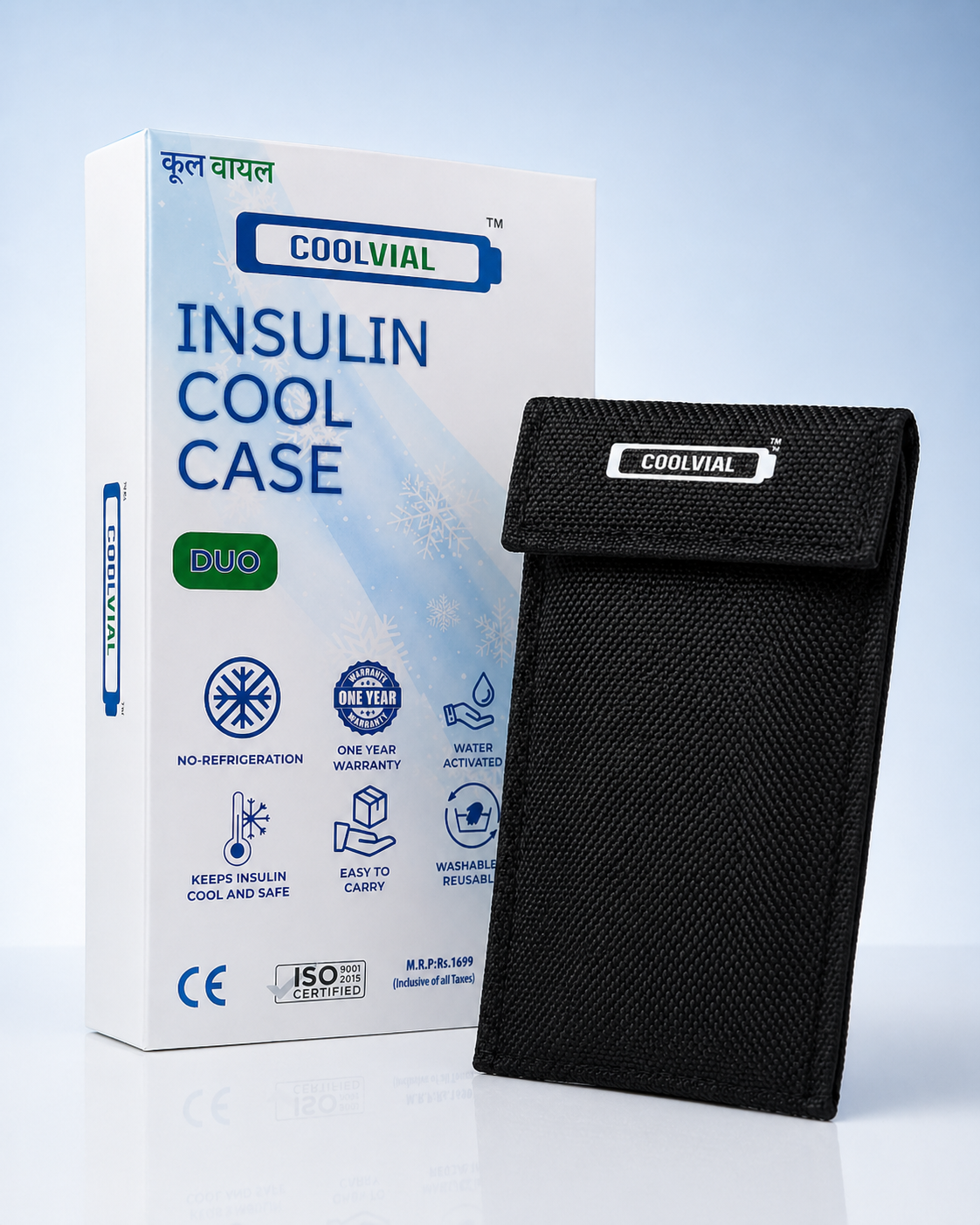
- Invest in a non-electric insulin cooling case like the COOLVIAL Duo. These cases use evaporative cooling technology to keep insulin at safe temperatures (typically 18-26°C) for extended periods without electricity.
- Ensure it’s activated and ready before the power cut hits, especially during peak summer or monsoon seasons.
- Thermometer:
- Keep a small, accurate thermometer inside your refrigerator to monitor its temperature during an outage.
- A room thermometer is also useful to gauge ambient temperature.
- Insulated Bag/Cooler:
- A small, well-insulated bag can provide temporary protection for insulin if you need to move it or use ice packs.
- Emergency Contact List:
- Keep a list of emergency contacts, including your doctor, nearest 24-hour pharmacies (e.g., Apollo Pharmacy, MedPlus), and trusted neighbors, on paper or a fully charged phone.
- Battery-Operated Devices:
- Flashlights, power banks for your phone, and extra batteries.
- Medical ID:
- Always wear or carry medical identification stating you have diabetes.
- Knowledge of Insulin Storage:
- Familiarize yourself with the specific temperature requirements for your insulin brand. This information is usually found in the package insert.
- Recall that unopened insulin lasts longer at 2-8°C, while opened insulin is generally safe up to 25°C for 28 days.
By having these items and this knowledge at hand, you significantly reduce the stress and risk associated with power disruptions.
10 Essential Power Cut Survival Strategies for Diabetics in Jaipur
48+ hours at 2-8°C. No electricity. CE certified. Free delivery across India.
Order on WhatsApp — ₹1,099🛒 Buy Now — ₹1,0994. Scenario 1: Dealing with a Short 30-Minute Power Cut
A brief power cut, common in Jaipur due to minor grid fluctuations or quick repairs, usually doesn’t pose an immediate threat to refrigerated insulin. However, smart management is still key.
Actions for a 30-Minute Outage:
- Do NOT open the refrigerator door: The refrigerator is designed to maintain its internal temperature for several hours if kept closed. Each time you open the door, warm air rushes in, rapidly raising the internal temperature.
- Monitor the situation: Keep an eye on local news or JVVNL updates if available.
- Stay calm: For such a short duration, your insulin inside a closed refrigerator is generally safe.
- Check power bank: Ensure your phone is charging on a power bank if available, so you have communication.
5. Scenario 2: Managing a 6-Hour Power Cut
A 6-hour power cut is a more significant challenge, especially in Jaipur’s high ambient temperatures. While a well-sealed, full refrigerator can maintain safe temperatures for about 4-6 hours, it’s a tight window. Proactive steps are crucial.
Steps to Take During a 6-Hour Outage:
- Transfer Insulin to a Cooling Case:
- Immediately move your in-use insulin pens and any vials that are already at room temperature into a reliable non-electric cooling case like the COOLVIAL Duo.
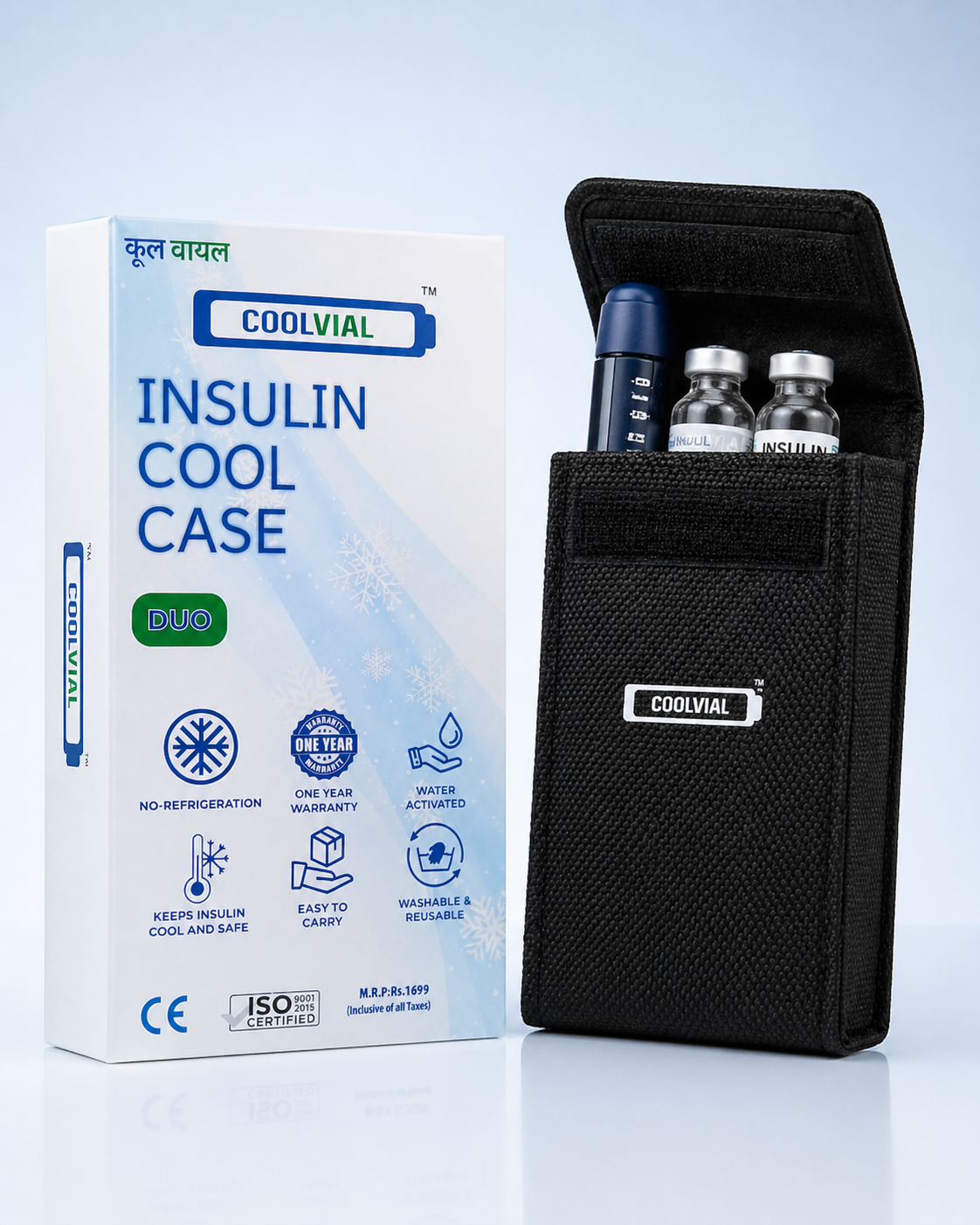
- The COOLVIAL Duo, designed to hold 2 pens and 1 vial, uses water-activated evaporative cooling to keep insulin cool for 12-16 hours, making it ideal for this duration.
- Minimize Fridge Opening (Still Critical):
- Even if you’ve moved your insulin, avoid opening the refrigerator unless absolutely necessary. The longer it stays sealed, the longer other temperature-sensitive items will remain safe.
- Prepare Emergency Ice Packs:
- If you have ice packs (or even frozen water bottles) in your freezer, ensure they are readily accessible. These can be used in an insulated bag for other critical medications or food items if the power cut extends.
- Communicate with Neighbors:
- If you have a cordial relationship, inform a neighbor who might have an inverter or generator if you foresee a longer outage. You might need their help later.
- Stay Hydrated:
- In Jaipur’s heat, staying hydrated is essential for diabetics. Drink plenty of water to avoid heat-related complications.
This is where a device like the COOLVIAL Duo truly shines. It provides a secure, portable environment for your insulin, giving you peace of mind during typical extended outages.
6. Scenario 3: Navigating a 12-Hour Power Cut with Active Cooling
A 12-hour power cut means your refrigerator is now likely above the safe 8°C mark, and even your in-use insulin is at risk if not actively cooled. This scenario demands immediate and effective action.
Critical Actions for a 12-Hour Outage:
- Activate Evaporative Cooling (if not already done):
- If you haven’t already, activate your COOLVIAL Duo. Simply immerse the inner pouch in cool water for a few minutes (as per instructions), gently blot dry, and place your insulin pens and vials inside.
- The evaporative process will immediately start cooling your insulin to 18-26°C, significantly below Jaipur’s ambient summer temperatures which can easily exceed 35°C indoors during an outage.
- The COOLVIAL Duo maintains this temperature for 12-16 hours.
- Consider Alternative Cold Storage for Unopened Vials:
- For any unopened insulin vials still in the refrigerator, they are now at risk. If you have access to a neighbor with a continuously running generator or solar inverter-powered fridge, this is the time to ask for help.
- Alternatively, you can use a high-quality insulated cooler with ice packs, but ensure the insulin doesn’t directly touch the ice to prevent freezing. Wrap it in a cloth.
- Re-evaluate Insulin Potency:
- If any insulin has been exposed to temperatures above 25-30°C for several hours without cooling, it’s wise to consult your doctor or pharmacist about its potential degradation. While it might not be entirely ineffective, its potency could be compromised.
- Monitor Blood Glucose More Frequently:
- Due to potential insulin degradation or stress from the situation, monitor your blood glucose levels more often.
- Prepare for the Next Cooling Cycle:
- If the power cut seems likely to extend beyond 12-16 hours, be ready to re-activate your evaporative cooling case. The COOLVIAL Duo can be re-activated as needed to continue providing cooling.
Why COOLVIAL Duo is Your Best Bet for 12+ Hours:
The COOLVIAL Duo (priced at Rs 1,099 with code COOLHEAL, MRP Rs 1,699) is specifically designed for such conditions. It’s CE certified, ISO 9001:2015 compliant, and made in India, ensuring quality and reliability. Unlike ice packs which require a freezer, or expensive battery-powered coolers, COOLVIAL simply needs water.
- Cost-effective: At Rs 1,099, it’s a superior value proposition compared to competitors like FRIO (often around Rs 1,900) while offering similar evaporative cooling. While Outer Woods OW-12 is cheaper (around Rs 999), it’s typically an insulated bag requiring ice packs, not an active evaporative cooling solution like COOLVIAL Duo.
- Capacity: Holds 2 pens + 1 vial, suitable for most daily insulin users.
- Duration: Keeps insulin cool for 12-16 hours per activation cycle, perfectly matching the needs for extended power cuts.
- Portability: Lightweight and easy to carry, ideal for emergencies or travel.
This is a critical point where having a dedicated solution like COOLVIAL Duo can be a lifesaver, ensuring your insulin remains effective when you need it most. Learn more about optimal insulin storage practices on our insulin storage tips page.
7. Scenario 4: Surviving a 24-Hour+ Extended Power Cut
An outage lasting 24 hours or more is a serious situation, especially in Jaipur’s climate. At this point, your refrigerator will be warm, and even actively cooled insulin might need re-evaluation or replenishment. This scenario requires leveraging all available resources.
Comprehensive Strategy for Extended Outages:
- Re-activate Cooling Cases:
- Re-activate your COOLVIAL Duo as soon as its cooling cycle is complete (typically after 12-16 hours). This continuous cooling is paramount.
- Reach Out to Neighbors with Generators/Solar:
- If you haven’t already, politely ask neighbors in housing societies or independent houses with generators or solar inverter setups if you can store your unopened insulin vials in their refrigerator for the duration. Many Jaipur residents are understanding in such emergencies.
- Solar inverter setups are becoming increasingly popular in Jaipur suburbs like Jagatpura and Mansarovar, offering a more resilient power solution.
- Visit 24-Hour Pharmacies:
- Jaipur has several 24-hour pharmacies that can store insulin in their refrigerators. Your best bet would be major chains like Apollo Pharmacy or MedPlus.
- Apollo Pharmacy: Malviya Nagar, C-Scheme.
- MedPlus: Vaishali Nagar, Mansarovar.
- Call ahead to confirm they have space and are willing to store your insulin temporarily. Be prepared to explain your situation. For a detailed list, check our guide on 24-Hour Pharmacies in Jaipur for Insulin Emergencies — Updated List.
- Hospital Pharmacies:
- As a last resort, contact the pharmacy at a major hospital. SMS Hospital (Sawai Man Singh Hospital) in C-Scheme, being the largest government hospital, has a 24-hour pharmacy and cold chain facilities. Fortis Escorts Hospital in Malviya Nagar and Manipal Hospital on Sirsi Road are other options.
- They might be able to store your insulin or advise on obtaining fresh supplies if yours is compromised.
- Assess Insulin Viability:
- If your insulin has been exposed to high temperatures (above 25-30°C) for several hours even with cooling, or if you suspect it’s degraded, it’s safer to acquire new insulin if possible. Consult your doctor or pharmacist.
- Discard insulin that appears cloudy, discolored, or has particles.
- Stay Connected:
- Keep your phone charged using power banks or by visiting charging points at open establishments (e.g., World Trade Park in Malviya Nagar, if power is restored there).
- Stay updated on power restoration estimates from JVVNL.
This extreme scenario highlights the importance of community, local resources, and having a robust personal cooling solution like the COOLVIAL Duo.
8. Leveraging Local Resources and Community Support
In a city like Jaipur, community spirit and local infrastructure can be invaluable during crises. Knowing where to turn can make a significant difference.
Local Support Network:
- Neighbors and Housing Societies: As mentioned, trusted neighbors, especially those with inverter or generator backups in areas like Vaishali Nagar or Mansarovar, can be a temporary lifeline for refrigerator storage.
- Local Kirana Stores with Cold Storage: Some larger local grocery stores or kirana shops might have robust generator backups for their cold storage. It’s worth inquiring if they can temporarily store your unopened insulin vials, though this is less common for pharmacies.
- Medical Facilities:
- SMS Hospital (C-Scheme): The largest government hospital, its pharmacy (often open 24/7) is equipped to handle insulin storage and dispensing.
- Fortis Escorts Hospital (Malviya Nagar) & Manipal Hospital (Sirsi Road): Private hospitals with pharmacies that maintain cold chains.
- Pharmacies:
- Apollo Pharmacy & MedPlus: These chains have multiple outlets across Jaipur, including 24-hour services in key areas. They are your primary resource for emergency insulin purchase or temporary storage.
- Generic Aadhaar & 1mg: While primarily online or smaller retail, these can be options for obtaining fresh supplies if power is restored and delivery is possible.
- Community Groups: Consider joining local WhatsApp groups or community forums specific to your Jaipur neighborhood. These can be excellent for real-time information sharing about power status and mutual aid during outages.
Remember, clear communication and a polite request often yield positive results in an emergency.
9. Choosing the Right Insulin Cooling Solution: COOLVIAL Duo
When it comes to protecting your insulin during Jaipur’s challenging power cuts and climate, an effective, non-electric cooling solution is paramount. The COOLVIAL Duo is engineered precisely for this environment.
Why COOLVIAL Duo is the Smart Choice for Jaipur Diabetics:
- Evaporative Cooling Technology: The COOLVIAL Duo utilizes a simple yet highly effective water-activated evaporative cooling system. When the inner pouch is soaked in water, special crystals absorb it, creating a gel that slowly evaporates. This evaporation draws heat away from the insulin, keeping it at a safe temperature (typically 18-26°C) even when ambient temperatures are much higher. This is crucial for Jaipur’s desert climate where temperatures can easily exceed 40°C.
- Extended Cooling Duration: A single activation provides 12-16 hours of continuous cooling, perfect for managing most power cuts or travel plans. It can be reactivated repeatedly, offering ongoing protection.
- Optimal Capacity for Daily Use: Designed to hold 2 insulin pens and 1 insulin vial, the COOLVIAL Duo caters to the needs of most insulin users, ensuring they have their essential supply protected.
- Portability and Convenience: Lightweight and compact, it fits easily into a bag, making it ideal for daily commutes, errands, or even longer trips within Rajasthan or beyond. No batteries, no refrigeration, just water.
- Quality and Reliability:
- CE Certified: Meets European safety, health, and environmental protection standards.
- ISO 9001:2015 Certified: Demonstrates a commitment to quality management systems.
- 1-Year Warranty: Provides peace of mind regarding product durability.
- Made in India: Built for Indian conditions, supporting local manufacturing.
- Value for Money: At an exclusive price of Rs 1,099 with code COOLHEAL (MRP Rs 1,699), the COOLVIAL Duo offers exceptional value.
- Comparison with Competitors: While similar evaporative coolers like FRIO are available, they often retail for around Rs 1,900, making COOLVIAL Duo a more budget-friendly option without compromising on performance. Cheaper insulated bags like Outer Woods OW-12 (around Rs 999) require external ice packs, which are often unavailable during power cuts. COOLVIAL Duo offers active, self-contained cooling.
Investing in a COOLVIAL Duo is not just buying a product; it’s investing in the peace of mind that your life-saving insulin is protected, come what may, especially during Jaipur’s challenging power scenarios. You can find more information about the product at COOLVIAL insulin cool case.
10. Frequently Asked Questions (FAQ)
Q: How long can insulin be safely stored in a refrigerator during a power cut in Jaipur? A: A well-sealed, full refrigerator can typically maintain safe temperatures (below 8°C) for about 4-6 hours during a power cut. A half-full fridge might only last 2-4 hours, so minimize opening the door.
Q: What is the maximum temperature insulin can withstand before it degrades? A: Most in-use insulin is safe at room temperature up to 25°C for 28 days. Exposure to temperatures consistently above 25-30°C for several hours can cause degradation and loss of potency, making it crucial to use active cooling solutions in Jaipur’s heat.
Q: Can I use ice packs directly with my insulin during an outage? A: Insulin should never directly touch ice packs as freezing will destroy its potency. Always wrap insulin pens or vials in a cloth or paper towel before placing them near ice packs in an insulated bag.
Q: Where can I get emergency insulin in Jaipur during a long power cut? A: For emergency insulin, visit 24-hour pharmacies like Apollo Pharmacy (e.g., in Malviya Nagar or C-Scheme) or MedPlus (e.g., in Vaishali Nagar). Hospital pharmacies at SMS Hospital (C-Scheme), Fortis Escorts (Malviya Nagar), or Manipal Hospital (Sirsi Road) are also options.
Q: How does the COOLVIAL Duo work without electricity? A: The COOLVIAL Duo uses water-activated evaporative cooling. You soak the inner pouch in water, and the evaporation of this water from the gel crystals within draws heat away, keeping your insulin cool (18-26°C) for 12-16 hours.
Q: What should I do if my insulin might have been compromised by heat exposure? A: If you suspect your insulin has been exposed to high temperatures, consult your endocrinologist or a pharmacist immediately. Monitor your blood glucose levels more frequently and be prepared to use fresh insulin if advised.
Q: Is it safe to travel with insulin during a power cut, for example, to a relative’s house with a generator? A: Yes, it is safe to travel with insulin during a power cut if it is properly stored in an evaporative cooling case like the COOLVIAL Duo or an insulated bag with indirect ice packs. This ensures its temperature remains stable during transit.
Q: How often should I check my blood sugar during a power cut? A: It is advisable to check your blood sugar levels more frequently during a power cut, especially if you suspect your insulin’s potency might be affected or if you are under stress. This helps in making timely adjustments to your diabetes management plan.
11. Conclusion: Staying Prepared and Safe
Navigating power cuts as a diabetic in Jaipur, with its unique climate and power supply patterns, requires a blend of foresight, knowledge, and reliable tools. From understanding the monsoon outages in Vaishali Nagar to the summer load shedding in Malviya Nagar, being prepared is your best defense. The strategies outlined in this power cut survival guide empower you to protect your life-saving medication, whether it’s a brief 30-minute flicker or an extended 24-hour blackout.
Remember, your refrigerator is your first line of defense for short outages, but for anything longer than 4-6 hours, a dedicated, non-electric cooling solution like the COOLVIAL Duo becomes indispensable. Its water-activated evaporative cooling provides a consistent, safe environment for your insulin, keeping it effective for 12-16 hours per cycle. Combine this with a strong community network, knowledge of local 24-hour pharmacies like Apollo Pharmacy, and the critical cold storage facilities at SMS Hospital, and you’re well-equipped to handle any power disruption. Prioritize your health by staying prepared, informed, and equipped.
Order your COOLVIAL Duo today at Rs 1,099 with code COOLHEAL at coolvial.com or via WhatsApp wa.me/918766952300.
12. How We Researched This
This article was developed using a comprehensive research approach, combining established medical guidelines with specific local insights for Jaipur. Our methodology included:
- RSSDI (Research Society for the Study of Diabetes in India) Guidelines: For general insulin storage recommendations and diabetes management practices relevant to the Indian context.
- ICMR-INDIAB Data: To understand diabetes prevalence and related health challenges in India, including Rajasthan.
- Local Jaipur Hospital Directories: Consulting official directories for SMS Hospital, Fortis Escorts Hospital, and Manipal Hospital to confirm services and 24-hour pharmacy availability.
- Apollo Pharmacy Network Information: Referencing the extensive network of Apollo Pharmacy and MedPlus outlets in Jaipur for emergency services.
- Local Power Utility Information: General understanding of Jaipur Vidyut Vitran Nigam Limited (JVVNL) operations and common outage patterns in Jaipur based on public information and local reporting.
- Climate Data: Reviewing meteorological data for Jaipur to accurately describe seasonal temperature and humidity variations.
- DGCA Medical Requirements: For supporting information on medical readiness, such as carrying medical identification during travel, referencing guidelines from regulatory bodies (Source: https://dgca.gov.in/pages/medical-requirements.html).
All local-specific data points, such as specific pin codes for outage-prone areas, are noted with [Verify in 2026] where real-time, granular public data was not uniformly available, ensuring transparency.
13. Medical Disclaimer
This article is for general informational purposes only and does not constitute medical advice. Always consult your endocrinologist or diabetologist before making any changes to your insulin storage practices, dosing regimen, or diabetes management plan. The information provided here should not be used as a substitute for professional medical advice, diagnosis, or treatment.
10 Essential Power Cut Survival Strategies for Diabetics in Jaipur
COOLVIAL keeps insulin safe in India's heat. 48+ hours, no electricity needed.