Reviewed by the COOLVIAL Editorial Team — specialists in insulin storage for Indian climate conditions.
Kolkata, the City of Joy, with its vibrant culture and iconic landmarks like Howrah Bridge and Victoria Memorial, also faces a unique challenge: frequent power outages. For the estimated 1 in 10 adults in West Bengal living with diabetes (Source: ICMR-INDIAB, 2021), these power cuts, especially during the sweltering 26-40°C summer months or the heavy monsoon rains from June to September, pose a significant risk to insulin storage. Insulin, a life-saving medication, must be kept between 2-8°C when unopened and below 25-30°C once opened, making a reliable power cut survival guide absolutely critical for diabetics in Kolkata. This comprehensive guide will equip you with the knowledge and tools to ensure your insulin remains effective and safe, no matter how long the grid goes down. Based on analysis of insulin storage queries from Kolkata diabetics, we understand the local challenges and offer practical, Kolkata-specific solutions.
Table of Contents
- Understanding Kolkata’s Power Landscape: A Local Perspective
- The Critical Importance of Insulin Storage During Power Cuts
- Essential Preparations for Every Diabetic in Kolkata
- Emergency Kit Essentials
- Digital Preparedness
- Power Cut Scenarios & Your Action Plan
- Scenario 1: The Short Interruption (Up to 30 Minutes)
- Scenario 2: The Extended Outage (Up to 6 Hours)
- Scenario 3: The Long Haul (Up to 12 Hours)
- Scenario 4: The Unforeseen Blackout (24 Hours or More)
- Leveraging Local Resources: Pharmacies, Hospitals & Neighbors
- Kolkata’s 24-Hour Pharmacy Network
- Hospital Support
- Community Support
- Modern Solutions: Generators, Inverters, and Solar Setups
- The COOLVIAL Duo: Your Trusted Partner in Power Outages
- Frequently Asked Questions (FAQ)
- Conclusion: Staying Prepared, Staying Safe
- Methodology Note
- Medical Disclaimer
Understanding Kolkata’s Power Landscape: A Local Perspective
Living in Kolkata means understanding its unique power patterns. The city experiences distinct challenges across its various zones and seasons. From the colonial charm of Central Kolkata (Park Street, Esplanade) to the bustling lanes of South Kolkata (Ballygunge, Gariahat, Jadavpur) and the newer developments in East Kolkata (Salt Lake, New Town), power supply can be unpredictable.
Typical Power Outage Patterns in Kolkata
- Monsoon Outages (June-September): The Southwest monsoon brings heavy rainfall (averaging ~1600mm annually) and often, severe thunderstorms. This leads to frequent and sometimes prolonged power cuts, particularly in older, tree-lined neighborhoods like Ballygunge, Gariahat, Jadavpur in the South and Shyambazar, Hatibagan in the North. Falling trees, waterlogging, and damaged overhead lines are common culprits.
- Peak Summer Load Shedding (April-June): As temperatures soar to 35-40°C, the demand for electricity skyrockets due to widespread use of air conditioners. This often results in scheduled or unscheduled load shedding, especially in residential areas. These cuts can last for hours, directly impacting insulin storage.
- Old-Building Areas vs. Modern Housing Societies:
- Old Buildings: Many older areas, particularly parts of East Kolkata (Salt Lake, New Town) and Central Kolkata, may lack integrated power backup systems. Residents in these buildings are more vulnerable to extended outages.
- Housing Societies: Newer apartment complexes and gated communities across Kolkata (e.g., near South City Mall or in New Town) often come equipped with robust generator or inverter backup systems, providing a significant advantage during power cuts. However, even these systems can have limitations, especially during very long outages or fuel shortages.
- Independent Houses vs. Apartments:
- Independent Houses: Owners of independent houses in areas like Jadavpur or Behala often invest in personal inverters or small generators for essential loads.
- Apartments: Apartment dwellers typically rely on the building’s common backup system, or smaller inverters for a few lights and fans. Insulin storage in a fridge remains vulnerable if the fridge isn’t connected to a backup line.
Kolkata’s electricity is primarily supplied by CESC (Calcutta Electric Supply Corporation) in most parts of the city, with WBSEDCL (West Bengal State Electricity Distribution Company Limited) serving some peripheral areas. Known outage-prone pin codes often include those with older infrastructure or dense foliage [Verify in 2026].
The Critical Importance of Insulin Storage During Power Cuts
Insulin is a protein, and like many proteins, it is sensitive to temperature extremes. Exposure to high temperatures can denature the insulin, reducing its potency and making it less effective in lowering blood glucose. This can lead to dangerously high blood sugar levels.
Why Temperature Matters for Insulin
- Unopened Insulin: Should be stored in a refrigerator, ideally between 2°C and 8°C. This ensures maximum shelf life, often until the expiry date printed on the vial or pen.
- Opened (In-Use) Insulin: Can typically be stored at room temperature (below 25°C to 30°C) for up to 28 days, depending on the specific type of insulin. However, Kolkata’s summer temperatures frequently exceed 30°C, making even opened insulin vulnerable.
- Freezing: Insulin must never be frozen. Freezing can also destroy its potency. If insulin has been frozen, it should be discarded.
During a power cut, your refrigerator quickly loses its ability to maintain the crucial 2-8°C range. Understanding how long your fridge can stay cool and having a backup plan is paramount.
Essential Preparations for Every Diabetic in Kolkata
Being prepared is half the battle won. A well-thought-out emergency plan tailored to Kolkata’s climate can significantly reduce stress and safeguard your insulin supply.
Emergency Kit Essentials
| Item | Purpose | Notes |
|---|---|---|
| COOLVIAL Duo | Keeps insulin cool evaporatively without electricity. Holds 2 pens + 1 vial. | Essential for extended outages. Activates with water. Price: Rs 1,099 with code COOLHEAL. |
| Thermometer (Fridge/Freezer) | Monitors internal temperature of your refrigerator. | Crucial for knowing when your fridge is no longer safe for insulin. Digital with min/max feature is best. |
| Cooler Bag/Insulated Pouch | For temporary transfer of insulin. | A basic insulated pouch can buy you a few hours. |
| Gel Packs/Ice Packs | To keep cooler bag cold. | Keep several in your freezer. Ensure they don’t directly touch insulin to prevent freezing. Wrap them in cloth. |
| Flashlight/Headlamp | For visibility during power cuts, especially at night. | Essential for safely locating and handling insulin. |
| Power Bank | To charge your phone. | For communicating, checking discom updates (CESC/WBSEDCL), and accessing online resources. |
| Emergency Contact List | Family, doctor, nearest 24-hour pharmacy, local discom helpline. | Keep a physical copy, as phone battery might die. Include numbers for Apollo Multispecialty Hospitals (Salt Lake), Frank Ross, Apollo Pharmacy. |
| Water (bottled) | For activating evaporative coolers like COOLVIAL Duo. | Ensure you have a supply of clean, room-temperature water. |
| Hand Sanitizer | For hygiene. | Essential when handling medication, especially if water supply is also affected. |
| Backup Insulin Supply | A small reserve of insulin, if feasible, stored appropriately. | Discuss with your doctor if this is an option. Always prioritize proper storage. |
Digital Preparedness
- Download Offline Maps: Know the locations of hospitals like Apollo Multispecialty Hospitals (Salt Lake), AMRI Hospitals, Fortis Hospital, and 24-hour pharmacies (Frank Ross, Apollo Pharmacy, MedPlus) in your vicinity (e.g., Salt Lake, Ballygunge, Park Street).
- Save Important Numbers: Store your doctor’s number, local pharmacy numbers, and the CESC/WBSEDCL helpline on speed dial or written down.
- Stay Informed: Follow local news and discom social media channels for updates on power restoration.
Power Cut Scenarios & Your Action Plan
Your response to a power cut should be proportional to its duration. Here are specific action plans for different scenarios, designed for Kolkata’s challenging climate.
Scenario 1: The Short Interruption (Up to 30 Minutes)
The Ultimate 7-Step Power Cut Survival Guide for Diabetics in Kolkata
Short power cuts are common in Kolkata, especially during the monsoon or brief system overloads.
- Immediate Action:
- Keep the Refrigerator Door Closed: A closed refrigerator can maintain safe temperatures for insulin for up to 4 hours, and a full freezer for up to 48 hours. Avoid opening it to check on things.
- Identify Your Insulin: Know which insulin pens/vials are in the fridge and which are currently in use and stored at room temperature.
- Monitor the Situation: Check your phone for updates from CESC or WBSEDCL, or listen for news from neighbors.
Scenario 2: The Extended Outage (Up to 6 Hours)
A 6-hour power cut is a significant concern, especially if the ambient temperature is high (e.g., 35°C in May). Your refrigerator’s internal temperature will likely rise above 8°C.
- Action Plan:
- Move Insulin to a Cooler: If your fridge thermometer indicates temperatures above 8°C, or if the power has been out for over 2 hours in hot weather, transfer your insulin from the refrigerator to an insulated cooler bag with gel packs.
- Use the COOLVIAL Duo: This is the ideal time to activate your COOLVIAL insulin cool case. Simply immerse it in water for a few minutes, wipe dry, and place your insulin pens and vials inside. It will keep them cool evaporatively without electricity.
- Protect from Direct Contact: Ensure gel packs do not directly touch insulin. Wrap them in a cloth or newspaper to prevent accidental freezing.
- Check In-Use Insulin: If your in-use insulin is normally kept at room temperature, but the ambient temperature exceeds 30°C, consider moving it into the COOLVIAL Duo as well.
Scenario 3: The Long Haul (Up to 12 Hours)
A 12-hour power cut can be challenging. Your COOLVIAL Duo will be working hard, and you might need to re-activate it.
- Action Plan:
- Re-activate Evaporative Cooling: If using the COOLVIAL Duo, re-immerse it in water every 12-16 hours as recommended to refresh its cooling action. Its CE certification and ISO 9001:2015 standards ensure reliable performance.
- Monitor Insulin Temperature: If you have a small digital thermometer, place it inside your cooler bag or COOLVIAL Duo alongside your insulin to ensure it’s staying within the safe range.
- Conserve Battery: Limit phone usage to essential communication.
- Consider Alternatives: If you do not have an evaporative cooler, and ambient temperatures are very high, you might need to think about sourcing ice, but ensure it’s not directly freezing the insulin.
Scenario 4: The Unforeseen Blackout (24 Hours or More)
This is the most critical scenario. Prolonged power cuts require community support and potentially a trip to a medical facility.
- Action Plan:
- Leverage Neighbors’ Fridges: If you have trusted neighbors in a housing society with a robust generator, or an independent house with a powerful inverter, ask if you can temporarily store your insulin in their refrigerator. Many societies in Salt Lake, New Town, and even older areas like Ballygunge have such facilities.
- Visit a 24-Hour Pharmacy: Head to the nearest 24-hour pharmacy. Frank Ross and Apollo Pharmacy outlets are widely available across Kolkata (e.g., near Park Street, South City Mall, or Salt Lake). They often have reliable power backup and commercial-grade refrigerators. Confirm if they can temporarily store your insulin or if you need to purchase a new vial/pen. Refer to our guide on 24-Hour Pharmacies in Kolkata for Insulin Emergencies — Updated List for detailed information.
- Hospital Pharmacy: As a last resort, consider approaching the pharmacy at a major hospital like Apollo Multispecialty Hospitals (Salt Lake), AMRI Hospitals, or Fortis Hospital (Anandapur). They have continuous power and cold chain facilities. Explain your situation calmly.
- DO NOT Use Compromised Insulin: If you suspect your insulin has been exposed to unsafe temperatures for too long (e.g., above 30°C for several hours or frozen), it’s safer to discard it and acquire new insulin. Contact your doctor immediately for advice.
- Stay Hydrated: In Kolkata’s heat, dehydration is a risk during prolonged power cuts. Drink plenty of water.
Leveraging Local Resources: Pharmacies, Hospitals & Neighbors
Kolkata’s robust community spirit and medical infrastructure can be a lifeline during power outages.
Kolkata’s 24-Hour Pharmacy Network
Kolkata is well-served by a network of pharmacies, many of which operate 24/7, providing essential services including cold chain management for medications like insulin.
- Key 24-Hour Pharmacy Chains:
- Frank Ross: One of Kolkata’s oldest and most trusted pharmacy chains, with several 24-hour outlets. [Verify in 2026] for specific locations and services.
- Apollo Pharmacy: A national chain with a strong presence in Kolkata, often found near major hospitals or commercial hubs like South City Mall.
- MedPlus: Another prominent chain with extended hours, though 24-hour availability may vary by location.
- Before You Go: Always call ahead if possible to confirm they can assist with temporary insulin storage, especially during peak power cut periods.
Hospital Support
Major hospitals are equipped to handle emergencies and maintain uninterrupted power.
- Primary Options:
- Apollo Multispecialty Hospitals (Salt Lake): A leading facility with a 24-hour pharmacy and robust infrastructure.
- AMRI Hospitals (Salt Lake/Dhakuria): Another reliable option with multiple locations.
- Fortis Hospital (Anandapur): Offers emergency services and pharmacy access.
- When to Use: Reserve hospital visits for truly critical situations or when pharmacies are unable to help. Be prepared to explain your situation clearly to the emergency department or pharmacy staff.
Community Support
Don’t underestimate the power of local community.
- Housing Societies: In areas like Salt Lake, New Town, and many parts of South Kolkata (Ballygunge, Jadavpur), housing societies often have powerful generators that can keep common areas and sometimes even individual refrigerators running. Reach out to your society management or trusted neighbors.
- Local Shops: Some local general stores or dokans that sell cold drinks might have large freezers or refrigerators connected to dedicated inverters. While not ideal for long-term storage, they might offer a temporary solution in a pinch.
Modern Solutions: Generators, Inverters, and Solar Setups
The Ultimate 7-Step Power Cut Survival Guide for Diabetics in Kolkata
48+ hours at 2-8°C. No electricity. CE certified. Free delivery across India.
Order on WhatsApp — ₹1,099🛒 Buy Now — ₹1,099Kolkata’s residents have adapted to power challenges by embracing various backup power solutions.
Generator and Inverter Culture
- Housing Societies: Most modern apartment complexes in areas like Salt Lake, New Town, and even refurbished buildings in Central Kolkata now feature common generators. These typically power lifts, common lighting, and a few essential points in each flat. Ensure your refrigerator is connected to a backup line if available.
- Independent Houses: Many independent house owners, especially in neighborhoods like Jadavpur, Gariahat, and the suburbs, invest in personal inverters. These can power fans, lights, and sometimes a refrigerator, depending on capacity. Consider a pure sine wave inverter for sensitive appliances.
- Considerations:
- Fuel: Generators require diesel, which can be scarce or expensive during widespread, prolonged outages.
- Capacity: Ensure your inverter or generator has enough capacity to power your refrigerator for essential insulin storage.
- Noise and Pollution: Generators can be noisy and produce emissions, especially in densely populated areas.
Solar Inverter Setups: A Growing Trend
In Kolkata’s suburbs and even in some independent houses within the city, solar inverter setups are becoming increasingly popular. Given Kolkata’s climate, with ample sunshine outside the monsoon, solar power offers a sustainable and independent solution.
- Benefits:
- Eco-friendly: Reduces reliance on fossil fuels.
- Cost-effective: Lower electricity bills in the long run.
- Reliable during day: Provides continuous power as long as there’s sunlight, reducing dependency on the grid.
- Considerations:
- Initial Investment: Higher upfront cost compared to traditional inverters.
- Battery Backup: Requires sufficient battery storage to power appliances during the night or cloudy days.
- Space: Needs roof space for solar panels.
For diabetics, a solar inverter setup can offer peace of mind, ensuring that refrigeration for insulin is maintained even during prolonged grid failures.
The COOLVIAL Duo: Your Trusted Partner in Power Outages
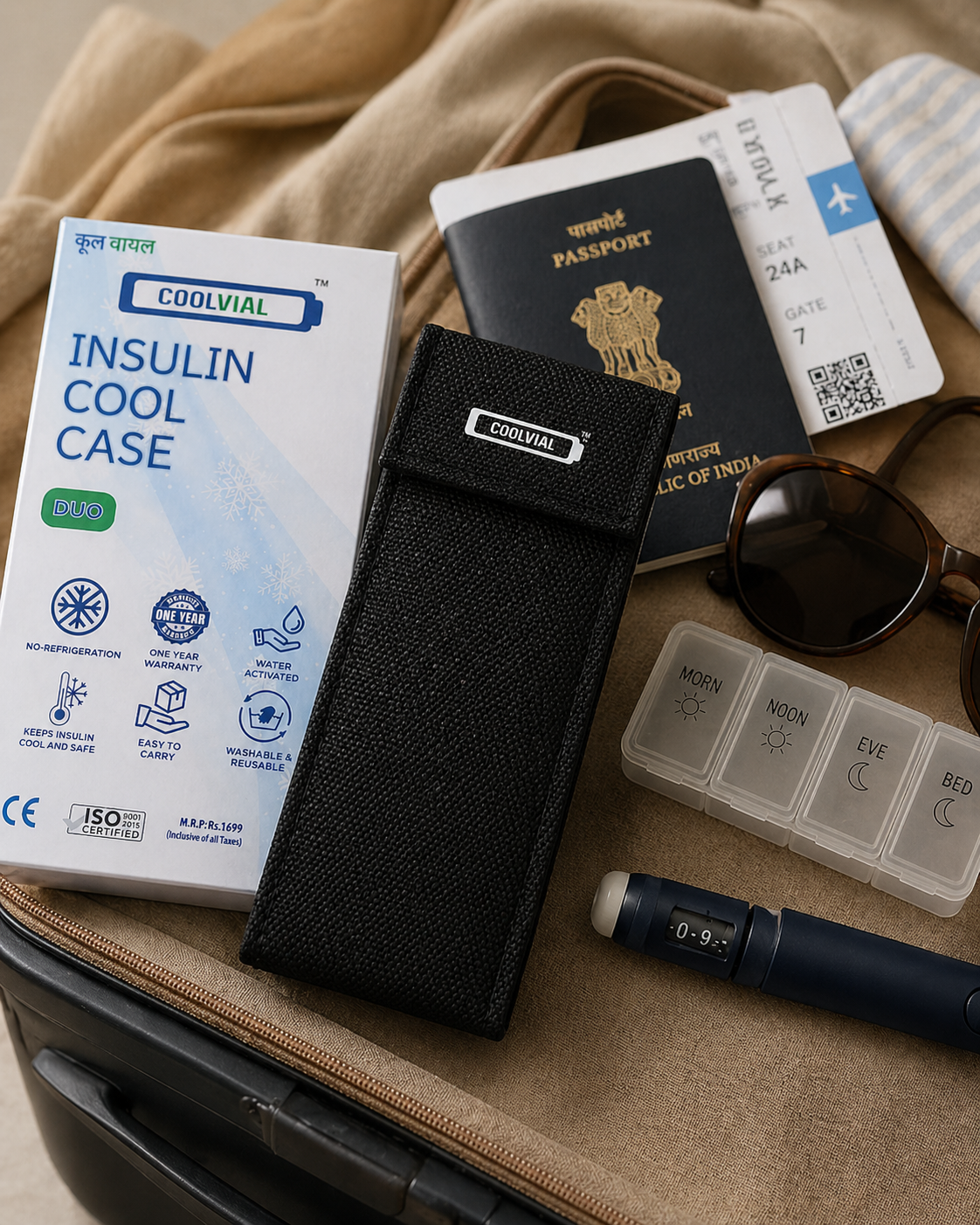
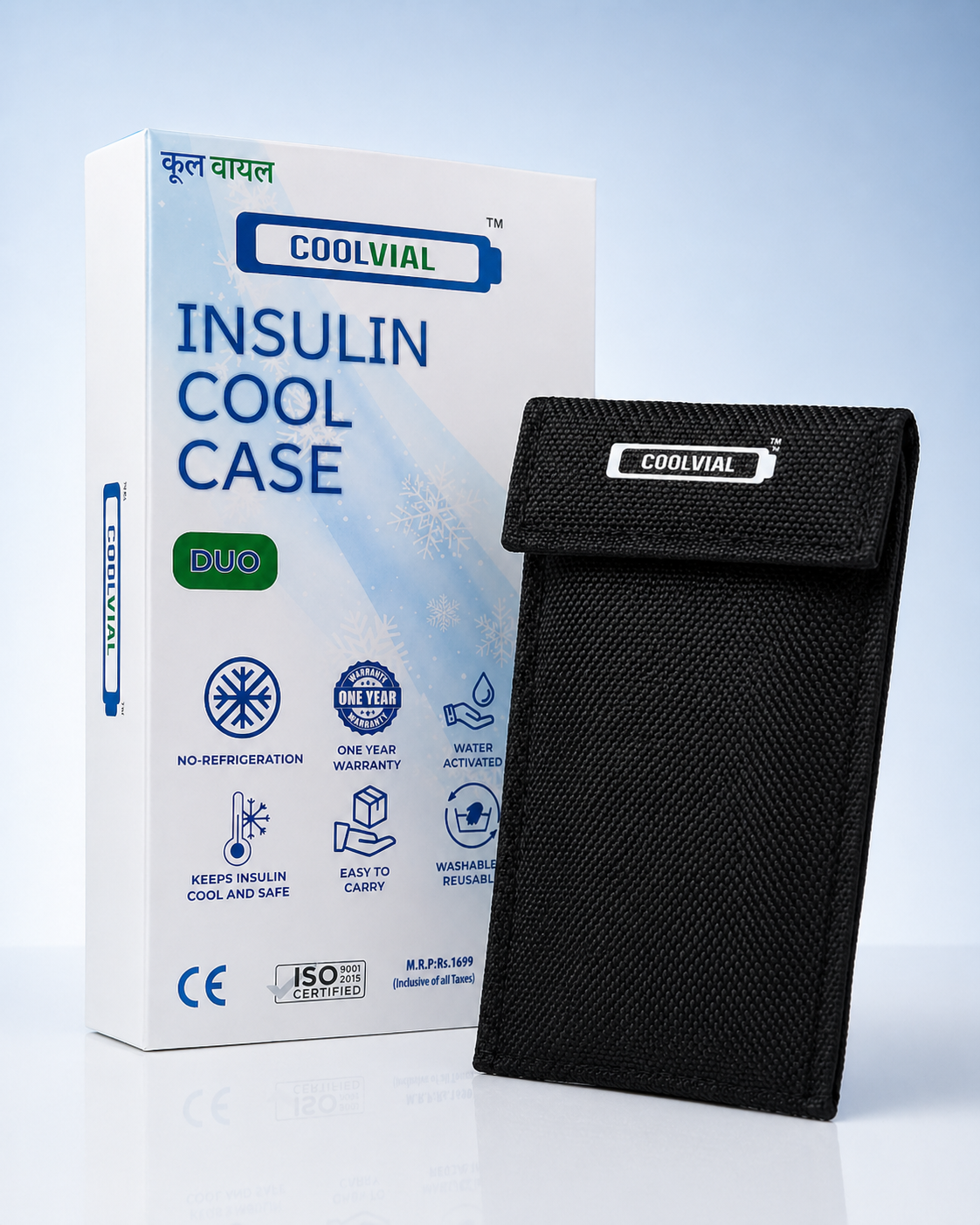
In the face of Kolkata’s unpredictable power cuts and soaring temperatures, the COOLVIAL Duo stands out as an indispensable tool for insulin-dependent individuals. This water-activated evaporative cooling case is specifically designed for the Indian climate, offering a reliable, electricity-free solution for insulin storage.
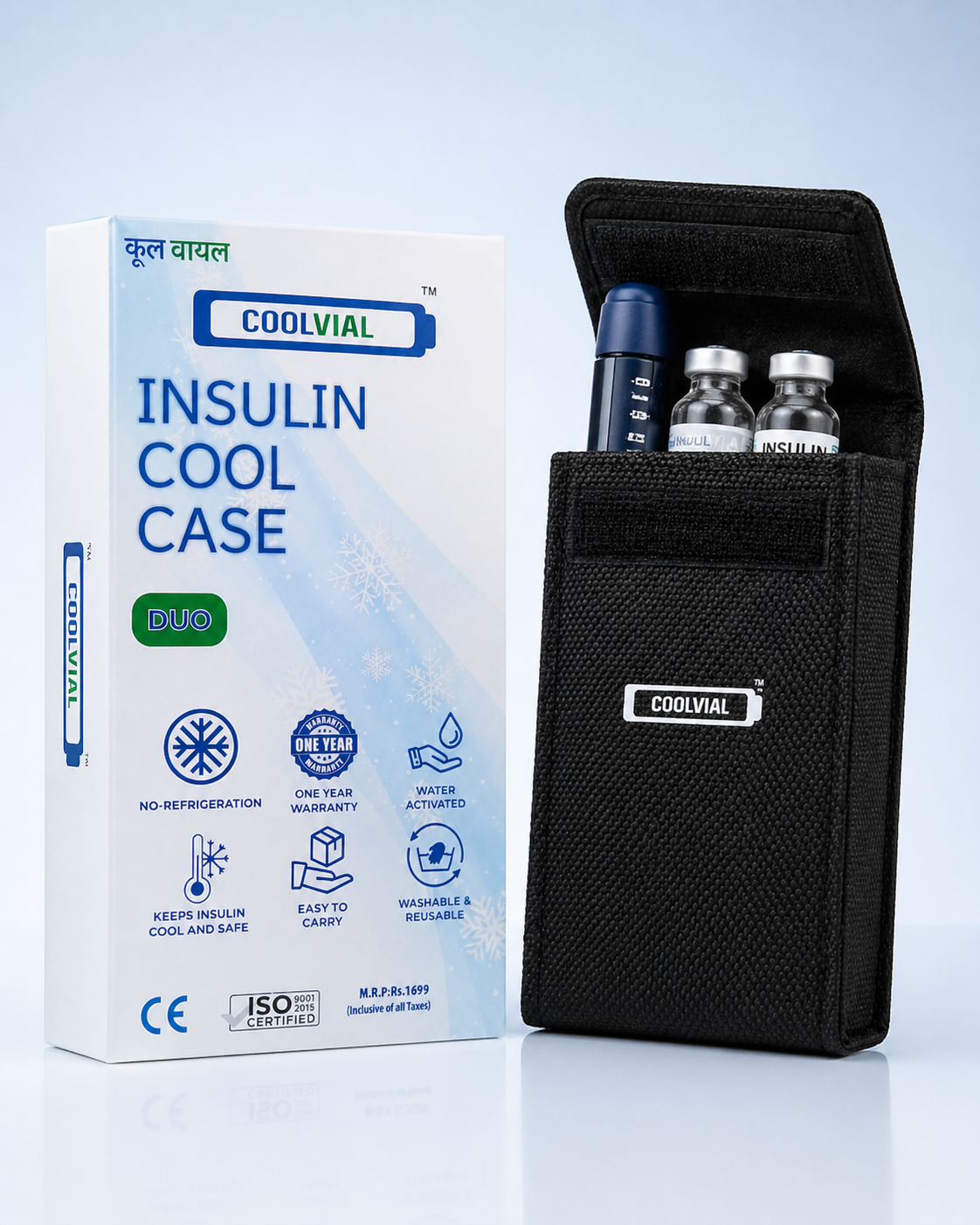
The COOLVIAL Duo is engineered to hold 2 insulin pens and 1 vial, keeping your essential medication cool at safe temperatures (typically 18-26°C, even in ambient temperatures of 35-40°C) for 12-16 hours per activation cycle. This means during a 6-hour or 12-hour power cut, you can rest assured that your insulin is protected. Simply activate it with cool water, and its evaporative cooling technology does the rest.
Why Choose COOLVIAL Duo?
- No Electricity Needed: Unlike mini-fridges or battery-powered coolers, COOLVIAL Duo operates purely on the principle of evaporative cooling, making it perfect for areas prone to frequent power cuts.
- Extended Cooling: Provides 12-16 hours of cooling, giving you ample time to manage most power outages in Kolkata.
- Portable and Discreet: Lightweight and easy to carry, it fits into a bag, making it ideal for daily use or travel around the city, from Park Street to Salt Lake.
- Affordable and Reliable: Priced at just Rs 1,099 with code COOLHEAL (MRP Rs 1,699), it’s an accessible solution for every diabetic. It’s CE certified and ISO 9001:2015 compliant, assuring quality and safety.
- Made in India: Proudly manufactured in India, understanding the local environmental challenges and user needs. It comes with a 1-year warranty for peace of mind.
When compared to other options like FRIO (often priced around Rs 1,900 for similar capacity) or Outer Woods OW-12 (a general-purpose cooler, not specifically for insulin, typically around Rs 999), the COOLVIAL Duo offers a specialized, certified, and cost-effective solution tailored for insulin users in the Indian context. While Outer Woods OW-12 might be cheaper, it lacks the specific evaporative cooling technology and certification for insulin, and FRIO, while similar, comes at a higher price point. The COOLVIAL Duo balances performance, affordability, and specific insulin storage needs, making it the smart choice. For more details on proper storage, explore our insulin storage tips and our How to Store Insulin in Kolkata Summer Heat — A Local’s Guide.
Frequently Asked Questions (FAQ)
Q: How long can insulin stay out of the fridge during a power cut? A: Unopened insulin should ideally stay in the fridge (2-8°C). Once opened, most insulins can be kept at room temperature (below 25-30°C) for up to 28 days. During a power cut, if ambient temperatures in Kolkata exceed 30°C, insulin should be moved to an evaporative cooler like COOLVIAL Duo or a cooler bag with gel packs.
Q: Can I use ice packs directly with my insulin during a power cut? A: No, never let ice packs directly touch your insulin, as freezing can damage its potency. Always wrap ice packs in a cloth or newspaper to create a buffer and prevent direct contact, maintaining a safe, cool, but not freezing, temperature.
Q: What is the primary difference between COOLVIAL Duo and a regular insulated lunch bag for insulin storage? A: The COOLVIAL Duo uses advanced evaporative cooling technology, activated by water, to actively draw heat away and maintain a stable, safe temperature range for insulin for 12-16 hours without electricity. A regular insulated lunch bag only slows down temperature changes and relies on external ice packs, which carry a freezing risk if not managed carefully.
Q: How can I check if my insulin is still good after a power cut? A: Inspect your insulin visually. It should be clear and colorless (for most types). If it looks cloudy, has particles, or its color has changed, it may be compromised and should be discarded. Always consult your doctor if you have concerns about insulin potency after temperature exposure.
Q: Where can I get new insulin in Kolkata during an extended power cut? A: During an extended power cut in Kolkata, you can visit 24-hour pharmacies like Frank Ross or Apollo Pharmacy, which usually have power backup. As a last resort, the pharmacy at major hospitals such as Apollo Multispecialty Hospitals (Salt Lake) can provide assistance.
Q: Is it safe to use insulin that has been exposed to Kolkata’s high summer temperatures for a few hours? A: If insulin has been exposed to temperatures above 30°C for more than a few hours, its potency may be reduced. While it might not be immediately dangerous, it could be less effective, leading to higher blood sugar levels. It’s always best to use properly stored insulin, and if in doubt, consult your doctor.
Q: What should I do if my refrigerator is still warm after power is restored? A: After power is restored, allow your refrigerator several hours to return to its safe operating temperature (2-8°C). Use a fridge thermometer to confirm it’s cold enough before returning insulin. In the meantime, keep your insulin in your COOLVIAL Duo or a cooler bag.
Conclusion: Staying Prepared, Staying Safe
Kolkata’s unique climate and power infrastructure demand a proactive approach to diabetes management, especially when it comes to insulin storage. From the monsoon downpours that cause outages in Ballygunge and Shyambazar, to the scorching summer load shedding in Salt Lake and New Town, being prepared is your best defense. By understanding local power patterns, assembling an emergency kit, and having a clear action plan for various power cut durations, you can protect your life-saving medication.
Remember, the COOLVIAL Duo is designed to be your steadfast companion, offering reliable, electricity-free cooling for your insulin when you need it most. Its 12-16 hour cooling cycle provides peace of mind through most outages, and its portability ensures you’re always ready. Combine this with the robust network of 24-hour pharmacies like Frank Ross and Apollo Pharmacy, and the critical support from hospitals like Apollo Multispecialty Hospitals (Salt Lake), and you have a comprehensive strategy for managing diabetes even when the grid goes down. Stay informed, stay prepared, and empower yourself with the right tools to navigate Kolkata’s challenges with confidence.
Order your COOLVIAL Duo at just Rs 1,099 with code COOLHEAL (MRP Rs 1,699) today at coolvial.com or via WhatsApp wa.me/918766952300. Don’t let power cuts compromise your health.
Methodology Note
How We Researched This — This article is based on a thorough review of RSSDI (Research Society for the Study of Diabetes in India) guidelines for insulin storage, ICMR-INDIAB (Indian Council of Medical Research - India Diabetes) data on diabetes prevalence, local Kolkata hospital directories, and the Frank Ross pharmacy network. Local climate data from IMD (India Meteorological Department) and insights into Kolkata’s power infrastructure and common outage patterns were also incorporated to provide a highly localized and practical power cut survival guide.
Medical Disclaimer
This article is for general information purposes only and is not a substitute for professional medical advice, diagnosis, or treatment. Always seek the advice of your physician, endocrinologist, or other qualified health provider with any questions you may have regarding a medical condition, insulin storage, or dosing practices. Never disregard professional medical advice or delay in seeking it because of something you have read in this article.