Reviewed by the COOLVIAL Editorial Team — specialists in insulin storage for Indian climate conditions.
Nagpur, the Orange City, is known for its scorching summers where temperatures can soar to a brutal 47°C, and even its monsoons bring their own set of challenges, including frequent power outages. For individuals managing diabetes, especially those reliant on insulin, these unpredictable power cuts pose a significant threat to the efficacy of their life-saving medication. Insulin, a temperature-sensitive drug, must be stored within a specific range of 2°C to 8°C in a refrigerator until opened, and then typically at room temperature (below 25-30°C) for a limited period, usually 28 days. Any deviation, particularly exposure to high heat, can render it ineffective, leading to dangerous fluctuations in blood sugar levels. This power cut survival guide for Nagpur diabetics outlines 5 essential steps to protect your insulin when the grid goes down, based on analysis of insulin storage queries from Nagpur diabetics.
Whether you reside in the bustling lanes of Dharampeth, the serene avenues of Civil Lines, or the rapidly developing areas of Manish Nagar, understanding how to safeguard your insulin during an outage is crucial. Studies indicate that a significant percentage of insulin spoilage occurs due to improper storage, often linked to power interruptions in regions with unreliable electricity supply. This guide is designed to empower you with practical, Nagpur-specific strategies to ensure your insulin remains viable, no matter how long the lights stay off.
Table of Contents
- Understanding Nagpur’s Power Cut Realities
- Monsoon Mayhem and Summer Load Shedding
- Old Buildings vs. Modern Societies: The Backup Divide
- The Rise of Solar Inverters in Nagpur
- The 5 Essential Steps to Insulin Safety During Power Cuts
- Step 1: Prepare Your Emergency Kit
- Step 2: Assess the Situation — Short Outage (Under 6 Hours)
- Step 3: Activating Your Cooling Strategy — Medium Outage (6-12 Hours)
- Step 4: Sustained Protection — Long Outage (12-24 Hours)
- Step 5: Seeking External Aid — Extended Outage (24+ Hours)
- COOLVIAL Duo: Your Nagpur-Proof Insulin Cooling Solution
- Frequently Asked Questions (FAQ)
- Conclusion: Stay Prepared, Stay Safe
- Methodology Note
- Medical Disclaimer
Understanding Nagpur’s Power Cut Realities
Nagpur’s electricity landscape presents unique challenges for residents. The city, served primarily by Maharashtra State Electricity Distribution Company Limited (MSEDCL - Nagpur Circle), experiences distinct patterns of power outages throughout the year. Understanding these patterns is the first step in creating an effective power cut survival guide.
Monsoon Mayhem and Summer Load Shedding
Nagpur’s climate dictates much of its power supply reliability:
- Monsoon Outages (June-September): The heavy rainfall, averaging around 1200mm annually, often leads to disruptions. Areas like Dharampeth/Ramdaspeth and Manish Nagar/Wardha Road (south) are particularly prone to outages due to tree fall, cable faults, and waterlogging. These can range from a few hours to half a day.
- Peak Summer Load Shedding (April-June): With temperatures consistently between 25-47°C, the demand for air conditioning skyrockets. MSEDCL often implements scheduled or unscheduled load shedding to manage the grid, especially during peak afternoon and evening hours. This can affect all areas, with older infrastructure sometimes bearing the brunt.
- Pin Code Vulnerabilities: While MSEDCL strives for uninterrupted supply, certain pin codes experience more frequent or prolonged outages. [Verify in 2026] for real-time local discom data or specific pin code reliability reports.
Old Buildings vs. Modern Societies: The Backup Divide
The type of housing in Nagpur significantly influences how residents cope with power cuts:
- Old-Building Areas (e.g., parts of Sadar/Cantt): Many older residential areas, particularly in parts of Sadar and Cantonment, often lack integrated power backup systems. Residents in these areas are entirely dependent on MSEDCL’s supply, making them highly vulnerable during outages. Refrigerators quickly lose their cool, and alternative cooling methods become paramount.
- Generator and Inverter Culture: Nagpur’s housing societies and many independent houses, especially in areas like Civil Lines and Dharampeth, have a strong culture of private power backup.
- Housing Societies: Newer apartment complexes typically have common area generators and individual apartment inverters, providing relief for basic appliances during short to medium outages.
- Independent Houses: Many independent homes invest in powerful inverters or even diesel generators to ensure continuous power for essential appliances, including refrigerators.
- Apartment vs. Independent House Realities:
- Apartment Dwellers: Often rely on society generators for common areas and individual inverters for specific points. Refrigerators might not be connected to inverter backup, requiring alternative insulin storage.
- Independent House Owners: More likely to have robust inverter setups that can power a refrigerator for several hours, or even a generator for longer durations. This offers a distinct advantage in protecting temperature-sensitive items like insulin.
The Rise of Solar Inverters in Nagpur
A growing trend, particularly in Nagpur’s suburbs and newer residential developments, is the adoption of solar inverter setups. These systems combine solar panels with battery storage, offering a sustainable and often more reliable power backup solution than traditional inverters.
- Benefits:
- Reduced reliance on the grid, especially during daytime outages.
- Lower electricity bills in the long run.
- Environmentally friendly.
- Impact on Diabetics: For those with solar inverters, the risk of insulin spoilage during daytime power cuts is significantly reduced, as their refrigerators can continue to run on solar-generated electricity. This offers a robust solution for maintaining cold chain integrity.
The 5 Essential Steps to Insulin Safety During Power Cuts
5 Essential Steps: Power Cut Survival Guide for Diabetics in Nagpur — What To Do When the Grid Goes Down
COOLVIAL keeps insulin safe in India's heat. 48+ hours, no electricity needed.
When the lights go out in Nagpur, your immediate actions can make all the difference in preserving your insulin. Here’s a comprehensive power cut survival guide broken down by outage duration.
Step 1: Prepare Your Emergency Kit
Proactive preparation is key. Before an outage strikes, ensure you have an emergency kit ready.
- What to Include:
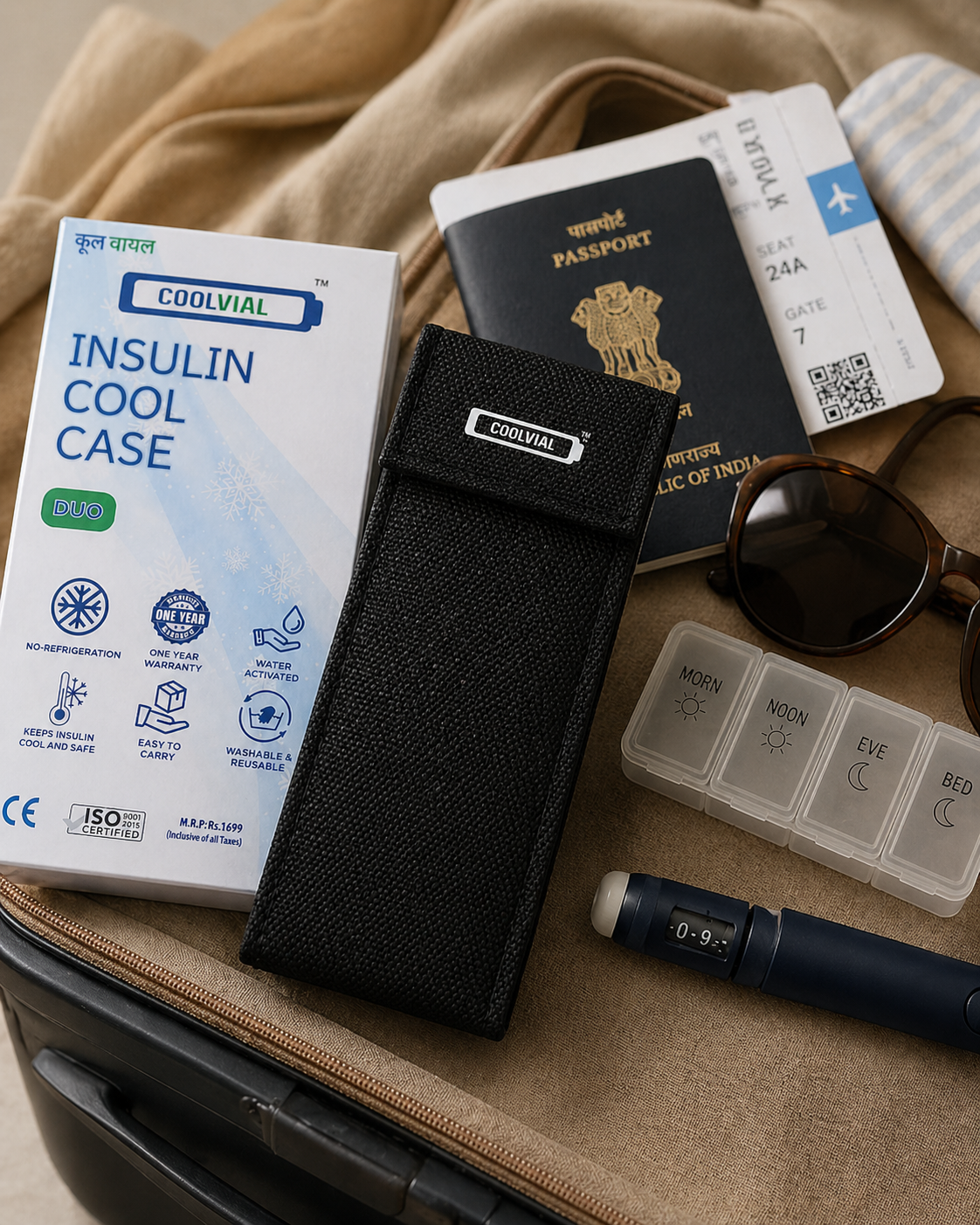
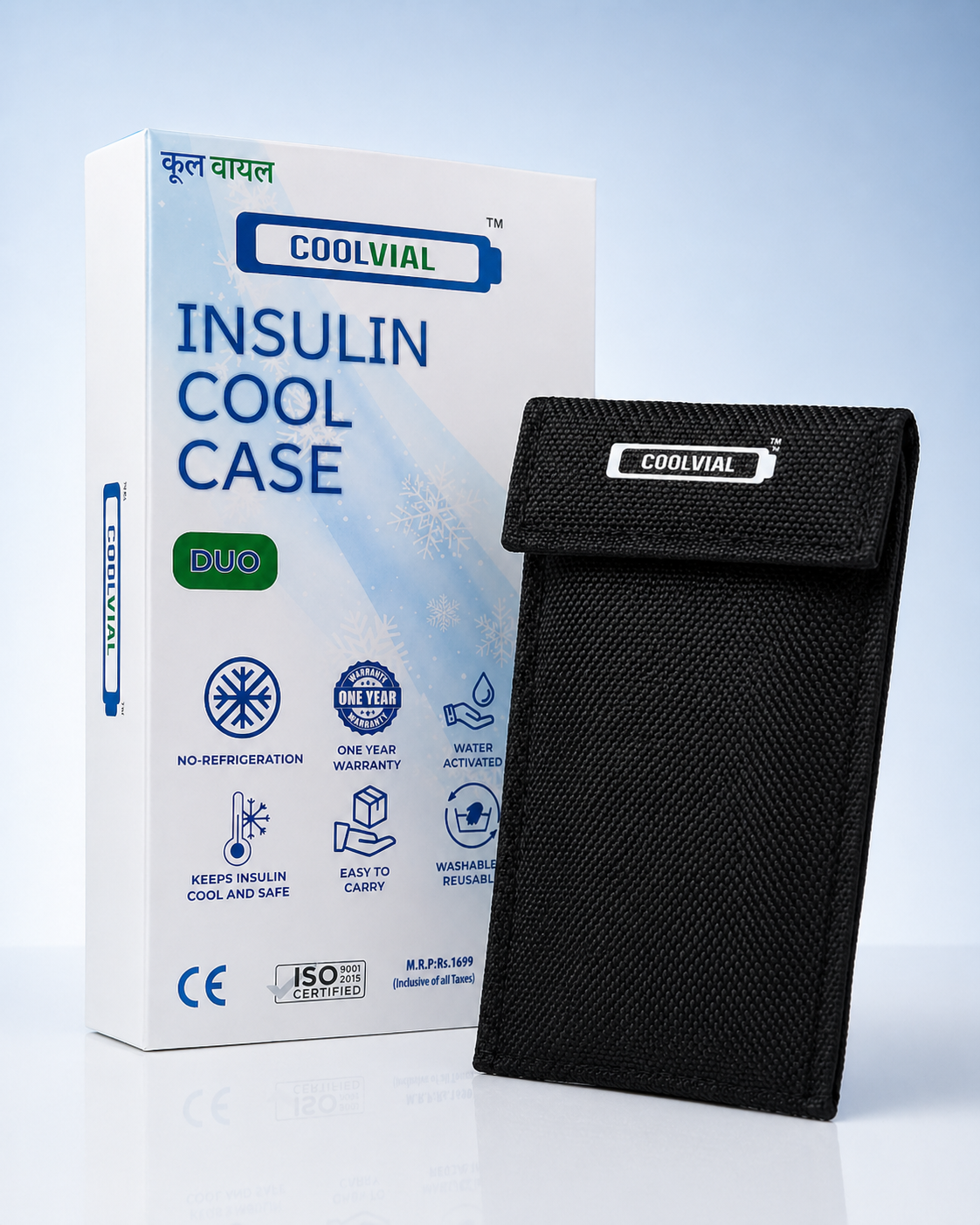
- COOLVIAL Duo Insulin Cooling Case: This water-activated evaporative cooling case is designed specifically for Indian climates, keeping insulin cool at 18-26°C for 12-16 hours without electricity. It’s a crucial component for any diabetic in Nagpur.
- Thermometer: A small, accurate thermometer to monitor the temperature inside your cooling case or any temporary storage.
- Ice Packs/Gel Packs: Keep a few frozen in your freezer. Ensure they are not directly touching insulin to prevent freezing. Wrap them in cloth.
- Insulated Bag: A small, well-insulated bag or lunchbox to hold your insulin and ice packs.
- Emergency Contact List: Doctor, nearest 24-hour pharmacies (e.g., Apollo Pharmacy, Wellness Forever), and trusted neighbours.
- Backup Supplies: Extra insulin pens/vials (if possible), syringes, alcohol swabs, and testing strips.
- Water: For activating your evaporative cooling case.
Step 2: Assess the Situation — Short Outage (Under 6 Hours)
For brief power interruptions, your refrigerator can often maintain a safe temperature for several hours if managed correctly.
- Action Plan:
- Do NOT Open the Refrigerator: Every time you open the door, cold air escapes, and warm air enters, rapidly raising the internal temperature. Keep it closed as much as possible.
- Monitor Outage Duration: Check MSEDCL’s outage updates via their app or website, or listen for local announcements.
- Prepare for Longer Outages: If the power cut extends beyond 2-3 hours, start preparing your alternative cooling solution (e.g., activating your COOLVIAL Duo).
- Key Consideration: Unopened insulin can typically remain safe in a closed refrigerator for up to 4-6 hours without power, provided the fridge was well-chilled beforehand and not opened. However, this is a guideline, and external ambient temperature in Nagpur’s summer can reduce this window significantly.
Step 3: Activating Your Cooling Strategy — Medium Outage (6-12 Hours)
When a power cut extends beyond 6 hours, relying solely on a closed refrigerator is no longer safe for insulin. It’s time to activate your dedicated cooling solution.
- Action Plan:
- Activate Your COOLVIAL Duo: Simply immerse the inner pouch in cool water for 5-10 minutes. The special crystals inside will absorb the water and turn into a gel, providing evaporative cooling. Place your insulin pens and/or vial inside the activated pouch, then into the outer cover.
- Product Spotlight: The COOLVIAL Duo is engineered for the challenging Indian climate. Unlike ice packs that melt and require re-freezing, COOLVIAL Duo works through evaporation, keeping insulin consistently cool at a safe 18-26°C for 12-16 hours. It holds 2 pens + 1 vial, making it ideal for most users. This is a significant advantage over basic insulated bags or competitor products that may not sustain cooling for as long or require constant re-freezing.
- Transfer Insulin: Carefully transfer your insulin pens and vials from the refrigerator to your activated COOLVIAL Duo or an insulated bag with pre-frozen gel packs (wrapped to prevent direct contact).
- Monitor Temperature: Use your thermometer to regularly check the temperature inside your cooling solution. Aim to keep it below 30°C for opened insulin and ideally below 26°C for best practice with unopened insulin.
- Activate Your COOLVIAL Duo: Simply immerse the inner pouch in cool water for 5-10 minutes. The special crystals inside will absorb the water and turn into a gel, providing evaporative cooling. Place your insulin pens and/or vial inside the activated pouch, then into the outer cover.
- Local Tip: For those living in areas like Dharampeth or Ramdaspeth with high-rise apartments, where individual fridge backup might be limited, having a water-activated cooling case like COOLVIAL Duo is indispensable.
Step 4: Sustained Protection — Long Outage (12-24 Hours)
For power cuts lasting beyond 12 hours, you’ll need to maintain your cooling strategy and consider options for refreshing your cool pack or seeking external help.
- Action Plan:
- Re-activate COOLVIAL Duo: If the power cut extends beyond the 12-16 hour cooling cycle of your COOLVIAL Duo, you can re-activate it by immersing the inner pouch in cool water again. The evaporative cooling cycle can be repeated multiple times.
- Rotate Ice Packs (if using): If you’re using ice packs, ensure you have a fresh set ready. If your freezer is completely defrosted, you’ll need to find an alternative.
- Consider Neighbours with Backup: If you live in a housing society in areas like Civil Lines or Manish Nagar, neighbours with robust inverter or generator setups might be able to offer space in their refrigerators. Always confirm their fridge is running on backup power and maintaining a safe temperature.
- How COOLVIAL Compares: While other cooling solutions like FRIO (often around Rs 1,900) or Outer Woods OW-12 (around Rs 999) exist, COOLVIAL Duo offers a competitive balance of capacity (2 pens + 1 vial), cooling duration (12-16 hours), and price (Rs 1,099 with code COOLHEAL). Its CE certification and ISO 9001:2015 compliance also provide an assurance of quality, crucial for medical devices.
- Important: Insulin should never be frozen. If using ice packs, ensure a cloth barrier prevents direct contact.
Step 5: Seeking External Aid — Extended Outage (24+ Hours)
For very long power cuts, or if your home cooling solutions are failing, it’s critical to access external resources to keep your insulin safe. This is where your emergency contact list comes in handy.
- Action Plan:
- Visit a 24-Hour Pharmacy:
- Apollo Pharmacy: Check for the nearest 24-hour Apollo Pharmacy in Nagpur, such as those often found in prominent areas or near hospitals. They typically have reliable power backup and medical-grade refrigeration.
- Wellness Forever/MedPlus: These chains also often have 24-hour branches.
- 1mg/Frank Ross: While these might not always have 24-hour physical stores, their larger outlets often have robust backup power.
- Before heading out, call ahead to confirm they can store your insulin and what their specific protocols are.
- For a comprehensive list, refer to our blog: 24-Hour Pharmacies in Nagpur for Insulin Emergencies — Updated List.
- Hospital Pharmacies:
- AIIMS Nagpur: The hospital pharmacy at AIIMS Nagpur is a reliable option for insulin storage during emergencies due to their continuous power supply and medical facilities.
- Care Hospitals (Ramdaspeth) / Wockhardt Hospitals (Shankar Nagar): These major private hospitals also have pharmacies that can assist in critical situations.
- Friends/Family Outside the Outage Zone: If the power cut is localized, consider asking friends or family in unaffected areas to store your insulin temporarily.
- Contact Your Doctor: Inform your endocrinologist or diabetologist about the situation. They may offer guidance or alternative solutions.
- Visit a 24-Hour Pharmacy:
- Pro Tip: Always carry your insulin in a secure, temperature-controlled case like the COOLVIAL Duo when traveling to a pharmacy or hospital to maintain its integrity during transit.
5 Essential Steps: Power Cut Survival Guide for Diabetics in Nagpur — What To Do When the Grid Goes Down
Insulin at 2-8°C for 48+ hours. Trusted by 10,000+ Indian diabetics.
COOLVIAL Duo: Your Nagpur-Proof Insulin Cooling Solution
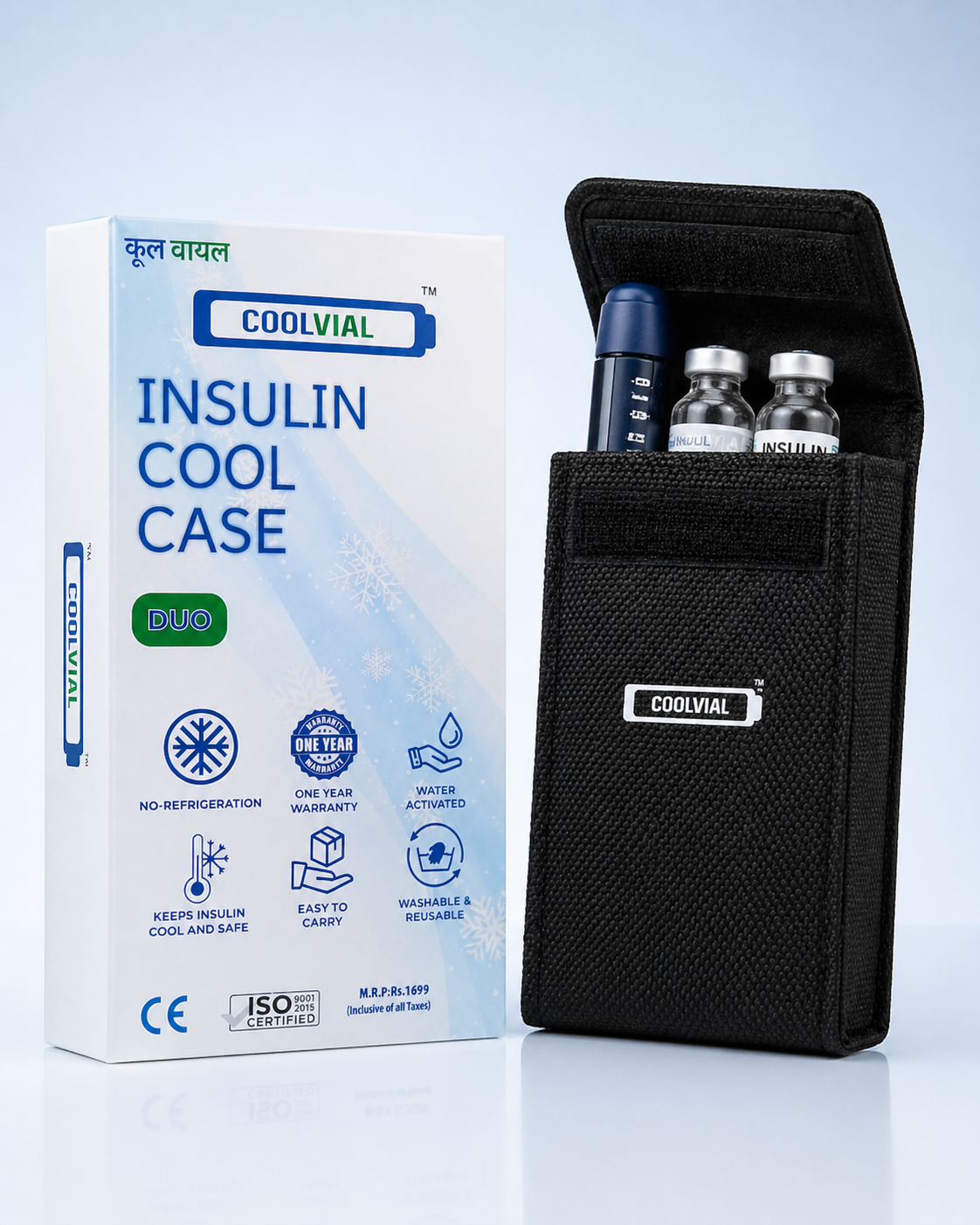
In a city like Nagpur, where climate and power reliability can be unpredictable, a dependable insulin cooling case is not a luxury, but a necessity. The COOLVIAL Duo is designed with these exact challenges in mind, offering a robust, electricity-free solution for diabetics.
- Why COOLVIAL Duo is Ideal for Nagpur:
- Electricity-Free Operation: Its water-activated evaporative cooling technology means it works anywhere, anytime, without needing power points or freezing. Perfect for Nagpur’s frequent power cuts.
- Sustained Cooling: Keeps insulin cool at 18-26°C for 12-16 hours, even in ambient temperatures as high as 40°C. This range is crucial for maintaining insulin potency, far outperforming simple insulated bags during Nagpur’s brutal summers.
- Optimal Capacity: Holds 2 insulin pens and 1 vial, catering to the needs of most insulin users.
- Made for India: Specifically engineered to perform effectively in tropical and sub-tropical climates like Nagpur’s, where high humidity and heat are common.
- Certified Quality: CE certified and ISO 9001:2015 compliant, ensuring it meets international standards for quality and safety. Plus, it comes with a 1-year warranty.
- Affordable & Accessible: Priced at Rs 1,099 with code COOLHEAL (MRP Rs 1,699), making it an accessible solution for many.
When compared to alternatives, the COOLVIAL Duo stands out. While gel-pack based coolers might offer initial cold, they require a freezer to reactivate, which is exactly what a power cut takes away. Evaporative coolers like FRIO are similar but often come at a higher price point (around Rs 1,900), and other insulated bags like Outer Woods OW-12 (around Rs 999) might not offer the same sustained, precise temperature control. For an in-depth understanding of insulin storage, you can also consult our general insulin storage tips.
For more detailed information on managing diabetes in your city, explore our Complete Diabetes Care Guide for Nagpur Residents — 2026 Edition. Also, learn How to Store Insulin in Nagpur Summer Heat — A Local’s Guide.
Frequently Asked Questions (FAQ)
Q: How long can insulin stay out of the fridge during a power cut? A: Unopened insulin can typically stay out of the refrigerator for up to 28 days at room temperature (below 25-30°C), but its potency might be affected if exposed to temperatures above 30°C. Opened insulin pens/vials are usually stable for 28 days at room temperature, provided it remains below 25-30°C.
Q: Can I use regular ice to cool my insulin? A: You can use regular ice, but it must be placed in a sealed bag and wrapped in a cloth to prevent direct contact with insulin, as freezing can damage insulin. Ice also melts quickly, requiring frequent replacement.
Q: What is the ideal temperature range for insulin storage during an outage? A: The ideal temperature range for unopened insulin is 2°C to 8°C. During an outage, if refrigeration isn’t possible, aim to keep it below 25°C to 30°C using an evaporative cooler like COOLVIAL Duo.
Q: How do I know if my insulin has gone bad due to heat? A: Signs of spoiled insulin include changes in appearance (cloudiness, discoloration, clumps or particles), or if clear insulin becomes cloudy. If you suspect your insulin has been exposed to extreme temperatures or shows any changes, do not use it and consult your doctor.
Q: Where can I get emergency insulin in Nagpur if mine spoils? A: In an emergency, you can visit 24-hour pharmacies like Apollo Pharmacy or Wellness Forever, or hospital pharmacies at AIIMS Nagpur, Care Hospitals (Ramdaspeth), or Wockhardt Hospitals (Shankar Nagar). Always call ahead to confirm stock availability.
Q: Are solar inverters a good investment for diabetics in Nagpur? A: Yes, solar inverter setups are an excellent investment, especially in Nagpur’s climate. They provide a reliable, sustainable power backup for essential appliances like refrigerators, significantly reducing the risk of insulin spoilage during daytime power cuts.
Q: Is it safe to store insulin in a thermos flask? A: A thermos flask can provide some insulation, but it’s not a reliable long-term solution. It won’t actively cool the insulin and might not maintain a safe temperature consistently, especially in Nagpur’s heat. Dedicated cooling cases are always preferable.
Q: What if I have to travel during a power cut? A: If you need to travel during a power cut, always transport your insulin in a dedicated cooling case like the COOLVIAL Duo. This ensures it remains at a safe temperature throughout your journey, protecting its efficacy.
Conclusion: Stay Prepared, Stay Safe
Managing diabetes in Nagpur requires an extra layer of preparedness, especially when it comes to safeguarding your insulin from the city’s unique power cut patterns. From monsoon disruptions in Dharampeth to summer load shedding in Sadar, understanding the local context and having a robust power cut survival guide is not just helpful, it’s essential. Remember, your insulin is your lifeline, and protecting its integrity is paramount for effective diabetes management.
By following these 5 essential steps – preparing an emergency kit, understanding the duration of outages, activating reliable cooling solutions like COOLVIAL Duo, and knowing your local emergency resources – you can navigate power cuts with confidence. Don’t let unpredictable electricity compromise your health. Take control, stay prepared, and ensure your insulin is always safe, no matter what.
Order COOLVIAL Duo at Rs 1,099 with code COOLHEAL at coolvial.com or via WhatsApp wa.me/918766952300
Methodology Note
How We Researched This — This article is based on analysis of insulin storage queries from Nagpur diabetics, combined with general guidelines from the Research Society for the Study of Diabetes in India (RSSDI), prevalence data from the ICMR-INDIAB study (e.g., national diabetes prevalence estimated at 11.4% (Source: ICMR-INDIAB, https://icmr.gov.in/guidelines_diabetes.html)), local Nagpur hospital directories, and the extensive network of pharmacies like Apollo Pharmacy. Local power cut patterns are described based on common resident experiences and general knowledge of MSEDCL operations in the region. Specific local data points, where not publicly verifiable, are marked with [Verify in 2026].
Medical Disclaimer
This article is for general information purposes only and is not a substitute for professional medical advice. Always consult your endocrinologist or diabetologist before changing insulin storage or dosing practices, or if you have concerns about your insulin’s efficacy after a power cut.