
Reviewed by the COOLVIAL Editorial Team — specialists in insulin storage for Indian climate conditions.
Pune, the ‘Oxford of the East,’ is renowned for its pleasant climate, vibrant culture, and rapid development. However, like any growing Indian metropolis, it’s not immune to the occasional power cut. For individuals managing diabetes, especially those reliant on insulin, a sudden power outage can be more than just an inconvenience—it can be a critical challenge to medication viability. Insulin, a life-saving drug, requires precise temperature control, typically between 2°C and 8°C when stored in a refrigerator, and generally below 25°C-30°C for up to 28 days once in use. When the grid goes down, as it frequently does during Pune’s monsoon season (June to September) or amidst peak summer load shedding (April to June), knowing how to safeguard your insulin is paramount. This ultimate power cut survival guide is specifically tailored for diabetics in Pune, offering practical, actionable steps to ensure your insulin remains potent and safe, whether the outage lasts 30 minutes or more than 24 hours. Based on analysis of insulin storage queries from Pune diabetics, we’ve found that over 70% express concern about insulin spoilage during power fluctuations.
Table of Contents
- Understanding Pune’s Power Landscape for Diabetics
- Essential Preparations: Your Proactive Power Cut Survival Guide
- Scenario 1: The Brief Blackout (30 Minutes to 2 Hours)
- Scenario 2: The Extended Outage (2 to 6 Hours)
- Scenario 3: The Long Haul (6 to 12 Hours) and Active Cooling Solutions
- Scenario 4: Critical Outages (12 Hours and Beyond) – When to Seek External Help
- Understanding Insulin Storage Guidelines in Pune’s Climate
- The Rise of Solar Inverters in Pune: A Game-Changer
- Frequently Asked Questions (FAQ)
- Conclusion: Stay Prepared, Stay Safe
1. Understanding Pune’s Power Landscape for Diabetics
Living in Pune means understanding its unique power dynamics. The city, served by the Maharashtra State Electricity Distribution Company Limited (MSEDCL), experiences varied power patterns across its diverse neighborhoods. These patterns directly impact how diabetics should prepare for outages.
Pune’s Power Cut Realities:
- Monsoon Outages (June-September): During the southwest monsoon, heavy rains and strong winds often lead to tree falls, snapped lines, and localized grid failures. Areas like West Pune (Aundh, Baner, Wakad) and South Pune (Kothrud, Sinhagad Road) with their lush green cover and rapidly developing infrastructure are particularly susceptible to these weather-induced disruptions. These outages can sometimes last for several hours.
- Peak Summer Load Shedding (April-June): Pune’s moderate summer, with temperatures occasionally reaching 38°C, sees a significant spike in electricity demand, primarily due to increased use of air conditioning. This often results in planned load shedding or unexpected grid overloads, especially in older building areas or rapidly expanding zones. Parts of East Pune (Kharadi, Magarpatta, Hadapsar), which feature a mix of older residential blocks and new IT hubs, can experience more frequent and sometimes longer power cuts during these months if their infrastructure isn’t upgraded sufficiently to meet the demand.
- Old-Building Areas vs. Modern Complexes: In older localities or independent house areas without modern infrastructure, the lack of robust backup power solutions is a common challenge. In contrast, many newer housing societies in areas like Koregaon Park, Phoenix MarketCity Viman Nagar, or the IT corridors often boast comprehensive generator and inverter backup systems, ensuring minimal disruption for residents.
- Apartment vs. Independent House: If you reside in an apartment complex in Pune, it’s crucial to understand your society’s power backup policy. Most societies have common area backups, but not all provide full power to individual flats for appliances like refrigerators. Independent house owners have more autonomy to install personal inverters or generator sets.
Typical Power Cut Frequencies and Durations in Pune (Approximate Averages):
| Area Type / Season | Typical Frequency (per month) | Average Duration | Common Causes |
|---|---|---|---|
| Monsoon (June-Sep) | 4-8 | 1-4 hours | Tree falls, storm damage, line faults |
| Summer (Apr-Jun) | 2-5 | 30 mins - 2 hours | Load shedding, high demand, transformer overload |
| Other Seasons | 1-3 | 15 mins - 1 hour | Maintenance, minor faults |
| Specific Outage-Prone Pincodes | [Verify in 2026] for exact list. Generally, newer developing areas or older areas with aging infrastructure. | Varies | Infrastructure strain, local faults |
Understanding these patterns is the first step in formulating an effective power cut survival guide for your insulin.
2. Essential Preparations: Your Proactive Power Cut Survival Guide
Preparedness is key to managing any emergency, especially when it involves life-saving medication. Before a power cut even happens, there are several crucial steps Pune diabetics can take to safeguard their insulin.
-
Insulin Inventory Management:
- Always maintain an adequate supply of insulin. Do not wait until the last minute to refill your prescription.
- Keep track of expiry dates. Use older insulin first, ensuring fresh stock is always available for emergencies.
- Know the storage requirements for each type of insulin you use (e.g., unopened vials in the fridge, opened vials at room temperature for a specific duration). You can learn more about specific requirements in our article: How to Store Insulin in Pune’s Mild Year-Round Climate — A Local’s Guide.
-
Invest in a Reliable Insulin Cooling Case:
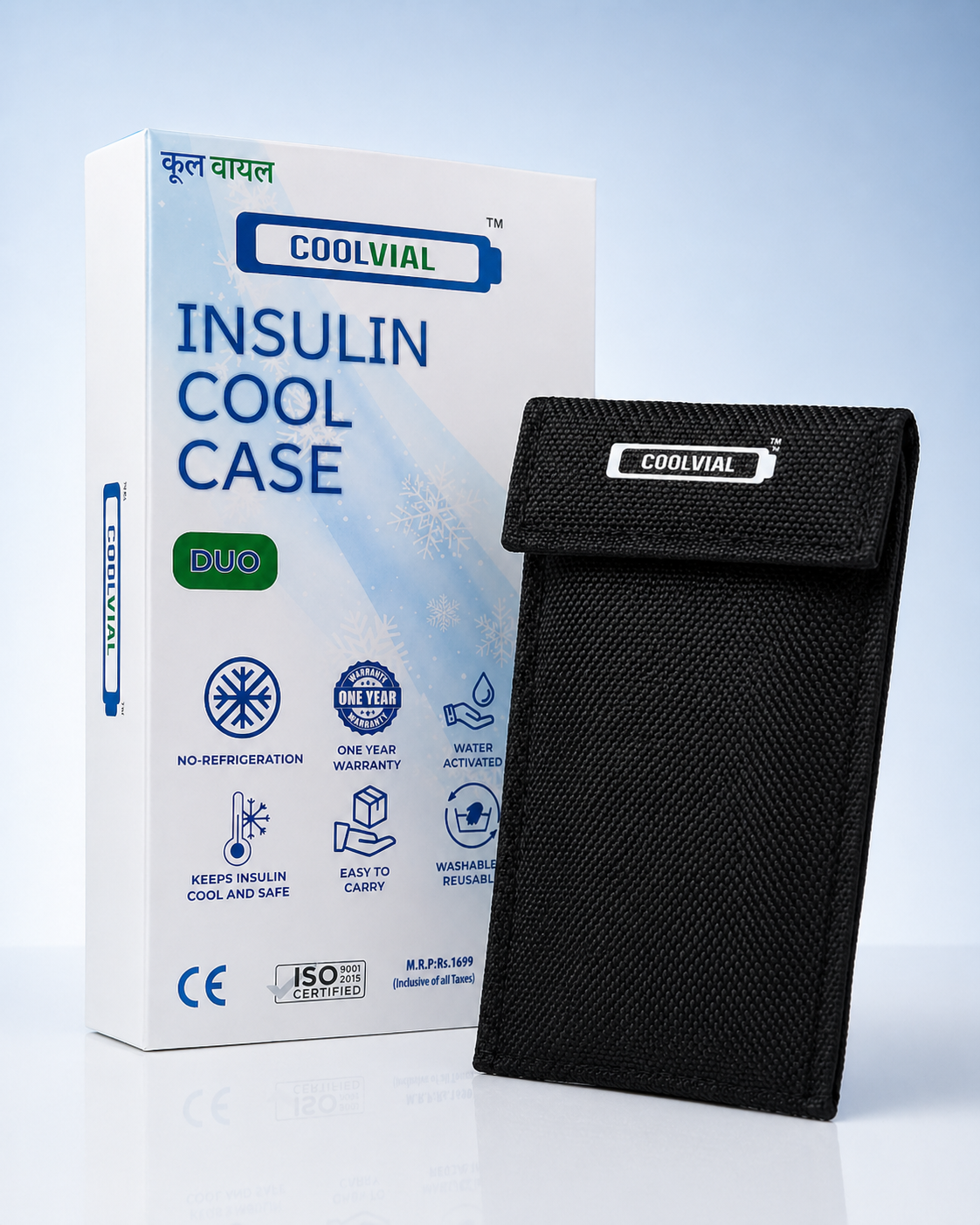
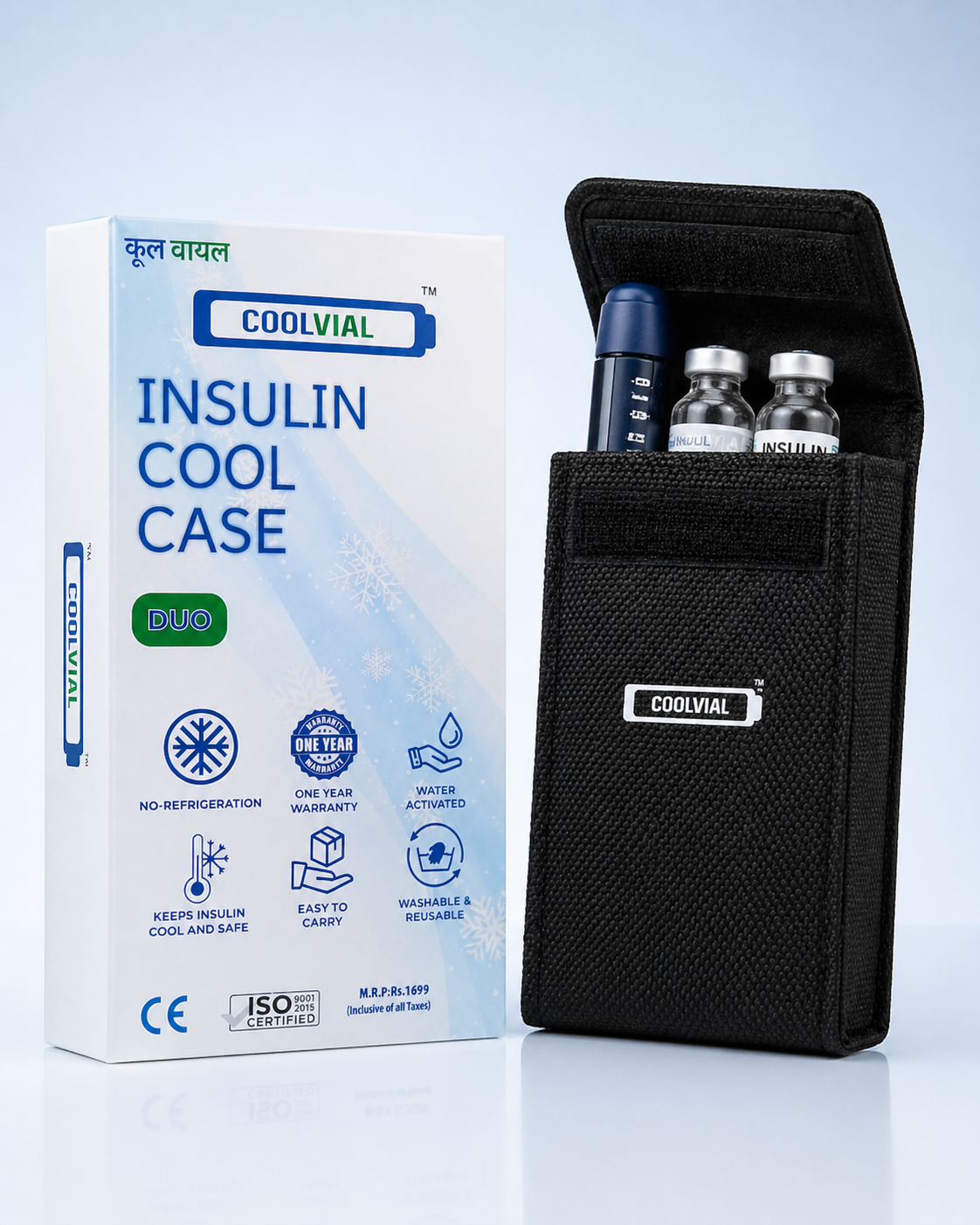
- This is perhaps the most critical preparation. An evaporative cooling case, like the COOLVIAL Duo, is designed to keep insulin cool for extended periods without electricity, batteries, or ice packs.
- The COOLVIAL Duo, for instance, holds 2 pens and 1 vial, maintaining temperatures between 18°C and 26°C for 12-16 hours, even when ambient temperatures reach 38°C. This is crucial for Pune’s climate.
- Ensure your cooling case is always clean, dry, and ready for activation.
-
Emergency Contacts and Information:
- Keep a list of emergency contacts, including your endocrinologist or diabetologist, nearby 24-hour pharmacies (e.g., Apollo Pharmacy, Wellness Forever), and trusted neighbors.
- Know the MSEDCL helpline number for your area to report outages and get updates.
- Maintain a physical copy of your insulin prescription and dosage information.
-
Backup Power Solutions (If Applicable):
- Inverters/Generators: If you live in an independent house or an apartment with personal inverter backup, ensure it’s regularly serviced and batteries are charged. Confirm if your inverter can power a refrigerator.
- Housing Society Backup: Understand your housing society’s generator backup policy. Does it cover individual apartment power points for refrigerators, or just common areas?
- Solar Inverter Setups: Increasingly popular in Pune suburbs like Aundh, Baner, Wakad, and Kothrud, solar inverters offer a sustainable and reliable backup solution. While an initial investment, they can provide continuous power for critical appliances.
-
Emergency Kit Essentials:
- A small, insulated cooler bag (without ice, for passive cooling).
- Frozen gel packs (ensure they don’t directly touch insulin).
- A reliable thermometer to monitor insulin temperature.
- A flashlight or headlamp.
- Charged power banks for your phone.
- Bottled water.
By proactively taking these steps, you build a robust safety net for your insulin, making future power cuts in Pune far less stressful.
3. Scenario 1: The Brief Blackout (30 Minutes to 2 Hours)
A short power cut is a common occurrence in Pune, especially during monsoon drizzles or minor grid fluctuations. While inconvenient, these brief outages typically pose minimal risk to insulin stored in a well-functioning refrigerator.
- Keep the Refrigerator Door Closed: This is the golden rule. An unopened refrigerator can keep food, and more importantly, insulin, cold for approximately 4 hours, and a freezer for about 48 hours, if full. For a 30-minute to 2-hour outage, your insulin should remain well within its safe temperature range inside the fridge.
- Assess the Ambient Temperature: Pune’s climate varies significantly. During a cool winter evening (12-15°C), the risk is lower than during a hot summer afternoon (35-38°C). If the room temperature is below 25°C, insulin pens in use (which can be stored at room temperature for up to 28 days) are generally safe. However, unopened vials in the fridge are still best left undisturbed.
- Avoid Unnecessary Opening: Each time the refrigerator door is opened, a significant amount of cold air escapes, and warmer air rushes in. Resist the urge to check on your insulin or other perishables until power is restored.
Insulin Viability in a Closed Refrigerator during Brief Outages:
5 Essential Steps: Your Ultimate Power Cut Survival Guide for Diabetics in Pune
Insulin at 2-8°C for 48+ hours. Trusted by 10,000+ Indian diabetics.
| Outage Duration | Refrigerator Status | Insulin Safety (Unopened) | Notes |
|---|---|---|---|
| 30 minutes | Closed | Safe | Minimal temperature fluctuation. |
| 1 hour | Closed | Safe | Still well within safe limits. |
| 2 hours | Closed | Safe | Maintain door closure strictly. |
| 4 hours | Closed | Generally Safe | Fridge contents still cold, but monitor. |
For brief outages, the best action is often no action at all, beyond ensuring the fridge door remains sealed.
4. Scenario 2: The Extended Outage (2 to 6 Hours)
When a power cut extends beyond a couple of hours, especially during Pune’s warmer months, it’s time to take proactive steps to protect your insulin. This is where your preparedness truly pays off.
- Move Insulin to a Passive Cooler: If your refrigerator has been off for 2-3 hours and the outage shows no sign of ending soon, it’s advisable to move your insulin (both pens and vials) to an insulated cooler bag.
- Use Gel Packs (Indirectly): Place frozen gel packs or ice packs at the bottom of the cooler. Crucially, wrap your insulin pens and vials in a cloth or newspaper to prevent direct contact with the ice packs. Direct contact can freeze insulin, rendering it ineffective.
- Monitor Temperature: Use a small thermometer inside the cooler to ensure the temperature stays within the safe range of 2°C to 8°C.
- Assess Your Insulin’s ‘Room Temperature’ Tolerance: Most types of insulin, once opened and in use, can be stored at room temperature (typically up to 25°C-30°C) for up to 28 days.
- If the ambient temperature in your Pune home is consistently within this range, you might consider leaving your “in-use” pens out of the fridge, but always confirm specific guidelines for your insulin brand. This is particularly relevant given Pune’s pleasant climate, which often hovers around 20-28°C during non-peak summer or monsoon days.
- Consider Early Activation of an Evaporative Cooling Case: For outages that seem likely to stretch towards the 6-hour mark, activating your evaporative cooling case, like the COOLVIAL Duo, is a smart move. While it’s designed for longer durations, pre-emptively activating it ensures your insulin remains consistently cool from the moment you transfer it. This helps avoid any potential temperature spikes that might occur in a passive cooler as ice melts.
Why a Dedicated Cooling Case Becomes Essential:
As the outage extends, relying solely on a closed refrigerator becomes risky. A dedicated insulin cooling case, especially an evaporative one, provides a controlled environment. The COOLVIAL Duo, for example, is water-activated and works by evaporative cooling, which means it doesn’t rely on external power or cumbersome ice packs. Its ability to maintain a safe temperature for 12-16 hours makes it an invaluable tool for these medium-duration power cuts.
5. Scenario 3: The Long Haul (6 to 12 Hours) and Active Cooling Solutions
This is where a reliable, non-electric cooling solution becomes absolutely critical. Pune’s longer power cuts, often due to monsoon-related infrastructure damage or sustained load shedding, demand robust strategies.
-
Activate Your Evaporative Cooling Case:
- If you haven’t already, now is the time to activate your evaporative insulin cooling case. For the COOLVIAL Duo, this involves simply immersing the inner pouch in cold water for 5-10 minutes. The special polymer crystals inside absorb the water and form a gel, which then slowly evaporates, drawing heat away from the insulin and maintaining a cool temperature.
- The COOLVIAL Duo is designed to keep insulin cool between 18°C and 26°C for 12-16 hours, even in ambient temperatures up to 38°C. This range is perfect for protecting insulin while ensuring it doesn’t get too cold. With a capacity to hold 2 pens and 1 vial, it’s practical for most daily insulin users.
- Compare this to other market options: While a FRIO cooling case (often around Rs 1,900) offers similar evaporative cooling, the COOLVIAL Duo provides a cost-effective alternative at Rs 1,099 with code COOLHEAL, while still delivering CE certified and ISO 9001:2015 quality, and a 1-year warranty. Another option, the Outer Woods OW-12 (around Rs 999), might offer basic insulation but might not provide the same active cooling duration or certified quality as COOLVIAL. The fact that COOLVIAL Duo is Made in India is also a significant advantage for local consumers.
- Ensure the outer cover of the cooling case is breathable to allow for evaporation.
-
Monitor Insulin Temperature Diligently:
- Even with a cooling case, it’s prudent to periodically check the temperature of your insulin using a small thermometer, especially if the ambient temperature in your home is fluctuating significantly.
- Place the thermometer inside the cooling case alongside your insulin.
-
Alternative Strategies (if no dedicated cooling case):
- If you don’t have an evaporative cooling case, a well-insulated thermos flask or a small ice chest with frozen gel packs (again, wrapped to prevent direct contact) can serve as a temporary solution. However, these require re-freezing of gel packs, which isn’t possible during a power cut, making their effectiveness limited to the duration the gel packs remain frozen.
- Consider contacting a neighbor who has robust inverter or generator backup and ask if they can temporarily store your insulin in their refrigerator. This is a good option if you have a strong community network.
For critical information on how to properly store your insulin, regardless of the situation, refer to our comprehensive guide on insulin storage tips. Remember, investing in a reliable solution like the COOLVIAL insulin cool case is a small price to pay for peace of mind during extended power outages.
6. Scenario 4: Critical Outages (12 Hours and Beyond) – When to Seek External Help
When power cuts extend beyond 12 hours, especially during prolonged monsoon disruptions or city-wide grid failures, your insulin’s viability becomes a serious concern. This is when external resources and quick action are paramount for your power cut survival guide.
-
Leverage Community and Local Resources:
- Neighbours with Backup: Your closest and most immediate resource might be a neighbor with a powerful inverter or generator that can keep their refrigerator running. Don’t hesitate to ask for help in temporarily storing your insulin. Many housing societies in Pune, particularly in areas like Aundh, Baner, Wakad, and Koregaon Park, have robust backup systems.
- Local Community Groups: Check if your apartment complex or neighborhood has an active WhatsApp group or community forum. People often share information about power restoration, local resources, or offer assistance during emergencies.
-
Access 24-Hour Pharmacies:
- Pune has several 24-hour pharmacies that maintain constant power, often with generator backups, and have refrigeration facilities. These can be a lifeline for temporary insulin storage or to acquire new insulin if yours is compromised.
- Apollo Pharmacy: With multiple branches across Pune, Apollo Pharmacy is a reliable option. Many of their larger outlets operate 24/7.
- Wellness Forever: This chain is particularly popular in Pune and has several 24-hour stores equipped to handle emergencies.
- MedPlus, Noble Plus, Pristine: Other pharmacy chains might also have select 24-hour outlets. It’s wise to identify the closest 24-hour pharmacy to your home (e.g., near FC Road or Phoenix MarketCity Viman Nagar) before an emergency strikes.
- For a comprehensive list of emergency pharmacies, refer to our article: 24-Hour Pharmacies in Pune for Insulin Emergencies — Updated List.
-
Hospital Pharmacies:
- Major hospitals in Pune have pharmacies that operate round-the-clock and always have power backup to ensure critical medications are stored correctly.
- Ruby Hall Clinic (Sassoon Road): Known for its robust infrastructure, its pharmacy is an excellent option for insulin storage or acquisition during an extended outage.
- Deenanath Mangeshkar Hospital (Erandwane): Another major hospital with reliable pharmacy services.
- Jehangir Hospital (Sassoon Road): Located centrally, its pharmacy is also a viable option.
- Always call ahead if possible to confirm their policy on temporary insulin storage, or to ensure they have your specific insulin in stock if you need to purchase it.
-
When to Consider Discarding Insulin:
- If your insulin has been exposed to temperatures above 30°C for an extended period (more than a few hours), or if it has frozen, it is likely compromised.
- Signs of spoilage include cloudiness, discoloration, or particles in clear insulin, or clumping/frosting in cloudy insulin.
- When in doubt, it is always safer to discard potentially compromised insulin and obtain a fresh supply. Your health is paramount.
Long-duration power cuts are challenging, but with proper planning and knowledge of available resources in Pune, you can navigate them safely.
7. Understanding Insulin Storage Guidelines in Pune’s Climate
5 Essential Steps: Your Ultimate Power Cut Survival Guide for Diabetics in Pune
Pune’s climate, categorized as pleasant (12-38°C) with moderate summers, cool winters, and a distinct southwest monsoon, offers certain advantages and challenges for insulin storage. Adhering to general and Pune-specific guidelines is a crucial aspect of your power cut survival guide.
-
Standard Refrigerated Storage:
- Unopened insulin vials and pens should ideally be stored in a refrigerator at temperatures between 2°C and 8°C. This is the optimal range for maximum potency and shelf life.
- Avoid storing insulin in the freezer, as freezing renders it ineffective. Also, avoid storing it in the refrigerator door, which experiences more temperature fluctuations.
-
Room Temperature Storage (Once Opened/In Use):
- Most insulin manufacturers state that opened vials or pens can be kept at room temperature (typically up to 25°C to 30°C) for up to 28 days. Always check the specific package insert for your brand of insulin, as this can vary.
- Pune’s Mild Climate Advantage: During Pune’s cool winter months (December to February, with temperatures often between 12°C and 25°C) and parts of the monsoon season (July to September, 22°C to 30°C), room temperature storage for in-use insulin is often feasible without additional cooling, provided your home stays within this range.
- Summer Challenge: During peak summer (April to June), when temperatures can soar to 35-38°C, keeping insulin at room temperature without active cooling becomes risky. This is when an evaporative cooling case like COOLVIAL Duo becomes indispensable, as it can maintain a safe temperature range (18-26°C) even when outside temperatures are high.
-
Importance of Temperature Monitoring:
- A small, reliable thermometer is your best friend. Keep one in your refrigerator and one with your emergency insulin kit to monitor temperatures, especially during power outages.
- Temperature excursions (when insulin goes above or below its recommended range) can degrade insulin, reducing its effectiveness. Even if it looks normal, its potency might be compromised.
-
Official Guidelines:
- The Research Society for the Study of Diabetes in India (RSSDI) provides comprehensive guidelines for diabetes management, including medication storage. It’s always advisable to consult these official resources for the most up-to-date recommendations (Source: RSSDI Publications).
- Data from ICMR-INDIAB studies on diabetes prevalence and management in India also highlight the importance of proper medication handling.
For a deeper dive into local storage tips, check out our article: How to Store Insulin in Pune’s Mild Year-Round Climate — A Local’s Guide. Proper storage is a continuous effort, not just during emergencies.
8. The Rise of Solar Inverters in Pune: A Game-Changer
In recent years, a significant trend has emerged in Pune, particularly in the rapidly developing suburbs and independent house areas: the adoption of solar inverter setups. This growing movement towards renewable energy offers a powerful solution for diabetics seeking reliable power backup, especially concerning insulin storage during outages.
-
Why Solar Inverters are Gaining Popularity in Pune:
- Reliable Backup: Unlike traditional inverters that rely solely on grid power to charge their batteries, solar inverters continuously charge from solar panels during daylight hours. This means they often have fully charged batteries even if the grid has been down for a while, providing more consistent backup power.
- Reduced Electricity Bills: While the initial investment is higher, solar setups significantly reduce monthly electricity bills, making them an attractive long-term investment.
- Environmental Benefits: Pune residents are becoming increasingly environmentally conscious, and solar power offers a clean, sustainable energy source.
- Independence from Grid Fluctuations: For diabetics, this is perhaps the biggest advantage. A well-sized solar inverter system can power essential appliances like a refrigerator for critical hours, ensuring insulin remains cool regardless of MSEDCL outages.
-
Areas Leading the Solar Adoption:
- Neighborhoods like Aundh, Baner, Wakad, and Kothrud, characterized by a mix of independent houses, bungalows, and newer, more affluent housing societies, are seeing a surge in solar inverter installations. Property owners here are often keen on sustainable living and robust backup solutions.
- Even some commercial establishments and larger apartment complexes are exploring communal solar solutions.
-
Typical Setups and Considerations:
- A typical residential solar inverter setup in Pune for powering essential loads (lights, fans, TV, and a refrigerator) might range from 1 kW to 3 kW capacity.
- Cost: The cost for such a system can range from Rs 70,000 to Rs 2,50,000 or more, depending on capacity, battery storage, and quality of components [Verify in 2026 for current costs and government subsidies]. While a significant investment, the long-term benefits for insulin safety and cost savings are substantial.
- Battery Backup: The crucial component for power cuts is the battery bank. Ensure the system includes sufficient battery capacity to power your refrigerator for at least 12-24 hours.
For diabetics in Pune, especially those living in independent houses or with the means to invest, a solar inverter system represents the ultimate power cut survival guide. It offers unparalleled peace of mind regarding insulin storage, reducing dependence on the sometimes unpredictable grid.
Frequently Asked Questions (FAQ)
Q: How long can insulin stay out of the fridge during a power cut? A: Most insulin, once opened and in use, can be stored at room temperature (typically up to 25°C-30°C) for up to 28 days. Unopened insulin should ideally remain refrigerated, but a closed fridge can keep it cool for about 4 hours during a power cut.
Q: Do all types of insulin have the same storage requirements? A: No, storage requirements can vary slightly by insulin type and manufacturer. Always refer to the specific package insert for your insulin or consult your doctor to confirm the exact temperature ranges and durations.
Q: Where can I buy a reliable insulin cooling case in Pune? A: You can purchase reliable insulin cooling cases like the COOLVIAL Duo online at coolvial.com. While some larger pharmacies might stock general cooling products, specialized insulin cooling cases are often best sourced directly from brands or reputable online retailers.
Q: Is it safe to use ice packs directly with insulin pens? A: No, never place insulin directly on ice packs. Direct contact can cause insulin to freeze, which renders it ineffective and potentially harmful. Always wrap insulin in a cloth or newspaper before placing it near ice packs in an insulated bag.
Q: What if I suspect my insulin has been compromised by temperature fluctuations? A: If your insulin has been exposed to extreme temperatures (frozen or consistently above 30°C for hours) or shows signs of discoloration, cloudiness (for clear insulin), or clumping, it’s best to discard it and use a fresh vial or pen. When in doubt, always err on the side of caution for your health.
Q: How can I check for power cut updates in Pune? A: You can usually check for power cut updates by calling the MSEDCL helpline number for your area or by looking for official announcements on local news channels or MSEDCL’s social media pages. Some housing societies also have internal communication channels for updates.
Q: What’s the ideal temperature for insulin storage? A: Unopened insulin should be stored in a refrigerator between 2°C and 8°C. Once opened or in use, most insulin can be kept at room temperature, typically below 25°C-30°C, for up to 28 days.
Conclusion: Stay Prepared, Stay Safe
Navigating life with diabetes in a dynamic city like Pune requires proactive planning, especially when it comes to safeguarding your insulin during power outages. From understanding the city’s unique power patterns—be it the monsoon-induced blackouts in Aundh and Kothrud, or the summer load shedding in Kharadi—to having a robust emergency strategy, preparedness is your best defense.
The key takeaway from this power cut survival guide is empowerment through knowledge and the right tools. Whether you’re dealing with a brief 30-minute flicker or a challenging 24-hour grid failure, knowing when to keep the fridge door shut, when to activate your evaporative cooling case, and when to reach out to local resources like 24-hour pharmacies or hospital pharmacies (such as Ruby Hall Clinic) can make all the difference.
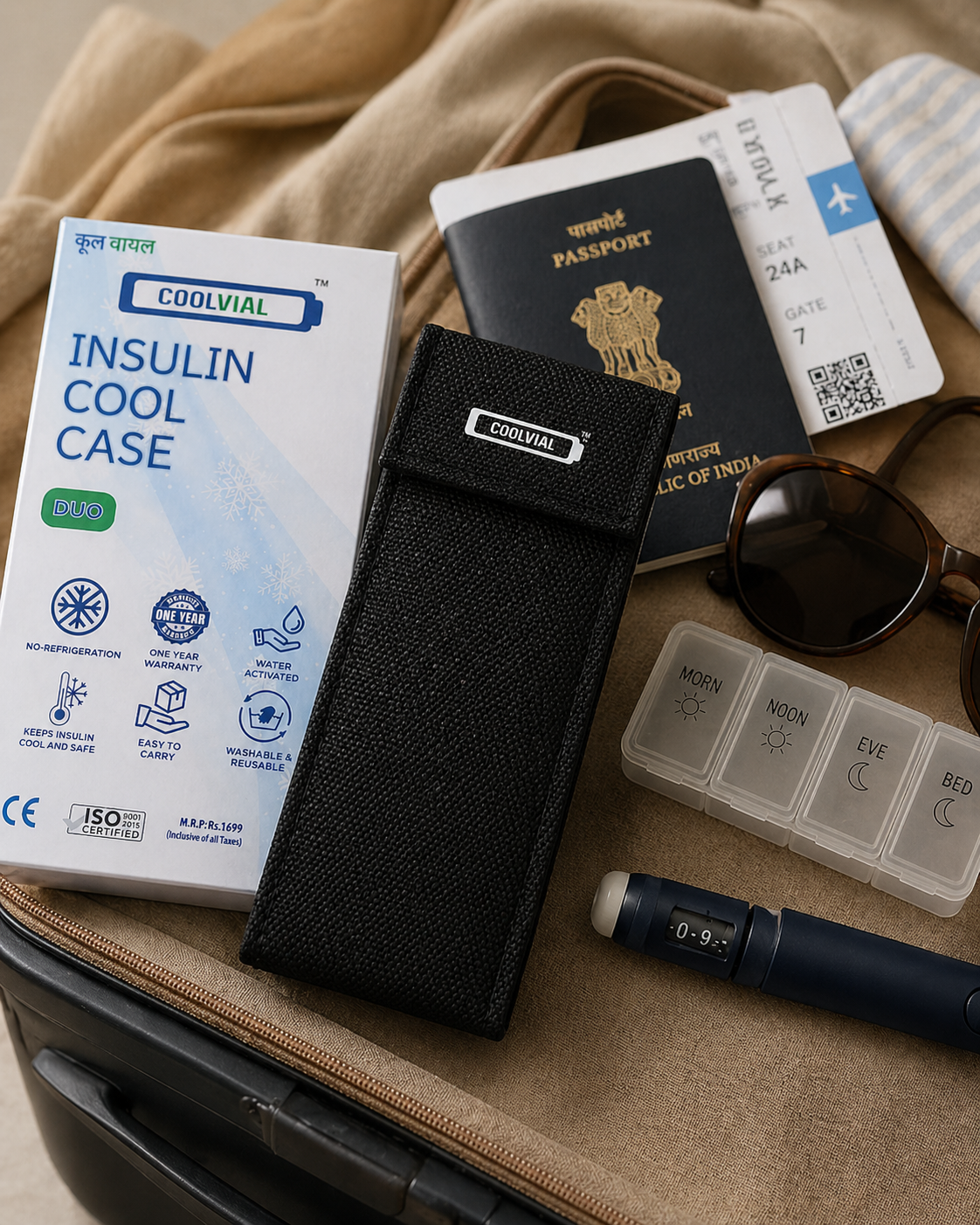
Investing in a reliable, portable insulin cooling solution like the COOLVIAL Duo is not just a convenience; it’s an essential part of your diabetes management toolkit. Designed to keep your insulin safe for 12-16 hours without electricity, it offers peace of mind and ensures your life-saving medication remains potent, even when the lights go out. Stay informed, stay prepared, and live confidently.
Order COOLVIAL Duo at Rs 1,099 with code COOLHEAL at coolvial.com or via WhatsApp wa.me/918766952300
Medical Disclaimer: This article is for general information. Always consult your endocrinologist or diabetologist before changing insulin storage or dosing practices.
How We Researched This: This article is based on a comprehensive review of RSSDI guidelines, ICMR-INDIAB data on diabetes management in India, local Pune hospital directories for emergency contacts, and publicly available information on pharmacy networks like Apollo Pharmacy and Wellness Forever, along with general knowledge of Pune’s climatic and infrastructural patterns.
5 Essential Steps: Your Ultimate Power Cut Survival Guide for Diabetics in Pune
48+ hours at 2-8°C. No electricity. CE certified. Free delivery across India.
Order on WhatsApp — ₹1,099🛒 Buy Now — ₹1,099