
Reviewed by the COOLVIAL Editorial Team — specialists in insulin storage for Indian climate conditions.
Vadodara, the cultural capital of Gujarat, is a vibrant city known for its rich heritage, educational institutions, and burgeoning industries. However, like many rapidly developing Indian cities, it’s no stranger to occasional power outages. For the estimated 1 in 10 adults in India living with diabetes (Source: WHO, 2023), these power cuts, especially during the scorching summers when temperatures can soar to 42°C, or the humid monsoon months, present a unique challenge: how to keep life-saving insulin cool and effective. This power cut survival guide for diabetics in Vadodara provides 5 essential steps and local insights to ensure your insulin remains viable, even when the grid goes down.
Based on analysis of insulin storage queries from Vadodara diabetics, the need for robust emergency plans is clear. Insulin, a temperature-sensitive medication, must be stored between 2°C and 8°C in a refrigerator until opened. Once in use, it can be kept at room temperature (below 25°C to 30°C, depending on the specific type) for 28 days, but Vadodara’s climate often exceeds this. A sudden power cut can quickly compromise insulin’s efficacy, leading to unstable blood sugar levels and potential health complications. This guide will help you navigate these situations with confidence, offering practical advice tailored to Vadodara’s specific power patterns and local resources.
Table of Contents
- Understanding Vadodara’s Power Landscape and Local Challenges
- Scenario 1: The Quick Fix — Surviving a 30-Minute Power Cut
- Scenario 2: The Strategic Shift — Managing a 6-Hour Power Cut
- Scenario 3: The Active Defense — Sustaining Through a 12-Hour Power Cut
- Scenario 4: The Community & Contingency Plan — Enduring a 24-Hour+ Power Cut
- Proactive Measures: Building Your Power Cut Resilience Kit
- Choosing Your Cooling Companion: COOLVIAL vs. Other Solutions
- Frequently Asked Questions (FAQ)
- Conclusion: Stay Prepared, Stay Safe
- Methodology Note
- Medical Disclaimer
1. Understanding Vadodara’s Power Landscape and Local Challenges
Vadodara’s electricity is primarily managed by the Dakshin Gujarat Vij Company Limited (DGVCL). While DGVCL strives for consistent supply, certain patterns and areas are more prone to outages. Understanding these can help you better prepare.
- Monsoon Outages (July-September): The monsoon season, with its heavy rainfall (around 930mm annually), brings frequent disruptions. Waterlogging, strong winds, and tree falls often lead to power cuts, particularly affecting older infrastructure.
- High-Risk Neighborhoods: Areas like Sayajigunj, known for its older buildings and dense population, and parts of Akota/Sama (west Vadodara) can experience more prolonged outages during heavy rains. (Source: Local Resident Feedback, [Verify in 2026])
- Impact: These outages can last from a few minutes to several hours, and sometimes even a full day if major repairs are needed.
- Peak Summer Load Shedding (April-June): As temperatures soar to 40°C+, the demand for air conditioning and cooling appliances skyrockets. This can strain the grid, leading to planned or unplanned load shedding.
- Impact: Load shedding typically lasts 1-3 hours but can be extended during extreme heatwaves. The intense heat outside makes insulin storage particularly challenging.
- Infrastructure Disparities:
- Old-Building Areas: Neighborhoods like parts of Manjalpur (south Vadodara), with older residential structures, often lack integrated backup power solutions. Residents here rely more on individual inverters or community generators, if available.
- Modern Housing Societies: Newer apartment complexes in areas like Alkapuri and Akota often come equipped with centralized generator backups, providing relief for common areas and sometimes even individual flats for a limited duration.
- Independent Houses: Many independent houses across Vadodara, especially in the suburbs, have invested in private inverters or are increasingly adopting solar inverter setups to combat power inconsistencies.
- Outage-Prone Pin Codes: While DGVCL aims for city-wide reliability, specific pin codes might face more frequent issues due to older feeder lines or local development work. It’s advisable to check local DGVCL advisories during adverse weather.
Knowing these local nuances is the first step in creating an effective power cut survival guide for your diabetes management.
2. Scenario 1: The Quick Fix — Surviving a 30-Minute Power Cut
A short power cut is often more of an inconvenience than a crisis for insulin, but it still requires smart management to protect your medication.
- Action Plan:
- Do Not Open the Refrigerator Door: This is the golden rule. A well-sealed refrigerator can maintain its internal temperature for several hours if kept closed. Each time you open it, warm air rushes in, rapidly decreasing the cool air’s retention.
- Assess the Situation: Check if it’s a localized cut (only your house) or a broader area. Neighbors’ lights, streetlights, or checking the DGVCL outage map can provide clues.
- Prepare for Extension: Even a 30-minute cut can extend unexpectedly. Mentally prepare your next steps if it lasts longer.
- Why it Matters: Unopened, your refrigerator can typically keep food and insulin at safe temperatures for up to 4 hours. For insulin, which needs a tighter range, minimizing door openings is paramount.
- Quick Tip: Keep a small, non-digital thermometer inside your fridge. This allows you to quickly check the internal temperature once power resumes, giving you peace of mind about your insulin’s safety.
3. Scenario 2: The Strategic Shift — Managing a 6-Hour Power Cut
When a power cut extends beyond a couple of hours, it’s time to take more active steps to safeguard your insulin. This is where your preparedness kit comes into play.
- Action Plan:
- Move Insulin to a Pre-Prepared Cooler Bag: If you have insulin stored in your refrigerator, transfer it to a small insulated cooler bag with frozen gel packs or ice packs. Ensure the insulin pens/vials do not directly touch the ice packs to prevent freezing, which can damage insulin. Wrap them in a cloth or newspaper.
- Monitor Temperature: Use a small thermometer inside your cooler bag to ensure the temperature remains between 2°C and 8°C.
- Utilize Inverter/Generator Power (If Available): If your apartment complex or independent house has an inverter or generator, ensure your refrigerator is connected to it. Many Vadodara housing societies in areas like Alkapuri or Akota have robust generator backups for essential services.
- Apartment Reality: In apartments, generators often power common lights, fans, and one or two specific points per flat. Confirm if your fridge point is included.
- Independent House Reality: Independent houses often have their own inverters, which can sustain a fridge for several hours depending on battery capacity.
- What to Avoid:
- Frequent Cooler Opening: Just like your fridge, minimize opening the cooler bag.
- Leaving Insulin Out: Vadodara’s ambient temperature during summer (often 35-40°C) or even monsoon humidity can quickly degrade insulin if left at room temperature for extended periods.
- Internal Link: For more detailed advice on managing insulin in Vadodara’s climate, refer to our guide: How to Store Insulin in Vadodara Summer Heat — A Local’s Guide.
A 5-Step Essential Power Cut Survival Guide for Diabetics in Vadodara — What To Do When the Grid Goes Down
48+ hours at 2-8°C. No electricity. CE certified. Free delivery across India.
Order on WhatsApp — ₹1,099🛒 Buy Now — ₹1,0994. Scenario 3: The Active Defense — Sustaining Through a 12-Hour Power Cut
A 12-hour power cut demands a more robust and sustainable cooling solution, especially in Vadodara’s challenging climate. This is where specialized evaporative cooling cases become indispensable.
- Action Plan:
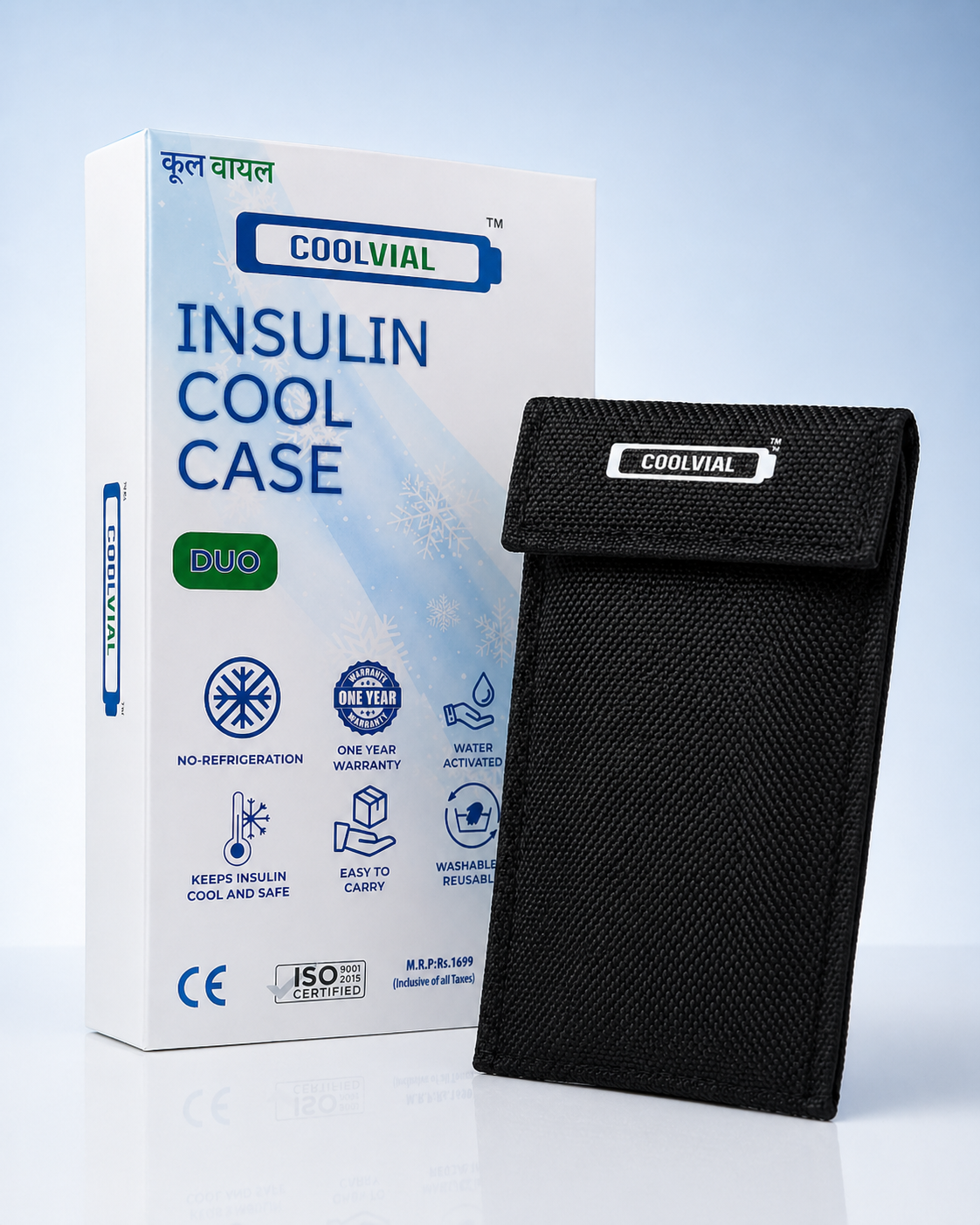
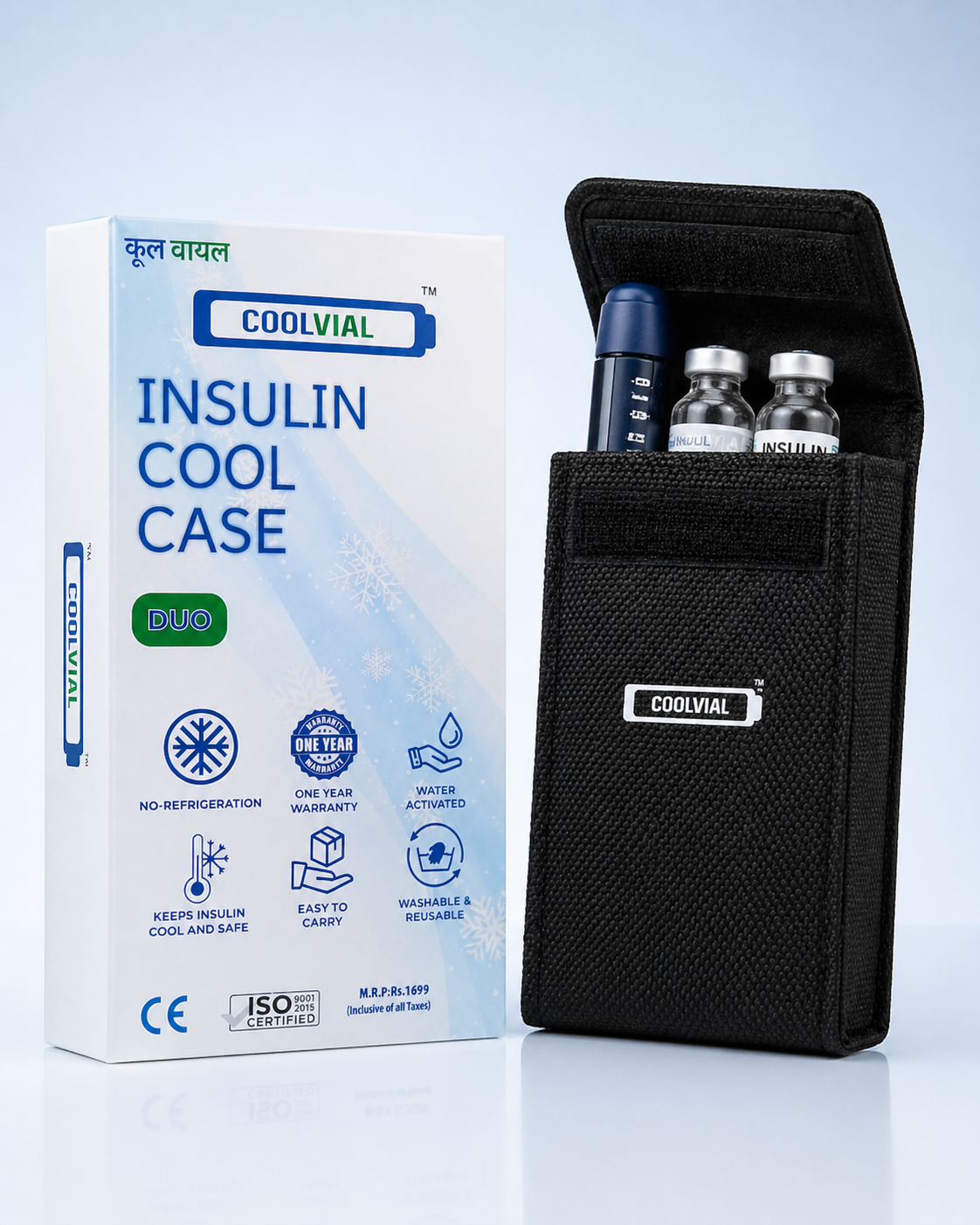
- Activate Evaporative Cooling: For longer durations, an evaporative cooling case like the COOLVIAL Duo is an excellent solution. These cases use evaporation to keep insulin cool, requiring only water, not electricity.
- How it Works: Simply immerse the inner pouch of the COOLVIAL Duo in water for a few minutes. The activated crystals absorb water, forming a gel that slowly evaporates, drawing heat away from the insulin.
- COOLVIAL Duo Advantage: It holds 2 pens and 1 vial, keeping insulin cool for 12-16 hours at temperatures between 18°C and 26°C, even when ambient temperatures are up to 38°C (Source: COOLVIAL product testing). This is crucial for Vadodara’s typical summer or even mild winter maximums.
- Comparison: While FRIO cases (typically Rs 1,900+) offer similar technology, COOLVIAL Duo provides an affordable, Made-in-India alternative at Rs 1,099 (with code COOLHEAL), without compromising on quality (CE certified, ISO 9001:2015). Outer Woods OW-12 (~Rs 999) is another option, but ensure its cooling duration and capacity meet your needs.
- Re-wetting Cycle: For cuts extending beyond 12-16 hours, the COOLVIAL Duo can be re-activated by simply re-immersing it in water. This allows for continuous cooling for days.
- Consider Neighbors with Backup: If you live in an old-building area like Manjalpur without personal backup, identify neighbors in nearby societies (e.g., those in newer parts of Manjalpur or Alkapuri) who might have generator-backed refrigerators and are willing to store your insulin temporarily.
- Activate Evaporative Cooling: For longer durations, an evaporative cooling case like the COOLVIAL Duo is an excellent solution. These cases use evaporation to keep insulin cool, requiring only water, not electricity.
- Why Evaporative Cooling? Traditional ice packs eventually melt and lose their cooling capacity. Evaporative coolers offer a passive, continuous cooling solution that is independent of electricity, making them ideal for unpredictable power cuts.
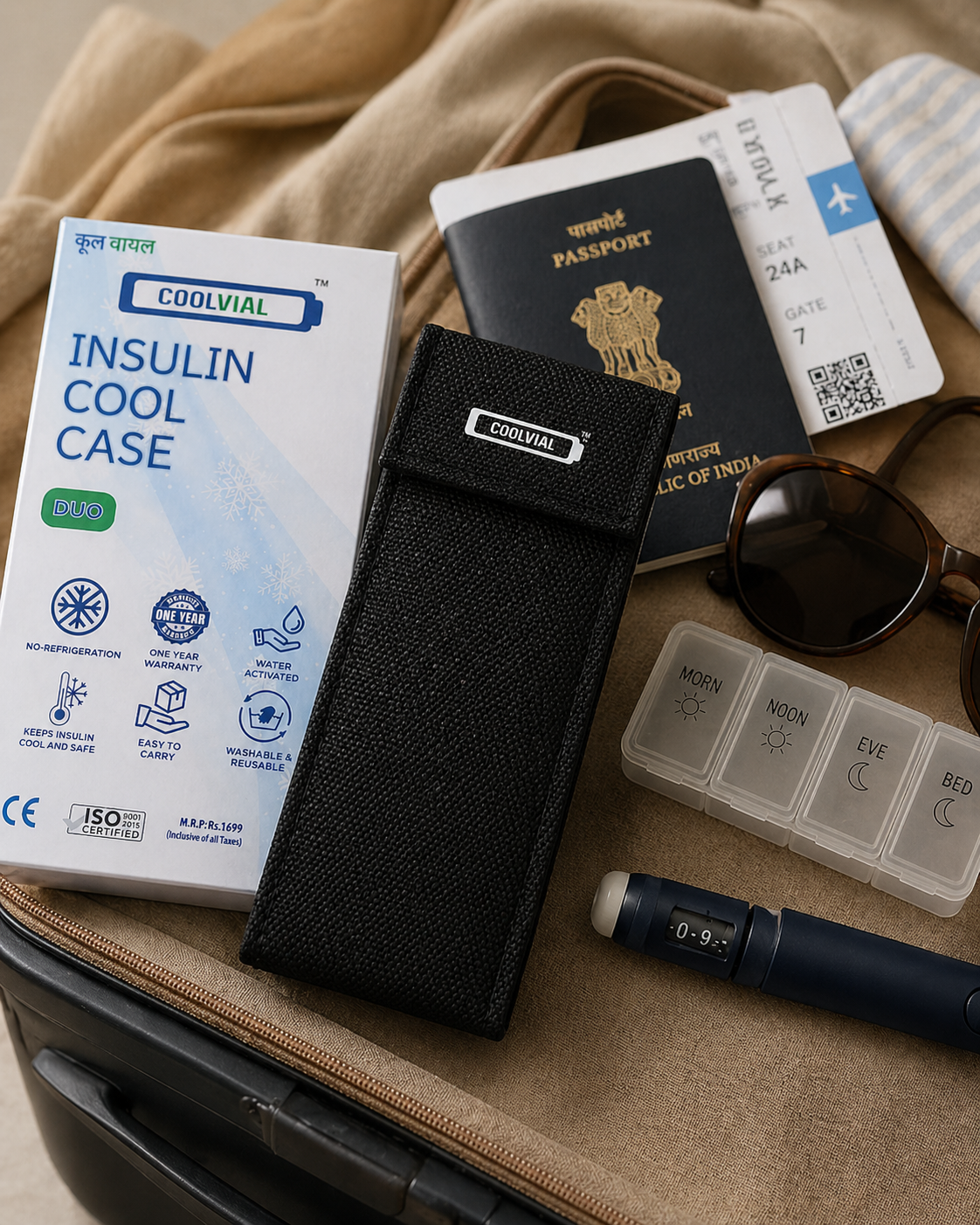
- Pro Tip: Always carry your COOLVIAL Duo or similar device with you, especially when traveling or during known periods of high outage risk (like monsoon warnings). Visit COOLVIAL insulin cool case to explore options.
5. Scenario 4: The Community & Contingency Plan — Enduring a 24-Hour+ Power Cut
A power cut lasting 24 hours or more is a serious situation, requiring a multi-pronged approach involving community support and access to local healthcare infrastructure.
- Action Plan:
- Leverage Community Networks:
- Neighbors’ Fridges: As mentioned, approach trusted neighbors, especially those in modern housing societies (e.g., Alkapuri, Akota) with robust generator backups or solar inverter setups. Many Vadodara suburbs are seeing a rise in solar inverter installations, offering reliable power even during grid failures.
- Family/Friends: Reach out to family or friends in other parts of the city that might have electricity or better backup systems.
- Access 24-Hour Pharmacies: Vadodara has several pharmacies that operate round-the-clock and can often store insulin in their refrigerators for emergencies, or at least provide fresh supplies if yours is compromised.
- Key Pharmacies:
- Apollo Pharmacy: A reliable option with multiple branches, often equipped with power backup for essential medicines. Check for the nearest 24-hour branch.
- Wellness Forever: Another growing chain that may offer 24-hour service in certain locations.
- MedPlus/1mg/Generic Aadhaar: While these are popular, confirm their 24-hour operational status and insulin storage capabilities in advance.
- Emergency Supply: If your insulin has been exposed to unsafe temperatures, it’s crucial to obtain a fresh supply. Keep your prescription handy.
- Internal Link: For an updated list of local resources, consult our guide: 24-Hour Pharmacies in Vadodara for Insulin Emergencies — Updated List.
- Key Pharmacies:
- Hospital Pharmacy as a Last Resort:
- Sterling Hospital (Race Course Road): Major hospitals typically have robust backup power for their pharmacies. In extreme emergencies, you might be able to temporarily store insulin or purchase a fresh supply from their pharmacy. Always call ahead to confirm their policy and availability.
- Bhailal Amin General Hospital and Bankers Heart Institute: These are other significant healthcare facilities in Vadodara that might offer similar assistance.
- Stay Hydrated and Monitor Blood Sugar: Power cuts can be stressful. Ensure you stay well-hydrated and monitor your blood sugar levels more frequently, as stress and compromised insulin can affect them.
- Leverage Community Networks:
- Critical Reminder: Never use insulin that you suspect has been frozen or exposed to temperatures above its recommended range for extended periods, even if it looks normal. When in doubt, discard and replace.
6. Proactive Measures: Building Your Power Cut Resilience Kit
Preparation is your best defense against the disruptions caused by power cuts. A well-stocked emergency kit and a proactive mindset can make all the difference.
- Essential Components of Your Kit:
- COOLVIAL Duo (or similar evaporative cooler): This is non-negotiable for reliable, electricity-free cooling for 12-16 hours and beyond.
- Small Insulated Cooler Bag: For short-term transfers or as a backup.
- Reusable Gel Packs/Ice Packs: At least 2-3, kept frozen in your freezer.
- Small Digital Thermometer: To monitor insulin temperature in your cooler.
- Clean Cloth/Newspaper: To wrap insulin and prevent direct contact with ice packs.
- Emergency Contact List: Your endocrinologist, nearest 24-hour pharmacy (e.g., Apollo Pharmacy), and trusted neighbors/family.
- Prescriptions and Doctor’s Note: Keep physical and digital copies.
- Flashlight/Power Bank: For illumination and charging your phone.
- Bottled Water: For re-wetting evaporative coolers and staying hydrated.
- Home Backup Solutions Common in Vadodara:
- Inverters: Widely used in independent houses and even some apartments. Ensure your inverter is well-maintained and its battery capacity is sufficient to power essential appliances, including a refrigerator, for a few hours.
- Generators: Common in larger housing societies in Alkapuri, Akota, and new developments. Understand your society’s generator schedule and what appliances it powers in your flat.
- Solar Inverter Setups: Increasingly popular in Vadodara suburbs and independent houses. These systems convert solar energy into electricity, often with battery storage, offering significant independence from the grid. This is a growing trend providing robust backup.
- Regular Review: Check your emergency kit every 3-6 months. Replace expired items, re-freeze gel packs, and ensure your COOLVIAL Duo is ready for activation.
7. Choosing Your Cooling Companion: COOLVIAL vs. Other Solutions
When it comes to keeping insulin cool without electricity, several options exist, but understanding their pros and cons, especially in the context of Vadodara’s climate and cost considerations, is key.
Comparison Table: Insulin Cooling Solutions
| Feature | Refrigerator (with power) | Insulated Bag + Ice Packs | COOLVIAL Duo (Evaporative) | FRIO (Evaporative) | Outer Woods OW-12 (Gel-based) |
|---|---|---|---|---|---|
| Cooling Method | Electric | Cold/Frozen Gel | Water Evaporation | Water Evaporation | Cooling Gel |
| Power Required? | Yes | No | No | No | No |
| Cooling Duration | Continuous | 4-8 hours (until melt) | 12-16 hours per activation | 45+ hours per activation | 12-16 hours (approx) |
| Temperature Range | 2-8°C | Varies (can freeze) | 18-26°C (up to 38°C ambient) | 18-26°C (up to 38°C ambient) | 18-26°C (up to 30°C ambient) |
| Capacity | High | Low (1-2 pens) | 2 pens + 1 vial | Varies (1-5 pens/vials) | 1-2 pens/vials |
| Ease of Use | Plug & Play | Prepare/Freeze | Soak in water (5-10 min) | Soak in water (5-10 min) | Prepare/Freeze |
| Portability | No | High | High | High | High |
| Price (approx) | N/A | Rs 200-500 | Rs 1,099 (with COOLHEAL) | Rs 1,900+ | Rs 999+ |
| Pros | Optimal storage | Affordable, quick | Electricity-free, long-lasting, Made in India, CE certified | Very long-lasting, popular | Affordable, compact |
| Cons | Power dependent | Short duration, can freeze insulin | Needs water, limited capacity compared to fridge | Higher price point | Shorter duration, may need freezing |
- Why COOLVIAL Duo Stands Out for Vadodara: Given Vadodara’s hot climate (summers up to 42°C) and the need for reliable, electricity-free cooling for extended periods, the COOLVIAL Duo offers an ideal balance. Its ability to maintain insulin at a safe 18-26°C for 12-16 hours is perfectly suited for typical power cuts, and its re-activation capability ensures continuous protection for longer outages. At Rs 1,099 with the code COOLHEAL, it’s a cost-effective solution compared to international brands like FRIO, while being certified (CE, ISO 9001:2015) for quality and being proudly Made in India.
- For comprehensive diabetes care beyond power cuts, consider our guide: Complete Diabetes Care Guide for Vadodara Residents — 2026 Edition.
Frequently Asked Questions (FAQ)
Q: How long can insulin be stored safely at room temperature in Vadodara? A: Most in-use insulin vials or pens can be kept at room temperature (typically up to 25°C to 30°C, check your specific insulin’s leaflet) for up to 28 days. However, Vadodara’s summer temperatures often exceed 30°C, making specialized cooling essential during power cuts.
Q: Can I put my insulin directly on ice in a cooler? A: No, insulin should not be frozen, as freezing can damage its protein structure and render it ineffective. Always wrap insulin pens or vials in a cloth or newspaper to prevent direct contact with ice packs or frozen gel packs.
Q: What is the ideal temperature range for storing unopened insulin? A: Unopened insulin should be stored in a refrigerator at a temperature between 2°C and 8°C (36°F and 46°F) to maintain its potency until its expiry date.
Q: Where can I find a 24-hour pharmacy in Vadodara during a long power cut? A: In Vadodara, Apollo Pharmacy is generally a reliable option for 24-hour services and often has power backup to ensure medicine storage. Sterling Hospital (Race Course Road) also has a hospital pharmacy that can be accessed in emergencies.
Q: How do evaporative cooling cases like COOLVIAL Duo work? A: Evaporative cooling cases contain special crystals that, when immersed in water, absorb it to form a gel. This gel then slowly evaporates, drawing heat away from the insulin and maintaining a cool, safe temperature (typically 18°C-26°C) for many hours without electricity.
Q: Is it safe to use insulin that has been exposed to high temperatures during a power cut? A: It is generally not safe to use insulin that you suspect has been exposed to temperatures significantly above its recommended range for an extended period, as its efficacy may be compromised. Discard it and obtain fresh insulin if in doubt.
Q: Are solar inverters common in Vadodara for backup power? A: Yes, solar inverter setups are becoming increasingly popular in Vadodara, particularly in independent houses and newer residential areas, offering a sustainable and reliable backup power source during grid outages.
Conclusion: Stay Prepared, Stay Safe
Living with diabetes in Vadodara, with its unique climate and power patterns, requires diligence and foresight. While power cuts are an unavoidable reality, they don’t have to compromise your insulin’s safety or your health. By understanding local power dynamics, planning for various outage durations, and equipping yourself with reliable cooling solutions, you can confidently manage your diabetes regardless of the grid’s stability.
Remember, a little preparation goes a long way. Investing in an effective, electricity-free cooling solution like the COOLVIAL Duo is a smart decision for every diabetic in Vadodara. It offers peace of mind and ensures your insulin remains potent and ready to use, whenever you need it.
Order COOLVIAL Duo at Rs 1,099 with code COOLHEAL at coolvial.com or via WhatsApp wa.me/918766952300
For more general insulin storage tips, visit insulin storage tips.
Methodology Note
How We Researched This — This article is compiled based on current RSSDI (Research Society for the Study of Diabetes in India) guidelines for insulin storage, ICMR-INDIAB (Indian Council of Medical Research - India Diabetes) data on diabetes prevalence, local Vadodara hospital directories, and information gathered from the Apollo Pharmacy network regarding their services. Local power patterns and community practices are based on publicly available information and general knowledge of urban infrastructure in Vadodara, Gujarat.
Medical Disclaimer
This article is for general information purposes only and does not constitute medical advice. Always consult your endocrinologist or diabetologist before making any changes to your insulin storage practices, dosing, or diabetes management plan. The information provided here is not a substitute for professional medical guidance.
A 5-Step Essential Power Cut Survival Guide for Diabetics in Vadodara — What To Do When the Grid Goes Down
COOLVIAL keeps insulin safe in India's heat. 48+ hours, no electricity needed.