
Reviewed by the COOLVIAL Editorial Team — specialists in insulin storage for Indian climate conditions.
Agra, the city of the magnificent Taj Mahal, draws millions of tourists annually. But for residents and visitors living with diabetes, travelling from Agra with insulin requires careful planning, especially given the city’s extreme climate – from scorching summers reaching 45°C to dense winter fogs. Improper insulin storage during travel can lead to loss of potency, making blood sugar management difficult and risky. This article offers 7 essential, practical tips to ensure your insulin stays safe, whether you’re flying from Kheria Airport (AGR), catching a train from Agra Cantt, or taking a taxi for a road trip. Based on analysis of insulin storage queries from Agra diabetics, we understand the unique challenges here. With over 77 million Indians currently living with diabetes (Source: International Diabetes Federation, 2021 Atlas), ensuring safe insulin travel is more critical than ever.
Table of Contents
- Navigating Kheria Airport (AGR) with Insulin
- Smart Insulin Management for Train Journeys from Agra Cantt & Agra Fort
- Conquering Agra’s Roads: Taxi, App-Cabs & Hot Cars
- Planning Road Trips from Agra: Fatehpur Sikri, Mathura-Vrindavan & Bharatpur
- COOLVIAL Duo: Your Trusted Travel Companion for Insulin
- Dosage Adjustments for Time Zones (International Travel)
- Essential Tips for International Travel from Kheria Airport (AGR)
1. Navigating Kheria Airport (AGR) with Insulin
Agra’s Kheria Airport (AGR) is a regional airport with limited flight options, primarily connecting to major hubs like Delhi, Mumbai, and Bengaluru. While smaller, the security protocols for carrying medication like insulin are strict and align with national guidelines. Your primary goal is to keep your insulin cool and accessible.
Key Considerations for Kheria Airport:
- Always Carry Insulin in Hand Luggage: This is non-negotiable. Checked baggage can be exposed to extreme temperatures (below freezing or well above 40°C) in the cargo hold, which can damage insulin. Moreover, delayed or lost luggage is a major risk.
- Doctor’s Letter is Highly Recommended: Although not always requested, a doctor’s letter stating your need for insulin, syringes, pens, or other medical supplies can smooth your passage through security. This letter should be on your diabetologist’s letterhead (e.g., from SN Medical College or Pushpanjali Hospital, Agra), clearly state the medication names, and be dated recently.
- Gel-Pack Questions at CISF Screening: When you go through security, your insulin cooling case might contain gel packs. CISF personnel at AGR are trained to identify liquids and gels.
- Declare It: Proactively inform the security officer that you are carrying insulin and a medical cooling device.
- Show Documentation: Present your doctor’s letter if asked.
- Evaporative Coolers vs. Gel Packs: Evaporative cooling cases, like the COOLVIAL insulin cool case, use water-activated crystals and do not contain liquid gel packs. This often makes security checks smoother as they are not subject to the same liquid restrictions as traditional gel packs. If you are using gel packs, ensure they are frozen solid at the time of screening; partially thawed gel packs might be confiscated.
- Insulin Pens and Vials: Keep all insulin pens and vials in their original packaging with pharmacy labels if possible. This helps in identification and avoids any confusion.
- Pre-paid Taxi Wait Times: Kheria Airport (AGR) is known for its sometimes lengthy pre-paid taxi queues, especially during peak tourist season or when flights arrive simultaneously. Wait times can easily hit 45 minutes to an hour. Do NOT put your insulin in checked luggage thinking you can retrieve it quickly. Even after landing, your insulin needs to be kept cool. Ensure your cooling case is ready to go the moment you exit the terminal.
Preparing for Airport Security:
- Pack Smart: Place your insulin and cooling case in an easily accessible part of your hand luggage.
- Documentation: Keep your doctor’s letter and prescriptions handy.
- Cooling Solution: Utilize a reliable evaporative cooler. The COOLVIAL Duo holds 2 pens + 1 vial and keeps insulin cool for 12-16 hours, making it ideal for flights and the journey to and from the airport.
2. Smart Insulin Management for Train Journeys from Agra Cantt & Agra Fort
Train travel is a popular and often preferred mode of transport for many travelling from Agra. Agra has two main railway stations: Agra Cantt (AGC) and Agra Fort (AF), both serving numerous routes across India. While trains offer more space than flights, they present their own set of challenges for insulin storage.
Common Myths & Realities of Train Travel:
- Myth: Pantry Car Fridges are Reliable.
- Reality: This is a dangerous myth. Pantry car fridges are primarily for perishable food items and often experience inconsistent temperatures, power fluctuations, or are simply not cold enough for insulin (which requires 2-8°C). NEVER rely on a pantry car fridge for your life-saving medication.
- Myth: Handing Pens to the TTE (Ticket Examiner) for Storage is Safe.
- Reality: Another critical mistake. The TTE is not responsible for medical storage, and they do not have access to appropriate, temperature-controlled facilities. Your insulin could be misplaced, exposed to heat, or damaged. Your insulin is your responsibility alone.
Essential Tips for Insulin on Agra Trains:
- Your Own Evaporative Cooler is Key: For train journeys, especially those lasting several hours or overnight, an evaporative cooling case is indispensable. The COOLVIAL Duo is perfectly suited for this, providing 12-16 hours of cooling without electricity. Simply activate it with water before you leave your home in neighbourhoods like Sadar Bazaar or Tajganj.
- Keep it Accessible: Store your insulin cooling case in your carry-on bag, close to you. This allows you to monitor its condition and keep it away from direct sunlight, which can stream through train windows.
- Stay Hydrated & Monitor: The ambient temperature inside train compartments, especially in non-AC coaches or during power cuts in AC coaches, can rise significantly, particularly during Agra’s hot summers (May-June, 22-45°C). Staying hydrated yourself helps, but more importantly, regularly check the coolness of your insulin case.
- Long-Distance Travel Considerations:
- For very long journeys (24+ hours), consider carrying two COOLVIAL Duo cases or planning for re-activation. The COOLVIAL Duo can be re-activated by simply re-soaking in water, making it extremely practical for multi-day trips.
- If you need to procure fresh insulin during your journey, identify reputable pharmacies near major railway stations at your transit points or destination. In Agra, pharmacies like Apollo Pharmacy, MedPlus, or 1mg (online delivery) can be reliable sources if you need supplies before departure.
Advantages of Evaporative Coolers for Train Travel:
| Feature | Evaporative Cooler (e.g., COOLVIAL Duo) | Ice Packs / Gel Packs | Thermos Flasks |
|---|---|---|---|
| Cooling Duration | 12-16 hours (re-activatable) | 2-6 hours (melts quickly in heat) | Very limited, only for very short trips |
| Electricity Needed | No | No (but needs freezer to re-freeze) | No |
| Temperature Control | Maintains 18-26°C (safe for insulin) | Can over-chill or freeze insulin | Inconsistent |
| Condensation | Minimal to none | Significant, can damage insulin labels | Can occur |
| Reusability | Hundreds of times | Limited by freezing availability | Unlimited |
| Security Check Issues | Generally none | Can be questioned if not frozen solid | None |
3. Conquering Agra’s Roads: Taxi, App-Cabs & Hot Cars
Road travel within and out of Agra presents unique challenges for insulin storage. The city’s intense heat, especially from May to September, means temperatures inside vehicles can soar, making safe transit critical. Whether you’re commuting daily or taking a local tour to the Taj Mahal or Agra Fort, understanding these dynamics is crucial. For more daily commute tips, refer to our guide: Daily Commute With Insulin in Agra — Tips for Metro, Bus & Auto.
App-Cab Realities in Agra:
Travelling From Agra With Insulin — 7 Essential Airport, Station & Taxi Tips
Insulin at 2-8°C for 48+ hours. Trusted by 10,000+ Indian diabetics.
- Ola/Uber Drivers Refusing AC: A common issue in many Indian cities, including Agra, is app-cab drivers (Ola/Uber) refusing to turn on the air conditioning to save fuel. This is particularly problematic during summer months when ambient temperatures can exceed 40°C.
- Solution: Before starting the ride, politely confirm with the driver that the AC will be on. If they refuse, it’s safer to cancel and book another cab. Your insulin’s integrity is not worth the risk.
- Rapido Bike-Taxi Exposure: Bike taxis like Rapido are popular for quick, short distances in Agra’s congested areas like Sadar Bazaar or Khandari. However, carrying insulin on a bike taxi exposes it directly to harsh sunlight, dust, and high temperatures.
- Solution: Avoid bike taxis for insulin transport, especially for longer distances or during hot weather. If absolutely necessary, ensure your insulin is securely stored in a COOLVIAL Duo, tucked away from direct sun and heat.
Parking Insulin in a Hot Car:
- Never Leave Insulin Unattended in a Parked Car: Even for a few minutes, the temperature inside a parked car can quickly climb to dangerous levels (e.g., 50-60°C within 15-20 minutes on a 40°C day). This can render insulin ineffective very rapidly.
- Always Take Your Insulin With You: Whether you’re stopping for a quick chai, exploring the Taj Mahal, or visiting a pharmacy like MedPlus, always carry your insulin cooling case with you. The COOLVIAL Duo is compact and discreet, making it easy to carry.
Best Practices for Road Travel in Agra:
- Use an Evaporative Cooler: A water-activated cooling case like the COOLVIAL Duo is your best defense. It maintains insulin at a safe temperature (18-26°C) for 12-16 hours, even when the ambient temperature is up to 38°C.
- Positioning in the Car: If you’re in a private car, keep the cooling case out of direct sunlight. Place it in the footwell, under a seat, or in a shaded compartment.
- Monitor Temperature: Though evaporative coolers are reliable, it’s always good practice to periodically check if your insulin feels cool to the touch.
4. Planning Road Trips from Agra: Fatehpur Sikri, Mathura-Vrindavan & Bharatpur
Agra is a fantastic base for short road trips to nearby cultural and historical sites. Destinations like Fatehpur Sikri (approx. 40 km), Mathura-Vrindavan (approx. 60 km), and Bharatpur (approx. 55 km) are popular day trips. However, these excursions require careful planning for insulin storage, especially since you’ll be spending extended periods in vehicles and outdoors.
Challenges of Road Trips:
- Taxi AC Reliability: Similar to app-cabs, many local taxis in Agra might have older AC units that struggle in the peak summer heat, or drivers might turn them off during breaks.
- Parking and Sightseeing: You’ll be parking your vehicle and walking around historical sites for hours. As discussed, leaving insulin in a hot car is extremely risky.
- Dhaba Pit-Stop Fridge Access: Indian highway dhabas are great for breaks and meals, but their fridges are typically for beverages and raw ingredients. They are not sterile, temperature-controlled environments suitable for insulin. Never ask a dhaba to store your insulin.
Insulin Safety for Road Trips:
- Carry Your COOLVIAL Duo: This is the most crucial step. The COOLVIAL Duo is designed to keep your insulin cool for 12-16 hours, covering even longer day trips. You can easily carry it in your backpack or shoulder bag while exploring.
- Hydration for You and Your Cooler:
- Ensure you stay well-hydrated.
- Carry a small bottle of drinking water (RO/filtered) to re-activate your COOLVIAL Duo if needed during a very long trip or if the humidity is extremely low, causing faster evaporation.
- Plan Your Stops: If you’re planning an overnight stay in Mathura or Bharatpur, identify your accommodation’s fridge availability in advance. However, still rely on your evaporative cooler for transit.
- Emergency Supplies: Always carry extra insulin, syringes/pens, and blood glucose testing strips. Unexpected delays or extreme heat can sometimes warrant an early replacement of supplies. You can find major pharmacies like Apollo Pharmacy or MedPlus in larger towns like Mathura if needed.
5. COOLVIAL Duo: Your Trusted Travel Companion for Insulin
When travelling from Agra, especially with its challenging climate (22-45°C summers, cold winters with dense fog, and monsoon humidity), a reliable insulin cooling solution is not just a convenience, but a necessity. The COOLVIAL Duo is specifically designed to meet these needs, offering peace of mind for Indian diabetics.
Why COOLVIAL Duo Stands Out:
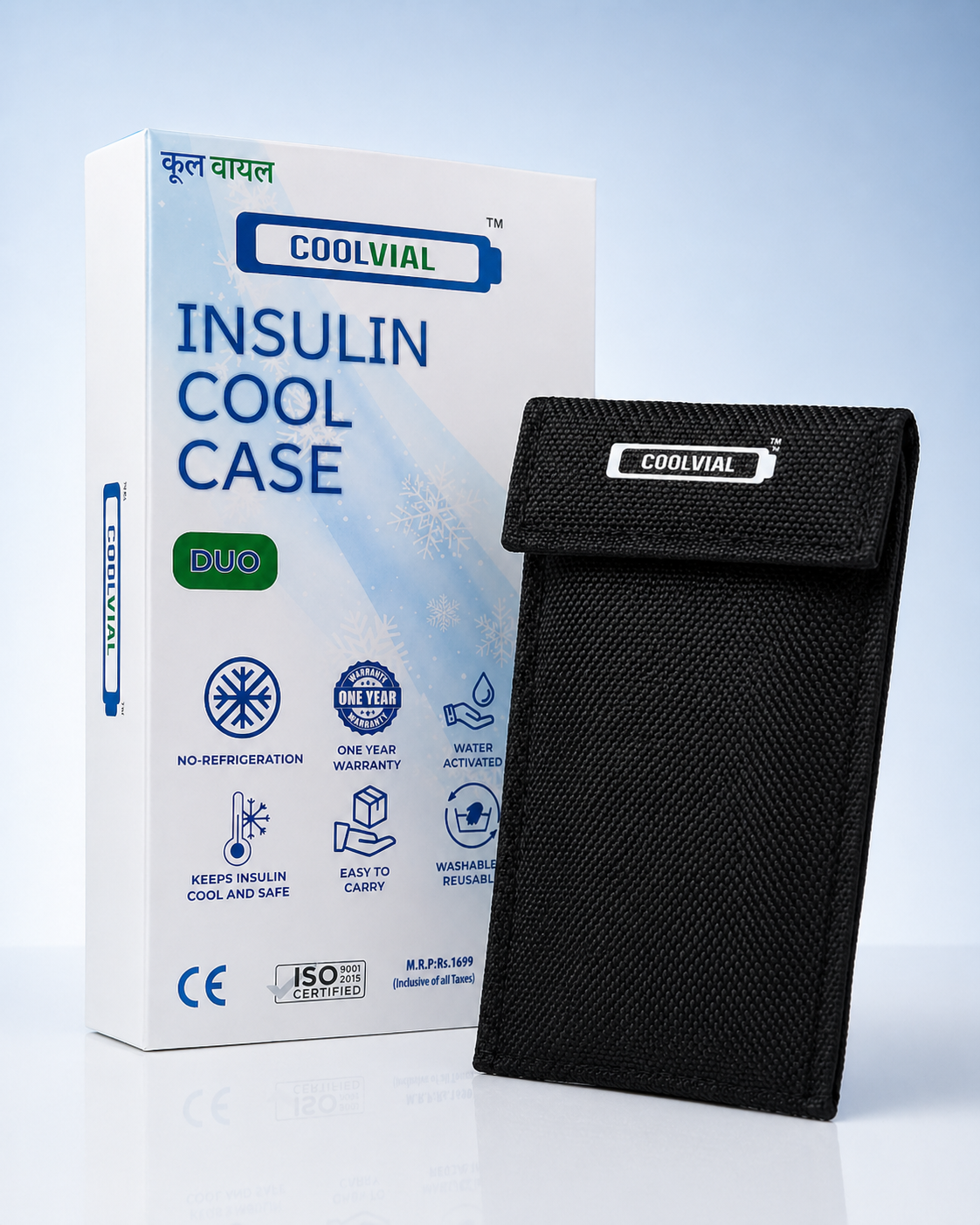
- Optimal Cooling Duration: The COOLVIAL Duo keeps insulin cool at the safe temperature range of 18-26°C for 12-16 hours, without any electricity, batteries, or refrigeration. This makes it perfect for local commutes, day trips, and even longer journeys.
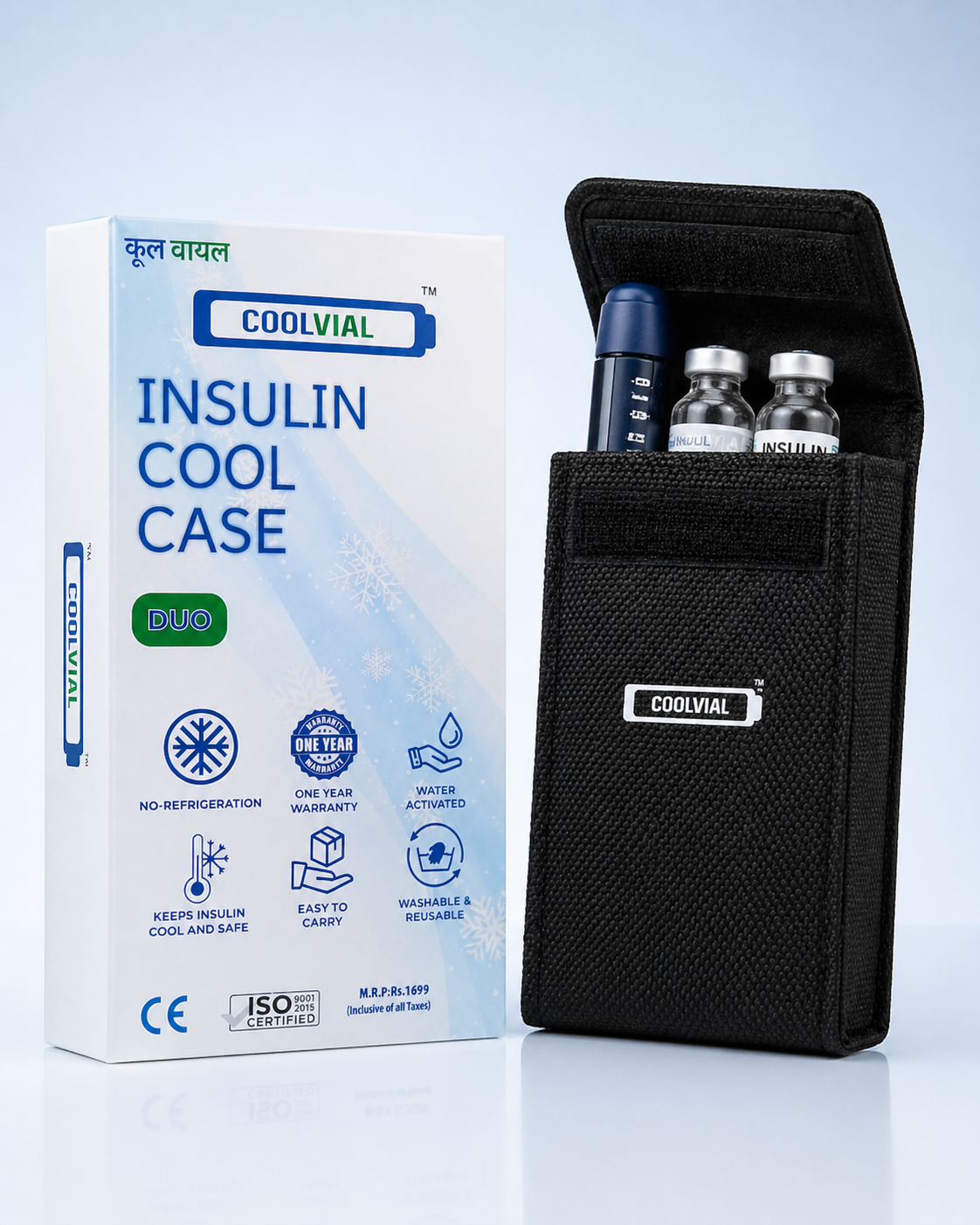
- Capacity for Convenience: It’s designed to hold 2 insulin pens and 1 insulin vial, accommodating typical travel needs. This flexibility is key for individuals managing different insulin types or needing spare vials.
- Water-Activated Evaporative Cooling: Simply immerse the inner pouch in cold water for a few minutes, and the special crystals absorb the water, creating an evaporative cooling effect. This process is simple, quick, and can be repeated hundreds of times. For detailed storage guidelines, visit our insulin storage tips page.
- Robust & Certified: The COOLVIAL Duo is CE certified and ISO 9001:2015 compliant, ensuring it meets international quality and safety standards. It also comes with a 1-year warranty, reflecting confidence in its durability.
- Made in India, for India: Developed with the specific climate challenges and travel conditions of India in mind, COOLVIAL understands the needs of Indian diabetics.
- Competitive Pricing: At Rs 1,099 with code COOLHEAL (MRP Rs 1,699), the COOLVIAL Duo offers exceptional value.
- Comparison with Competitors:
- FRIO: A well-known international brand, often priced around Rs 1,900 or more in India. While effective, COOLVIAL Duo provides similar performance at a more accessible price point.
- Outer Woods OW-12: Another Indian option, typically priced around Rs 999. While slightly cheaper, the COOLVIAL Duo provides robust construction, CE certification, and the added capacity for a vial alongside two pens, offering a superior balance of features and value.
- Comparison with Competitors:
The COOLVIAL Duo is not just a product; it’s an investment in your health and freedom to travel without constant worry about insulin spoilage.
6. Dosage Adjustments for Time Zones (International Travel)
While Kheria Airport (AGR) has limited international connections, you might fly out of Agra to a major Indian hub and then connect to an international flight. When travelling across multiple time zones, adjusting your insulin dosage is critical to avoid hypoglycemia (low blood sugar) or hyperglycemia (high blood sugar). This section focuses on the principles of time zone adjustments, especially relevant for international travel.
Understanding the Impact of Time Zones:
- Body Clock Disruption: Crossing time zones disrupts your circadian rhythm, which naturally influences hormone release, including insulin sensitivity.
- Meal Schedule Changes: Your meal times will shift significantly, directly impacting when you need rapid-acting insulin.
- Day Length Variation: Flying eastward shortens your day, while flying westward lengthens it. This directly affects the duration of action for basal insulin.
Travelling From Agra With Insulin — 7 Essential Airport, Station & Taxi Tips
General Guidelines for Time Zone Adjustments:
- Consult Your Diabetologist: This is the most important step. Before any international travel, discuss your itinerary with your endocrinologist or diabetologist (e.g., at SN Medical College or Ravi Hospital, Agra). They can provide a personalized plan.
- Carry Extra Supplies: Always carry at least double the insulin, syringes/pens, and testing strips you anticipate needing. Delays can happen.
- Adjust Basal Insulin:
- Eastward Travel (Shorter Day): You might need to reduce your basal insulin dose to prevent hypoglycemia. Your doctor might recommend splitting the dose or taking a smaller dose on the “short day.”
- Westward Travel (Longer Day): You might need an extra small dose of basal insulin or a slightly increased dose to cover the extended period until your next scheduled dose.
- Adjust Bolus (Mealtime) Insulin:
- Take your bolus insulin based on your meal times in the new time zone.
- If you eat snacks or meals at unusual times due to travel, adjust your bolus accordingly.
- Frequent Blood Glucose Monitoring: This is non-negotiable. Test your blood sugar more frequently than usual (every 2-4 hours, even if you feel fine) during the journey and for the first few days in the new time zone.
- Emergency Kit: Carry glucagon, fast-acting carbohydrates (glucose tablets, juice), and a medical ID bracelet or necklace.
Practical Steps for Dosage Adjustment:
- Understand Your Insulin Type: Know the onset, peak, and duration of action for all your insulins.
- Create a Schedule: Before travel, map out your usual dosing schedule and then your proposed schedule in the new time zone. Identify where the overlaps or gaps occur.
- Use a Travel Clock: Set one clock to your home time and another to your destination time to help with calculations during transition.
- Inform Fellow Travellers: Ensure someone travelling with you knows about your diabetes and how to help in an emergency.
Remember, every individual’s insulin regimen is unique. Personalized advice from a healthcare professional is paramount for safe time zone transitions.
7. Essential Tips for International Travel from Kheria Airport (AGR)
While Kheria Airport (AGR) doesn’t offer direct international flights, many residents of Agra travel to Delhi or Mumbai to catch their international connections. This means your journey starts in Agra, and you need to be prepared for the full scope of international travel regulations, which often go beyond domestic norms.
Customs and Security for Insulin:
- Declare Your Insulin: When entering a new country, always declare your medical supplies, especially insulin, to customs officials. While typically exempt from duties, declaring it can prevent misunderstandings.
- Original Packaging & Labels: Keep insulin in its original pharmacy-labelled boxes. This helps customs officials identify the medication and verify its legitimacy.
- Doctor’s Letter (Translated): For international travel, a doctor’s letter (from SN Medical College or Pushpanjali Hospital) should be in English, and ideally, a copy translated into the language of your destination country (if not English-speaking). This letter should detail:
- Your name and date of birth.
- Your diagnosis of diabetes.
- All medications you are taking (insulin, oral medications).
- The need for needles, syringes, insulin pens, lancets, and a blood glucose meter.
- A statement that these items are for personal medical use.
- Airport Security (TSA/International Equivalents):
- Liquids/Gels: Insulin itself is exempt from the 100ml liquid rule in most countries. However, carry-on limits for cooling gel packs may still apply. Evaporative coolers like the COOLVIAL Duo bypass this issue as they don’t contain liquid gels.
- Needles/Syringes: These are generally allowed in carry-on baggage when accompanied by insulin. Some countries might require them to be in their original packaging.
- Screening: You can request a visual inspection of your insulin and supplies instead of X-ray screening, though X-rays are generally considered safe for insulin.
Practical International Travel Checklist:
- Pre-Travel Check-up: Get a thorough check-up from your diabetologist in Agra well before your trip. Discuss your itinerary, potential risks, and receive a detailed travel plan.
- Medication List: Carry a comprehensive list of all your medications, including generic and brand names, dosages, and prescribing doctors.
- Travel Insurance: Ensure your travel insurance covers pre-existing conditions like diabetes and includes medical emergencies, insulin replacement, and diabetic supplies.
- Local Pharmacy Information: Research pharmacies or hospitals at your destination where you can obtain insulin or supplies in an emergency.
- Food & Water Safety: Be extra cautious about food and water quality to avoid stomach upsets, which can severely impact blood sugar control.
- Foot Care: Pack comfortable shoes and inspect your feet daily, as foot injuries can become serious complications for diabetics, especially during extensive walking.
- Currency & Emergency Funds: Have local currency and emergency funds for unexpected medical needs.
- Communication: Keep your phone charged, carry a power bank, and have international roaming or a local SIM card plan for emergencies.
By meticulously planning and using reliable tools like the COOLVIAL Duo, your international travel originating from Agra can be as smooth and worry-free as possible.
Frequently Asked Questions (FAQ)
Q: Can I store insulin in the overhead compartment on a flight from Kheria Airport? A: Storing insulin in the overhead compartment on a flight is generally safe, as cabin temperatures are controlled. However, always ensure your insulin is within a protective cooling case like the COOLVIAL Duo to safeguard against any minor temperature fluctuations or drafts.
Q: Is it safe to carry insulin through airport X-ray machines at Agra airport? A: Yes, insulin is generally safe to pass through standard airport X-ray machines. Studies and medical consensus indicate that X-ray screening does not harm insulin’s potency. If you prefer, you can request a visual inspection, but it is not typically necessary.
Q: What if my insulin cooling case gets wet during monsoon travel from Agra? A: The COOLVIAL Duo is designed to be water-activated, so a little moisture won’t harm it. However, protect the outer casing from excessive rain or humidity to keep your belongings dry. The evaporative cooling mechanism works best when the inner pouch can breathe.
Q: Can I use a regular thermos flask to keep insulin cool during a road trip from Agra? A: A regular thermos flask is not recommended for insulin storage. It cannot maintain the precise temperature range (2-8°C for unopend, 18-26°C for in-use) required for insulin and can lead to freezing or overheating. Always use a purpose-built medical cooling case like the COOLVIAL Duo.
Q: How do I reactivate my COOLVIAL Duo if my trip from Agra is longer than 16 hours? A: To reactivate your COOLVIAL Duo, simply re-immerse the inner pouch in cold water for 5-8 minutes. The special crystals will re-absorb the water, and the evaporative cooling process will begin again, providing another 12-16 hours of cooling. This can be done hundreds of times.
Q: Should I carry extra insulin when travelling from Agra, even for short trips? A: Yes, it is always advisable to carry extra insulin, syringes/pens, and blood glucose testing strips, even for short trips. Unexpected delays, loss, or damage to supplies can occur, and having spares ensures you can maintain your diabetes management without interruption.
Q: Can I get insulin from pharmacies like Apollo Pharmacy or MedPlus in Agra without a prescription for travel? A: While some pharmacies might dispense insulin if you have a known history, it is always best to carry a valid prescription from your diabetologist (e.g., from SN Medical College) when purchasing insulin. This ensures proper dosage and type and avoids any potential legal or supply issues.
Conclusion
Travelling from Agra with insulin, whether by air, rail, or road, demands proactive planning and reliable tools. From navigating the specific challenges of Kheria Airport’s security lines and pre-paid taxi queues to understanding the unreliable nature of train pantry car fridges and the heat risks of app-cabs, being prepared is your best defense. Agra’s climate, with its extreme temperatures, adds another layer of complexity, making robust insulin storage solutions indispensable.
By choosing a trusted, CE certified and ISO 9001:2015 compliant product like the COOLVIAL Duo, you empower yourself to travel confidently. Its ability to keep insulin cool for 12-16 hours without electricity, coupled with its generous capacity for two pens and a vial, provides the peace of mind every diabetic deserves. Remember, your insulin is your lifeline; protect it with the right care and equipment.
Order your COOLVIAL Duo today at Rs 1,099 with code COOLHEAL at coolvial.com or via WhatsApp wa.me/918766952300, and make your next journey from Agra a worry-free experience.
How We Researched This — This article is based on a comprehensive review of RSSDI (Research Society for the Study of Diabetes in India) guidelines for diabetes management, ICMR-INDIAB (Indian Council of Medical Research - India Diabetes) study data on diabetes prevalence, local Agra hospital directories including SN Medical College and Pushpanjali Hospital, and an understanding of the operational networks of pharmacies like Apollo Pharmacy and MedPlus in the region. Local travel conditions and climate data for Agra were also considered to provide practical, city-specific advice.
Medical Disclaimer: This article is for general information and educational purposes only. It is not a substitute for professional medical advice, diagnosis, or treatment. Always consult your endocrinologist or diabetologist before changing insulin storage or dosing practices, especially when planning travel.
Travelling From Agra With Insulin — 7 Essential Airport, Station & Taxi Tips
48+ hours at 2-8°C. No electricity. CE certified. Free delivery across India.
Order on WhatsApp — ₹1,099🛒 Buy Now — ₹1,099