
Reviewed by the COOLVIAL Editorial Team — specialists in insulin storage for Indian climate conditions.
Meerut, the historic city known for its vibrant Sadar Bazaar and iconic Augarnath Temple, is a bustling hub in Uttar Pradesh. For residents managing diabetes, the thought of travelling from Meerut with insulin can often bring a wave of anxiety, especially given India’s diverse and sometimes extreme climatic conditions. Whether you’re heading to IGI Delhi for a flight, catching a train from Meerut City (MTC) or Meerut Cantt (MUT), or embarking on a road trip to nearby destinations like Hastinapur or Haridwar, proper insulin storage is non-negotiable. As per ICMR-INDIAB data, the estimated prevalence of diabetes in urban Uttar Pradesh is significant, affecting approximately 10-12% of adults [Verify in 2026], underscoring the critical need for effective medication management, especially during transit. This comprehensive guide provides 10 essential tips to ensure your insulin remains safe and potent throughout your journey from Meerut.
Table of Contents
- Understanding Meerut’s Climate and Insulin Storage Needs
- Preparing for Your Journey: Essential Insulin Travel Checklist
- Navigating IGI Delhi (DEL) with Insulin: Airport Security & Check-in
- Train Travel from Meerut City (MTC) & Meerut Cantt (MUT): Dispelling Myths
- Road Trips from Meerut: Hastinapur, Haridwar & Rishikesh
- Why COOLVIAL Duo is Your Ideal Travel Companion
- International Travel from IGI Delhi (DEL): Customs & Time-Zone Dosing
- Frequently Asked Questions (FAQs)
- Conclusion
1. Understanding Meerut’s Climate and Insulin Storage Needs
Meerut experiences a broad spectrum of weather conditions throughout the year, which directly impacts insulin storage. Understanding these variations is the first step in planning any trip.
- Summer (March to June): Characterized by intense heat, with temperatures often soaring between 22°C and 44°C, sometimes even higher. The dry heat can quickly degrade insulin if not properly protected.
- Monsoon (July to September): Brings humidity and heavy rainfall. While temperatures might drop slightly, the high moisture content can still pose risks to insulin, especially if packaging gets wet.
- Winter (October to February): Generally mild to cold, ranging from 6°C to 22°C. Fog is common, particularly in December and January. While less of a heat concern, insulin should still be protected from freezing, especially in unheated vehicles or luggage compartments during early morning travel.
Key Insulin Storage Temperatures:
- Unopened Insulin: Store in a refrigerator between 2°C and 8°C.
- Opened Insulin (in-use): Can be kept at room temperature (below 25°C to 30°C, depending on the specific insulin brand) for up to 28 days (or as per manufacturer guidelines). Crucially, never expose insulin to direct sunlight, extreme heat, or freezing temperatures.
| Season | Typical Temperature Range (Approx.) | Key Insulin Risk |
|---|---|---|
| Summer | 22°C - 44°C | Heat degradation, direct sunlight |
| Monsoon | 20°C - 35°C | Humidity, accidental wetting, still high heat |
| Winter | 6°C - 22°C | Freezing (especially at night/early morning) |
Even a short exposure to temperatures above 30°C can reduce insulin’s potency. Given Meerut’s climate, relying on ambient conditions for travel is a gamble you cannot afford. This is where specialized cooling solutions become indispensable.
2. Preparing for Your Journey: Essential Insulin Travel Checklist
Before you even step out of your home in Shastri Nagar or the Begum Bridge area, a thorough preparation ensures a smoother, stress-free journey. This checklist is vital for anyone travelling from Meerut with insulin.
- Consult Your Doctor: Before any significant travel, especially across time zones or for extended periods, consult your diabetologist at Anand Hospital (Sastri Nagar) or Subharti Medical College. Discuss:
- Adjustments to dosing schedule if crossing time zones.
- A comprehensive doctor’s letter (prescription) detailing your condition, medication (insulin type, dosage), and need to carry syringes, lancets, and other supplies. This is crucial for airport security.
- Emergency contacts and a plan for managing high/low blood sugar on the go.
- Pack Sufficient Supplies:
- Insulin: Carry at least 1.5 to 2 times the amount you anticipate needing for your trip, accounting for potential delays.
- Pens/Vials/Syringes: Enough for the entire trip, plus spares.
- Blood Glucose Monitor & Strips: Check battery life.
- Lancets & Lancing Device: Don’t forget these.
- Alcohol Swabs: For hygiene.
- Emergency Glucagon Kit: If prescribed.
- Fast-acting Carbohydrates: Glucose tablets, juice boxes, or hard candies for treating hypoglycemia.
- Cooling Case: Invest in a reliable insulin cooling case. Evaporative cooling cases like COOLVIAL Duo are highly effective for Indian conditions, keeping insulin cool for 12-16 hours without electricity.
- Medical Identification: Wear a medical ID bracelet or carry an ID card stating you have diabetes.
- Pharmacy Contacts: Have the numbers of major pharmacy chains like Apollo Pharmacy, MedPlus, or 1mg in Meerut, and research pharmacies at your destination.
- Medical Records: Keep copies of your prescriptions and doctor’s letter, both physical and digital.
3. Navigating IGI Delhi (DEL) with Insulin: Airport Security & Check-in
Many journeys from Meerut, especially by air, originate from Indira Gandhi International Airport (IGI Delhi). The rules for carrying insulin and diabetes supplies are generally consistent, but it’s vital to be prepared for security checks by CISF personnel.
Hand Luggage vs. Checked Baggage
This is perhaps the most critical rule for travelling from Meerut with insulin by air: ALWAYS carry your insulin pens and vials in your hand luggage.
- Why Hand Luggage?
- Temperature Control: The cargo hold of an aircraft is not temperature-controlled and can experience freezing temperatures at high altitudes, which will destroy insulin.
- Accessibility: You need immediate access to your insulin during your flight, especially for long-haul journeys or unexpected delays.
- Loss/Damage: Checked baggage can be lost, delayed, or mishandled, putting your vital medication at risk.
Doctor’s Letter and CISF Screening
While not strictly mandatory for domestic travel within India, a doctor’s letter is highly recommended and can save you a lot of hassle at IGI Delhi’s security checkpoints.
- Doctor’s Letter Contents:
- Your full name and date of birth.
- A clear diagnosis of diabetes.
- List of all prescribed medications (insulin type, dosage, frequency).
- Confirmation that you require syringes, lancets, and other medical devices for personal use.
- Your doctor’s signature, stamp, and contact details.
- Security Screening:
- Inform CISF officers that you are carrying insulin and medical supplies.
- Present your doctor’s letter if requested.
- Insulin pens, vials, and syringes are generally allowed. Gel packs or cooling cases, if used, might be subject to additional screening. Be prepared to explain that they are for medical purposes.
- According to the Directorate General of Civil Aviation (DGCA) guidelines, passengers with medical conditions are permitted to carry necessary medicines and equipment. For detailed official guidelines, refer to the DGCA website: https://dgca.gov.in/pages/medical-requirements.html.
Pre-paid Taxi Queue at IGI Delhi
Upon arrival at IGI Delhi, especially if you’re flying in and then travelling onward to Meerut or another destination, be aware of the pre-paid taxi queues.
10 Essential Tips: Safe Travelling From Meerut With Insulin
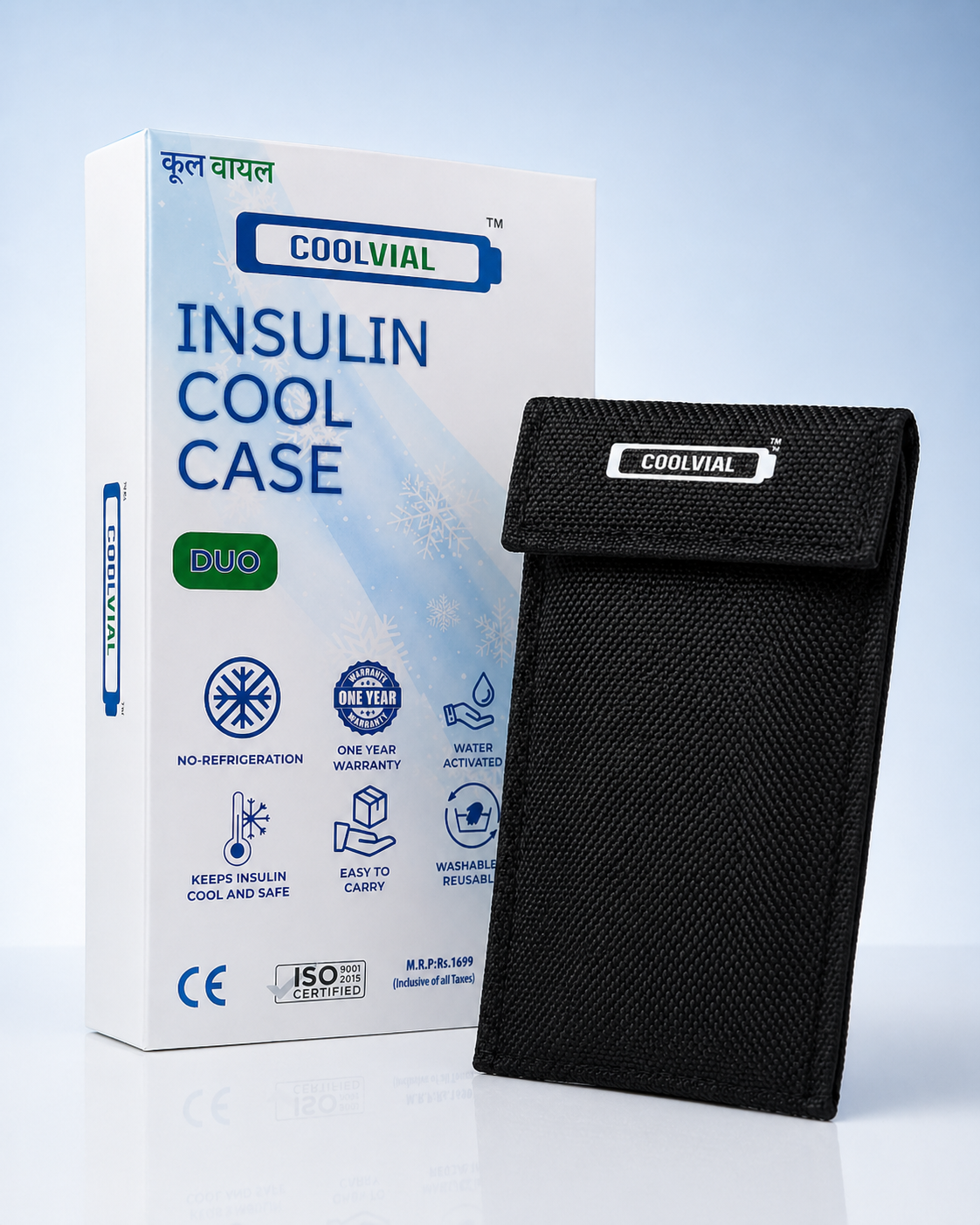
48+ hours at 2-8°C. No electricity. CE certified. Free delivery across India.
Order on WhatsApp — ₹1,099🛒 Buy Now — ₹1,099- Wait Times: Pre-paid taxi queues at IGI Delhi can often hit 45 minutes or more, particularly during peak hours or late nights.
- Implication for Insulin: If you’ve placed your insulin in checked luggage (which you absolutely shouldn’t!), this delay means extended exposure to potentially damaging temperatures in the baggage handling area or on the tarmac. Even if you’re carrying it correctly in hand luggage, this wait means more time spent in varying temperatures before you reach a controlled environment. Plan accordingly and have your cooling case ready.
4. Train Travel from Meerut City (MTC) & Meerut Cantt (MUT): Dispelling Myths
Train journeys are a popular mode of transport from Meerut, connecting to various parts of India. However, managing insulin on trains from Meerut City (MTC) or Meerut Cantt (MUT) requires specific knowledge and debunking common myths.
Pantry Car Fridges: A Risky Myth
One of the most persistent myths is that you can rely on the pantry car’s refrigerator to store your insulin. This is a dangerous misconception.
- Unreliable Temperatures: Pantry car refrigerators are primarily for food and beverages. Their temperature control is often inconsistent, fluctuating widely, and rarely maintained at the strict 2°C-8°C required for unopened insulin. They might also be prone to power outages or simply not function optimally.
- Contamination Risk: Sharing fridge space with food items can expose your insulin to contamination.
- Accessibility Issues: You might not have constant access to the pantry car, especially during odd hours or when the train is crowded.
Verdict: NEVER rely on pantry car fridges for insulin storage.
Never Hand Pens to the TTE
Another common, but risky, practice is to hand your insulin pens or vials to the Ticket Travelling Examiner (TTE) or other railway staff for safekeeping, especially with the expectation that they might store it in a “cooler place.”
- Lack of Training: TTEs and other railway staff are not trained in pharmaceutical storage. They do not have access to appropriate, temperature-controlled storage facilities.
- Responsibility: Once you hand over your medication, you lose direct control and responsibility for its condition. If it gets damaged or lost, you have little recourse.
- Best Practice: Keep your insulin with you, in your hand luggage, within your personal cooling case.
| Train Insulin Management | Do’s | Don’ts |
|---|---|---|
| Storage | Use a personal evaporative cooling case | Rely on pantry car fridges |
| Access | Keep insulin in hand luggage, always with you | Hand insulin to TTE or other staff |
| Preparation | Carry extra supplies for delays | Assume train staff can assist with medical emergencies |
For daily commutes within Meerut, say from Shastri Nagar to Civil Lines, or short bus/auto rides, the challenges are different but still require care. You can find more specific tips for local travel in our article: Daily Commute With Insulin in Meerut — Tips for Metro, Bus & Auto.
5. Road Trips from Meerut: Hastinapur, Haridwar & Rishikesh
Road trips are a fantastic way to explore the region around Meerut, from the historical significance of Hastinapur to the spiritual retreats of Haridwar and Rishikesh. However, cars, especially in India’s heat, can become mobile ovens, posing significant risks to insulin.
Taxi AC Reliability & App-Cab Realities (Ola/Uber/Rapido)
When booking a taxi for a road trip or even a local ride from PVS Mall, be mindful of AC reliability.
- Traditional Taxis: Older taxis might have less efficient AC systems, or drivers might turn them off to save fuel. Always confirm the AC is functional and will be kept on.
- App-Cabs (Ola/Uber): While generally more reliable, some drivers might refuse to run the AC or only run it minimally to save fuel, especially for shorter rides or if you’ve opted for a cheaper ride category. Politely but firmly request the AC be on. Consider higher categories (e.g., Prime Sedan) if available, which often guarantee AC.
- Rapido Bike-Taxi Exposure: For quick local commutes within Meerut, Rapido bike-taxis are popular. However, they offer no protection from direct sunlight, heat, or dust. If you’re carrying insulin for a quick trip to Apollo Pharmacy or MedPlus, ensure it’s in a small, insulated pouch within your bag, shielded from direct exposure.
Parking Insulin in a Hot Car
A parked car, even for a short duration, can reach dangerously high internal temperatures.
- Rapid Temperature Rise: On a sunny day in Meerut, internal car temperatures can soar to 50°C-60°C within minutes, far exceeding safe limits for insulin.
- Best Practice: Never leave your insulin in a parked car, even in the glove compartment or under a seat. Take your cooling case with you, even for quick stops at Suraj Kund or Gandhi Bagh.
- Dashboard/Windows: Avoid placing your cooling case on the dashboard or near windows where direct sunlight can quickly heat it up.
Dhaba Pit-Stop Fridge Access
Road trips often involve pit-stops at dhabas for refreshments. While tempting to ask them to store your insulin, exercise caution.
- Inconsistent Fridge Performance: Similar to train pantry cars, dhaba refrigerators are not designed for precise pharmaceutical temperature control. They are frequently opened, and temperatures can fluctuate.
- Hygiene & Security: There’s also a risk of hygiene issues or misplacement of your medication.
- Rely on Your Own Cooler: Your evaporative cooling case is your most reliable option. Keep it with you, re-wet it if needed, and ensure it’s protected from direct heat sources.
6. Why COOLVIAL Duo is Your Ideal Travel Companion
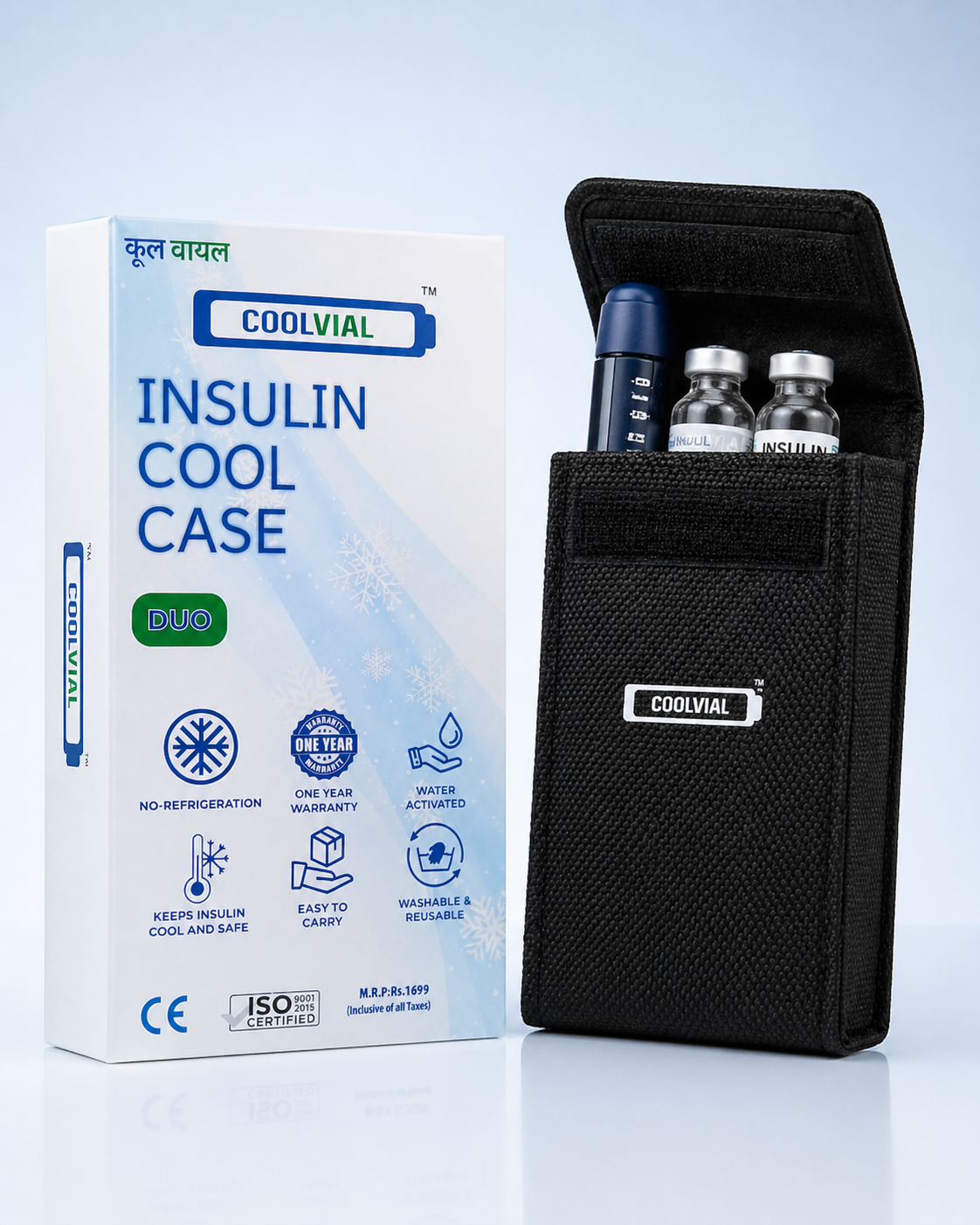
Given the specific challenges of travelling from Meerut with insulin across various modes and climates, a reliable cooling solution is not just a convenience, but a necessity. The COOLVIAL Duo is engineered precisely for these conditions.
The COOLVIAL Duo is a water-activated evaporative cooling case designed to keep your insulin cool and safe without electricity or refrigeration. It holds 2 pens and 1 vial, offering ample space for most travel needs. Its unique evaporative technology maintains a safe temperature range (typically 18°C-26°C, depending on ambient temperature) for 12-16 hours on a single activation, making it perfect for long journeys, airport layovers, and road trips.
Key Advantages of COOLVIAL Duo:
- No Electricity Required: Simply activate with water, making it ideal for travel where power sources are scarce (trains, remote road trips).
- Extended Cooling: Provides 12-16 hours of cooling, significantly longer than basic ice packs which only last a few hours and can freeze insulin.
- Robust & Portable: Designed for durability, it’s compact enough to fit into your hand luggage or day bag.
- Cost-Effective: Priced at Rs 1,099 with code COOLHEAL (MRP Rs 1,699), it offers superior value. When compared to similar products like FRIO (which typically costs around Rs 1,900) or more basic insulated pouches like Outer Woods OW-12 (around Rs 999), COOLVIAL Duo strikes an excellent balance of capacity, performance, and price. It’s CE certified and ISO 9001:2015 compliant, assuring quality and reliability, and comes with a 1-year warranty. Plus, it’s proudly Made in India.
- Peace of Mind: Knowing your insulin is safe from Meerut’s scorching summers or unexpected travel delays allows you to focus on enjoying your journey.
For more detailed insights on how to properly store your insulin and maximize its shelf life, visit our dedicated page on insulin storage tips.
7. International Travel from IGI Delhi (DEL): Customs & Time-Zone Dosing
If your journey from Meerut takes you beyond India’s borders via IGI Delhi, there are additional considerations for managing insulin.
Customs Regulations
- Declaration: Always declare your insulin and medical supplies at customs. While most countries are understanding, it’s best to be transparent to avoid any issues.
- Documentation: Carry your comprehensive doctor’s letter, translated into English (and potentially the local language of your destination, if possible). This letter should clearly state your medical condition and the necessity of carrying insulin, syringes, and other devices.
- Quantity Limits: Be aware of any quantity limits for medications in your destination country. Most allow personal use quantities, but it’s wise to check the specific country’s customs website beforehand.
Time-Zone Dosing
Crossing multiple time zones can significantly impact your insulin dosing schedule.
- Consult Your Doctor: This is paramount. Your doctor will provide a personalized plan to adjust your basal and bolus insulin doses. This might involve:
- Slightly adjusting doses based on the direction of travel (east vs. west).
- Taking smaller, more frequent doses.
- Closely monitoring blood glucose levels.
- Carry a Watch with Your Home Time: Keep a watch or use your phone to track your home time zone, even as you adjust to the local time, to help with initial dosing calculations.
- Meal Timing: Be prepared for changes in meal timings, which directly affect your bolus insulin.
- Emergency Supplies: Always have extra insulin, syringes, and glucagon (if prescribed) readily available, as finding specific insulin brands or supplies in a foreign country can be challenging.
8. Frequently Asked Questions (FAQs)
Here are common questions asked by individuals travelling from Meerut with insulin.
Q: Can I put my insulin in a regular cooler with ice packs for a short road trip from Meerut? A: While a regular cooler might seem convenient for a short trip, direct contact with ice can freeze insulin, rendering it ineffective. Always ensure insulin is protected from direct contact with ice and that the temperature remains above freezing. An evaporative cooler or a well-insulated bag with gel packs (not ice) is a safer choice.
Q: Is it safe to buy insulin from a different pharmacy at my destination if I run out? A: It is generally safe to buy insulin from a reputable pharmacy chain like Apollo Pharmacy or MedPlus at your destination, provided you have a valid prescription. However, it’s always best to carry enough insulin for your entire trip to avoid the stress of finding a pharmacy, especially in unfamiliar areas.
Q: What should I do if my insulin cooling case stops working or I lose it during travel? A: If your cooling case fails or is lost, immediately seek a cool environment (e.g., air-conditioned room) to store your insulin. Contact your doctor for advice on safe temporary storage and look for pharmacies that might sell alternative cooling solutions or insulin. Always carry backup supplies if possible.
Q: Can I carry insulin needles and syringes on a flight from IGI Delhi? A: Yes, you are permitted to carry insulin needles and syringes in your hand luggage for personal medical use. It is highly recommended to have a doctor’s letter (prescription) to avoid any issues during security screening.
Q: How do I manage insulin storage if I’m staying in a budget hotel without a refrigerator in Meerut or elsewhere? A: For budget accommodations without a fridge, an evaporative cooling case like COOLVIAL Duo is ideal. It keeps insulin cool for hours without external power. For longer stays, inquire if the hotel can store your unopened insulin in their main kitchen or restaurant refrigerator.
Q: Is it okay to leave my insulin in a dark, shaded area in my car for a few hours if I can’t take it with me? A: No, even a dark, shaded area in a car can quickly reach temperatures that degrade insulin, especially in Meerut’s hot climate. Always take your insulin with you in a dedicated cooling case, even for short stops.
Q: What if I forget my doctor’s letter for airport security at IGI Delhi? A: While a doctor’s letter is highly recommended, it is not strictly mandatory for domestic travel with insulin within India. However, security personnel may ask more questions, and screening might take longer. If possible, have a digital copy on your phone or ask your doctor’s clinic to email it to you.
Conclusion
Travelling from Meerut with insulin, whether by air from IGI Delhi, train from Meerut City or Cantt, or by road to places like Hastinapur or Haridwar, requires meticulous planning and the right tools. From understanding Meerut’s challenging climate to navigating airport security, dispelling train travel myths, and managing hot car environments, every detail contributes to the safety and efficacy of your life-saving medication.
Prioritizing your insulin’s storage means prioritizing your health and peace of mind. A reliable, portable cooling solution like the COOLVIAL Duo is an invaluable investment for any diabetic traveller. It offers the assurance that your insulin remains potent, allowing you to focus on enjoying your journey and exploring new horizons. Don’t let travel anxiety overshadow your adventures; empower yourself with preparation and the right cooling companion.
Order COOLVIAL Duo at Rs 1,099 with code COOLHEAL — coolvial.com or WhatsApp wa.me/918766952300
Medical Disclaimer
This article is for general informational purposes only and does not constitute medical advice. Always consult your endocrinologist or diabetologist before changing insulin storage or dosing practices, especially when travelling.
How We Researched This
This article is based on analysis of insulin storage queries from Meerut diabetics, RSSDI guidelines for diabetes management, ICMR-INDIAB data on diabetes prevalence, local Meerut hospital directories (including Anand Hospital and Subharti Medical College), and information from established pharmacy networks like Apollo Pharmacy. Practical insights for travel were compiled drawing from common experiences of diabetics navigating Indian transport systems and climatic conditions.
10 Essential Tips: Safe Travelling From Meerut With Insulin
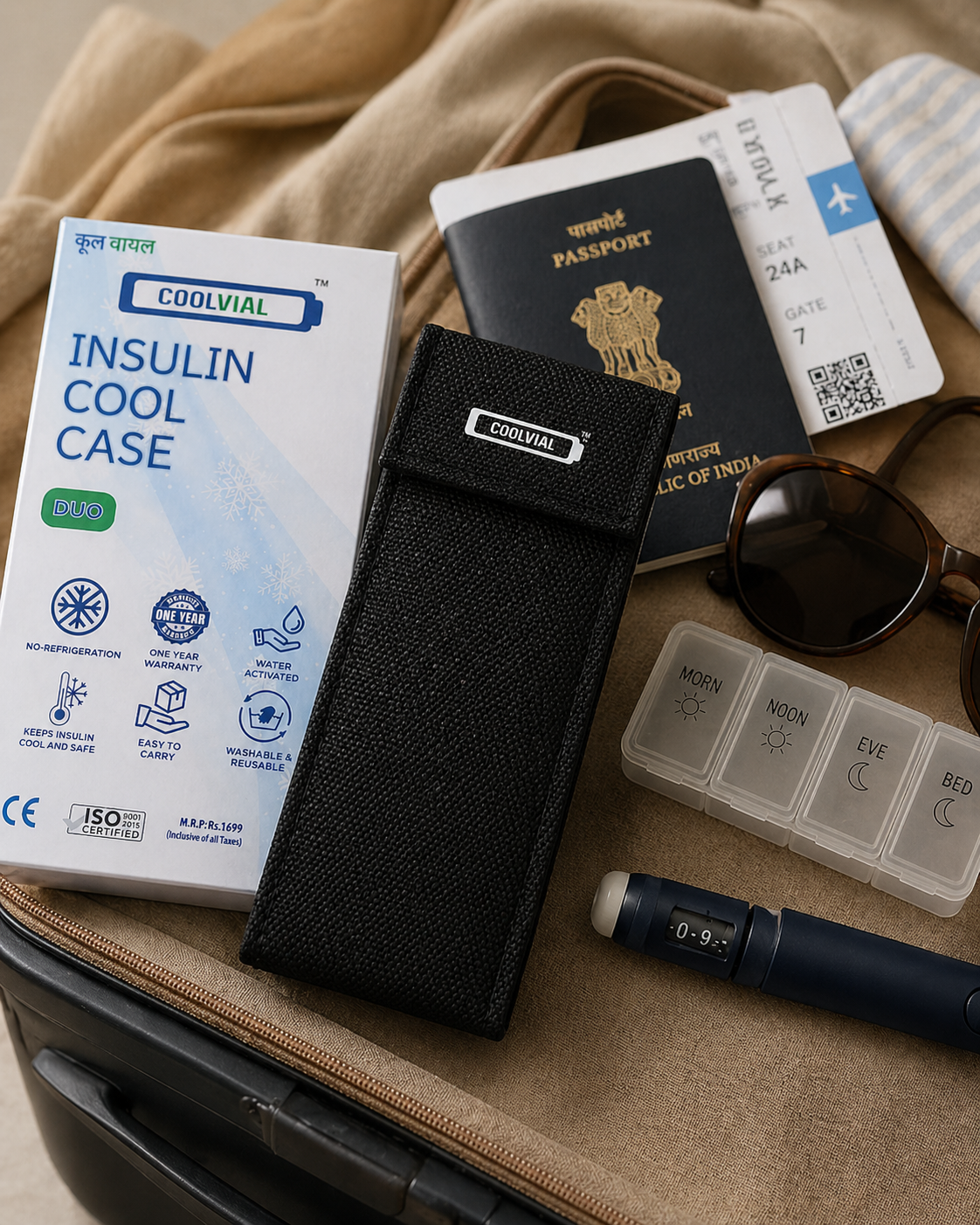
COOLVIAL keeps insulin safe in India's heat. 48+ hours, no electricity needed.