
Reviewed by the COOLVIAL Editorial Team — specialists in insulin storage for Indian climate conditions.
Mysuru, with its salubrious climate, iconic Mysore Palace, and serene Brindavan Gardens, is a delightful city to live in and travel from. However, for the over 2.5 million Indians managing diabetes with insulin, the prospect of travelling from Mysuru with this life-saving medication requires meticulous planning. Whether you’re flying out of Mysuru Airport (MYQ), catching a train from Mysuru Junction (MYS), or embarking on a road trip to Coorg or Ooty, ensuring your insulin stays cool and potent is paramount. Based on analysis of insulin storage queries from Mysuru diabetics, this guide offers practical, location-specific advice to navigate your journeys safely. Insulin, typically stored between 2°C and 8°C (36°F to 46°F) before opening, and at room temperature (up to 25-30°C) for up to 28 days once opened, can quickly degrade in India’s often warm conditions, even in Mysuru’s milder climate which can still hit 34°C.
This article provides 10 essential tips to help you manage your insulin storage and travel logistics, ensuring peace of mind on your next adventure originating from the City of Palaces.
Table of Contents
- Navigating Mysuru Airport (MYQ) with Insulin: Security & Check-in Essentials
- Hand Luggage vs. Checked Luggage: A Critical Choice
- Doctor’s Letter: Your Best Travel Companion
- Understanding CISF Screening for Insulin & Cooling Aids
- Airport Taxi Wait Times: Plan Ahead
- Train Travel from Mysuru Junction (MYS): Dispelling Myths and Ensuring Safety
- The Truth About Pantry Car Refrigerators
- Why You Should NEVER Hand Insulin to a TTE
- Packing Smart for Overnight Journeys
- Road Trips from Mysuru: Conquering Coorg, Ooty & Bandipur
- Taxi AC Reliability and Temperature Fluctuations
- The Perils of Parking Insulin in a Hot Car
- Dhaba Pit-Stops: Fridge Access and Alternatives
- Dealing with App-Cab Realities in Mysuru
- Ola/Uber: The AC Conundrum
- Rapido Bike-Taxis: Exposure Risks
- International Travel from Mysuru Airport (MYQ): Beyond Borders
- Customs Declarations and Language Barriers
- Time-Zone Dosing Adjustments
- General Insulin Storage Tips for Mysuru Travellers
- The COOLVIAL Advantage
- Frequently Asked Questions (FAQs)
- Conclusion: Travel Smart, Live Well
- Medical Disclaimer
- How We Researched This
Navigating Mysuru Airport (MYQ) with Insulin: Security & Check-in Essentials
Mysuru Airport (MYQ) might be a smaller regional airport, but the security protocols for carrying medication like insulin are consistent with national aviation guidelines. Your primary goal is to ensure your insulin remains cool and accessible throughout your journey.
Hand Luggage vs. Checked Luggage: A Critical Choice
When travelling from Mysuru with insulin by air, a non-negotiable rule is to always carry your insulin pens, vials, and syringes in your hand luggage. The cargo hold of an aircraft is not temperature-controlled and can experience extreme fluctuations, often dropping below freezing point at cruising altitudes. This can irreversibly damage insulin, rendering it ineffective. Furthermore, checked luggage can be delayed or lost, leaving you without your essential medication.
- Key Action: Pack all insulin, syringes, lancets, and blood glucose meters in your carry-on bag.
- Recommendation: Carry at least twice the amount of insulin you expect to need for your trip, accounting for potential delays.
Doctor’s Letter: Your Best Travel Companion
While not always explicitly demanded, a doctor’s letter (or prescription) stating your medical condition (diabetes), the necessity of carrying insulin, and the types of insulin and medical supplies you use, is highly recommended. This document can significantly ease your passage through security.
- What to include in the letter:
- Your full name and date of birth.
- Diagnosis of diabetes.
- List of medications, including insulin (name, dosage, quantity).
- Confirmation that you need to carry syringes, lancets, and a blood glucose meter.
- Doctor’s official letterhead, stamp, and signature.
- Date of issue (preferably recent, within 6 months).
You can easily obtain such a letter from your endocrinologist at hospitals like Apollo BGS Hospitals (Kuvempunagar) or JSS Hospital (Ramanuja Road) in Mysuru.
Understanding CISF Screening for Insulin & Cooling Aids
At Mysuru Airport, the Central Industrial Security Force (CISF) personnel are responsible for screening. When you carry insulin, especially with gel packs or a cooling case, be prepared for additional scrutiny.
- Tips for a Smooth Security Check:
- Declare: Inform the security officer that you are carrying insulin and medical supplies.
- Display: Have your doctor’s letter and insulin readily accessible, ideally in a separate clear bag.
- Cooling Cases: If using an evaporative cooling case like the COOLVIAL insulin cool case, explain that it’s a medical cooling device and does not contain liquids in excess of permissible limits (as it works by evaporation, not large volumes of liquid). Some gel packs might trigger questions, so be ready to explain their medical purpose.
- Avoid X-ray for Insulin: While most modern airport X-ray machines are safe for insulin, if you have concerns, you can request a visual inspection. However, this may cause delays. Generally, insulin is robust enough to withstand X-ray screening.
Airport Taxi Wait Times: Plan Ahead
A unique challenge at Mysuru Airport (MYQ) is the potential for long pre-paid taxi wait queues, which can sometimes extend up to 45 minutes, especially during peak hours. If your insulin is in a cooling case, this duration might be manageable, but it’s a critical factor to consider.
- Practical Steps:
- Keep Insulin on Your Person: Do not place your insulin cooling case on a hot tarmac or in a stationary vehicle while you wait for your taxi. Keep it with you, preferably in a shaded area.
- Pre-Book or App-Cab: Consider pre-booking a taxi from a reliable service or using an app-based cab (Ola/Uber) to minimise wait times, though even these might have queues or pick-up challenges at smaller airports.
Train Travel from Mysuru Junction (MYS): Dispelling Myths and Ensuring Safety
Train journeys from Mysuru Junction (MYS) are a popular way to travel, whether it’s a short trip to Bengaluru or a longer journey across states. While trains offer comfort, they present specific challenges for insulin storage.
The Truth About Pantry Car Refrigerators
A common misconception among travellers is that pantry car refrigerators in Indian Railways are a safe and reliable option for insulin storage. This is a myth that needs to be busted immediately.
-
Reasons for Unreliability:
- Inconsistent Temperatures: Pantry car fridges are primarily designed for bulk food storage, not precise medical temperature control. Temperatures can fluctuate wildly, often not maintaining the critical 2°C to 8°C range.
- Hygiene Concerns: These fridges can be unhygienic, posing a risk of contamination to your medication.
- Accessibility: Access might be limited to specific hours or depend on staff willingness, which is not ideal for a time-sensitive medication.
- Security: There’s no guarantee against theft or accidental damage if left unsupervised.
-
Conclusion: Never rely on pantry car fridges for your insulin. Bring your own dedicated cooling solution.
10 Essential Tips for Travelling From Mysuru With Insulin — Airport, Station & Taxi Advice
48+ hours at 2-8°C. No electricity. CE certified. Free delivery across India.
Order on WhatsApp — ₹1,099🛒 Buy Now — ₹1,099Why You Should NEVER Hand Insulin to a TTE
Another dangerous practice is handing your insulin pens or vials to the Train Ticket Examiner (TTE) or any railway staff for “safekeeping” or refrigeration.
-
Risks Involved:
- Lack of Responsibility: Railway staff are not trained or equipped to handle medical supplies requiring specific temperature control. They cannot be held responsible for its condition.
- Misplacement/Loss: In a busy train environment, your insulin could easily be misplaced or forgotten.
- Temperature Abuse: Even if they try to help, they likely don’t have access to appropriate cooling, leading to temperature excursions.
-
Rule of Thumb: Your insulin is your responsibility. Keep it with you and manage its temperature personally.
Packing Smart for Overnight Journeys
For longer or overnight train journeys from Mysuru, especially to destinations like Mumbai or Delhi, smart packing of your insulin is crucial.
-
Essential Packing List for Train Travel:
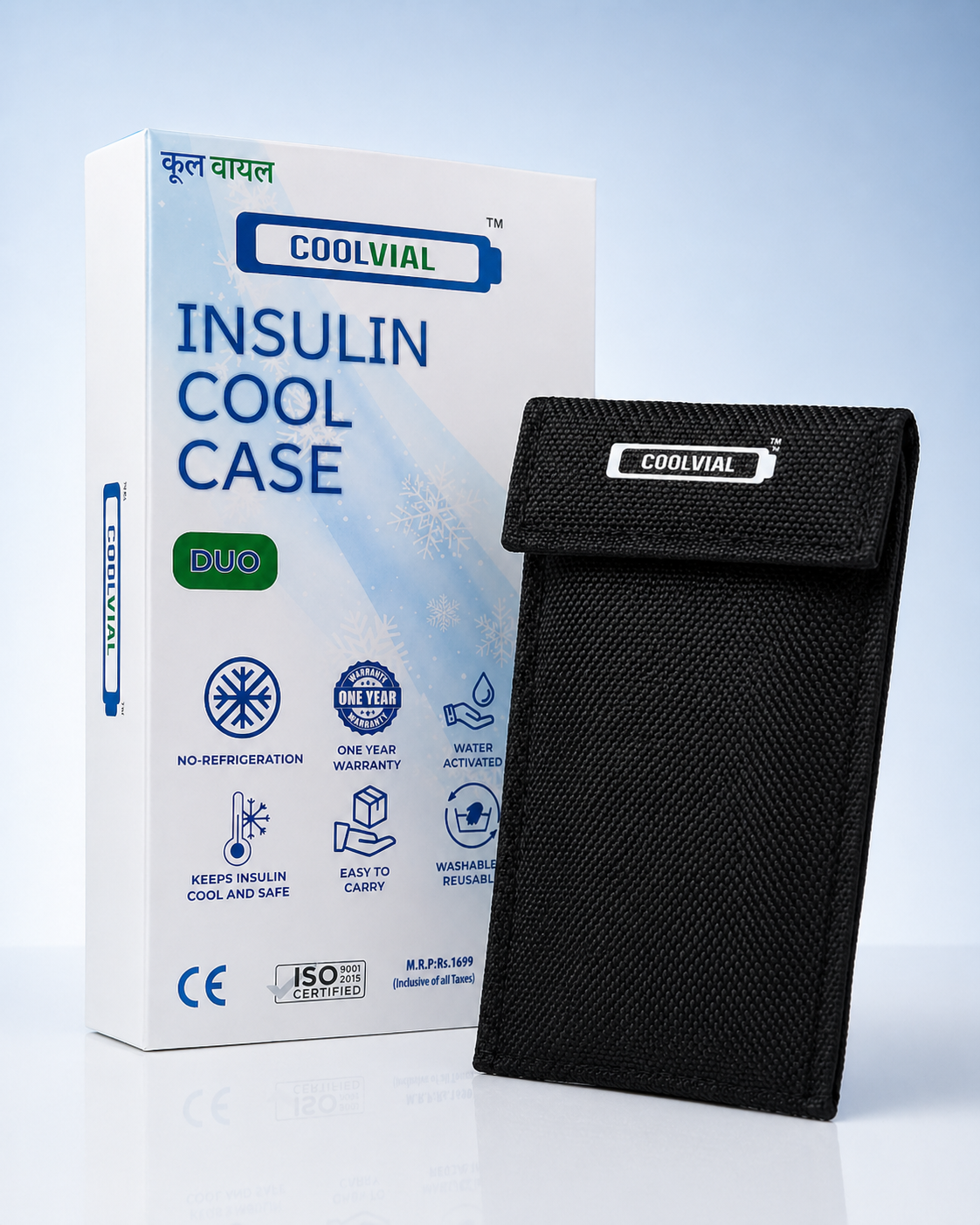
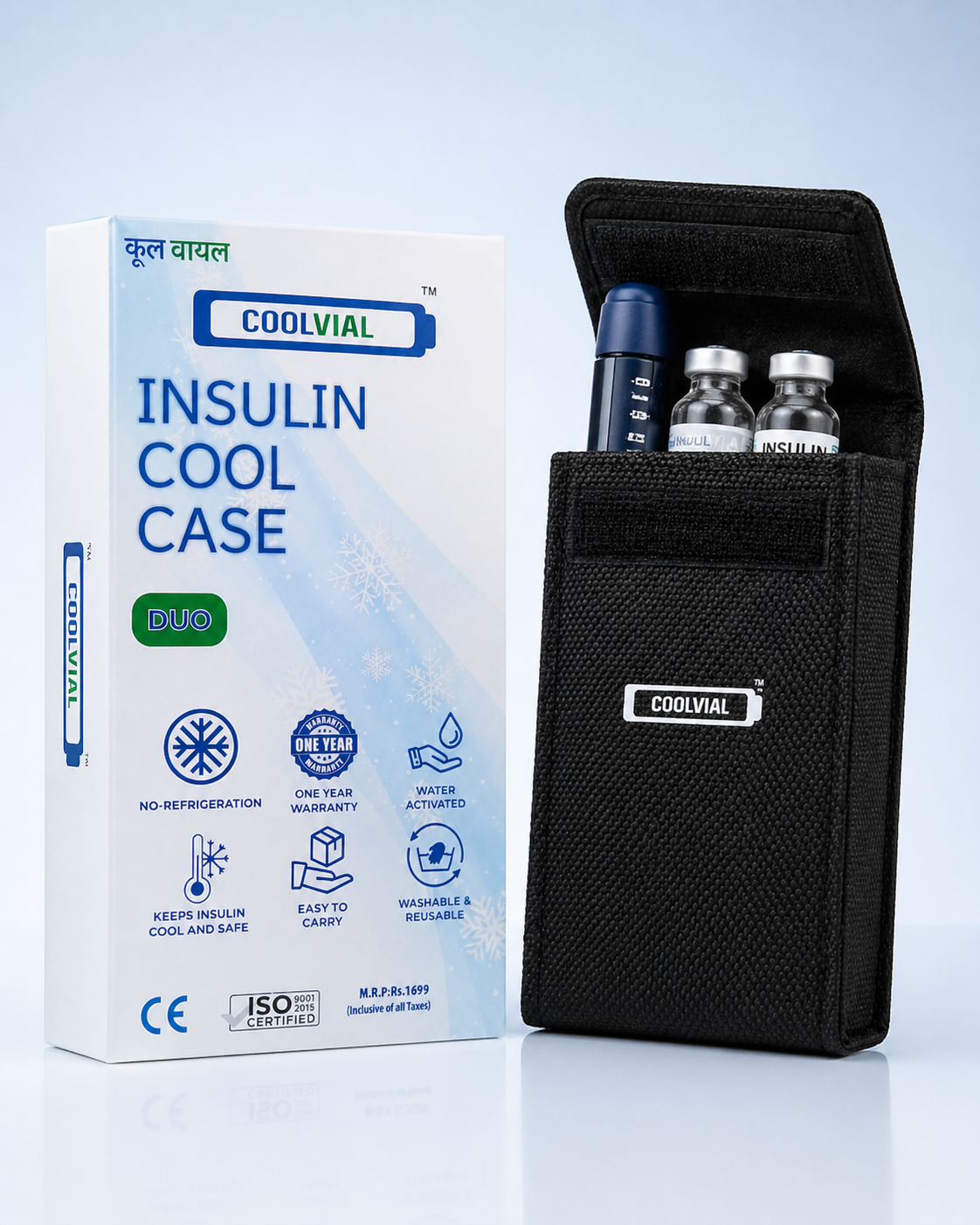
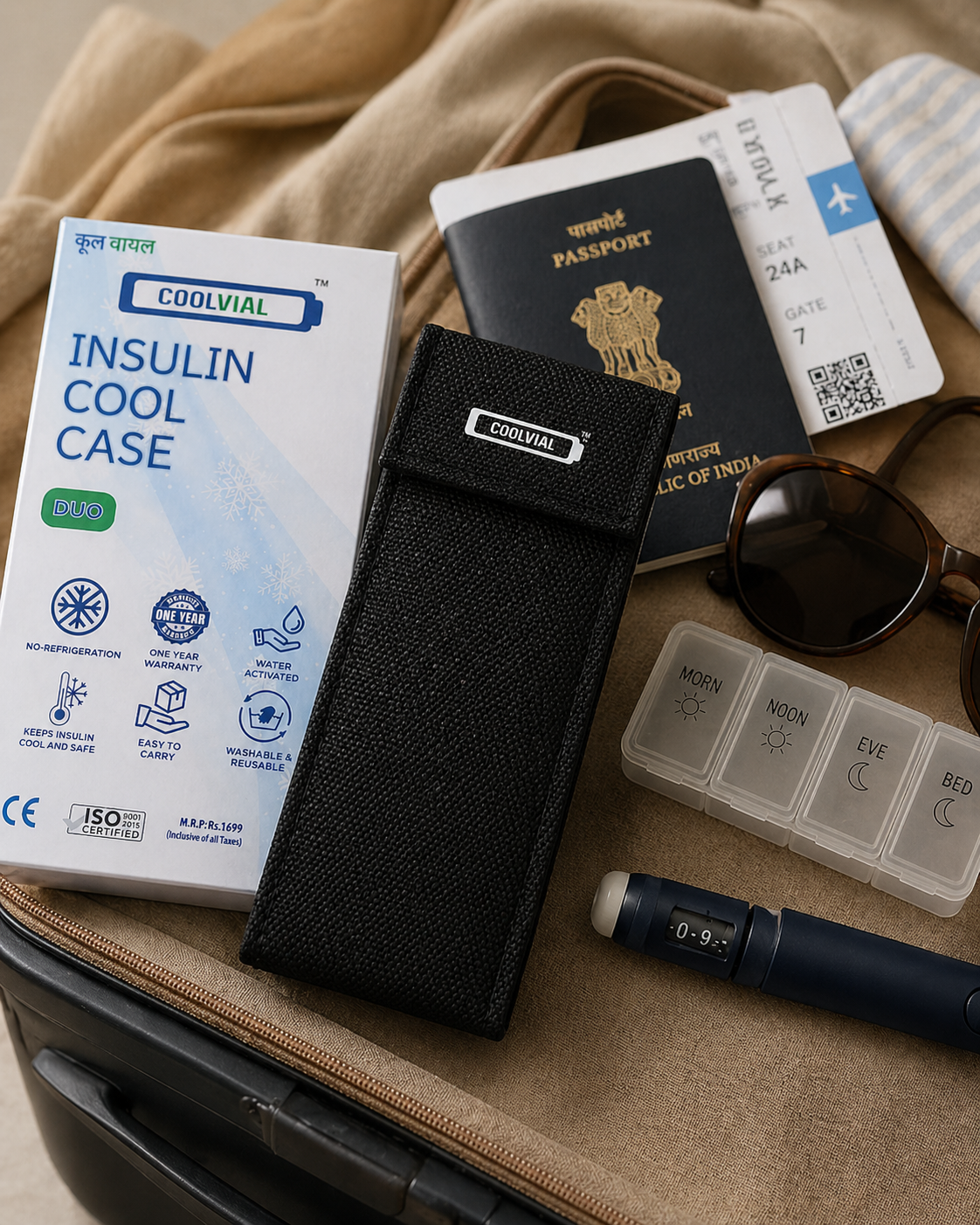
- Evaporative Cooling Case: An evaporative cooling case like COOLVIAL Duo is ideal. It uses water-activated cooling technology to keep insulin cool for 12-16 hours without electricity. This makes it perfect for long train rides where power outlets might be scarce or unreliable. It’s also more compact and lighter than bulky ice packs.
- Temperature Monitoring: Consider carrying a small, portable thermometer to monitor the temperature inside your cooling case, especially during longer journeys.
- Adequate Supplies: Pack enough insulin, syringes, and testing strips for the entire journey plus a buffer, easily accessible in your carry-on.
- Water Source: For evaporative coolers, ensure you have access to clean drinking water (bottled water is best) to reactivate the cooling case as needed.
-
COOLVIAL Duo’s Edge: Compared to traditional ice packs that can freeze insulin (damaging it) or competitor products like FRIO (~Rs 1,900) which offer similar functionality at a higher price, COOLVIAL Duo (Rs 1,099 with code COOLHEAL) provides an excellent balance of performance, affordability, and convenience. Its ability to hold 2 pens and 1 vial makes it versatile for most travellers.
Road Trips from Mysuru: Conquering Coorg, Ooty & Bandipur
Mysuru is a gateway to some of South India’s most scenic road trip destinations – the misty hills of Coorg, the cool climes of Ooty, and the wildlife of Bandipur. While these journeys are exhilarating, the variable conditions on Indian roads demand careful insulin management.
Taxi AC Reliability and Temperature Fluctuations
When taking a taxi or private car for a road trip from Mysuru, the reliability of the air conditioning system is a significant factor. Even if a taxi has AC, it might not always be consistently effective, especially during long drives or in older vehicles.
-
Considerations for Taxi AC:
- Pre-Check: If possible, verify the AC’s functionality before starting a long journey.
- Driver Habits: Some drivers might switch off the AC to save fuel, especially on highways, or if the passenger doesn’t explicitly request it.
- Temperature Variations: Even with AC, the ambient temperature inside the car can fluctuate, particularly if windows are opened frequently or during prolonged stops.
-
Protection Strategy: Always keep your insulin in a reliable cooling case like COOLVIAL Duo. Do not assume the car’s AC will suffice for maintaining the required temperature range for hours.
The Perils of Parking Insulin in a Hot Car
Perhaps the single biggest threat to insulin on a road trip is leaving it in a parked car, especially under the Mysuru sun or even just the mild climate’s afternoon warmth. The interior of a car can heat up dramatically and rapidly, even on a day that feels mild outside. Temperatures inside a parked car can soar to 50°C to 70°C (122°F to 158°F) within minutes on a sunny day.
- Why it’s Dangerous: Insulin is extremely sensitive to heat. Exposure to such high temperatures will quickly degrade its potency, making it ineffective.
- Golden Rule: Never leave your insulin in a parked car, even for a “quick” stop. Always take your cooling case with you, whether you’re stepping into a restaurant, a store, or a landmark like Chamundi Hill.
Dhaba Pit-Stops: Fridge Access and Alternatives
Road trips often involve pit-stops at roadside dhabas for refreshments. While some modern dhabas might have refrigerators, relying on them for insulin storage is not advisable for the same reasons as pantry car fridges: inconsistent temperatures, hygiene issues, and lack of accountability.
- Alternatives at Pit-Stops:
- Personal Cooling Case: Your evaporative cooling case is your best friend. Ensure it’s activated and functioning effectively before and during the stop.
- Water for Reactivation: If your COOLVIAL Duo needs re-activation, you can easily do so with bottled water available at any dhaba or shop.
- Shade and Airflow: When you stop, keep your cooling case in a shaded area, away from direct sunlight, and ensure it has good airflow, especially if it’s an evaporative type.
For more detailed advice on daily insulin management within Mysuru, you might find our article Daily Commute With Insulin in Mysuru — Tips for Metro, Bus & Auto helpful, even though Mysuru doesn’t have a metro, the principles for bus and auto apply.
Dealing with App-Cab Realities in Mysuru
The convenience of app-based taxis (Ola, Uber) and bike-taxis (Rapido) is undeniable in Mysuru, connecting neighborhoods like Vontikoppal/V V Mohalla, Saraswathipuram, Kuvempunagar, and Jayalakshmipuram. However, when travelling from Mysuru with insulin, these options come with their own set of considerations.
Ola/Uber: The AC Conundrum
While you book an AC cab, it’s not uncommon for drivers to sometimes refuse to turn on the air conditioning or switch it off during the ride, citing fuel efficiency or mechanical issues. This can be problematic if you’re relying on the car’s AC to supplement your insulin’s cooling.
- Strategies for App-Cabs:
- Confirm AC: Politely confirm with the driver at the start of the ride that the AC will be on.
- Keep Insulin Secure: Regardless of the car’s AC, always keep your insulin in your personal cooling case. Do not place it in direct sunlight near a window or in a glove compartment.
- Short Rides: For short rides within Mysuru, like from a pharmacy (Apollo Pharmacy, MedPlus) to your home, the risk is lower, but still, use a cooling case.
Rapido Bike-Taxis: Exposure Risks
Rapido bike-taxis offer a quick and economical way to navigate Mysuru’s traffic. However, they are entirely unsuitable for carrying insulin without robust protection.
-
Exposure Risks:
- Direct Sun Exposure: On a bike, your insulin will be directly exposed to the sun and ambient heat, which can be intense even in Mysuru’s milder climate.
- Vibration and Impact: The vibrations and potential impacts during a bike ride can also negatively affect insulin’s delicate protein structure.
- Lack of Security: It’s harder to keep your medication secure and stable on a two-wheeler.
-
Recommendation: If you must use a bike-taxi, ensure your insulin is in a highly protective, well-insulated cooling case that can withstand direct sun and some shock. However, for insulin, a car or auto-rickshaw (with a good cooling case) is always a safer bet.
International Travel from Mysuru Airport (MYQ): Beyond Borders
While Mysuru Airport (MYQ) primarily handles domestic flights, international travel often involves connecting flights from major hubs like Bengaluru or Chennai. The principles for international travel are similar but with added layers of complexity, especially when travelling from Mysuru with insulin.
Customs Declarations and Language Barriers
When entering a foreign country, you might be required to declare all medications, including insulin and related supplies.
- Key Steps:
- Research Destination Rules: Before you fly, research the specific customs regulations for medications in your destination country. Some countries have strict rules on quantities or types of medication.
- Doctor’s Letter (Translated): Your doctor’s letter (mentioned earlier) should ideally be translated into the official language of your destination country. Carry both the English and translated versions.
- Original Packaging: Keep insulin in its original pharmacy-labelled packaging to avoid any confusion at customs.
- Declare: Always declare your insulin and supplies at customs, even if not explicitly asked, to avoid potential issues.
Time-Zone Dosing Adjustments
Crossing multiple time zones can disrupt your insulin dosing schedule, potentially leading to hypo- or hyperglycemia. This is one of the most critical aspects of international travel for diabetics.
- Consult Your Doctor: Before any international trip, consult your endocrinologist at hospitals like Columbia Asia Hospital Mysore or JSS Hospital. They will provide a personalised plan for adjusting your insulin doses based on the number of time zones crossed, type of insulin used, and duration of travel.
- General Guidelines (to be discussed with doctor):
- Westward Travel (longer day): You might need an extra dose of short-acting insulin or a slight increase in basal insulin.
- Eastward Travel (shorter day): You might need to reduce your insulin dose to avoid hypoglycemia.
- Meal Times: Adjust insulin doses around local meal times, not your departure city’s meal times.
- Frequent Monitoring: Monitor your blood glucose levels more frequently than usual, especially in the first 24-48 hours after arrival.
For a comprehensive understanding of diabetes care, consider referring to resources from organisations like the Research Society for the Study of Diabetes in India (RSSDI) (Source: RSSDI Publications).
General Insulin Storage Tips for Mysuru Travellers
Beyond specific modes of transport, understanding the fundamental principles of insulin storage is crucial for anyone travelling from Mysuru with insulin. Mysuru’s climate, while mild, still demands vigilance, especially with average temperatures hovering around 25-30°C for much of the year.
- Key Insulin Storage Principles:
- Unopened Insulin: Store unopened insulin vials and pens in a refrigerator, ideally between 2°C and 8°C. Do not freeze. If you’re stocking up from pharmacies like Netmeds or 1mg, ensure you transport it home promptly in a cool environment.
- Opened Insulin: Once opened, most insulin types can be stored at room temperature (below 25°C to 30°C) for up to 28 days. However, always check the specific manufacturer’s instructions for your insulin.
- Avoid Direct Sunlight: Never expose insulin to direct sunlight or extreme heat. This is a common pitfall in India.
- No Freezing: Freezing insulin destroys its potency. Avoid placing it directly on ice packs without a protective layer.
- Visual Inspection: Before each use, inspect your insulin for any changes in colour, clarity, or consistency. If it looks cloudy (unless it’s a naturally cloudy type), clumpy, or discoloured, do not use it.
The COOLVIAL Advantage
For individuals in Mysuru, where temperatures can range from a cool 14°C to a warm 34°C, a reliable cooling solution is indispensable. This is where the COOLVIAL Duo shines as an ideal companion for travelling from Mysuru with insulin.
- Why COOLVIAL Duo is a Smart Choice:
- Evaporative Cooling: It works on the principle of evaporative cooling, requiring only water to activate. This means no electricity, batteries, or refrigeration are needed, making it perfect for travel where power sources are unreliable or unavailable.
- Optimal Temperature Maintenance: It keeps insulin cool within the safe temperature range (typically 18-26°C, depending on ambient temperature) for 12-16 hours, even in temperatures up to 34°C. This is crucial for maintaining insulin efficacy during long journeys.
- Capacity: The COOLVIAL Duo is designed to hold 2 insulin pens and 1 vial, offering ample space for most travellers’ needs.
- Cost-Effective: At Rs 1,099 with code COOLHEAL (MRP Rs 1,699), it provides a robust, certified solution at a competitive price point, especially when compared to alternatives like FRIO (often above Rs 1,900 for similar capacity) or Outer Woods OW-12 (~Rs 999) which might offer less capacity or duration.
- Certifications & Warranty: CE certified and ISO 9001:2015 compliant, along with a 1-year warranty and being Made in India, offers peace of mind regarding quality and reliability.
Investing in a high-quality insulin cooling case is not an expense, but an investment in your health and peace of mind, especially when you are travelling from Mysuru with a condition that demands constant care.
Frequently Asked Questions (FAQs)
Q: Can I put my insulin in the hotel room mini-fridge in Mysuru? A: Yes, most hotel mini-fridges are suitable for storing unopened insulin, but ensure the temperature is above freezing (2-8°C) by checking it with a thermometer if possible, as some mini-fridges can freeze items.
Q: Do I need a prescription for insulin when travelling within India from Mysuru? A: While not strictly mandatory for domestic travel, carrying your prescription or a doctor’s letter is highly recommended as proof of medical necessity, especially for security checks.
Q: How long can insulin stay out of refrigeration when travelling? A: Once opened, most insulin can be stored at room temperature (below 25-30°C) for up to 28 days, but always refer to your specific insulin’s manufacturer guidelines. For unopened insulin, it should ideally remain refrigerated until needed.
Q: Can extreme heat or cold damage my insulin in Mysuru’s climate? A: Yes, both extreme heat (above 30°C) and freezing temperatures can permanently damage insulin, reducing its effectiveness and potentially making it unsafe to use. Mysuru’s daytime temperatures can reach 34°C, requiring cooling solutions.
Q: Is it safe to carry insulin in an auto-rickshaw in Mysuru? A: Yes, but ensure your insulin is secured in a reliable evaporative cooling case like COOLVIAL Duo to protect it from direct sun, heat, and potential bumps, as auto-rickshaws offer little environmental control.
Q: What if my insulin cooling case runs out of cooling capacity during a long journey? A: If you’re using an evaporative cooler like COOLVIAL Duo, you can reactivate it by re-soaking it in clean water. Carry a small bottle of water for this purpose, or purchase bottled water from any shop or dhaba.
Q: Should I carry extra insulin supplies when travelling from Mysuru? A: Absolutely. Always carry at least 1.5 to 2 times the amount of insulin and other supplies (syringes, strips) you anticipate needing, to account for unforeseen delays, loss, or damage.
Conclusion: Travel Smart, Live Well
Travelling from Mysuru with insulin doesn’t have to be a source of stress. By understanding the unique challenges posed by different modes of transport – from the security checkpoints at Mysuru Airport (MYQ) and the unpredictable conditions of train journeys from Mysuru Junction (MYS) to the varying climates on road trips to Coorg or Ooty – you can plan effectively. The key lies in proactive preparation, vigilant temperature management, and choosing the right tools for the job.
Remember to always keep your insulin in your hand luggage for flights, never rely on external refrigerators for storage, and most importantly, invest in a dependable personal cooling solution. A product like the COOLVIAL Duo, designed specifically for Indian conditions, offers the peace of mind and reliability you need to travel confidently. Its ability to keep insulin cool for 12-16 hours without electricity is a game-changer for journeys through Mysuru’s varied travel landscape.
Embrace the beauty of Mysuru and beyond, knowing that your health is protected. Travel smart, stay cool, and live well.
Order COOLVIAL Duo at Rs 1,099 with code COOLHEAL — coolvial.com or via WhatsApp wa.me/918766952300
Medical Disclaimer: This article is for general information purposes only and does not constitute medical advice. Always consult your endocrinologist or diabetologist before making any changes to your insulin storage, dosing practices, or travel plans.
How We Researched This: This article is based on a comprehensive review of current RSSDI (Research Society for the Study of Diabetes in India) guidelines for diabetes management, relevant sections of ICMR-INDIAB data on diabetes prevalence, local Mysuru hospital directories (including Apollo BGS Hospitals, Columbia Asia Hospital Mysore, JSS Hospital), and information from established pharmacy networks like Apollo Pharmacy and MedPlus. Insights were also drawn from common queries and practical experiences of individuals managing diabetes in Indian travel scenarios.
10 Essential Tips for Travelling From Mysuru With Insulin — Airport, Station & Taxi Advice
COOLVIAL keeps insulin safe in India's heat. 48+ hours, no electricity needed.