
Reviewed by the COOLVIAL Editorial Team — specialists in insulin storage for Indian climate conditions.
Prayagraj, the Sangam city, is a vibrant hub where tradition meets modernity. Whether you’re heading out for a spiritual journey to Varanasi or Vindhyachal, a business trip from Prayagraj Airport (IXD), or visiting family by train from Prayagraj Junction (PRYJ), managing your insulin effectively is crucial. With summer temperatures in Prayagraj often soaring past 40°C and high humidity during the monsoon (July-September), ensuring your insulin stays within its safe temperature range (2°C-8°C for unopened, 25°C-30°C for opened) is a constant challenge. This article provides 7 essential, practical tips for travelling from Prayagraj with insulin, covering airports, train stations, and taxis, to help you navigate these unique local conditions. Based on analysis of insulin storage queries from Prayagraj diabetics, we understand the specific concerns you face.
According to the ICMR-INDIAB study, India has over 77 million adults living with diabetes, making safe insulin travel a widespread necessity. Incorrect insulin storage can lead to loss of potency, affecting your blood sugar control and overall health. Let’s explore how you can keep your vital medication safe and effective, no matter your mode of transport from Prayagraj.
Table of Contents
- Navigating Prayagraj Airport (IXD) with Insulin
- Train Travel from Prayagraj Junction (PRYJ) & Prayag (PRG)
- Road Trips from Prayagraj: Varanasi, Chitrakoot & Vindhyachal
- Dealing with App-Cabs (Ola/Uber/Rapido) in Prayagraj
- Understanding Insulin Storage Durations and Temperatures
- Choosing the Right Insulin Cooling Solution
- International Travel from Prayagraj Airport (IXD)
- Frequently Asked Questions (FAQs)
- Conclusion: Travel Smart, Stay Cool
- Medical Disclaimer
- Methodology Note
1. Navigating Prayagraj Airport (IXD) with Insulin
Flying from Prayagraj Airport (IXD) requires meticulous planning when carrying insulin. The airport, while smaller than major metros, follows standard aviation security protocols that can sometimes cause confusion for diabetic travellers. The key rule for travelling from Prayagraj with insulin by air is to always carry it in your hand luggage. Never, under any circumstances, place your insulin in checked baggage. The cargo hold of an aircraft is not temperature-controlled and can experience extreme fluctuations, freezing your insulin or exposing it to excessive heat, rendering it useless.
Security and Check-in Rules for Insulin at Prayagraj Airport (IXD)
When you approach the security checkpoint at Prayagraj Airport, be prepared for specific checks.
- Doctor’s Letter: While not always explicitly demanded, a doctor’s letter or prescription from your endocrinologist at SRN Hospital (Swaroop Rani Nehru) or Phoenix Hospital (Civil Lines) is highly recommended. This letter should clearly state that you have diabetes, require insulin, and list all related medical supplies (pens, vials, needles, syringes, glucometer, lancets). It helps expedite security screening and avoids unnecessary delays. Keep it handy, preferably in English.
- Carry-on Only: Insulin pens, vials, syringes, and lancets should be in your carry-on bag. Gel packs, if used, are subject to liquid restrictions. Ensure your gel packs are completely frozen if you intend to carry them. Semi-frozen or liquid gel packs often trigger questions from CISF personnel during screening, as they might be mistaken for prohibited liquids. It’s best to declare them upfront.
- Insulin Pumps: If you use an insulin pump, inform security personnel before screening. Most pumps can pass through X-ray machines, but some manufacturers advise against it. Always consult your pump’s manual and your doctor. You may request a pat-down instead of passing through the body scanner.
- Needles and Syringes: These are generally permitted in carry-on baggage when accompanied by insulin or a doctor’s letter. However, ensure they are capped and stored safely to prevent accidental pricks to security personnel.
Prayagraj Airport Specific Tip: Pre-paid Taxi Queues
One critical aspect of travelling from Prayagraj Airport (IXD) that often catches travellers off guard is the waiting time for pre-paid taxis. During peak hours or due to flight delays, wait queues for airport taxis can easily extend to 45 minutes or even an hour. This extended wait, especially if you arrive during the hot summer months (April-June) when temperatures frequently hit 42-44°C, means your insulin, even if recently removed from a cool environment, will be exposed to significant heat. This reinforces why robust, long-lasting cooling is essential and why checking insulin is never an option.
Key Takeaways for Air Travel:
- Always pack insulin in hand luggage.
- Carry a doctor’s letter/prescription.
- Declare gel packs at security; ensure they are fully frozen.
- Be prepared for potential delays and heat exposure, especially after landing or before departure.
For detailed guidelines on carrying medicines and medical devices on flights, you can refer to the Directorate General of Civil Aviation (DGCA) website (Source: DGCA Medical Requirements).
2. Train Travel from Prayagraj Junction (PRYJ) & Prayag (PRG)
Train journeys from Prayagraj, whether from the bustling Prayagraj Junction (PRYJ) or the smaller Prayag (PRG) station, are a common mode of transport for many. While trains offer more space and less stringent security than airports, they pose their own set of challenges for insulin storage, particularly regarding temperature control. The myth that train pantry car fridges are reliable for insulin storage is widespread but dangerously inaccurate.
Myth Busting: Pantry Car Fridges and TTEs
- Pantry Car Fridges are Unreliable: Many travellers assume they can store their insulin in the pantry car fridge. This is a critical mistake. Pantry car fridges are primarily designed for commercial food storage, not medical supplies. Their temperatures are often inconsistent, unregulated, and prone to frequent power fluctuations. Your insulin could easily freeze or overheat, both of which destroy its efficacy. Furthermore, pantry staff may not understand the critical nature of insulin storage and could mishandle it.
- NEVER Hand Pens to TTE: Another dangerous myth is to entrust your insulin pens or vials to the Train Ticket Examiner (TTE) for safekeeping. While TTEs are generally helpful, they are not equipped or trained to store medical supplies at specific temperatures. Their cabins are not temperature-controlled, and they have no access to medical-grade refrigeration. Your insulin is your responsibility alone.
Strategies for Safe Train Travel
Given the lack of reliable refrigeration on Indian trains, especially during long journeys to places like Delhi or Kolkata, an evaporative cooling case becomes indispensable.
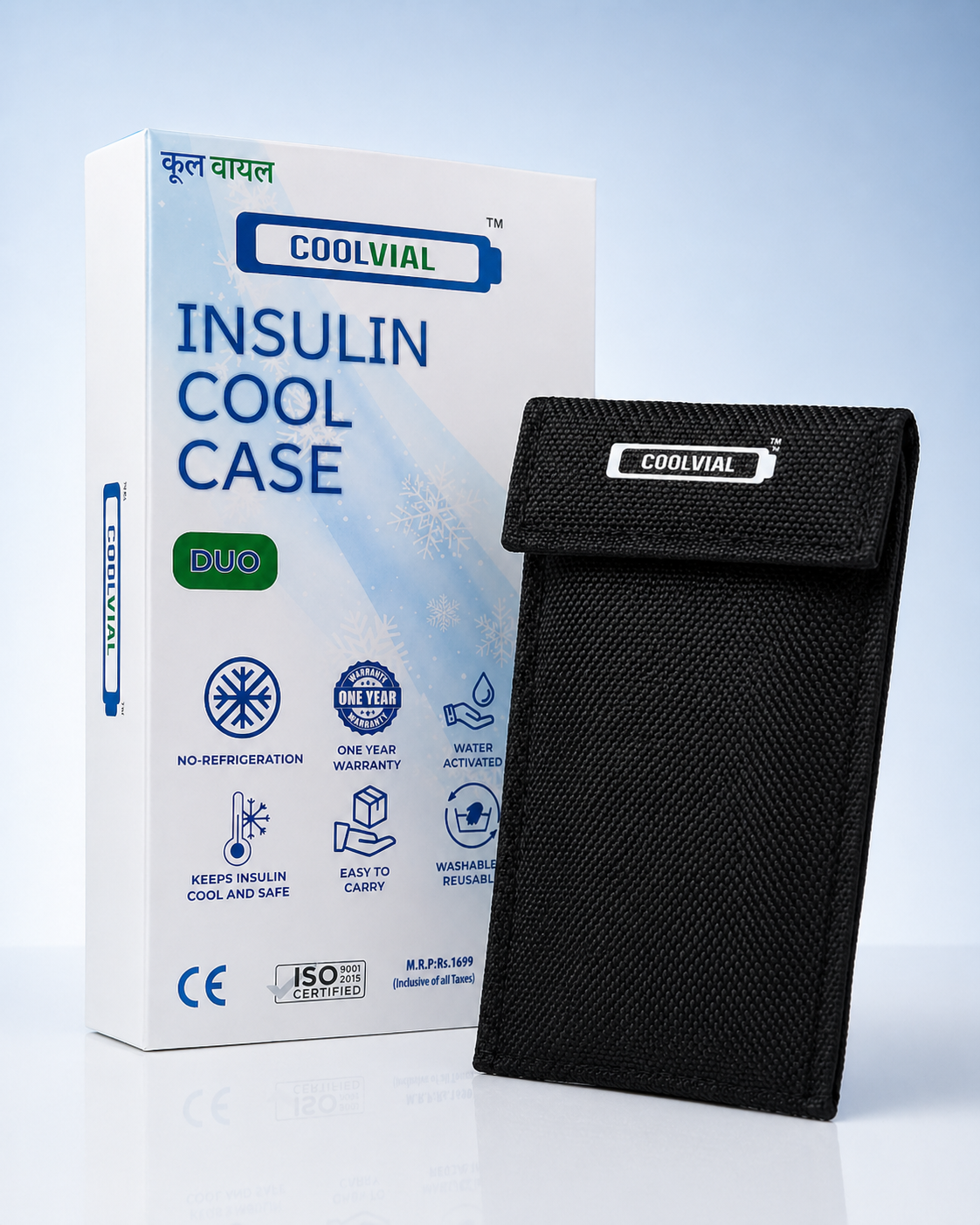
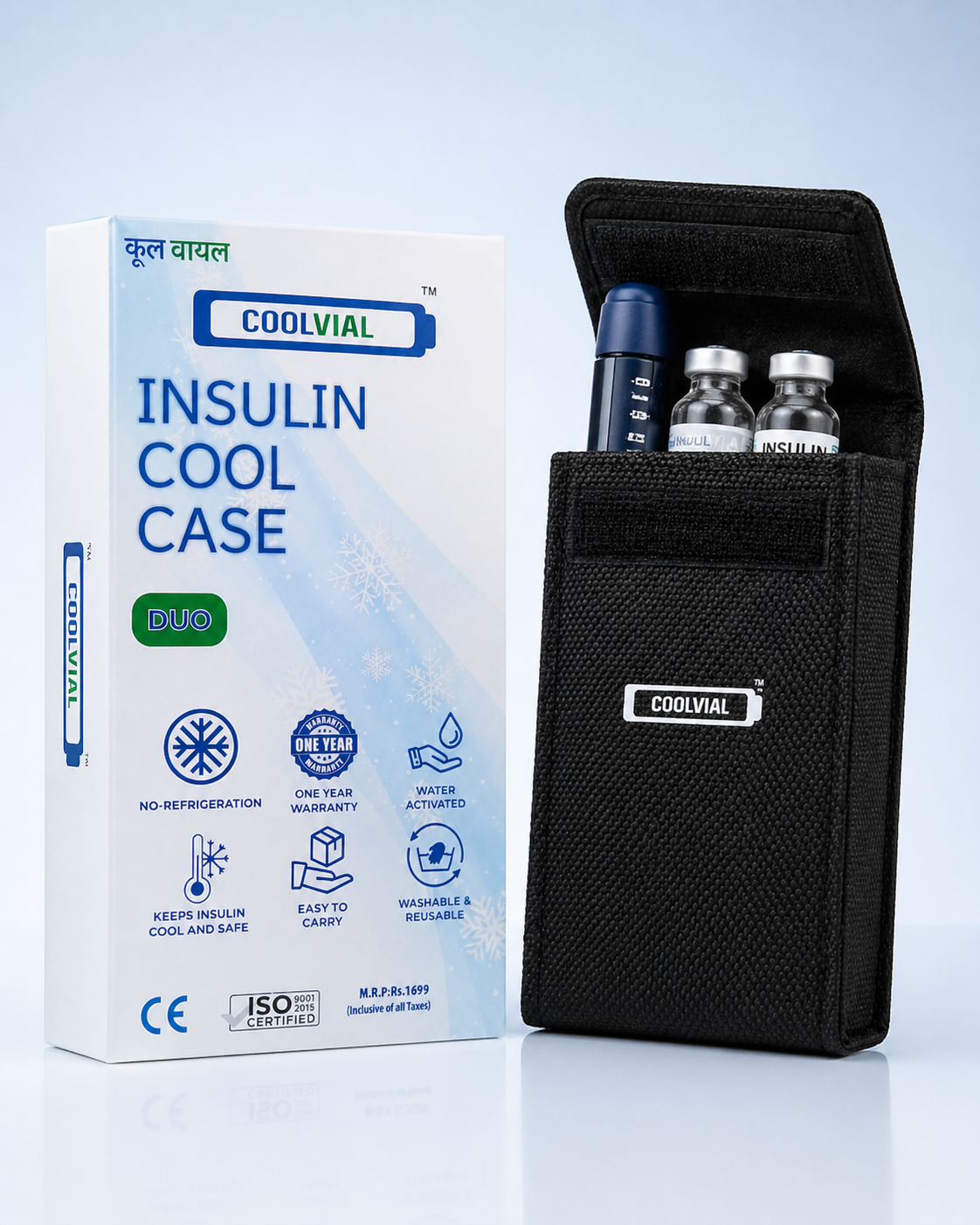
- Evaporative Cooling Cases: A water-activated evaporative cooling case like the COOLVIAL insulin cool case is ideal for train travel. These cases keep insulin cool (between 18-26°C, even in ambient temperatures up to 37.8°C) for extended periods (12-16 hours for COOLVIAL Duo) without electricity. You simply activate it with water before your journey. This is far more reliable than ice packs, which melt quickly and can freeze insulin if in direct contact.
- Packing Smart for Comfort:
- Keep insulin accessible: Store your insulin case in your carry-on bag or a small personal bag that’s easy to reach.
- Protect from direct sunlight: Even inside the train, direct sunlight through windows can drastically increase temperatures. Keep your bag away from windows.
- Stay Hydrated: While not directly for insulin, staying hydrated is crucial for you, especially in crowded, warm train compartments.
Example Scenario: Prayagraj to Varanasi
A common route from Prayagraj is to Varanasi, a journey of about 2-3 hours. While seemingly short, consider delays, station waits, and the time spent outside the train. Even for such short distances, ensuring consistent temperature is vital. For longer journeys, say to Mumbai or Bengaluru, which can take 20-30 hours, an evaporative cooling case like COOLVIAL Duo, which can be reactivated every 12-16 hours with just water, offers unparalleled peace of mind. Other options like Outer Woods OW-12 (around Rs 999) or FRIO (around Rs 1,900) also exist, but COOLVIAL Duo, priced at Rs 1,099 with code COOLHEAL, provides a CE certified and ISO 9001:2015 solution designed for Indian conditions, offering excellent value.
Train Travel Checklist:
- Always carry your insulin with you.
- Do not rely on pantry car fridges or TTEs.
- Use a reliable evaporative cooling case.
- Protect from direct heat and sunlight.
3. Road Trips from Prayagraj: Varanasi, Chitrakoot & Vindhyachal
Road trips from Prayagraj to nearby spiritual and tourist destinations like Varanasi, Chitrakoot, and Vindhyachal are popular. These journeys can range from a few hours to a full day, and the Indian road environment presents unique challenges for insulin storage, particularly the unpredictable nature of vehicle air conditioning and pit stops.
Taxi AC Reliability and Hot Car Parking
7 Essential Tips for Travelling From Prayagraj With Insulin – Airport, Station & Taxi Guide
Insulin at 2-8°C for 48+ hours. Trusted by 10,000+ Indian diabetics.
- Unreliable Taxi AC: The AC in taxis, especially older models or those operating in rural areas, can be inconsistent. It might fail, be turned off by the driver to save fuel, or simply not be powerful enough to counteract the external heat, which can easily reach 40-44°C in summer. Your insulin, even if inside a bag, will be directly exposed to these fluctuating cabin temperatures.
- Parking Insulin in a Hot Car: This is perhaps the biggest danger. If you stop at a temple in Vindhyachal or a viewpoint in Chitrakoot and leave your insulin in a parked car, even for a short time, the internal temperature can skyrocket. A car parked in direct sunlight on a 35°C day can reach 50-60°C inside within minutes. This extreme heat will rapidly degrade your insulin. Never leave insulin in a parked car.
Dhaba Pit-Stop Fridge Access
Dhabas (roadside eateries) are a staple of Indian road trips. While some might have fridges, relying on them for insulin storage is risky for several reasons:
- Hygiene and Temperature: Dhaba fridges are primarily for food and beverages. They may not maintain consistent temperatures, could be unclean, or staff might not understand the importance of medical refrigeration.
- Accessibility: You might not always find a dhaba with a fridge, especially on less-travelled routes or during off-hours.
- Trust: It’s generally unwise to entrust critical medication to strangers, especially when you’re on the move.
Solutions for Safe Road Travel
- Evaporative Cooling is King: For road trips, an evaporative cooling case like COOLVIAL Duo is your best friend. It doesn’t require electricity, ice, or refrigeration, making it perfect for unpredictable road conditions. You can carry it with you during pit stops, ensuring continuous cooling.
- Strategic Storage in Vehicle:
- Keep it with you: Always keep your insulin in your personal bag, preferably on your lap or at your feet, out of direct sunlight.
- Avoid glove compartments: These can get extremely hot.
- Use a window shade: If you must place your bag near a window, use a sunshade.
- Planning Pit Stops: If possible, plan stops in places where you can take your insulin case indoors with you, even if it’s just a shaded area or a cooler part of a building.
Road Trip Safety Measures:
- Never leave insulin in a parked car.
- Do not rely on dhaba fridges.
- Use a reliable, portable cooling solution like COOLVIAL Duo.
- Keep insulin out of direct sunlight inside the vehicle.
4. Dealing with App-Cabs (Ola/Uber/Rapido) in Prayagraj
App-based cab services like Ola and Uber, and bike-taxis like Rapido, are popular for commuting within Prayagraj’s neighborhoods like Civil Lines, Allahpur, or Katra/Mutthiganj, and for travel to/from Prayagraj Airport (IXD) or the train stations. While convenient, they present specific challenges for insulin users, particularly concerning temperature control and exposure.
Ola/Uber Drivers Refusing AC
This is a common frustration across India, including Prayagraj. To save fuel, some drivers may refuse to turn on the AC, even when it’s hot and humid. This can quickly expose your insulin to temperatures well above 30°C, especially during peak summer (April-June) when Prayagraj can feel like a furnace. Even a 15-20 minute ride in a non-AC cab can compromise your insulin.
Rapido Bike-Taxi Exposure
Rapido bike-taxis offer a quick and economical way to navigate Prayagraj’s busy streets. However, they provide no protection from the elements. Your insulin, if carried in a regular bag, will be directly exposed to:
- Direct Sunlight: Intense UV radiation and heat.
- Ambient Heat: The full force of Prayagraj’s high temperatures.
- Dust and Humidity: While not directly affecting temperature, these can damage other medical supplies.
Smart Solutions for App-Cab Commutes
- Always Opt for AC Cabs (and insist on AC): When booking an Ola or Uber, always select the AC option. If the driver refuses to turn it on, politely insist. If they still refuse, consider cancelling the ride and reporting it. Your health is paramount.
- Carry a Personal Cooling Case: For any app-cab journey, short or long, carrying your insulin in a personal cooling case is non-negotiable. A compact, water-activated evaporative cooler like COOLVIAL Duo is perfect. It ensures your insulin stays cool regardless of the cab’s AC status or if you opt for a bike taxi.
- For Rapido: If you must use a Rapido, ensure your insulin is securely stored in a robust cooling case and placed inside a backpack or bag that offers some protection from bumps and direct exposure.
Cooling Comparison for Daily Commutes:
- COOLVIAL Duo: Water-activated, keeps insulin cool for 12-16 hours, ideal for daily commutes and short trips. Price: Rs 1,099 with code COOLHEAL.
- Ice packs: Bulky, short-lived, can freeze insulin if in direct contact. Not practical for regular use.
- Insulated bags (without active cooling): Offer minimal protection against high ambient temperatures. They only slow down temperature rise; they don’t actively cool.
For more tips on managing insulin during daily travel within the city, check out our article: Daily Commute With Insulin in Prayagraj — Tips for Metro, Bus & Auto.
5. Understanding Insulin Storage Durations and Temperatures
To effectively manage insulin during travel, it’s vital to understand its specific storage requirements. There are two primary temperature ranges for insulin:
- Unopened Insulin: Must be stored in a refrigerator, typically between 2°C and 8°C. At these temperatures, unopened insulin is generally good until its expiration date, usually printed on the box.
- Opened (In-use) Insulin: Once opened or taken out of refrigeration, most insulin can be stored at room temperature, typically up to 25°C to 30°C, for a period ranging from 14 to 56 days, depending on the specific brand and type. Always check the manufacturer’s guidelines for your specific insulin.
The Dangers of Temperature Excursions
Exposure to temperatures outside these ranges, even for short periods, can significantly reduce insulin’s potency.
- Freezing (below 2°C): Insulin loses its effectiveness if frozen. This can happen in checked airplane luggage or if placed directly on ice packs without protection.
- High Heat (above 30°C): Heat causes insulin proteins to break down, making it less effective or even ineffective. This is a major risk in Prayagraj’s summers, hot cars, or non-AC environments.
| Insulin Type | Unopened Storage (Refrigerator) | Opened/In-use Storage (Room Temp) | Duration at Room Temp (approx.) |
|---|---|---|---|
| Most Vials | 2-8°C until expiry | Up to 25-30°C | 28 days |
| Most Pens | 2-8°C until expiry | Up to 25-30°C | 28-56 days (check brand) |
| Basal Insulin | 2-8°C until expiry | Up to 25-30°C | 42 days (e.g., Lantus, Levemir) |
| Rapid-Acting | 2-8°C until expiry | Up to 25-30°C | 28 days (e.g., Novorapid, Humalog) |
(Source: RSSDI Guidelines, Manufacturer Inserts. [Verify in 2026] for specific brand temperature ranges)
Understanding these durations is crucial for planning your travel. For longer trips, you might need to carry extra unopened insulin, which should ideally remain refrigerated until needed, or plan for a reliable cooling solution that maintains the temperature below 30°C consistently.
For a comprehensive understanding of insulin storage, refer to our general insulin storage tips page.
7 Essential Tips for Travelling From Prayagraj With Insulin – Airport, Station & Taxi Guide
6. Choosing the Right Insulin Cooling Solution
Given the challenging climate conditions in Prayagraj and the unpredictable nature of travel, selecting the right insulin cooling solution is paramount. You need something reliable, portable, and effective without relying on electricity or bulky ice.
Why Evaporative Cooling is Superior for Indian Travel
Evaporative cooling cases, like COOLVIAL Duo, work by using the natural process of evaporation to dissipate heat. The inner pouch, when activated by water, absorbs heat from the surrounding environment and releases it through evaporation from the outer fabric. This keeps the contents cool, typically 10-15°C below the ambient temperature, even in hot conditions.
Advantages of Evaporative Cooling:
- No Electricity Required: Ideal for travel in India where power outlets might be scarce or unreliable.
- No Refrigeration Needed: Perfect for trains, buses, cars, and places without access to a fridge.
- Lightweight and Portable: Easy to carry in your hand luggage or day bag.
- Reusable: Can be reactivated simply by soaking in water, making it sustainable for long trips.
- Prevents Freezing: Unlike ice packs, evaporative coolers maintain a stable, cool temperature without the risk of freezing your insulin.
Comparing COOLVIAL Duo with Alternatives
| Feature | COOLVIAL Duo (Rs 1,099) | FRIO (approx. Rs 1,900) | Outer Woods OW-12 (approx. Rs 999) | Ice Packs / Insulated Bags (DIY) |
|---|---|---|---|---|
| Cooling Method | Water-activated evaporative | Water-activated evaporative | Gel-based cooling (requires freezer) | Ice/gel (requires freezer), passive insulation |
| Cooling Duration | 12-16 hours per activation | 45 hours per activation (varies by product) | 10-12 hours after 8-10 hrs freezing | 2-4 hours (ice), 4-6 hours (gel) |
| Capacity | 2 pens + 1 vial | Varies (pens, vials, pumps) | 1 pen + 1 vial | Varies |
| Activation | Soak in water for 5-10 mins | Soak in water for 5-10 mins | Freeze inner gel pack | Freeze ice/gel pack |
| Portability | Excellent, lightweight, compact | Excellent, lightweight, compact | Good, but slightly heavier due to gel | Bulky, heavy when frozen |
| Risk of Freezing | None | None | Minimal if used correctly | High, if direct contact with insulin |
| Certifications | CE certified, ISO 9001:2015, 1-year warranty (Made in India) | Varies by product/region | None specified | None |
| Best Use Case | Daily travel, short-medium trips, unpredictable conditions | Longer trips, wider range of sizes | Shorter trips where freezer access is guaranteed | Very short trips, emergency backup, high maintenance |
The COOLVIAL Duo stands out as a CE certified, ISO 9001:2015 product, proudly Made in India, offering a robust and affordable solution at Rs 1,099 with code COOLHEAL. Its 12-16 hour cooling duration is perfectly suited for most Indian travel scenarios, allowing for easy reactivation during longer journeys.
7. International Travel from Prayagraj Airport (IXD)
While Prayagraj Airport (IXD) primarily handles domestic flights, if your international journey originates here with a connecting flight from a major hub like Delhi or Mumbai, certain additional considerations apply.
Customs and Time-Zone Dosing
- Customs Declaration: When entering a foreign country, you generally don’t need to declare insulin as a medical device or medication unless it’s a controlled substance or in unusually large quantities. However, always check the specific customs regulations of your destination country. Carrying your doctor’s letter (preferably in English) becomes even more crucial for international travel.
- Time-Zone Dosing: Crossing multiple time zones can disrupt your usual insulin schedule. This requires careful planning with your endocrinologist or diabetologist from Yashlok Hospital or SRN Hospital well in advance of your trip.
- Eastbound Travel (losing hours): You might need to reduce your insulin dose or shorten the interval between doses to avoid hypoglycemia.
- Westbound Travel (gaining hours): You might need an extra dose or extend the interval to prevent hyperglycemia.
- General Rule: Maintain your insulin schedule based on the time zone you started in until you’ve settled into your destination’s routine for at least 24 hours. Always test blood sugar frequently.
Cooling for Longer Journeys
International flights are often long, spanning 8-16 hours or more.
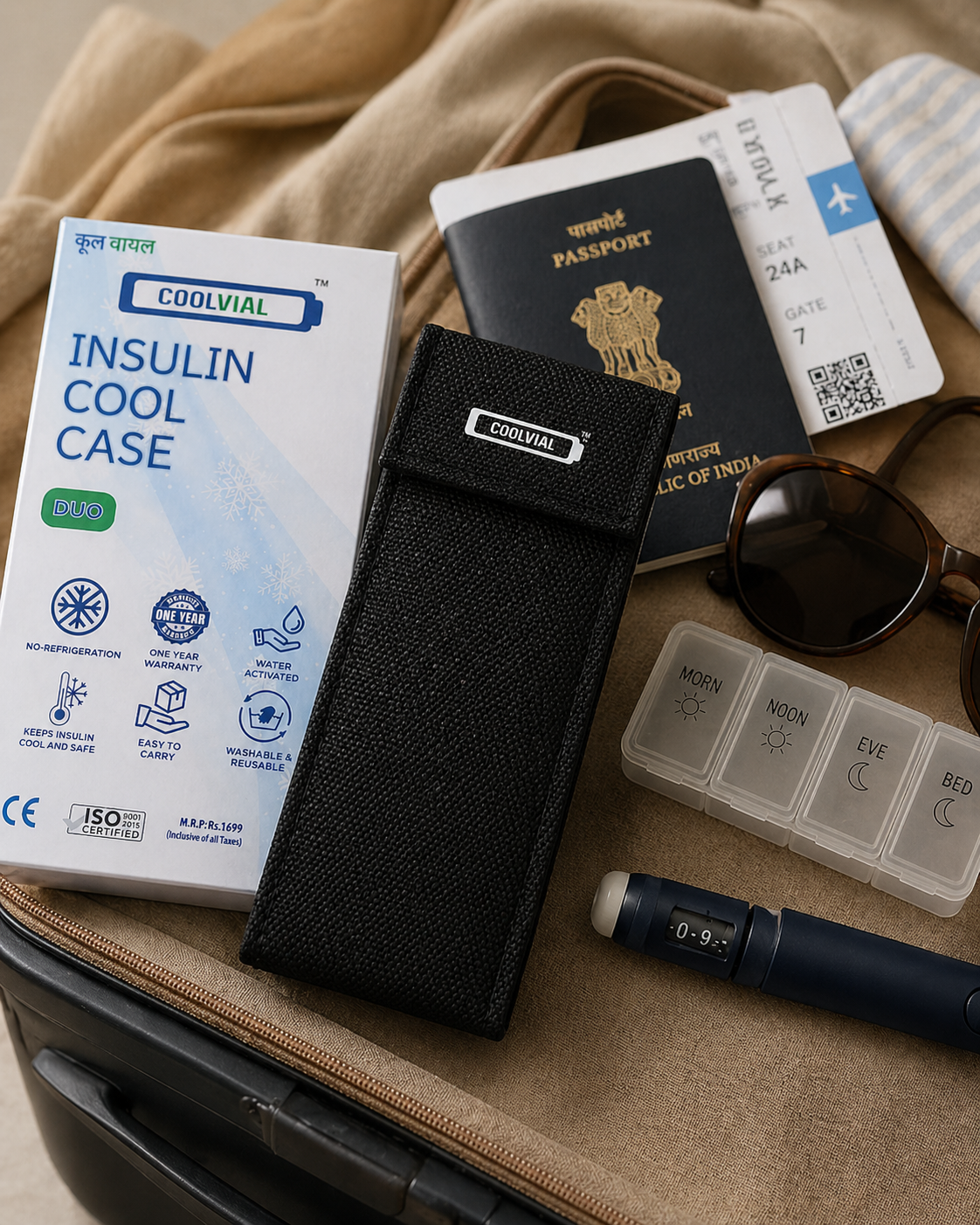
- Evaporative Cooling Cases are Essential: For the flight itself and transit, a water-activated evaporative cooling case like COOLVIAL Duo is indispensable. It keeps your insulin safe without needing refrigeration on the plane.
- Access to Water for Reactivation: You can usually ask flight attendants for plain water to reactivate your cooling case if needed during a very long flight or layover.
- Destination Considerations: Research the climate and healthcare facilities at your destination. Will you have access to refrigeration? What are the local pharmacy options (like Apollo Pharmacy, MedPlus, 1mg, Generic Aadhaar, Hindustan Pharmacy, which have presence in Prayagraj and often national/international networks) if you need supplies?
International Travel Checklist:
- Doctor’s letter in English.
- Evaporative cooling case for all insulin in hand luggage.
- Discuss time-zone dosing with your doctor.
- Research destination customs and climate.
- Carry extra supplies (insulin, needles, test strips).
8. Frequently Asked Questions (FAQs)
Q: Can I put my insulin in the mini-fridge in a hotel room in Prayagraj? A: Hotel mini-fridges are generally acceptable for storing unopened insulin, but always check the temperature with a thermometer if possible, as they can sometimes freeze contents.
Q: What should I do if my insulin gets too hot during travel from Prayagraj? A: If your insulin has been exposed to temperatures significantly above its recommended range (e.g., above 30°C for in-use insulin, or above 8°C for unopened), it’s best to discard it and use a fresh vial or pen, as its potency might be compromised.
Q: Is it safe to carry insulin pens and needles through airport security at Prayagraj Airport (IXD)? A: Yes, insulin pens, vials, and needles are permitted in carry-on luggage at Prayagraj Airport. It’s highly recommended to carry a doctor’s letter or prescription to avoid any issues with CISF personnel.
Q: How often do I need to reactivate my COOLVIAL Duo during a long journey? A: COOLVIAL Duo keeps insulin cool for 12-16 hours per activation. For journeys longer than this, you will need to reactivate it by soaking the inner pouch in water for 5-10 minutes.
Q: Can I keep my insulin in a regular insulated lunch bag for a short trip around Prayagraj? A: A regular insulated lunch bag offers minimal protection. It will only slow down the temperature rise but does not actively cool. For reliable temperature control, especially in Prayagraj’s climate, an evaporative cooling case is far more effective.
Q: What if I run out of insulin or supplies while travelling from Prayagraj? A: Always carry extra insulin and supplies. If you run out, locate the nearest reputable pharmacy (e.g., Apollo Pharmacy, MedPlus) at your destination. Having a copy of your prescription can help.
Q: How does COOLVIAL Duo compare to ice packs for travelling from Prayagraj with insulin? A: COOLVIAL Duo uses water-activated evaporative cooling, which prevents freezing and maintains a stable cool temperature for 12-16 hours without electricity. Ice packs melt quickly, are bulky, and can freeze insulin if placed in direct contact.
9. Conclusion: Travel Smart, Stay Cool
Travelling from Prayagraj with insulin doesn’t have to be a source of stress. By understanding the specific challenges of local travel—from Prayagraj Airport (IXD) security and pre-paid taxi queues, to the unreliability of train pantry car fridges, and the realities of app-cab AC—you can plan effectively. The key is proactive preparation and investing in reliable solutions that safeguard your health.
An evaporative cooling case like the COOLVIAL Duo is not just a convenience; it’s an essential travel companion for any diabetic in India. It offers a simple, effective, and affordable way to keep your insulin safe, maintaining its potency regardless of the external heat or the mode of transport. With CE certification, ISO 9001:2015 standards, and a 1-year warranty, COOLVIAL Duo is built to give you peace of mind.
Empower yourself to explore, travel, and live life to the fullest, knowing your insulin is protected. Make smart choices, carry your COOLVIAL Duo, and embark on your journeys from Prayagraj with confidence.
Order COOLVIAL Duo at Rs 1,099 with code COOLHEAL — coolvial.com or WhatsApp wa.me/918766952300
10. Medical Disclaimer
This article is for general informational purposes only and does not constitute medical advice. Always consult your endocrinologist or diabetologist before making any changes to your insulin storage practices, dosing regimen, or travel plans, especially concerning your specific insulin type and individual health needs.
11. Methodology Note
How We Researched This — This article is compiled using information from established medical guidelines, including those published by the Research Society for the Study of Diabetes in India (RSSDI), data from the Indian Council of Medical Research - India Diabetes (ICMR-INDIAB) study, and local Prayagraj hospital directories (SRN Hospital, Phoenix Hospital, Yashlok Hospital). We also referenced common practices and challenges observed within local pharmacy networks like Apollo Pharmacy and MedPlus, and general travel advisories relevant to the Indian context. Local temperature data points are based on historical records from the Indian Meteorological Department.
7 Essential Tips for Travelling From Prayagraj With Insulin – Airport, Station & Taxi Guide
48+ hours at 2-8°C. No electricity. CE certified. Free delivery across India.
Order on WhatsApp — ₹1,099🛒 Buy Now — ₹1,099