
Reviewed by the COOLVIAL Editorial Team — specialists in insulin storage for Indian climate conditions.
The ancient city of Varanasi, with its spiritual aura and vibrant ghats like Dashashwamedh and Manikarnika, draws millions of visitors and residents alike. But for those living with diabetes, especially Type 1, travelling from Varanasi with insulin presents unique challenges, particularly given the city’s extreme climate – from scorching summers hitting 44°C to dense winter fogs and humid monsoon downpours. Keeping insulin at its optimal temperature (typically 2-8°C when unopened, up to 25-30°C once opened) is critical, yet often overlooked amidst travel preparations. According to the ICMR-INDIAB study (2023), India’s diabetes prevalence stands at 11.4%, with Uttar Pradesh at 10.1%, highlighting the sheer number of individuals who need to manage insulin carefully while on the move. This guide, based on analysis of insulin storage queries from Varanasi diabetics, provides 5 essential, practical tips for safe insulin travel, whether you’re catching a flight from Lal Bahadur Shastri Airport (VNS), a train from Varanasi Junction, or embarking on a road trip.
Table of Contents
- Navigating Lal Bahadur Shastri Airport (VNS) with Insulin
- Security Check & Hand Luggage Rules
- Post-Arrival Transport: Managing the Airport Taxi Queue
- Train Travel from Varanasi Junction (BSB) & Banaras (BSBS)
- Insulin Storage on Indian Railways
- Pantry Car Realities & TTE Misconceptions
- Essential Tips for Road Trips from Varanasi
- Keeping Insulin Cool in Taxis and Private Cars
- Dhaba Stops & Fridge Access
- App-Based Cabs & Bike Taxis in Varanasi: Insulin Safety
- International Travel from Lal Bahadur Shastri Airport (VNS)
- Customs, Time Zones & Dosing Adjustments
- Local Support: Pharmacies & Hospitals in Varanasi
1. Navigating Lal Bahadur Shastri Airport (VNS) with Insulin
Air travel can be stressful, and adding insulin management to the mix requires careful planning. Lal Bahadur Shastri Airport (VNS) is a busy regional hub, and understanding its specific procedures is key to a smooth journey. Remember, insulin should NEVER be placed in checked luggage due to extreme temperature fluctuations in the cargo hold and the risk of loss.
Security Check & Hand Luggage Rules
The Bureau of Civil Aviation Security (BCAS) guidelines in India permit liquid medications, including insulin, in hand luggage. However, preparedness is crucial to avoid delays at the security screening by the Central Industrial Security Force (CISF).
- Doctor’s Letter: Always carry a doctor’s letter or prescription. This letter should clearly state your diagnosis, the type of insulin you use, the quantity, and that it’s a life-saving medication. Have it in English, and ideally, a local language if travelling internationally. This document is your primary proof.
- Original Packaging: Keep insulin pens and vials in their original, labeled packaging. This helps identify the medication and dosage.
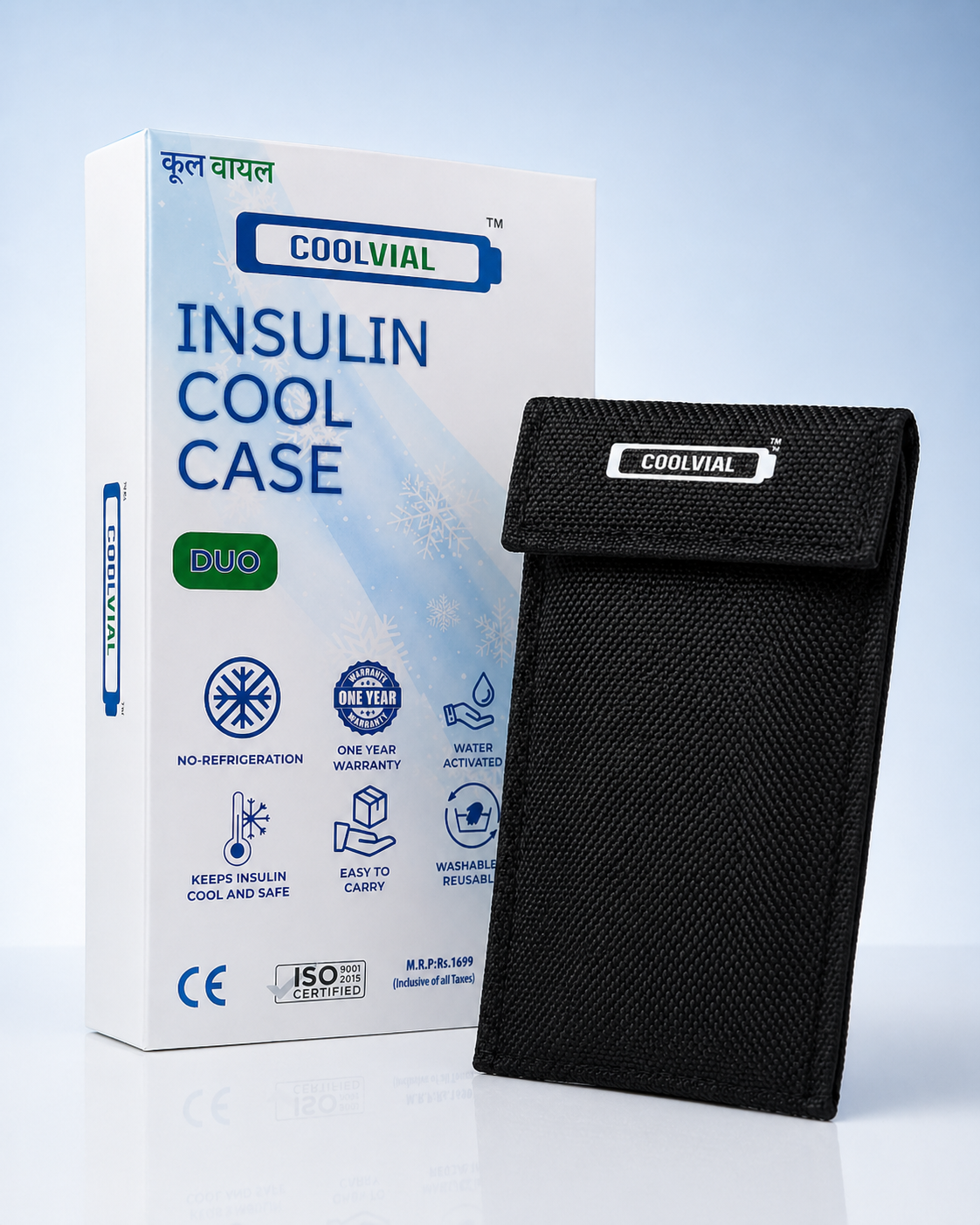
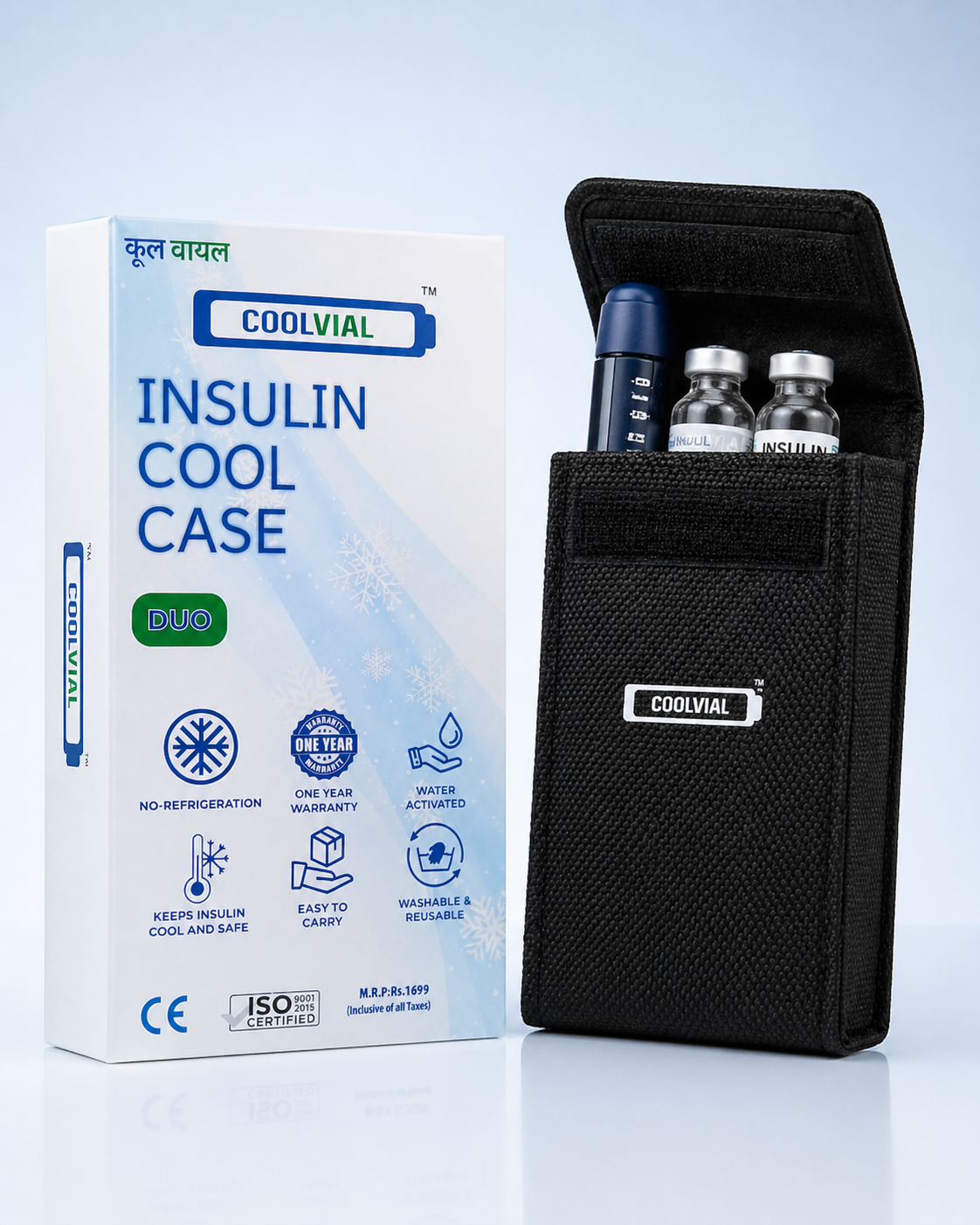
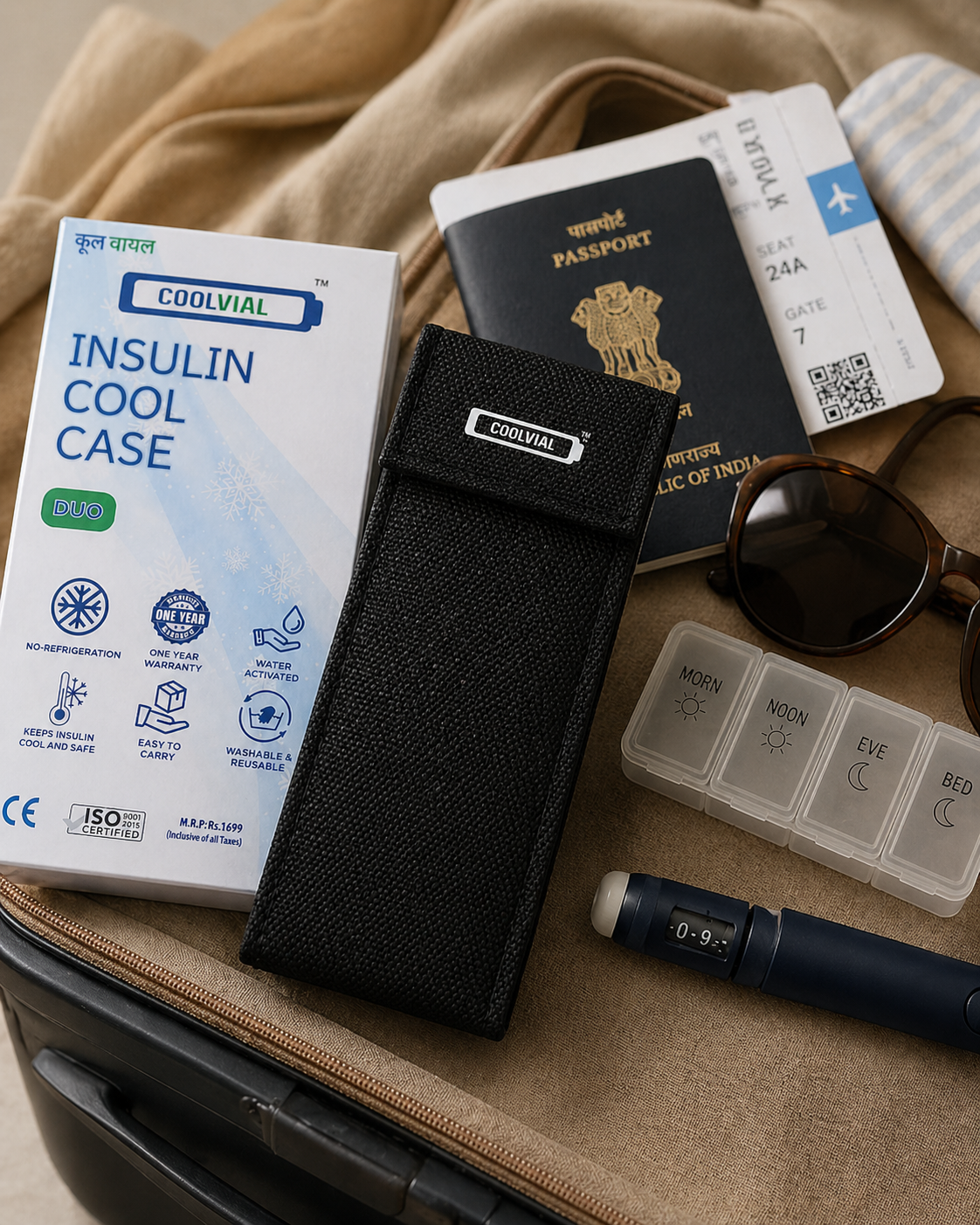
- Cooling Solutions: If you’re using a gel pack for cooling, be aware that CISF personnel might question it. Gel packs are generally allowed if frozen solid when you pass through security, but they might be subject to additional screening. An evaporative cooling case like the COOLVIAL insulin cool case is often preferred as it uses water activation, avoiding the “liquid” scrutiny associated with gel packs. Our COOLVIAL Duo, for instance, keeps insulin cool for 12-16 hours without electricity, making it ideal for flights and transit.
- Needles and Syringes: These are permitted in hand luggage when accompanied by insulin. It’s advisable to keep them in their original packaging to demonstrate they are medical supplies.
- Declaration: Be prepared to declare your insulin and medical supplies at the security checkpoint. Inform the CISF officer about your medication proactively.
Checklist for VNS Airport Security:
- Original prescription/doctor’s letter (English)
- Insulin pens/vials in original packaging
- Lancets, syringes, alcohol swabs
- Blood glucose meter and test strips
- COOLVIAL Duo or similar evaporative cooling case
- Snacks and glucose tablets for hypo emergencies
Post-Arrival Transport: Managing the Airport Taxi Queue
One specific challenge at Lal Bahadur Shastri Airport (VNS) is the pre-paid taxi stand. During peak hours, especially after incoming flights, queues can hit 45 minutes or more [Verify in 2026]. This waiting period can expose your insulin to the elements, particularly in Varanasi’s hot and humid climate.
If your insulin is in a standard bag, even for a short while, it can quickly exceed safe temperatures. This is where an effective cooling solution becomes indispensable. The COOLVIAL Duo is designed precisely for such scenarios, offering reliable cooling even during extended waits in the open. Its evaporative cooling technology doesn’t rely on refrigeration, making it perfect for unpredictable travel situations.
2. Train Travel from Varanasi Junction (BSB) & Banaras (BSBS)
Train journeys are an integral part of Indian travel, connecting Varanasi Junction (BSB/Cantt) and the newer Banaras (BSBS, formerly Manduadih) to every corner of the country. While trains offer a unique experience, managing insulin effectively requires debunking some common myths.
Insulin Storage on Indian Railways
Unlike air travel, there are no specific security checks for insulin on trains, but temperature control remains paramount. The ambient temperature inside a train compartment, especially during summer (April-June) when Varanasi can see temperatures soar above 40°C, can be detrimental to insulin. Even in AC coaches, the cooling might not be consistent, or you might find yourself in non-AC sections during transit.
- Personal Cooling Solutions: Your best bet is a personal, reliable cooling case. Evaporative coolers are superior to ice packs or gel packs for train travel because they don’t require re-freezing and offer extended cooling. The COOLVIAL Duo, holding 2 pens and 1 vial, provides 12-16 hours of cooling, perfect for most overnight or day journeys from Varanasi to destinations like Delhi, Kolkata, or Mumbai.
- Cooler Placement: Keep your insulin cool case with you, preferably in a spot away from direct sunlight or heat sources like windows. Avoid placing it near the floor or under seats where heat can accumulate.
- Carry Sufficient Supplies: Always carry more insulin and supplies than you anticipate needing. Delays are common on Indian Railways, and access to pharmacies might be limited during transit. You can find comprehensive information on daily management in our “Daily Commute With Insulin in Varanasi — Tips for Metro, Bus & Auto” article, which also touches upon local transport challenges.
Pantry Car Realities & TTE Misconceptions
5 Essential Tips for Travelling From Varanasi With Insulin — Airport, Station & Taxi Guide
48+ hours at 2-8°C. No electricity. CE certified. Free delivery across India.
Order on WhatsApp — ₹1,099🛒 Buy Now — ₹1,099There are persistent myths about insulin storage on Indian trains that need to be addressed directly.
Myth-Busting for Train Travel:
- Pantry Car Fridges are Unreliable: While some long-distance trains have pantry cars, their refrigerators are primarily for food and beverages. They are often overcrowded, their temperatures are inconsistent, and they are not maintained to pharmaceutical standards. NEVER rely on a pantry car fridge to store your life-saving insulin. The risk of temperature excursion, cross-contamination, or even theft is too high.
- NEVER Hand Pens to TTE: Train Ticket Examiners (TTEs) are not equipped or authorized to store medication. Handing your insulin pens to a TTE, even with the best intentions, is a grave mistake. They do not have access to proper storage facilities, and you risk losing your medication. Your insulin is your personal responsibility.
The only truly safe way to transport insulin on a train journey originating from Varanasi is in your own dedicated, reliable cooling solution. Brands like FRIO offer similar evaporative cooling technology, though often at a higher price point (around Rs 1,900) compared to our COOLVIAL Duo (Rs 1,099 with code COOLHEAL). Another option, Outer Woods OW-12, might be slightly cheaper (around Rs 999), but it’s important to compare their cooling duration and capacity to ensure it meets your specific travel needs for 2 pens + 1 vial over 12-16 hours.
3. Essential Tips for Road Trips from Varanasi
Varanasi serves as a gateway to several popular road trip destinations, including the Buddhist pilgrimage site of Sarnath (just 10 km away), the historical city of Allahabad/Prayagraj (about 120 km), and the spiritual town of Vindhyachal (around 70 km). While flexible, road trips pose distinct challenges for insulin storage due to variable vehicle conditions and frequent stops.
Keeping Insulin Cool in Taxis and Private Cars
The interior of a car, especially when parked in the sun, can quickly become an oven. Temperatures can soar to 50-60°C within minutes, far exceeding insulin’s safe storage limits.
- Car AC Reliability: When booking a taxi or using your private vehicle, ensure the air conditioning (AC) is fully functional. Even with the AC on, placing insulin in the glove compartment or on the dashboard is risky as these areas can still get very hot.
- Insulated Cooler Bags: An evaporative cooling case like the COOLVIAL Duo is your best friend for road trips. It doesn’t need external power and provides consistent cooling. If you stop for a break, always take your insulin with you. Never leave it unattended in a parked car, even for a few minutes.
- Parking Smart: Whenever possible, park in shaded areas. If no shade is available, open windows slightly (if safe) to allow some heat to escape, but always take your insulin with you.
Road Trip Insulin Safety Checklist:
- COOLVIAL Duo: Always carry your insulin in a reliable evaporative cooler.
- AC Check: Confirm car AC is working well before starting the journey.
- No Direct Sunlight: Keep the cooler away from direct sun exposure inside the car.
- Never Leave in Car: Take insulin with you during all stops, even short ones.
- Extra Supplies: Pack extra insulin, syringes, and test strips for unexpected delays.
- Emergency Contact: Have details of local pharmacies (e.g., Apollo Pharmacy in Sigra, MedPlus in Lanka) and hospitals (e.g., BHU Sir Sunderlal Hospital (IMS BHU), Apex Hospital) along your route. You can find more details in our “Complete Diabetes Care Guide for Varanasi Residents — 2026 Edition” for local resources.
Dhaba Stops & Fridge Access
Indian road trips are incomplete without stopping at dhabas for delicious meals. While dhabas are welcoming, their fridges are typically for food and beverages and are not suitable for insulin storage.
- Avoid Dhaba Fridges: Just like pantry car fridges, dhaba refrigerators are not temperature-controlled for pharmaceuticals. Do not ask dhaba owners to store your insulin in their fridge.
- Self-Sufficient Cooling: Rely entirely on your personal cooling solution. Re-activate your COOLVIAL Duo with water at a dhaba if its cooling duration is nearing its end. A quick dip in water is all it needs to reactivate its evaporative cooling properties.
4. App-Based Cabs & Bike Taxis in Varanasi: Insulin Safety
App-based services like Ola and Uber are widely available in Varanasi, making local travel convenient, especially in central areas like Sigra and Cantonment. Rapido bike-taxis are also popular for navigating congested lanes around Kashi Vishwanath Temple or Lanka. However, these modes of transport come with their own set of insulin safety considerations.
- Ola/Uber AC Refusal: A common complaint in many Indian cities, including Varanasi, is app-cab drivers refusing to turn on the AC to save fuel. This can quickly turn the car interior into a hotbox. Always confirm with the driver that the AC will be on before starting the ride, or consider cancelling if they refuse. Your insulin’s safety depends on it.
- Rapido Bike-Taxi Exposure: While quick, bike-taxis offer no protection from the elements. Your insulin will be exposed to direct sunlight, heat, and dust. This mode of transport is generally not recommended for carrying insulin unless it’s a very short distance and your insulin is securely stored in a high-quality, evaporative cooling case like the COOLVIAL Duo, protected from direct sun within another bag.
- Cooler Bag Security: Regardless of the mode, always keep your insulin cooling case close to you. Do not put it in the boot of a taxi unless it’s a very short ride and the boot is not exposed to direct heat.
5. International Travel from Lal Bahadur Shastri Airport (VNS)
For those undertaking international journeys from Lal Bahadur Shastri Airport (VNS), perhaps connecting through a larger hub, additional considerations arise concerning customs, time zones, and dosing adjustments.
Customs, Time Zones & Dosing Adjustments
- Customs Declaration: When entering a foreign country, you might need to declare your medical supplies to customs officials. Always have your doctor’s letter translated into the official language of your destination country, if possible.
- Time Zone Changes: Significant time zone shifts can disrupt your regular insulin dosing schedule.
- Consult Your Doctor: Before travelling internationally, consult your endocrinologist or diabetologist at hospitals like BHU Sir Sunderlal Hospital (IMS BHU) or Heritage Hospital (Lanka). They can provide a personalized plan for adjusting your basal and bolus insulin doses.
- Gradual Adjustment: Often, doctors recommend gradually adjusting your dose a few days before travel or making smaller adjustments upon arrival, depending on the direction and number of time zones crossed.
- Extra Monitoring: Monitor your blood glucose levels more frequently during and after travel to catch any fluctuations early.
- Jet Lag and Meals: Jet lag can affect your appetite and sleep patterns, which in turn impacts blood sugar. Try to align your meal times and insulin doses with the local time as quickly as possible.
- Power Adapters: If you use an insulin pump or continuous glucose monitor (CGM) that requires charging, remember to pack appropriate power adapters and converters for your destination country.
For international trips, the 12-16 hour cooling duration of the COOLVIAL Duo is a significant advantage, ensuring your insulin remains viable even during long flights and extended airport transits.
6. Local Support: Pharmacies & Hospitals in Varanasi
Even with the best preparation, unforeseen circumstances can arise. Knowing where to access medical support and replenish supplies in Varanasi is crucial.
Hospitals and Emergency Care:
- BHU Sir Sunderlal Hospital (IMS BHU), Lanka: A large, reputable university hospital offering comprehensive medical services, including endocrinology.
- Apex Hospital, Sigra: A multi-speciality hospital centrally located, often recommended for emergency care.
- Heritage Hospital, Lanka: Another significant hospital in the Lanka area, known for good facilities.
Pharmacies for Insulin & Supplies:
- Apollo Pharmacy: Several branches across Varanasi, including in Sigra and Cantonment, generally well-stocked.
- MedPlus: Another chain pharmacy with a presence in neighborhoods like Lanka, offering a wide range of medications.
- 1mg Pharmacy: Online ordering with home delivery, useful for non-urgent supplies.
- Generic Aadhaar: Focuses on affordable generic medicines, worth checking for cost-effective options.
- Hindustan Pharmacy: Local pharmacies across various neighborhoods.
Always carry a copy of your prescription, as some pharmacies may require it for insulin purchases. It’s also wise to call ahead to confirm stock availability, especially for specific insulin brands.
How We Researched This
This article is based on a comprehensive review of insulin storage guidelines from the Research Society for the Study of Diabetes in India (RSSDI) (Source: RSSDI Publications), data on diabetes prevalence from the ICMR-INDIAB study, local Varanasi hospital directories, and information gathered from the Apollo Pharmacy network and other local pharmacies regarding insulin availability and storage practices. We also incorporated insights from common queries received from diabetics in Varanasi regarding travel challenges.
FAQ Section
Q: Can I put my insulin in checked luggage when travelling from Varanasi? A: No, you should never put insulin in checked luggage. Cargo holds experience extreme temperature fluctuations that can damage insulin, and there’s also a risk of luggage being lost, leaving you without your essential medication.
Q: Do I need a doctor’s letter to carry insulin at Lal Bahadur Shastri Airport (VNS)? A: Yes, it is highly recommended to carry a doctor’s letter or prescription. This letter should state your diagnosis, insulin type, and dosage, helping you explain your medication to CISF security personnel and avoid delays.
Q: Are pantry car fridges on Indian trains safe for insulin storage? A: Pantry car fridges are not reliable for insulin storage. Their temperatures are inconsistent, they are not maintained to pharmaceutical standards, and there’s a risk of contamination or loss. Always use a personal evaporative cooling case.
Q: How can I keep my insulin cool during a road trip from Varanasi in a hot car? A: Use a dedicated evaporative cooling case like the COOLVIAL Duo. Never leave insulin in a parked car, even for a short time, as interior temperatures can quickly exceed safe limits. Keep it with you and away from direct sunlight.
Q: What should I do if my app-cab driver in Varanasi refuses to turn on the AC? A: Politely but firmly request the driver to turn on the AC for your medical supplies. If they refuse, consider cancelling the ride and booking another. Your insulin’s integrity depends on maintaining a safe temperature.
Q: How does a COOLVIAL Duo compare to other cooling cases like FRIO or Outer Woods? A: The COOLVIAL Duo offers 12-16 hours of evaporative cooling for 2 pens + 1 vial, is CE certified, ISO 9001:2015, and priced at Rs 1,099 with code COOLHEAL. FRIO cases use similar technology but are often more expensive (~Rs 1,900), while Outer Woods OW-12 might be cheaper (~Rs 999) but you should verify its capacity and cooling duration for your specific needs.
Q: Where can I find emergency insulin supplies in Varanasi? A: For emergency insulin supplies, you can visit major pharmacy chains like Apollo Pharmacy or MedPlus in areas like Sigra or Lanka. For medical emergencies, BHU Sir Sunderlal Hospital (IMS BHU) and Apex Hospital are reliable options.
Conclusion
Travelling from Varanasi with insulin requires a proactive and informed approach, given the city’s unique climate and diverse transport options. From navigating the security protocols at Lal Bahadur Shastri Airport (VNS) to understanding the realities of train travel from Varanasi Junction, and managing the heat during road trips to Sarnath or Prayagraj, every step demands attention to your insulin’s safe storage. Relying on personal, reliable cooling solutions like the COOLVIAL Duo, which offers 12-16 hours of cooling without electricity, is not just a convenience but a necessity for maintaining your insulin’s efficacy. Remember to always carry a doctor’s letter, avoid placing insulin in checked luggage or unreliable fridges, and be prepared for local transport challenges like uncooperative taxi ACs. By following these 5 essential tips, you can ensure your life-saving medication remains potent, allowing you to focus on your journey with peace of mind.
Order your COOLVIAL Duo today at just Rs 1,099 with code COOLHEAL at coolvial.com or simply WhatsApp us at wa.me/918766952300. Your health, your journey, our priority.
Medical Disclaimer: This article is for general information and educational purposes only. It is not a substitute for professional medical advice, diagnosis, or treatment. Always consult your endocrinologist or diabetologist before changing insulin storage or dosing practices, especially when planning travel.
5 Essential Tips for Travelling From Varanasi With Insulin — Airport, Station & Taxi Guide
COOLVIAL keeps insulin safe in India's heat. 48+ hours, no electricity needed.