
Reviewed by the COOLVIAL Editorial Team — specialists in insulin storage for Indian climate conditions.
Bhopal, the serene “City of Lakes” nestled in Madhya Pradesh, offers a unique blend of natural beauty and urban bustle. For the thousands of residents living with diabetes, navigating the daily commute with insulin can be a significant challenge, especially given the city’s moderate climate which can swing from a pleasant 11°C in winters to scorching 40°C or even higher in peak summers. Protecting your insulin from these temperature extremes during your daily commute with insulin is not just advisable, it’s absolutely essential for its efficacy.
Based on analysis of insulin storage queries from Bhopal diabetics, we understand the specific concerns that arise when you travel by metro (under construction), BCLL buses, autos, or even e-rickshaws. With an estimated 77 million people living with diabetes in India (Source: IDF), ensuring proper insulin storage during transit is a widespread concern. This comprehensive guide provides 10 essential, practical tips tailored for Bhopal residents to ensure your insulin remains safe and effective, no matter how you commute across the City of Lakes. From Arera Colony to New Market, or MP Nagar to Old Bhopal, we’ve got you covered.
Table of Contents
- Bhopal’s Climate & Your Insulin: Understanding the Challenge
- The Urban Gauntlet: How Long Does Insulin Survive?
- Navigating Bhopal’s Public Transport with Insulin
- Bhopal Metro: What to Expect
- BCLL City Buses: Battling the Heat
- Autorickshaws & E-rickshaws: Shade vs. Sun
- Ride-Sharing Cabs: Managing AC Denial
- Two-Wheeler Dickey: A Strict No-Go Zone
- Your Daily Insulin Cooling Strategy: The COOLVIAL Duo Advantage
- Insulin Storage at Work & Study Places in Bhopal
- Essential Daily Commute Checklist for Insulin Users in Bhopal
- Bhopal’s Healthcare & Pharmacy Network for Insulin Users
- Frequently Asked Questions (FAQ)
- Conclusion: Commute Smart, Live Well
- Methodology Note
- Medical Disclaimer
Bhopal’s Climate & Your Insulin: Understanding the Challenge
Bhopal’s climate, while often described as moderate, presents significant challenges for insulin storage, particularly during the summer months (March to June) and the monsoon season (July to September). Insulin is a delicate protein that begins to degrade rapidly when exposed to temperatures above 25°C. Unopened insulin should be stored in a refrigerator between 2°C and 8°C. Once opened, it can typically be kept at room temperature (below 25°C to 30°C) for up to 28 days, depending on the manufacturer.
Here’s a breakdown of Bhopal’s climatic impact on insulin:
- Peak Summer (March-June): Ambient temperatures frequently soar to 38-42°C, and can even touch 45°C on extreme days. Inside non-AC vehicles or bags exposed to direct sunlight, temperatures can easily exceed 50°C.
- Monsoon (July-September): While temperatures might drop slightly, high humidity (often above 80%) can also negatively impact insulin. Combined with warm temperatures, this creates a challenging environment. Bhopal experiences an average annual rainfall of about 1200mm, leading to increased humidity.
- Winter (October-February): Temperatures are generally mild, ranging from 11-25°C, making insulin storage less problematic, but vigilance is still necessary as indoor temperatures can fluctuate.
These conditions make carrying insulin a daily concern for students commuting to institutions like AIIMS Bhopal or Chirayu Medical College, and professionals travelling to corporate parks near DB City Mall or Van Vihar.
The Urban Gauntlet: How Long Does Insulin Survive?
Imagine a 60-90 minute commute from Arera Colony to New Market or from Old Bhopal to MP Nagar. How long can your insulin pen or vial safely survive in a regular bag without temperature control?
- Office Bag/School Bag/College Backpack: In peak Bhopal summer, if the ambient temperature is 40°C, the interior of a non-insulated bag can reach 45-50°C within 15-30 minutes, especially if exposed to direct sunlight. At these temperatures, insulin can begin to lose potency significantly within hours, not days. A pen carried in a standard bag for a 60-minute commute is at high risk. For Type 1 children carrying insulin to school, this is particularly critical.
- Laptop Sleeve: While offering some minimal insulation, a laptop sleeve is primarily designed to protect electronics, not maintain temperature. It will quickly absorb ambient heat, becoming a poor choice for insulin storage.
- Brief Exposure: Even short exposures to high temperatures (e.g., 15-20 minutes at 38°C+) can start the degradation process. Repeated exposure over several days will cumulatively reduce insulin’s effectiveness, potentially leading to unpredictable blood sugar levels.
Key considerations for insulin survival:
- Manufacturer Guidelines: Always check the specific temperature guidelines provided by your insulin manufacturer. Most recommend storage below 25-30°C once opened.
- Visual Inspection: If your insulin changes in appearance (cloudy when it should be clear, clumps, discoloration), it’s likely compromised and should not be used.
- Feeling the Difference: If your blood sugar levels are unexpectedly high despite correct dosing, compromised insulin could be a reason.
This highlights the critical need for a reliable cooling solution during your daily travels.
Navigating Bhopal’s Public Transport with Insulin
Bhopal’s public transport system, though expanding, presents unique challenges for maintaining insulin temperature.
Bhopal Metro: What to Expect
The Bhopal Metro is currently under construction, with initial phases expected to be operational by [Verify in 2026, e.g., late 2026 or 2027]. When it becomes fully operational, the metro is expected to offer air-conditioned coaches, which will be a significant relief.
- AC Reliability: While metro coaches are designed to be climate-controlled, AC systems can occasionally malfunction or be set to higher temperatures to conserve energy.
- Seat-Side Temperatures: Even in an AC coach, areas near windows or doors can experience slightly higher temperatures due to external heat transfer and frequent opening.
- Crowd Factor: During peak hours, body heat from a large number of passengers can also subtly raise the ambient temperature inside the coach.
Tip: Even with AC, it’s wise to keep your insulin in a personal cooling case, especially if your journey involves transfers or waiting on platforms.
BCLL City Buses: Battling the Heat
BCLL (Bhopal City Link Limited) buses are a lifeline for many, but the majority are non-AC.
- Interior Temperatures: During peak summer, the inside of a non-AC city bus can easily reach 45-50°C, significantly higher than the ambient 38-42°C outside, due to trapped heat and lack of ventilation.
- Window Sun: Seats near windows are particularly vulnerable to direct sunlight, which can rapidly heat up any bag placed there.
- Commute Duration: A typical bus commute from, say, Old Bhopal’s Chowk to MP Nagar can take 45-60 minutes, providing ample time for insulin to degrade.
Strategy: Always carry your insulin in a dedicated cooling solution. Try to sit away from direct sunlight and near windows that can be opened for better airflow, if available.
Autorickshaws & E-rickshaws: Shade vs. Sun
Autorickshaws and e-rickshaws offer flexibility but come with their own set of temperature challenges.
- Sun Exposure: In an open-air auto, your bag can be directly exposed to the sun for the entire duration of the ride. Even partial shade from the auto’s roof might not be enough to prevent significant heat build-up.
- Trapped Heat: While open, the fabric roof and seats can absorb and radiate heat, creating a warm microclimate within the auto.
- E-rickshaws: Often slower and more exposed, e-rickshaws can prolong exposure to ambient heat.
Recommendation: Always keep your insulin cooling case in your lap or under your seat, covered by your body or another item, to shield it from direct sun. Never place it in the small storage space behind the driver, which can get extremely hot.
Ride-Sharing Cabs: Managing AC Denial
Ride-sharing services like Ola and Uber are popular in Bhopal. While most cars have AC, there’s a common “AC denial culture” in India where drivers might be reluctant to turn on the AC to save fuel, especially for shorter rides.
- Polite Request: Always politely request the driver to turn on the AC. Most will comply.
- Window Management: If AC is not on, open windows for cross-ventilation, but be mindful of direct sunlight entering the car.
- Pre-Cooling: If possible, book a cab a few minutes in advance, allowing the driver to pre-cool the car before you get in.
Two-Wheeler Dickey: A Strict No-Go Zone
For many Bhopal residents, two-wheelers are the primary mode of transport. However, the dickey (under-seat storage) of a scooter or motorcycle is one of the worst places to store insulin.
- Extreme Heat: The engine generates significant heat, which radiates directly into the dickey. Temperatures inside a two-wheeler dickey can easily hit 55-60°C, even on a moderately warm day, and sustain these temperatures for the duration of your ride.
- Rapid Degradation: At these temperatures, insulin can be rendered ineffective within minutes.
- No Insulation: The plastic or metal of the dickey offers no thermal insulation; in fact, it acts as a heat trap.
NEVER, EVER store your insulin in a two-wheeler dickey. If you must carry insulin on a two-wheeler, use a high-quality personal cooling case carried in a backpack on your back, where your body can provide some insulation and airflow.
Your Daily Insulin Cooling Strategy: The COOLVIAL Duo Advantage
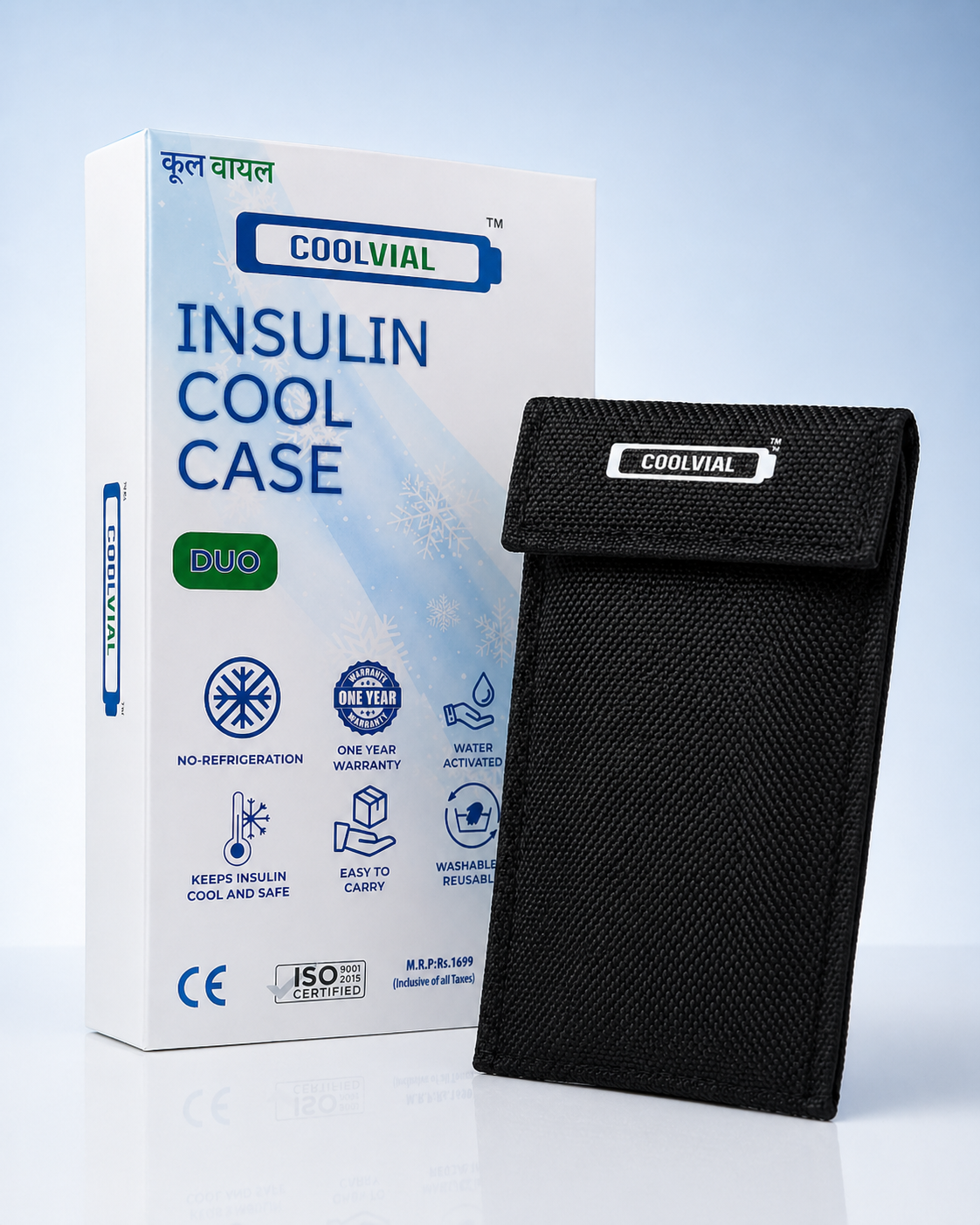
Considering Bhopal’s unique climate and commuting challenges, a reliable insulin cooling solution is non-negotiable. This is where the COOLVIAL Duo steps in as your ideal companion for a safe daily commute with insulin.
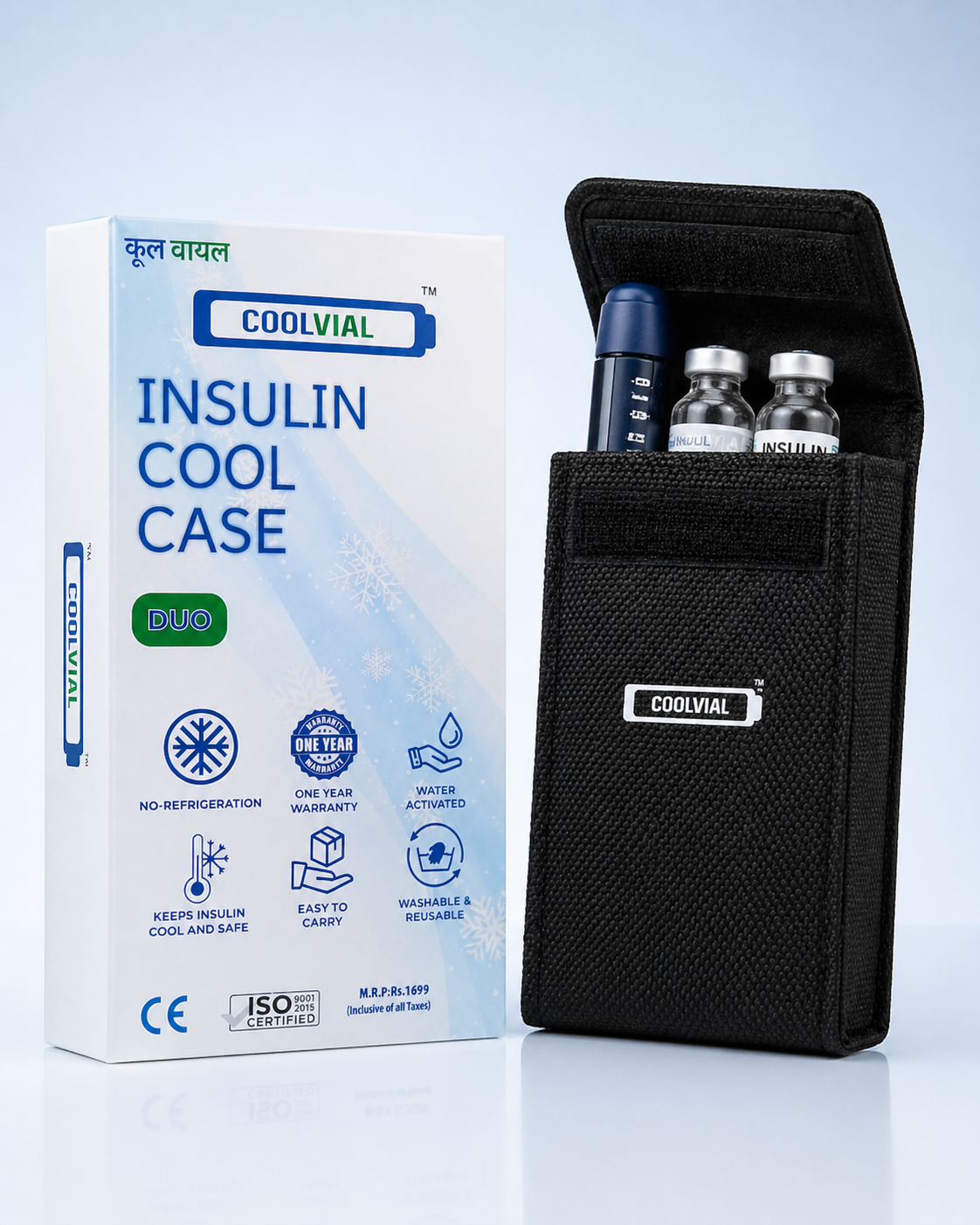
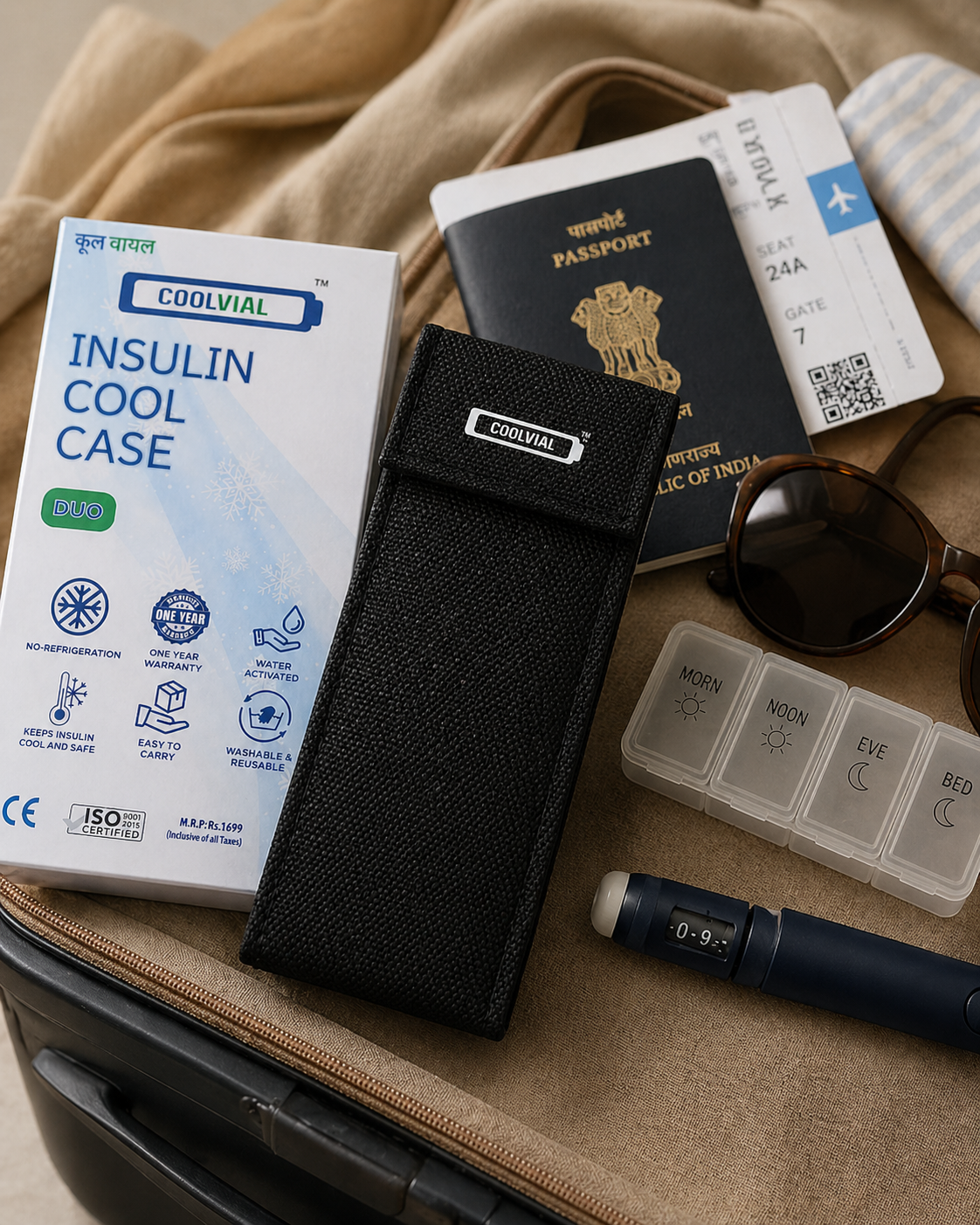
The COOLVIAL Duo is a water-activated evaporative cooling case designed specifically for the Indian climate. Unlike ice packs that require refrigeration and can over-cool insulin, or bulky insulated bags, the COOLVIAL Duo uses a simple evaporation process to keep your insulin cool and safe within the recommended temperature range (2-8°C or below 25°C, depending on type) for 12-16 hours, without any electricity.
Why COOLVIAL Duo is perfect for Bhopal:
- Reliable Cooling: It maintains a safe temperature even when ambient temperatures in Bhopal soar to 40°C+.
- Capacity: The COOLVIAL Duo holds 2 insulin pens and 1 insulin vial, or 3-4 pens, making it suitable for most daily needs. This is crucial for those needing multiple types of insulin or carrying a spare.
- Ease of Use: Simply activate by soaking in water for 60 seconds. No batteries, no ice packs, no refrigeration needed. This is incredibly practical for those long commutes or days spent away from home.
- Durability & Safety: It’s CE certified and ISO 9001:2015 compliant, ensuring quality and safety. Plus, it comes with a 1-year warranty.
- Made in India: Designed and manufactured locally, understanding the specific needs and conditions of Indian users.
- Cost-Effective: Priced at Rs 1,099 with code COOLHEAL (MRP Rs 1,699), it offers superior value compared to alternatives. For instance, a comparable product like FRIO typically costs around Rs 1,900. While Outer Woods OW-12 is around Rs 999, the COOLVIAL Duo offers a robust capacity for 2 pens + 1 vial, balancing price and utility perfectly.
Your Morning Prep Ritual with COOLVIAL Duo:
- Hydrate: Before leaving home, activate your COOLVIAL Duo by submerging the inner pouch in cold water for 60 seconds.
- Load: Gently squeeze out excess water, then place your insulin pens and vials into the activated pouch.
- Pack: Insert the pouch into the outer cover. Your COOLVIAL Duo is now ready to keep your insulin cool for 12-16 hours.
- Carry: Place it in your office bag, school backpack, or college bag. The compact design ensures it fits easily without adding bulk.
For more detailed information on insulin storage, visit our insulin storage tips page.
Insulin Storage at Work & Study Places in Bhopal
10 Essential Tips for a Safe Daily Commute With Insulin in Bhopal — Metro, Bus & Auto
COOLVIAL keeps insulin safe in India's heat. 48+ hours, no electricity needed.
Your commute is just one part of the day. Proper insulin storage continues to be important once you reach your destination, whether it’s a corporate office in a Van Vihar business park or a classroom at AIIMS Bhopal.
At the Office (e.g., Van Vihar, DB City Mall corporate parks):
- Desk Drawer/Cabinet: A closed drawer or cabinet can offer some protection from direct sunlight and minor temperature fluctuations, but it won’t keep insulin cool on its own.
- Office Refrigerator: If available and accessible, an office refrigerator is ideal for long-term storage of unopened insulin. Ensure it’s clearly labeled to avoid accidental disposal.
- Lunch Storage: Many offices have common areas for lunch storage. Your COOLVIAL Duo can be kept here, ensuring your insulin remains cool even if the common area isn’t perfectly climate-controlled.
- Avoid: Never leave insulin on your desk near a window, under direct AC vent (can overcool), or near heat-emitting electronics.
At School/College (e.g., AIIMS Bhopal, Chirayu Medical College):
- School Nurse/Medical Room: For younger children, coordinating with the school nurse or medical room staff to store insulin in a refrigerator is the safest option.
- Personal Locker: If available, a locker can protect your COOLVIAL Duo from direct sun and curious hands.
- Teacher/Professor Awareness: Inform your teachers or professors about your diabetes and the need to carry insulin. This can be particularly important for Type 1 children.
- Lunch Break Management: If you need to administer insulin during lunch, ensure your COOLVIAL Duo is easily accessible. Consider exploring Diabetic-Friendly Restaurants & Cafes in Bhopal — Where to Eat Safely if you dine out frequently.
Essential Daily Commute Checklist for Insulin Users in Bhopal
Being prepared is key to managing diabetes effectively, especially when you’re on the move in a city like Bhopal.
- Activated Cooling Case: Always ensure your COOLVIAL Duo (or similar cooling solution) is activated and ready before you leave home.
- Sufficient Insulin: Carry enough insulin for your daily doses, plus a little extra for emergencies or delays.
- Blood Glucose Meter & Strips: Regular monitoring is crucial, especially when your routine changes.
- Lancets & Alcohol Swabs: For hygienic testing.
- Hypoglycemia Treatment: Glucose tablets, juice box, or hard candies to treat low blood sugar episodes.
- Snacks: Healthy snacks to avoid sudden drops in blood sugar if meals are delayed.
- Medical ID: Wear a medical ID bracelet or carry a card stating you have diabetes, in case of an emergency.
- Emergency Contacts: Keep a list of emergency contacts, including your doctor, readily accessible.
- Hydration: Especially important in Bhopal’s heat. Carry a water bottle.
- Doctor’s Prescription/Letter: A copy of your prescription or a doctor’s letter can be helpful, especially if you face questions about carrying medical supplies. This is also vital for longer journeys, as detailed in Travelling From Bhopal With Insulin — Airport, Station & Taxi Tips.
Bhopal’s Healthcare & Pharmacy Network for Insulin Users
Bhopal has a robust network of hospitals and pharmacies that are crucial for diabetes management. Familiarize yourself with key locations along your commute.
Hospitals for Diabetes Care:
- AIIMS Bhopal (Saket Nagar): A premier institution offering comprehensive diabetes and endocrinology services.
- Bansal Hospital (Shahpura): Another well-regarded hospital with specialized departments.
- Chirayu Medical College & Hospital (Bairagarh): Provides medical services and has a teaching hospital.
Pharmacies for Insulin & Supplies:
- Apollo Pharmacy: Widely available across Bhopal, including branches in areas like MP Nagar.
- MedPlus: Another large chain with multiple outlets.
- 1mg (Online & Retail): Offers both online delivery and physical stores.
- Generic Aadhaar: Known for providing affordable generic medicines.
- Lifeline Pharmacy: Local pharmacies providing essential medicines.
Knowing the nearest pharmacy or hospital along your daily route (e.g., near New Market, Arera Colony, or Old Bhopal) can provide immense peace of mind in case you need to quickly replace insulin or seek medical assistance.
Frequently Asked Questions (FAQ)
Q: How can I tell if my insulin has gone bad from heat exposure during my daily commute with insulin? A: If your insulin has been exposed to excessive heat, it may appear cloudy, have clumps, or change color. If it’s supposed to be clear and it isn’t, or if you notice any unusual appearance, it has likely lost potency and should not be used.
Q: Is it safe to store insulin in a regular lunchbox with ice packs for my Bhopal commute? A: Storing insulin with regular ice packs in a lunchbox is generally not recommended as ice packs can inadvertently freeze the insulin, rendering it ineffective. Insulin should never be frozen. An evaporative cooling case like COOLVIAL Duo is a safer alternative that maintains a stable, safe temperature.
Q: Can I use a regular thermos flask to keep my insulin cool during my commute in Bhopal? A: A thermos flask is designed to maintain the temperature of its contents, whether hot or cold. While it might keep insulin cool for a short period, it lacks the precise temperature regulation needed for insulin and could lead to over-cooling or insufficient cooling. It is not as reliable as a dedicated insulin cooling case.
Q: What should I do if my insulin cooling case gets damaged or runs out of cooling capacity during my commute? A: If your cooling case is damaged or stops working, try to find the coolest possible place immediately. This could be an air-conditioned shop, office, or public transport. Minimize direct sun exposure and consider heading to the nearest pharmacy like Apollo Pharmacy or MedPlus to check for alternatives or temporary solutions.
Q: How often should I reactivate my COOLVIAL Duo for my daily commute in Bhopal? A: The COOLVIAL Duo typically keeps insulin cool for 12-16 hours on a single activation. For a daily commute, reactivating it every morning (or as needed based on your commute duration and local temperature) by soaking it in water for 60 seconds is sufficient to ensure continuous cooling.
Q: Is it safe to store my insulin pen in my pocket during a short walk in Bhopal? A: Carrying an insulin pen directly in your pocket, especially close to your body, can expose it to your body heat (around 37°C), which is above the recommended storage temperature for opened insulin (typically below 25-30°C). For even short walks in Bhopal’s heat, it’s safer to use a small cooling case or at least keep it in a bag, away from direct body heat.
Conclusion: Commute Smart, Live Well
Living with diabetes in Bhopal means embracing the city’s charm while being proactive about your health. Ensuring the safe storage of your insulin during your daily commute with insulin is a fundamental aspect of effective diabetes management. From the bustling streets of New Market to the serene banks of the Upper Lake, Bhopal’s varied environments demand a smart approach.
By understanding the impact of local temperatures on insulin, making informed choices about transport, and adopting a reliable cooling solution like the COOLVIAL Duo, you can confidently navigate your day. Remember, consistent insulin potency means better blood sugar control and a healthier life. Make the COOLVIAL Duo a part of your daily routine and experience the peace of mind that comes with knowing your insulin is always safe, effective, and ready when you need it.
Order COOLVIAL Duo at Rs 1,099 with code COOLHEAL at coolvial.com or via WhatsApp wa.me/918766952300
Methodology Note
How We Researched This — This article is based on a thorough review of RSSDI (Research Society for the Study of Diabetes in India) guidelines for insulin storage, ICMR-INDIAB (Indian Council of Medical Research - India Diabetes) study data for diabetes prevalence, local Bhopal hospital directories (AIIMS Bhopal, Bansal Hospital, Chirayu Medical College), and an understanding of pharmacy networks (Apollo Pharmacy, MedPlus). Local climate data and common commuting practices in Bhopal have been integrated to provide highly specific and actionable advice.
Medical Disclaimer
This article is for general information. Always consult your endocrinologist or diabetologist before changing insulin storage or dosing practices.
10 Essential Tips for a Safe Daily Commute With Insulin in Bhopal — Metro, Bus & Auto
Insulin at 2-8°C for 48+ hours. Trusted by 10,000+ Indian diabetics.