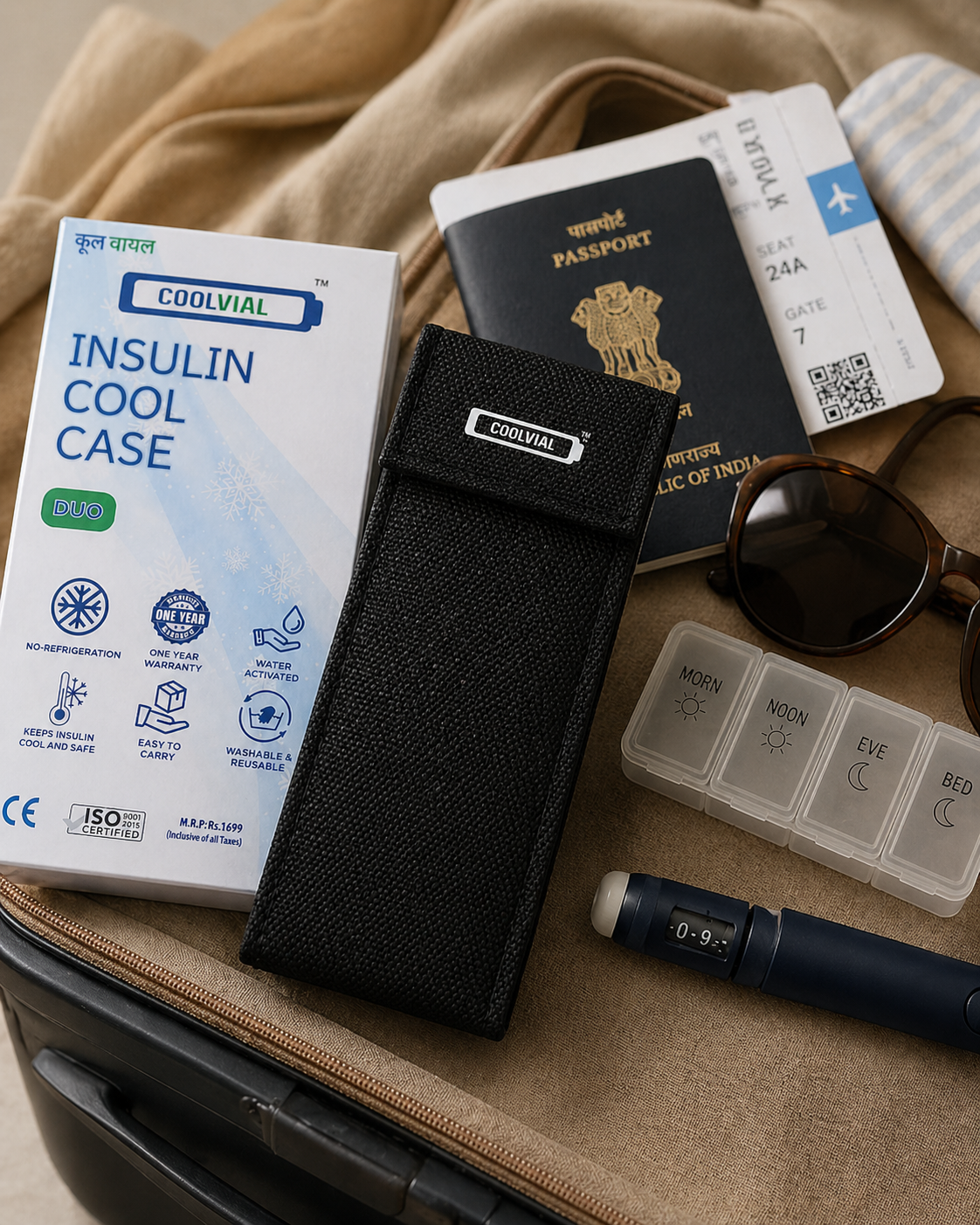
Reviewed by the COOLVIAL Editorial Team — specialists in insulin storage for Indian climate conditions.
For many residents of Ghaziabad, be it from the bustling lanes of Vaishali, the corporate hubs of Indirapuram, or the rapidly developing areas of Raj Nagar Extension, the daily commute is an inescapable part of life. Whether you’re catching the Delhi Metro’s Blue Line from Kaushambi, navigating the city’s roads in a non-AC auto-rickshaw, or taking a UP Roadways bus, managing your health needs on the go is crucial. For individuals living with diabetes, especially those dependent on insulin, ensuring the medication’s integrity during the daily commute with insulin presents a unique challenge, particularly given Ghaziabad’s extreme climate, which can swing from a chilly 5°C in winter to a scorching 46°C in summer. Based on analysis of insulin storage queries from Ghaziabad diabetics, a primary concern is the impact of these temperature fluctuations on insulin efficacy. Insulin, a life-saving medication, can degrade rapidly when exposed to temperatures above 25°C, rendering it less effective or even useless. This article provides 5 essential, practical tips to safeguard your insulin during your daily travels in Ghaziabad, ensuring your health remains a priority, no matter how long your journey from Raj Nagar Extension to Vaishali/Kaushambi, which can easily be 60-90 minutes.
Table of Contents
- The Ghaziabad Heat Challenge for Insulin: Why Temperature Matters
- Mastering Metro Travel with Insulin in Ghaziabad
- Navigating Ghaziabad’s Buses and Autos with Insulin
- Smart Insulin Storage at Work, School, and College in Ghaziabad
- Two-Wheeler Commutes and the “Dickey Danger”
- Your Smart Insulin Cooling Solution for Ghaziabad Commutes
- Essential Ghaziabad Insulin Commute Checklist
- Frequently Asked Questions (FAQs)
- Conclusion: Commute with Confidence, Live with Control
1. The Ghaziabad Heat Challenge for Insulin: Why Temperature Matters
Ghaziabad, part of the National Capital Region (NCR), experiences a climate characterized by extreme variations. Summers are intensely hot, with temperatures frequently soaring to 40-42°C, and sometimes even touching 46°C in peak season. The monsoon season (July-September) brings high humidity, which can also be detrimental to insulin. In contrast, winters can be quite cold, dropping to 5°C. Unopened insulin vials or pens should ideally be stored in a refrigerator between 2°C and 8°C. Once in use, most insulins can be kept at room temperature (below 25-30°C) for up to 28 days (Source: RSSDI Guidelines). However, “room temperature” in Ghaziabad is often far from this ideal range, especially inside vehicles during the summer months.
Consider a typical 60-90 minute commute from Raj Nagar Extension to an office in Vaishali or near Hindon Air Force Base. Your insulin, whether in an office bag, school bag, college backpack, or laptop sleeve, will be directly exposed to these harsh conditions. Inside a non-AC city bus or an auto-rickshaw during peak summer, temperatures can easily reach 38-42°C, sometimes even higher if the vehicle is stationary in traffic under direct sunlight. Even a seemingly innocuous car parked in the sun can see its interior temperature rocket to 60°C in less than an hour.
- Impact of High Temperatures on Insulin:
- Degradation: Heat breaks down insulin molecules, reducing its potency.
- Reduced Efficacy: Degraded insulin becomes less effective, leading to higher blood glucose levels.
- Increased Dosing: You might need higher doses to achieve the same effect, leading to potential complications.
- Spoilage Indicators: While not always visible, signs of spoilage can include discoloration, cloudiness (for clear insulins), or clumping.
It’s clear that relying on a regular bag for your daily commute with insulin in Ghaziabad’s climate is a significant risk. Protecting your insulin is not just about convenience; it’s about maintaining consistent blood sugar control and preventing serious health complications. According to the ICMR-INDIAB study, diabetes prevalence is a growing concern across India, underscoring the importance of proper medication management (Source: ICMR Guidelines on Diabetes).
2. Mastering Metro Travel with Insulin in Ghaziabad
The Delhi Metro, with its Blue and Red lines extending into Ghaziabad, and the newly introduced Rapid Rail to Meerut, offers a relatively cooler and often faster mode of transport. However, even in air-conditioned environments, vigilance is key.
-
Metro AC Reliability and Seat-Side Temperatures:
- While metro coaches are air-conditioned, the cooling can vary. During peak hours, with packed compartments, the ambient temperature can rise, especially near doors or windows.
- Direct sunlight filtering through windows can also warm up specific seats or areas. It’s not uncommon for AC systems to struggle during extreme summer afternoons, leading to temperatures inside coaches reaching 28-30°C on occasion, which is still at the upper limit for insulin.
-
Tips for Carrying Insulin on the Metro:
- Always use an insulated carrier: Even inside the metro, an insulin cool case provides an extra layer of protection against temperature fluctuations and accidental bumps.
- Avoid direct sunlight: If you’re near a window, try to position your bag or yourself to block direct sun exposure on your insulin.
- Keep it close: Don’t stash your insulin deep inside a large bag where it might get crushed or forgotten. Keep it accessible and in a personal bag that you hold.
- Consider Rapid Rail: The Rapid Rail (RRTS) offers a modern, air-conditioned experience. While generally well-cooled, the same precautions apply. Ensure your insulin is in a dedicated cooler.
Even with the relative comfort of the metro, proactively protecting your insulin is non-negotiable.
3. Navigating Ghaziabad’s Buses and Autos with Insulin
For many Ghaziabad residents, city buses and auto-rickshaws are the primary modes of local transport. These options, while economical, pose significant challenges for insulin storage due to their open nature and lack of consistent climate control.
-
Temperatures Inside Non-AC City Buses and Autos:
- During peak summer months (April-June), the interior of a non-AC city bus or an auto-rickshaw can be stifling. Temperatures often hover between 38-42°C, mirroring or even exceeding the outside ambient temperature.
- In an auto, while some shade is offered by the canopy, the open sides mean constant exposure to hot, humid air and direct sun during certain parts of the day. A 60-minute ride from Mohan Nagar to Indirapuram in such conditions can expose your insulin to damaging heat for an extended period.
- Even during monsoon, high humidity combined with temperatures around 30-35°C can create an environment that accelerates insulin degradation.
-
Ride-Sharing AC Denial Culture:
- When opting for ride-sharing cabs in Ghaziabad, it’s common to encounter drivers who are reluctant to turn on the AC to save fuel, especially for shorter distances or during off-peak hours. This “AC denial culture” means you could be in a closed, unventilated car where temperatures quickly climb to uncomfortable and unsafe levels for insulin. Always insist on AC if you’re carrying temperature-sensitive medication.
-
Practical Tips for Bus and Auto Commutes:
- Prioritize Cooling: For these commutes, a reliable insulin cool case is absolutely essential. A simple cloth bag or a regular pouch will not suffice.
- Strategic Seating: In a bus, try to sit away from direct sunlight from windows. In an auto, position yourself to maximize shade, perhaps on the side away from the sun’s direct path.
- Keep it off the floor: Avoid placing your bag containing insulin directly on the hot floor of a bus or auto, as heat can transfer from the engine or road.
- Shortest Route: Whenever possible, choose routes that minimize travel time, reducing the duration of exposure to adverse conditions.
5 Essential Tips for a Safe Daily Commute With Insulin in Ghaziabad — Metro, Bus & Auto
For more comprehensive advice on navigating public transport with diabetes, you might find our article on Travelling From Ghaziabad With Insulin — Airport, Station & Taxi Tips helpful.
4. Smart Insulin Storage at Work, School, and College in Ghaziabad
Your commute doesn’t end when you reach your destination. How you store your insulin throughout the day at your workplace, school, or college is equally important, especially if you need to take doses during the day or store it for your return journey.
-
Insulin in Office Bags, School Bags, College Backpacks, Laptop Sleeves:
- A regular office bag, school bag (for Type 1 children), college backpack, or laptop sleeve offers no thermal protection. Insulin placed directly in these can quickly reach ambient temperatures.
- If your bag sits in a warm office, a sun-exposed classroom, or a locker, the insulin is at risk. Even a cool office might have warmer spots near windows or equipment.
-
Lunch Storage at Offices:
- Corporate parks and offices, such as those near Shipra Mall or Hindon Air Force Base, usually have common refrigerators. This is an ideal place to store your insulin if you’re comfortable. However, ensure it’s clearly labeled and stored in a protective container to avoid mix-ups or accidental freezing (which is also harmful).
- If a fridge isn’t available or suitable, your personal insulin cool case should continue to protect your medication at your desk.
-
School/College Tips for Ghaziabad’s Major Institutions:
- Communicate with Authorities: Parents of Type 1 children attending schools in Ghaziabad (e.g., DPS Ghaziabad, Seth Anandram Jaipuria School) should speak with the school nurse or administration about safe insulin storage. A designated, temperature-controlled spot should be arranged.
- Educate Teachers/Peers: For college students attending institutions like IMS Ghaziabad or ABES Engineering College, it’s wise to inform close friends or faculty about your diabetes and insulin needs.
- Personal Cooler is Key: For school and college, a personal, portable insulin cooler is the most reliable solution. It allows children and young adults to maintain independence while ensuring their insulin is safe throughout the day.
Proper storage extends beyond just the travel time; it’s a 24/7 commitment to effective diabetes management.
5. Two-Wheeler Commutes and the “Dickey Danger”
Two-wheelers are a ubiquitous mode of transport in Ghaziabad. While offering flexibility, they pose one of the greatest risks for insulin storage due to enclosed compartments that can become extreme heat traps.
-
NEVER Parking Insulin in a Two-Wheeler Dickey (Storage Compartment):
- This is a critical warning: The dickey (under-seat storage) of a scooter or motorcycle is extremely dangerous for insulin. When a two-wheeler is parked under the sun, especially during Ghaziabad’s intense summers, the enclosed dickey can quickly heat up to alarming temperatures, often exceeding 60°C.
- This rapid heat build-up is like putting your insulin in an oven, guaranteeing degradation within minutes. Insulin exposed to such temperatures will become ineffective, potentially leading to a medical emergency.
- Similarly, fuel tanks and engine areas generate significant heat, making any proximity unsafe.
-
Alternatives for Two-Wheeler Users:
- Dedicated Insulin Cooler in a Backpack: If you must carry insulin on a two-wheeler, always use a high-quality evaporative cooler like the COOLVIAL Duo, placed inside a backpack. Ensure the backpack is worn on your back, not placed on the hot seat or near the engine.
- Front Basket/Bag: Some scooters have a front hook or a small basket. If using these, ensure your insulin cooler is secured and not exposed to direct sun or engine heat. Cover it with a light-colored cloth if possible.
- Short-Term Hand Carry: For very short distances where you can keep the cooler in your hand, this might be an option, but it’s less secure.
The mantra for two-wheeler commuters carrying insulin in Ghaziabad must be: Never in the dickey, always in a proper cooler, and always on your person or in a thermally protected backpack.
6. Your Smart Insulin Cooling Solution for Ghaziabad Commutes
Given the unique challenges of Ghaziabad’s climate and commute realities, a reliable, portable insulin cooling solution is not a luxury, but a necessity. This is where products like the COOLVIAL Duo step in, offering a practical and effective way to protect your life-saving medication.
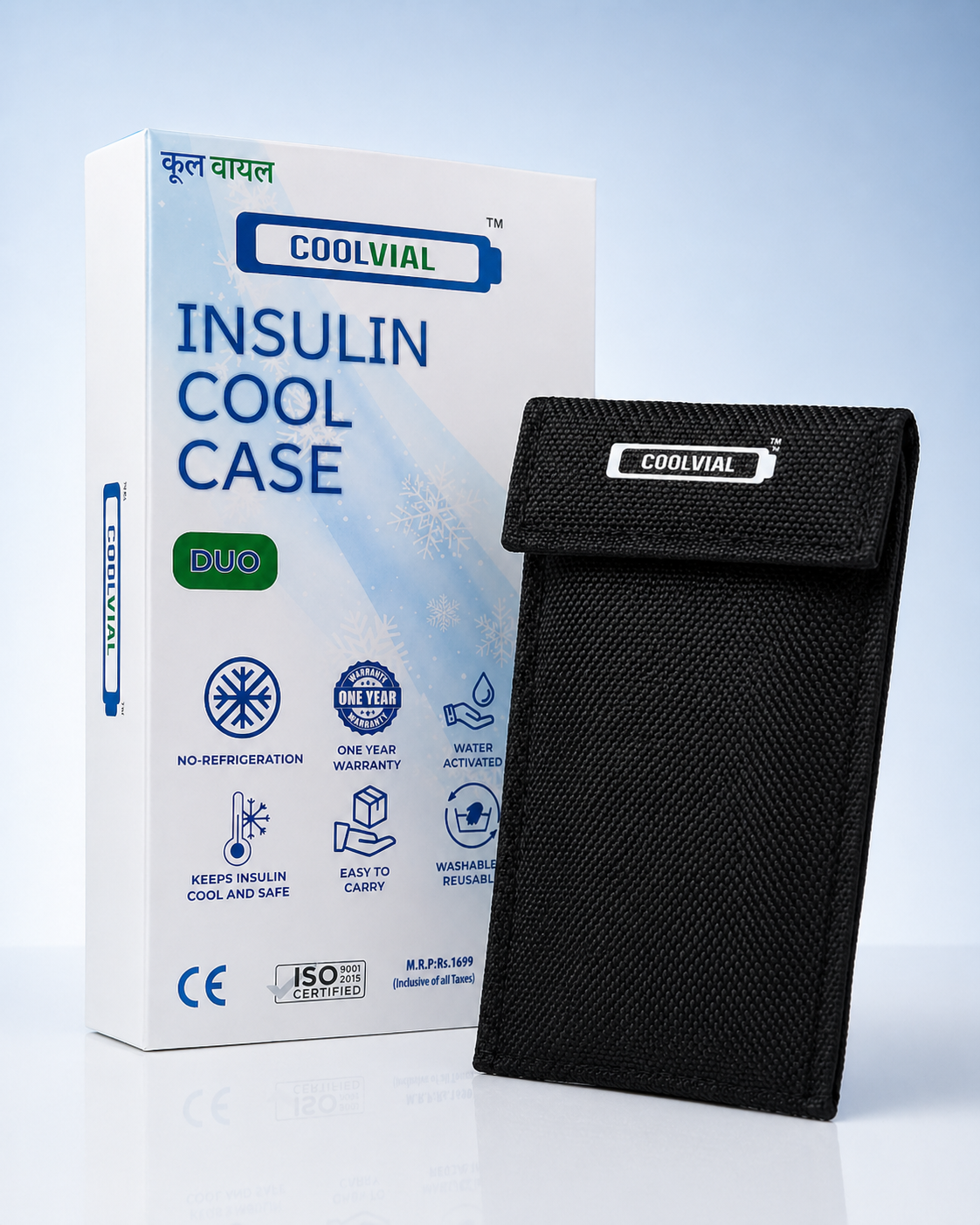
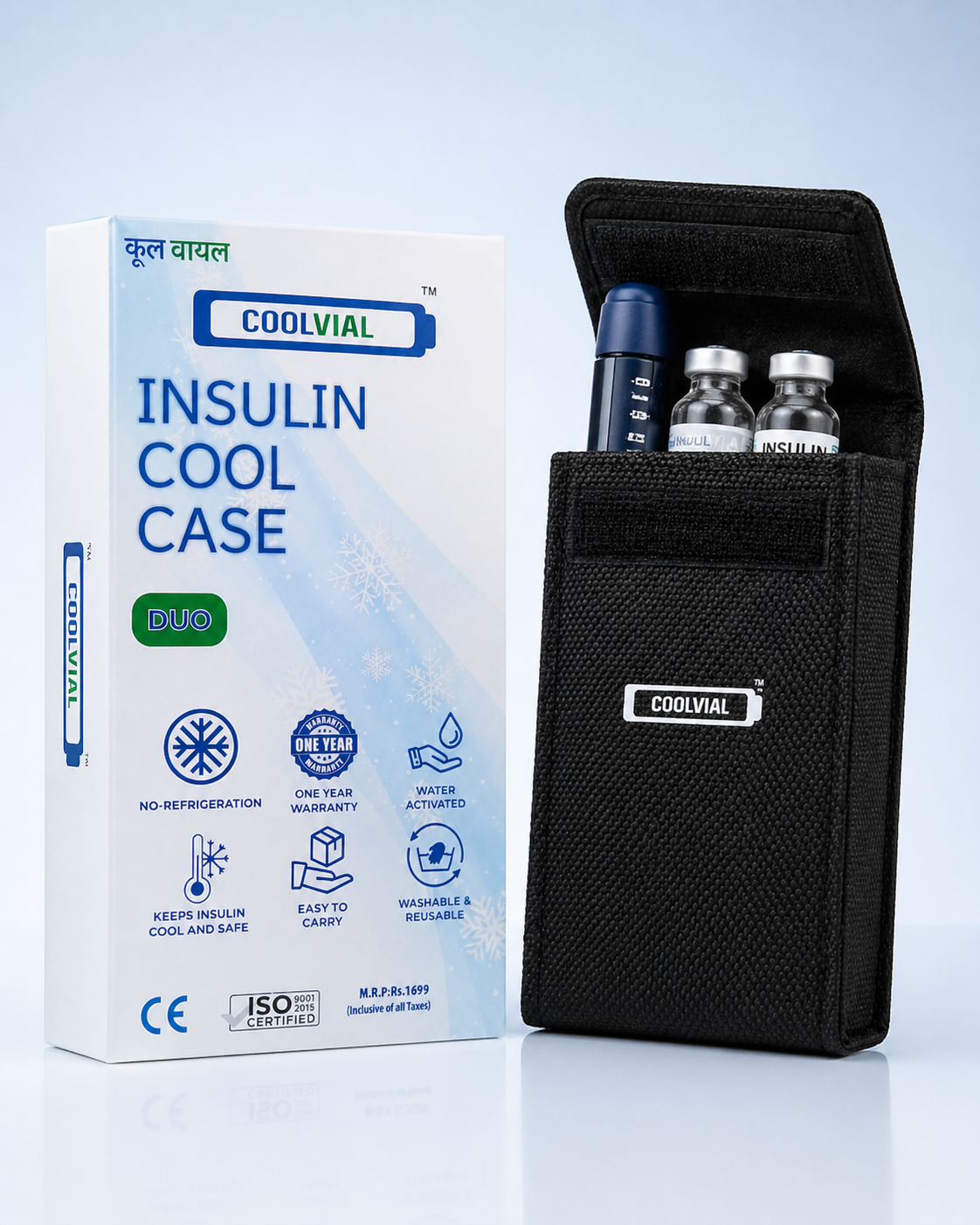
The COOLVIAL Duo is a water-activated evaporative insulin cooling case designed specifically for the Indian climate. It operates on a simple yet effective principle: when activated with water, the crystals inside the case absorb it and form a gel, which then slowly evaporates, drawing heat away and keeping the contents cool.
-
Key Features and Benefits of COOLVIAL Duo for Ghaziabad Diabetics:
- Sustained Cooling: Keeps insulin cool for 12-16 hours without electricity, batteries, or ice packs. This is crucial for long commutes and full workdays in Ghaziabad.
- Capacity: Holds 2 insulin pens and 1 insulin vial, making it versatile for most users.
- Portability: Compact and lightweight, it easily fits into a small bag, backpack, or even a laptop sleeve.
- Durability: Made in India, it’s designed to withstand daily use.
- Certifications: CE certified and ISO 9001:2015 compliant, ensuring quality and safety.
- Warranty: Comes with a 1-year warranty for peace of mind.
- Affordability: Priced at Rs 1,099 with code COOLHEAL (MRP Rs 1,699), it offers excellent value.
-
Comparison with Other Cooling Cases:
- Frio: While Frio is a well-known international brand (similar evaporative technology), it typically costs around Rs 1,900 or more in India. COOLVIAL Duo offers comparable cooling performance at a significantly more accessible price point.
- Outer Woods OW-12: Outer Woods (around Rs 999) is another Indian brand, often slightly cheaper. However, the COOLVIAL Duo specifically focuses on insulin pens and vials with its tailored design, ensuring optimal fit and protection for your crucial medication. Its robust construction and certifications also provide an added layer of trust.
-
Your Morning Prep Ritual with COOLVIAL Duo:
- Hydrate: In the morning, simply immerse the inner pouch of your COOLVIAL Duo in cold water for 5-10 minutes.
- Drain: Squeeze out any excess water gently. The crystals will have turned into a gel.
- Load: Place your insulin pens and vials into the activated pouch.
- Secure: Insert the pouch into the outer cover, zip it up, and you’re ready to go.
- Re-activate as needed: For extended use (beyond 12-16 hours) or in extremely dry climates, you can re-activate it with water.
5 Essential Tips for a Safe Daily Commute With Insulin in Ghaziabad — Metro, Bus & Auto
48+ hours at 2-8°C. No electricity. CE certified. Free delivery across India.
Order on WhatsApp — ₹1,099🛒 Buy Now — ₹1,099This simple ritual takes minutes but provides hours of worry-free protection, making your daily commute with insulin in Ghaziabad much safer. You can learn more about general insulin storage tips on our website.
7. Essential Ghaziabad Insulin Commute Checklist
To summarize and ensure you’re fully prepared for your daily journey through Ghaziabad, here’s a concise checklist:
-
Before You Leave:
- Check Insulin: Verify your insulin pens/vials are not expired, discolored, or cloudy.
- Activate Cooler: Always activate your COOLVIAL Duo (or similar evaporative cooler) with water before leaving home.
- Pack Smart: Place insulin securely in its cooler, then in your main bag (backpack, office bag).
- Carry Supplies: Ensure you have alcohol swabs, lancets, testing strips, and a fast-acting glucose source (e.g., glucose tablets, juice box) for emergencies.
- Medication List: Keep a small card with your medication details, doctor’s contact, and emergency contacts.
-
During Commute:
- Avoid Heat Traps: Never leave insulin in a two-wheeler dickey, a car’s dashboard, or direct sunlight.
- Metro/Bus/Auto: Keep your cooler bag close to you, away from direct sun or hot surfaces.
- Hydration: Stay hydrated yourself, especially in Ghaziabad’s heat.
-
At Destination (Work/School/College):
- Optimal Storage: If possible, store your cooler in a cool, shaded spot or a refrigerator (if safe and available).
- Accessibility: Keep your insulin accessible for your next dose.
- Inform Others: Let a trusted colleague, teacher, or friend know about your insulin and its storage.
For a broader understanding of diabetes management in your city, refer to our Complete Diabetes Care Guide for Ghaziabad Residents — 2026 Edition. And when you’re looking for safe dining options, check out our list of Diabetic-Friendly Restaurants & Cafes in Ghaziabad — Where to Eat Safely.
8. Frequently Asked Questions (FAQs)
Q: How long can insulin be safely kept out of the fridge in Ghaziabad’s summer? A: Once opened, most insulin pens or vials can be kept at room temperature, typically below 25-30°C, for up to 28 days. In Ghaziabad’s summer, where ambient temperatures often exceed this, a specialized insulin cool case is essential to maintain a safe temperature range.
Q: Is it safe to carry insulin in a regular backpack on the Delhi Metro in Ghaziabad? A: While the Delhi Metro is air-conditioned, temperature fluctuations and crowded conditions can still expose insulin to temperatures above 25°C. For optimal safety during your daily commute with insulin, it is always recommended to use an insulated insulin cool case, even within the metro.
Q: What is the biggest risk for insulin when commuting by auto-rickshaw in Ghaziabad? A: The biggest risk for insulin when commuting by auto-rickshaw in Ghaziabad is prolonged exposure to high ambient temperatures, which can reach 38-42°C inside the vehicle during summer. The open nature of autos, combined with direct sunlight, can quickly degrade insulin.
Q: Can I store my insulin in my office refrigerator at Max Hospital Vaishali? A: If your office at Max Hospital Vaishali has a staff refrigerator, it can be a good option for storing insulin, provided it is clearly labeled and kept in a protective container to prevent accidental freezing or mix-ups. Always confirm with your workplace guidelines first.
Q: Why is a two-wheeler dickey dangerous for insulin storage in Ghaziabad? A: A two-wheeler dickey is extremely dangerous for insulin storage because it is an enclosed space that can trap heat, reaching temperatures well over 60°C when parked in the sun, especially during Ghaziabad’s hot summers. Such extreme heat will rapidly degrade and render insulin ineffective.
Q: How does the COOLVIAL Duo help with the daily commute with insulin? A: The COOLVIAL Duo is a water-activated evaporative cooling case that keeps insulin cool for 12-16 hours without electricity, making it ideal for Ghaziabad’s varied commute. It protects insulin pens and vials from the extreme heat found in metros, buses, autos, and offices, ensuring medication efficacy.
Q: What is the typical safe temperature range for insulin during daily use? A: Once in use, insulin should ideally be stored at room temperature, which is generally considered to be between 15°C and 25°C, and certainly not exceeding 30°C. Exposing insulin to temperatures above this range for extended periods can reduce its potency.
9. Conclusion: Commute with Confidence, Live with Control
Navigating Ghaziabad’s dynamic urban landscape while managing diabetes requires foresight and the right tools. From the air-conditioned comfort of the Delhi Metro to the open-air challenges of an auto-rickshaw, your daily commute with insulin demands careful attention to temperature control. Ignoring the impact of Ghaziabad’s extreme climate on your insulin is not an option; it’s a direct threat to your health and well-being.
By understanding the risks and implementing smart storage solutions, particularly by adopting an evaporative cool case like the COOLVIAL Duo, you can ensure your insulin remains potent and effective. This small investment in a reliable cooler translates into consistent blood sugar management, reduced health complications, and the freedom to live your life without constant worry about your medication. Empower yourself with knowledge and the right products to make every journey in Ghaziabad a safe and healthy one.
Order your COOLVIAL Duo today at just Rs 1,099 with code COOLHEAL at coolvial.com or via WhatsApp wa.me/918766952300 and experience the peace of mind that comes with reliable insulin protection.
Medical Disclaimer:
This article is for general information purposes only and does not constitute medical advice. Always consult your endocrinologist or diabetologist before making any changes to your insulin storage or dosing practices.
How We Researched This:
This article is based on a comprehensive review of RSSDI guidelines for diabetes management in India, ICMR-INDIAB data on diabetes prevalence and care, local Ghaziabad hospital directories (including Yashoda Super Speciality (Kaushambi), Columbia Asia Ghaziabad, Max Hospital Vaishali), and insights from the Apollo Pharmacy network regarding medication storage concerns in the region. Local climate data and commute patterns were analyzed to provide Ghaziabad-specific recommendations.