
Reviewed by the COOLVIAL Editorial Team — specialists in insulin storage for Indian climate conditions.
Jodhpur, the ‘Sun City,’ is renowned for its vibrant culture and scorching summers, often seeing temperatures soar past 40°C. For the thousands of residents managing diabetes, a daily commute with insulin presents a unique set of challenges, especially when journeys from Paota to Sardarpura can last 60-90 minutes in non-AC transport. Ensuring insulin’s efficacy requires careful planning to prevent degradation, as even brief exposure to temperatures above 25°C can compromise its potency. This guide offers 7 essential tips for a safe daily commute with insulin in Jodhpur’s buses, autos, and e-rickshaws, based on analysis of insulin storage queries from Jodhpur diabetics.
According to data from the ICMR-INDIAB study, the prevalence of diabetes in Rajasthan, including cities like Jodhpur, highlights the critical need for effective insulin management solutions for a significant portion of the population (Source: ICMR-INDIAB, [Verify in 2026]). With Jodhpur’s peak summer temperatures often hitting 38-42°C inside non-AC public transport, understanding how to protect your life-saving medication is paramount.
Table of Contents
- Understanding Jodhpur’s Climate and Its Impact on Insulin
- The Realities of Jodhpur’s Public Transport for Insulin Storage
- Protecting Insulin in Your Daily Bag: School, College & Office
- The Morning Prep Ritual: Ensuring Insulin Stays Cool All Day
- Safe Insulin Storage at Workplaces and Educational Institutions
- The Smart Choice: Why a Dedicated Insulin Cooler is Essential
- Beyond the Commute: General Insulin Storage Best Practices
- Frequently Asked Questions (FAQ)
- Conclusion
- Medical Disclaimer
- How We Researched This
1. Understanding Jodhpur’s Climate and Its Impact on Insulin
Jodhpur, situated in the heart of the Thar desert, experiences extreme climatic conditions. Summers (May-June) are particularly harsh, with daytime temperatures routinely ranging from 38°C to 46°C. Even during cooler months, direct sunlight can rapidly heat surfaces and enclosed spaces. This intense heat directly threatens insulin, which is a protein and highly sensitive to temperature fluctuations.
Key Temperature Guidelines for Insulin:
- Unopened (refrigerated): Store between 2°C and 8°C.
- Opened (in-use): Store at room temperature (below 25°C) for up to 28 days (check specific brand guidelines).
- Critical Threshold: Temperatures above 25°C can begin to degrade insulin, reducing its potency. Exposure to 30°C for extended periods, or rapid spikes to 40°C+, can quickly render it ineffective.
- Freezing: Freezing insulin also damages it, making it unusable.
The dry, dusty climate of Jodhpur also means that dust storms are common, which can lead to rapid temperature changes and potentially compromise insulin if not stored in a sealed, protective environment. The average annual rainfall of around 360mm does little to mitigate the summer heat, making year-round vigilance crucial for those needing to transport insulin.
2. The Realities of Jodhpur’s Public Transport for Insulin Storage
Jodhpur does not currently have a metro system, so residents rely heavily on city buses, auto-rickshaws, e-rickshaws, and share autos for their daily commute. Each mode of transport presents unique challenges for maintaining insulin’s temperature.
Temperature Challenges in Jodhpur’s Public Transport:
| Transport Mode | Typical Interior Temperature (Peak Summer, 11 AM - 4 PM) | Insulin Risk Factors is a major concern.
- Auto-rickshaws: While autos offer some open-air exposure, they are still prone to significant heat build-up. The minimal shade provided by the canopy is often insufficient against the direct desert sun.
- E-rickshaws and Share Autos: Similar to autos, these can reach high internal temperatures, exacerbated by slower speeds in traffic and frequent stops. The “AC denial culture” in ride-sharing, where drivers might resist using AC to save fuel or due to vehicle limitations, is not typically an issue in Jodhpur’s non-AC public transport, but the lack of AC itself is the primary challenge.
A common commute from Paota to Sardarpura, covering approximately 8-10 km, can easily take 45-60 minutes during non-peak hours and up to 90 minutes during peak traffic. During this time, the insulin in a regular bag can be exposed to temperatures far exceeding 25°C, potentially reaching 35-40°C in an hour, especially if exposed to direct sunlight or ambient heat inside a crowded vehicle.
3. Protecting Insulin in Your Daily Bag: School, College & Office
Carrying insulin in a standard bag without proper protection is a major risk, especially in Jodhpur’s climate. An insulin pen or vial can quickly degrade.
Survival Rates in Different Bags (without cooling):
- Office Bag (Laptop Bag): Often made of synthetic materials, these can trap heat. Insulin might degrade within 1-2 hours on a hot day if the bag is in direct sun or in a hot vehicle.
- School Bag (Type 1 children): Children’s bags are rarely insulated. Insulin can become compromised within 30-60 minutes if left in the sun during assembly or inside a parked school bus.
- College Backpack: Similar to office bags, backpacks offer little thermal protection. Insulin could be at risk within 1-1.5 hours during a typical commute or between classes.
- Laptop Sleeve: Offers virtually no thermal protection. Insulin would be at extreme risk within 15-30 minutes in a hot environment.
The Danger of Two-Wheeler Dickey: NEVER store insulin in a two-wheeler’s dickey (under-seat storage). This enclosed space, especially when exposed to direct sunlight, can rapidly heat up to 60°C or even higher within minutes. Such extreme temperatures will instantly destroy insulin’s potency, making it completely ineffective. This is a critical safety warning for Jodhpur’s many two-wheeler commuters.
7 Essential Tips for Daily Commute With Insulin in Jodhpur's Buses & Autos
48+ hours at 2-8°C. No electricity. CE certified. Free delivery across India.
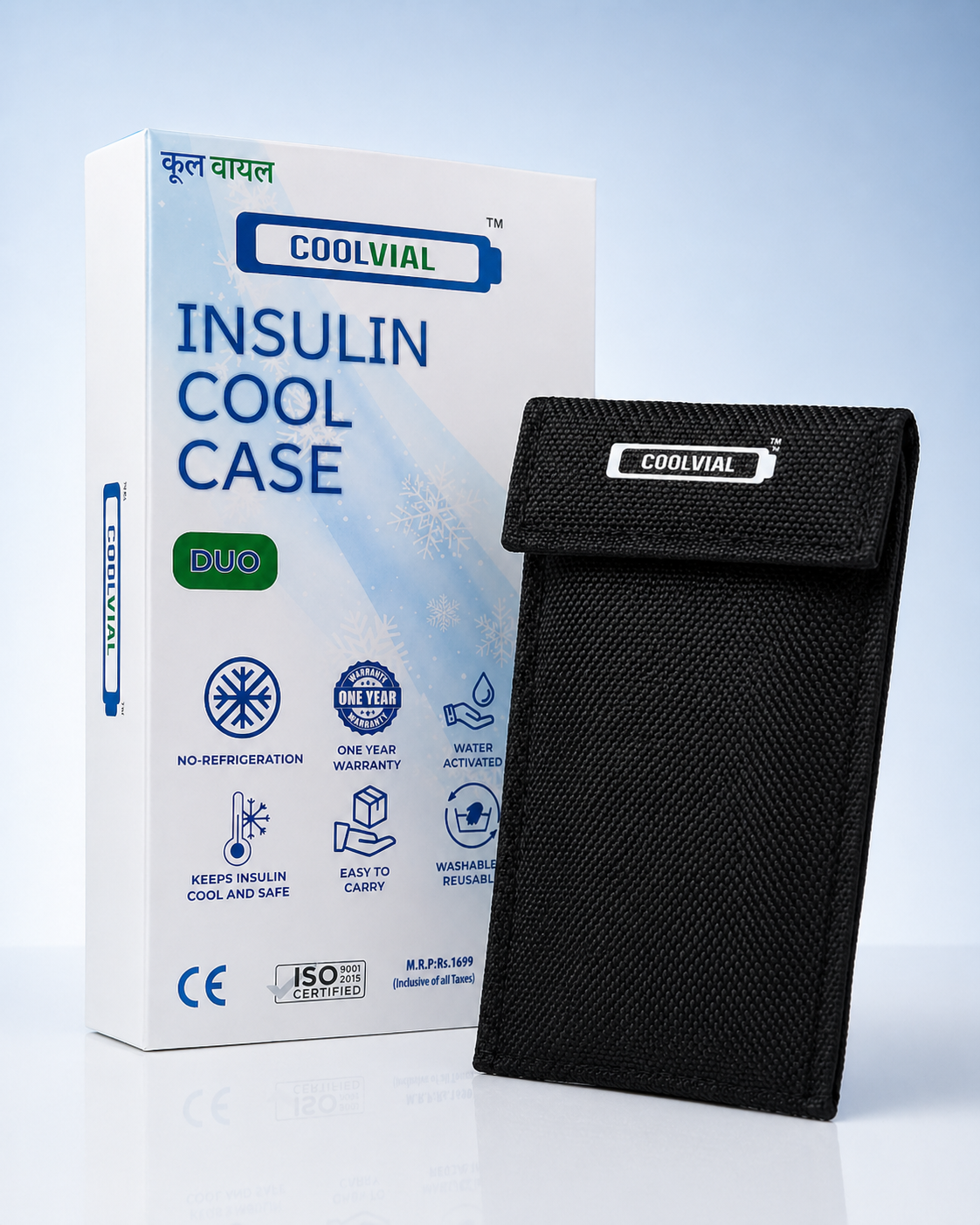
Order on WhatsApp — ₹1,099🛒 Buy Now — ₹1,099To combat these challenges, a reliable evaporative cooling case like the COOLVIAL insulin cool case is indispensable. It’s designed to keep insulin within safe temperatures (typically 18-26°C) for 12-16 hours, even when ambient temperatures reach 38-46°C, making it perfect for Jodhpur’s harsh conditions.
4. The Morning Prep Ritual: Ensuring Insulin Stays Cool All Day
A consistent morning routine is crucial for insulin users in Jodhpur. This ritual ensures your insulin is protected from the moment you leave home until you return.
Your Daily Insulin Cooling Checklist:
- Activate Your Cooling Case:
- For an evaporative cooler like the COOLVIAL Duo, submerge the inner pouch in cold water for the recommended time (e.g., 60-90 seconds).
- Gently squeeze out excess water until the pouch is damp but not dripping.
- Insert your insulin pens and/or vial into the activated pouch.
- Pack Strategically:
- Place your COOLVIAL Duo inside your main bag (school bag, office bag, college backpack).
- Position it away from the bag’s exterior walls if possible, to minimize direct heat transfer from the outside.
- Avoid placing it near electronic devices that generate heat, such as laptops or power banks.
- Dress for the Heat:
- Wear light-colored, breathable clothing to minimize your own body temperature, which can indirectly affect items in your bag if carried close.
- Carry a water bottle to stay hydrated, as dehydration can affect blood sugar levels.
- Plan Your Route:
- If possible, choose routes with more shade during walks to and from bus stops or auto stands.
- Consider slightly earlier commutes to avoid the absolute peak afternoon heat.
- Check Insulin Appearance:
- Before administration, always visually inspect your insulin. It should be clear and colorless (unless it’s NPH insulin, which is cloudy). Any changes in color, cloudiness (for clear insulin), or clumping indicate degradation, and the insulin should be discarded.
For children with Type 1 diabetes attending schools like DPS Jodhpur or St. Paul’s School, this morning ritual is especially vital. Parents should ensure their child knows how to properly activate and use their insulin cooler and where to store it safely during the school day.
5. Safe Insulin Storage at Workplaces and Educational Institutions
Even once you arrive at your destination, the battle against heat isn’t over. Proper storage at your workplace or educational institution is essential for maintaining insulin potency throughout the day.
Workplace Storage Tips (e.g., Umaid Bhawan Palace corporate parks, Clock Tower offices):
- Designated Cool Spot: If your office has an AC, find a spot away from direct vents (which can over-cool and freeze) and direct sunlight. A drawer or a locker might be suitable if the ambient office temperature is maintained below 25°C.
- Office Refrigerator (If Available): If your office has a common refrigerator, ensure your insulin is stored in a labeled, sealed container to prevent contamination and accidental disposal. Place it towards the front or middle, not against the back wall where it could freeze.
- Lunch Storage: When storing your lunch, keep your insulin separate from ice packs used for food, as direct contact with ice can freeze insulin. If using a personal cooler for lunch, ensure insulin is in its protective COOLVIAL case within the cooler, not in direct contact with ice.
- Communication: Inform a trusted colleague or your HR department about your medical needs and where your insulin is stored in case of an emergency.
Educational Institution Tips (e.g., AIIMS Jodhpur, JNVU, schools):
- School/College Nurse or Medical Room: For students, the best option is often to store insulin in the school nurse’s office or medical room, which typically has a refrigerator. Ensure proper labeling.
- Teacher/Professor Awareness: Inform your teachers or professors about your diabetes and insulin storage needs. This can be crucial for support during excursions or longer periods away from the designated storage.
- Personal Cooler Use: For college students at institutions like JNVU, carrying your COOLVIAL Duo is usually the most practical solution. It allows you to keep your insulin with you safely, even during long lecture blocks or library sessions.
- Avoid Lockers in Direct Sun: Many lockers in schools and colleges, especially in older buildings, can become extremely hot if exposed to direct sunlight. This is not a safe place for insulin.
The general principle is to avoid leaving insulin unattended in bags or lockers for extended periods, especially in non-AC environments, and to always rely on a dedicated cooling solution like COOLVIAL when a refrigerated option isn’t available.
6. The Smart Choice: Why a Dedicated Insulin Cooler is Essential
Given the extreme climate and daily commute realities of Jodhpur, relying on makeshift solutions for insulin storage is simply not safe. A dedicated insulin cooling case is an investment in your health and peace of mind.
Why COOLVIAL Duo is Your Ideal Companion for Daily Commute with Insulin in Jodhpur:
- Sustained Cooling Performance: The COOLVIAL Duo uses water-activated evaporative cooling technology to maintain insulin at safe temperatures (18-26°C) for 12-16 hours, even when the ambient temperature outside is as high as 46°C. This duration comfortably covers even the longest Jodhpur commutes and a full workday or school day.
- Capacity for Your Needs: The COOLVIAL Duo is specifically designed to hold 2 insulin pens and 1 vial, providing ample space for most daily insulin regimens. This means you don’t have to compromise on carrying your necessary medication.
- No Electricity Required: A significant advantage in a city where power outages can occur or when commuting in non-AC vehicles. Simply activate it with water – no batteries, no ice packs, no refrigeration needed. This makes it incredibly convenient for travel on buses, autos, or even during outdoor activities near landmarks like Mehrangarh Fort.
- Robust & Certified: COOLVIAL Duo is CE certified and ISO 9001:2015 certified, ensuring it meets international quality and safety standards. It comes with a 1-year warranty, offering peace of mind.
- Made in India, for India: Designed with the Indian climate in mind, COOLVIAL understands the unique challenges faced by diabetics here. This local understanding translates into a product perfectly suited for Jodhpur’s conditions.
- Cost-Effective Solution: Priced at Rs 1,099 with code COOLHEAL (MRP Rs 1,699), the COOLVIAL Duo offers superior performance and capacity compared to some alternatives. For instance, similar evaporative coolers like FRIO often retail around Rs 1,900, while basic soft cooler bags like Outer Woods OW-12 (around Rs 999) may offer less consistent cooling for insulin over extended periods in extreme heat. The COOLVIAL Duo strikes an excellent balance of affordability and reliability.
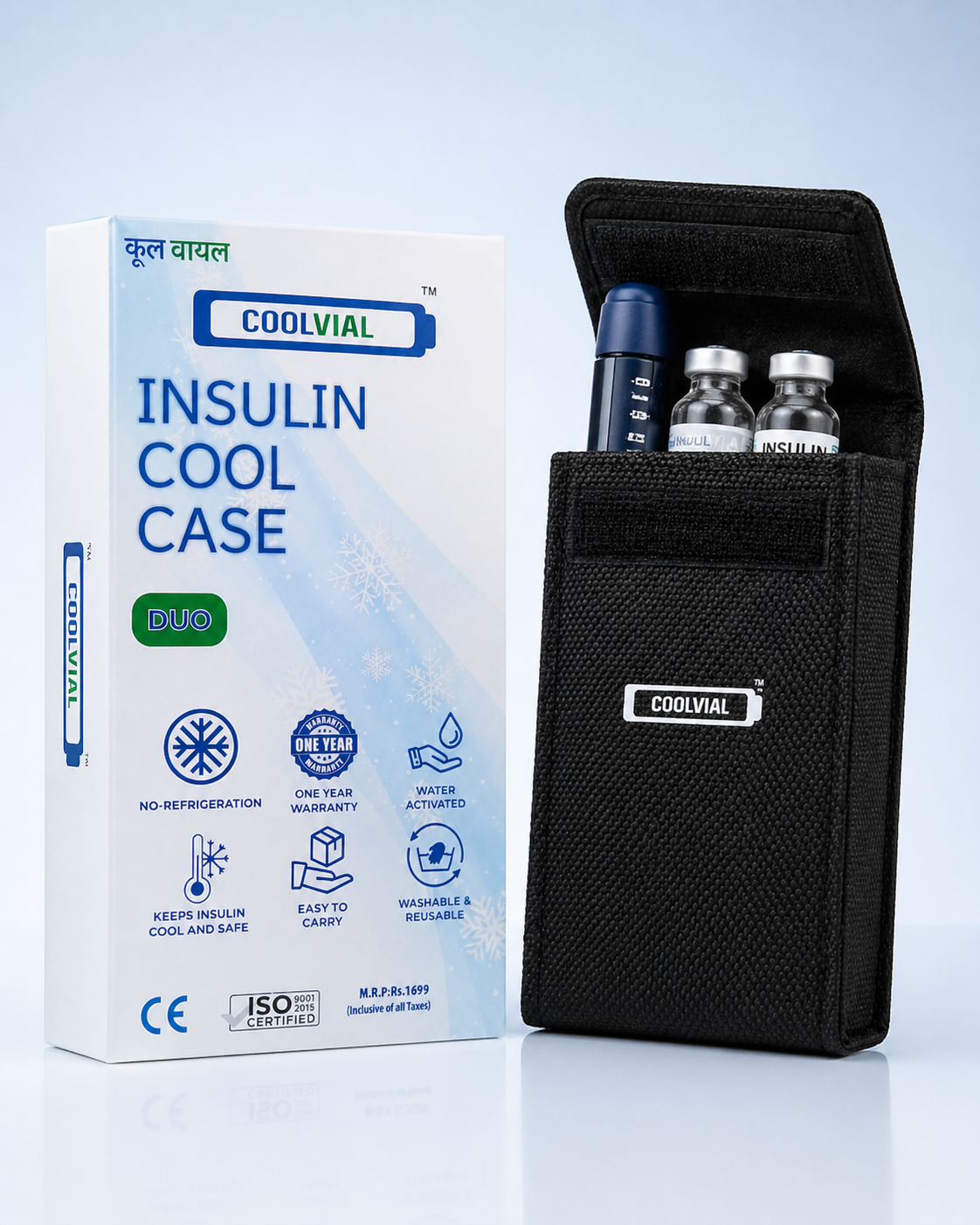
Choosing a reliable cooler like COOLVIAL Duo means you can confidently manage your daily commute with insulin across Jodhpur, whether you’re heading to AIIMS Jodhpur (Basni) for an appointment, to Mathuradas Mathur Hospital (MDM) for a check-up, or just running errands near Sojati Gate. It eliminates the constant worry about insulin spoilage due to heat.
7. Beyond the Commute: General Insulin Storage Best Practices
While this article focuses on the daily commute, it’s vital to maintain good insulin storage habits at all times.
General Insulin Storage Tips:
- Home Storage: Always store unopened insulin vials and pens in the refrigerator between 2°C and 8°C. Do not freeze.
- In-Use Insulin: Once opened, insulin can typically be stored at room temperature (below 25°C) for up to 28 days. However, in Jodhpur’s climate, “room temperature” often exceeds this limit. Always keep in-use insulin in your COOLVIAL Duo or a refrigerator, even at home, if your ambient room temperature is consistently above 25°C.
- Avoid Direct Sunlight: Never leave insulin in direct sunlight, even for a few minutes. This includes on a windowsill, in a car dashboard, or uncovered on a table.
- Temperature Monitoring: If you use a personal mini-fridge for insulin, consider a small thermometer to ensure it maintains the correct temperature range.
- Expiry Dates: Always check the expiry date on your insulin. Discard any expired insulin, regardless of how it was stored.
- Travel Preparedness: For longer journeys outside Jodhpur, whether by train or bus, always carry your insulin in a dedicated cooler. Read our guide on Travelling From Jodhpur With Insulin — Airport, Station & Taxi Tips for more detailed advice.
- Understanding Degradation: Remember that degraded insulin may not look visibly different until significant damage has occurred. Rely on proper storage, not just visual inspection. Insulin that has lost its potency can lead to dangerously high blood sugar levels, increasing the risk of complications. The World Health Organization (WHO) highlights that diabetes management relies heavily on access to quality insulin and proper storage (Source: WHO Fact Sheet on Diabetes).
For a comprehensive understanding of diabetes management in the local context, refer to our Complete Diabetes Care Guide for Jodhpur Residents — 2026 Edition. This resource, along with advice on Diabetic-Friendly Restaurants & Cafes in Jodhpur — Where to Eat Safely, can help you navigate life with diabetes in Jodhpur more effectively.
Frequently Asked Questions (FAQ)
Q: How long can insulin be exposed to Jodhpur’s summer heat before it’s ruined? A: Insulin can begin to degrade in as little as 30-60 minutes when exposed to temperatures above 25°C, and much faster in extreme Jodhpur summer temperatures of 38-46°C found in non-AC buses or autos.
Q: Can I store my insulin in a regular lunchbox with an ice pack for my commute? A: Storing insulin in a regular lunchbox with an ice pack is not recommended because direct contact with ice can freeze insulin, making it ineffective, and the temperature regulation is often inconsistent.
Q: Is it safe to leave my insulin pen in my office drawer in Jodhpur? A: Leaving an insulin pen in an office drawer in Jodhpur is only safe if the room’s ambient temperature is consistently below 25°C, otherwise, it risks degradation.
Q: What should I do if my insulin gets hot during my commute? A: If your insulin gets hot during your commute, visually inspect it for changes in color or consistency; if compromised, it’s best to discard it and use a new pen or vial, as its potency may be reduced.
Q: How does COOLVIAL Duo protect insulin in Jodhpur’s extreme heat? A: COOLVIAL Duo uses water-activated evaporative cooling, which keeps insulin at a safe 18-26°C for 12-16 hours, even when ambient temperatures reach 46°C, without requiring electricity.
Q: Can I carry insulin in my two-wheeler’s dickey in Jodhpur? A: You should never carry insulin in your two-wheeler’s dickey in Jodhpur, as temperatures in this enclosed space can quickly exceed 60°C, rendering the insulin completely ineffective.
Q: Where can I buy a COOLVIAL Duo in Jodhpur? A: COOLVIAL Duo can be ordered online through coolvial.com, offering a convenient way to purchase the product in Jodhpur.
Q: What are the signs that my insulin has degraded due to heat? A: Signs that insulin has degraded due to heat include changes in color (cloudy for clear insulin), the presence of particles or clumps, or a reduction in its effectiveness, leading to higher blood sugar levels.
Conclusion
Navigating daily life with diabetes in Jodhpur, especially during the extreme summers, demands proactive and informed choices about insulin storage. The challenges posed by high temperatures in public transport, combined with long commute times, necessitate a reliable solution. By adopting a disciplined morning ritual and investing in a high-quality evaporative cooling case like the COOLVIAL Duo, you can ensure your insulin remains potent and effective, safeguarding your health. Don’t let the Jodhpur heat compromise your diabetes management. Take control of your insulin’s safety, whether you’re commuting to work, attending classes, or simply going about your day.
Order COOLVIAL Duo at Rs 1,099 with code COOLHEAL at coolvial.com or via WhatsApp wa.me/918766952300 to secure your insulin’s efficacy today!
Medical Disclaimer
This article is for general information. Always consult your endocrinologist or diabetologist before changing insulin storage or dosing practices.
How We Researched This
This article was compiled using information from RSSDI guidelines for diabetes management in India, ICMR-INDIAB data on diabetes prevalence, local Jodhpur hospital directories including AIIMS Jodhpur, Goyal Hospital & Research Centre, and Mathuradas Mathur Hospital, and insights from the Apollo Pharmacy network regarding common patient queries on insulin storage. Local Jodhpur transportation realities and climate data were analyzed to provide specific, actionable advice.
7 Essential Tips for Daily Commute With Insulin in Jodhpur's Buses & Autos
COOLVIAL keeps insulin safe in India's heat. 48+ hours, no electricity needed.