
Reviewed by the COOLVIAL Editorial Team — specialists in insulin storage for Indian climate conditions.
Jodhpur, the enchanting Blue City of Rajasthan, is a vibrant hub with its majestic Mehrangarh Fort and the sprawling Umaid Bhawan Palace. For residents living with diabetes, however, the city’s unique charm also presents a challenge: its extreme Thar desert climate. With summer temperatures soaring between 25°C and 46°C, ensuring the safe storage of insulin is paramount, especially when travelling from Jodhpur with your essential medication. This comprehensive guide provides 10 essential tips to help you navigate airport security, train journeys, and taxi rides, ensuring your insulin remains effective and protected.
Based on analysis of insulin storage queries from Jodhpur diabetics, a common concern is maintaining the cold chain for insulin during travel. Unopened insulin must be stored in a refrigerator (2°C to 8°C), while opened insulin can be kept at room temperature (below 25°C to 30°C, depending on the specific type) for up to 28 days. Given Jodhpur’s high ambient temperatures, often exceeding 30°C for much of the year, relying on standard room temperature storage during travel is simply not an option. This article will equip you with the practical knowledge to protect your insulin, whether you’re heading to a nearby city or embarking on an international adventure.
Table of Contents
- Understanding Insulin Storage Requirements for Jodhpur’s Climate
- Navigating Jodhpur Airport (JDH) with Insulin
- Essential Tips for Train Travel from Jodhpur Junction (JU) & Bhagat Ki Kothi
- Safe Road Trips from Jodhpur to Jaisalmer, Bikaner & Mount Abu
- Managing Insulin During App-Cab Journeys in Jodhpur
- The Indispensable Role of an Evaporative Cooling Case
- Preparing for International Travel from Jodhpur Airport (JDH)
- Common Pitfalls to Avoid When Travelling with Insulin
- Key Documents and Preparations Before You Leave Jodhpur
- Emergency Contacts and Pharmacy Access While Travelling
1. Understanding Insulin Storage Requirements for Jodhpur’s Climate
Jodhpur’s climate, characterized by scorching summers and significant diurnal temperature variations, makes proper insulin storage a daily challenge. The dry heat, especially during May and June, can rapidly degrade insulin if not kept within its recommended temperature range. Insulin, a protein, is sensitive to extreme heat and freezing temperatures, both of which can reduce its potency and effectiveness.
- Temperature Sensitivity:
- Unopened Insulin: Must be refrigerated at 2°C to 8°C.
- Opened Insulin: Can typically be stored at room temperature (below 25°C to 30°C, check specific brand instructions) for up to 28 days. However, in Jodhpur, “room temperature” often exceeds this safe threshold.
- Impact of Heat: Exposure to temperatures above 30°C for extended periods can cause insulin to lose its effectiveness, leading to higher blood glucose levels and potentially serious health complications.
- Impact of Freezing: Insulin should never be frozen. If frozen, it loses its effectiveness and should be discarded. This is less of a concern in Jodhpur’s daytime, but cold desert nights can be surprisingly chilly.
To truly understand how Jodhpur’s climate impacts your daily diabetes management, refer to our comprehensive guide: Complete Diabetes Care Guide for Jodhpur Residents — 2026 Edition. It delves deeper into local challenges and solutions for living with diabetes in the Blue City.
2. Navigating Jodhpur Airport (JDH) with Insulin
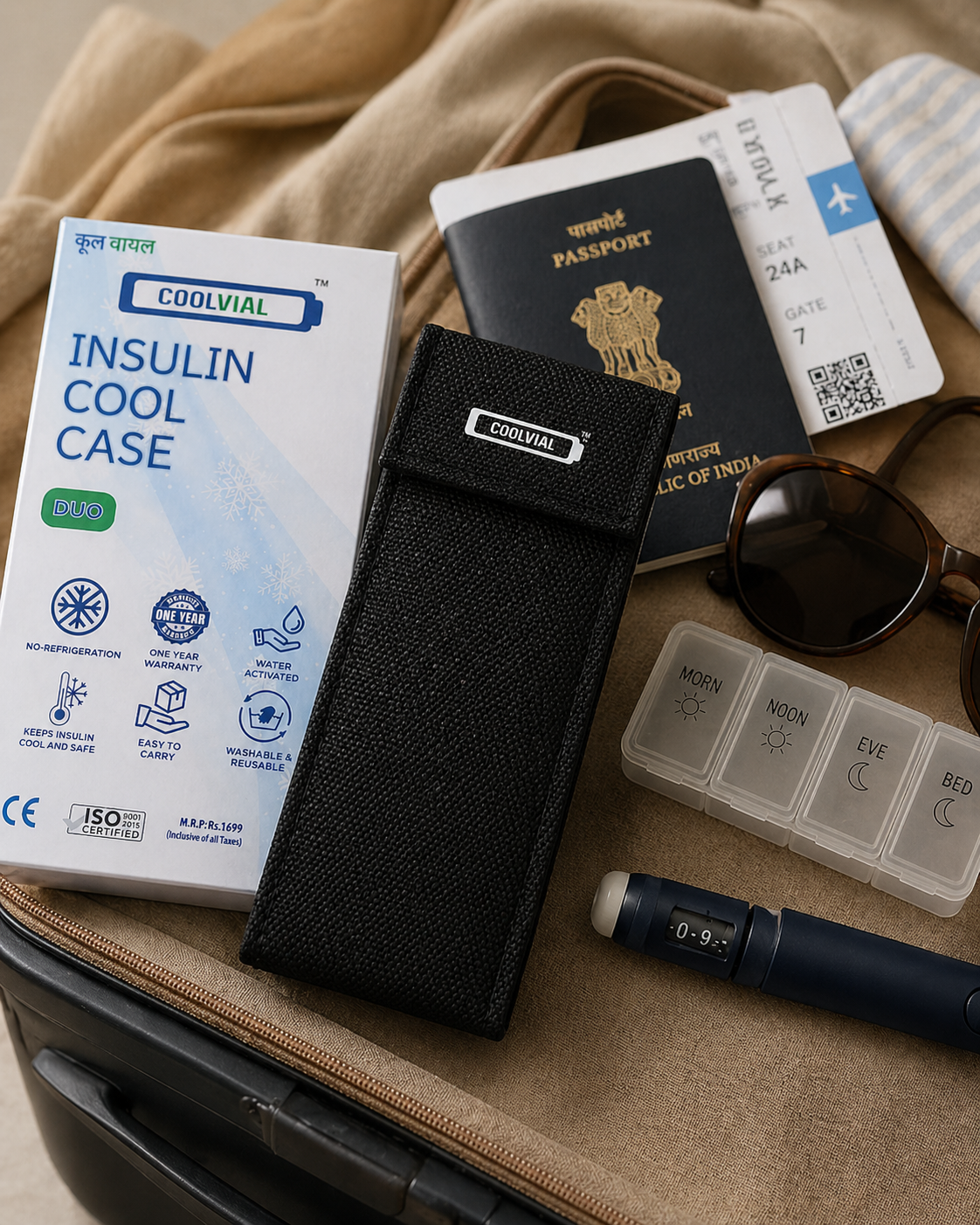
Jodhpur Airport (JDH) serves as a vital gateway for many, but for those with diabetes, security checks and flight delays can add an extra layer of stress. The key rule for travelling from Jodhpur with insulin by air is always carry your insulin in your hand-luggage. Never place it in checked baggage, as cargo holds are not temperature-controlled and can experience extreme fluctuations that will damage your medication.
- Security Screening at JDH:
- Insulin Pens/Vials: These are considered essential medical supplies and are generally permitted through security. Keep them in a clear, resealable bag for easy inspection.
- Doctor’s Letter: While not always demanded, a doctor’s letter or prescription explaining your need for insulin, syringes, or pens is highly recommended. It can expedite the screening process and prevent misunderstandings with CISF personnel. This letter should clearly state your condition (diabetes), the type of insulin you use, and the quantity.
- Gel-Packs/Ice Packs: If you are using non-evaporative cooling methods, be prepared for questions about gel-packs at CISF screening. They may need to be visually inspected and might be subject to liquid restrictions if they are not completely frozen. Evaporative cooling cases, like the COOLVIAL Duo, are often preferred as they use water and don’t contain gels that raise questions.
- Pre-paid Taxi Queues: A common reality at Jodhpur Airport (JDH) is the potentially long wait for pre-paid taxis, which can sometimes hit 45 minutes or more during peak hours or flight delays. This extended exposure to Jodhpur’s heat, even before you’ve left the airport premises, can be detrimental to insulin. Ensure your insulin is in an effective cooling case from the moment you exit the terminal.
- DGCA Guidelines: According to the Directorate General of Civil Aviation (DGCA) medical requirements, passengers carrying essential medications like insulin are generally accommodated, provided they have supporting documentation. (Source: DGCA Medical Requirements)
3. Essential Tips for Train Travel from Jodhpur Junction (JU) & Bhagat Ki Kothi
Train journeys, especially long-distance ones from Jodhpur Junction (JU) or Bhagat Ki Kothi, can be a comfortable way to travel across India. However, they come with their own set of challenges for insulin storage. The myth that pantry car fridges are reliable for personal medication storage needs to be busted: NEVER hand your insulin pens to a TTE (Travelling Ticket Examiner) or pantry car staff for refrigeration. Their fridges are often unreliable, used for food items, and there’s no guarantee of consistent temperature or secure storage.
- Personal Cooling Solutions are Key:
- Evaporative Cooling Cases: These are your best friend for train travel. Simply activate with water, and they keep your insulin cool for hours. The COOLVIAL Duo, for instance, can maintain insulin at safe temperatures for 12-16 hours without electricity, making it ideal for journeys across Rajasthan.
- Insulated Bags with Gel Packs: If using gel packs, ensure they are thoroughly frozen before departure. Pack them in a high-quality insulated bag. Be aware that their cooling duration is finite, and re-freezing options on trains are virtually non-existent.
- Choosing Your Seat:
- Avoid Direct Sunlight: Even inside a train compartment, direct sunlight streaming through windows can rapidly heat your insulin. Choose a seat away from direct sun exposure.
- AC Coaches: Opt for AC coaches (AC 1st Class, AC 2-tier, AC 3-tier) if possible, as the ambient temperature will be more stable and lower than in non-AC coaches.
- Packing for Convenience:
- Keep your insulin and related supplies (syringes, needles, alcohol swabs, glucose meter) easily accessible in a small bag within your main carry-on. You don’t want to be rummaging through luggage at a crowded platform at Jodhpur Junction.
4. Safe Road Trips from Jodhpur to Jaisalmer, Bikaner & Mount Abu
Embarking on a road trip from Jodhpur to destinations like the Golden City of Jaisalmer, the Camel Country of Bikaner, or the cool hills of Mount Abu offers incredible experiences. However, the desert heat and long stretches of road demand extra vigilance for insulin.
- Taxi AC Reliability: When hiring a taxi for a road trip, explicitly confirm that the AC is fully functional and will remain on throughout the journey. In Jodhpur’s heat, a non-functional AC can turn the car interior into an oven, quickly degrading your insulin. Don’t hesitate to check the AC before starting the trip.
- Parking Insulin in a Hot Car: NEVER leave insulin in a parked car, even for a short duration. The interior temperature of a car parked under the Jodhpur sun can skyrocket to 60°C or more within minutes, well above safe limits for insulin. Always take your cooling case with you when you step out.
- Dhāba Pit-Stop Fridge Access: While some larger dhabas (roadside eateries) might have refrigerators, it’s generally unwise to rely on them for insulin storage. Their fridges are primarily for food and beverages, and temperature consistency, hygiene, and security for your medication cannot be guaranteed. Stick to your personal cooling solution.
- Hydration and Supplies: Beyond insulin, ensure you carry ample water and snacks for your journey, especially when driving through remote stretches of the Thar. Keep extra glucose tablets or juice handy for any hypoglycemic events.
For those planning to commute within Jodhpur itself, our guide on Daily Commute With Insulin in Jodhpur — Tips for Metro, Bus & Auto offers specific advice for local transport challenges.
5. Managing Insulin During App-Cab Journeys in Jodhpur
App-based taxis like Ola and Uber, and bike-taxis like Rapido, are popular for local travel within Jodhpur, whether you’re heading to AIIMS Jodhpur (Basni) for an appointment or visiting the Clock Tower at Ghanta Ghar. While convenient, they present specific considerations for insulin users.
- Ola/Uber AC Reliability: It’s unfortunately a common experience that some Ola or Uber drivers might refuse to turn on the AC to save fuel, especially for shorter rides or during periods of high demand. In Jodhpur’s heat, even a 15-minute ride without AC can significantly warm up your insulin.
- Tip: When booking, choose a category that guarantees AC (e.g., ‘Prime Sedan’ over ‘Mini’). Politely request the driver to switch on the AC immediately. If they refuse, consider cancelling the ride and booking another, or prepare your insulin in an evaporative cooler that doesn’t rely on external cooling.
- Rapido Bike-Taxi Exposure: Rapido bike-taxis, while quick and economical, offer no protection from the elements. Your insulin will be fully exposed to the direct sun and high ambient temperatures. This mode of transport is generally not recommended for carrying insulin, especially during the day in summer. If absolutely necessary, ensure your insulin is in a robust, well-activated evaporative cooling case, and minimize travel time.
- Short Trips, Big Impact: Even short trips from Ratanada to Sardarpura, or from Paota to Shastri Nagar, can expose insulin to damaging temperatures. Always carry your insulin in a dedicated cooling case.
6. The Indispensable Role of an Evaporative Cooling Case
For anyone travelling from Jodhpur with insulin, an evaporative cooling case is not just a convenience, but a necessity. These innovative cases work by using the principle of evaporative cooling – the same way our bodies sweat to cool down. You simply soak the inner pouch in water for a few minutes, and it keeps your insulin cool for hours, even in extreme heat, without needing electricity or ice packs.
- Why COOLVIAL Duo is Your Ideal Travel Companion:
- Sustained Cooling: The COOLVIAL Duo maintains insulin at safe temperatures (typically 18°C to 26°C) for 12-16 hours, even when ambient temperatures reach 46°C, as is common in Jodhpur’s peak summer.
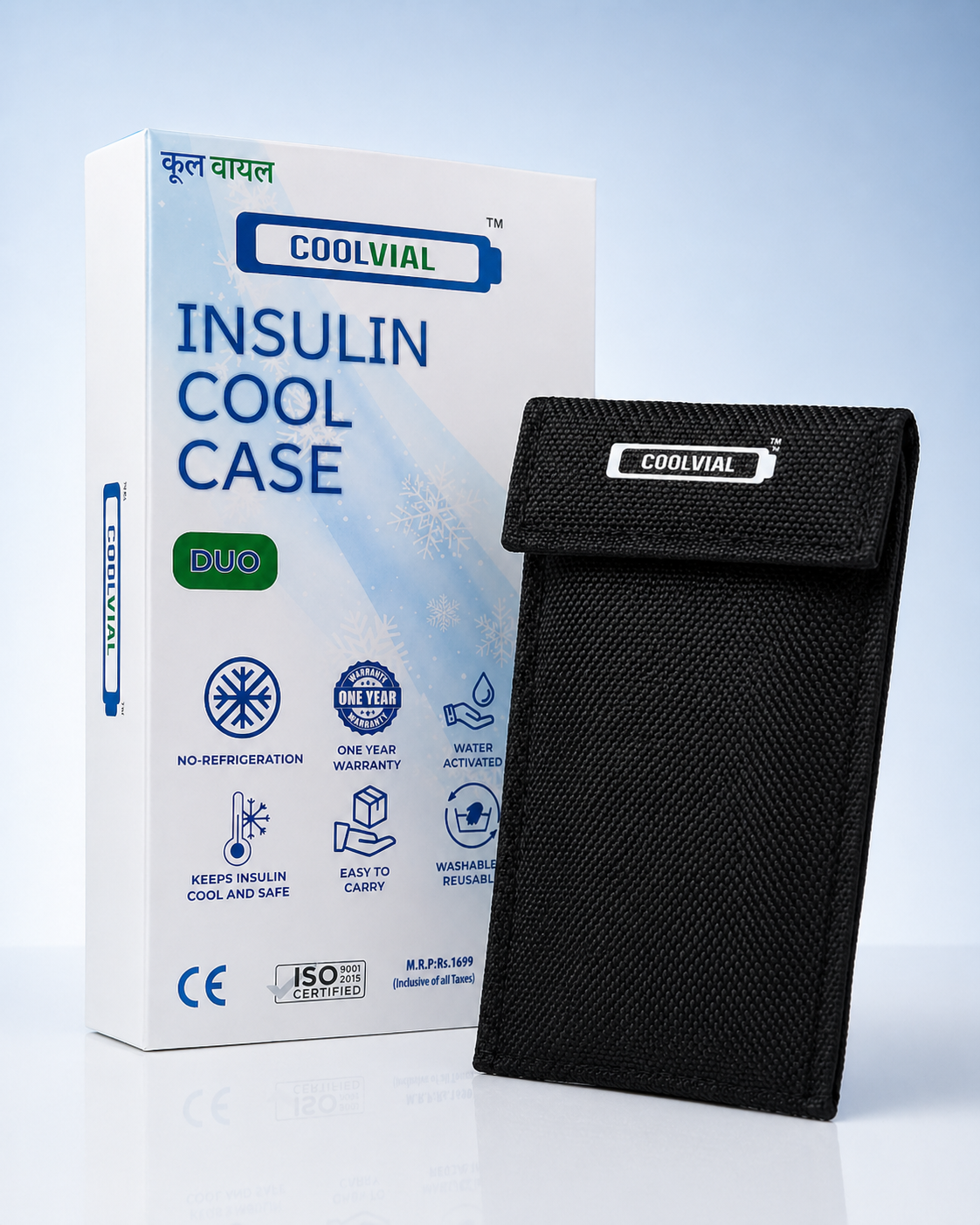
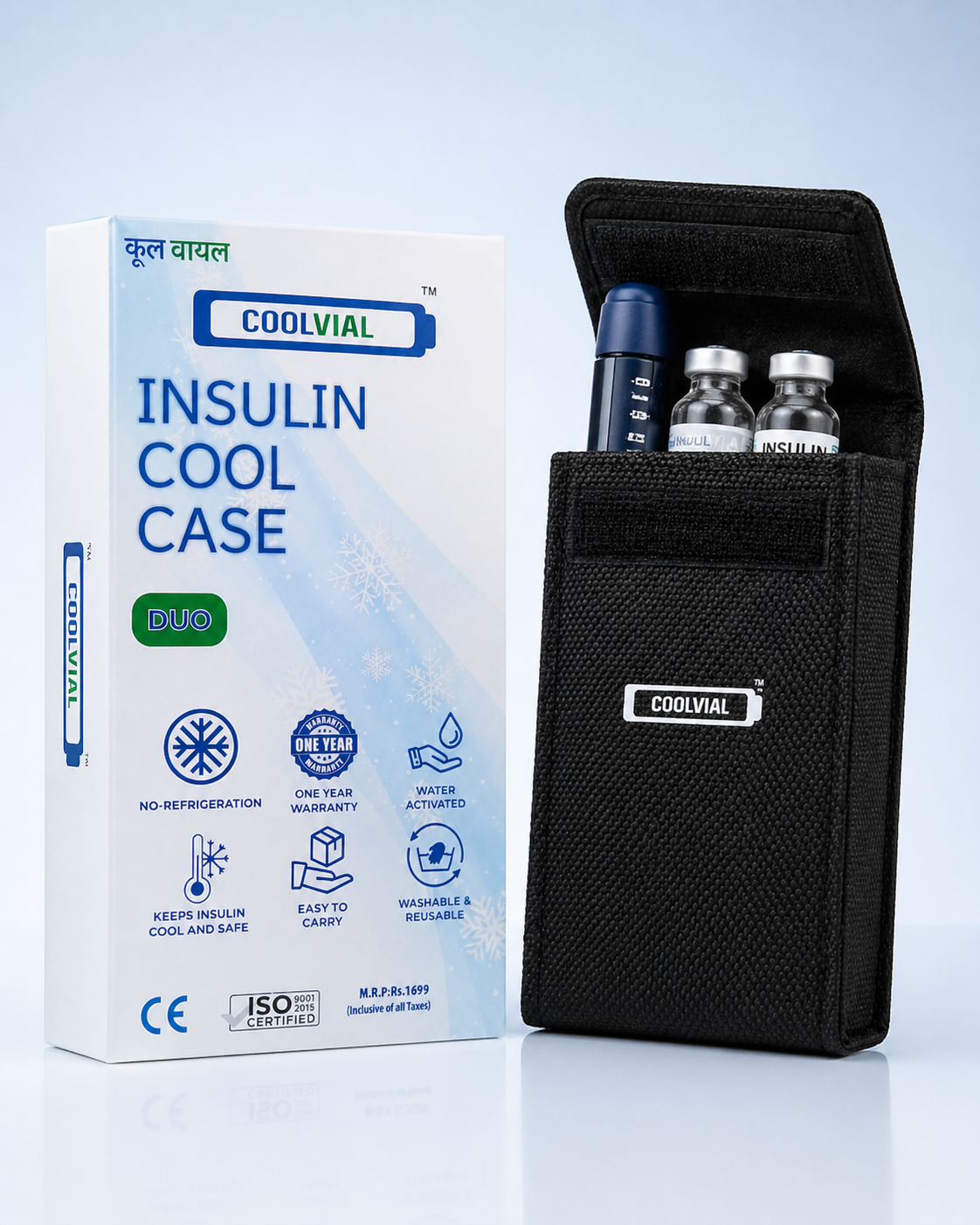
- Capacity: It’s designed to hold 2 insulin pens and 1 vial, making it perfect for most travel needs.
- Ease of Use: Simply activate with water – no refrigeration required, no cumbersome gel packs to freeze or worry about at airport security.
- Durability & Safety: CE certified and ISO 9001:2015 compliant, the COOLVIAL Duo offers a 1-year warranty and is proudly Made in India.
- Cost-Effective: At Rs 1,099 with code COOLHEAL (MRP Rs 1,699), it offers exceptional value.
- Comparison: While other brands like FRIO are available (often priced around Rs 1,900 for similar capacity), and some local insulated pouches like Outer Woods OW-12 (around Rs 999) exist, the COOLVIAL Duo strikes an optimal balance of price, performance, and certification for the Indian climate. Its design is specifically tailored for the needs of Indian diabetics facing challenging temperatures.
Consider investing in a COOLVIAL insulin cool case for worry-free travel. It’s a small investment for peace of mind and the integrity of your life-saving medication. For more details on effective insulin storage, visit our insulin storage tips page.
7. Preparing for International Travel from Jodhpur Airport (JDH)
While Jodhpur Airport (JDH) primarily handles domestic flights, if your international journey originates here with a connecting flight, or if you’re flying directly via a charter, additional planning is crucial. International travel introduces complexities like customs regulations, longer travel times, and time-zone adjustments.
- Customs and Security:
- Doctor’s Letter: Absolutely essential for international travel. It should be in English, clearly stating your medical condition, the type and quantity of insulin, syringes, and other diabetic supplies. It’s advisable to have multiple copies, both physical and digital.
- Original Packaging: Keep insulin in its original pharmacy-labeled packaging to avoid issues with customs officials.
- Time-Zone Dosing:
- Consult Your Doctor: Before an international trip, always consult your endocrinologist at AIIMS Jodhpur (Basni) or Goyal Hospital & Research Centre. They can provide a personalized plan for adjusting your insulin doses based on time zone changes, meal schedules, and activity levels.
- Gradual Adjustments: For long-haul flights across multiple time zones, your doctor might recommend a gradual adjustment of doses before departure or during the flight itself.
- Extra Supplies: Always carry more insulin and supplies than you anticipate needing, preferably 1.5 to 2 times your usual amount, to account for unforeseen delays or losses.
- Language Barrier: Carry a small card with essential medical information (your condition, medication, emergency contact) translated into the local language of your destination, if applicable.
8. Common Pitfalls to Avoid When Travelling with Insulin
Even with the best intentions, mistakes can happen. Being aware of common pitfalls can help you avoid them, especially when travelling from Jodhpur’s challenging climate.
- Leaving Insulin in a Hot Car: As mentioned, this is one of the quickest ways to ruin your insulin. Even a brief stop at the Sojati Gate market or near Jaswant Thada can be enough.
- Relying on Hotel Fridges: While many hotels offer mini-fridges, their temperatures can be inconsistent. Always verify the temperature with a thermometer if possible, or use your evaporative cooling case.
- Forgetting a Doctor’s Letter: This can cause significant delays and stress at airport security or international customs.
- Underestimating Travel Time: Always factor in potential delays – traffic, flight delays, long queues at Jodhpur Junction. Your cooling solution needs to last longer than your estimated journey.
- Not Carrying Enough Supplies: Accidents happen. A dropped pen, a lost bag, or an unexpected extension of your trip can leave you in a difficult situation. Always carry extra insulin, syringes, and test strips.
- Ignoring Expiry Dates: Ensure all your insulin and supplies are well within their expiry dates before you embark on your journey.
10 Essential Tips for Safe Travelling From Jodhpur With Insulin — Airport, Station & Taxi Guide
COOLVIAL keeps insulin safe in India's heat. 48+ hours, no electricity needed.
9. Key Documents and Preparations Before You Leave Jodhpur
Before you even step out of your home in Sardarpura or Ratanada, a thorough checklist of documents and preparations can make all the difference for smooth, stress-free travel.
- Medical Documents:
- Doctor’s Letter/Prescription: As detailed earlier, vital for all travel, especially air and international.
- Medical ID Card: Wear a medical ID bracelet or carry a card stating you have diabetes and your insulin type.
- Health Insurance Details: Keep your health insurance policy number and emergency contact information readily accessible.
- Insulin and Supplies:
- Adequate Insulin: Pack enough insulin for your entire trip, plus a buffer.
- Syringes/Pens/Needles: Ensure you have enough for all doses, plus extras.
- Glucose Meter, Strips, Lancets: Don’t forget these essentials for monitoring.
- Emergency Glucose: Carry glucose tablets, juice boxes, or hard candies for treating hypoglycemia.
- Alcohol Swabs: For proper injection hygiene.
- Cooling Solution:
- COOLVIAL Duo: Ensure it’s clean and ready for activation.
- Water Source: Know where you can access potable water to reactivate your cooling case if needed during your journey.
- Pre-Travel Check-up:
- Visit your diabetologist at Mathuradas Mathur Hospital (MDM) or AIIMS Jodhpur (Basni) a few weeks before your trip to discuss your travel plans, adjust medication schedules, and get any necessary prescriptions or letters.
- Local Pharmacy Information:
- Have a list of pharmacies at your destination, or use apps like Apollo Pharmacy, MedPlus, or 1mg to locate them. In Jodhpur, you can find these easily, but knowing your options at your destination is crucial. Generic Aadhaar and Maru Pharmacy are also good local options for reference.
10. Emergency Contacts and Pharmacy Access While Travelling
Even with the best preparation, unforeseen circumstances can arise. Knowing who to contact and where to get supplies can be a lifesaver.
- Emergency Contacts:
- Program local emergency numbers (e.g., 112 for general emergencies in India) into your phone.
- Have contact details for your doctor, family members, and travel companions readily available.
- For international travel, know the local emergency services number of your destination.
- Pharmacy Access:
- Research Ahead: Before you travel, identify major pharmacy chains or reputable local pharmacies at your destination. Apps like Apollo Pharmacy and MedPlus are widespread.
- Generic Names: Always know the generic name of your insulin, not just the brand name, as brand names can vary internationally.
- Prescription: Always carry your original prescription, as some pharmacies may require it to dispense insulin.
- Understanding Local Healthcare: If travelling internationally, understand how to access healthcare in your destination country and if your travel insurance covers medical emergencies related to diabetes.
FAQ Section
Q: Can I put my insulin in checked luggage when flying from Jodhpur Airport (JDH)? A: No, you should absolutely never put insulin in checked luggage. Cargo holds are not temperature-controlled and can experience extreme temperature fluctuations that will damage your insulin, rendering it ineffective. Always carry insulin in your hand-luggage.
Q: Do I need a doctor’s letter to carry insulin on a flight from Jodhpur? A: While not always mandatory for domestic flights, a doctor’s letter or prescription explaining your need for insulin is highly recommended. It can prevent delays and issues during security screening by CISF personnel at Jodhpur Airport (JDH).
Q: How long can COOLVIAL Duo keep insulin cool in Jodhpur’s extreme heat? A: The COOLVIAL Duo is designed to keep insulin at safe temperatures (typically 18°C-26°C) for 12-16 hours, even in ambient temperatures up to 46°C, making it highly effective for Jodhpur’s desert climate.
Q: Is it safe to store insulin in a train’s pantry car fridge from Jodhpur Junction? A: No, it is generally unsafe and unreliable to store insulin in a train’s pantry car fridge. These fridges are primarily for food items, and their temperature consistency and security for personal medication cannot be guaranteed. Always use a personal evaporative cooling case.
Q: What should I do if my Ola/Uber driver in Jodhpur refuses to turn on the AC? A: Politely request the driver to turn on the AC. If they refuse, consider cancelling the ride and booking another, or ensure your insulin is securely stored in an evaporative cooling case like the COOLVIAL Duo, which doesn’t rely on external cooling.
Q: Can I leave insulin in my car during a road trip to Jaisalmer if I just step out for a few minutes? A: No, never leave insulin in a parked car, even for a short duration. The interior temperature of a car parked under the Jodhpur sun can quickly rise to damaging levels, degrading your insulin within minutes. Always take your cooling case with you.
Conclusion
Travelling from Jodhpur with insulin, whether by air, train, or road, demands meticulous planning and the right tools. Jodhpur’s unique climate, with its extreme heat, poses a significant challenge to maintaining the efficacy of your life-saving medication. By understanding airport security protocols, debunking train travel myths, being aware of road trip risks, and utilizing reliable cooling solutions, you can ensure your insulin remains potent and effective throughout your journey.
Remember, your health is paramount. Investing in a dependable cooling case like the COOLVIAL Duo provides the peace of mind you deserve, allowing you to focus on the joys of travel rather than the worries of insulin degradation. Its robust design, long-lasting cooling, and convenience make it an indispensable companion for any diabetic embarking on a journey from the Blue City.
Order COOLVIAL Duo at Rs 1,099 with code COOLHEAL at coolvial.com or via WhatsApp wa.me/918766952300. Travel smart, travel cool!
Medical disclaimer: This article is for general information. Always consult your endocrinologist or diabetologist before changing insulin storage or dosing practices.
How We Researched This: This article is based on analysis of insulin storage queries from Jodhpur diabetics, combined with insights from RSSDI (Research Society for the Study of Diabetes in India) guidelines, ICMR-INDIAB (Indian Council of Medical Research - India Diabetes) data on diabetes prevalence and management in India, local Jodhpur hospital directories (AIIMS Jodhpur, Goyal Hospital, Mathuradas Mathur Hospital), and information from pharmacy networks like Apollo Pharmacy. Specific local conditions and travel realities for Jodhpur were thoroughly considered to provide practical and relevant advice.
10 Essential Tips for Safe Travelling From Jodhpur With Insulin — Airport, Station & Taxi Guide
Insulin at 2-8°C for 48+ hours. Trusted by 10,000+ Indian diabetics.