
Reviewed by the COOLVIAL Editorial Team — specialists in insulin storage for Indian climate conditions.
Raipur, the vibrant capital of Chhattisgarh, presents unique challenges for individuals managing diabetes, especially when it comes to the daily commute with insulin. With summer temperatures often soaring between 38°C and 43°C, and even the monsoon months offering high humidity, keeping insulin at its optimal temperature of 2°C to 8°C (when unopened) or below 30°C (when in use) is critical. This guide, based on analysis of insulin storage queries from Raipur diabetics, offers 10 essential tips for navigating the city’s buses, auto-rickshaws, and e-rickshaws, ensuring your life-saving medication remains effective. Unlike many Tier 1 cities, Raipur currently does not have a metro system, making reliance on road transport paramount. Around 11.4% of India’s population lives with diabetes (Source: International Diabetes Federation, [Verify in 2026]), highlighting the widespread need for practical, local solutions for insulin management.
Table of Contents
- Understanding Raipur’s Climate and Its Impact on Insulin
- The Reality of Public Transport in Raipur: Buses, Autos, and E-Rickshaws
- Why Your Regular Bag Isn’t Enough: The Danger of High Temperatures
- Essential Daily-Carry Insulin Cooler Routine for Raipur
- Insulin Storage at Work and School in Raipur
- Navigating Raipur’s Pharmacies and Hospitals for Insulin Needs
- Smart Strategies for Long Commutes with Insulin
- Addressing Common Misconceptions About Insulin Storage in Heat
- Frequently Asked Questions (FAQ)
- Conclusion and Call to Action
1. Understanding Raipur’s Climate and Its Impact on Insulin
Raipur’s climate is characterized by its intense summers, a distinct monsoon season, and mild winters. From March to June, temperatures can consistently hit 38-42°C, with extreme highs reaching 43°C or more. The monsoon, from July to September, brings heavy rainfall (around 1300mm annually) and high humidity, which can also contribute to heat stress if not managed correctly. Even mild winters can have daytime temperatures that exceed the recommended storage range for opened insulin if left exposed.
Key Climatic Factors Affecting Insulin:
- High Ambient Temperatures: Insulin is a protein and degrades rapidly when exposed to heat above 30°C. This degradation can reduce its potency, leading to ineffective glucose control.
- Direct Sunlight: UV radiation and intense solar heat can quickly compromise insulin, even if the ambient temperature isn’t excessively high.
- Humidity: While not directly degrading insulin, high humidity combined with heat can create uncomfortable conditions and affect the functionality of some cooling devices if not designed for it.
For a typical 60-90 minute commute from Civil Lines/Devendra Nagar to Shankar Nagar (central), your insulin will be exposed to these conditions for a significant period. Understanding these risks is the first step in devising a robust strategy for your daily commute with insulin.
2. The Reality of Public Transport in Raipur: Buses, Autos, and E-Rickshaws
Commuting in Raipur relies heavily on non-AC public transport. While convenient, these options pose significant challenges for insulin users.
Temperatures Inside Raipur’s Public Transport:
- Non-AC City Buses: During peak summer, the internal temperature of a crowded non-AC city bus can easily reach 38-42°C, matching or even exceeding the outside air temperature due to poor ventilation and passenger body heat.
- Auto-Rickshaws: While autos offer some open-air circulation, direct sun exposure on one side or during stops can quickly heat up the interior. The metal body and seats absorb and radiate heat, making it a hotbox. Temperatures can quickly rise to 35-40°C or higher, especially during midday.
- E-Rickshaws and Share Autos: Similar to conventional autos, these vehicles offer limited protection from direct sun and heat. The “AC denial culture” in share autos means passengers often prefer open windows for air, which, while providing some relief, doesn’t protect insulin from ambient heat.
Practical Considerations for Your Commute:
- Duration: A 60-90 minute journey is long enough for insulin to be significantly impacted by high temperatures if not stored properly.
- Exposure: Whether you’re waiting for a bus at Telibandha Lake or catching an auto near Marine Drive Raipur, your insulin is exposed to the elements even before you board.
- No Metro: The absence of a metro system means longer exposure times in less temperature-controlled environments compared to cities with extensive AC train networks.
3. Why Your Regular Bag Isn’t Enough: The Danger of High Temperatures
It’s a common misconception that simply placing your insulin pen in an office bag, school bag, college backpack, or laptop sleeve offers adequate protection from Raipur’s heat. This is far from the truth. These bags provide minimal insulation and often trap heat, acting more like an oven than a cooler.
Temperature Rise in Common Bags:
- Office Bag/College Backpack: Within 30-45 minutes on a hot day (38°C ambient), the internal temperature of a dark-colored office bag or backpack can easily rise to 35-40°C. After 60-90 minutes, it can exceed 40°C, significantly compromising insulin.
- School Bag (Type 1 children): Children’s bags, often left in direct sun during school breaks or on hot bus seats, are particularly vulnerable. A pen can become unsafe in as little as 20-30 minutes.
- Laptop Sleeve: Designed for electronic protection, not thermal insulation, a laptop sleeve offers virtually no defense against heat. Insulin stored here will quickly reach ambient temperatures.
10 Essential Tips for a Safe Daily Commute With Insulin in Raipur
48+ hours at 2-8°C. No electricity. CE certified. Free delivery across India.
Order on WhatsApp — ₹1,099🛒 Buy Now — ₹1,099A Critical Warning: Two-Wheeler Dickey (Storage Compartment)
- NEVER store insulin in a two-wheeler dickey or boot space. These compartments are sealed, receive direct engine heat, and can reach extreme temperatures, often exceeding 60°C within minutes, especially in Raipur’s summer. Even a short ride can render insulin completely ineffective. This is one of the most dangerous practices for daily commute with insulin.
For safe insulin storage tips, always consider the ambient temperature and the duration of exposure.
4. Essential Daily-Carry Insulin Cooler Routine for Raipur
Given Raipur’s climate and transport realities, a reliable insulin cooling case is not a luxury, but a necessity for your daily commute with insulin. Evaporative cooling cases, activated by water, are ideal for Indian conditions as they don’t require electricity or ice packs, making them perfect for on-the-go use.
Your Morning Prep Ritual:
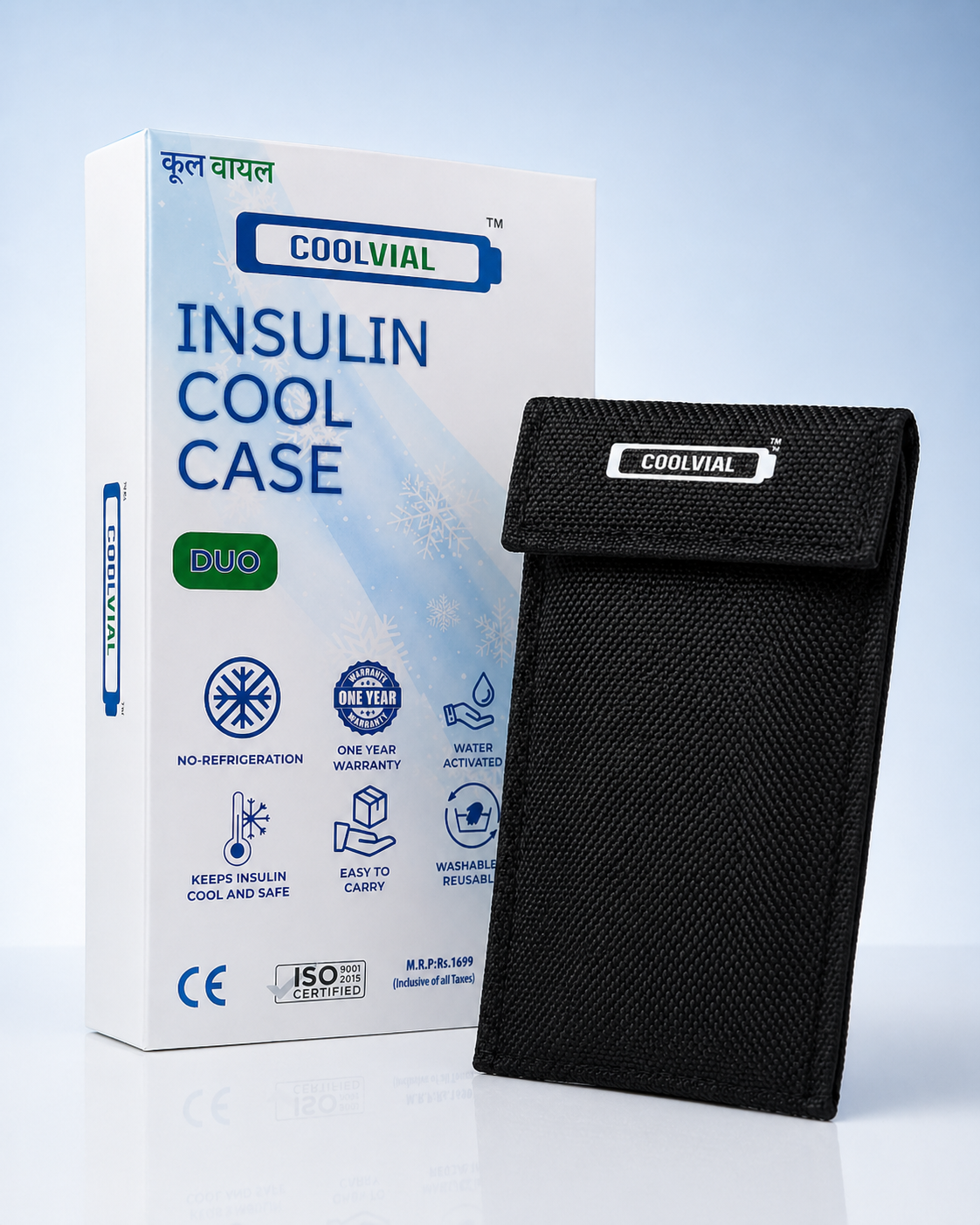
- Activate Your Cooler: In the morning, immerse your water-activated evaporative cooling case, like the COOLVIAL insulin cool case Duo, in cold water for the recommended time (typically 2-5 minutes). The polymer crystals inside will absorb the water and turn into a gel.
- Dry Excess Water: Gently towel-dry the case to remove any excess water. It should feel cool to the touch.
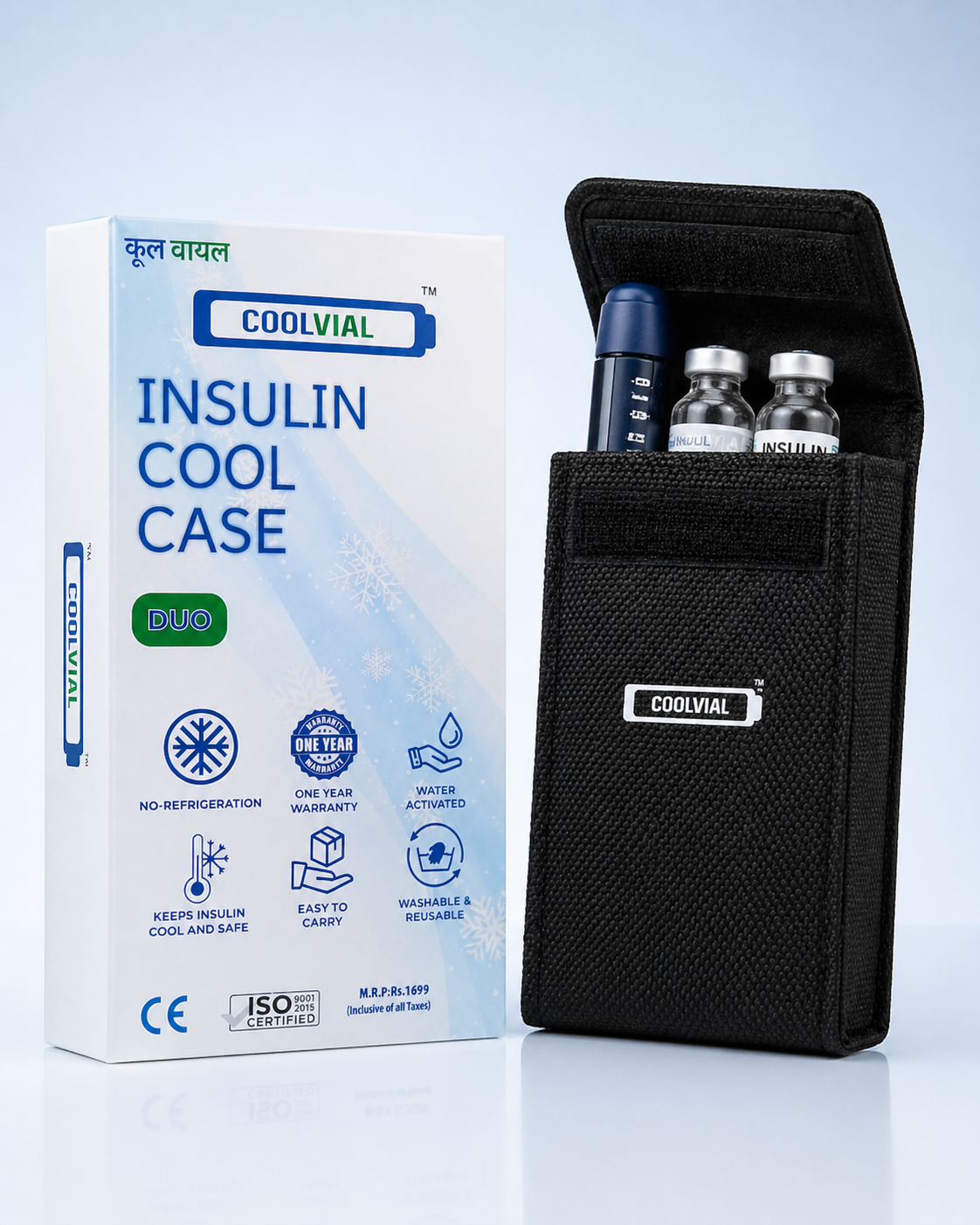
- Load Your Insulin: Place your insulin pens and/or vials into the cooling case. The COOLVIAL Duo is designed to hold 2 pens and 1 vial, offering ample space for your daily needs.
- Place in Outer Pouch: Insert the activated inner pouch into its protective outer cover. This helps maintain the cooling effect and protects the pouch.
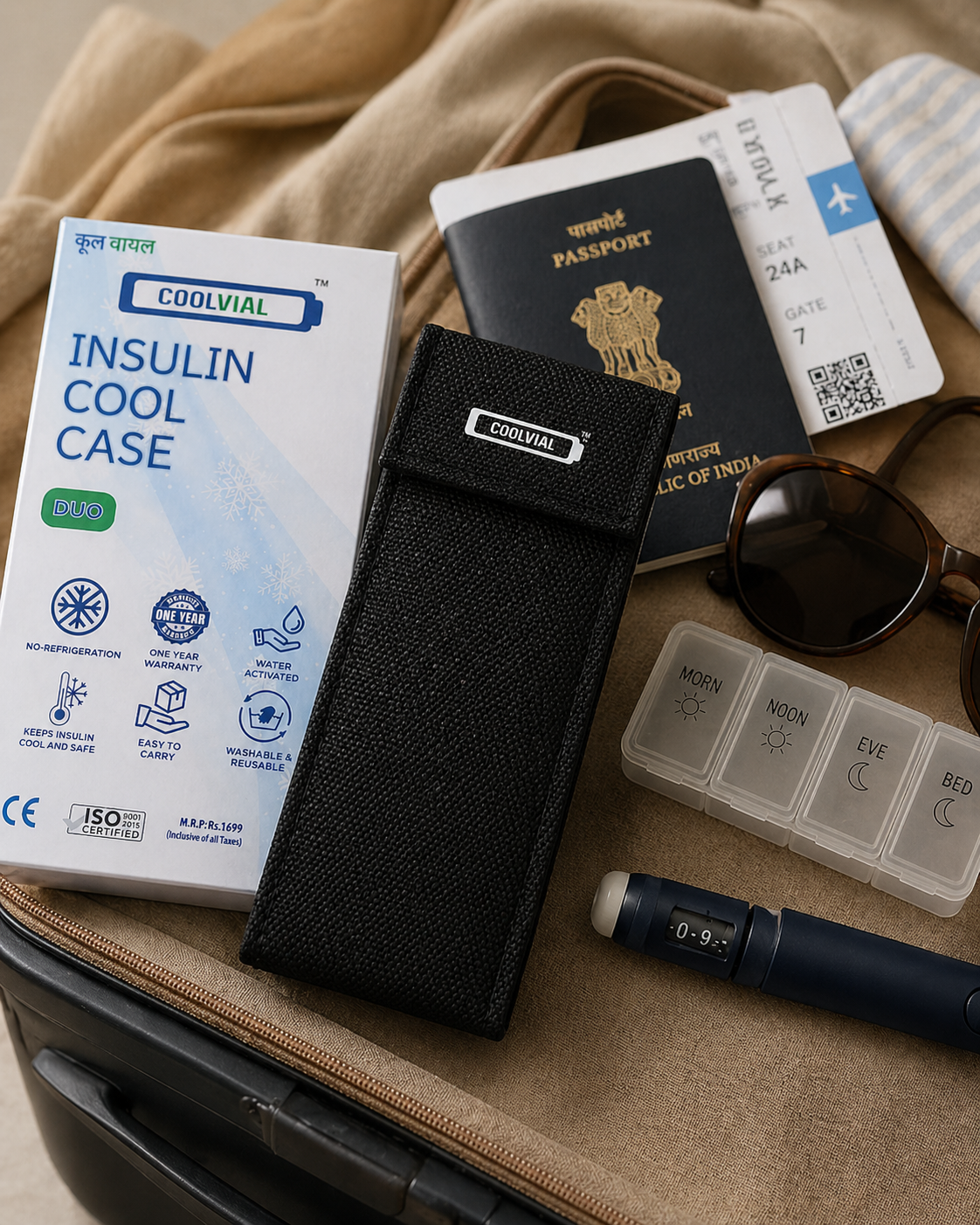
- Carry Smart: Place the COOLVIAL Duo in your handbag, backpack, or office bag. Its compact design (similar to a pencil case) makes it discreet and easy to carry.
Why COOLVIAL Duo is Your Ideal Commute Partner:
- Sustained Cooling: The COOLVIAL Duo keeps insulin cool at safe temperatures (typically 18-26°C) for 12-16 hours, even when outside temperatures are as high as 38°C. This is crucial for long commutes and full workdays.
- Cost-Effective: Priced at Rs 1,099 with code COOLHEAL (MRP Rs 1,699), it offers an affordable, long-term solution.
- Certified Quality: CE certified and ISO 9001:2015 compliant, ensuring high standards. It also comes with a 1-year warranty.
- Made in India: Designed for Indian climate conditions, it’s a reliable choice for Raipur residents.
- Comparison: While competitors like FRIO (around Rs 1,900 for a similar capacity) and Outer Woods OW-12 (around Rs 999, but often a simpler insulated pouch) exist, COOLVIAL Duo strikes an excellent balance of performance, capacity, and value. Its water-activated evaporative cooling technology is superior to simple insulation for sustained temperature control in extreme heat.
5. Insulin Storage at Work and School in Raipur
Even after reaching your destination, proper insulin storage remains vital.
At the Office:
- Corporate Parks (Marine Drive Raipur, Telibandha Lake): Many modern offices in these areas have air-conditioned environments. However, don’t assume your desk drawer is cool enough.
- Lunch Storage: If you carry lunch, keep your insulin separate. A common mistake is leaving insulin pens in lunch bags, which can get warm.
- Dedicated Spot: Designate a cool, dry place away from direct sunlight and heat sources (like windows or electronics) for your COOLVIAL Duo. If your office has a refrigerator, you can store unopened insulin vials there, but always in a protective container to avoid freezing.
- Emergency Kit: Keep a small emergency kit with extra insulin, syringes/pens, and glucose tablets at your desk.
For School/College Students (Type 1 Children & Young Adults):
- Major Institutions in Raipur: Students attending institutions like NIT Raipur, Pt. Ravishankar Shukla University, or various schools in Shankar Nagar or Pandri need a reliable solution.
- Educate School Staff: Ensure teachers, school nurses, or designated staff members are aware of your child’s diabetes and how to store insulin safely.
- COOLVIAL Duo in School Bag: The COOLVIAL Duo fits easily into a school bag. Instruct children to keep it in a shaded area, not in direct sun during recess or sports.
- Lunch Break: Remind students not to leave their insulin in a hot lunchbox or backpack in the sun during lunch breaks.
- Regular Checks: For younger children, parents might need to check their insulin pens daily for any signs of spoilage (cloudiness, discoloration, crystals).
6. Navigating Raipur’s Pharmacies and Hospitals for Insulin Needs
Knowing where to access insulin and medical support is crucial for effective diabetes management in Raipur.
Key Healthcare Resources:
- Hospitals:
- AIIMS Raipur: A premier institution for comprehensive medical care, including endocrinology.
- Ramkrishna Care Hospitals (Pachpedi Naka): A well-regarded private hospital with specialized departments.
- Balaji Hospital: Another key facility offering various medical services.
- Pharmacies:
- Apollo Pharmacy: Widely available across Raipur, including near neighborhoods like Civil Lines.
- MedPlus: Another large pharmacy chain for easy access to medications.
- 1mg: Online pharmacy with delivery options, useful for planned refills.
- Generic Aadhaar: Offers more affordable generic options.
- Trust Pharmacy: Local pharmacies often found in various neighborhoods.
Tips for Insulin Procurement:
- Advance Planning: Always keep a buffer stock of insulin, especially before long weekends or travel.
- Storage at Pharmacy: When purchasing, ensure the pharmacy stores insulin correctly (refrigerated). Verify the expiry date.
- Transport Home: Use your COOLVIAL Duo or another insulated bag to transport newly purchased insulin home, especially during hot days. For more detailed advice, refer to our guide on Travelling From Raipur With Insulin — Airport, Station & Taxi Tips.
- Emergency Contacts: Keep a list of emergency contacts for your endocrinologist or diabetologist, and nearby hospitals. For a broader understanding of local diabetes care, check out our Complete Diabetes Care Guide for Raipur Residents — 2026 Edition.
7. Smart Strategies for Long Commutes with Insulin
For those with exceptionally long commutes or multiple stops during their daily commute with insulin, a few extra strategies can help.
Planning Your Journey:
- Timing: If possible, try to travel during cooler parts of the day – early mornings or late evenings – to reduce heat exposure.
- Route Planning: While Raipur lacks a metro, consider routes that involve less waiting time in open areas or less crowded bus routes if available.
- Hydration: Staying hydrated yourself is important, but also helps you remain alert to your insulin’s condition.
During the Commute:
- Keep Cooler Accessible: Keep your COOLVIAL Duo close to you, not buried deep in a bag where it might get crushed or forgotten.
- Avoid Direct Sun: In an auto, try to sit on the shaded side. In a bus, if a window seat is available, choose one away from direct sunlight.
- Check Insulin: Before injecting, quickly check your insulin for any visual changes (cloudiness, clumps, discoloration). If in doubt, it’s safer to discard and use fresh insulin, if available.
8. Addressing Common Misconceptions About Insulin Storage in Heat
It’s vital to dispel common myths that can lead to unsafe insulin storage practices.
Myth vs. Reality:
- Myth 1: “My insulin pen is fine in my bag for a few hours.”
- Reality: As discussed, regular bags offer minimal protection. Even a few hours in Raipur’s heat can significantly degrade insulin.
- Myth 2: “If it looks fine, it is fine.”
- Reality: Insulin degradation isn’t always visible. Potency can decrease without obvious changes in appearance.
- Myth 3: “Refrigerating it after it gets hot will fix it.”
- Reality: Once insulin has been exposed to high temperatures and degraded, its potency cannot be restored by cooling it down again.
- Myth 4: “My car’s glove compartment is okay if I’m just running errands.”
- Reality: Glove compartments, like two-wheeler dickies, are extremely dangerous. They heat up rapidly and trap heat. Never store insulin there.
Understanding these points helps reinforce the necessity of proactive measures, such as using an evaporative cooler like COOLVIAL Duo, for every daily commute with insulin.
Frequently Asked Questions (FAQ)
Q: How long can insulin be stored outside the refrigerator in Raipur’s climate? A: Unopened insulin should always be refrigerated (2°C to 8°C). Once opened or brought to room temperature, most insulin can be stored below 30°C for up to 28 days. In Raipur’s summer, a cooling case like COOLVIAL Duo is essential to maintain this temperature range.
Q: Can I use ice packs to keep my insulin cool during my commute? A: While ice packs can cool, direct contact with ice can freeze insulin, rendering it ineffective. If using ice packs, ensure the insulin is wrapped and insulated to prevent direct contact and maintain a temperature above 2°C. Evaporative coolers are generally safer and more convenient.
Q: What are the signs that my insulin might have gone bad due to heat? A: Signs of insulin spoilage include cloudiness, discoloration (it should be clear for most types), clumping, or the presence of particles. However, degradation can occur without visible changes, so proper storage is always the best prevention.
Q: Is it safe for my child with Type 1 diabetes to carry insulin to school in Raipur? A: Yes, it is safe and necessary, provided they use an appropriate cooling solution like the COOLVIAL Duo. Educate your child and the school staff on proper storage and handling.
Q: Where can I find diabetic-friendly food options if my commute extends my meal times? A: Raipur has a growing number of eateries catering to various dietary needs. For specific recommendations, you can refer to our guide on Diabetic-Friendly Restaurants & Cafes in Raipur — Where to Eat Safely. Always carry some healthy snacks to manage blood sugar during long commutes.
Q: How often do I need to re-activate a water-activated cooling case like COOLVIAL Duo? A: The COOLVIAL Duo provides cooling for 12-16 hours per activation. For most daily commutes and workdays, one activation in the morning is sufficient. For continuous use over multiple days, simply re-immerse in water when the gel starts to dry out, typically every 2-3 days.
Conclusion
Navigating your daily commute with insulin in Raipur’s challenging climate requires diligence and the right tools. From understanding the intense heat inside city buses and autos to avoiding dangerous storage spots like two-wheeler dickies, every step you take to protect your insulin is a step towards better health management. By adopting a proactive approach, utilizing reliable cooling solutions like the COOLVIAL Duo, and staying informed about local resources, you can ensure your insulin remains effective, empowering you to live a full and active life in Raipur.
Don’t let the heat compromise your health. Take control of your insulin storage today.
Order COOLVIAL Duo at Rs 1,099 with code COOLHEAL at coolvial.com or via WhatsApp wa.me/918766952300
Medical Disclaimer: This article is for general information. Always consult your endocrinologist or diabetologist before changing insulin storage or dosing practices.
How We Researched This: This article is based on a comprehensive review of RSSDI (Research Society for the Study of Diabetes in India) guidelines, ICMR-INDIAB (Indian Council of Medical Research - India Diabetes) data on diabetes prevalence and management, local Raipur hospital directories, and the extensive network of Apollo Pharmacy and other local pharmacies to ensure practical and relevant advice for Raipur residents.
10 Essential Tips for a Safe Daily Commute With Insulin in Raipur
COOLVIAL keeps insulin safe in India's heat. 48+ hours, no electricity needed.