
Reviewed by the COOLVIAL Editorial Team — specialists in insulin storage for Indian climate conditions.
Amritsar, the heart of Punjab, is renowned for its spiritual serenity at the Golden Temple (Harmandir Sahib) and its vibrant culture. However, its climate presents unique challenges, especially for individuals managing diabetes. The scorching summer, with temperatures frequently soaring between 22°C and 42°C, can turn insulin storage into a critical concern. Based on analysis of insulin storage queries from Amritsar diabetics, understanding how to store insulin correctly is not just a recommendation, but a necessity to maintain its efficacy and ensure consistent blood sugar management.
In Amritsar, where non-AC homes often experience indoor temperatures ranging from 33°C to 38°C during April to June, even at night, keeping insulin within its prescribed temperature range of 2°C to 25°C becomes a daily battle. Insulin exposed to temperatures above 25°C can rapidly lose potency, leading to ineffective doses and uncontrolled blood glucose levels. This guide offers 7 essential, practical tips specifically tailored for Amritsar residents to navigate these climatic realities and keep their life-saving medication safe.
Table of Contents
- Understanding Amritsar’s Climate and Insulin Needs
- The Indoor Heat Challenge: Walled City vs. Modern Areas
- Refrigeration Realities: Power Cuts and Fridge Stability
- Embracing Evaporative Cooling: A Local Solution
- Water Quality for Evaporative Cooling: A Crucial Detail
- Navigating Peak Summer Heat + Power Cut Scenarios
- Travel and Outdoor Activities: Keeping Insulin Safe
- Practical Insulin Storage Tips for Amritsar Residents
- COOLVIAL Duo: Your Reliable Partner in Amritsar’s Heat
- Frequently Asked Questions (FAQ)
- Conclusion: Stay Cool, Stay Healthy
- How We Researched This
- Medical Disclaimer
Understanding Amritsar’s Climate and Insulin Needs
Amritsar experiences a diverse climate throughout the year, but it’s the intense summer that poses the most significant threat to insulin stability. From April to June, the city bakes under a blazing sun, with daytime temperatures routinely hitting 40°C and beyond. Even the evenings offer little respite, with temperatures often remaining above 30°C. This extreme heat degrades insulin, making it less effective.
- Summer (April-June): Temperatures frequently between 22°C and 42°C. Humidity can be moderate before the monsoon.
- Monsoon (July-September): Around 700mm rainfall, bringing high humidity (often 70-90%) but slightly lower temperatures (25-35°C). While heat might ease, humidity introduces new storage challenges. For more on this, refer to our guide on Amritsar Monsoon & Insulin — Protecting Your Vials From Humidity Damage.
- Winter (October-March): Very cold, ranging from 4°C to 19°C, often accompanied by dense fog. While cold, insulin should not freeze.
The International Diabetes Federation (IDF) estimates that 537 million adults worldwide are living with diabetes, a number projected to rise significantly, with India being a major contributor to this global burden (Source: IDF Diabetes Atlas 10th Edition, https://www.idf.org/aboutdiabetes/what-is-diabetes/facts-figures.html). For Amritsar residents, managing diabetes effectively starts with understanding the unique environmental factors that impact insulin. Unopened insulin should be refrigerated (2-8°C), while insulin in use can be kept at room temperature (below 25°C) for up to 28 days, depending on the manufacturer. The key challenge in Amritsar is that “room temperature” often far exceeds 25°C.
The Indoor Heat Challenge: Walled City vs. Modern Areas
The architectural styles and living conditions across Amritsar’s neighborhoods significantly influence indoor temperatures, directly impacting how to store insulin.
1. Walled City (Heritage/Golden Temple Area)
- Older Constructions: Homes in the Walled City, particularly around the Golden Temple (Harmandir Sahib), are often older, with thick walls that can retain heat throughout the day and radiate it back at night.
- Ventilation: Smaller windows and dense housing clusters can limit cross-ventilation, trapping hot air indoors.
- Typical Indoor Temperatures: Even without direct sunlight, these homes can easily reach 35°C to 38°C during peak summer months (April-June), making it impossible to keep insulin safely at “room temperature” without active cooling.
- Fridge Access: Space constraints might mean smaller refrigerators, less stable during power cuts.
2. Lawrence Road, Mall Road, and Ranjit Avenue
- Newer Constructions: These areas often feature more modern homes and apartments, some with better insulation or access to air conditioning.
- AC Usage: While more prevalent, AC usage isn’t continuous for all, especially given electricity costs. Many still rely on coolers or fans.
- Impact of Power Cuts: Even with AC, prolonged power cuts render them useless, quickly raising indoor temperatures to dangerous levels for insulin.
- Refrigeration: Generally larger, more modern refrigerators might offer slightly better insulation, but still vulnerable to extended outages.
Regardless of where you live in Amritsar, the reality is that ambient indoor temperatures often exceed 25°C for extended periods during summer. This necessitates proactive measures to ensure your insulin’s integrity.
Refrigeration Realities: Power Cuts and Fridge Stability
Refrigeration is the go-to solution for unopened insulin vials and pens. However, Amritsar’s summer comes with its own set of challenges for maintaining a stable cold chain: frequent and often unpredictable power cuts.
Challenges with Refrigeration in Amritsar
- Power Outages: During peak summer, the strain on the electricity grid leads to planned and unplanned power cuts, sometimes lasting several hours. A standard refrigerator can maintain its internal temperature for about 4-6 hours during an outage, but this duration rapidly decreases if the fridge is frequently opened.
- Voltage Fluctuations: Erratic power supply can also lead to voltage fluctuations that damage refrigerator compressors or affect their cooling efficiency.
- Door Openings: Each time the refrigerator door is opened, warm air enters, raising the internal temperature and reducing its ability to keep insulin cool during a power cut.
- Temperature Monitoring: Many households lack a dedicated refrigerator thermometer, making it difficult to ascertain if the fridge is consistently maintaining the ideal 2-8°C range, especially after a power cut.
Best Practices for Refrigerating Insulin
- Dedicated Space: Store insulin in a designated, easily accessible spot in the fridge, away from the freezer compartment to prevent accidental freezing.
- Avoid Door Storage: The temperature on the refrigerator door fluctuates the most; store insulin deeper inside, on a middle shelf.
- Monitor Temperature: Consider placing a small, inexpensive refrigerator thermometer inside to ensure temperatures remain between 2°C and 8°C. Check it regularly.
- Minimise Openings: During power cuts, keep the refrigerator door closed as much as possible to preserve the cold air inside.
- Backup Plan: Always have a backup plan for insulin storage, especially for insulin in use, which is kept at room temperature. This is where a reliable insulin cool case like the COOLVIAL Duo becomes indispensable.
Even Fortis Escorts Amritsar (Majitha-Verka Bypass) endocrinology recommendations emphasize the importance of stable temperatures for insulin. They advise patients to always have a contingency plan for insulin storage, particularly for those who travel frequently or live in areas prone to extended power outages.
Embracing Evaporative Cooling: A Local Solution
Evaporative cooling technology is a game-changer for how to store insulin in climates like Amritsar. It’s simple, effective, and doesn’t require electricity, making it ideal for combating power cuts and high ambient temperatures.
How Evaporative Cooling Works
Evaporative cooling cases, such as the COOLVIAL Duo, use a simple scientific principle:
- Water Activation: The inner pouch of the case contains special crystals or gel. When submerged in water, these crystals absorb the water and swell.
- Evaporation: The absorbed water slowly evaporates from the surface of the pouch.
- Cooling Effect: As water evaporates, it draws heat away from the surrounding environment, creating a cooling effect. This keeps the insulin inside the pouch at a stable, safe temperature, typically 2°C to 8°C below the ambient temperature, or within the safe range of 18°C to 26°C even when outside temperatures hit 35-40°C.
Effectiveness in Amritsar’s Climate
- Summer Heat (High Temperatures, Moderate Humidity): Evaporative cooling works best in dry or moderately humid conditions. Amritsar’s peak summer (April-June) often has moderate humidity, making these cases highly effective. They can keep insulin cool for 12-16 hours, even when outside temperatures are soaring.
- Monsoon Humidity (High Humidity): During the monsoon (July-September), when humidity is very high, the efficiency of evaporative cooling might slightly reduce as evaporation slows down. However, they still offer significant protection compared to leaving insulin exposed to ambient temperatures. In such scenarios, the cooling effect might be slightly less pronounced, but still crucial to prevent spoilage.
- No Electricity Needed: This is the primary advantage for Amritsar residents, especially during power cuts that can last for hours, leaving refrigerators and air conditioners useless.
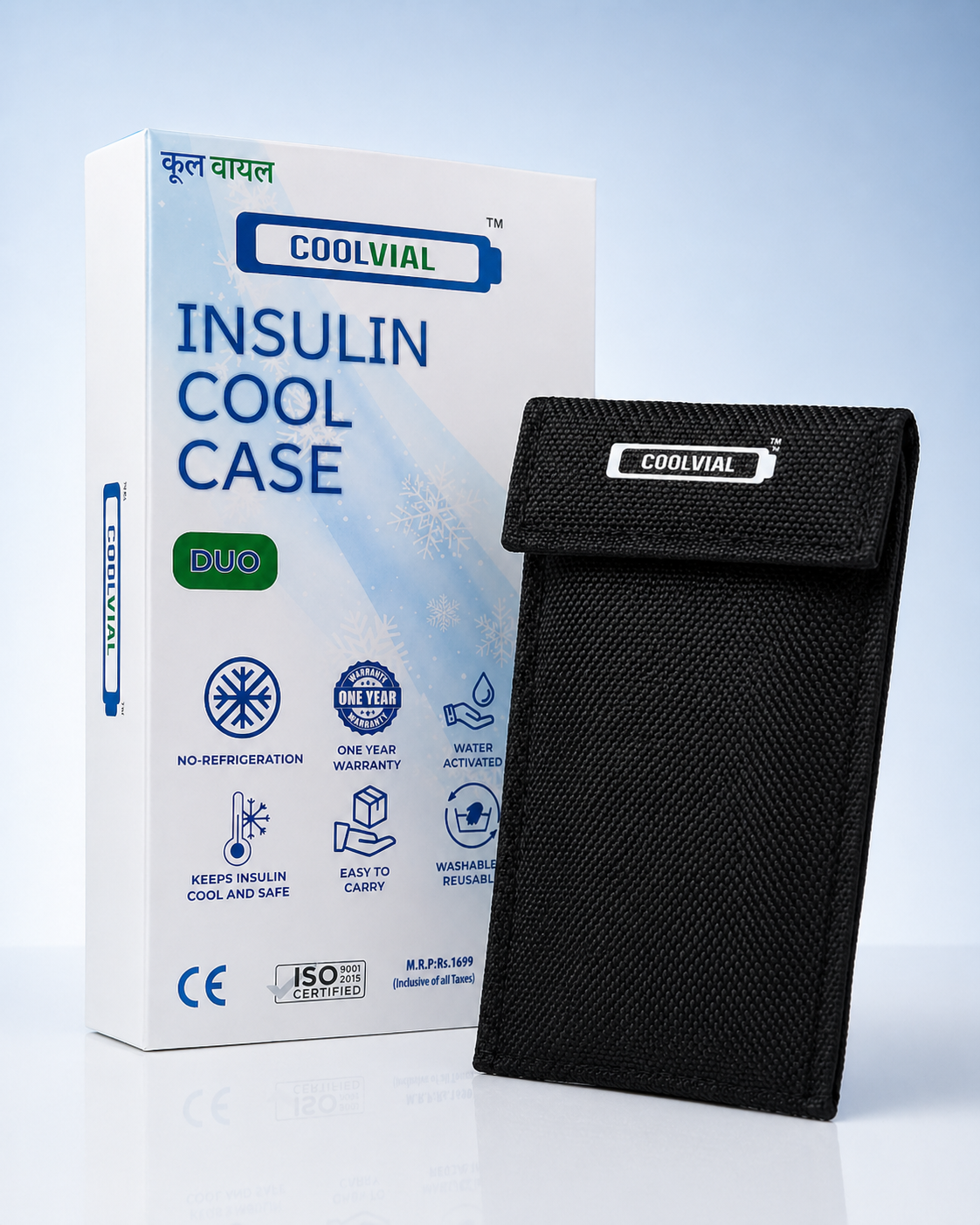
Comparing Cooling Cases: COOLVIAL Duo vs. Competitors
When considering an evaporative cooling case, it’s essential to look at capacity, cooling duration, certifications, and value.
| Feature | COOLVIAL Duo | FRIO Classic (e.g., Duo Pen) | Outer Woods OW-12 (e.g., Mini) |
|---|---|---|---|
| Capacity | Holds 2 pens + 1 vial | Typically 2 pens (varies by model) | Typically 1-2 pens (varies by model) |
| Cooling Duration | 12-16 hours | Up to 45 hours (with re-activation) | Up to 12-16 hours |
| Price (approx.) | Rs 1,099 with code COOLHEAL (MRP Rs 1,699) | ~Rs 1,900 | ~Rs 999 |
| Certifications | CE certified, ISO 9001:2015 | Medical Device Directive 93/42/EEC | No specific public certifications stated |
| Warranty | 1-year warranty | 12-month warranty | Varies |
| Made In | India | UK | India |
| Key Advantage | Excellent value, ideal capacity for daily use, Indian-made, certified. | Longest cooling duration, established brand. | Budget-friendly, compact. |
The COOLVIAL Duo offers an optimal balance of capacity, cooling duration, and affordability, especially with the current offer. It’s designed keeping Indian climatic conditions in mind and manufactured locally, ensuring reliability. It provides a robust solution for keeping your insulin safe on the go or during power cuts. You can find out more about the COOLVIAL insulin cool case on our website.
Water Quality for Evaporative Cooling: A Crucial Detail
Activating an evaporative cooling case like the COOLVIAL Duo requires submerging its inner pouch in water. While tap water is often sufficient, Amritsar’s water quality, particularly in hard-water zones, warrants a closer look.
Why Water Quality Matters
- Mineral Deposits: Hard water contains high levels of minerals like calcium and magnesium. Repeatedly soaking the cooling pouch in hard water can lead to mineral buildup on the fabric and within the crystals.
- Reduced Efficiency: Over time, these mineral deposits can reduce the pouch’s ability to absorb water effectively, thereby diminishing its evaporative cooling performance. The fabric might become stiff, and the cooling crystals might not swell to their full capacity.
- Hygiene: While not directly affecting cooling, using cleaner water ensures better hygiene for a medical accessory.
Recommendations for Amritsar Residents
- Use Bottled or RO Water: For optimal performance and longevity of your COOLVIAL Duo or any evaporative cooling case, it is highly recommended to use bottled drinking water or water from a Reverse Osmosis (RO) purifier for activation. This minimizes mineral buildup.
- Softened Tap Water: If you have a whole-house water softener, using softened tap water can also be an option.
- Occasional Rinse: Even with purified water, it’s a good practice to gently rinse the outer fabric of the inner pouch after activation (before drying) to remove any residue.
- Drying: Ensure the pouch is completely dry before storing it for extended periods to prevent mold or mildew, especially relevant during Amritsar’s humid monsoon months.
This small but significant step ensures your evaporative cooling case remains effective for years, providing reliable insulin storage regardless of Amritsar’s challenging climate.
Navigating Peak Summer Heat + Power Cut Scenarios
This is perhaps the most challenging scenario for Amritsar residents managing diabetes: May-June peak heat combined with a prolonged power cut. Indoor temperatures can quickly climb, and conventional refrigeration becomes unreliable. How to store insulin effectively in this situation requires immediate action and a prepared strategy.
The “Double Whammy” Effect
- Rapid Temperature Rise: With ambient temperatures hitting 40°C or higher, and no AC or fan, indoor temperatures in non-AC homes can reach 38°C within an hour or two of a power cut. Even homes with AC will quickly heat up.
- Fridge Failure: A refrigerator’s internal temperature will start rising after 4-6 hours without power, especially if the door is opened.
- Insulin Degradation: Insulin exposed to temperatures above 25°C rapidly loses potency. At 35-38°C, degradation accelerates significantly, potentially rendering your insulin ineffective within hours.
Your Action Plan for Peak Heat + Power Cut
- Immediate Transfer: As soon as a power cut occurs during peak summer, transfer your “in-use” insulin (pens, vials) from its current location to an activated evaporative cooling case like the COOLVIAL Duo. If you have unopened insulin in the fridge, transfer it too if the power cut is expected to be prolonged (over 4-6 hours).
- Activate Your Cooling Case: Always have your COOLVIAL Duo (or similar case) ready. If not already activated, immediately soak its inner pouch in bottled/RO water for the recommended time (usually 5-10 minutes).
- Insulate Further: Place the activated cooling case in the coolest part of your home – perhaps a lower shelf, away from direct sunlight, or in a well-ventilated room. Avoid placing it in an enclosed cupboard that traps heat.
- Stay Hydrated & Cool: While not directly about insulin, keeping yourself cool helps you think clearly and manage your diabetes effectively. Drink plenty of water and stay in shaded areas.
- Emergency Contact: Keep contact numbers for your local pharmacy (e.g., Apollo Pharmacy, MedPlus, 1mg, Frontier Medicare, Generic Aadhaar) and your endocrinologist (e.g., at Fortis Escorts Amritsar, Amandeep Hospital) handy. In a dire emergency, they might offer guidance or temporary storage solutions.
- “Cooling Hub” Strategy: Identify a neighbour or relative who might have a generator or inverter-backed AC/fridge and can offer temporary storage in extreme, prolonged outages. This should be a last resort and pre-arranged.
Having a robust, reliable evaporative cooling case is not just a convenience; it’s a life-saving necessity in Amritsar’s peak summer.
Travel and Outdoor Activities: Keeping Insulin Safe
Amritsar is a city of vibrancy and movement. Whether you’re visiting the serene Golden Temple, reflecting at Jallianwala Bagh, witnessing the Wagah Border ceremony, or exploring the Partition Museum, your insulin needs protection from the elements. This is where portable, reliable storage solutions become critical.
Challenges for Insulin During Travel and Outdoors
- Direct Sunlight: Leaving insulin in direct sunlight, even for a short period (e.g., in a car, on a temple premise, or during outdoor excursions), can rapidly degrade it.
- High Ambient Temperatures: Outdoor temperatures in Amritsar can be extreme. A standard backpack or purse offers no thermal protection.
- Lack of Refrigeration: When away from home, access to a refrigerator is limited or non-existent.
- Security Checkpoints: Airport security or other checkpoints may require insulin to be easily accessible and clearly identifiable.
Smart Storage for Amritsar’s Explorers
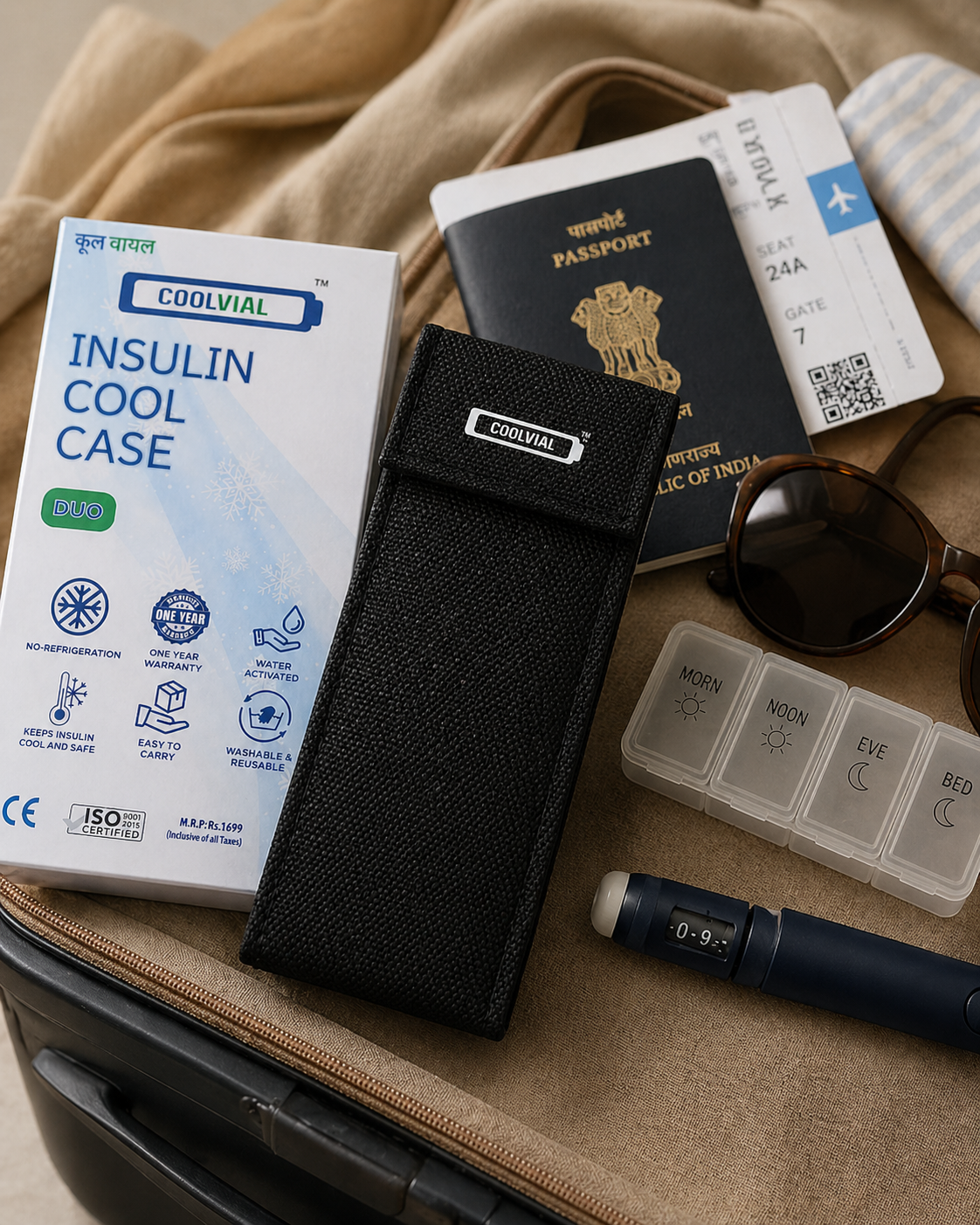
- Portable Evaporative Cooler: A device like the COOLVIAL Duo is purpose-built for such situations. It’s compact, lightweight, and requires no electricity, making it perfect for day trips, pilgrimages, or even just going to work.
- Tip: Activate it with bottled water before you leave home, and it will keep your insulin cool for 12-16 hours.
- Insulated Bags (with caveats): While an insulated lunch bag can offer minimal protection, it’s not designed for the sustained cooling required for insulin in Amritsar’s heat. Avoid relying solely on these. If used, add frozen gel packs (ensure insulin doesn’t directly touch them to avoid freezing).
- Avoid Car Glove Compartments: Cars, especially when parked in the sun, can become ovens. Temperatures inside can reach 60°C or higher, instantly ruining insulin. Never leave insulin in a parked car.
- Carry-On Luggage: If flying from Sri Guru Ram Das Jee International Airport, always carry insulin in your carry-on luggage. The cargo hold can experience extreme temperatures.
- Medical Documentation: Carry a doctor’s note (from your endocrinologist at Fortis Escorts Amritsar, for example) explaining your need for insulin and syringes, especially when traveling.
- Check Insulin Visually: Always inspect your insulin before injection. Look for changes in clarity, color, or the presence of particles. If it looks different, discard it.
By adopting these practices, you can confidently explore Amritsar’s rich heritage without compromising your diabetes management. For a more comprehensive guide on managing diabetes in the city, check out our Complete Diabetes Care Guide for Amritsar Residents — 2026 Edition.
Practical Insulin Storage Tips for Amritsar Residents
Beyond specific scenarios, here are general, actionable tips for how to store insulin effectively in Amritsar’s climate:
1. Know Your Insulin’s Temperature Range
- Unopened Insulin: Typically 2°C to 8°C (refrigerated).
- Opened/In-Use Insulin: Most types can be kept at room temperature (below 25°C) for up to 28 days. However, in Amritsar, “room temperature” rarely stays below 25°C in summer, making a cooling case essential.
How to Store Insulin in Amritsar Summer Heat — 7 Essential Tips for Locals
COOLVIAL keeps insulin safe in India's heat. 48+ hours, no electricity needed.
2. Invest in a Reliable Cooling Solution
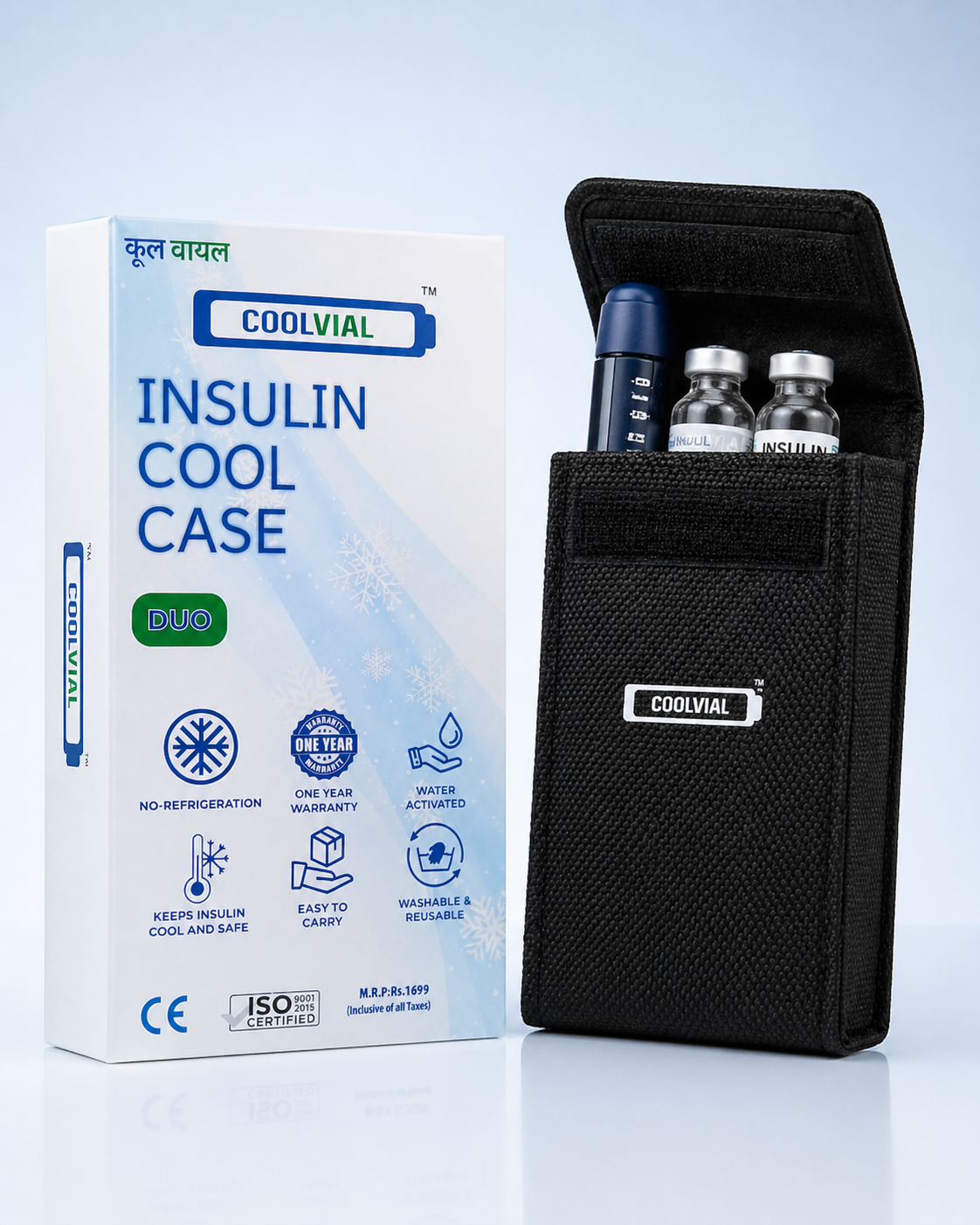
- Consider a water-activated evaporative cooling case like the COOLVIAL Duo. It provides a consistent, safe temperature range (18-26°C) for up to 16 hours without electricity. Its capacity (2 pens + 1 vial) is ideal for daily needs.
- Keep it activated and ready, especially during summer months.
3. Strategic Home Placement
- During summer, identify the coolest spots in your home. This might be a shaded corner, a lower shelf, or a room with less direct sunlight.
- Avoid windowsills, kitchen counters (especially near stoves), and areas prone to direct sunlight.
4. Monitor Insulin Appearance
- Always check your insulin before injecting. If it appears cloudy, discolored, or has particles (for clear insulin), or if it has “frosted” or clumped (for cloudy insulin), it may have been compromised by heat or cold. Discard it.
5. Always Have a Backup Plan
- Keep at least one extra vial or pen of insulin in a safe, cool place.
- Know the location of nearby pharmacies (Apollo Pharmacy, MedPlus, 1mg, Frontier Medicare, Generic Aadhaar) in case you need to purchase emergency supplies.
6. Travel Smart
- When leaving home, even for a few hours, carry your insulin in a cooling case.
- Never leave insulin in a car, scooter dicky, or any unventilated space.
7. Consult Your Doctor
- Regularly discuss your insulin storage practices with your endocrinologist or diabetologist at hospitals like Fortis Escorts Amritsar (Majitha-Verka Bypass) or Sri Guru Ram Das Charitable Hospital. They can provide personalized advice based on your specific insulin type and lifestyle.
COOLVIAL Duo: Your Reliable Partner in Amritsar’s Heat
In Amritsar’s challenging climate, the COOLVIAL Duo emerges as a practical, affordable, and highly effective solution for insulin storage. Designed with the needs of Indian diabetics in mind, it addresses the core issues of heat, power cuts, and portability.
Why COOLVIAL Duo is Ideal for Amritsar:
- Evaporative Cooling Technology: Keeps insulin at a stable, safe temperature (18-26°C) for 12-16 hours, even when ambient temperatures soar to 40°C.
- No Electricity Required: A crucial advantage during Amritsar’s frequent power outages, ensuring your insulin remains protected when refrigerators fail.
- Optimal Capacity: Holds 2 insulin pens and 1 insulin vial, covering the needs of most users for daily use and short trips.
- Durable and Reusable: Made from robust materials, the COOLVIAL Duo is designed for repeated use, offering long-term value.
- Easy to Activate: Simply submerge the inner pouch in water for 5-10 minutes. Use bottled or RO water for best results in Amritsar’s hard water zones.
- Certified Quality: CE certified and ISO 9001:2015 compliant, assuring you of its quality and reliability. It also comes with a 1-year warranty.
- Made in India: A product designed and manufactured locally, understanding the nuances of the Indian climate.
The COOLVIAL Duo offers a superior alternative to basic insulated bags and a more affordable yet certified option compared to some international brands. While Frio cases (typically around Rs 1,900) also use evaporative cooling, the COOLVIAL Duo provides comparable functionality with a suitable capacity for daily use at a more accessible price point. Similarly, while brands like Outer Woods OW-12 (around Rs 999) offer budget options, COOLVIAL Duo’s certifications and specific capacity for both pens and vials make it a well-rounded choice for Amritsar residents seeking peace of mind.
Protect your insulin and ensure its efficacy. The COOLVIAL Duo is available at a special price of Rs 1,099 (MRP Rs 1,699) with the code COOLHEAL.
Frequently Asked Questions (FAQ)
Q: How do I know if my insulin has gone bad due to heat in Amritsar? A: Insulin exposed to heat may become cloudy, discolored, or show particles. Clear insulin might appear frosted or clumped. If you notice any changes in its appearance, it is best to discard it, even if it’s within its expiry date.
Q: Can I use ice packs to keep my insulin cool during a power cut? A: While ice packs can provide cooling, insulin should not be frozen or come into direct contact with ice packs, as freezing can damage its protein structure. Always wrap insulin in cloth or keep it in a protective case, like the COOLVIAL Duo, before placing it near an ice pack.
Q: What is the ideal temperature range for insulin in use in Amritsar? A: Once opened, most insulin types are stable at temperatures below 25°C for up to 28 days. In Amritsar’s summer, where ambient temperatures often exceed 25°C, using an evaporative cooling case that maintains temperatures between 18°C and 26°C is essential.
Q: Is it safe to leave insulin in the refrigerator during a short power cut? A: A well-sealed refrigerator can typically maintain its internal temperature for 4-6 hours during a power cut, provided the door remains closed. For longer outages or if temperatures inside rise above 8°C, transfer your insulin to an alternative cooling solution like an evaporative case.
Q: Where can I buy a COOLVIAL Duo in Amritsar? A: You can conveniently order the COOLVIAL Duo directly from coolvial.com. While local pharmacies like Apollo Pharmacy or MedPlus may carry similar products, ordering online ensures you get the specific COOLVIAL Duo and the special offer.
Q: Does Amritsar’s hard water affect the COOLVIAL Duo? A: Using hard water for activation can lead to mineral buildup on the evaporative cooling pouch over time, potentially reducing its efficiency. It is recommended to use bottled or RO purified water to activate your COOLVIAL Duo for optimal performance and longevity.
Q: How often do I need to reactivate the COOLVIAL Duo? A: The COOLVIAL Duo keeps insulin cool for 12-16 hours on a single activation. For continuous cooling, reactivate it by re-submerging the inner pouch in water for 5-10 minutes after this period, or as needed based on ambient temperature and cooling requirements.
Conclusion: Stay Cool, Stay Healthy
Amritsar’s vibrant spirit is undeniable, but its summer heat demands respect and preparedness, especially for those managing diabetes. Understanding how to store insulin correctly is not just a guideline; it’s a critical component of your daily health regimen. From the bustling lanes of the Walled City to the modern avenues of Ranjit Avenue, the challenge of maintaining insulin potency during scorching temperatures and unpredictable power cuts is a shared reality.
By adopting proactive strategies – from mindful refrigeration practices and using purified water for cooling cases to having a robust backup plan for power outages – you can ensure your insulin remains effective. Products like the COOLVIAL Duo offer a reliable, electricity-free solution, empowering you to live life fully without constantly worrying about your insulin’s safety. It’s a small investment for immense peace of mind, allowing you to focus on what truly matters: your health and enjoying the rich experiences Amritsar has to offer.
Order COOLVIAL Duo at Rs 1,099 with code COOLHEAL at coolvial.com or via WhatsApp wa.me/918766952300 to keep your insulin safe and effective, no matter how high the Amritsar mercury rises.
How We Researched This
This article is based on a comprehensive review of insulin storage guidelines from leading diabetes bodies such as the RSSDI (Research Society for the Study of Diabetes in India), global recommendations, and local climatic data for Amritsar. We cross-referenced information with ICMR-INDIAB data on diabetes prevalence, consulted local Amritsar hospital directories for key medical institutions, and considered the network of pharmacies like Apollo Pharmacy to provide practical, location-specific advice for residents. The insights into typical indoor temperatures and power cut realities are derived from common experiences in Tier 2 Indian cities like Amritsar.
Medical Disclaimer
This article is for general information purposes only and does not constitute medical advice. Always consult your endocrinologist or diabetologist before changing insulin storage or dosing practices, or if you have any concerns about the effectiveness of your insulin.
How to Store Insulin in Amritsar Summer Heat — 7 Essential Tips for Locals
Insulin at 2-8°C for 48+ hours. Trusted by 10,000+ Indian diabetics.