
Reviewed by the COOLVIAL Editorial Team — specialists in insulin storage for Indian climate conditions.
Chennai, with its vibrant culture and iconic landmarks like Marina Beach, is a city that truly comes alive under the sun. However, for the nearly 1 in 10 adults in Tamil Nadu living with diabetes (Source: ICMR-INDIAB study, 2020), this glorious sunshine brings a critical challenge: how to store insulin safely amidst the city’s formidable summer heat. Temperatures in Chennai frequently soar to 35-40°C from April to June, making proper insulin storage not just important, but life-saving. Based on analysis of insulin storage queries from Chennai diabetics, this comprehensive guide offers 5 essential, practical tips to ensure your insulin remains potent and effective, even during the peak of the Chennai summer.
Table of Contents
- Chennai’s Unique Climate: Understanding the Insulin Challenge
- The Basics: Unopened vs. Opened Insulin Vials and Pens
- Chennai’s Fridge Reality: Power Cuts, Voltage Fluctuations, and Reliability
- Evaporative Cooling: A Smart Solution for Chennai’s Humidity
- Water Quality Matters: Activating Your Cooling Case in Chennai
- Navigating Chennai’s Peak Summer Heat (May-June) & Power Cuts
- Beyond Summer: Protecting Insulin During Chennai’s Distinct Monsoon
- Practical Storage Tips for Chennai Residents
- COOLVIAL Duo: Your Reliable Partner for Insulin Storage in Chennai
- Frequently Asked Questions (FAQs)
- Conclusion: Staying Cool, Staying Healthy
Chennai’s Unique Climate: Understanding the Insulin Challenge
Chennai’s climate is defined by its intense heat and high humidity, a combination that poses a significant threat to insulin stability. While much of India experiences a June-September monsoon, Chennai’s primary rainy season is the Northeast Monsoon from October to December, often bringing heavy rainfall and even cyclone risks. However, the period from April to June is characterized by scorching temperatures, frequently reaching 38-40°C during the day.
Even indoors, non-air-conditioned homes in neighborhoods like T Nagar, Nungambakkam, Anna Nagar, or Velachery can see temperatures consistently hover between 33-38°C, even well into the night. This persistent heat makes conventional “room temperature” storage (typically defined as up to 25°C) impossible without active cooling.
- Key Climate Factors Affecting Insulin:
- High Temperatures (April-June): Daily averages often exceed 35°C, with peaks at 40°C.
- High Humidity: Relative humidity frequently above 70%, even during dry periods.
- Persistent Indoor Heat: Non-AC homes can remain above 30°C for extended periods.
- Monsoon Risks (Oct-Dec): While not summer, the NE monsoon brings humidity and potential power disruptions, further complicating storage.
Understanding these local conditions is the first step in formulating an effective strategy for how to store insulin properly in Chennai.
The Basics: Unopened vs. Opened Insulin Vials and Pens
Before delving into Chennai-specific strategies, it’s crucial to understand the fundamental guidelines for insulin storage. These guidelines differentiate between unopened (un-punctured) insulin and insulin that has been opened (punctured) for use.
-
Unopened Insulin:
- Storage: Must always be stored in a refrigerator, ideally between 2°C and 8°C.
- Shelf Life: Check the expiry date on the packaging. Stored correctly, it remains potent until this date.
- Freezing: Never freeze insulin. If it freezes, it loses its effectiveness and must be discarded.
- Location: Keep it away from the freezer compartment or the back wall of the fridge where temperatures can fluctuate wildly.
-
Opened Insulin (Vials, Pens, Cartridges):
- Refrigeration: While some manufacturers recommend continuing refrigeration, most allow storage at “room temperature” once opened.
- Room Temperature (General Guideline): Typically defined as up to 25°C. However, this is where Chennai’s climate presents a major challenge.
- Duration: Once opened, insulin is generally good for 28 days (some brands vary, always check your specific insulin’s leaflet). After this period, it must be discarded, even if there’s insulin left.
- Signs of Spoilage: Discard insulin if it changes color, becomes cloudy (unless it’s NPH insulin, which is naturally cloudy), or develops particles.
| Insulin State | Storage Temperature Range | Shelf Life | Special Considerations |
|---|---|---|---|
| Unopened | 2°C - 8°C (Refrigerated) | Expiry Date | Do NOT freeze. |
| Opened | Up to 25°C (Room Temp) | 28 Days | Discard if discolored or cloudy (except NPH). Chennai’s “room temp” is often too high. |
Given Chennai’s ambient temperatures often exceed 25°C, especially indoors, simply leaving opened insulin at “room temperature” is not a viable option for most residents. This necessitates active cooling solutions even for insulin in use. For a holistic approach to diabetes management in the city, consider exploring our Complete Diabetes Care Guide for Chennai Residents — 2026 Edition.
Chennai’s Fridge Reality: Power Cuts, Voltage Fluctuations, and Reliability
Relying solely on your home refrigerator for insulin storage in Chennai comes with its own set of challenges. While essential for unopened vials, the city’s infrastructure can sometimes test its limits.
-
Power Cuts (Load Shedding): Despite improvements, unexpected power outages are still a reality, particularly during peak summer demand or during the NE monsoon’s heavy rains. Even brief power cuts can cause refrigerator temperatures to rise above the safe 8°C threshold for insulin.
- Recommendation from Apollo Hospitals (Greams Road) endocrinologists often includes having a backup plan for insulin storage during extended power outages [Verify in 2026].
-
Voltage Fluctuations: Erratic voltage can affect refrigerator performance, leading to inconsistent cooling or even compressor damage over time. This can subtly compromise the internal temperature stability.
-
Door Opening Frequency: In large families or busy households in neighborhoods like Anna Nagar or Vadapalani, frequent fridge door opening can cause internal temperatures to fluctuate, especially in the door compartments.
-
Temperature Zones within the Fridge: Not all parts of a refrigerator maintain the ideal 2°C-8°C range consistently. The door shelves are often warmer, and areas close to the freezer can be too cold.
- Best Practice: Store insulin vials in the middle shelf, towards the front, in a sealed container to protect them from moisture and temperature swings. Use a fridge thermometer to monitor actual temperatures.
-
Strategies to Mitigate Fridge Risks:
- Monitor Temperature: Invest in a small, reliable refrigerator thermometer to ensure your fridge consistently stays between 2°C and 8°C.
- Backup Power: If frequent, long power cuts are an issue in your area (e.g., some parts of North Chennai like Perambur or Tondiarpet), consider a small UPS for your fridge or, more practically, an alternative cooling method for insulin during outages.
- Minimize Door Openings: Be mindful of how often the fridge door is opened, especially during summer.
- Strategic Placement: Avoid storing insulin in the door shelves or too close to the freezer compartment.
| Fridge Risk | Impact on Insulin | Mitigation Strategy |
|---|---|---|
| Power Cuts | Temperature rise above 8°C, spoilage | Evaporative cooling case, small UPS for fridge |
| Voltage Fluctuations | Inconsistent cooling, potential damage to fridge | Voltage stabilizer, monitor fridge temperature |
| Frequent Door Openings | Temperature spikes, especially in door shelves | Store in main compartment, minimize openings |
| Improper Placement | Too warm (door) or too cold (near freezer) | Middle shelf, in a sealed container |
Evaporative Cooling: A Smart Solution for Chennai’s Humidity
5 Essential Tips: How to Store Insulin in Chennai Summer Heat — A Local's Guide
48+ hours at 2-8°C. No electricity. CE certified. Free delivery across India.
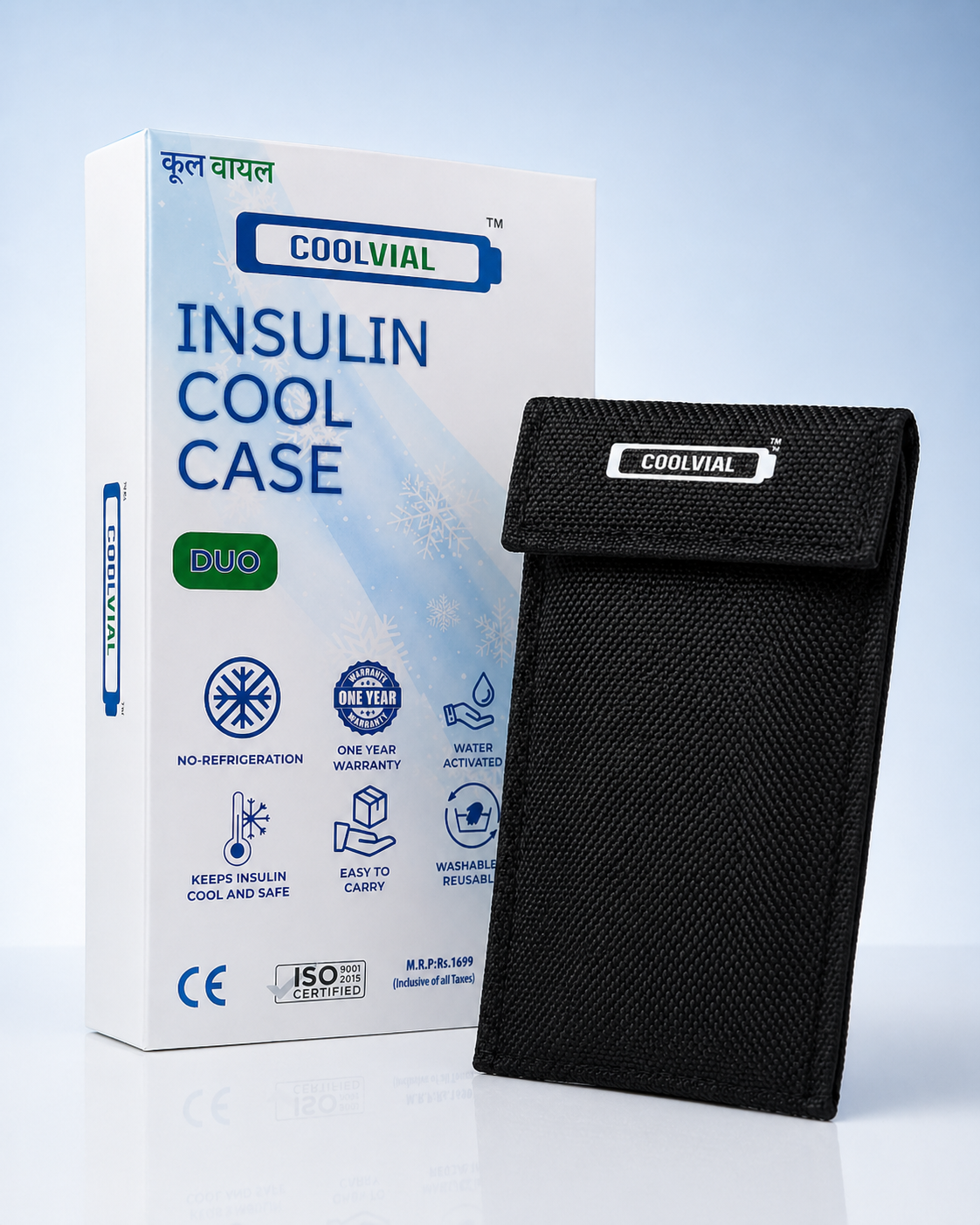
Order on WhatsApp — ₹1,099🛒 Buy Now — ₹1,099Evaporative cooling technology, used in products like the COOLVIAL Duo, offers an elegant solution for how to store insulin in Chennai’s challenging climate. It works by using the simple principle of evaporation: when water evaporates from a surface, it draws heat away, thereby cooling the object.
-
How it Works (COOLVIAL Duo):
- Submerge the inner pouch of the COOLVIAL Duo in water for 45-60 seconds.
- The specialized crystals within the pouch absorb the water and swell, forming a gel.
- As water slowly evaporates from the surface of the pouch, it creates a cooling effect.
- This keeps your insulin at a safe temperature (typically 18-26°C), even when ambient temperatures are much higher.
-
Effectiveness in Local Humidity:
- A common misconception is that evaporative cooling doesn’t work well in high humidity. While extremely high humidity (e.g., 90-100%) can reduce the rate of evaporation, it doesn’t stop the cooling process entirely.
- In Chennai’s typical summer humidity (often 70-85%), evaporative coolers like COOLVIAL Duo are still highly effective. They maintain insulin at a temperature significantly below the ambient heat, keeping it within the safe range (below 25°C for opened insulin, or protecting unopened insulin from extreme heat exposure).
- The COOLVIAL Duo is designed to keep insulin cool for 12-16 hours, even in ambient temperatures of 35-40°C, making it ideal for daily use, travel, or during power cuts.
-
Benefits for Chennai Residents:
- No Electricity Needed: Perfect for travel, outings to places like Phoenix MarketCity Velachery or Express Avenue, and crucial during power outages.
- Portable and Discreet: Easy to carry your insulin pens and vials wherever you go, from a morning walk at Marina Beach to a visit to Apollo Hospitals (Greams Road).
- Cost-Effective: A one-time investment offers long-term protection, especially compared to the recurring cost of spoiled insulin.
- Reliable Performance: Maintains a safe temperature range (18-26°C) for insulin, protecting it from degrading in Chennai’s heat.
| Cooling Method | Pros | Cons | Chennai Suitability |
|---|---|---|---|
| Refrigerator | Ideal for unopened insulin, long-term storage | Vulnerable to power cuts, voltage issues, portability | Primary for bulk |
| Evaporative Cooler (e.g., COOLVIAL Duo) | No electricity, portable, effective in high heat & humidity, 12-16 hr cooling | Requires water activation, not as cold as fridge | Excellent for daily use, travel, power cuts |
| Ice Packs / Gel Packs | Quick cooling, temporary | Can freeze insulin if not careful, bulky, short duration, condensation | Emergency backup only |
Water Quality Matters: Activating Your Cooling Case in Chennai
When using an evaporative cooling case like COOLVIAL Duo, the quality of water used for activation is important, especially in a city like Chennai known for its varying water conditions.
-
Chennai’s Water Reality: Many parts of Chennai, particularly in older neighborhoods or areas with groundwater dependency, can have hard water. Hard water contains high levels of dissolved minerals like calcium and magnesium.
-
Impact on Evaporative Coolers:
- While hard water won’t immediately damage your COOLVIAL Duo, repeated activation with highly mineralized water can leave mineral deposits on the fabric of the inner pouch over time.
- These deposits can potentially reduce the efficiency of the evaporation process or stain the fabric.
- Though COOLVIAL Duo is designed for durability, using cleaner water extends its lifespan and ensures optimal performance.
-
Recommendations for Activation:
- Bottled Water: Using readily available bottled drinking water is the safest and most convenient option. It’s clean, mineral-free, and ensures optimal performance.
- RO (Reverse Osmosis) Water: If you have an RO filter at home, this water is also excellent for activating your COOLVIAL Duo.
- Tap Water (with caution): If bottled or RO water isn’t available, tap water can be used. However, be aware that over time, mineral buildup might occur, especially if your locality (e.g., some areas in North Chennai like Tondiarpet) has particularly hard water. You can periodically rinse the outer fabric gently to minimize buildup.
-
Activation Steps for COOLVIAL Duo:
- Submerge: Dip the inner pouch completely in water (bottled/RO recommended) for 45-60 seconds.
- Drain: Remove and gently squeeze out excess water. The pouch will feel cool and gel-like.
- Insert: Place your insulin pens and vials into the activated pouch.
- Protect: Insert the pouch into the outer cover for insulation and protection.
By paying attention to water quality, you ensure that your COOLVIAL Duo continues to provide reliable, efficient cooling for your vital insulin, protecting it from Chennai’s relentless heat. For more general insulin storage tips that apply year-round, visit our mission page.
Navigating Chennai’s Peak Summer Heat (May-June) & Power Cuts
The combination of May-June’s peak heat and potential power cuts presents the most challenging scenario for insulin storage in Chennai. This requires a multi-pronged approach and proactive planning.
-
Understanding the Risk:
- During May and June, ambient temperatures can consistently exceed 38°C, and indoor temperatures in non-AC homes can reach 35-38°C, even at night.
- A power cut during this period can quickly turn a refrigerator into a warm box, compromising insulin within a few hours.
-
What to Do During a Power Cut in Peak Heat:
- Immediate Transfer: If you anticipate a power cut or experience one, immediately transfer any opened insulin (pens/vials in use) from the fridge to an activated evaporative cooling case like the COOLVIAL Duo. This will keep them at a safe 18-26°C for 12-16 hours.
- Unopened Insulin: For unopened insulin vials, if the power cut is expected to be prolonged (more than 4-6 hours), transfer them to the COOLVIAL Duo as well. While the fridge is ideal, 12-16 hours in an evaporative cooler is far better than prolonged exposure to 35°C+ ambient temperatures.
- Insulated Cooler Box: For larger quantities of unopened insulin, a well-insulated cooler box with frozen gel packs (ensuring the insulin doesn’t directly touch the ice/gel) can serve as a temporary solution. However, this is bulky and requires careful monitoring to prevent freezing.
- Monitor Local News: Keep an eye on local news or TANGEDCO announcements for scheduled power outages. Plan ahead by activating your COOLVIAL Duo in advance.
- Seek AC Spaces: If a power cut extends for many hours and you have no other cooling solution, consider moving to an air-conditioned public space (e.g., a mall like Phoenix MarketCity Velachery or Express Avenue, or a relative’s home with a generator) with your insulin in a cooling case.
-
Apollo Hospitals (Greams Road) Endocrinology Recommendations:
- Specialists at Apollo Hospitals (Greams Road) emphasize the importance of having a reliable, non-electric cooling solution for insulin, especially for patients who travel frequently or live in areas prone to power fluctuations [Verify in 2026]. They advise patients to always have at least a few days’ supply of insulin protected by a portable cooler.
- They also recommend carrying a spare vial or pen, stored safely, to account for any unforeseen spoilage.
| Scenario | Recommended Action for Insulin Storage |
|---|---|
| Peak Heat (35-40°C) | Use COOLVIAL Duo for opened insulin; fridge for unopened. |
| Power Cut (Short, <4 hrs) | Keep fridge closed; transfer opened insulin to COOLVIAL Duo if worried. |
| Power Cut (Long, >4 hrs) | Transfer ALL insulin (opened & unopened) to COOLVIAL Duo. Consider insulated cooler with non-freezing gel packs for bulk. |
| Travel/Outdoors | Always use COOLVIAL Duo. |
Beyond Summer: Protecting Insulin During Chennai’s Distinct Monsoon
While summer focuses on heat, Chennai’s Northeast Monsoon (October-December) brings a different environmental challenge: high humidity and potential water damage. Unlike the rest of India, this is Chennai’s main rainy season, often accompanied by heavy downpours and even cyclone threats.
- Humidity and Insulin:
- High humidity itself doesn’t directly spoil insulin if it’s kept sealed. However, it can affect packaging, labels, and the functionality of insulin pens.
- The primary concern during the monsoon is the indirect impact of heavy rains: increased risk of power cuts, water seepage into homes, and general dampness.
- Protecting Vials from Humidity and Water Damage:
- Waterproof Storage: Store insulin vials and pens in sealed, waterproof bags or containers, even when in the fridge or a cooling case. This protects them from accidental spills or moisture.
- Power Cut Preparedness: As with summer, power cuts are common during heavy rains. Ensure your COOLVIAL Duo is ready for activation.
- Avoid Damp Areas: Do not store insulin in damp cupboards or areas prone to water leaks, which can damage packaging and compromise sterility.
- Check Pharmacy Practices: When purchasing insulin from local pharmacies like Apollo Pharmacy, MedPlus, Trust Pharmacy, Vijaya Medicals, or Madras Pharmacy, ensure they have proper climate-controlled storage to protect their stock from humidity.
For a more detailed guide on protecting your insulin during this specific period, refer to our article: Chennai Monsoon & Insulin — Protecting Your Vials From Humidity Damage.
Practical Storage Tips for Chennai Residents
Effective insulin storage in Chennai requires a blend of standard guidelines and local adaptations. Here are some actionable tips:
- Always Have a Backup: Never rely solely on a single method. Keep your COOLVIAL Duo ready for immediate activation. If you’re traveling, have enough insulin for the trip plus a few extra days.
- Monitor Home Temperatures: In non-AC homes across Central (T Nagar/Nungambakkam) or West Chennai (Anna Nagar/Vadapalani), actively monitor indoor temperatures. If they consistently exceed 25°C, your opened insulin needs active cooling.
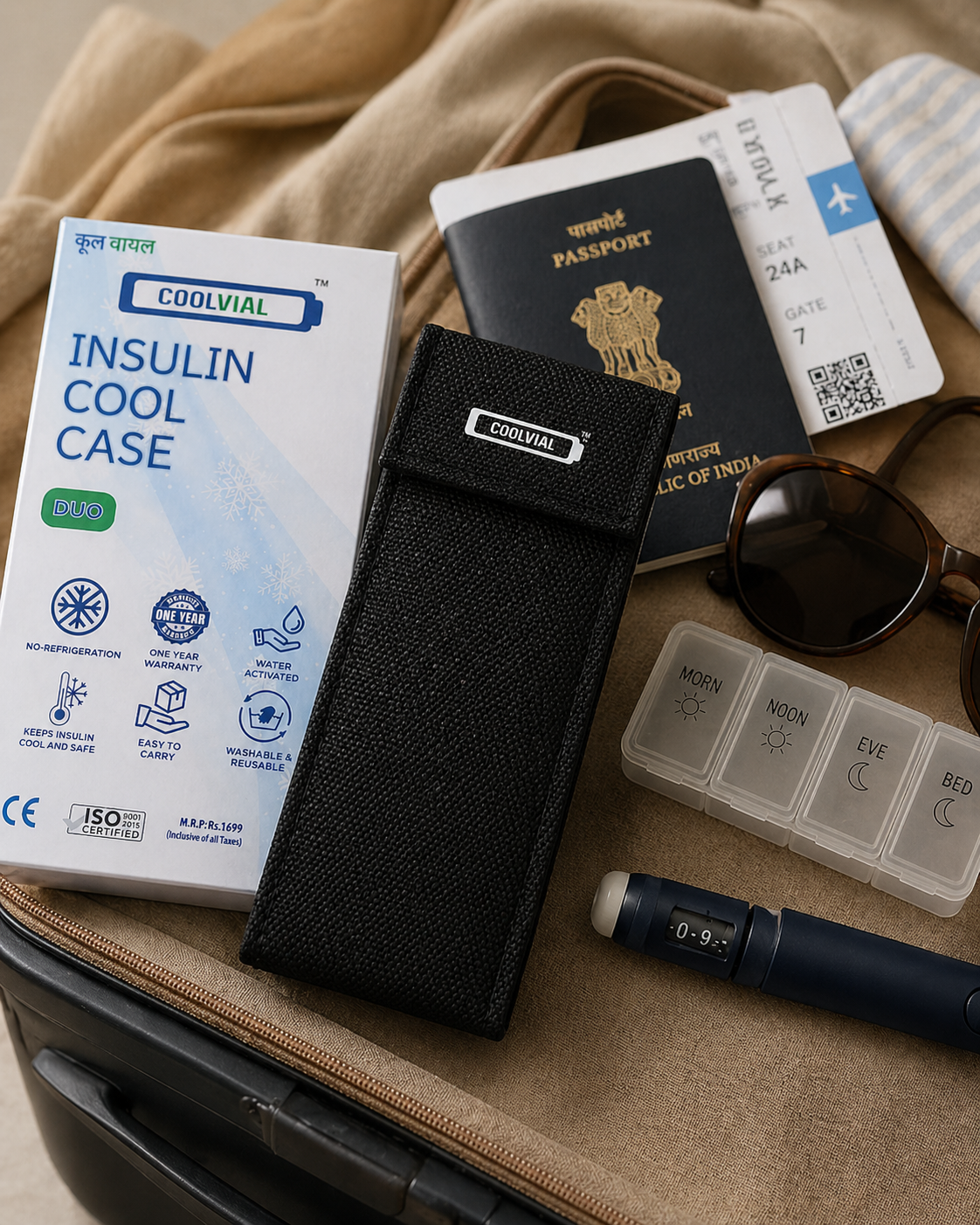
- Travel Smart: When commuting within Chennai (e.g., from Adyar to OMR) or traveling out of the city, always use a portable cooling solution. The COOLVIAL Duo is discreet and fits easily into a bag.
- Pharmacy Awareness: Be observant when buying insulin. Ensure the pharmacy stores its insulin stock properly refrigerated. If you notice insulin kept out on shelves in the heat, politely inquire about their storage practices. Reputable pharmacies like Apollo Pharmacy and MedPlus generally adhere to strict storage guidelines.
- Educate Family Members: Ensure everyone in your household understands the importance of proper insulin storage, especially regarding fridge door closures and handling during power cuts.
- Avoid Direct Sunlight: Never leave insulin in direct sunlight, even for a short period. This applies to cars parked in the sun, windowsills, or outdoor areas. The temperature inside a parked car in Chennai can quickly exceed 50°C.
- Check Expiry Dates: Always double-check the expiry date on new insulin vials/pens and note the date you open a new pen/vial to ensure you discard it after 28 days.
COOLVIAL Duo: Your Reliable Partner for Insulin Storage in Chennai
In the demanding climate of Chennai, where daily temperatures often push insulin to its limits, the COOLVIAL Duo emerges as an indispensable tool for anyone managing diabetes. Designed specifically for the Indian climate, it offers peace of mind and unwavering protection for your vital medication.
Why COOLVIAL Duo is Perfect for Chennai:
- Non-Electric Evaporative Cooling: Unlike bulky ice packs or power-dependent mini-fridges, the COOLVIAL Duo requires no electricity. Simply activate it with water for 45-60 seconds, and it provides 12-16 hours of cooling. This is crucial during Chennai’s frequent power cuts and for maintaining cool temperatures when you’re out and about, whether at Marina Beach or exploring T Nagar.
- Optimal Temperature Range: It keeps insulin safely between 18°C and 26°C, ensuring potency without the risk of freezing. This range is ideal for opened insulin that needs protection from Chennai’s 35-40°C ambient heat.
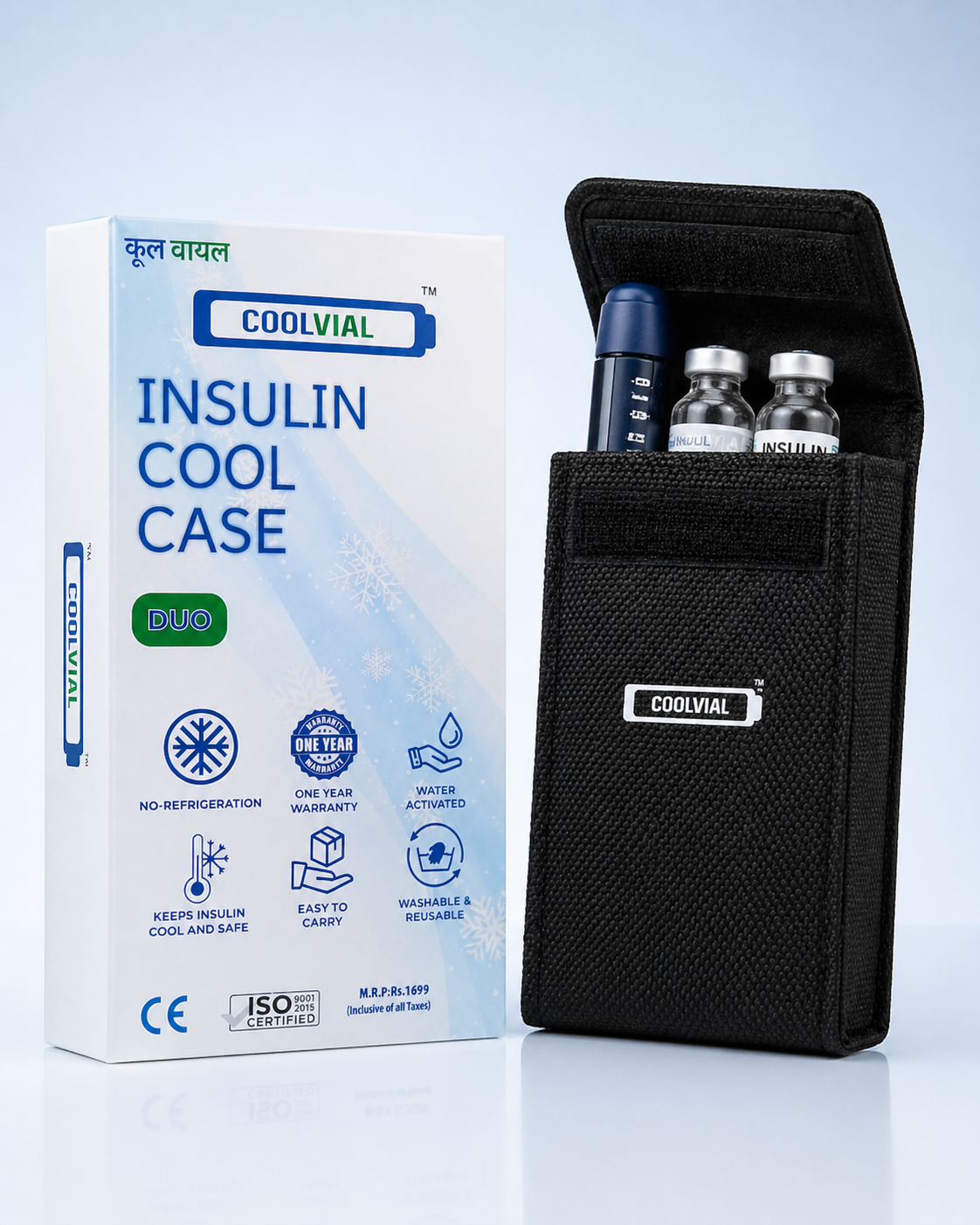
- Capacity Designed for Needs: The COOLVIAL Duo is thoughtfully designed to hold 2 insulin pens and 1 insulin vial, or multiple vials, providing ample space for your daily and backup insulin needs.
- Robust & Certified: Manufactured in India, it boasts CE certification and ISO 9001:2015 standards, reflecting its commitment to quality and reliability. We stand by our product with a 1-year warranty.
- Affordable & Accessible: While premium international brands like FRIO often retail for Rs 1,900 or more for similar capacity, and other Indian options like Outer Woods OW-12 might be around Rs 999 with potentially less capacity, the COOLVIAL Duo offers superior value. Currently, it’s available for just Rs 1,099 when you use the special code COOLHEAL (MRP Rs 1,699). This makes high-quality insulin cooling accessible to more Chennai residents.
- Durability and Reusability: Made with high-quality materials, the COOLVIAL Duo is built to last. It can be reactivated hundreds of times, making it a sustainable and economical choice compared to single-use cooling solutions.
How COOLVIAL Duo Addresses Chennai’s Challenges:
- Heat Protection: Shields insulin from external temperatures up to 40°C, a common reality in Chennai summers.
- Power Cut Solution: Provides a reliable cooling solution when your refrigerator is out of action due to power outages.
- Travel Companion: Ensures your insulin remains cool and safe whether you’re commuting across Chennai, visiting family in Adyar or Velachery, or traveling further afield.
- Humidity Resilience: While evaporative cooling is slightly less efficient in 100% humidity, Chennai’s typical humidity levels still allow for effective cooling, maintaining insulin below dangerous temperatures.
Choosing the COOLVIAL Duo is an investment in your health and peace of mind. It’s a practical, proven solution for how to store insulin effectively in Chennai’s unique and often challenging climate.
Frequently Asked Questions (FAQs)
Q: Can I store my insulin in a regular cooler with ice packs in Chennai’s heat? A: While a cooler with ice packs can provide temporary cooling, it’s generally not recommended for direct insulin storage as ice can freeze insulin, rendering it ineffective. Always use a barrier to prevent direct contact, and monitor temperature closely.
Q: How often should I check my refrigerator temperature for insulin storage in Chennai? A: It is advisable to check your refrigerator’s temperature daily, especially during Chennai’s summer and monsoon seasons, using a dedicated thermometer to ensure it consistently stays between 2°C and 8°C.
Q: What are the signs that my insulin has gone bad due to heat exposure in Chennai? A: Insulin that has spoiled due to heat may appear cloudy, discolored, or contain particles (unless it’s NPH insulin, which is naturally cloudy). Discard immediately if you observe any of these changes.
Q: Is it safe to carry my insulin pen in my pocket or bag without a cooling case when going out for a short time in Chennai? A: No, it is generally not safe to carry insulin directly in your pocket or an uninsulated bag in Chennai’s heat, even for short periods, as body heat and ambient temperatures can quickly elevate its temperature above safe limits. Always use a cooling case like COOLVIAL Duo.
Q: Where can I buy COOLVIAL Duo in Chennai, or is it only online? A: COOLVIAL Duo is primarily available online via coolvial.com, ensuring direct access to our latest offers and product information.
Q: Does Chennai’s hard water affect the COOLVIAL Duo’s performance over time? A: While COOLVIAL Duo is durable, repeated activation with Chennai’s hard water might lead to mineral deposits over a very long period, potentially reducing efficiency. Using bottled or RO water for activation is recommended to prolong its lifespan and maintain optimal performance.
Q: My home in T Nagar reaches 35°C even at night during summer. Can I still use my opened insulin for 28 days? A: If your home consistently exceeds 25°C, your opened insulin will degrade faster than 28 days. You must use an active cooling solution like COOLVIAL Duo to keep it within the safe 18-26°C range for its full duration of use.
Conclusion: Staying Cool, Staying Healthy
Managing diabetes in Chennai’s unique climate demands vigilance and smart choices, especially when it comes to how to store insulin. The city’s intense summer heat, coupled with the challenges of power cuts and high humidity, necessitates reliable cooling solutions beyond conventional refrigeration. From understanding the nuances of Chennai’s indoor temperatures to making informed decisions about water quality for your cooling cases, every step contributes to safeguarding your health.
By adopting proactive strategies, utilizing effective non-electric cooling solutions like the COOLVIAL Duo, and staying informed about local conditions, you can ensure your insulin remains potent and effective. Don’t let Chennai’s climate compromise your diabetes management. Stay cool, stay prepared, and live your life to the fullest.
Order your COOLVIAL Duo today at Rs 1,099 with code COOLHEAL at coolvial.com or via WhatsApp wa.me/918766952300.
Medical Disclaimer: This article is for general information. Always consult your endocrinologist or diabetologist before changing insulin storage or dosing practices.
How We Researched This: Our content is developed based on comprehensive research, including RSSDI guidelines, ICMR-INDIAB data on diabetes prevalence, local Chennai hospital directories (such as Apollo Hospitals (Greams Road), MIOT International), and insights into pharmacy networks like Apollo Pharmacy. We strive to provide accurate, relevant, and actionable information tailored to the Indian context, with specific attention to local climate realities.
5 Essential Tips: How to Store Insulin in Chennai Summer Heat — A Local's Guide
COOLVIAL keeps insulin safe in India's heat. 48+ hours, no electricity needed.