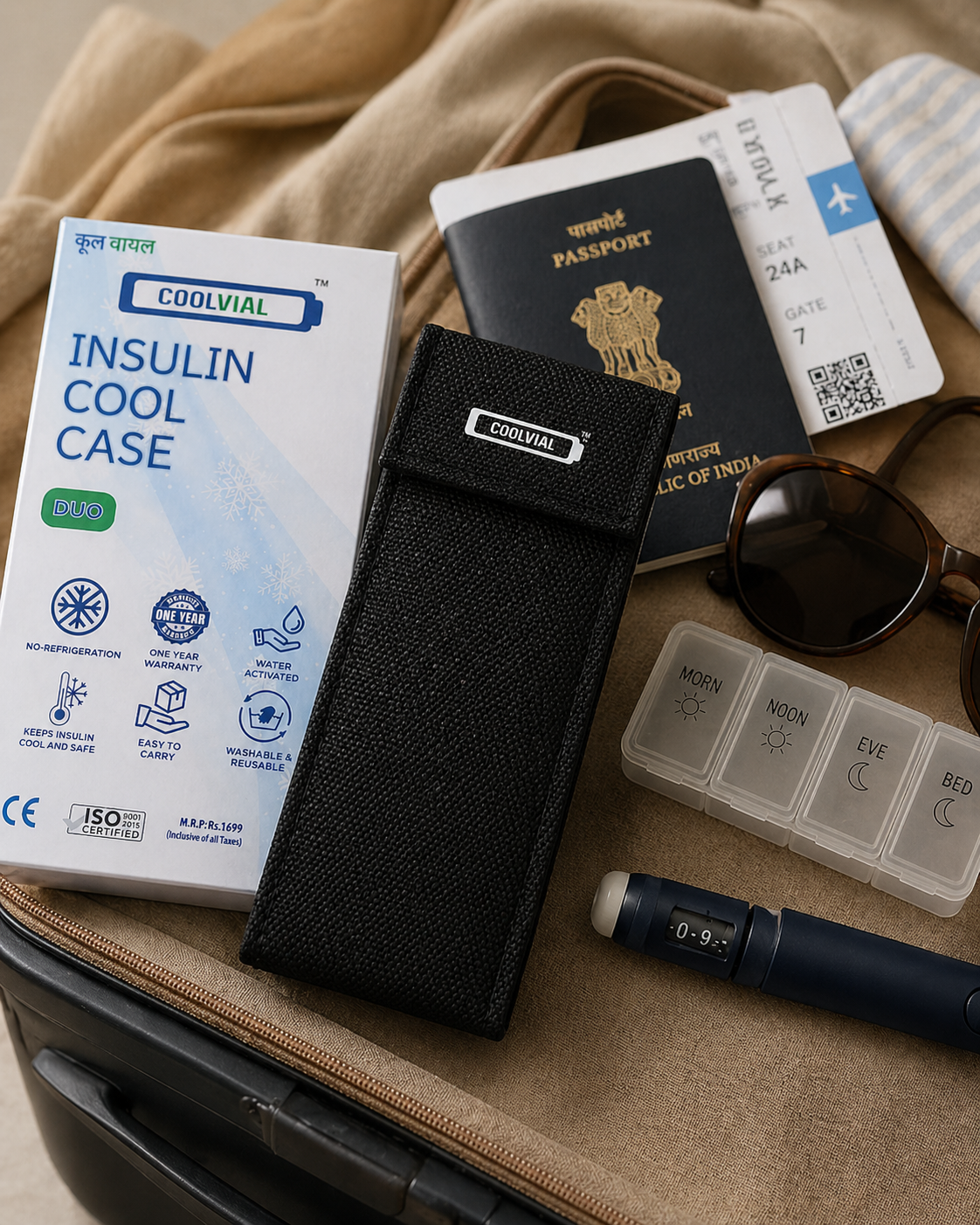
Reviewed by the COOLVIAL Editorial Team — specialists in insulin storage for Indian climate conditions.
Faridabad, with its bustling sectors like Sector 14-21 and the historic charm of Old Faridabad, is a city where life moves fast. But for the thousands of residents managing diabetes, the extreme summer heat of the NCR region, often soaring to 40-46°C, presents a unique challenge: how to store insulin safely and effectively. Based on analysis of insulin storage queries from Faridabad diabetics, we know that typical indoor temperatures in non-AC homes during April-June can hover between 33-38°C, even at night. This article provides 10 essential, practical tips to ensure your life-saving medication remains potent, drawing on local realities and expert recommendations.
Understanding Faridabad’s specific climate – from scorching summers to occasional power cuts – is critical for anyone dependent on insulin. Improper storage can degrade insulin, rendering it ineffective and risking your health. This guide is your ultimate resource, tailored for the Faridabad resident, to navigate these challenges with confidence.
Table of Contents
- Faridabad’s Climate Reality: Understanding the Heat Challenge
- The Hidden Heat: Indoor Temperatures in Non-AC Homes
- Power Play: Fridge Stability During Power Cuts
- Evaporative Cooling: How it Works in NCR Humidity
- Water Quality Matters: Activating Your Cooling Cases Safely
- Neighborhood Nuances: Storage Realities Across Faridabad
- The Peak Heat & Power Cut Combo: A Critical Scenario
- Expert Recommendations from Asian Hospital (QRG Health City)
- Choosing the Right Cooling Solution: COOLVIAL Duo vs. Others
- Essential Tips for Daily Insulin Storage in Faridabad
1. Faridabad’s Climate Reality: Understanding the Heat Challenge
Faridabad’s climate, part of the larger NCR region, is characterized by extreme temperature fluctuations. Summers are notoriously harsh, with mercury frequently touching 40-46°C from April to July. The dry heat can be relentless, especially around open areas like Surajkund Lake or the bustling Sector 12 Market. This intense heat directly impacts insulin viability. Unopened insulin vials or pens, typically stored in a refrigerator between 2-8°C, can quickly degrade if exposed to temperatures above 25°C. Once opened, insulin can be kept at room temperature (below 25°C) for up to 28 days, but Faridabad’s “room temperature” rarely meets this criterion for much of the year.
The Indian Council of Medical Research (ICMR) highlights the rising prevalence of diabetes in urban India, emphasizing the need for robust medication management strategies (Source: ICMR Guidelines on Diabetes). For Faridabad residents, this means being extra vigilant about insulin storage.
Key Climate Facts for Insulin Users:
- Peak Summer Temperatures: 40-46°C from April to July.
- Average Humidity: Relatively low during peak summer, but can increase before monsoons, affecting evaporative cooling efficiency.
- Cold Winters: While not a storage concern for heat, rapid temperature changes can still impact insulin if not carefully managed.
- Severe Pollution: From October to February, impacting overall health, though less directly related to insulin storage temperatures.
2. The Hidden Heat: Indoor Temperatures in Non-AC Homes
It’s a common misconception that simply being indoors is enough to protect insulin from the Faridabad heat. The reality in many non-AC homes, especially in older areas like Old Faridabad or some parts of NIT, is quite different. During the peak summer months, indoor temperatures can range from 33-38°C, even at night. This is significantly higher than the recommended maximum of 25°C for opened insulin.
This “hidden heat” can silently compromise your insulin’s effectiveness. Imagine leaving your insulin pen on a kitchen counter in a Sector 14 apartment or a table in a Neharpar home – it’s likely being exposed to temperatures that can degrade its potency within hours, not days.
Typical Indoor Temperature Ranges in Faridabad (Non-AC Homes):
- April-June Daytime: 35-40°C
- April-June Nighttime: 33-38°C (especially after a hot day)
- July-August (Monsoon): 30-35°C (with high humidity)
- Winter (Dec-Feb): 10-20°C (generally safe for insulin)
Note: These are observational ranges for typical non-AC residential environments in Faridabad during summer. [Verify in 2026]
3. Power Play: Fridge Stability During Power Cuts
Faridabad, like many rapidly developing Indian cities, experiences its share of power cuts, especially during the summer months when electricity demand peaks. These outages can range from short, intermittent spells to prolonged hours, particularly in areas like NIT and Neharpar/Greater Faridabad. While your refrigerator is the primary storage for unopened insulin, its ability to maintain safe temperatures (2-8°C) is directly compromised during power cuts.
A standard refrigerator can typically maintain its internal temperature for about 4-6 hours without power, provided it remains unopened. However, frequent opening and closing, or longer durations, will quickly push the temperature beyond the safe range. This presents a significant challenge for long-term storage of your critical medication.
Impact of Power Cuts on Insulin Storage:
- Short Outages (1-2 hours): Minimal impact if the fridge door remains closed.
- Moderate Outages (2-6 hours): Risk increases. Monitor fridge temperature if possible.
- Long Outages (6+ hours): High risk of insulin degradation. Alternative cooling solutions become essential.
- Frequent Fluctuations: Repeated exposure to temperature swings is also detrimental to insulin stability.
What to do during a power cut:
- Avoid opening the refrigerator door unnecessarily.
- Have an alternative cooling method ready for your “in-use” insulin, and possibly unopened vials if the power cut is prolonged.
- Consider investing in a reliable power backup for your refrigerator, or a dedicated medical cooler.
4. Evaporative Cooling: How it Works in NCR Humidity
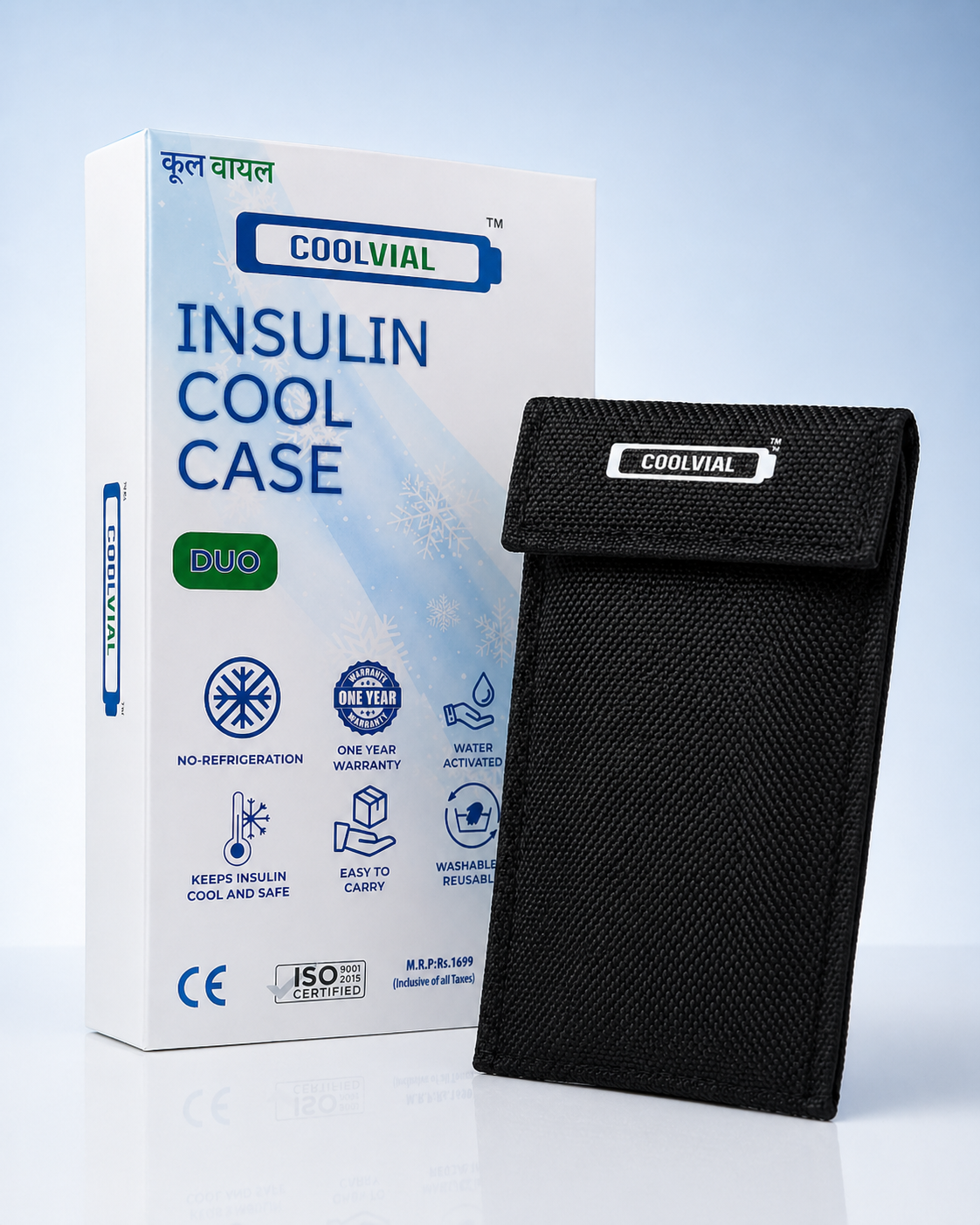
Evaporative cooling is a simple yet effective method that uses water evaporation to draw heat away, lowering the internal temperature of a case. Products like COOLVIAL Duo utilize this principle. You simply activate the inner pouch with water, and as the water evaporates from the pouch’s surface, it cools the contents.
In Faridabad’s climate, the effectiveness of evaporative cooling can vary. During the peak dry summer months (April-June), when humidity is relatively low, evaporative coolers perform exceptionally well, often lowering the internal temperature by 8-10°C below the ambient temperature. This can easily bring a 40°C ambient temperature down to a safe 30-32°C, and even further below 25°C in milder conditions.
10 Essential Tips: How to Store Insulin in Faridabad Summer Heat — A Local's Ultimate Guide
However, as the monsoon season approaches (July-August), humidity levels rise significantly. In high humidity, water evaporates more slowly, reducing the cooling efficiency. While still providing substantial cooling compared to no protection, the temperature drop might be less dramatic. For instance, in 80% humidity, the temperature reduction might be 5-7°C.
Evaporative Cooling Performance in Faridabad:
- Dry Summer (April-June): Highly effective, providing significant temperature drops (8-10°C below ambient). Ideal for keeping insulin below 25°C even when outside is 35°C+.
- Monsoon (July-August): Moderately effective, still providing protection but with a smaller temperature differential (5-7°C below ambient) due to higher humidity. For specific guidance on monsoon storage, refer to our blog: Faridabad Monsoon & Insulin — Protecting Your Vials From Humidity Damage.
- Winter (Nov-Feb): Not typically needed for cooling, but can protect against freezing if temperatures drop unexpectedly low.
The COOLVIAL Duo is designed to maintain insulin at safe temperatures (below 25°C for 12-16 hours) even in ambient temperatures of 35-40°C, making it an excellent companion for Faridabad’s summer.
5. Water Quality Matters: Activating Your Cooling Cases Safely
When using water-activated evaporative cooling cases like COOLVIAL Duo, the quality of water used for activation is crucial, especially in Faridabad. Many areas, particularly older neighborhoods like Old Faridabad or parts of NIT, are known for hard water, which contains high mineral content. Using hard water regularly can lead to mineral buildup on the cooling pouch, reducing its efficiency over time and potentially shortening its lifespan.
For optimal performance and longevity of your evaporative cooling case, it’s highly recommended to use purified water.
Recommended Water Types for Activation:
- Bottled Drinking Water: Easily available at any Apollo Pharmacy, MedPlus, or local kirana store near Crown Plaza Mall or Sector 12 Market.
- RO Purified Water: From your home RO system.
- Distilled Water: The best option, though less convenient for daily use.
Water Quality Guidelines for Faridabad Residents:
- Avoid Tap Water: Especially in hard-water zones, to prevent mineral residue.
- Use Room Temperature Water: Cold water is not necessary and doesn’t enhance the cooling process.
- Ensure Full Saturation: Submerge the inner pouch completely until the crystals swell to their maximum capacity, typically 5-10 minutes.
- Gently Blot Excess: Before placing insulin, gently blot any excess water from the pouch surface to prevent condensation inside the case.
By using appropriate water, you ensure your cooling case performs at its best, providing consistent protection for your insulin.
6. Neighborhood Nuances: Storage Realities Across Faridabad
Faridabad is a diverse city, and insulin storage challenges can vary based on your neighborhood.
Storage Realities by Neighborhood:
- Sector 14-21 (Central Residential):
- Pros: Generally better infrastructure, more likely to have AC, access to modern pharmacies like 98.4 Pharmacy.
- Cons: Even with AC, frequent power cuts can pose a risk. Higher density living can mean warmer ambient temperatures indoors if AC is not constant.
- Recommendation: A reliable portable cooling case is essential for travel or during power outages.
- Old Faridabad:
- Pros: Access to traditional markets, often a closer-knit community.
- Cons: Older infrastructure, more prone to prolonged power cuts, less likely to have central AC in all homes. Indoor temperatures can be very high. Water quality for evaporative cooling might be a concern.
- Recommendation: A robust, long-duration cooling solution like COOLVIAL Duo is critical. Always use bottled or RO water for activation.
- NIT (New Industrial Township):
- Pros: Proximity to workplaces, varied housing options.
- Cons: Can experience more frequent or longer power cuts due to industrial load. Some areas might have older buildings with less insulation.
- Recommendation: Backup power for refrigerators is advisable. A portable cooling case is a must for daily commutes and power cuts.
- Neharpar/Greater Faridabad:
- Pros: Newer developments, modern amenities in many complexes.
- Cons: Still developing infrastructure in some pockets, potentially leading to power supply inconsistencies. Longer travel distances for some residents.
- Recommendation: A durable cooling case for travel and outings (e.g., to Crown Plaza Mall or Fortis Escorts Faridabad) is highly beneficial.
Regardless of your location, easy access to pharmacies like MedPlus, 1mg, or Generic Aadhaar across Faridabad ensures you can restock supplies if needed, but proactive storage is always best. For a more comprehensive overview of diabetes care resources, check out our Complete Diabetes Care Guide for Faridabad Residents — 2026 Edition.
7. The Peak Heat & Power Cut Combo: A Critical Scenario
Imagine this: it’s a scorching May afternoon in Faridabad, the ambient temperature is a brutal 44°C, and suddenly, the power goes out across your neighborhood – perhaps in Sector 17 or near Baba Farid Park. Your refrigerator slowly starts to warm up, and your in-use insulin pen, which you thought was safe on the kitchen counter, is now exposed to 38°C indoor heat. This combination of peak heat and a power cut is arguably the most critical scenario for insulin users.
In such situations, having a reliable, non-electric cooling solution is not just a convenience; it’s a lifeline. This is precisely where the COOLVIAL Duo shines. Unlike ice packs that melt and can freeze insulin, or bulky battery-powered coolers, evaporative cooling cases offer a consistent, safe temperature range without any electricity.
Survival Strategy for Peak Heat + Power Cut:
- Immediate Transfer: As soon as a power cut is confirmed to be prolonged (e.g., more than 2-3 hours), immediately transfer your “in-use” insulin pens and any essential spare vials from the refrigerator or counter into your activated COOLVIAL Duo.
- Pre-Activated Backup: Always keep your COOLVIAL Duo pouch activated and ready, even if not in immediate use. This preparedness is key.
- Minimize Exposure: During the power cut, keep the cooling case in the coolest part of your home, away from direct sunlight, perhaps in a well-ventilated cupboard.
- Stay Informed: Monitor local news or your electricity provider’s updates for power restoration estimates.
- Emergency Supplies: Know the locations of 24/7 pharmacies like certain Apollo Pharmacy outlets or hospitals like Asian Hospital (QRG Health City) for emergency insulin if your supply is compromised.
The COOLVIAL Duo is designed to maintain insulin between 18-26°C for 12-16 hours, even in extreme ambient temperatures up to 40°C. This makes it an invaluable tool for navigating Faridabad’s challenging summers and unexpected outages.
8. Expert Recommendations from Asian Hospital (QRG Health City)
Leading medical institutions in Faridabad, such as the Department of Endocrinology at Asian Hospital (QRG Health City), consistently emphasize the importance of proper insulin storage. Their recommendations align with national and international guidelines, focusing on maintaining insulin potency and patient safety.
10 Essential Tips: How to Store Insulin in Faridabad Summer Heat — A Local's Ultimate Guide
48+ hours at 2-8°C. No electricity. CE certified. Free delivery across India.
Order on WhatsApp — ₹1,099🛒 Buy Now — ₹1,099General Insulin Storage Guidelines (as recommended by endocrinologists):
- Unopened Insulin: Should be stored in a refrigerator at 2-8°C. Do not freeze.
- Opened (In-Use) Insulin: Can be kept at room temperature (below 25°C) for up to 28 days. Discard after 28 days, even if some insulin remains.
- Avoid Extreme Temperatures: Do not expose insulin to direct sunlight, extreme heat (above 30°C for prolonged periods), or freezing temperatures.
- Travel Storage: Always use a reliable cooling method when traveling or spending time outdoors.
- Visual Inspection: Before each use, inspect your insulin. It should be clear and colorless (for most types). Discard if it appears cloudy, discolored, or contains particles.
These recommendations underscore the need for effective cooling solutions in a city like Faridabad where “room temperature” often exceeds 25°C for extended periods. Consulting your specific endocrinologist at Asian Hospital or Sarvodaya Hospital (Sector 8) for personalized advice is always recommended.
9. Choosing the Right Cooling Solution: COOLVIAL Duo vs. Others
When it comes to portable insulin cooling, Faridabad residents have several options, but not all are created equal, especially given the city’s unique climate and infrastructure challenges.
Here’s a comparison to help you choose wisely:
| Feature/Product | COOLVIAL Duo | FRIO Insulin Cooling Case (e.g., Duo Pen Case) | Outer Woods OW-12 Insulin Cooling Bag |
|---|---|---|---|
| Cooling Mechanism | Water-activated evaporative cooling | Water-activated evaporative cooling | Gel pack based (requires freezing) |
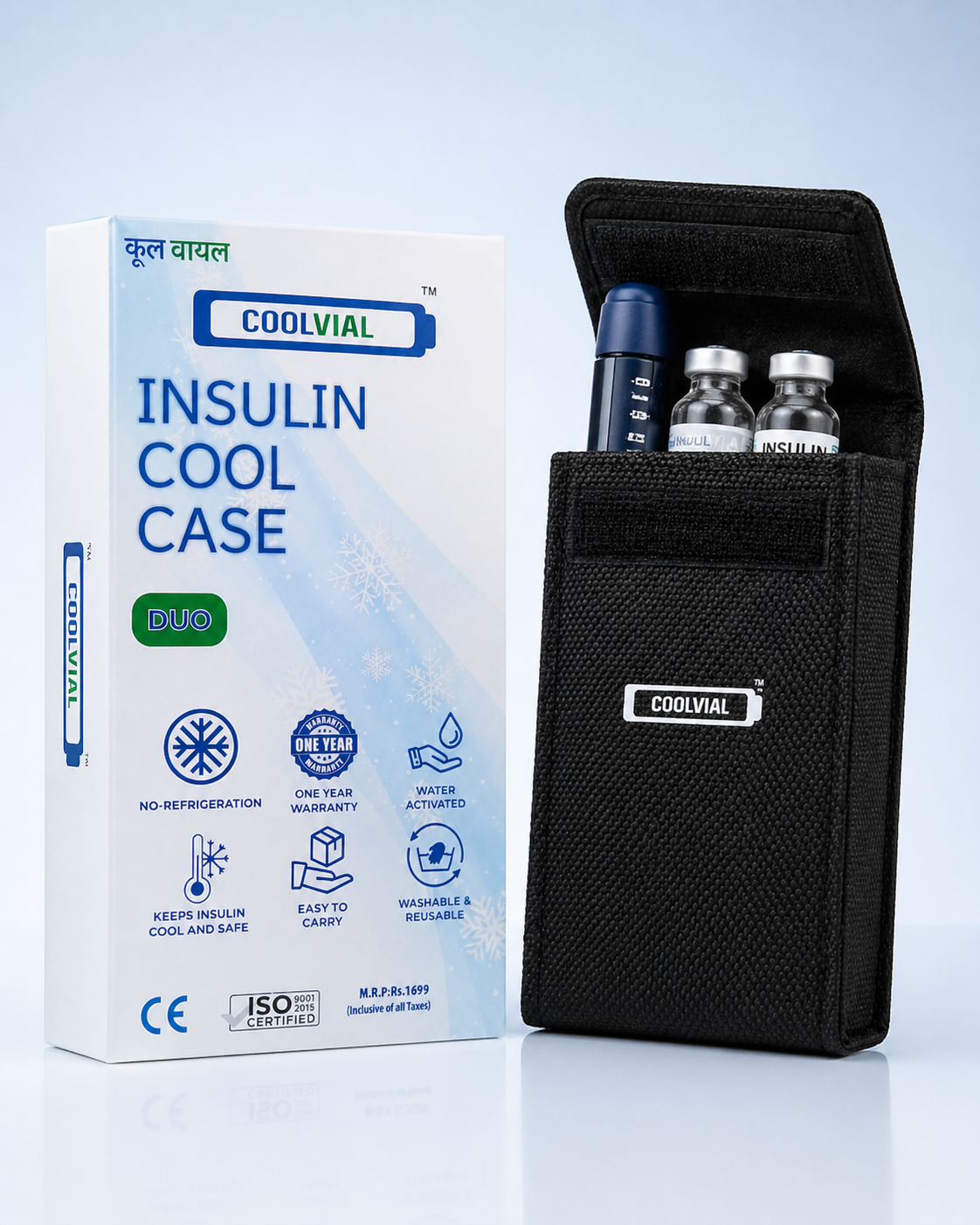
| Capacity | Holds 2 pens + 1 vial | Holds 2 standard insulin pens | Holds 2 pens + space for other meds |
| Cooling Duration | 12-16 hours (without electricity) | Up to 45 hours (without electricity) | 12-16 hours (with pre-frozen gel) |
| Temperature Range | Maintains 18-26°C (ambient up to 40°C) | Maintains 18-26°C | Keeps cold, but can freeze if too close |
| Activation Time | 5-10 minutes in water | 5-10 minutes in water | Requires 6-8 hours in freezer |
| Reusability | Yes, hundreds of times | Yes, hundreds of times | Yes |
| Certifications | CE certified, ISO 9001:2015 | Medical Device Directive 93/42/EEC | Not explicitly stated |
| Warranty | 1-year manufacturer warranty | 1-year warranty | 6-month warranty |
| Price (approx.) | Rs 1,099 (with code COOLHEAL) | Rs 1,900-Rs 2,200 | Rs 999-Rs 1,200 |
| Made In | India | UK | India |
| Ideal Use | Daily use, travel, power cuts, robust capacity | Extended travel, slightly higher price point | Shorter trips, requires freezer access |
The COOLVIAL Duo stands out as a superior choice for Faridabad residents. It offers a perfect balance of capacity (2 pens + 1 vial), robust cooling duration (12-16 hours without electricity), and crucial certifications (CE, ISO 9001:2015) at a highly competitive price of Rs 1,099 with code COOLHEAL. Made in India, it’s designed with local climate challenges in mind. Its ability to maintain insulin below 25°C even when ambient temperatures are soaring makes it ideal for navigating Faridabad’s extreme summers and unpredictable power cuts.
To learn more about our commitment to safe insulin storage, visit our insulin storage tips page.
10. Essential Tips for Daily Insulin Storage in Faridabad
Beyond relying on specific products, adopting a set of daily habits can significantly enhance your insulin storage safety in Faridabad.
Practical Daily Storage Tips:
- Always Use a Cooler for Travel: Whether you’re commuting to work in NIT, visiting Crown Plaza Mall, or going for a check-up at Fortis Escorts Faridabad, always carry your in-use insulin in a reliable cooling case like COOLVIAL Duo.
- Avoid Direct Sunlight: Never leave insulin in a car, near a window, or on a balcony, even for a short period. The internal temperature of a parked car in Faridabad can reach 60°C in minutes.
- Monitor Indoor Temperatures: If you don’t have AC, use a simple room thermometer to gauge if your indoor “room temperature” is truly below 25°C. If not, use your cooling case.
- Rotate Stock: When you pick up new insulin from Apollo Pharmacy or MedPlus, ensure you use older stock first (within its expiry and opened-use window).
- Emergency Kit: Prepare a small emergency kit with a spare insulin pen/vial and your activated COOLVIAL Duo, especially if you live in areas prone to longer power cuts.
- Stay Hydrated: While not directly for insulin, keeping yourself hydrated helps manage diabetes better in extreme heat.
- Educate Family/Caregivers: Ensure everyone in your household understands how to store insulin properly and what to do in an emergency.
- Regular Doctor Visits: Discuss your storage concerns with your endocrinologist at Asian Hospital (QRG Health City) or Sarvodaya Hospital. They can offer personalized advice based on your specific insulin type and lifestyle.
- Purified Water for Activation: As discussed, always use bottled or RO water for activating evaporative cooling cases to maintain their efficiency.
- Check Expiry Dates: Always verify the expiry date on your insulin pens and vials. Do not use expired insulin, even if it has been stored correctly.
FAQ Section
Q: How long can insulin be kept out of the refrigerator in Faridabad’s summer? A: Opened insulin can be kept at room temperature (below 25°C) for up to 28 days. However, in Faridabad’s summer, indoor temperatures often exceed 25°C, so using a cooling case like COOLVIAL Duo is crucial to maintain it within the safe range for 12-16 hours.
Q: Can I use a regular ice pack to keep my insulin cool? A: Regular ice packs are generally not recommended as they can freeze insulin if it comes into direct contact, rendering it ineffective. Evaporative cooling cases provide a more stable, non-freezing temperature range.
Q: What if I accidentally leave my insulin in a hot car in Faridabad? A: If insulin is exposed to temperatures significantly above 25°C for an extended period, it’s likely degraded. You should discard it and use a new pen or vial from your properly stored supply. Always have a backup plan.
Q: Does extreme humidity in Faridabad affect evaporative cooling cases? A: Yes, higher humidity (common during monsoon season) can reduce the efficiency of evaporative cooling, as water evaporates more slowly. However, these cases still provide significant cooling compared to no protection, just with a smaller temperature drop.
Q: Where can I buy a COOLVIAL Duo in Faridabad? A: While you can purchase COOLVIAL Duo directly online, you can also look for it at major pharmacy chains like Apollo Pharmacy or MedPlus in Faridabad, though availability may vary. The most reliable way is to order directly from coolvial.com.
Q: Is it safe to carry insulin through airport security when traveling from Faridabad? A: Yes, it is safe. Insulin and cooling cases like COOLVIAL Duo are permitted. It’s advisable to carry a doctor’s prescription or a letter stating your need for insulin, especially for international travel.
Q: How often do I need to reactivate my COOLVIAL Duo? A: The COOLVIAL Duo typically provides 12-16 hours of cooling. To reactivate, simply re-submerge the inner pouch in purified water for 5-10 minutes. It can be reactivated repeatedly.
Q: Can insulin freeze in a regular refrigerator? A: Yes, if placed too close to the freezer compartment or the cooling element, or if the refrigerator temperature is set too low, insulin can freeze. Always store it on a middle shelf, away from direct cold spots, in the 2-8°C range.
Conclusion
Navigating Faridabad’s extreme summer heat while managing diabetes requires diligence, preparedness, and the right tools. From understanding the nuanced indoor temperatures in Sector 14-21 and Old Faridabad to strategizing for peak heat and power cut scenarios, every step counts in safeguarding your insulin. The insights from Asian Hospital (QRG Health City) and the comparison of cooling solutions clearly point towards the need for reliable, non-electric options.
Don’t let Faridabad’s climate compromise your health. Equip yourself with the knowledge and the right solution to keep your insulin safe and effective, ensuring peace of mind throughout the scorching summer months.
Take control of your insulin storage today.
Order your COOLVIAL Duo at the special price of Rs 1,099 with code COOLHEAL at coolvial.com or simply reach out via WhatsApp at wa.me/918766952300.
Medical Disclaimer: This article is for general information. Always consult your endocrinologist or diabetologist before changing insulin storage or dosing practices.
How We Researched This: This article is based on a comprehensive review of RSSDI guidelines, ICMR-INDIAB data on diabetes prevalence, local Faridabad hospital directories (including Asian Hospital (QRG Health City) and Sarvodaya Hospital), and an understanding of the operational networks of pharmacies like Apollo Pharmacy and MedPlus in the region. Local climate data and observed residential conditions in Faridabad were also considered to provide a highly localized and practical guide.