
Reviewed by the COOLVIAL Editorial Team — specialists in insulin storage for Indian climate conditions.
Kochi, the Queen of the Arabian Sea, is renowned for its picturesque backwaters, historic Fort Kochi, and bustling Marine Drive. But for the city’s many residents living with diabetes, Kochi’s tropical coastal climate presents a unique challenge: safely storing insulin. With temperatures hovering between 23-32°C year-round and an average humidity that can soar from 75% to a staggering 95%, keeping insulin effective is a constant concern. This isn’t just about heat; the relentless dampness in Kochi is the true enemy, silently degrading insulin’s efficacy and even damaging its packaging. Based on analysis of insulin storage queries from Kochi diabetics, understanding how to store insulin properly in this specific environment is crucial for maintaining blood sugar control and preventing costly spoilage. This guide offers 10 essential tips for navigating Kochi’s unique climatic demands to ensure your insulin remains potent and safe.
Table of Contents
- Understanding Kochi’s Unique Climate: Beyond Just Heat
- The Silent Threat: Humidity and Mould on Insulin Packaging
- Why Your Fridge Might Not Be Enough (or Even Worse) in Kochi
- The Realities of AC vs. Non-AC Homes in Kochi’s Neighborhoods
- Protecting Insulin from Coastal Salt Air and Backwater Moisture
- Essential On-the-Go Insulin Storage for Kochi’s Commuters and Tourists
- The Power Trio: Silica Gel, Airtight Containers, and Evaporative Cooling
- Recognizing Spoiled Insulin in Humid Conditions
- Traveling with Insulin from Kochi: What You Need to Know
- Expert Recommendations from Kochi’s Top Endocrinologists
1. Understanding Kochi’s Unique Climate: Beyond Just Heat
When most people think of tropical climates, they immediately think of heat. While Kochi certainly has its warm days, with temperatures typically ranging from 23°C to 32°C, it’s the pervasive, year-round humidity that truly sets it apart from many other Indian cities. Unlike inland areas where humidity peaks only during the monsoon, Kochi’s coastal location means that relative humidity often stays above 75%, climbing to 95% or higher during the intense dual monsoon seasons (June to November). This constant dampness creates an environment ripe for challenges when it comes to preserving sensitive medications like insulin.
Key Climate Characteristics of Kochi:
- Moderate but Consistent Heat: Daily temperatures rarely drop below 23°C, ensuring a warm environment where insulin can quickly degrade if not stored correctly.
- Extreme Year-Round Humidity: The average relative humidity rarely falls below 75%, making it a constant battle against moisture, even on seemingly dry days. This is significantly different from cities like Delhi, where humidity levels fluctuate more dramatically.
- Intense Dual Monsoons: Kochi experiences heavy rainfall from the Southwest Monsoon (June-September) and the Northeast Monsoon (October-November), bringing torrential downpours and exacerbating humidity levels.
- Coastal Salt Air: The proximity to the Arabian Sea means the air carries a certain salinity, which can have corrosive effects on packaging and metallic components of insulin pens over time.
This combination of factors means that standard insulin storage advice might not be sufficient for Kochi residents. Understanding these specific climate nuances is the first step in formulating an effective strategy for how to store insulin safely and effectively.
2. The Silent Threat: Humidity and Mould on Insulin Packaging
One of the most insidious threats in Kochi’s humid climate isn’t just to the insulin itself, but to its packaging. Insulin pens often come in cardboard boxes, and vials are sealed with rubber stoppers. These materials are highly susceptible to moisture.
How Humidity Affects Insulin Packaging:
- Mould Growth: Cardboard boxes, paper labels, and even the outer plastic of insulin pens can become breeding grounds for mould and mildew in humidity exceeding 70%. This not only looks unpleasant but can compromise the sterility of the pen or vial, and even degrade the ink on expiry dates or dosage instructions.
- Label Degradation: High humidity can cause labels on insulin vials or pens to peel, smudge, or fade, making it difficult to read critical information like expiry dates, insulin type, and dosage. This is particularly dangerous as it can lead to medication errors.
- Cardboard Softening: The integrity of the insulin box is compromised. A damp, softened box offers less protection against physical damage, and can even stick to other items in your storage area.
- Rubber Stopper Integrity: While less common, prolonged exposure to extreme humidity can, in rare cases, affect the seal of rubber stoppers on vials, potentially allowing moisture or contaminants to enter.
Practical Steps to Combat Mould and Packaging Damage:
- Inspect Regularly: Always check your insulin pens and vials for any signs of mould, discoloration, or label damage before use.
- Remove from Original Cardboard: If possible, once you bring insulin home, consider removing the pens/vials from their original cardboard boxes, especially if they are for long-term storage, and place them in an airtight, moisture-proof container.
- Use Desiccants: Placing small silica gel packets inside your storage containers can absorb excess moisture and significantly reduce the risk of mould growth. These are readily available at local pharmacies like Apollo Pharmacy or MedPlus.
- Clean Storage Areas: Regularly clean and dry your storage drawers or cabinets, especially in non-AC homes in areas like Fort Kochi or Vyttila, where ventilation might be limited.
3. Why Your Fridge Might Not Be Enough (or Even Worse) in Kochi
It’s common knowledge that unopened insulin should be stored in a refrigerator, typically between 2°C and 8°C. However, in Kochi’s high humidity, your regular kitchen fridge can ironically become a source of problems rather than a complete solution.
The Fridge Condensation Conundrum in Kochi:
- High Ambient Humidity: When you open your refrigerator door in a high-humidity environment like Kochi (75-95% RH), warm, moist air rushes in. As this air cools rapidly inside the fridge, it condenses into water droplets on surfaces, including your insulin pens and vials.
- Unlike Delhi’s Dry Cold: In a city like Delhi, which experiences dry winters, fridge condensation might be minimal. But in Kochi, this condensation is a persistent issue, leading to moisture accumulation inside the fridge, on packaging, and even on the insulin pens themselves.
- Risk of Water Damage: Repeated exposure to condensation can damage pen mechanisms, labels, and even promote mould growth if moisture persists. It can also degrade the outer surface of your insulin pen, especially if it’s not designed for constant dampness.
- Temperature Fluctuations: Frequent opening of the fridge door in a hot environment can cause internal temperature fluctuations, which are detrimental to insulin stability.
Smart Fridge Storage for Kochi Residents:
- Airtight Containers are Essential: Always store your insulin pens and vials in airtight, waterproof containers inside the refrigerator. This creates a protective barrier against condensation. Tupperware or similar food-grade containers work well.
- Avoid the Door: Store insulin in the main compartment, not the door, as door shelves experience the most temperature fluctuations.
- Regular Inspection: Check your refrigerated insulin periodically for any signs of moisture inside the airtight container. If you see condensation, dry the container and replace any silica gel packets.
- Consider a Dedicated Mini-Fridge: For critical medications, some residents in areas like Kakkanad or Tripunithura might opt for a small, dedicated medical mini-fridge with better humidity control, though this is a more significant investment.
Even with careful refrigeration, the moment you take insulin out, it is exposed to Kochi’s humid ambient air. This is where portable cooling solutions become critical.
4. The Realities of AC vs. Non-AC Homes in Kochi’s Neighborhoods
Kochi’s diverse neighborhoods, from the historic charm of Fort Kochi to the modern high-rises of Kakkanad/Infopark and the bustling central areas of MG Road/Ernakulam, present varying living conditions that directly impact insulin storage. The presence or absence of air conditioning makes a significant difference.
AC Apartments (Kakkanad, Modern Ernakulam):
- Controlled Environment: Homes with consistent air conditioning offer a more stable internal environment, typically with temperatures between 22-26°C and reduced humidity levels (often 50-60%). This is ideal for insulin storage once opened (which can be kept at room temperature for 28-30 days).
- Still Not Perfect: Even with AC, if the unit is turned off for extended periods (e.g., when residents are at work or during power cuts), the indoor temperature and humidity can quickly revert to ambient Kochi levels, putting insulin at risk.
- Power Fluctuations: Kochi can experience power outages, especially during the monsoon. During these times, AC units cease to function, and indoor conditions rapidly deteriorate.
Non-AC Homes (Fort Kochi, Older Vyttila/Tripunithura, Rural Backwaters):
- Direct Exposure: Residents in non-AC homes face the full brunt of Kochi’s tropical climate indoors. Temperatures can easily reach 30-32°C, and humidity remains consistently high.
- Increased Mould Risk: Without air circulation and dehumidification, mould growth on insulin packaging and storage areas is a much higher risk.
- Limited Cooling Options: Relying solely on fans offers minimal relief from high temperatures and does nothing to reduce humidity.
Tailored Advice for Each Scenario:
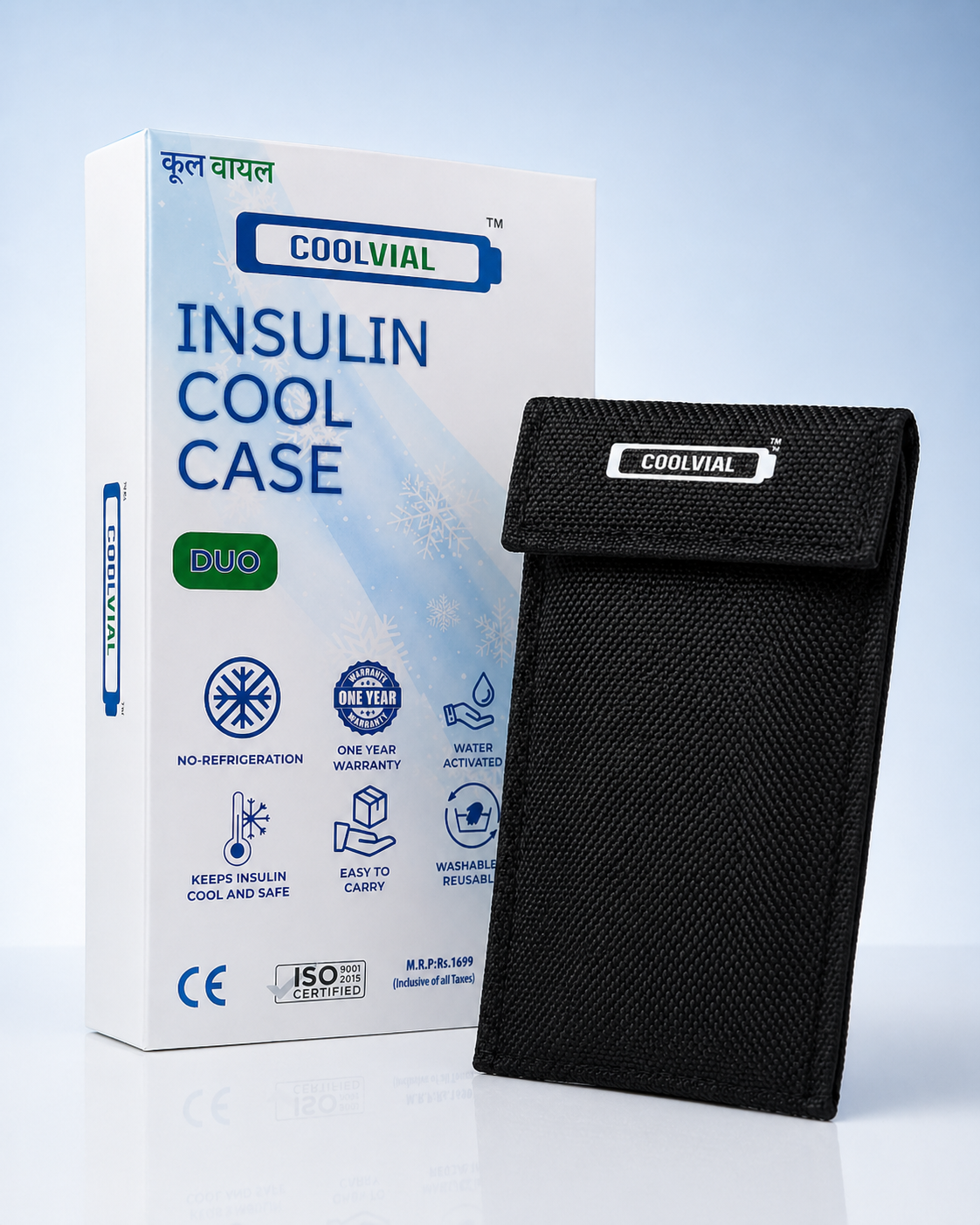
- For AC Homes: Ensure a reliable backup cooling solution is always on hand for power cuts. A high-quality evaporative cooling case is indispensable.
- For Non-AC Homes: Prioritize evaporative cooling cases, airtight containers, and desiccants. Store insulin in the coolest, driest part of the house, away from direct sunlight and external walls. Consider using a small, dehumidifying fan in storage areas if possible.
- Neighborhood Specifics:
- MG Road/Ernakulam: Many apartments here have AC, but traffic pollution means windows often stay shut, leading to stuffiness if AC isn’t running.
- Fort Kochi: Older, traditional homes with less sealed construction can be prone to higher indoor humidity.
- Kakkanad/Infopark: Newer apartments here are generally well-sealed and AC-reliant, but power stability is still a factor.
Regardless of your living situation, having a robust, electricity-free cooling solution is a non-negotiable for anyone managing diabetes in Kochi.
5. Protecting Insulin from Coastal Salt Air and Backwater Moisture
Kochi’s identity is intrinsically linked to its coast and intricate backwater network. While beautiful, these elements introduce unique environmental challenges for insulin storage: coastal salt air and pervasive backwater moisture.
Impact of Coastal Salt Air:
- Corrosion of Metal Components: Insulin pens often contain small metal parts, such as needle attachments, dosage dials, and internal mechanisms. Prolonged exposure to salt-laden air, even indirectly, can accelerate corrosion and rust. This compromises the pen’s functionality, leading to sticky dials, difficulty in attaching needles, or even complete failure.
- Degradation of Plastic: While less dramatic, salt air can also subtly degrade certain plastics over time, making them brittle or discolored.
- Packaging Damage: Salt crystals can accumulate on packaging, potentially interacting with moisture to further degrade cardboard and labels.
Impact of Backwater Moisture:
- Elevated Local Humidity: Areas directly adjacent to the backwaters, like parts of Fort Kochi or tourist houseboats, experience even higher localized humidity compared to more inland parts of the city. The constant evaporation from the water bodies saturates the air with moisture.
- Condensation Risk: Any cool surface, including an insulin pen just removed from a cooling case, will quickly attract condensation in such an environment.
- Water Damage: Accidental splashes or exposure to rain/mist is a higher risk, especially for tourists enjoying a houseboat stay or local fishermen on the backwaters.
Strategies for Coastal and Backwater Environments:
- Airtight Protection is Paramount: When near the coast or backwaters, ensure your insulin is always stored in an airtight, waterproof container. This acts as the first line of defense against both salt air and direct moisture.
- Regular Cleaning of Pens: If your pen comes into contact with salty air, gently wipe it down with a dry, clean cloth.
- Desiccants: Always include silica gel packets within your airtight storage to absorb any moisture that might penetrate or condense inside.
- Special Considerations for Tourists: If you’re visiting the backwaters or staying in a houseboat, never leave your insulin exposed. Keep it sealed in your cooling case, and use a waterproof bag for extra protection. Amrita Institute of Medical Sciences (AIMS Ponekkara) endocrinologists often advise patients traveling through such areas to be extra vigilant about storage.
6. Essential On-the-Go Insulin Storage for Kochi’s Commuters and Tourists
Navigating Kochi means dealing with traffic on MG Road, bustling markets, and exploring landmarks like the Chinese Fishing Nets or Lulu Mall. For those with diabetes, this also means ensuring insulin stays safe while on the move, often for 12+ hours a day.
Challenges for On-the-Go Storage in Kochi:
- Prolonged Heat Exposure: Commuting in non-AC buses or auto-rickshaws, or simply spending time outdoors exploring Fort Kochi, means insulin is constantly exposed to temperatures that can degrade it quickly.
- Vibration and Physical Shock: Travel can subject insulin pens and vials to bumps and jostles, which can damage the pen mechanism or even the insulin itself.
- Risk of Theft/Loss: Public places always carry a risk of losing medical supplies.
- Security Checks (Air Travel): For those flying from Cochin International Airport, understanding airline regulations for carrying insulin is vital.
Smart On-the-Go Solutions:
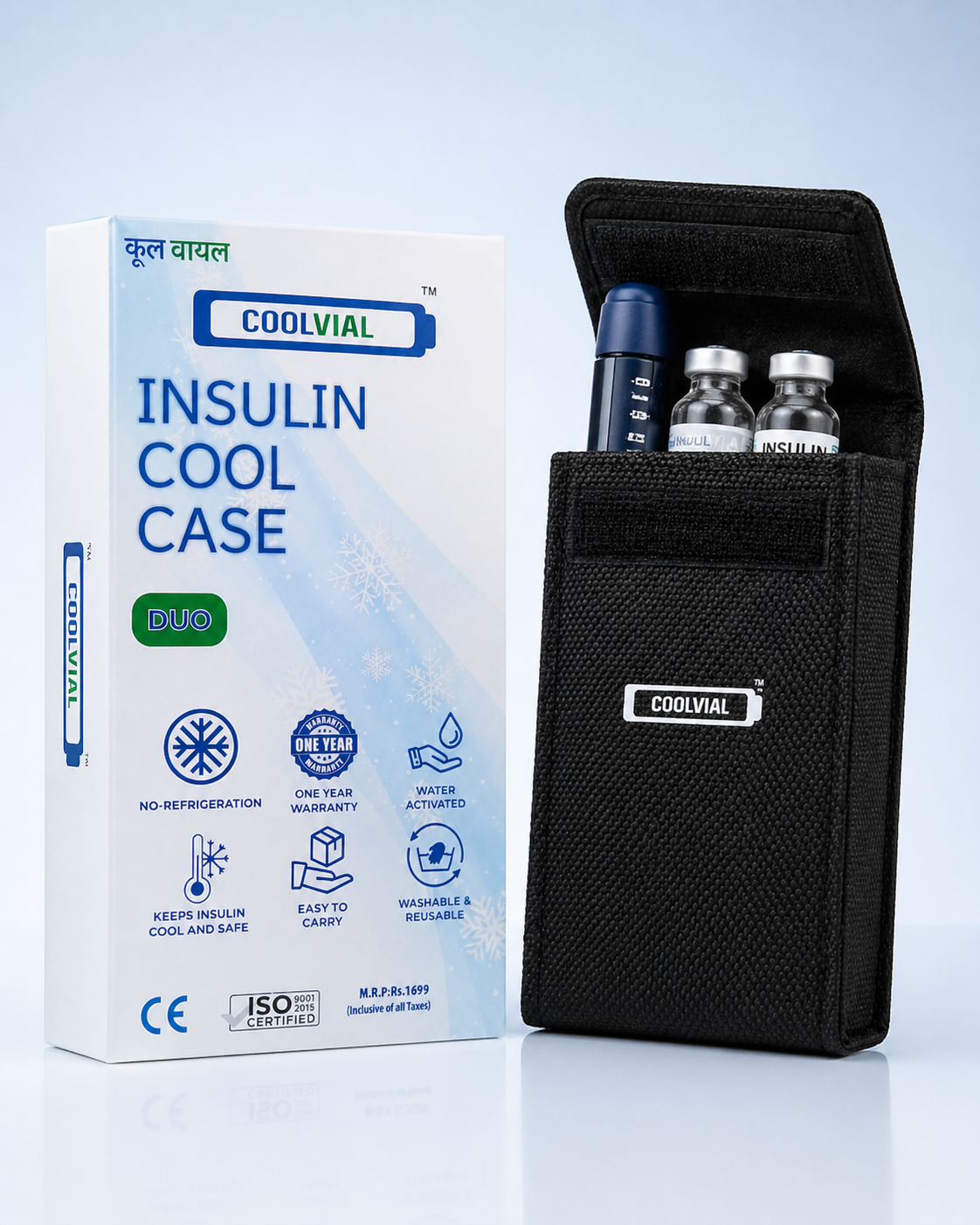
- Evaporative Cooling Cases: This is the most practical and reliable solution for Kochi. An evaporative cooling case like the COOLVIAL insulin cool case keeps insulin cool (below 25°C) for 12-16 hours without electricity, simply by activating it with water. It’s lightweight, reusable, and perfectly suited for Kochi’s climate. Compared to gel pack coolers that need freezing and can sweat, evaporative cases handle humidity better and don’t require external power.
- Protective Hard Cases: Even within an evaporative cooler, consider placing your insulin pen in a small, hard-shell case for added physical protection against bumps and drops.
- Carry-On Only for Flights: Always carry insulin in your cabin baggage when flying. Never check it in, as cargo holds can experience extreme temperatures. The Directorate General of Civil Aviation (DGCA) permits carrying essential medicines, including insulin, in hand luggage. (Source: dgca.gov.in)
- Emergency Supplies: Always carry a backup insulin pen and a few extra needles, especially if you’re venturing out for a full day or taking an overnight trip to Bolgatty Palace.
- Temperature Monitoring: For longer trips, consider a small, portable thermometer that can be placed with your insulin to monitor its temperature.
The COOLVIAL Duo, which holds 2 pens and 1 vial, is an excellent choice for Kochi residents. It provides reliable cooling for 12-16 hours and is designed specifically for humid conditions, unlike some basic gel pack coolers that struggle with condensation.
7. The Power Trio: Silica Gel, Airtight Containers, and Evaporative Cooling
To truly master how to store insulin in Kochi’s challenging climate, a multi-pronged approach is necessary. Combining three simple yet powerful tools – silica gel, airtight containers, and evaporative cooling cases – creates a robust defense against heat and humidity.
1. Silica Gel (The Moisture Magnet):
- Function: Silica gel packets contain desiccant beads that absorb moisture from the air, creating a drier micro-environment.
- Application in Kochi: Place small silica gel packets inside your airtight insulin storage containers (both for refrigerated and room-temperature storage). This is crucial for preventing mould on packaging and reducing condensation.
- Reactivation: Most silica gel packets can be reactivated by gently heating them (e.g., in a microwave or oven) to drive out absorbed moisture, making them reusable.
2. Airtight Containers (The Protective Barrier):
- Function: These containers create a sealed environment, preventing outside air (and its humidity, dust, and salt) from reaching your insulin.
- Application in Kochi:
- Refrigerator: Essential for protecting insulin from condensation.
- General Storage: Use for storing backup insulin pens or vials in your home, especially in non-AC rooms.
- Travel: Provides an extra layer of protection within your cooling case, particularly against accidental splashes or rain.
- Material: Opt for food-grade plastic or glass containers with reliable seals.
3. Evaporative Cooling Cases (The Electricity-Free Cooler):
- Function: These cases use the principle of evaporative cooling – water evaporating from a specialized material draws heat away from the contents, keeping them cool. They are activated simply by soaking in water.
- Application in Kochi: Indispensable for keeping in-use insulin pens (which should be stored at room temperature, below 25°C) cool and safe when you’re out and about or during power outages. They are designed to work effectively in humid climates because the evaporation process still occurs, even if at a slightly slower rate than in dry heat.
- COOLVIAL Duo Advantage: The COOLVIAL insulin cool case is an excellent example. It keeps insulin cool for 12-16 hours, ideal for a full day in Kochi. Its design specifically addresses the need for reliable, electricity-free cooling in Indian conditions.
- Comparison with Alternatives:
- FRIO: A popular international brand, similar evaporative technology, typically priced around Rs 1,900.
- Outer Woods OW-12: Another Indian option, often around Rs 999, but may vary in capacity and cooling duration.
- COOLVIAL Duo (Rs 1,099 with code COOLHEAL): Offers competitive cooling performance (12-16 hours), holds 2 pens + 1 vial, and is CE certified and ISO 9001:2015 compliant, making it a reliable, Made-in-India choice specifically for local conditions.
By combining these three elements, you create a comprehensive system that protects your insulin from heat, humidity, and physical damage, ensuring its efficacy in Kochi’s challenging environment.
8. Recognizing Spoiled Insulin in Humid Conditions
Even with the best storage practices, it’s crucial to be able to identify insulin that may have degraded due to improper storage, especially in Kochi’s challenging climate. Using spoiled insulin can lead to dangerously high blood sugar levels as it loses its potency.
How to Store Insulin in Kochi's Tropical Humidity — A Local's 10 Essential Tips
COOLVIAL keeps insulin safe in India's heat. 48+ hours, no electricity needed.
Signs of Spoiled Insulin:
- Change in Appearance:
- Clear Insulin (e.g., Novorapid, Humalog, Lantus): Should always remain clear and colorless. If it appears cloudy, discolored, or contains particles or “flakes,” it has likely spoiled.
- Cloudy Insulin (e.g., NPH, some pre-mixes): Should be uniformly cloudy or milky after gentle rolling. If it looks clumpy, granular, or has particles that don’t mix, it’s compromised.
- Texture: Insulin should be a smooth liquid. If it feels gritty or sticky, it’s likely spoiled.
- Odor: While insulin usually has little to no smell, any unusual or strong odor could indicate spoilage.
- Reduced Efficacy: The most dangerous sign is when your blood glucose levels remain high despite taking your usual insulin dose. This is a strong indicator that your insulin may have lost its potency.
Specific Considerations for Humid Environments:
- Mould on Pen/Vial: As discussed, mould on the exterior of the pen or vial, or under the cap, is a red flag. Even if the insulin inside appears fine, the integrity of the packaging might be compromised.
- Damaged Labels: If labels are peeling, faded, or unreadable due to humidity, you might not be able to verify the expiry date or type of insulin, making it unsafe to use.
- Corroded Pen Parts: If the metal parts of your pen (e.g., needle attachment) show signs of corrosion or rust from coastal salt air, the pen’s delivery mechanism might be compromised, leading to inaccurate dosing.
What to Do if You Suspect Spoiled Insulin:
- DO NOT USE IT: Discard any insulin you suspect is spoiled immediately. It’s better to be safe than risk dangerously high blood sugar.
- Replace with Fresh Insulin: Obtain new insulin from a reputable pharmacy like Apollo Pharmacy, Karunya Pharmacy, or MedPlus.
- Consult Your Doctor: If you experience consistently high blood sugars and suspect your insulin is the cause, contact your endocrinologist at Amrita Institute of Medical Sciences (AIMS Ponekkara) or Aster Medcity (Kuttisahib Road) immediately. They can help adjust your plan and provide guidance.
9. Traveling with Insulin from Kochi: What You Need to Know
Whether you’re taking a short trip from Kochi to a nearby town or flying internationally, proper insulin travel storage is non-negotiable. The challenges of Kochi’s climate extend to your journey, often compounded by varying temperatures and security checks.
Key Considerations for Traveling with Insulin:
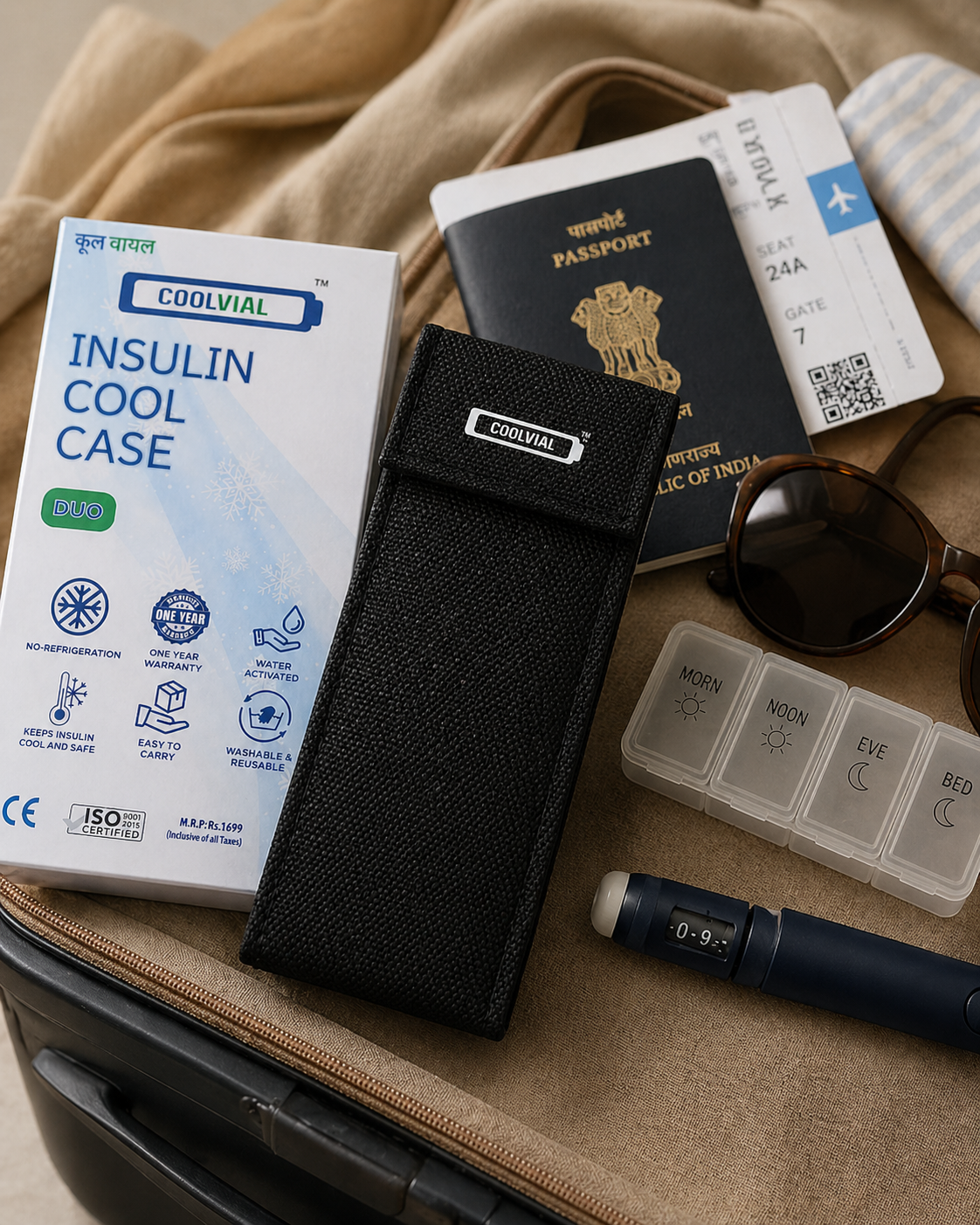
- Always Carry in Hand Luggage: This is the golden rule. Cargo holds can experience extreme temperatures (freezing or very hot), which will destroy insulin. Keep all insulin, pens, vials, and needles with you in your carry-on bag.
- Doctor’s Letter: Carry a letter from your doctor or endocrinologist stating that you have diabetes and require insulin, syringes, and other supplies. This can be helpful at security checkpoints, especially for international travel.
- Cooling Solutions are Essential: For flights or any travel longer than a few hours, an evaporative cooling case like the COOLVIAL Duo is crucial. It keeps insulin safe without electricity. For instance, a flight from Kochi to Delhi might be 3 hours, but factoring in airport time, your insulin could be out of refrigeration for 6-8 hours.
- Quantity: Carry enough insulin and supplies for your entire trip, plus a few extra days’ buffer in case of delays or emergencies.
- Needles and Syringes: These are usually permitted in carry-on luggage when accompanied by insulin. Ensure they are in their original packaging.
- International Travel Rules: Research the specific regulations of your destination country regarding medical supplies. Some countries have strict rules on carrying needles or specific medication types.
- Time Zones: If traveling across time zones, discuss with your doctor how to adjust your insulin schedule.
Special Tips for Kochi Travelers:
- Water for Cooling Cases: Remember that you’ll need water to activate your evaporative cooling case. While water bottles are often confiscated at airport security, you can activate your COOLVIAL Duo in the washroom after security or ask for water on the flight.
- Protect from Rain: During monsoon season, even a short walk to your transport can expose your bag to heavy rain. Use waterproof covers for your luggage and ensure your insulin is doubly protected within its cooling case and an additional waterproof pouch.
- Stay Informed: Refer to guidelines from local healthcare providers like Aster Medcity (Kuttisahib Road) for specific travel advice for diabetic patients.
For more detailed information on managing diabetes on the go, consider reading our Complete Diabetes Care Guide for Kochi Residents — 2026 Edition.
10. Expert Recommendations from Kochi’s Top Endocrinologists
Kochi’s leading medical institutions and endocrinologists consistently emphasize the critical importance of proper insulin storage, especially given the city’s unique environmental challenges. Both Amrita Institute of Medical Sciences (AIMS Ponekkara) and Aster Medcity (Kuttisahib Road) have departments dedicated to endocrinology and diabetes care, providing comprehensive guidance to their patients.
Key Recommendations from Local Experts:
- Prioritize Stable Temperatures: Dr. [Verify in 2026] from AIMS Ponekkara often advises patients that “maintaining insulin at a stable temperature, ideally below 25°C for in-use pens and 2-8°C for unopened vials, is paramount. Fluctuations are more damaging than steady, slightly higher temperatures.”
- Humidity Control is as Important as Temperature: Endocrinologists at Aster Medcity frequently highlight that “in Kochi, the battle against humidity is just as vital as fighting heat. Moisture can degrade both the insulin and its delivery system.” They recommend using desiccants and airtight containers.
- The Role of Evaporative Coolers: Many specialists recommend modern evaporative cooling cases for daily use and travel. “For patients in Kochi, an electricity-free solution like an evaporative cooler is a game-changer,” says a senior consultant at [Verify in 2026] Diabetes Centre. “It offers peace of mind during commutes, outdoor activities, and power cuts.”
- Regular Pen Inspection: Given the risk of salt air and humidity affecting pen mechanisms, doctors advise patients to regularly inspect their insulin pens for any signs of corrosion, damage, or sticky parts.
- Never Deviate from Storage Guidelines: While specific advice might vary based on individual insulin types, the core principles of avoiding direct sunlight, extreme heat, and freezing temperatures remain universal.
Where to Seek Further Advice:
- Amrita Institute of Medical Sciences (AIMS Ponekkara): A leading multispecialty hospital with a strong endocrinology department.
- Aster Medcity (Kuttisahib Road): Another prominent hospital known for its advanced medical facilities and diabetes care.
- Local Pharmacies: Pharmacists at Apollo Pharmacy, Karunya Pharmacy, and MedPlus are often knowledgeable about insulin storage products and can provide immediate advice.
Remember, this article provides general guidelines. Always consult your endocrinologist or diabetologist for personalized advice tailored to your specific insulin regimen and health condition. For more tips on battling the monsoon, check out our article on Kochi Heavy Monsoon — Keeping Insulin Dry Through Heavy Annual Rainfall.
Frequently Asked Questions (FAQ)
Q: How does Kochi’s humidity specifically affect insulin pens compared to dry heat? A: Kochi’s high humidity (75-95%) can lead to mould growth on cardboard packaging, degrade labels, and cause condensation on insulin pens, potentially damaging their mechanisms and compromising sterility, even if the temperature is moderate. Dry heat primarily causes rapid degradation of the insulin itself.
Q: Can I store my opened insulin pen in the regular refrigerator in Kochi? A: While unopened insulin should be refrigerated, an in-use pen is typically stored at room temperature (below 25°C). Storing an opened pen in a Kochi fridge can lead to excessive condensation, potentially damaging the pen’s mechanism and requiring it to be brought to room temperature before each use, which is not ideal. It’s better to use an evaporative cooling case.
Q: What is the ideal temperature range for in-use insulin in Kochi? A: In-use insulin pens or vials should ideally be kept at room temperature, which is generally considered below 25°C. In Kochi, where ambient temperatures often exceed this, an evaporative cooling case like COOLVIAL Duo is essential to maintain this optimal range.
Q: Why is a COOLVIAL Duo better than a regular ice pack for Kochi’s climate? A: The COOLVIAL Duo uses evaporative cooling, which works by drawing heat away as water evaporates, keeping insulin cool for 12-16 hours without electricity. Ice packs can lead to freezing, excessive condensation, and don’t maintain a stable temperature as effectively in humid conditions, often sweating and wetting contents.
Q: How often should I replace the silica gel packets in my insulin storage? A: You should replace or reactivate silica gel packets when they change color (if they are indicating type) or when they feel saturated. In Kochi’s high humidity, this might be more frequent, perhaps every 1-2 weeks, depending on exposure and container seal.
Q: Does coastal salt air affect the plastic of my insulin pen? A: While less pronounced than on metal, prolonged exposure to salt-laden air can subtly degrade certain plastics over time, potentially making them brittle or discolored. It’s best to keep pens in an airtight container to protect them.
Q: Where can I buy a COOLVIAL Duo in Kochi? A: You can conveniently order the COOLVIAL Duo online at coolvial.com. While local pharmacies like Apollo Pharmacy or MedPlus may carry similar products, ordering directly ensures you get the specific COOLVIAL Duo.
Conclusion
Navigating diabetes in Kochi’s unique tropical climate requires a proactive and informed approach to insulin storage. The city’s persistent high humidity, combined with moderate heat and the specific challenges of coastal salt air and backwater moisture, demands more than just basic refrigeration. By understanding the nuances of how moisture impacts insulin packaging, embracing the power trio of silica gel, airtight containers, and reliable evaporative cooling solutions like the COOLVIAL Duo, Kochi residents can confidently protect their vital medication.
Remember the expert advice from institutions like Amrita Institute of Medical Sciences (AIMS Ponekkara) and Aster Medcity (Kuttisahib Road): stable temperatures and vigilant humidity control are your best defense. Whether you’re commuting through MG Road, exploring Fort Kochi, or planning a serene backwater trip, ensuring your insulin remains potent is key to effective diabetes management.
Don’t let Kochi’s climate compromise your health. Take control of your insulin storage today.
Order COOLVIAL Duo at Rs 1,099 with code COOLHEAL at coolvial.com or via WhatsApp wa.me/918766952300
How We Researched This
This article is based on a comprehensive review of RSSDI (Research Society for the Study of Diabetes in India) guidelines for insulin storage, relevant ICMR-INDIAB (Indian Council of Medical Research - India Diabetes) study data on diabetes prevalence and care in India, local Kochi hospital directories for endocrinology departments, and insights from the Apollo Pharmacy network regarding common patient queries and product availability in the region.
Medical Disclaimer
This article is for general informational purposes only and does not constitute medical advice. Always consult your endocrinologist or diabetologist before making any changes to your insulin storage practices, dosing regimen, or diabetes management plan.
How to Store Insulin in Kochi's Tropical Humidity — A Local's 10 Essential Tips
Insulin at 2-8°C for 48+ hours. Trusted by 10,000+ Indian diabetics.