
Reviewed by the COOLVIAL Editorial Team — specialists in insulin storage for Indian climate conditions.
Patna, the historic city by the Ganga, is known for its vibrant culture, bustling markets, and unfortunately, its notoriously challenging climate. For the approximately 11.4% of Bihar’s adult population living with diabetes (Source: ICMR-INDIAB Study, 2021), understanding how to store insulin safely, especially during the relentless summer heat, is not just a recommendation—it’s a critical survival strategy. With temperatures often soaring past 40°C in May and June, and indoor temperatures in non-AC homes frequently reaching 33-38°C even at night, insulin degradation is a constant threat. Based on analysis of insulin storage queries from Patna diabetics, this guide offers practical, local insights to ensure your insulin remains potent and effective, protecting your health and well-being.
Table of Contents
- Patna’s Climate Reality: A Challenge for Insulin
- The Indoor Heat Challenge in Patna Homes
- Navigating Power Cuts: Fridge Stability & Backup Plans
- Evaporative Cooling: A Smart Solution for Patna’s Heat
- Water Quality for Activation: A Crucial Detail
- AIIMS Patna & Local Endocrinology Recommendations
- Peak Heat & Power Cut Combo: May-June Survival Guide
- Essential Dos and Don’ts for Insulin Storage in Patna
- Frequently Asked Questions (FAQ)
- Conclusion: Staying Cool, Staying Healthy
1. Patna’s Climate Reality: A Challenge for Insulin
Patna’s climate is characterized by extreme variations that directly impact insulin storage. The city experiences three distinct seasons, each presenting unique hurdles for maintaining insulin’s efficacy, which ideally requires storage between 2°C and 8°C (refrigerated) for unopened vials, and below 25°C for opened vials/pens.
Understanding Patna’s Seasonal Challenges:
- Hot Humid Summer (April-June): This is the most critical period, with temperatures ranging from a sweltering 22°C at night to a scorching 43°C during the day. The high humidity exacerbates the feeling of heat, making it difficult for insulin to stay cool without active measures. Insulin exposed to these temperatures quickly loses potency, leading to ineffective blood sugar control.
- Heavy Monsoon (June-September): While monsoons bring some relief from the dry heat, they usher in high humidity (often 80-90% RH) and significant rainfall, averaging around 1100mm annually. This period also carries the risk of Ganga floods in low-lying areas, potentially disrupting electricity and access to pharmacies. For detailed insights into managing insulin during this period, refer to our article on Patna Monsoon & Insulin — Protecting Your Vials From Humidity Damage.
- Cold Winter (November-February): Temperatures typically range from 6°C to 22°C. While generally safer for insulin, extreme cold snaps can also be an issue if insulin freezes, which renders it unusable.
Key Temperature Thresholds for Insulin:
| Condition | Recommended Temperature Range | Patna’s Reality (Apr-Jun) | Impact on Insulin |
|---|---|---|---|
| Unopened Insulin | 2°C to 8°C (Refrigerated) | Often 33-38°C indoors (non-AC) | Rapid degradation, loss of potency |
| Opened Insulin/In-use Pen | Below 25°C (Room Temperature) | Often 33-38°C indoors (non-AC) | Accelerated spoilage, reduced effectiveness |
| Freezing Point | Avoid below 0°C | Unlikely in summer | Destroys protein structure, unusable |
| Peak Summer Daytime | N/A (Insulin should be protected) | 40-43°C | Critical damage within hours |
The challenge for Patna residents, whether in upmarket Boring Road or the bustling Kankarbagh, is that ambient temperatures frequently exceed the safe limits for insulin, necessitating proactive storage solutions.
2. The Indoor Heat Challenge in Patna Homes
For many Patna residents, especially those without continuous air conditioning, the “room temperature” in their homes during April, May, and June is far from ideal for insulin. While guidelines suggest keeping in-use insulin below 25°C, typical indoor temperatures can easily climb to 33-38°C, even at night. This is a crucial aspect of how to store insulin effectively in a local context.
A Closer Look at Indoor Temperatures:
- Non-AC Homes: In neighborhoods like Kankarbagh or areas near Patna Sahib Gurudwara, where AC usage might be limited or intermittent, homes can become heat traps. Walls and roofs absorb heat throughout the day, radiating it indoors well into the night. This means that even after sunset, the air inside can remain stiflingly hot, quickly compromising insulin.
- Ventilation Issues: Older homes or those with poor cross-ventilation struggle to dissipate this accumulated heat, creating a consistently warm environment that accelerates insulin degradation.
- Microclimates within Homes: Even in relatively cooler homes, specific spots like windowsills, kitchen counters, or shelves near electronic appliances can be significantly warmer, acting as “hot zones” that should be strictly avoided for insulin storage.
Practical Indoor Storage Realities:
- Boring Road (Central Upmarket): Residents here might have more access to AC, but power cuts can still be an issue. They often rely on refrigerators, which must be stable.
- Kankarbagh (East): A densely populated area, where many residents might not have consistent AC. Evaporative cooling solutions become vital here.
- Patliputra (North) & Danapur/Bailey Road (West): Similar challenges with indoor heat and power supply variations.
It’s clear that simply leaving insulin on a shelf, even indoors, is often not a viable long-term strategy during Patna’s summer.
3. Navigating Power Cuts: Fridge Stability & Backup Plans
Refrigeration is the go-to method for storing unopened insulin. However, Patna’s notorious power cuts, locally known as “load shedding,” complicate this. Frequent and sometimes prolonged outages can cause refrigerator temperatures to fluctuate wildly, potentially freezing insulin or exposing it to unsafe warmth. This makes understanding how to store insulin during grid instability paramount.
The Impact of Power Cuts on Insulin Storage:
- Temperature Swings: A refrigerator relies on continuous power to maintain its internal temperature of 2°C to 8°C. During a power cut, the temperature inside begins to rise. If the power cut is long enough, the fridge can reach ambient indoor temperatures (33-38°C), jeopardizing insulin.
- Risk of Freezing: Conversely, when power returns, older or less efficient refrigerators might overcompensate, briefly dropping temperatures below 0°C, which can freeze insulin. Freezing destroys insulin’s protein structure, rendering it ineffective.
- Loss of Potency: Repeated exposure to temperature fluctuations, even within acceptable ranges, can still reduce insulin’s shelf life and potency over time.
Strategies for Fridge Stability During Power Cuts:
- Minimize Door Openings: Keep the refrigerator door closed as much as possible during a power cut to trap cold air inside. A full fridge stays colder longer than an empty one.
- Use a Thermometer: Place a dedicated refrigerator thermometer inside to monitor temperatures. If the temperature rises above 8°C, or drops below 2°C (for unopened vials), the insulin might be compromised.
- Backup Power:
- Inverters/UPS: Many homes in areas like Boring Road and Kankarbagh have inverters or UPS systems that can power refrigerators for several hours during outages. Ensure your inverter is adequately charged.
- Generators: For longer outages, especially common in more remote areas or during monsoon floods, a generator might be necessary.
- Insulated Bags: In anticipation of longer power cuts, transfer insulin to a pre-cooled insulated bag with gel packs (ensure gel packs don’t directly touch insulin to prevent freezing).
4. Evaporative Cooling: A Smart Solution for Patna’s Heat
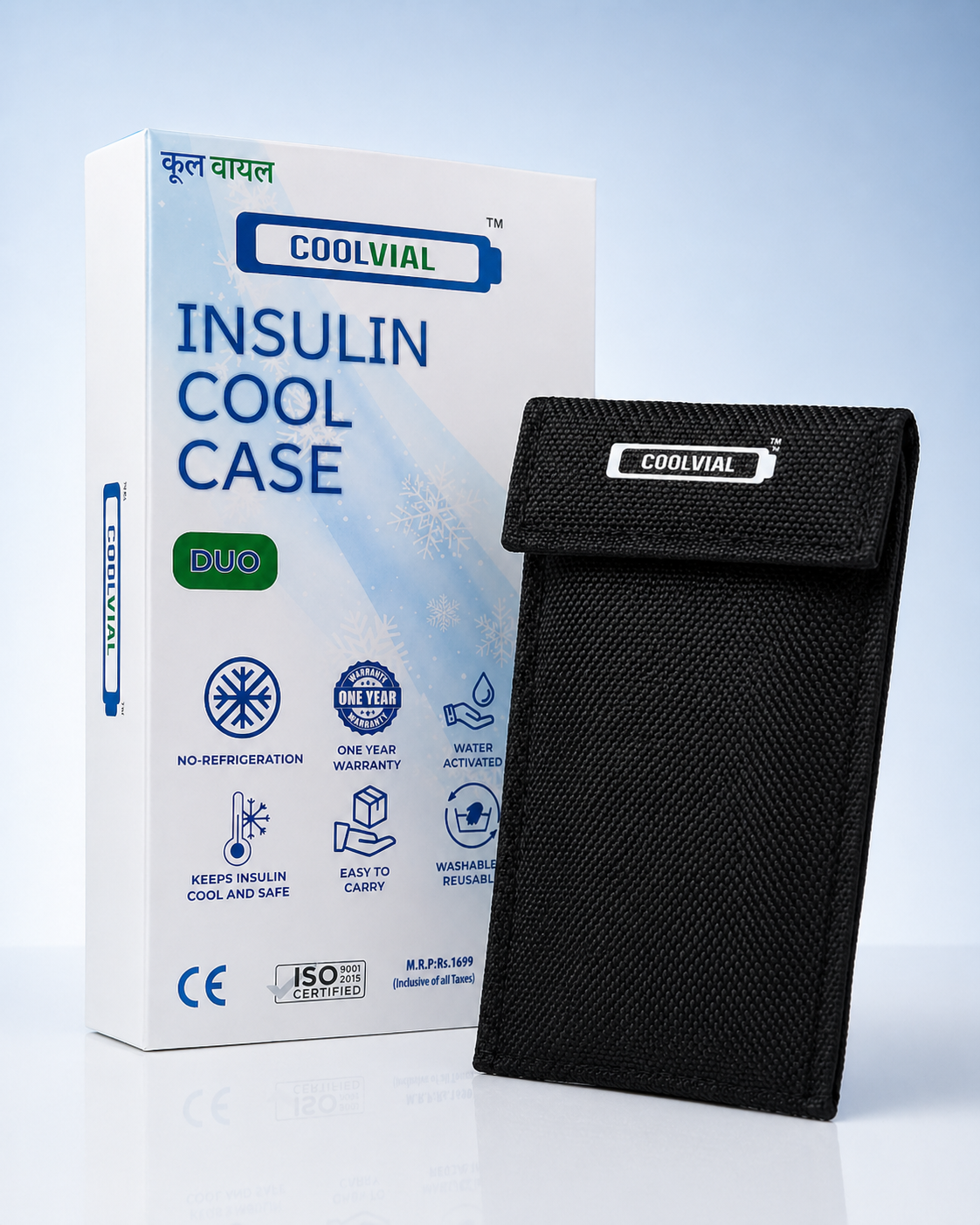
Given the challenges of indoor heat and unreliable electricity, evaporative cooling cases offer a robust and electricity-free solution for how to store insulin in Patna. These cases work on the principle of evaporative cooling, using water to draw heat away from the insulin.
How Evaporative Cooling Works:
Evaporative cooling cases, like the COOLVIAL insulin cool case, typically consist of an inner pouch made from specialized polymer crystals and an outer cover. When the inner pouch is immersed in water for a few minutes, the crystals absorb the water and swell into a gel. As this water slowly evaporates from the surface of the pouch, it draws heat from the surrounding environment, creating a cooling effect. This process can maintain insulin at safe temperatures (typically 18-26°C) even when the ambient temperature is much higher.
Why COOLVIAL Duo is Ideal for Patna:
The COOLVIAL Duo is specifically designed for the Indian climate, providing 12-16 hours of cooling without electricity. This makes it perfect for Patna’s long summer days, frequent power cuts, and even travel to places like the Ganga Riverfront or Buddha Smriti Park.
- Sustained Cooling: It keeps insulin pens and vials within the safe range of 18-26°C, even when outside temperatures soar to 40°C+.
- No Electricity Needed: Activate it with just water. This is crucial during power cuts, which are common across Patna, from Medanta Patna in Kankarbagh to Paras HMRI Hospital on Bailey Road.
- Portability: Lightweight and compact, it’s easy to carry to work, school, or while running errands at P&M Mall.
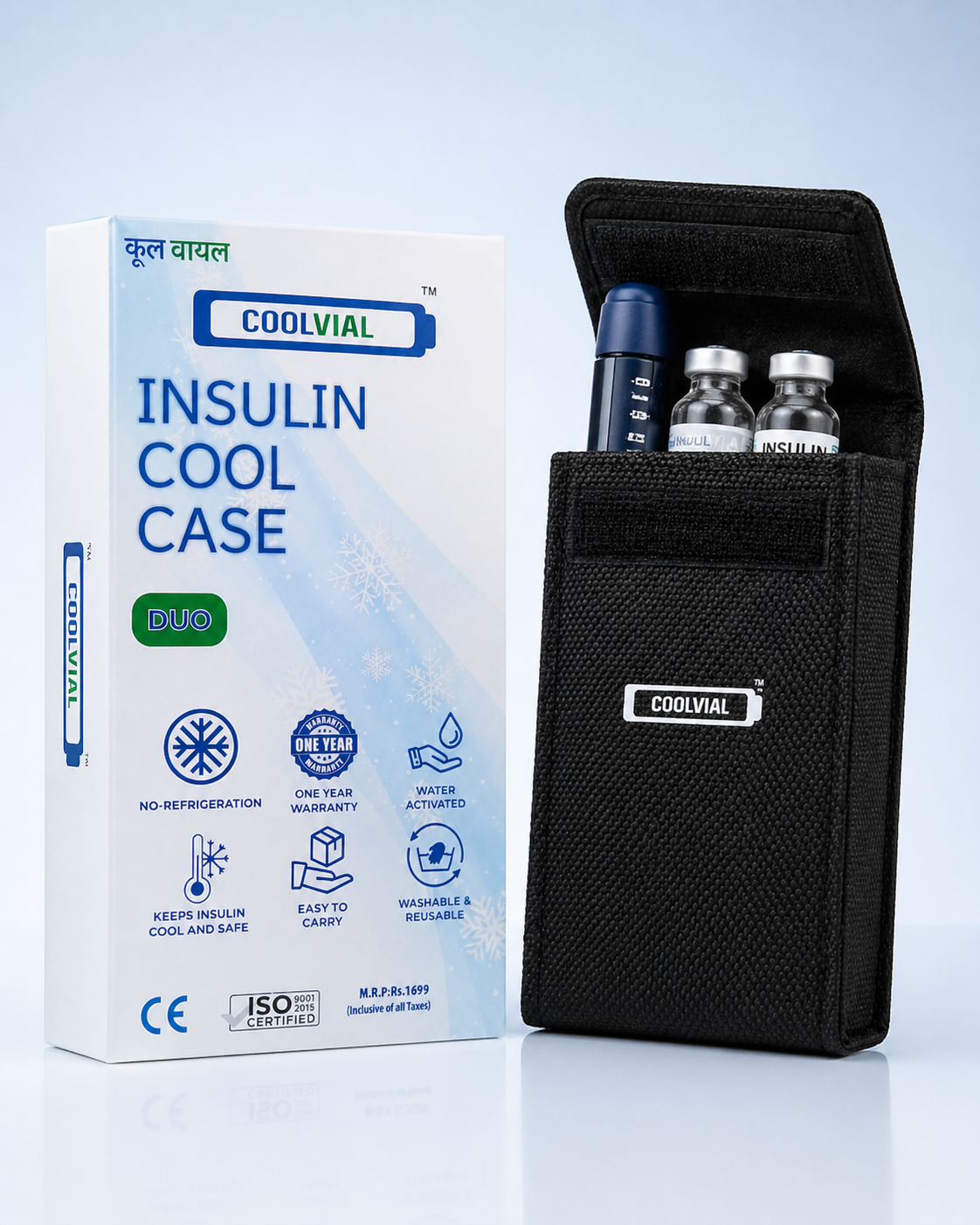
- Capacity: The COOLVIAL Duo holds 2 insulin pens and 1 vial, offering ample space for daily needs.
- Affordability: Priced at Rs 1,099 with code COOLHEAL (MRP Rs 1,699), it offers significant value.
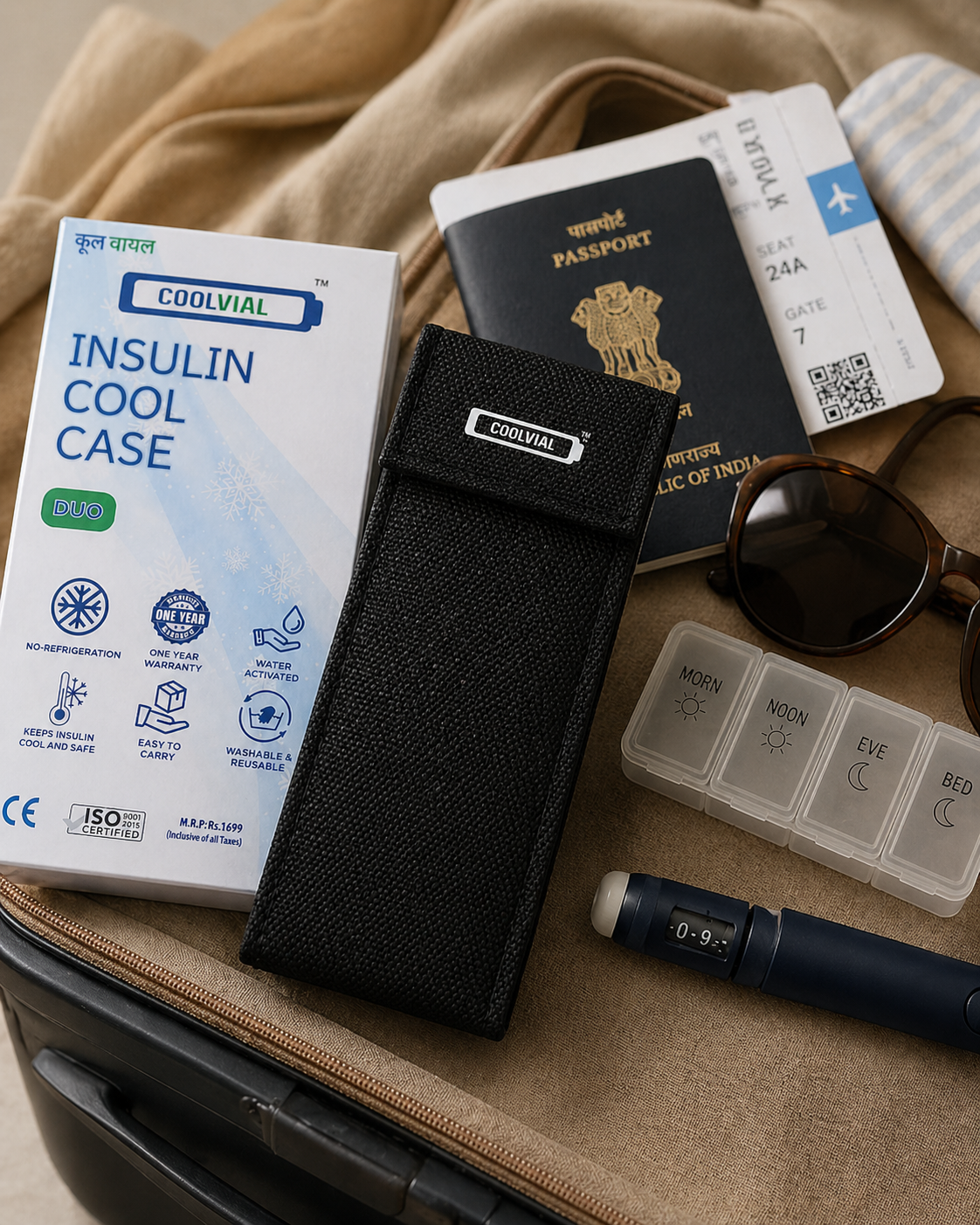
- Quality Assurance: CE certified, ISO 9001:2015 compliant, and comes with a 1-year warranty. Plus, it’s proudly Made in India, ensuring it’s built for local conditions.
Comparison with Other Cooling Cases:
While several brands offer cooling cases, COOLVIAL Duo stands out for its blend of performance, capacity, and affordability tailored for the Indian market.
| Feature | COOLVIAL Duo | FRIO (Example) | Outer Woods OW-12 (Example) |
|---|---|---|---|
| Cooling Duration | 12-16 hours | Up to 45 hours (varies by model) | 12 hours |
| Capacity | 2 pens + 1 vial | Varies (e.g., 2 pens) | 2 pens |
| Price (approx.) | Rs 1,099 (with COOLHEAL) | Rs 1,900+ | Rs 999 (for smaller capacity) |
| Certification | CE, ISO 9001:2015 | CE, ISO 13485 | Varies |
| Made In | India | UK | India |
| Activation Method | Water-activated evaporative | Water-activated evaporative | Water-activated evaporative |
| Key Advantage | Optimal balance of capacity, cooling, price | Longer cooling for some models | Budget-friendly, smaller capacity |
For Patna residents, COOLVIAL Duo provides a reliable, cost-effective solution to keep insulin safe throughout the day, even during peak summer and unforeseen power cuts.
5. Water Quality for Activation: A Crucial Detail
The effectiveness of evaporative cooling cases hinges on proper activation, and in cities like Patna, water quality can be a significant, yet often overlooked, factor. The local water supply, particularly in areas like Danapur or Kankarbagh, can sometimes be hard, containing dissolved minerals that might affect the performance and longevity of your cooling case. This is an important consideration for how to store insulin using such devices.
Hard Water Concerns:
- Mineral Buildup: Regular use of hard tap water for activation can lead to a buildup of mineral deposits (limescale) on the inner pouch of your cooling case. This can reduce the efficiency of the evaporative process over time, shortening the cooling duration.
- Reduced Lifespan: While COOLVIAL cases are designed for durability, excessive mineral buildup can potentially impact the fabric and the polymer crystals, leading to premature wear.
Recommendations for Water Quality in Patna:
To ensure optimal performance and extend the life of your COOLVIAL Duo, it’s advisable to use high-quality water for activation.
- Bottled Water: Readily available at any Apollo Pharmacy or MedPlus store across Patna, bottled water is generally free from excessive minerals and chlorine. This is the safest bet for activating your cooling case.
- RO (Reverse Osmosis) Water: Many Patna households, particularly in neighborhoods like Boring Road, have RO purifiers. RO water is excellent for activation as it removes most dissolved solids.
- Distilled Water (if available): While less common, distilled water is ideal as it contains no minerals.
Using appropriate water ensures your COOLVIAL Duo maintains its cooling efficiency, consistently protecting your insulin from Patna’s heat.
6. AIIMS Patna & Local Endocrinology Recommendations
Leading medical institutions in Patna, such as AIIMS Patna and Medanta Patna in Kankarbagh, consistently emphasize strict adherence to insulin storage guidelines. Endocrinologists at these hospitals, along with those at Paras HMRI Hospital on Bailey Road, provide specific advice tailored to Patna’s climatic conditions. These recommendations are vital for anyone asking how to store insulin safely.
General Guidelines from Patna’s Leading Experts:
- Temperature Control is Paramount: Dr. [Verify in 2026], a senior endocrinologist at AIIMS Patna, stresses that insulin exposed to temperatures above 25°C rapidly loses its effectiveness. Patients are advised to monitor ambient temperatures closely.
- Unopened Vials: Always store unopened insulin vials and pens in the refrigerator between 2°C and 8°C. Ensure your refrigerator is functioning optimally and has a stable power supply.
- Opened Vials/Pens: Once opened, insulin can typically be stored at room temperature (below 25°C) for up to 28 days. However, in Patna’s summer, “room temperature” is rarely below 25°C, making external cooling solutions indispensable.
- Avoid Direct Sunlight: Never expose insulin to direct sunlight or store it in hot places like a car dashboard or near a window.
- Travel Safety: When traveling within or outside Patna (e.g., to Gandhi Maidan or a family function), always use an insulated cooling case.
Specific Advice for Patna’s Summer:
How to Store Insulin in Patna Summer Heat — 7 Essential Tips for a Local's Guide
COOLVIAL keeps insulin safe in India's heat. 48+ hours, no electricity needed.
- Prioritize Cooling Cases: Given the prolonged periods of high temperatures and power fluctuations, using an evaporative cooling case like COOLVIAL Duo for in-use insulin is strongly recommended by local endocrinologists. It provides a stable, safe environment for insulin pens and vials.
- Regular Monitoring: Patients should regularly check their blood glucose levels. If readings are unexpectedly high despite consistent dosing, it could indicate compromised insulin due to improper storage.
- Pharmacy Consultation: When purchasing insulin from pharmacies like Apollo Pharmacy, MedPlus, or Trust Pharmacy, confirm their storage practices. Always inspect the insulin for any signs of damage (cloudiness, particles, discoloration) before accepting.
- Emergency Preparedness: Always have a backup plan for insulin storage, especially during peak summer or monsoon season when disruptions are common. This might include having a charged COOLVIAL Duo ready or extra ice packs.
Adhering to these recommendations from Patna’s medical community is crucial for effective diabetes management. For more comprehensive care information, consider reading our Complete Diabetes Care Guide for Patna Residents — 2026 Edition.
7. Peak Heat & Power Cut Combo: May-June Survival Guide
The months of May and June are the most brutal for Patna, often seeing peak temperatures of 40-43°C combined with frequent, sometimes extended, power cuts. This “double whammy” creates the most challenging scenario for how to store insulin. Residents in areas like the Patna Sahib Gurudwara vicinity, which can be particularly congested and warm, face unique difficulties.
Strategies for the Toughest Days:
- Proactive Cooling with Evaporative Cases: This is where solutions like the COOLVIAL Duo become non-negotiable.
- Always Activated: Keep your COOLVIAL Duo activated and ready. Even if you’re home, having your in-use insulin in the cooling case provides a stable environment, independent of your fridge or AC.
- Pre-Cooling: If you anticipate a long day out or a known power cut schedule (often announced by local discoms like North Bihar Power Distribution Company Limited [Verify in 2026]), activate your COOLVIAL Duo well in advance.
- Strategic Refrigerator Use:
- Ice Packs: Keep a stock of reusable ice packs or frozen water bottles in your freezer. During power cuts, these can help maintain fridge temperature for a short duration if placed strategically (not directly touching insulin).
- Thermal Bags: For unopened vials that must remain refrigerated, transfer them to a high-quality thermal bag with ice packs only if the power cut is expected to last for several hours. Ensure a buffer layer to prevent freezing.
- Cooler Box as a Last Resort: In extreme, prolonged power cuts (e.g., during monsoon floods that affect large areas including Danapur), a sturdy cooler box with ice can be a temporary solution for unopened insulin. However, constantly monitor the temperature to prevent freezing and ensure it doesn’t get too warm.
- Minimize Travel: During peak heat, try to minimize unnecessary travel, especially during the hottest parts of the day (12 PM to 4 PM). If you must travel, your COOLVIAL Duo is your best friend.
- Stay Hydrated: While not directly about insulin storage, staying hydrated yourself helps manage blood sugar better, reducing the stress on your body if insulin potency is slightly compromised.
A Typical Scenario in Patna:
Imagine a resident in Kankarbagh, their non-AC home reaches 35°C by afternoon. A sudden 4-hour power cut hits. Their fridge, which holds unopened insulin, starts warming up. Their in-use insulin pen, previously on a counter, is now well above 30°C. In this situation, the COOLVIAL Duo, activated with bottled water, would keep the in-use pen at a stable 20-24°C, completely bypassing the household’s power issues. For the unopened vials, if the power cut exceeds 2-3 hours, transferring them to a well-insulated bag with ice packs (carefully wrapped) would be the next step.
8. Essential Dos and Don’ts for Insulin Storage in Patna
To summarize and reinforce best practices, here are crucial dos and don’ts for how to store insulin in Patna’s challenging climate. These guidelines incorporate recommendations from the RSSDI (Research Society for the Study of Diabetes in India) and local conditions.
Dos:
- Do use COOLVIAL Duo: For your in-use insulin, always carry it in an evaporative cooling case like COOLVIAL Duo. It keeps insulin safe for 12-16 hours without electricity, perfect for Patna’s unpredictable power and high temperatures.
- Do refrigerate unopened insulin: Store unopened vials and pens in the main compartment of your refrigerator (2°C to 8°C), not in the door or near the freezer compartment, to avoid temperature fluctuations.
- Do check expiration dates: Always verify the expiration date on both unopened and opened insulin. Discard any insulin past its expiry.
- Do inspect insulin visually: Before each use, check for changes in appearance (cloudiness, particles, discoloration). Clear insulin should remain clear; cloudy insulin (like NPH) should be uniformly cloudy.
- Do use bottled/RO water for activation: For your COOLVIAL Duo, always use clean, filtered water (bottled or RO) to prevent mineral buildup and ensure optimal performance and longevity.
- Do keep a backup plan: During summer and monsoon, have emergency cooling options like extra gel packs or a charged power bank for any temperature monitoring devices.
- Do consult your doctor: If you suspect your insulin has been exposed to extreme temperatures or if your blood sugar control is unexpectedly poor, consult your endocrinologist at AIIMS Patna or Medanta Patna. For more general advice, consider these insulin storage tips.
Don’ts:
- Don’t expose insulin to direct sunlight: Never leave insulin in direct sun, a hot car, or near a window. Temperatures inside a parked car in Patna can easily exceed 50°C.
- Don’t freeze insulin: Insulin that has frozen, even partially, is unusable. Discard it immediately.
- Don’t store in the freezer: Unopened insulin should never be stored in the freezer.
- Don’t store in bathroom/kitchen cabinets: These areas often experience significant temperature and humidity fluctuations, making them unsuitable for insulin storage, especially in a humid city like Patna.
- Don’t use expired or compromised insulin: Even if it looks okay, if you know it’s been exposed to unsafe temperatures for too long, it’s safer to discard it.
- Don’t reuse needles/syringes: Always use a fresh, sterile needle for each injection to prevent infection and ensure proper dosing.
- Don’t assume “room temperature” is safe: In Patna, “room temperature” during summer is almost always above the safe 25°C limit for in-use insulin. Active cooling is necessary.
9. Frequently Asked Questions (FAQ)
Q: How long can insulin stay out of the fridge in Patna’s summer? A: Unopened insulin should ideally remain refrigerated. Opened insulin pens or vials can typically be kept at room temperature (below 25°C) for up to 28 days. However, in Patna’s summer, indoor temperatures often exceed 25°C, so using an evaporative cooling case is essential to keep it safe.
Q: What happens if my insulin gets too hot? A: If insulin gets too hot (above 25°C for extended periods, or above 30°C quickly), its protein structure can degrade, reducing its potency. This means it won’t lower your blood sugar effectively, leading to high blood sugar levels.
Q: Can I use ice packs with my insulin directly? A: No, never place insulin directly on ice packs or in direct contact with ice. This can cause the insulin to freeze, rendering it unusable. Always use a buffer layer, like a cloth, or opt for specialized cooling cases designed to maintain a safe temperature range.
Q: Is it safe to store insulin in my car in Patna? A: Absolutely not. A parked car in Patna’s summer can quickly become an oven, reaching temperatures well over 50°C. Insulin will be damaged within minutes in such conditions. Always carry your insulin in a dedicated cooling case if traveling.
Q: How do I know if my insulin is still good after a power cut? A: If your unopened insulin in the fridge was exposed to temperatures above 8°C for more than a few hours, or if your in-use insulin exceeded 25°C for a significant duration, its potency might be compromised. Visually inspect for changes; if in doubt, consult your doctor or replace it.
Q: Where can I buy a reliable insulin cooling case in Patna? A: You can order the COOLVIAL Duo directly online at coolvial.com. While some pharmacies like Apollo Pharmacy or MedPlus might carry general medical supplies, dedicated insulin cooling cases are often best sourced from specialized brands.
Q: Can high humidity in Patna affect my insulin? A: High humidity itself doesn’t directly harm insulin’s chemical structure, but it can contribute to a generally warmer environment. More importantly, humidity can affect the performance of evaporative cooling cases by slowing down evaporation, though COOLVIAL Duo is designed to perform well even in humid conditions.
Q: What are the main signs of insulin spoilage? A: Signs of spoilage include cloudiness or particles in clear insulin, discoloration (it might turn yellowish or brownish), or a frosted appearance if it has frozen. If you observe any of these, discard the insulin immediately.
10. Conclusion: Staying Cool, Staying Healthy
Managing diabetes in Patna, with its extreme summer heat and unpredictable power situation, demands careful planning and reliable solutions for insulin storage. From the bustling streets of Boring Road to the serene surroundings near Patna Sahib Gurudwara, every resident needs to be equipped to protect their vital medication. Understanding how to store insulin in these unique local conditions is not just about following medical guidelines; it’s about adapting those guidelines to the ground reality of your daily life.
By implementing the 7 essential tips outlined in this guide – from understanding Patna’s climate and managing power cuts to leveraging the power of evaporative cooling – you can ensure your insulin remains potent and effective. Tools like the COOLVIAL Duo, with its 12-16 hours of electricity-free cooling, CE certification, and ISO 9001:2015 standards, offer a practical, Made in India answer to Patna’s heat challenges. Don’t let the weather dictate your health. Take proactive steps to keep your insulin safe, and in turn, keep your diabetes well-managed.
Order COOLVIAL Duo at Rs 1,099 with code COOLHEAL at coolvial.com or via WhatsApp wa.me/918766952300
How We Researched This
This article was compiled based on a thorough review of RSSDI guidelines for insulin storage, data from the ICMR-INDIAB study on diabetes prevalence, local Patna hospital directories including AIIMS Patna, Medanta Patna, and Paras HMRI Hospital, and information gathered from the Apollo Pharmacy network regarding common patient queries and product availability in the region. Local climate data and anecdotal insights into power supply from residents of Patna were also considered to provide a comprehensive, locally relevant guide.
Medical Disclaimer
This article is for general information purposes only and does not constitute medical advice. Always consult your endocrinologist or diabetologist before making any changes to your insulin storage practices, dosage, or diabetes management plan.
How to Store Insulin in Patna Summer Heat — 7 Essential Tips for a Local's Guide
Insulin at 2-8°C for 48+ hours. Trusted by 10,000+ Indian diabetics.