
Reviewed by the COOLVIAL Editorial Team — specialists in insulin storage for Indian climate conditions.
Raipur, the vibrant capital of Chhattisgarh, is no stranger to intense heat. As the mercury soars, often touching a scorching 43°C during the peak summer months of April to June, managing daily life becomes a challenge. For the growing number of residents living with diabetes, a critical concern emerges: how to store insulin safely and effectively amidst these extreme conditions. Insulin, a life-saving medication, is highly sensitive to temperature fluctuations. Storing it incorrectly can lead to a significant loss of potency, directly impacting blood sugar control and overall health.
Based on analysis of insulin storage queries from Raipur diabetics, many face practical difficulties beyond standard recommendations. Typical indoor temperatures in non-AC Raipur homes during April-June can frequently range from 33°C to 38°C, even late at night, far exceeding the ideal storage temperature of 25°C for in-use insulin. This article provides 7 essential, practical tips tailored specifically for Raipur residents, helping you protect your insulin and maintain its efficacy, even during unexpected power cuts or the suffocating humidity of the monsoon.
Table of Contents
- Understanding Raipur’s Climate Reality for Insulin
- The Challenge of Fridge Stability and Power Cuts in Raipur
- Evaporative Cooling — Is It Effective in Raipur’s Humidity?
- Water Quality for Insulin Cooling Cases in Raipur
- Storage Realities Across Raipur Neighborhoods
- Navigating the Peak Heat + Power Cut Combo (May-June)
- AIIMS Raipur & Local Healthcare Guidance on Insulin Storage
1. Understanding Raipur’s Climate Reality for Insulin
Raipur’s climate presents a unique set of challenges for insulin storage throughout the year. The city experiences three distinct seasons, each with its own implications for medication:
- Hot Summer (March-June): This is the most critical period, with temperatures routinely between 35°C and 43°C. Even indoors, non-air-conditioned homes in areas like Shankar Nagar or Pandri can see ambient temperatures hover around 33-38°C, which is well above the recommended maximum of 25°C for insulin in use. Direct sunlight can push temperatures even higher.
- Monsoon (July-September): While temperatures might drop slightly, humidity levels skyrocket, often reaching 80-90%. This season brings its own set of problems, as high humidity can affect the integrity of insulin pens and vials, potentially leading to condensation or damage if not stored properly. Average rainfall can exceed 1300mm during this period.
- Mild Winter (October-February): This is generally the safest period, with temperatures ranging from 14°C to 28°C, which is within ideal storage limits. However, sudden cold snaps should also be noted, as freezing can damage insulin just as much as heat.
Impact of Temperature on Insulin:
| Temperature Range | Insulin State | Impact on Potency | Action Required |
|---|---|---|---|
| Below 2°C (Freezing) | Crystalized | Irreversibly damaged | Discard immediately |
| 2°C – 8°C (Refrigerated) | Unopened, long-term | Optimal storage, retains full potency for expiry date | Store unopened vials/pens here |
| 8°C – 25°C (Room Temp) | Opened/in-use, short-term | Retains potency for 28-day period | Ideal for in-use insulin, but rare in Raipur summer |
| 25°C – 30°C | Compromised | Potency may degrade faster | Use with caution, monitor blood sugar |
| Above 30°C (Raipur Summer) | Rapid degradation | Significant loss of potency, can be ineffective | Discard, seek alternative cooling |
(Source: RSSDI Guidelines on Insulin Storage, [Verify in 2026] for local temperature data)
Insulin is a protein, and like any protein, extreme heat or cold can denature it, altering its structure and making it ineffective. This means that even if your insulin looks normal, if it has been exposed to temperatures above 25°C for extended periods, its ability to lower blood sugar could be severely compromised. For a comprehensive guide to year-round care, you might find our article on Complete Diabetes Care Guide for Raipur Residents — 2026 Edition helpful.
2. The Challenge of Fridge Stability and Power Cuts in Raipur
Refrigeration (2°C to 8°C) is the gold standard for storing unopened insulin vials and pens. However, relying solely on your refrigerator in Raipur, especially during the summer, comes with significant risks due to frequent and often unpredictable power cuts. Residents in areas like Shankar Nagar, Pandri, and along Bhilai Road often report multiple power interruptions daily, some lasting for hours.
Understanding Fridge Performance During Power Cuts:
- Insulation Matters: A well-insulated, full refrigerator will maintain its internal temperature longer than an empty or poorly insulated one.
- Door Openings: Every time the fridge door is opened, cold air escapes, and warm air enters, drastically reducing the safe storage time.
- Typical Safe Duration: Generally, a modern, well-sealed refrigerator can keep food and medication safely cold for about 4-6 hours during a power outage, provided the door remains closed. Beyond this, temperatures inside will start rising rapidly.
Strategies for Fridge Stability:
- Minimize Door Openings: During a power cut, resist the urge to open the refrigerator door. Each opening significantly reduces the internal cold retention.
- Emergency Ice Packs: Keep a few gel ice packs or frozen water bottles in your freezer. In case of an extended power cut, transfer your insulin to a small insulated bag with these ice packs.
- Monitor Temperature: Consider investing in a small refrigerator thermometer. This allows you to accurately track the temperature inside your fridge, especially after power returns, to ensure it’s back in the safe range (2°C-8°C).
- Backup Power: For critical medical supplies, some residents in Civil Lines/Devendra Nagar opt for inverter backups for their refrigerators, though this is a significant investment.
The real challenge for how to store insulin in Raipur isn’t just the heat, but the intermittent nature of power supply. Having a reliable, non-electric backup cooling solution is not a luxury, but a necessity.
3. Evaporative Cooling — Is It Effective in Raipur’s Humidity?
How to Store Insulin in Raipur Summer Heat — 7 Essential Tips for a Local's Guide
Insulin at 2-8°C for 48+ hours. Trusted by 10,000+ Indian diabetics.
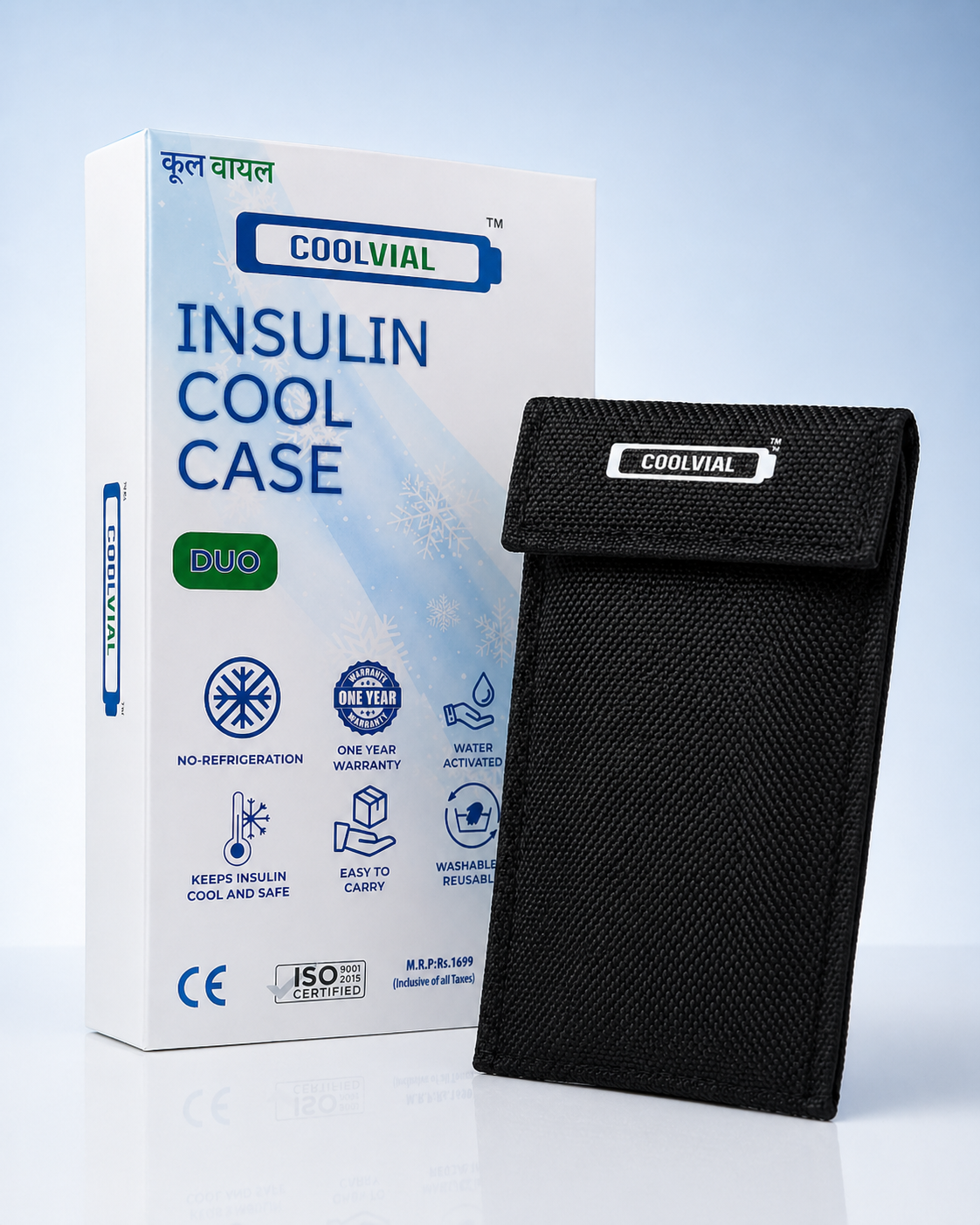
Evaporative cooling is a simple, effective, and electricity-free method of keeping things cool. Devices like the COOLVIAL Duo utilize this principle: water evaporates from a porous outer layer, drawing heat away from the inner chamber where the insulin is stored. This method can keep insulin at a safe temperature (typically 18°C-26°C) even when ambient temperatures are much higher.
Effectiveness in Raipur’s Climate Zones:
- Dry Summer (April-June): During Raipur’s dry summer, when humidity levels are relatively low (often below 40%), evaporative cooling works exceptionally well. The dry air readily absorbs moisture, leading to efficient cooling. This makes it an ideal solution for areas like Mahamaya Temple, where outdoor activities are common and access to refrigeration might be limited.
- Humid Monsoon (July-September): As Raipur transitions into the monsoon season, the effectiveness of evaporative cooling can be slightly reduced due to high atmospheric humidity (often above 80%). When the air is already saturated with moisture, evaporation slows down, and so does the cooling effect. However, even with reduced efficiency, an evaporative cooler like COOLVIAL Duo can still provide a significant temperature drop of 5-10°C below ambient, which is often enough to keep insulin within the safe 25°C limit, especially as monsoon temperatures are typically lower than peak summer. For specific concerns during the rainy season, refer to our guide on Raipur Monsoon & Insulin — Protecting Your Vials From Humidity Damage.
Why COOLVIAL Duo is a Smart Choice:
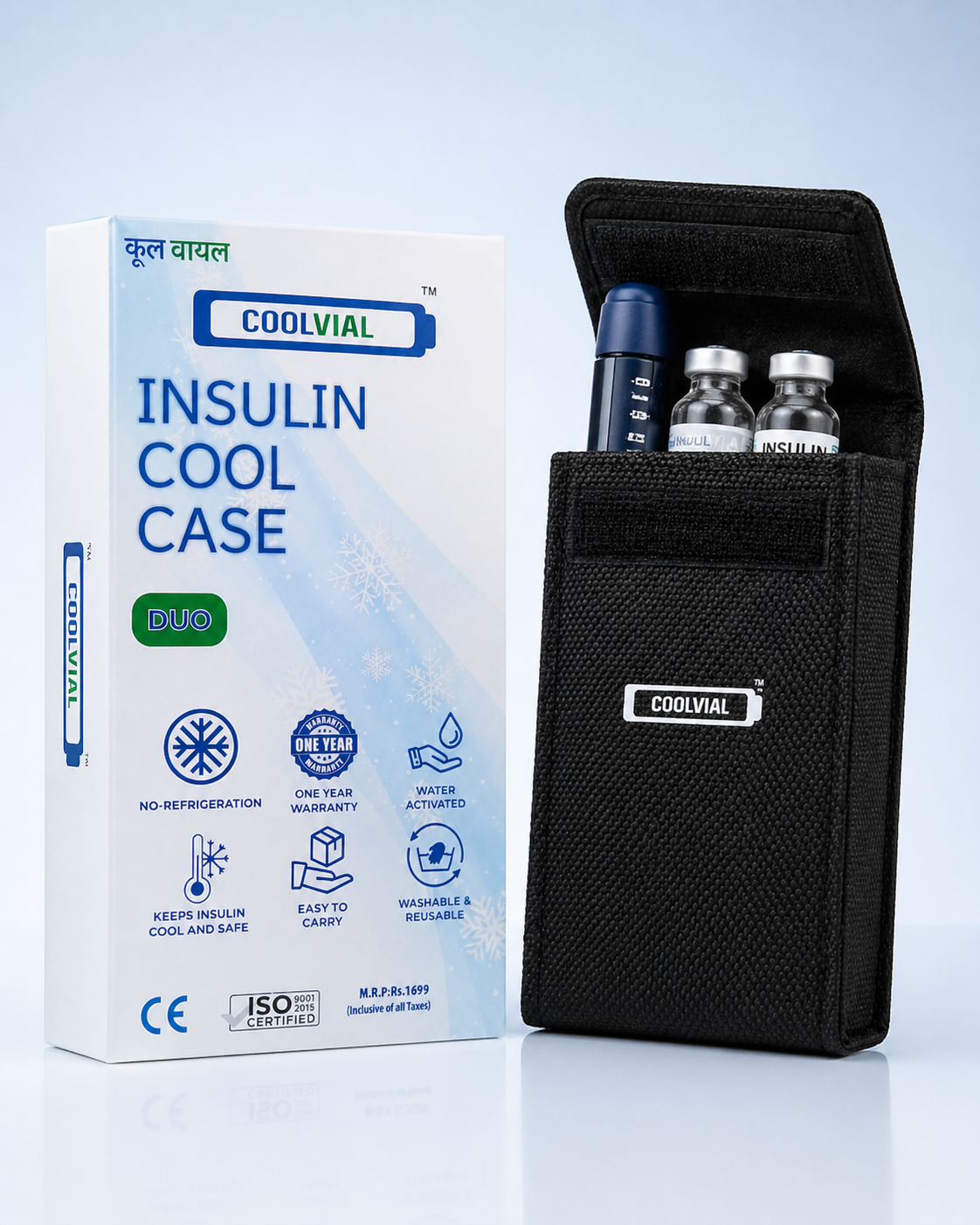
The COOLVIAL Duo is engineered for Indian climatic conditions. It keeps insulin cool for 12-16 hours without electricity, making it perfect for daily use, travel, or during power outages. Its compact design (holds 2 pens + 1 vial) offers convenience. Priced at just Rs 1,099 with code COOLHEAL (MRP Rs 1,699), it offers a cost-effective and reliable solution. In comparison, similar products like FRIO typically retail around Rs 1,900, while basic insulated pouches like Outer Woods OW-12 might be around Rs 999 but offer less precise and shorter-duration cooling.
4. Water Quality for Insulin Cooling Cases in Raipur
For evaporative cooling cases to function optimally and maintain hygiene, the quality of water used for activation is crucial. Raipur, like many Indian cities, can have varying water quality, including hard water in certain zones. Using tap water directly might lead to mineral buildup or, in some cases, introduce impurities that could affect the cooling efficiency over time.
Recommendations for Water Use:
- Bottled Water: This is the safest and most convenient option. Standard purified bottled water available at any local store or pharmacy (like Apollo Pharmacy, MedPlus, or 1mg store) is ideal.
- RO Purified Water: If you have an RO water purifier at home, this is also an excellent choice. RO water is free from most minerals and impurities that could clog the evaporative material.
- Filtered Water: If bottled or RO water isn’t readily available, use water from a reliable home water filter. Ensure it’s clean and free from visible particles.
- Avoid:
- Direct Tap Water: Especially in areas known for hard water, direct tap water can leave mineral deposits on the cooling pouch, reducing its effectiveness and lifespan.
- Hot Water: Always use cool or room temperature water for activation.
Using clean water ensures the longevity and effectiveness of your evaporative cooling case. It’s a small step that makes a big difference in ensuring your insulin remains potent. For instance, if you’re traveling outside Raipur, perhaps to a rural area, carrying a small bottle of purified water specifically for your cooling case is a wise precaution.
5. Storage Realities Across Raipur Neighborhoods
The practicalities of how to store insulin can vary significantly even within Raipur, depending on the specific neighborhood and individual living conditions. Different areas face distinct challenges regarding power stability, access to resources, and typical indoor environments.
Neighborhood-Specific Considerations:
- Shankar Nagar (Central): As a more central and older locality, Shankar Nagar often experiences more frequent and prolonged power outages compared to newer developments. Homes might also be older, with less efficient insulation, leading to higher indoor temperatures (often 35-38°C in summer). Residents here would greatly benefit from a reliable, non-electric cooling solution for daily use and emergencies.
- Civil Lines/Devendra Nagar: These areas are generally newer, often with better infrastructure and more stable power supply. Many homes are equipped with air conditioning, which provides an optimal environment for insulin storage. However, even here, power cuts are not unheard of, and residents should still have a backup plan.
- Pandri: A bustling commercial and residential hub, Pandri faces similar challenges to Shankar Nagar regarding power stability and older residential buildings. The close proximity of markets and shops might offer easier access to bottled water, but the heat remains a constant threat.
- Bhilai Road (Outskirts): Areas along Bhilai Road, especially those slightly outside the main city, might experience even less reliable power and potentially higher ambient temperatures due to less urban canopy. Commuting to and from these areas also necessitates portable cooling solutions.
AIIMS Raipur Endocrinology Recommendations:
Discussions with endocrinologists at AIIMS Raipur emphasize the importance of consistent temperature control. They typically advise patients to:
- Prioritize Refrigeration: Store unopened insulin in the refrigerator (2°C-8°C).
- Maintain <25°C for In-Use: Once opened, insulin should be kept below 25°C and used within 28 days.
- Emergency Preparedness: Always have a plan for power cuts, recommending insulated bags or evaporative cooling cases.
- Travel Safety: For travel, especially by air, insulin should be carried in cabin baggage and protected from extreme temperatures. The Directorate General of Civil Aviation (DGCA) guidelines also permit carrying essential medicines like insulin in hand luggage (Source: https://dgca.gov.in/pages/medical-requirements.html).
Consulting your diabetologist at AIIMS Raipur, Ramkrishna Care Hospitals (Pachpedi Naka), or Balaji Hospital for personalized advice is always recommended. They can provide guidance tailored to your specific insulin type and lifestyle.
6. Navigating the Peak Heat + Power Cut Combo (May-June)
The combination of Raipur’s peak summer heat (often exceeding 40°C) and an unexpected power cut is arguably the most challenging scenario for insulin users. This is when your proactive planning truly pays off.
How to Store Insulin in Raipur Summer Heat — 7 Essential Tips for a Local's Guide
Scenario: It’s a scorching May afternoon in Raipur. The temperature outside is 42°C, and inside your non-AC home in Shankar Nagar, it’s a stifling 37°C. Suddenly, the power goes out, and you know it could be hours before it returns. Your insulin pens are in the fridge.
Your Action Plan:
-
Assess the Situation:
- Insulin Status: Is your insulin currently in the fridge (unopened) or an in-use pen at room temperature?
- Duration: How long has the power been out? Is it a short blink or a prolonged outage?
- Backup Ready: Do you have your evaporative cooling case, like the COOLVIAL Duo, ready and hydrated?
-
Immediate Steps (within the first hour of power cut):
- Retrieve Insulin: If your insulin is in the refrigerator, carefully remove the opened/in-use pens. Unopened vials are safer in a closed fridge for a few hours, but if the outage is long, consider moving them too.
- Activate Cooling Case: If not already activated, quickly soak your COOLVIAL Duo in clean water (bottled/RO water is best in Raipur) for the recommended time (typically 5-10 minutes).
- Transfer Insulin: Once the COOLVIAL Duo is ready, place your insulin pens and/or vials inside. Ensure the case is properly sealed.
-
Sustained Protection (during prolonged outages):
- Placement: Keep the activated cooling case in the coolest part of your home – away from direct sunlight, windows, and heat-generating appliances. A shaded, well-ventilated area is best.
- Re-hydration: Check the cooling case periodically. If the outer material feels dry, re-hydrate it as per instructions. The COOLVIAL Duo can maintain coolness for 12-16 hours on a single activation, but in extreme heat, you might need to re-activate it sooner.
- Monitor Yourself: High heat can also affect you. Stay hydrated and monitor your blood sugar closely, as stress and heat can impact insulin absorption.
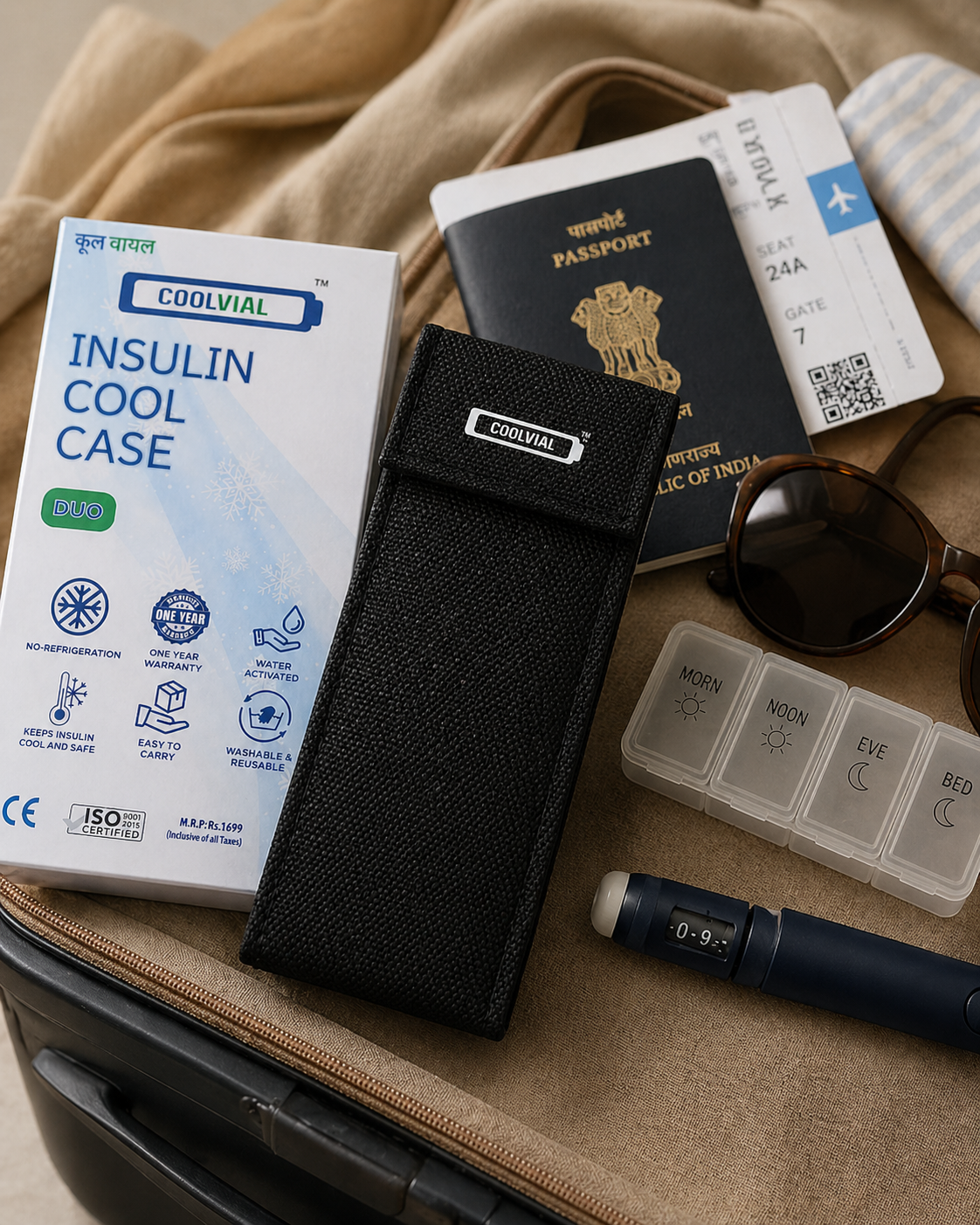
This is where investing in a reliable, non-electric solution like the COOLVIAL insulin cool case becomes invaluable. The COOLVIAL Duo, with its ability to keep insulin cool for 12-16 hours, provides a crucial buffer during these unpredictable power cuts. It holds 2 pens and 1 vial, offering ample space for your daily needs. With CE certification, ISO 9001:2015 standards, and a 1-year warranty, it offers peace of mind at an affordable price of Rs 1,099 using code COOLHEAL.
7. AIIMS Raipur & Local Healthcare Guidance on Insulin Storage
The medical community in Raipur, particularly endocrinologists and diabetologists at leading institutions, consistently emphasizes the critical importance of proper insulin storage. Hospitals like AIIMS Raipur, Ramkrishna Care Hospitals (Pachpedi Naka), and Balaji Hospital regularly counsel patients on managing their medication in the local climate.
Key Recommendations from Local Experts:
- Temperature Monitoring: Patients are advised to be aware of both outdoor and indoor temperatures. Relying solely on “room temperature” is insufficient when indoor temperatures frequently exceed 30°C.
- Avoid Extreme Fluctuations: Insulin should not be subjected to freezing or extreme heat. Rapid changes in temperature can be as damaging as prolonged exposure to adverse conditions.
- Travel Preparedness: For travel within or outside Raipur, always carry insulin in a protective cooling case. Never leave insulin in a parked car, as internal temperatures can soar rapidly (up to 60°C in just minutes during summer).
- Pharmacy Access: Local pharmacies such as Apollo Pharmacy, MedPlus, 1mg, Generic Aadhaar, and Trust Pharmacy are excellent resources for insulin supplies and often provide advice on general storage, but specific cooling solutions are best sourced from specialized providers like COOLVIAL.
- Discarding Compromised Insulin: If you suspect your insulin has been exposed to damaging temperatures (e.g., it looks cloudy, discolored, or has particles, or if your blood sugar control suddenly worsens without other changes), it’s safer to discard it and use a fresh pen or vial. Consult your doctor immediately if you have any concerns.
These recommendations underscore the need for a multifaceted approach to how to store insulin in Raipur. It’s not just about finding a cool spot, but about understanding the local environment and having reliable tools and practices in place. Further guidance on safe storage can be found on our general insulin storage tips page.
Frequently Asked Questions (FAQ)
Q: How long can insulin stay out of the fridge in Raipur’s summer? A: In Raipur’s summer, where indoor temperatures can easily reach 33-38°C, insulin should ideally not be out of a cooling environment for more than a few hours. Unopened insulin is generally stable at room temperature (below 25°C) for 28 days, but Raipur’s summer temperatures exceed this, causing faster degradation of potency.
Q: Can I use a regular insulated lunch bag to store insulin during power cuts? A: A regular insulated lunch bag offers minimal protection against Raipur’s extreme heat. While it might provide a slight buffer for a very short period, it lacks the active cooling mechanism of an evaporative case like COOLVIAL Duo and won’t maintain safe temperatures for long during a power cut.
Q: Is it safe to carry insulin in my handbag while commuting in Raipur? A: Carrying insulin directly in a handbag during Raipur’s summer commute is risky due to high ambient temperatures and potential exposure to direct sunlight. Always use a purpose-built insulin cooling case to protect it from heat damage while traveling.
Q: What if my insulin freezes during Raipur’s mild winter? A: While rare, if your insulin freezes during a cold snap in Raipur’s winter, it becomes irreversibly damaged and must be discarded, even if it thaws. Freezing destroys the insulin protein, making it ineffective and potentially harmful.
Q: Where can I buy a reliable insulin cooling case in Raipur? A: While some medical stores like Apollo Pharmacy or MedPlus might stock general medical accessories, specialized insulin cooling cases like COOLVIAL Duo are best purchased directly from our website coolvial.com or via our WhatsApp number.
Q: How often should I reactivate my evaporative cooling case in Raipur’s summer? A: In Raipur’s peak summer, with temperatures often above 40°C, you might need to reactivate your evaporative cooling case more frequently than the standard recommendation. For example, COOLVIAL Duo provides 12-16 hours of cooling, but if you notice the pouch drying out or the ambient temperature is extremely high, re-soaking every 10-12 hours might be prudent.
Q: Can I store my insulin in a clay pot (matka) for cooling? A: While clay pots can offer some evaporative cooling, they are not designed for precise temperature control required for insulin. The cooling effect is highly dependent on humidity and airflow, and the temperature might not consistently stay within the safe 2-25°C range, making it unreliable for critical medication like insulin.
Conclusion
Navigating diabetes in Raipur’s challenging climate requires careful planning and the right tools. The city’s intense summer heat, frequent power cuts, and the humid monsoon season all pose significant threats to the potency of your life-saving insulin. By understanding these local realities and adopting smart storage practices, you can ensure your medication remains effective, empowering you to live a healthier life.
Prioritizing proper insulin storage, whether through consistent refrigeration or by utilizing advanced evaporative cooling solutions, is a non-negotiable aspect of diabetes management in Raipur. The COOLVIAL Duo offers a made-in-India solution, CE certified and ISO 9001:2015 compliant, providing 12-16 hours of electricity-free cooling for your insulin pens and vials. It’s an investment in your health and peace of mind, especially when temperatures soar and power is intermittent.
Don’t let Raipur’s climate compromise your health. Take control of your insulin storage today.
Order COOLVIAL Duo at Rs 1,099 with code COOLHEAL at coolvial.com or via WhatsApp wa.me/918766952300.
How We Researched This: This article synthesizes information from RSSDI guidelines, ICMR-INDIAB data on diabetes prevalence and care in India, local Raipur hospital directories for healthcare provider information, and insights from the Apollo Pharmacy network regarding general medication availability and storage concerns in the region. Local climate data and power supply realities were compiled from publicly available meteorological and discom reports [Verify in 2026].
Medical Disclaimer: This article is for general informational purposes only and does not constitute medical advice. Always consult your endocrinologist or diabetologist at AIIMS Raipur, Ramkrishna Care Hospitals, Balaji Hospital, or your preferred healthcare provider before making any changes to your insulin storage or dosing practices.
How to Store Insulin in Raipur Summer Heat — 7 Essential Tips for a Local's Guide
48+ hours at 2-8°C. No electricity. CE certified. Free delivery across India.
Order on WhatsApp — ₹1,099🛒 Buy Now — ₹1,099