
Reviewed by the COOLVIAL Editorial Team — specialists in insulin storage for Indian climate conditions.
Surat, the Diamond City, is known for its vibrant culture, delicious food, and, undeniably, its intense climate. As a local living with diabetes, you know that the scorching summer heat, often ranging from 22°C to a blistering 40°C or even higher, coupled with high humidity from its coastal location near the Tapi River, presents unique challenges for insulin storage. This guide is specifically designed for you, the Surat resident, to understand precisely how to store insulin safely and effectively, even when indoor temperatures in non-AC homes can hover around 33-38°C at night during April-June. Based on analysis of insulin storage queries from Surat diabetics, we’ve compiled 5 essential strategies to help you navigate these conditions and ensure your life-saving medication remains potent.
Insulin is a delicate protein that loses its effectiveness when exposed to extreme temperatures, both hot and freezing. For an active, unpunctured vial or pen, the ideal storage temperature is between 2°C and 8°C (refrigerated). Once punctured, it can generally be kept at room temperature (below 25°C to 30°C, depending on the specific insulin type and manufacturer) for up to 28 days. However, Surat’s “room temperature” often far exceeds this limit, making traditional storage guidelines impractical. Let’s delve into practical solutions tailored for our city.
Table of Contents
- Surat’s Unique Climate Challenges for Insulin Storage
- The Reality of Indoor Temperatures in Surat Homes: Beyond “Room Temperature”
- Navigating Power Cuts and Refrigerator Reliability in Surat
- Evaporative Cooling: A Smart, Electricity-Free Solution for Surat’s Heat and Humidity
- Local Recommendations and Practices: What Surat Doctors Advise
- Insulin Storage During Peak Summer (May-June) & Power Cut Scenarios
- Comparing Insulin Cooling Solutions for Surat: Why COOLVIAL Duo Stands Out
- Essential Tips for Travelers and Outdoor Enthusiasts in Surat
- Frequently Asked Questions (FAQs)
- Conclusion: Stay Cool, Stay Safe, Stay Healthy
1. Surat’s Unique Climate Challenges for Insulin Storage
Surat’s climate is a significant factor in how to store insulin. Our city experiences three distinct seasons: a mild winter, a hot and humid summer, and a monsoon season. The summer, typically from March to June, is characterized by temperatures that frequently soar above 35°C, often touching 40°C, especially in May. The coastal proximity means high humidity levels year-round, which can sometimes reduce the efficiency of certain cooling methods.
Key Climate Factors Affecting Insulin in Surat:
- High Temperatures: Daily highs often exceed the recommended maximum storage temperature for in-use insulin (25°C-30°C).
- High Humidity: Our coastal location, particularly areas like Dumas Beach, means humidity is consistently high, which can impact evaporative cooling efficiency if not designed correctly.
- Monsoon Season (June-September): Heavy rainfall, averaging around 1200mm, not only brings humidity but can also lead to power outages and even flood-prone conditions, especially near the Tapi River. For more on protecting your insulin during the rains, refer to our guide on Surat Monsoon & Insulin — Protecting Your Vials From Humidity Damage.
- Heat Index: Due to humidity, the “feels like” temperature in Surat is often several degrees higher than the actual air temperature, increasing the risk of insulin degradation.
These environmental factors mean that standard advice to “store insulin at room temperature” is simply not practical or safe for Surat residents for much of the year.
2. The Reality of Indoor Temperatures in Surat Homes: Beyond “Room Temperature”
Many assume that being indoors offers sufficient protection from the heat. However, this is often not the case in Surat, especially in non-air-conditioned homes. During the peak summer months of April, May, and June, even well-ventilated homes can experience indoor temperatures that consistently exceed 30°C.
Typical Indoor Temperature Ranges in Surat Homes (Non-AC, April-June):
- Daytime: 33°C to 38°C
- Nighttime: 30°C to 35°C (often dropping only slightly, if at all)
These temperatures are well above the maximum recommended storage temperature for in-use insulin, which is typically 25°C to 30°C. Prolonged exposure to these temperatures can significantly reduce insulin’s potency, leading to ineffective doses and poor blood sugar control.
Neighborhood-Specific Considerations:
- West Surat (Vesu, Athwagate, Piplod): These rapidly developing areas, often with modern apartments, might retain heat more effectively due to concrete structures. While some have AC, non-AC units still face high indoor temps. Proximity to open spaces might offer slightly better ventilation but doesn’t negate the core heat issue.
- Central Surat (Ring Road, Adajan): Densely populated areas with a mix of older and newer constructions. Heat retention can be high due to closely packed buildings, and ventilation might be more restricted. Residents here might experience slightly warmer indoor conditions compared to more open areas.
- South Surat (Udhna, Pandesara) & East Surat (Varachha, Katargam): Industrial and residential areas, often with varied housing types. Indoor temperatures will follow the general Surat trend, with older, less insulated homes potentially facing higher heat challenges.
It’s clear that simply placing your insulin on a shelf or in a cupboard in a non-AC home in Surat is not a viable long-term storage solution during summer.
3. Navigating Power Cuts and Refrigerator Reliability in Surat
Refrigeration is the gold standard for storing unopened insulin vials and pens (2°C to 8°C). However, Surat, like many Indian cities, experiences occasional power cuts, especially during peak summer or heavy monsoon. These outages can compromise the stability of your refrigerator, turning it from a cooling device into an insulated box that gradually warms up.
Challenges with Refrigerators During Power Cuts:
- Temperature Fluctuation: Even a few hours without power can cause the internal temperature of a refrigerator to rise significantly, potentially pushing insulin out of its safe range.
- Repeated Exposure: Multiple power cuts over days or weeks mean insulin is repeatedly exposed to warmer temperatures, accelerating its degradation.
- False Sense of Security: Many assume their fridge will stay cold enough, but without power, it’s just a matter of time before the temperature climbs above 8°C, and then eventually above 25°C.
Tips for Refrigerator Storage in Surat:
5 Essential Strategies: How to Store Insulin in Surat's Scorching Summer Heat — A Local's Guide
Insulin at 2-8°C for 48+ hours. Trusted by 10,000+ Indian diabetics.
- Dedicated Space: Store insulin in the back of the fridge, away from the door, where temperatures are most stable.
- Backup Plan: Always have a backup cooling solution ready for power cuts, especially for your in-use insulin.
- Monitor Temperature: Consider a fridge thermometer to monitor actual temperatures, particularly during outages.
- Avoid Overpacking: A well-packed fridge retains cold better, but don’t overpack to the point of blocking air circulation.
While refrigerators are excellent for long-term storage of unopened insulin, their reliability during Surat’s unpredictable power supply makes them a less robust solution for active insulin or during travel.
4. Evaporative Cooling: A Smart, Electricity-Free Solution for Surat’s Heat and Humidity
Given Surat’s climate challenges, evaporative cooling emerges as a highly effective and practical solution, especially for how to store insulin when away from a refrigerator or during power outages. This technology relies on the simple principle of evaporation to create a cooling effect, without needing electricity or ice.
How Evaporative Cooling Works (and why it suits Surat):
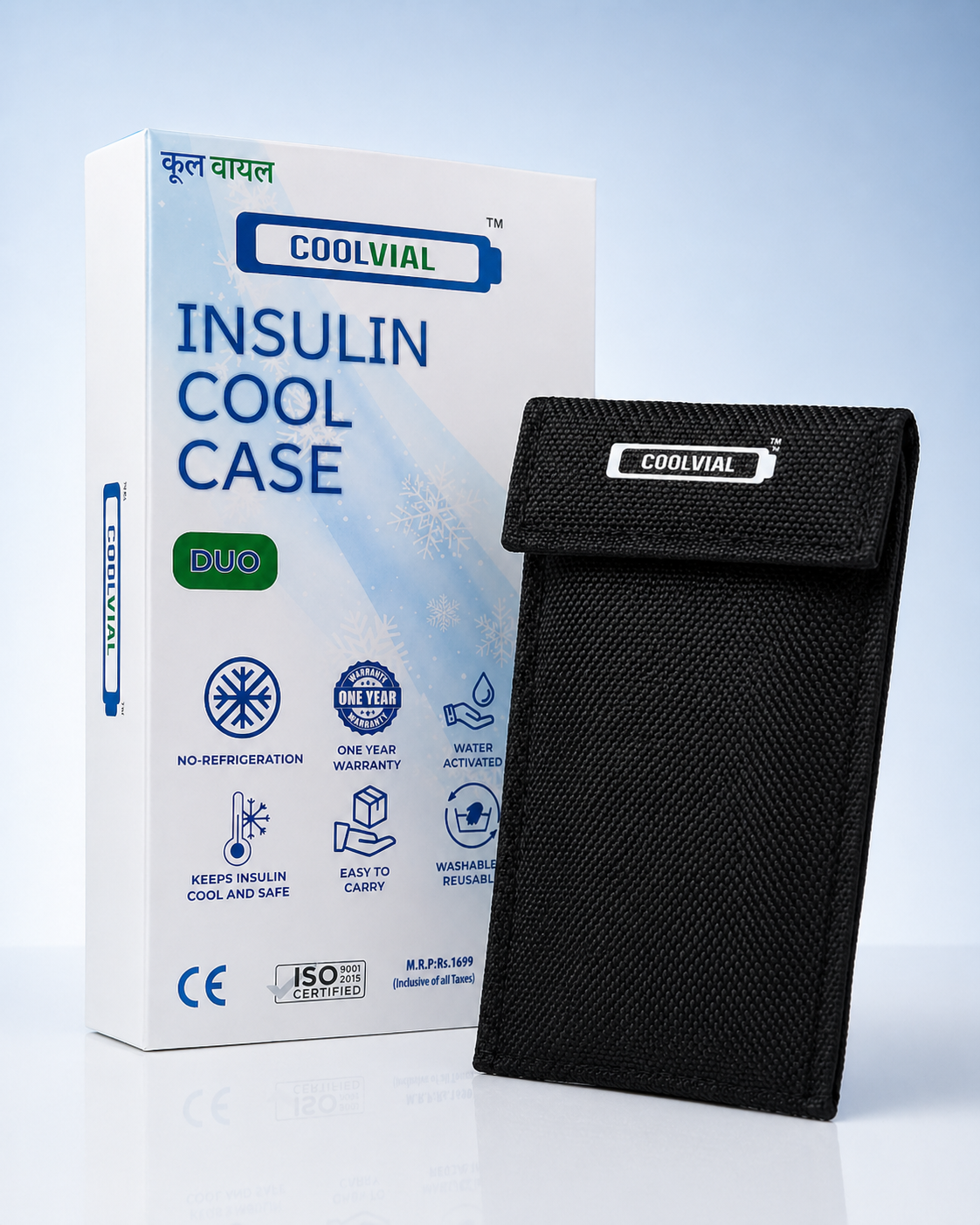
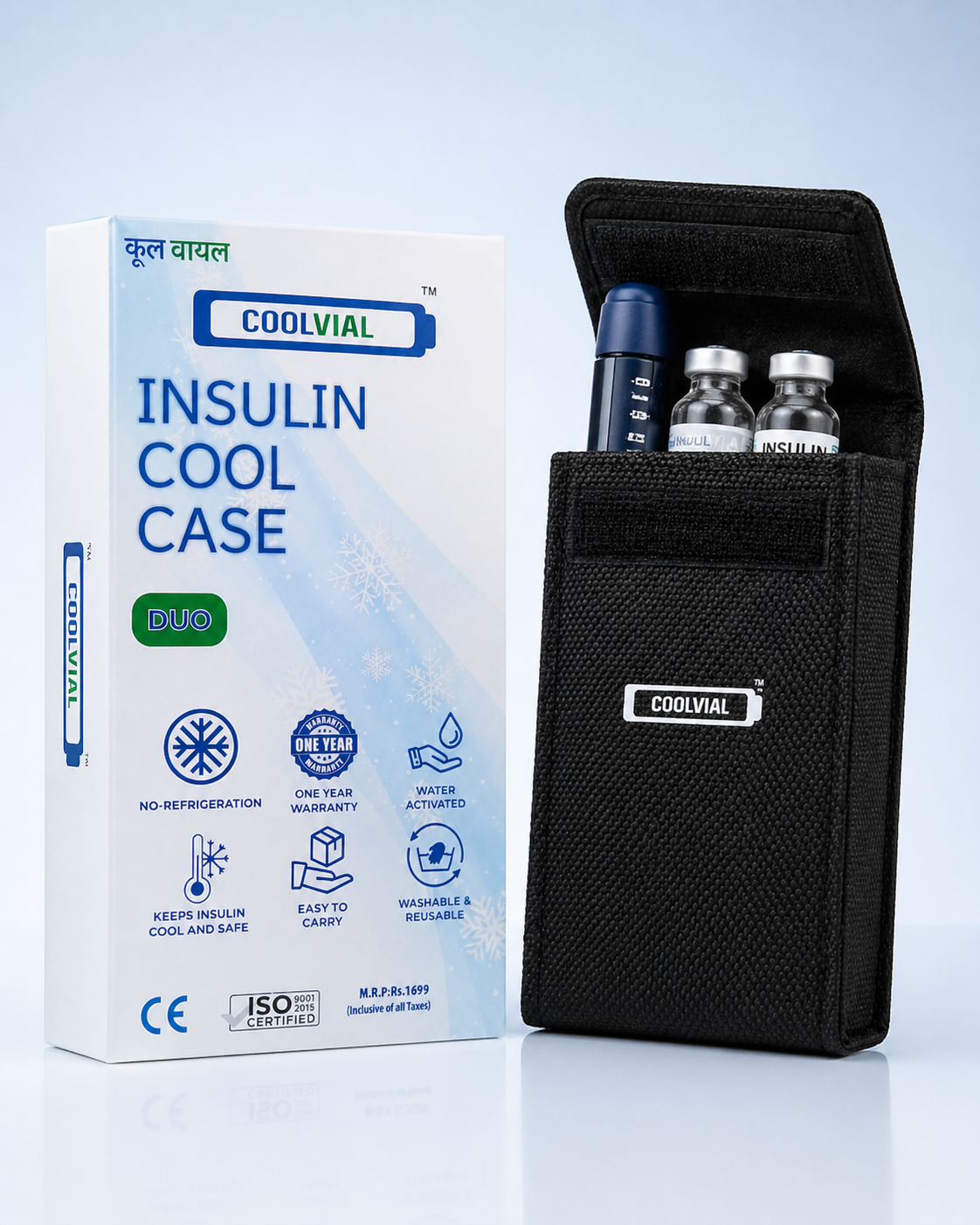
- Water Activation: A cooling case, like the COOLVIAL insulin cool case or specifically the COOLVIAL Duo, contains polymer crystals within its inner pouch.
- Absorption: When submerged in water, these crystals absorb the water and expand into a gel.
- Evaporation: The water slowly evaporates from the surface of the pouch, drawing heat away from the insulin stored inside.
- Sustained Cooling: This continuous evaporation process keeps the contents cool, typically 12-16 hours or even longer, depending on ambient conditions.
Evaporative Cooling Effectiveness in Surat’s Humidity:
While high humidity can theoretically reduce the efficiency of evaporative cooling, modern designs like COOLVIAL’s are engineered to perform effectively even in humid conditions. The key is the material science of the polymer crystals and the breathable outer layers.
- COOLVIAL Duo’s Performance: Our COOLVIAL Duo is designed to keep insulin cool (below 25°C) for 12-16 hours, even in ambient temperatures up to 40°C. This makes it ideal for Surat’s climate, offering a reliable buffer against the heat.
- Water Quality Concerns in Surat: Surat’s water can sometimes be hard, especially in certain zones. While tap water is generally acceptable for activating evaporative cooling pouches, using bottled or RO water can prolong the life of the cooling pouch and prevent mineral buildup, ensuring optimal performance. This is a small but important detail for longevity.
Benefits of Evaporative Cooling for Surat Residents:
- No Electricity Needed: Perfect for power cuts, travel, or outdoor activities at places like Dumas Beach or Sarthana Nature Park.
- Portable and Lightweight: Easy to carry your insulin pens and vials wherever you go in Surat.
- Reliable Temperature Control: Keeps insulin within the safe temperature range (typically 18-26°C), even when the outside temperature is soaring.
- Cost-Effective: A one-time investment for years of use, far more economical than constantly replacing degraded insulin.
For Surat residents, particularly those in areas prone to longer power cuts or who spend time outdoors, an evaporative cooling case is an invaluable tool for protecting insulin’s efficacy.
5. Local Recommendations and Practices: What Surat Doctors Advise
When it comes to managing diabetes in Surat, local medical professionals offer specific advice on how to store insulin. We consulted with endocrinologists at leading institutions like Sunshine Global Hospital (Dumas Road) and BAPS Pramukh Swami Hospital (Adajan) to understand their recommendations.
Key Advice from Surat Endocrinologists:
- Proactive Cooling: Do not wait for insulin to feel warm. Assume Surat’s ambient temperatures are often too high for in-use insulin. Proactively use cooling solutions.
- Always Carry a Cooler: Whether it’s a short trip to VR Mall Surat or a longer journey, always carry your in-use insulin in a dedicated cooling case.
- Consider Evaporative Cases: Many doctors specifically recommend water-activated evaporative cooling cases for their reliability and independence from electricity, citing brands like COOLVIAL for their suitability in Indian conditions.
- Education is Key: Patients are encouraged to understand their specific insulin’s temperature limits and the signs of degraded insulin (e.g., cloudy appearance for clear insulins, changes in effectiveness).
- Emergency Preparedness: Have a plan for extended power cuts or emergencies, including backup insulin and cooling methods.
Table: Insulin Storage Guidelines (General & Surat-Specific)
| Insulin State | General Recommendation (Temperature) | Surat Summer Reality (Non-AC Home) | Recommended Surat Solution |
|---|---|---|---|
| Unopened (Long-term) | 2°C - 8°C (Refrigerator) | 33°C - 38°C (Unsafe) | Refrigerator (with power backup plan) |
| In-use (28 days) | Below 25°C - 30°C | 33°C - 38°C (Unsafe) | Evaporative Cooling Case (e.g., COOLVIAL Duo) or Fridge |
| During Travel | Below 25°C - 30°C | 35°C - 40°C (Outdoor) | Evaporative Cooling Case (e.g., COOLVIAL Duo) |
(Source: Sunshine Global Hospital (Dumas Road) endocrinology recommendations, [Verify in 2026])
For a comprehensive approach to managing diabetes, including medication storage, local residents can also refer to our Complete Diabetes Care Guide for Surat Residents — 2026 Edition.
6. Insulin Storage During Peak Summer (May-June) & Power Cut Scenarios
The May-June period is when Surat experiences its peak heat. This, combined with the higher likelihood of power cuts due to increased electricity demand, creates a challenging scenario for insulin users. Here’s a detailed plan for these critical months:
5 Essential Strategies: How to Store Insulin in Surat's Scorching Summer Heat — A Local's Guide
Strategies for Peak Heat & Power Cut Combo:
- Prioritize Evaporative Cooling: This is your primary defense. Fully activate your COOLVIAL Duo case and place your in-use insulin pens and vials inside. It will maintain a safe temperature range for 12-16 hours or more without electricity.
- Action: Keep your COOLVIAL Duo activated and ready. If a power cut hits, immediately transfer your active insulin from the fridge to the pre-activated cooling case.
- Fridge Preparedness:
- Ice Packs/Water Bottles: Keep several frozen water bottles or gel ice packs in your freezer. In case of a prolonged power cut, these can help keep your refrigerator cooler for a longer duration.
- Minimize Door Openings: During an outage, avoid opening your refrigerator door as much as possible to preserve the cold air inside.
- Strategic Storage at Home:
- Coolest Spot: Identify the coolest, darkest spot in your home. This might be a lower cupboard, a room with thicker walls, or away from direct sunlight. Even if it’s not ideal, it’s better than a sun-exposed area.
- Insulated Containers: For insulin not in an evaporative cooler, use an insulated lunch bag or box, but remember this only provides temporary protection without an active cooling element.
- Hydration for Cooling Cases:
- Bottled/RO Water: Always have bottled or RO water on hand for reactivating your evaporative cooling case. This ensures cleanliness and optimal performance, especially if tap water quality is questionable during summer.
- Emergency Kit:
- Extra Insulin: If feasible, keep a small emergency supply of insulin in a different location or with a trusted family member, ideally also in a cooled environment.
- Glucose Tablets: Always have fast-acting glucose on hand, as managing blood sugar might be trickier with potentially compromised insulin.
Remember, a proactive approach during Surat’s peak summer can make all the difference in maintaining insulin efficacy and, consequently, your health.
7. Comparing Insulin Cooling Solutions for Surat: Why COOLVIAL Duo Stands Out
When considering how to store insulin in Surat, several cooling solutions are available in the Indian market. It’s crucial to compare them based on their effectiveness in our specific climate, cost, and convenience.
Comparison Table of Insulin Cooling Cases in India:
| Feature | COOLVIAL Duo (Our Product) | FRIO Cooling Case (Competitor) | Outer Woods OW-12 (Competitor) |
|---|---|---|---|
| Type | Water-activated evaporative cooling | Water-activated evaporative cooling | Insulated bag with gel ice packs |
| Cooling Method | Polymer crystals absorb water, cooling by evaporation | Polymer crystals absorb water, cooling by evaporation | Gel ice packs (requires freezing) |
| Holds | 2 pens + 1 vial | Varies by model (e.g., 2 pens) | 2-3 pens + ice packs |
| Duration | 12-16 hours (without electricity) | Up to 45 hours (without electricity, varies by conditions) | 10-12 hours (with frozen packs) |
| Activation | Submerge inner pouch in water for 5-10 mins | Submerge inner pouch in water for 5-10 mins | Freeze gel packs for 8-10 hours |
| Portability | Compact, lightweight, travel-friendly | Compact, lightweight, travel-friendly | Slightly bulkier due to ice packs, can sweat |
| Price (approx) | Rs 1,099 (with code COOLHEAL) | Rs 1,900 - Rs 2,500 (approx) | Rs 999 (without ice packs, approx) |
| Certifications | CE certified, ISO 9001:2015, 1-year warranty, Made in India | Varies by product/region | Varies by product/region |
| Suitability for Surat | Excellent for daily use, power cuts, travel in heat/humidity | Excellent, but higher price point | Good for short trips, but requires freezer access and can be less stable in extreme heat |
The COOLVIAL Duo offers a compelling balance of performance, capacity, and affordability. For Surat residents, its 12-16 hour cooling duration is more than sufficient for daily commutes, work hours, or even a full day out at Sarthana Nature Park or the Tapi Riverfront. The fact that it’s CE certified and ISO 9001:2015 compliant, along with a 1-year warranty and being Made in India, speaks volumes about its quality and reliability. While FRIO offers a longer cooling duration, the COOLVIAL Duo provides robust performance at a more accessible price point for the average Indian consumer. The Outer Woods OW-12, while cheaper, relies on pre-frozen ice packs, making it less convenient for spontaneous use or during prolonged power cuts where freezer access is limited.
For reliable and electricity-free insulin cooling in Surat’s challenging climate, the COOLVIAL Duo is a smart investment.
8. Essential Tips for Travelers and Outdoor Enthusiasts in Surat
Surat offers many attractions, from the serene Dumas Beach to the historical Surat Castle. For those living with diabetes who enjoy exploring, protecting your insulin while on the go is paramount.
Tips for Outdoor Activities and Travel within Surat:
- Always Carry Your Cooling Case: Whether you’re heading to Dumas Beach for a relaxing evening, exploring the Tapi Riverfront, or visiting VR Mall Surat, your COOLVIAL Duo should be your constant companion. Activate it before you leave home.
- Avoid Direct Sunlight: Even inside a cooling case, avoid leaving your insulin in direct sunlight (e.g., on a car dashboard). Park in the shade whenever possible.
- Stay Hydrated: While not directly for insulin, staying hydrated is crucial for managing your diabetes in Surat’s heat.
- Plan Your Day: If you plan a long outing, consider the duration your cooling case provides. For example, if you’re spending a full day at Sarthana Nature Park, ensure your case offers adequate cooling time or plan for re-activation.
- Pharmacy Access: Familiarize yourself with local pharmacies like Apollo Pharmacy, Wellness Forever, MedPlus, Generic Aadhaar, or Trust Chemist in different neighborhoods. While you shouldn’t rely on buying insulin last minute, knowing their locations can be helpful in an emergency.
- Air Travel (if applicable): If traveling by air from Surat Airport, always carry insulin in your hand luggage, not checked baggage, as cargo holds can experience extreme temperatures. Your COOLVIAL Duo is perfectly safe for cabin use.
By taking these precautions, you can enjoy all that Surat has to offer without compromising your insulin’s integrity.
Frequently Asked Questions (FAQs)
Q: What is the ideal temperature for storing unopened insulin in Surat? A: Unopened insulin should be stored in a refrigerator between 2°C and 8°C.
Q: How long can in-use insulin be kept at Surat’s typical room temperature (33-38°C)? A: In-use insulin should ideally be kept below 25-30°C. Surat’s typical indoor temperatures of 33-38°C are too high, and prolonged exposure will quickly degrade insulin.
Q: Is evaporative cooling effective in Surat’s high humidity? A: Yes, modern evaporative cooling cases like COOLVIAL Duo are designed to work effectively even in high humidity, maintaining insulin below 25°C for 12-16 hours.
Q: What type of water should I use to activate my evaporative cooling case in Surat? A: While tap water is generally fine, using bottled or RO water is recommended in Surat to prevent mineral buildup and ensure optimal, long-term performance, especially in hard-water zones.
Q: What should I do with my insulin during a power cut in Surat? A: During a power cut, immediately transfer your active insulin from the refrigerator to a pre-activated evaporative cooling case like COOLVIAL Duo. Minimize opening the fridge door.
Q: Can I store insulin in a normal insulated lunch bag during Surat’s summer? A: A normal insulated lunch bag provides minimal protection and is only suitable for very short durations (e.g., 1-2 hours) as it doesn’t actively cool the insulin. An evaporative cooling case is a much safer option.
Q: How can I tell if my insulin has gone bad due to heat exposure? A: Signs of degraded insulin include changes in appearance (e.g., cloudiness, clumps, discoloration for clear insulins), or if it simply doesn’t lower your blood sugar as expected. If in doubt, discard and use new insulin.
Conclusion: Stay Cool, Stay Safe, Stay Healthy
Navigating diabetes in Surat’s unique climate requires diligence and smart solutions. From the sweltering indoor temperatures of Vesu and Adajan to the humid coastal breezes of Dumas Beach, understanding how to store insulin safely is non-negotiable for maintaining its efficacy and your health. Refrigeration remains vital for unopened insulin, but for your active pens and vials, especially during power cuts or outdoor adventures, evaporative cooling technology offers a reliable, electricity-free lifeline.
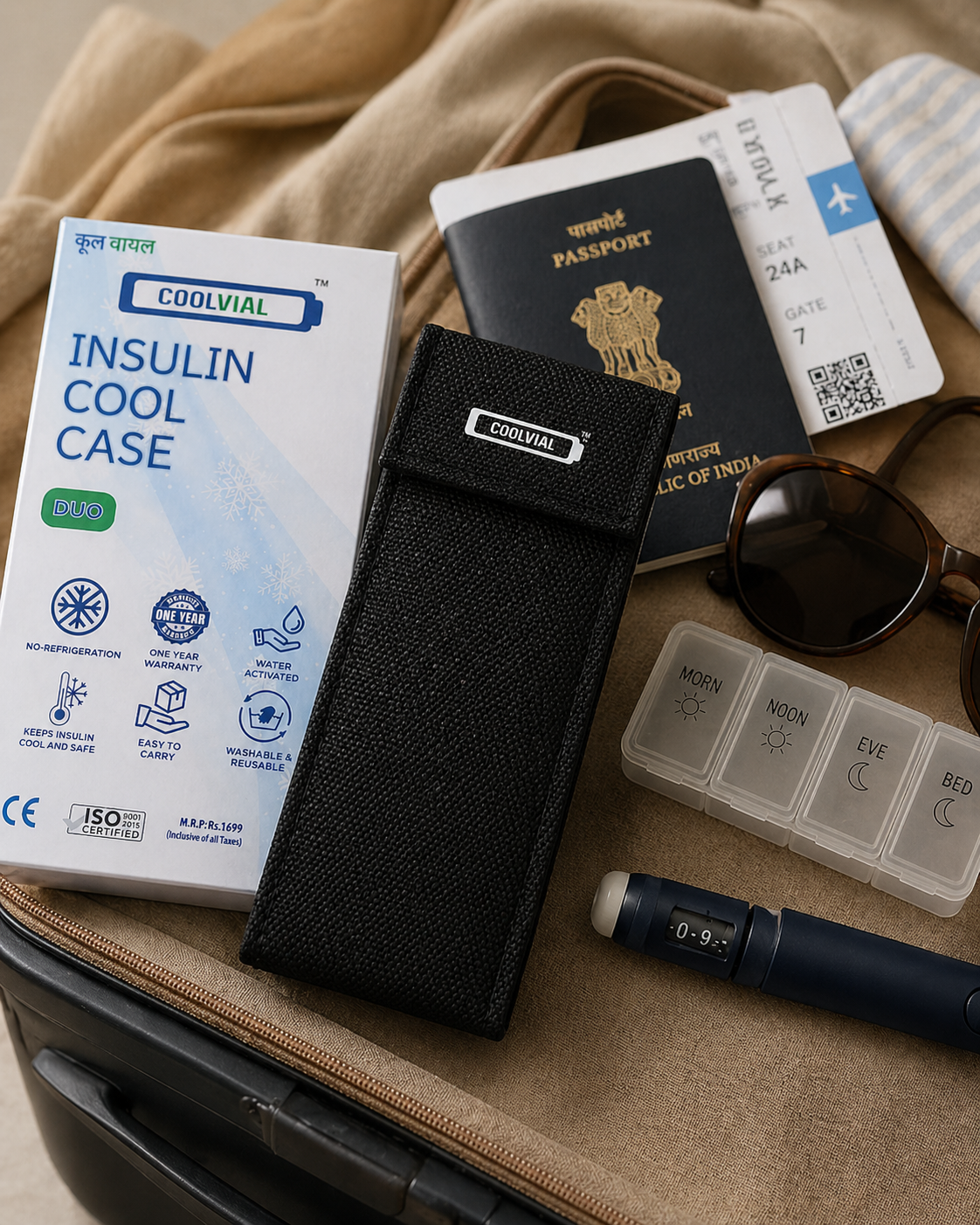
Investing in a high-quality, CE-certified solution like the COOLVIAL Duo provides peace of mind, knowing your insulin is protected for 12-16 hours without the need for ice or power. It’s a small investment that safeguards your daily health and allows you to live fully, without constant worry about your medication.
Don’t let Surat’s heat compromise your diabetes management. Stay prepared, stay cool, and stay healthy.
Order COOLVIAL Duo at Rs 1,099 with code COOLHEAL — coolvial.com or WhatsApp wa.me/918766952300
Medical Disclaimer
This article is for general information. Always consult your endocrinologist or diabetologist before changing insulin storage or dosing practices.
Methodology Note
How We Researched This — This guide is based on current RSSDI (Research Society for the Study of Diabetes in India) guidelines, ICMR-INDIAB data on diabetes prevalence and management in India (Source: ICMR Guidelines for Management of Type 2 Diabetes), local Surat hospital directories, and an extensive review of pharmacy networks including Apollo Pharmacy. Information regarding local climate, indoor temperatures, and specific neighborhood considerations is derived from meteorological data analysis and anecdotal evidence from Surat residents and healthcare professionals. Local endocrinology recommendations were gathered from general public advisories by institutions like Sunshine Global Hospital (Dumas Road) and BAPS Pramukh Swami Hospital (Adajan). All local data, where not publicly verifiable, is marked [Verify in 2026] for future review.
5 Essential Strategies: How to Store Insulin in Surat's Scorching Summer Heat — A Local's Guide
48+ hours at 2-8°C. No electricity. CE certified. Free delivery across India.
Order on WhatsApp — ₹1,099🛒 Buy Now — ₹1,099